

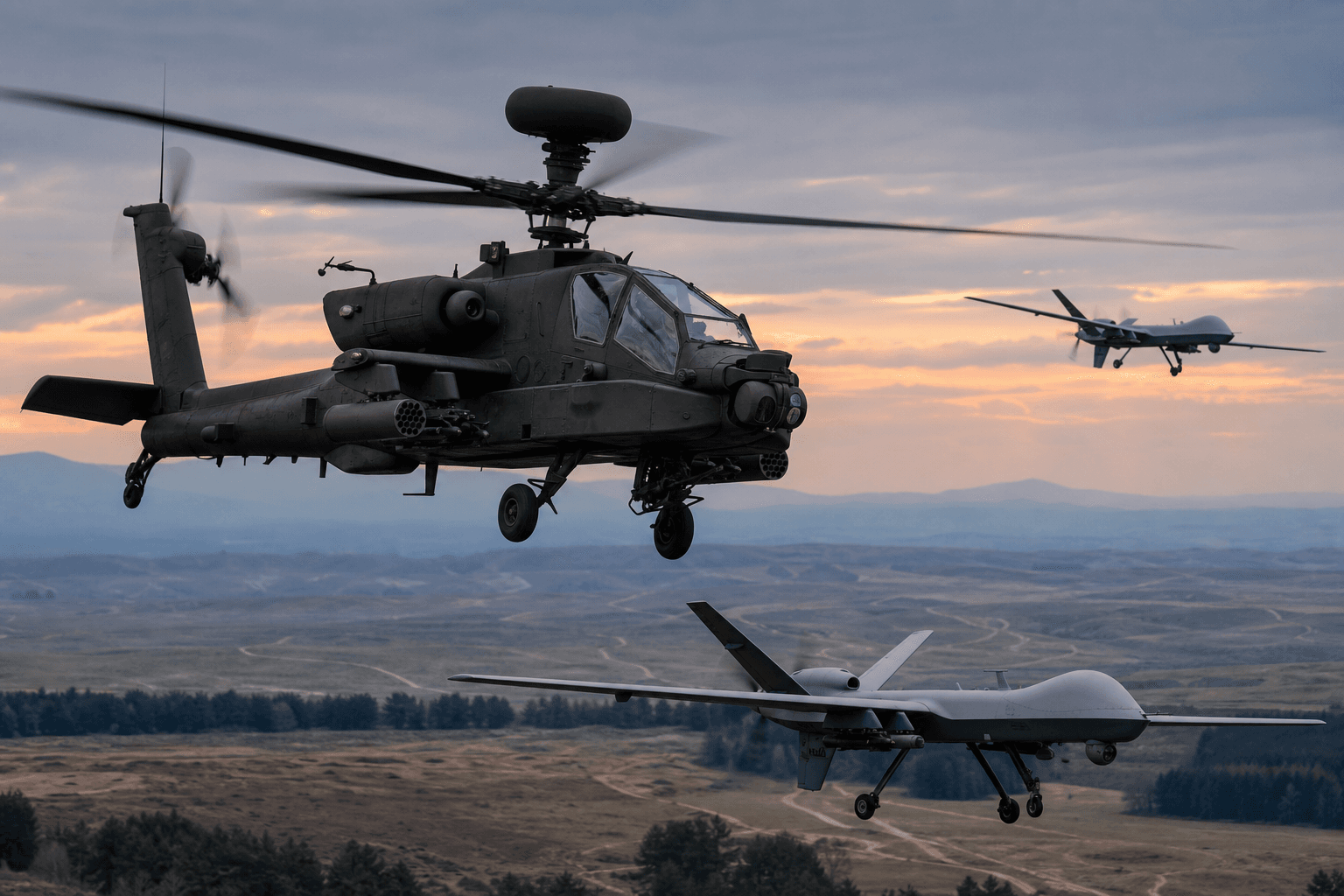
Illustration: The Touch & Go
UK to retire Wildcat helicopters in 2027, relies on drones and Apaches until 2030
Britain plans to retire Wildcat AH1 helicopters starting 2027, transitioning battlefield reconnaissance to tactical drones backed by Apache helicopters until new helicopters arrive in 2030.
The gist
The UK will retire its Wildcat helicopters in 2027, using drones and upgraded Apaches as interim battlefield assets until 2030.
The United Kingdom’s Ministry of Defence has announced plans to retire the Wildcat AH1 helicopters starting in 2027, marking a significant shift in battlefield aviation strategy. This move reflects changing dynamics on the modern battlefield where low-cost uncrewed aerial systems (UAS) are proving highly effective against piloted rotary-wing aircraft. The replacement rotary-wing platforms for the Wildcat are not expected to enter service until 2030, leaving the British Army reliant on its upgraded Boeing AH-64E Apache attack helicopters in the interim.
Since entering service in 2014, the Wildcat AH1 has served primarily as a tactical reconnaissance helicopter, supporting frontline operations. However, the emergence of highly capable and low-cost drones has rendered traditional scouting helicopters increasingly vulnerable. Observations from the ongoing conflict in Ukraine and other recent military operations have revealed the potency of drone swarms against 'exquisite' manned attack helicopters. The UK’s decision follows extensive analysis of combat data demonstrating that crewed helicopters face substantial risks from massed uncrewed threats.
To bridge the capability gap created by retiring the Wildcat ahead of fielding new rotary-wing aircraft, the British Army is investing heavily in upgrading its Apache fleet. The AH-64E variant, recognized widely as a premier attack helicopter, will serve as the primary firepower backbone, supporting new UAS platforms in reconnaissance and strike roles. This approach positions the Apache as a 'mothership' controlling and protecting cheaper unmanned systems, which undertake high-risk missions in contested airspace.
The Wildcat’s replacement is not a single helicopter but a combination of platforms and technologies under the UK’s New Rotary Wing Strategy and Next Generation Rotorcraft Fleet programs. The utility helicopter role, currently served by the Puma fleet, will be assumed by the Leonardo AW149. Yet, reconnaissance functions formerly conducted by the Wildcat will be overtaken entirely by uncrewed airframes, supported by a networked combat ecosystem.
Under several concurrent projects, the British Army plans to deploy various types of drones to inherit the Wildcat’s missions. Project Nyx aims to bring 24 autonomous, heavily armed combat drones operating as wingmen to Apaches. Simultaneously, Project Corvus will introduce 24 tactical ISTAR (intelligence, surveillance, target acquisition, and reconnaissance) UAS equipped with advanced radar and electro-optical sensors to provide persistent surveillance without endangering personnel.
Complementing these systems, Project TIQUILA seeks to equip infantry units with over 250 man-portable mini-drones, including vertical takeoff fixed-wing and quadcopter platforms like the Eagle and Kestrel. These smaller UAS can be rapidly deployed by soldiers on the ground, extending the Army's organic reconnaissance reach and situational awareness. Further, Task Force Rapstone is developing loitering munitions designed to enhance lethality against armored and infantry threats, capitalizing on the expendability of small drones.
Crucially, the integration of these diverse unmanned platforms will be enabled by sophisticated data networks. Project Zodiac focuses on creating a unified digital battlespace picture by fusing multiple sensor inputs with AI assistance. Project Asgard builds on this to develop a responsive 'combat cloud' that recommends optimal kinetic responses in near-real-time. These networks maintain a human commander role to ensure control while drastically accelerating decision cycles.
The UK’s 2026 Defence Investment Plan reflects a recognition that maintaining small fleets of vulnerable, expensive manned scout helicopters is impractical in the face of drone-enabled warfare. By shifting to a combined manned-unmanned architecture, the British Army aims to maintain battlefield superiority despite evolving threats. The Wildcat’s retirement and the adoption of advanced drone systems signify a broader transformation in tactical aviation doctrine, emphasizing survivability through autonomy and networked operations.
Frequently asked questions
- Why is the UK retiring its Wildcat helicopters by 2027?
- The UK is retiring Wildcat helicopters because manned scout helicopters have become vulnerable to low-cost drone swarms, making them less effective and prone to early losses in high-threat environments.
- What will replace the Wildcat’s reconnaissance role until new helicopters arrive?
- The reconnaissance role will be taken over by multiple tactical uncrewed aerial systems, including autonomous combat drones and small man-portable surveillance drones, supported by upgraded Apache attack helicopters.
- How will data and communications be managed among the new drone platforms?
- The UK is developing integrated data networks called Project Zodiac and Project Asgard, which combine sensor data with AI to provide a unified battlespace picture and recommend precise kinetic responses, maintaining human command oversight.
Read more
All Military/Defense →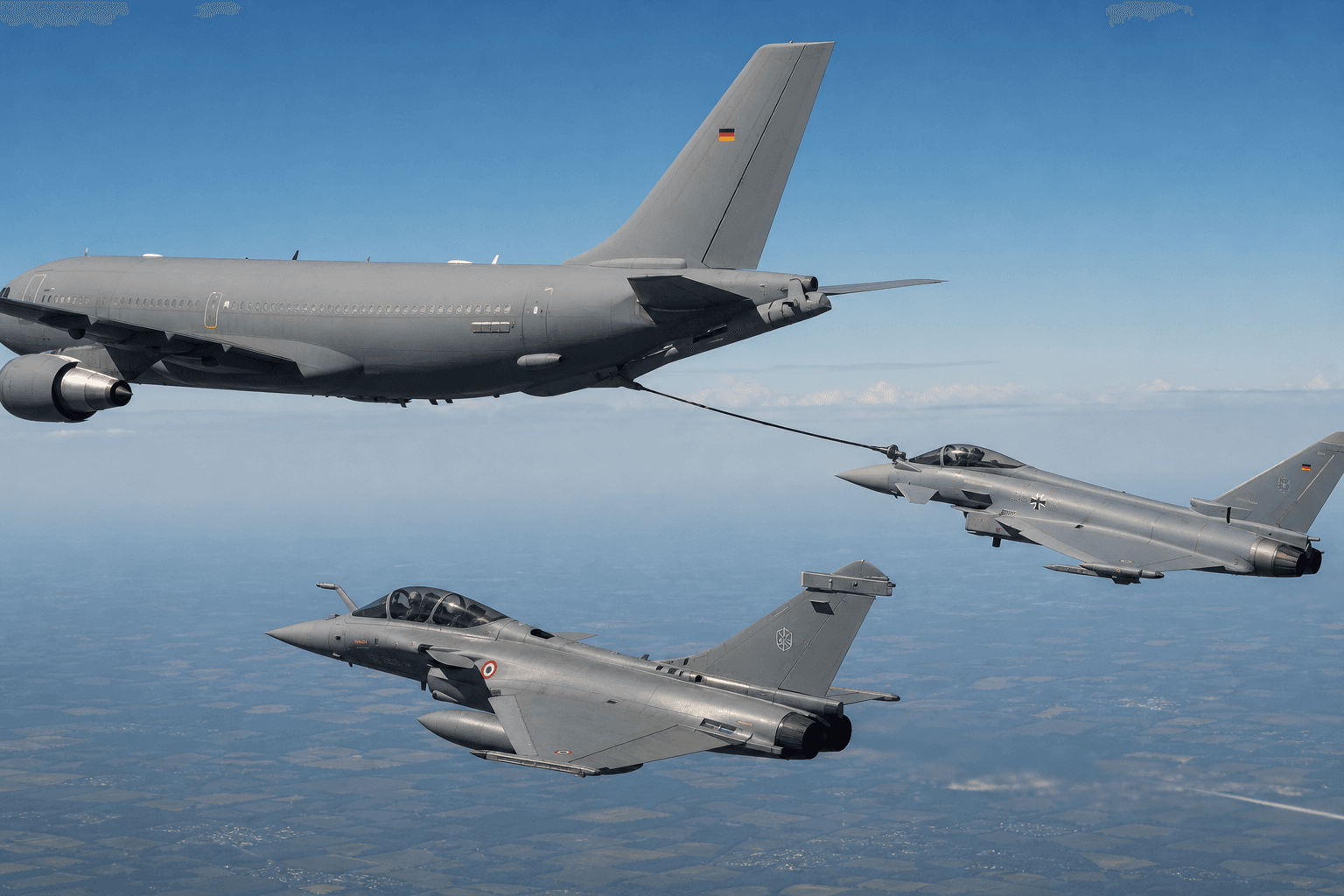
France and Germany pivot defense strategy after joint fighter jet project collapse
France and Germany have formally shifted their defense relationship away from the wreckage of a failed joint fighter jet program. President Emmanuel Macron and Chancellor Friedrich Merz met near Cologne on July 17, 2026, to move toward new areas of cooperation, including nuclear deterrence. Macron and Merz then chaired the annual Franco-German government consultations at Augustusburg Castle in Bruehl, a site specifically chosen for its history: French President Charles de Gaulle and German Chancellor Konrad Adenauer laid the groundwork for a Franco-German friendship treaty there in 1962. En Allemagne, le Conseil des ministres franco-allemand que nous co-présidons aujourd'hui avec le Chancelier Friedrich Merz doit nous permettre de renforcer notre compétitivité, notre sécurité et notre défense et la résilience de nos démocraties. Le réflexe franco-allemand… https://t.co/9utgniu3Ni — Emmanuel Macron (@EmmanuelMacron) July 17, 2026 A show of force at Noervenich Alongside the government consultations, the two countries will hold a Franco-German Defense and Security Council meeting at the Noervenich Luftwaffe air base, underscoring the push for European rearmament amid concerns over Russia and a less reliable American security commitment. On July 16, 2026, two French Rafale jets, capable of carrying nuclear weapons, were deployed to Noervenich, while a German Eurofighter was refueled mid-air by a French aircraft, a Luftwaffe spokesman told AFP. The French presidency says the goal for the July 17, 2026 talks is to move past symbolism and advance "concrete" projects, an explicit attempt to recover from the collapse of the Future Combat Air System (FCAS), the countries' joint sixth-generation fighter jet program, which ran aground in June 2026. How the fighter jet program began FCAS was launched in 2017 by Macron and then-German Chancellor Angela Merkel. Positioned as Europe's flagship sixth-generation combat air program, it came with an estimated price tag of roughly €100 billion. The project centered on a manned New Generation Fighter, paired with a 'combat cloud' architecture meant to link aircraft, drones and satellites into a single digital system. In October 2019, the two governments met in Toulouse to resolve early friction over how the work would be divided and succeeded in producing an arms export agreement covering jointly developed weapons. Under the deal, one country would automatically approve arms sales if its share of the selling price fell below a threshold rumored at around 20%. Both governments called it proof of mutual trust, a condition for the success of FCAS and the parallel Main Ground Combat System tank program. Where it fell apart The industrial workshare dispute between Airbus, representing Germany and Spain, and France's Dassault, proved to be the program's fatal obstacle. Tensions became public in February 2026, when Merz questioned openly whether a single aircraft platform could meet both countries' requirements, since France needed a nuclear-capable, carrier-compatible jet, whereas Germany did not. A mediation effort launched after a Macron-Merz dinner in Brussels on March 18, 2026, collapsed a month later, after the mediator concluded that a jointly-built crewed fighter was no longer realistic. At an informal EU summit in Cyprus on April 23, 2026, Macron and Merz sent the decision back to their defense ministries, with Macron insisting two days later that the program was "not at all" dead. The core issue never changed. Dassault's Eric Trappier repeatedly demanded the lead role, rejecting equal footing with Airbus, and a reported personal appeal from Merz failed to change his position. Germany's new national aviation strategy, adopted by cabinet on June 10, 2026 and unveiled at the ILA Berlin air show, states that Airbus must co-lead any future German combat aircraft program. Spain, the program's third partner, had already hedged by funding an Airbus-Indra study into its own combat air system. Belgium, an observer since 2024, went further. After Merz's February remarks, Defense Minister Theo Francken declared the program dead, and Brussels announced plans to buy 11 additional F-35A jets instead. Two countries, two fighter jets With the joint fighter program dead, France and Germany are now pursuing separate sixth-generation aircraft. Dassault will develop France's jet independently, backed in part by more than €4 billion allocated to the Rafale F5 standard. Airbus is to lead Germany's program, with Spain expected to remain involved. The company has also opened talks with Sweden's Saab, seen in Berlin as a more cooperative partner. Both programs are expected to produce aircraft during the early 2040s. Despite the split, the two countries plan to keep developing the combat cloud architecture that formed FCAS's other core pillar, with responsibilities for that piece expected to come up for discussion at the July 17, 2026 council. RELATED Germany, France abandon joint FCAS fighter after industry deadlock
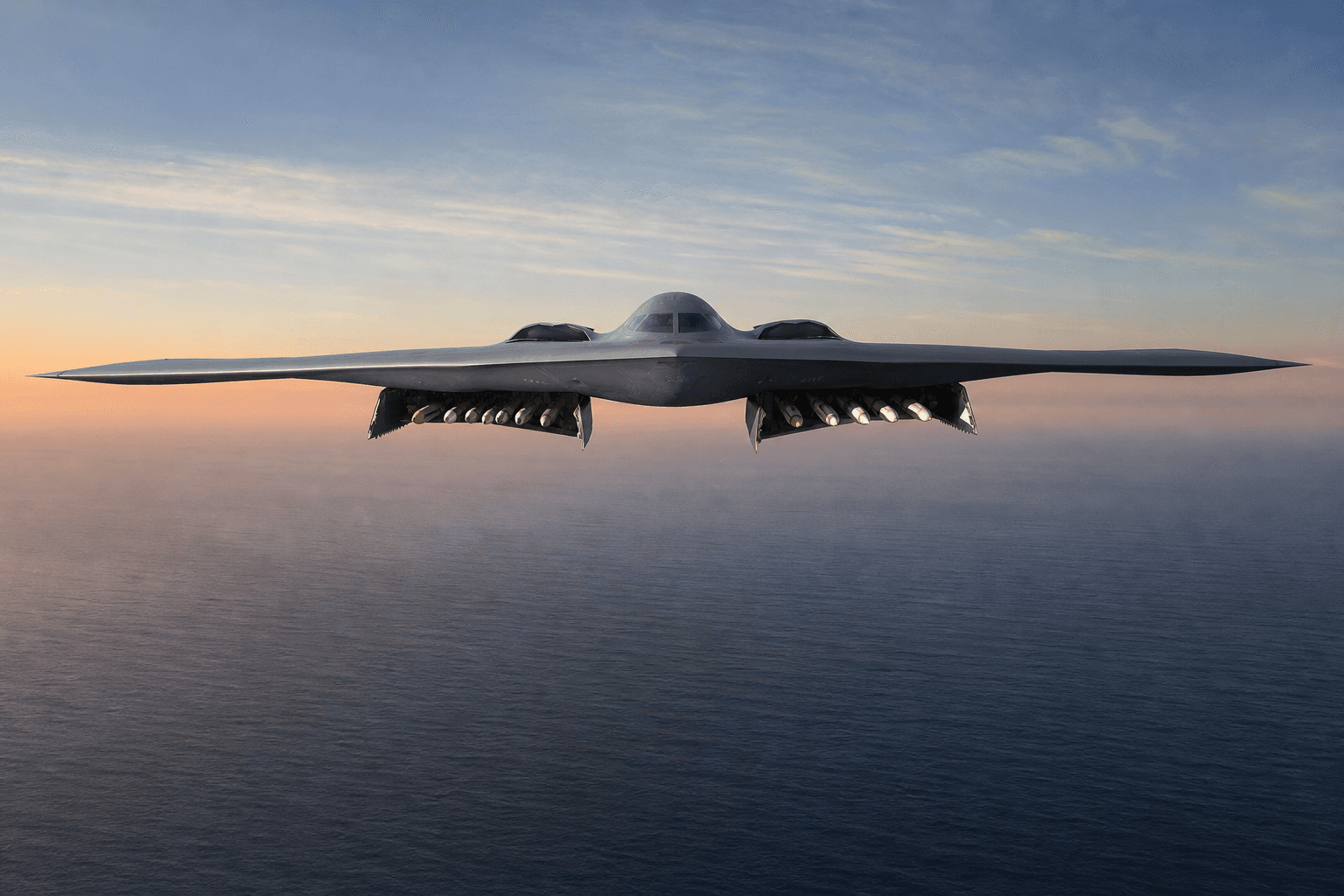
US Air Force Adapts 19 B-2 Stealth Bombers with Long-Range Anti-Ship Missiles in Pacific
The Indo-Pacific is possibly the most consequential area of operations for the United States (US) Military at the present time. This region, which had, since the conclusion of the Vietnam War, drifted ever farther from the US strategic focus, has recently witnessed a resurgence of strategic interest.
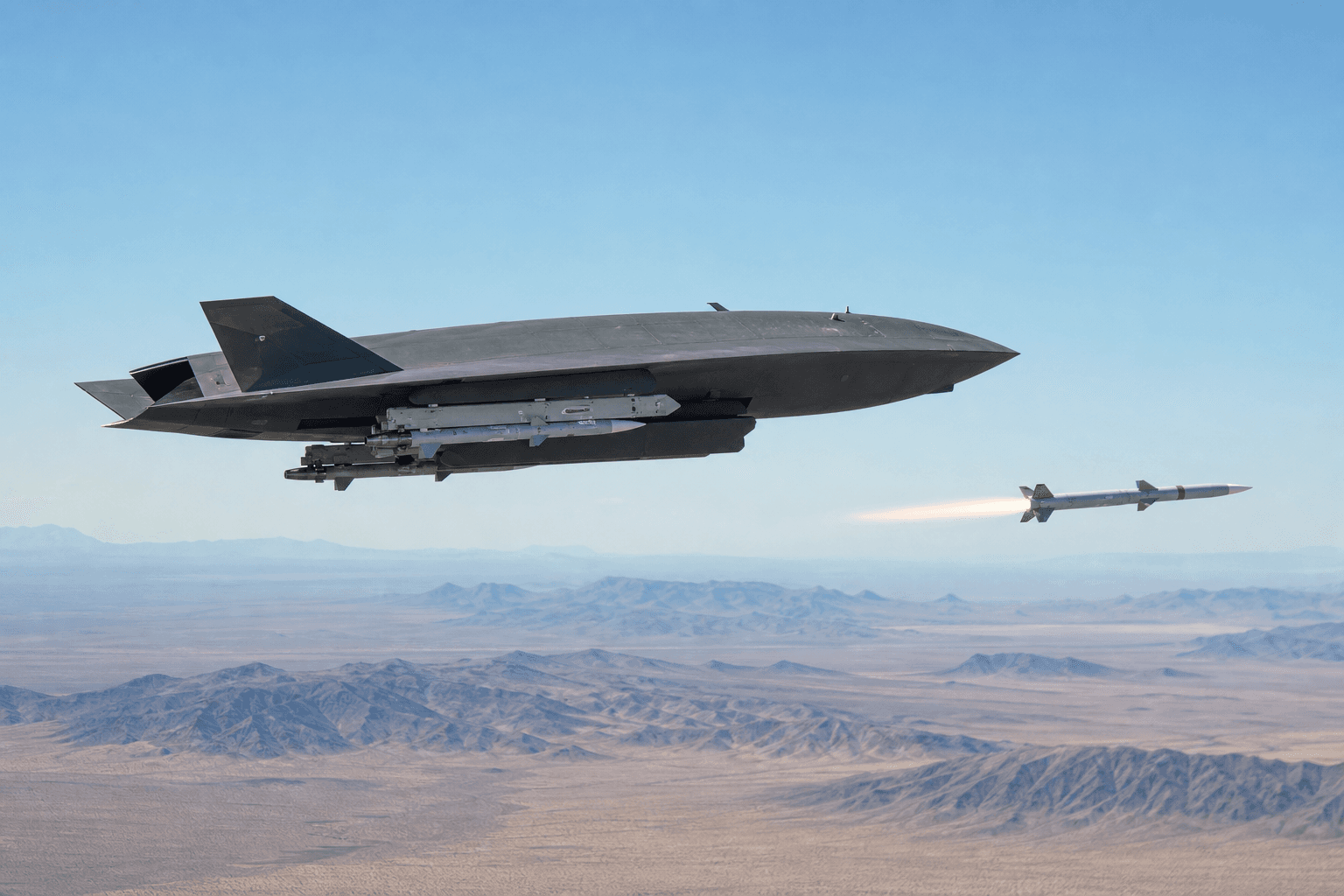
USAF Jet-Powered Combat Drone Launches Live AIM-120 Missile in Mojave Test
The US Air Force has fired a live air-to-air missile from a jet-powered combat drone for the first time, marking a major step in the development of uncrewed aircraft designed to fight alongside crewed warplanes. Anduril's YFQ-44A fired an AIM-120 Advanced Medium-Range Air-to-Air Missile at a target in restricted airspace over California's Mojave Desert, the Air Force said on July 15, 2026. The Air Force said the YFQ-44A carried out the targeting and launch sequence on its own, while a human operator retained control over the decision to fire. "CCA will not autonomously employ weapons," the Air Force said. "The decision to release any weapon system remains exclusively with a human operator, who maintains command and control of the platform at all times." The test was conducted with the 412th Test Wing's Air Dominance Combined Test Force, which includes military personnel, government employees and contractors. Testing began earlier in 2026 with inert captive-carry flights designed to collect handling data while the YFQ-44A carried the weapon. Later evaluations focused on the data link between the aircraft and missile and whether commands from the operator were executed correctly in a simulated environment. "Moving from inert carriage earlier this year to this weapon release demonstrates program maturity, allowing us to validate our digital integration models with actual data," Gen. Dale White, the Department of War's Direct Reporting Portfolio Manager for Critical Major Weapon Systems, said. The Air Force did not say whether the AIM-120 physically struck or destroyed an aerial target. It described the target as digital and the event as live-fire testing, meaning the missile itself was launched but the engagement relied on a simulated target track. Air Force Chief of Staff Gen. Ken Wilsbach called the test "an important next step" in the Collaborative Combat Aircraft program. "We're one step closer to delivering capabilities to the warfighter," Wilsbach said. YFQ-44A developed as autonomous fighter escort The YFQ-44A, originally known as Fury, is one of two aircraft selected for the first phase of the Air Force's Collaborative Combat Aircraft (CCA) program. The service is also testing General Atomics Aeronautical Systems' YFQ-42A. Both are intended to operate with crewed combat aircraft and carry out missions including reconnaissance, electronic warfare and air-to-air combat. The Air Force says the relatively affordable aircraft could fly ahead of crewed fighters into heavily defended airspace, reducing the risk to pilots. Anduril's aircraft carries weapons externally under its wings. The General Atomics design uses an internal weapons bay, a design that can reduce radar signature. The Air Force has described the aircraft as semi-autonomous rather than fully autonomous. They are expected to handle many flight and mission tasks with limited direct control, but humans will remain in the loop. The YFQ-44A weapons test follows the Air Force's decision to move both competing aircraft into a new phase of development and acquisition. The service has said it wants to field CCA faster and in larger numbers than a traditional crewed fighter program, using shorter development cycles and software that can be updated as threats change. "This latest milestone continues the rapid pace of developmental testing for safe and effective CCA operations," the Air Force said. The Air Force has not disclosed when the YFQ-44A conducted the missile launch or when it expects the aircraft to enter operational service.
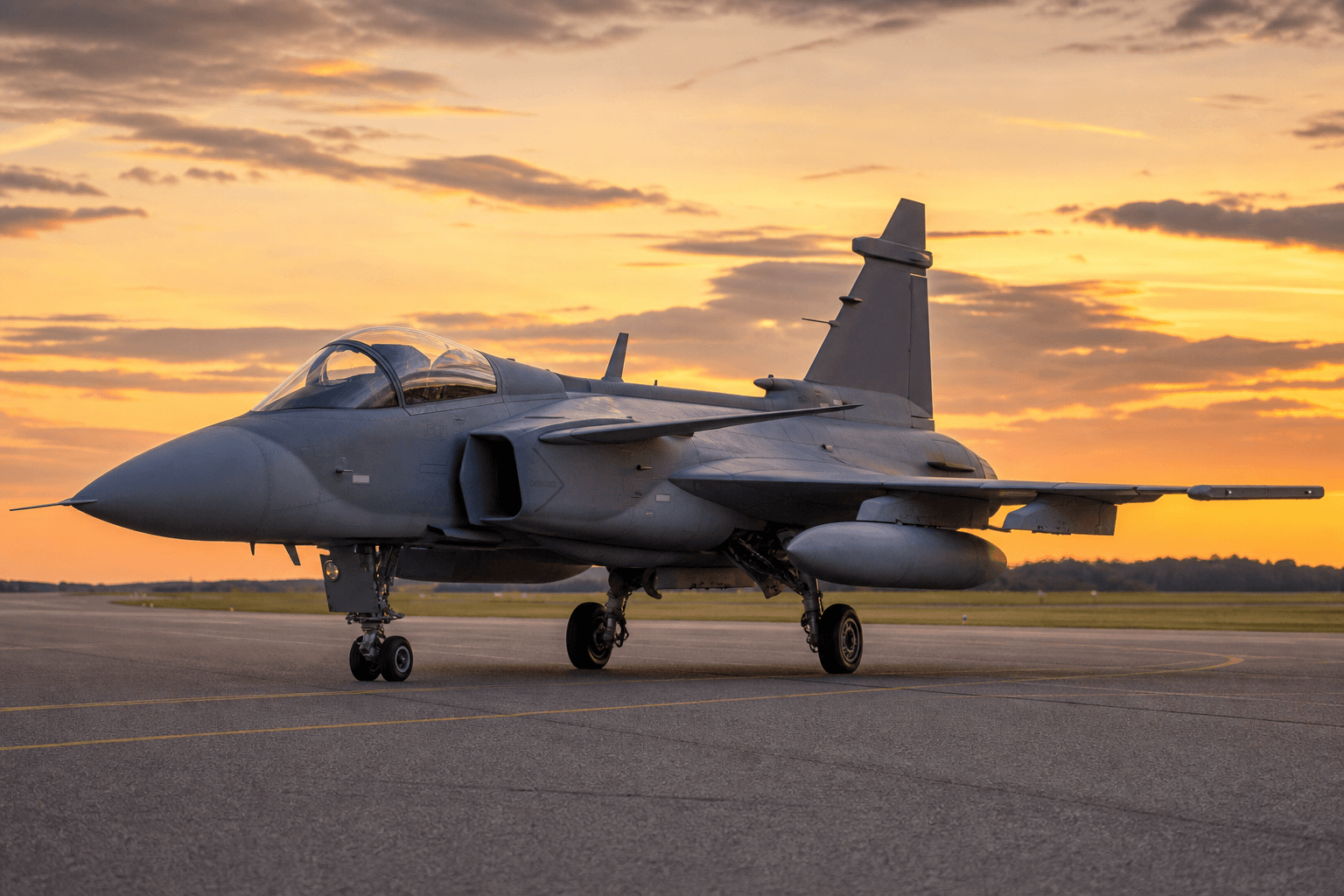
UK commits €300M to equip Ukraine with 16 Saab Gripen E fighters by 2029
The UK has pledged €300 million ($345 million) to help Ukraine field a squadron of 16 Saab Gripen E fighter jets by 2029. British Prime Minister Keir Starmer announced the funding during a visit to Kyiv on July 16, 2026, where he met Ukrainian President Volodymyr Zelenskyy. The UK said it would work with Sweden to help deliver the aircraft as Ukraine continues to defend itself against Russian attacks. The package includes training for Ukrainian pilots and engineers, simulators, spare parts and other equipment needed to operate and support the fighters. "Today's investment will help put advanced Gripen fighter jets in Ukrainian skies, strengthening their ability to defend their country while supporting thousands of skilled jobs here at home," Starmer said. The British government said construction of the Gripen aircraft supports around 5,000 jobs at more than 50 UK-based companies involved in the program, including Saab UK and Leonardo UK. Saab signed a contract with Sweden's Defence Materiel Administration in June 2026 for 16 Gripen E fighters intended for Ukraine. The order is valued at approximately $2.45 billion, with Saab deliveries to Sweden scheduled for 2029 and 2030. Britain's pledge will help support the delivery and fielding of those aircraft. The Gripen E is the latest version of Saab's single-engine fighter. It can conduct air-to-air missions, strike ground targets and carry out reconnaissance. The UK government said the aircraft's low maintenance requirements and ability to operate with small ground crews make it well suited to Ukraine's needs. The fighters are expected to form part of a broader modernization of Ukraine's air force, which operates Soviet-designed aircraft alongside Western fighters including the Lockheed Martin F-16 and Dassault Mirage 2000. Sweden and Ukraine signed a letter of intent covering broader cooperation on air capabilities in October 2025. Ukraine announced in May 2026 that it intended to purchase an initial batch of up to 20 Gripen E/F aircraft, with deliveries of the new fighters expected to begin before 2030. Sweden also plans to donate up to 16 older Gripen C/D aircraft from its existing fleet, provided Ukraine completes an agreement to purchase the newer Gripen E/F. Sweden said training for Ukrainian pilots and other personnel could begin in 2026.
The Daily Touch & Go
The day's best aviation news in your inbox. Free, no spam.