

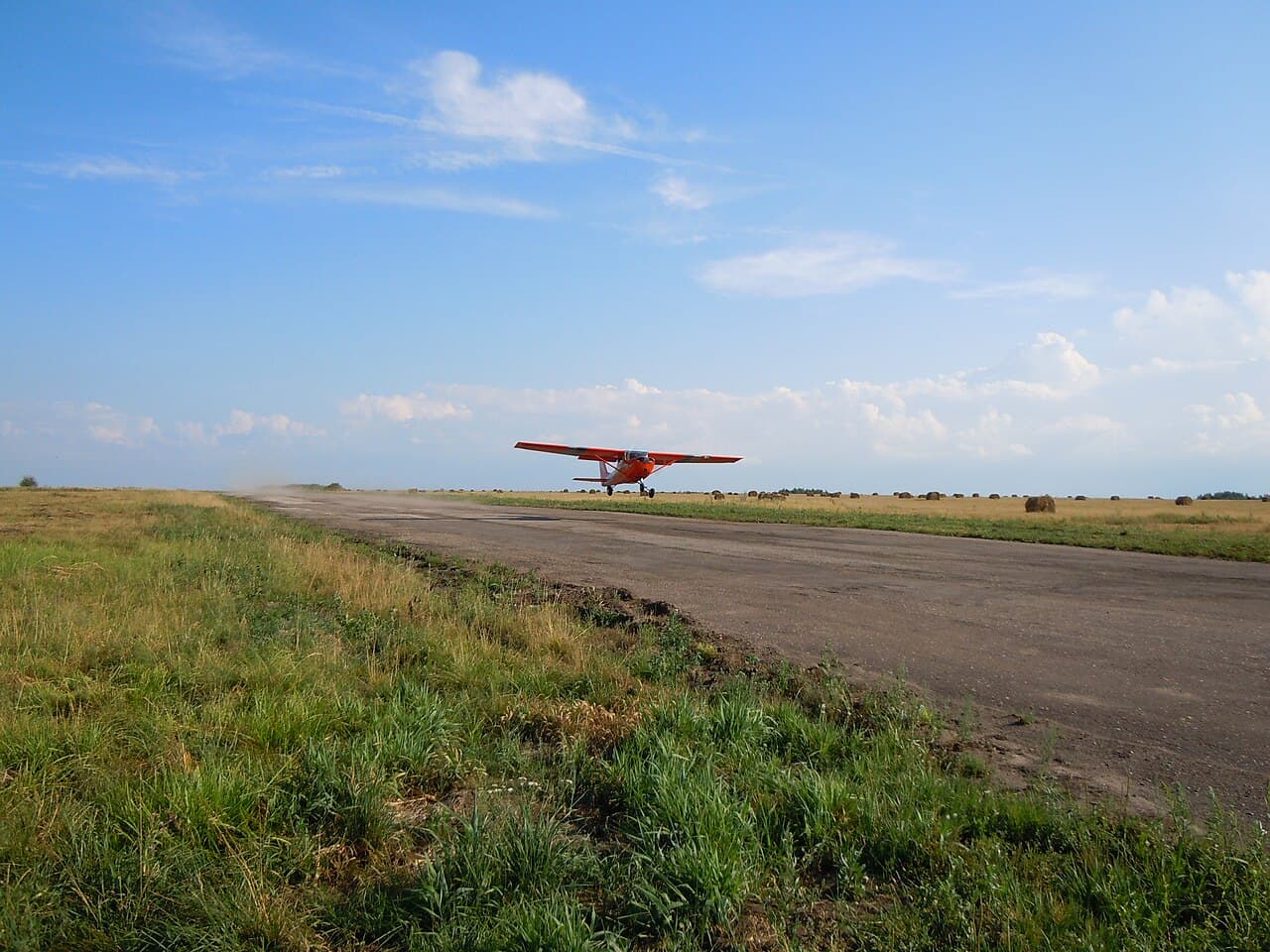
Image: Navigator-avia · CC BY-SA 3.0 · via Wikimedia Commons
1966 Cessna 150G Offers Affordable Time-Building with Modern Avionics Upgrade
This well-maintained 1966 Cessna 150G combines original charm and updated instruments, providing an economical option for student pilots and aspiring owners.
The gist
A 1966 Cessna 150G blends classic flight training reliability with modern avionics, priced at $44,500 for cost-conscious buyers.
Continuing coverage
All Avionics Upgrade →- 1975 Cessna 310R: Classic Light Twin Offers Speed, Space, and 1970s Style for $205,000
- 1969 Beechcraft Baron 55 Offers Versatile Multi-Engine Flight at $139K
- 1976 Piper PA-32R-300 Lance offers six-seat capacity and performance upgrades
- Garmin Launches Axis Flight Displays Tailored for Certified Piston Aircraft
- Meticulously Restored 1960 Cessna 310D Blends Vintage Charm with Modern Avionics
The 1966 Cessna 150G remains a stalwart in general aviation, recognized for its forgiving flight characteristics and economical operation that have made it a dependable training platform for decades. This particular example, highlighted as a top pick by Aircraft For Sale, presents an enticing opportunity for student pilots building hours or private owners seeking an affordable entry-level aircraft. With a total time airframe of 4,816 hours, it maintains a robust service history while retaining its original paint and interior condition, reflecting careful upkeep over the years.
Under the cowling lies a Continental O200-A engine rated at 100 horsepower, a proven powerplant cherished for its reliability and efficiency. Notably, this engine has just 646 hours since a major overhaul, promising considerable operational life ahead. Paired with the engine is a McCauley fixed-pitch propeller showing 1,487 hours since overhaul, ensuring consistent performance with manageable maintenance demands. The aircraft’s useful load stands at 470 pounds, offering practical payload capacity for training or recreational flying.
Operational versatility is enhanced by supplemental type certificates installed on the airframe, including an auto fuel STC that allows greater fuel sourcing options. Additional aerodynamic improvements come from Madras Super-Tips on the wingtips, which can improve handling characteristics by reducing drag and enhancing roll response. Complementing these upgrades, LED navigation and strobe lights at the wingtips improve visibility and reduce electrical load relative to older lamp technologies.
The cockpit showcases a significant modernization that sets this 150G apart from many of its pure vintage contemporaries. The panel features dual Garmin G5 electronic flight instruments, providing advanced attitude and heading reference system capabilities. The G5 units function as the primary attitude indicators and horizontal situation indicators, connected to a Garmin GNC 355 navigation and communication unit. This integration delivers a more capable and user-friendly platform suitable for instrument flight, greatly expanding utility beyond visual flight rules.
Communication and compliance with current airspace regulations are further supported by a Collins AMR-350 audio panel, enabling clear audio management between radio frequencies. The transponder is an Appareo Stratus unit equipped with ADS-B Out capabilities, meeting mandated surveillance requirements and enhancing flight safety through real-time traffic and weather data when paired with compatible devices. Additionally, USB charging ports provide convenient power sources for mobile electronics, reflecting the modern connectivity needs of pilots.
This 150G is maintained to a high standard, with a fresh annual inspection scheduled through Vertex Aviation before its next delivery. This reassures potential buyers of the aircraft’s continued airworthiness and reliability. Based in Washington state and listed at $44,500, it stands out as a competitive value for pilots looking to own a classic aircraft redesigned with modern avionics, offering an accessible path into aircraft ownership without sacrificing essential upgrades.
The Cessna 150 series holds a distinctive place in aviation history, widely used for primary flight training and known for its ease of handling and efficient fuel consumption. The inclusion of contemporary avionics in this example enables it to operate effectively in today’s complex airspace systems, extending the operational relevance of a vintage airframe. This blend of heritage and modernization enhances appeal among flight schools, training organizations, and individual pilots aiming for a cost-effective flying platform.
For those considering ownership, financing assistance is available through FLYING Finance, which offers tools such as an airplane loan calculator and access to aviation finance experts. This support can facilitate access to ownership for pilots who might otherwise face barriers to entry. The availability of such a well-kept, avionics-upgraded Cessna 150G could make a tangible difference in the flight training and light general aviation markets.
Frequently asked questions
- What engine does the 1966 Cessna 150G use and what is its status?
- It uses a 100 hp Continental O200-A engine with 646 hours since its major overhaul, indicating substantial remaining operating time.
- What avionics upgrades are installed in this Cessna 150G?
- The aircraft features dual Garmin G5 electronic flight instruments as attitude indicators and HSIs, a Garmin GNC 355 nav/comm unit, Collins AMR-350 audio panel, and an Appareo Stratus ADS-B Out transponder.
- What is the asking price and location for this aircraft?
- The 1966 Cessna 150G is listed for $44,500 and is based in Washington state, coming with a scheduled annual inspection before sale.
Read more
All MRO/Maintenance →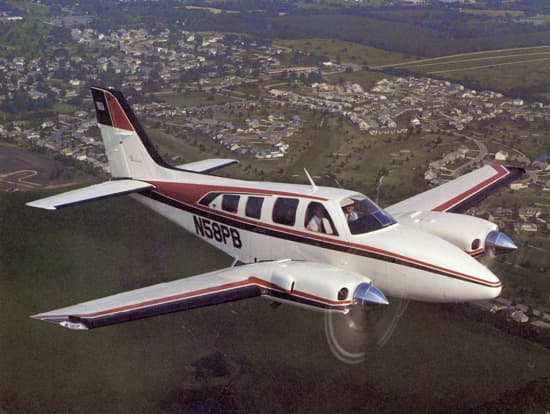
1969 Beechcraft Baron 55 Offers Versatile Multi-Engine Flight at $139K
Every day, the team at Aircraft For Sale chooses an airplane that catches our attention because it is unique, a good deal, or has other qualities we find interesting. You can read Aircraft For Sale: Today's Top Pick at FLYINGMag.com daily. Today's Top Pick is a 1969 Beechcraft Baron 55. Renowned for harmonizing performance with rugged reliability, the Beechcraft Baron series remains a premier choice for pilots stepping up to a multi-engine aircraft. This 1969 Baron 55 provides a robust platform for owners seeking serious cross-country utility and the peace of mind of a second engine. Based at the Spirit of St. Louis Airport (KSUS) in Missouri, the airframe has logged 5,006 total hours. With a generous useful load of 1,640 pounds and passenger capacity for up to six, it is ready to haul family or business associates in comfort. Providing the necessary thrust is a pair of 260 hp Continental IO-470-L engines. While they are higher time at approximately 1,800 and 2,300 hours, respectively, since major overhaul, they benefit from bottom overhauls 1,100 hours ago and top overhauls roughly 900 hours ago. The owner reports they run clean and cool, burning just 20 gph total while running lean of peak for a 170-knot cruise. For extra speed, they can be pushed to yield 185 knots at 26 gph. The aircraft also features de-ice boots, wet props, and wet windshield for protection against inadvertent icing encounters. Behind the yoke, the instrument panel has been thoroughly modernized to reduce pilot workload in the modern environment. The avionics suite is anchored by an Aspen Evolution 1000 Pro Max primary flight display alongside a Garmin GNS 430W GPS/nav/comm. Perhaps the most impressive upgrade is the Garmin GFC 600 digital autopilot with a coupled go-around feature, which the current owner notes provides the feel of flying a much larger, sophisticated airplane. Engine parameters are easily monitored via dual Electronics International CGR-30P digital engine monitors. 1969 Beechcraft Baron 55 [Credit: Ian Williamson] Readying the aircraft for its next chapter, the seller recently completed a meticulous annual inspection. Ensuring extended worry-free operation, the next annual is not due until July 2027, the static check is valid until November 2026, and the wing spar Airworthiness Directive (AD) is not due for another 320 flight hours. Offered at $139,000 , this Missouri-based Beechcraft Baron 55 stands as an accessible entry point into the world of multi-engine cross-country travel. If you're exploring ownership options, FLYING Finance can help get you airborne. Use our airplane loan calculator to estimate your monthly payments, or connect with an aviation finance expert at flyingfinance.com . FLYING Magazine: Half a Century of Beechcraft Barons FLYING Magazine: We Fly: Beechcraft Baron G58 FLYING Magazine: Beechcraft Baron: A Retrospective Look FLYING Magazine: New Interiors for Beechcraft Barons, Bonanzas Plane + Pilot : Beech Baron 58 AVweb: Beech Baron 55 The Aviation Consumer: Beech Baron 55

1976 Piper PA-32R-300 Lance offers six-seat capacity and performance upgrades
Each day, the team at Aircraft For Sale picks an airplane that catches our attention because it is unique, represents a good deal, or has other interesting qualities. You can read Aircraft For Sale: Today's Top Pick at FLYINGMag.com daily. Today's Top Pick is a 1976 Piper PA-32R-300 Lance. Aircraft manufacturers are known for developing existing models into new ones. Often this method makes more economic sense than embarking on a clean- sheet project. Piper is especially famous for squeezing, pulling, and stretching its original PA-28 Cherokee in ways that resulted in a whole fleet of airplanes, from trainers to twins. Enlarging the PA-28 to become the PA-32 Cherokee Six was one of Piper's greatest moves because it gave pilots the flying equivalent of the family station wagon—at a time when station wagons were very much in vogue and economical six-place airplanes were rare. If you ask me, though, it was the decision to retract the gear and further modify the Six to produce the Lance that truly moved Piper into the mainstream of high-performance personal transport. The Lance's cabin has plenty of room for six seats. [Credit: Bradford Fuller] The aircraft for sale today has plenty of space for growing families traveling on vacation or colleagues making business trips to cities without airline service. A wide cabin means occupants are not constantly rubbing shoulders and passengers have space to get comfortable on long flights. This heavy hauler has the bonus of LoPresti aerodynamic modifications to improve speed. It also received new paint and interior in 1998. This 1976 Piper Lance has 4,417 hours on the airframe and 512 hours since overhaul on its Lycoming IO-540K1G5D engine, which also underwent a top overhaul 240 hours ago. The aircraft's Hartzell Scimitar propeller has logged 250 hours since new. The Lance has a gross weight of 3,600 pounds, useful load of 1,508 pounds, and fuel capacity of 98 gallons. This Lance's panel includes Garmin GPS and other updated equipment. [Credit: Bradford Fuller] The panel includes a Garmin GNS 430W GPS/nav/com, King KX170B nav/com, AutoControl IIIB autopilot, Garmin 495, GTX 345 transponder, KMA 20 TSO audio panel, FS 1000II intercom, Narco DME, and JPI EDM 700 engine monitor. Pilots looking for the carrying capacity of a large SUV with cross-country performance that feels more like that of a super sports car should consider this 1976 Piper PA-34R-300, which is available on AiircraftForSale . If you're interested in financing, you can do so with FLYING Finance. Use our airplane loan calculator to calculate your estimated monthly payments. Or, to speak with an aviation finance specialist, visit flyingfinance.com . FLYING Magazine: Air Compare: Piper Lance vs. Saratoga FLYING Magazine: Piper Saratoga Avionics Install: Part 1 Plane + Pilot : Piper Cherokee Six/Lance/Saratoga Plane + Pilot : Piper Lance/Turbo Lance Plane + Pilot : Piper Saratoga The Aviation Consumer: Used Aircraft Guide: Piper Saratoga and Lance

Essential Maintenance Tips for Pilots Heading to AirVenture Oshkosh and Beyond
With EAA AirVenture Oshkosh in Wisconsin around the corner, thousands of pilots are preparing to take their aircraft on long cross country trips. Inevitably, some of those pilots will find themselves facing a challenging maintenance issue far from home. Preparation is the key here, and a little advance planning can go a long way toward reducing your risk and salvaging your trip. Here are some of the most important do's and don'ts for your next cross-country adventure:
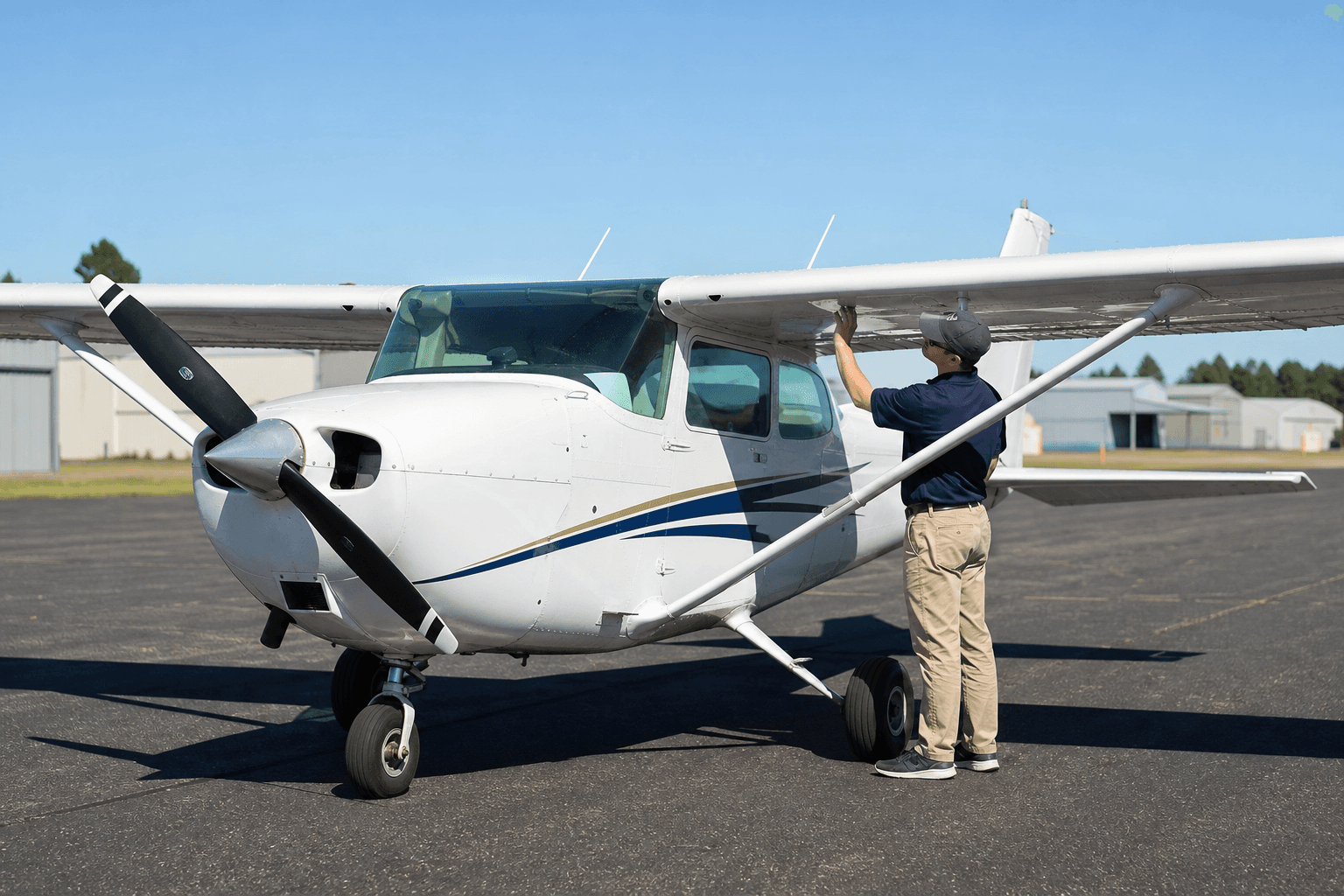
Pilots Gear Up for Summer with Essential Pre-Trip Aircraft Maintenance Tips
With EAA AirVenture Oshkosh in Wisconsin around the corner, thousands of pilots are preparing to take their aircraft on long cross country trips. Inevitably, some of those pilots will find themselves facing a challenging maintenance issue far from home. Preparation is the key here, and a little advance planning can go a long way toward reducing your risk and salvaging your trip. Here are some of the most important do's and don'ts for your next cross-country adventure:
The Daily Touch & Go
The day's best aviation news in your inbox. Free, no spam.