

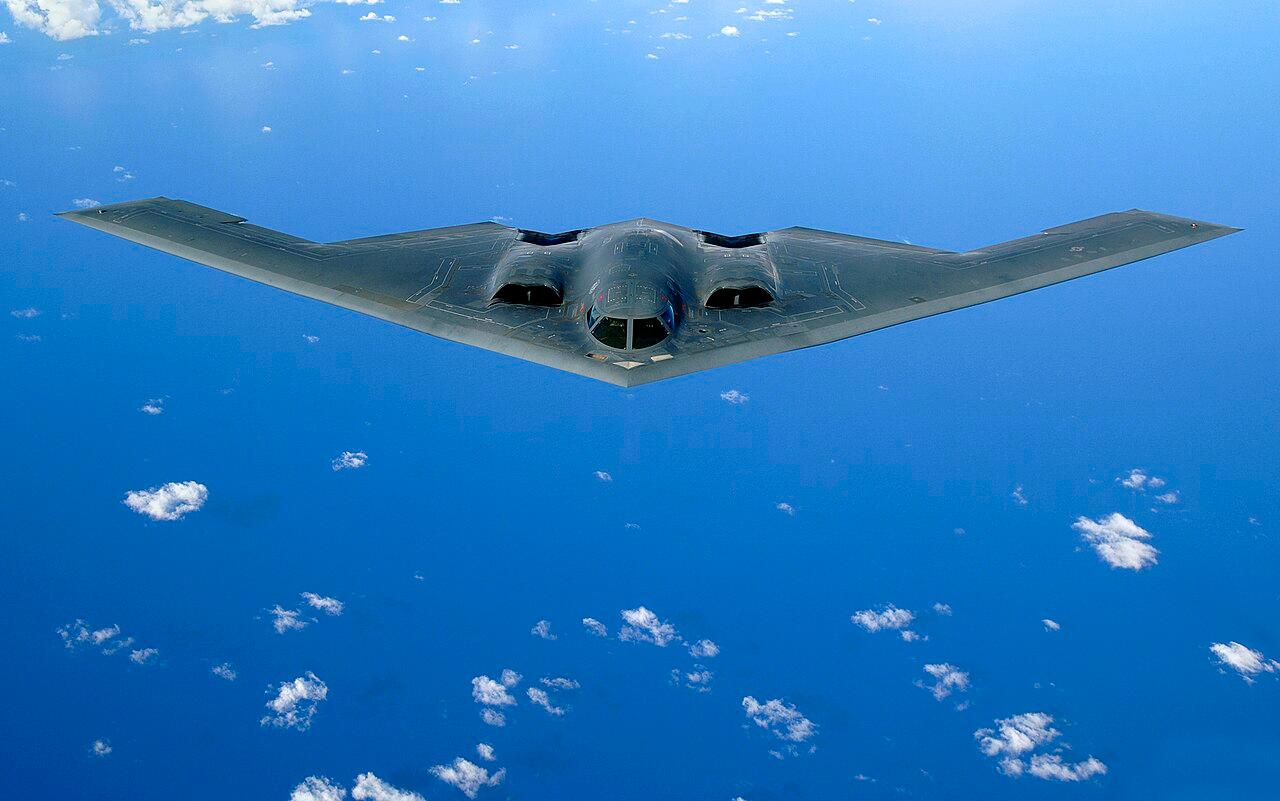
Image: U.S. Air Force photo/Staff Sgt. Bennie J. Davis III · Public domain · via Wikimedia Commons
Northrop B-2 Spirit Bomber Balances Stealth and Subsonic Speed for Global Reach
The B-2 Spirit combines a flying wing design with stealth features and high subsonic speed to achieve intercontinental strike missions with precision payloads.
The gist
The B-2 Spirit flies near supersonic speeds with stealth and long range, allowing it to deliver precise strikes globally while avoiding detection.
The Northrop B-2 Spirit Bomber is renowned for its unique flying wing design and advanced stealth capabilities. Unlike conventional bombers with defined fuselages and tails, the B-2 integrates its whole airframe into a continuous lifting surface. This configuration reduces drag and enhances lift efficiency, enabling long endurance flight while carrying heavy weapon loads. However, the inherently unstable flying wing form requires sophisticated onboard computers to constantly adjust flight controls for smooth handling.
Stealth is the defining operational characteristic of the B-2 Spirit. Its smooth, curved surfaces reflect radar waves away from detection sources, and it avoids right-angle structures that typically produce radar returns. The airframe is coated with radar-absorbent materials that convert radar signals into heat rather than reflection. Even engine air intakes and exhausts are cloaked in serpentine ducts and cooling methods to minimize radar and infrared signatures, allowing the bomber to penetrate heavily defended airspace with reduced chance of detection.
Despite stealth being more critical than speed, the B-2 achieves a respectable maximum velocity near the speed of sound, approximately 628 mph (1,010 km/h), with cruise speeds around 560 mph (901 km/h). This places it in the high subsonic range, trading supersonic speed for aerodynamic efficiency and greater range. This speed is slower than supersonic bombers like the B-1B Lancer but comparable to the B-52 Stratofortress, positioning the B-2 as a stealthy but capable long-range platform.
The bomber's range is one of its most remarkable features. With a published unrefueled range of roughly 6,900 miles (11,104 km), the B-2 was designed for intercontinental strike missions. When combined with aerial tanking operations, it can remain on station for over 40 hours, enabling missions that fly directly from U.S. bases to targets halfway across the world and back without forward basing. This extended endurance supports strategic flexibility and reduces reliance on overseas airfields, which may be vulnerable or politically complex.
Payload capacity further defines the B-2’s operational role. It can internally carry up to 40,000 lbs of ordnance, including both conventional and nuclear weapons, all stowed in weapon bays to preserve stealth. Emphasis is placed on precision munitions, such as GPS-guided bombs, allowing a small number of B-2s to accurately strike multiple high-value targets in a single sortie. This precision reduces collateral damage and the need for large bomber formations.
Crew requirements have been streamlined relative to earlier bombers; only two aircrew—pilot and mission commander—operate the B-2, relying heavily on advanced avionics and automation. The cockpit design supports situational awareness and reduces operator fatigue during extended missions, with accommodations to enhance endurance on flights lasting many hours. The sophisticated flight management systems enable flexibility to respond to evolving mission needs while maintaining low observability.
Operationally, the B-2 Spirit has remained exclusively in the United States Air Force since its introduction in the late 1990s. It first took combat action in 1999 during the Kosovo conflict, executing precision strikes from U.S. bases directly on distant targets, verifying its strategic reach and stealth capabilities in real conflict scenarios. Its exclusivity is attributed to its advanced technology and high acquisition and operational costs, underscoring its role as a critical pillar of U.S. nuclear and conventional deterrence.
Overall, the B-2 Spirit exemplifies how integrating stealth technology with aerodynamic efficiency and endurance can redefine strategic bombing. Unlike speed-centric designs, it leverages invisibility, precision, and global reach to fulfill modern military objectives, maintaining relevance decades after its introduction.
Originally reported by Simple Flying
Read more
All Military/Defense →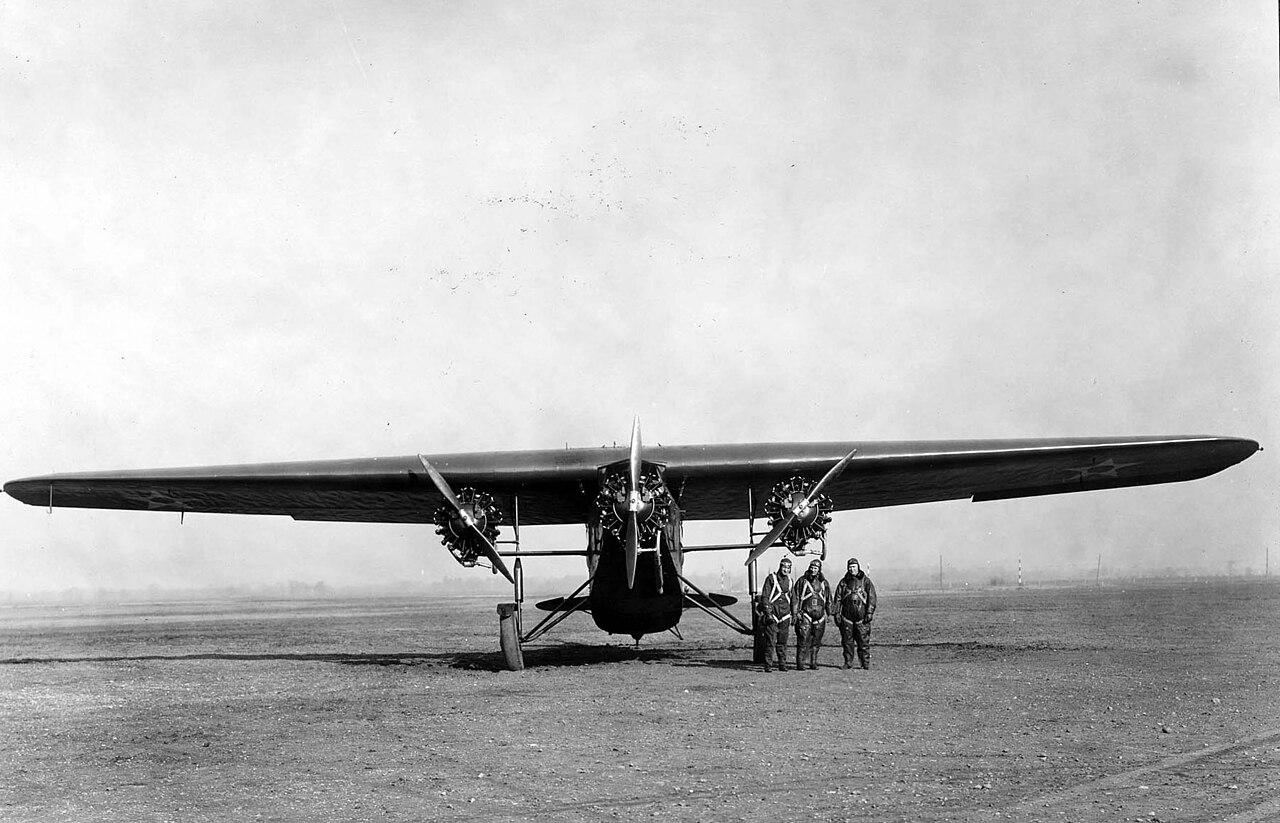
US Navy replaces C-2A Greyhound with CMV-22B Osprey despite lower payload capacity
The Navy retired its 10,000-lb payload C-2A Greyhound cargo plane in favor of the CMV-22B Osprey tiltrotor, trading payload for mission flexibility and support for the F-35C engine transport.

Airlines Extend Scheduled Flight Times to Improve On-Time Stats Despite Costs
To boost on-time arrival rates, airlines schedule flights with longer block times accounting for ground delays and congestion, despite increased operational costs.
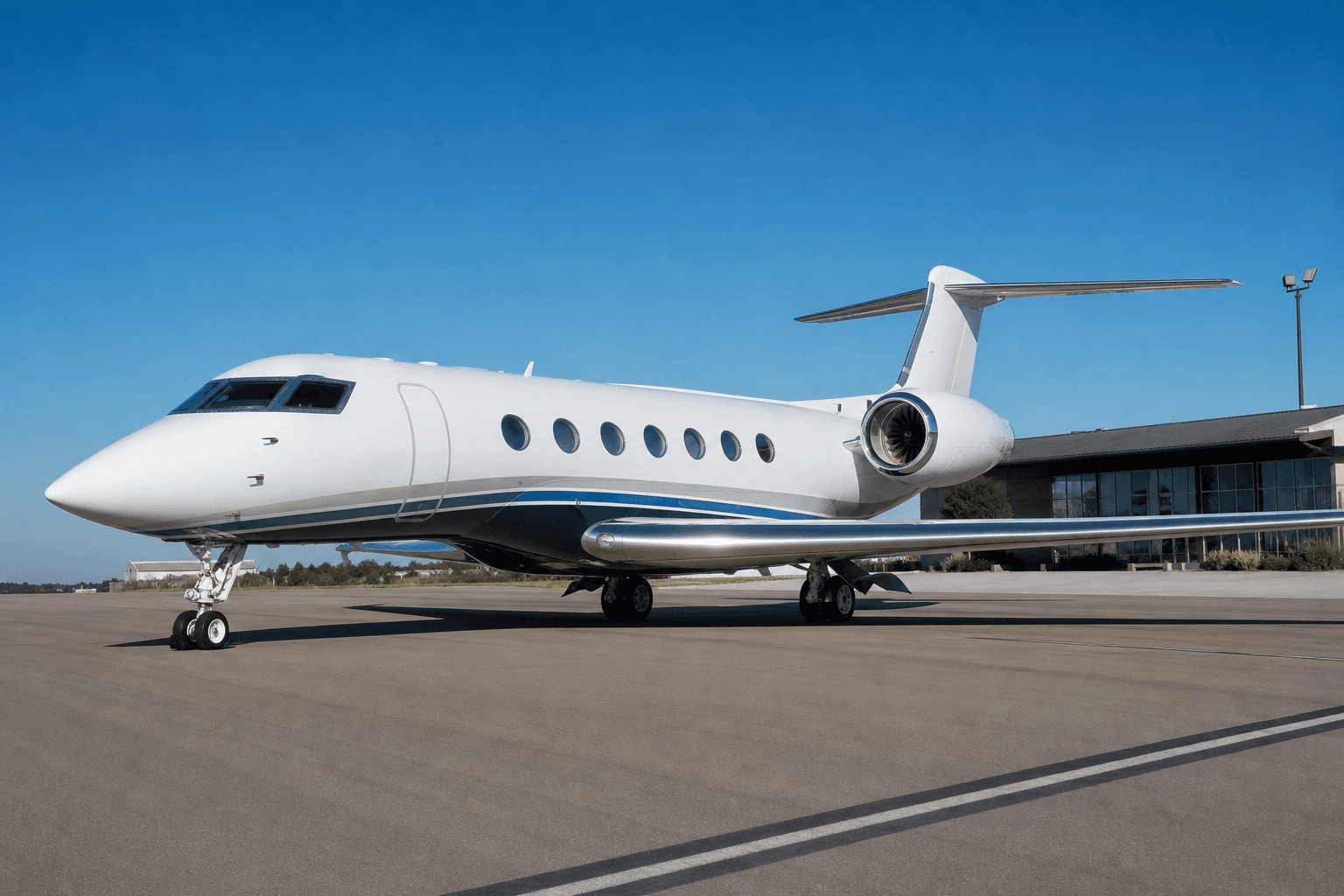
FlyExclusive Expands Fleet and Services by Integrating Fly Alliance Aircraft
FlyExclusive announces a strategic agreement to provide flight operations, management, and maintenance services for Fly Alliance's fleet, enhancing long-range and large-cabin offerings while maintaining Fly Alliance's brand identity.
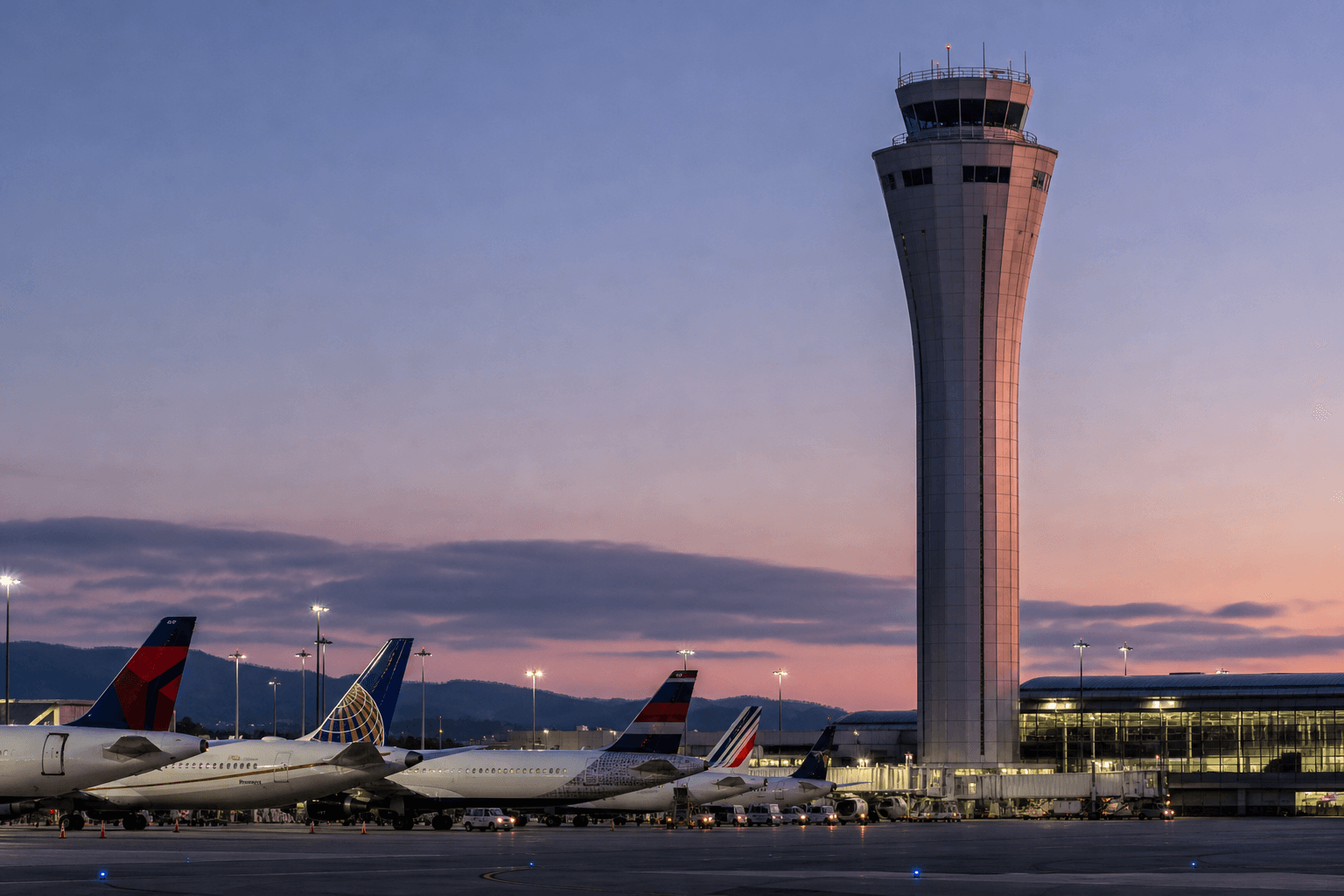
FAA Ground Stop Sparks Confusion as Leadership Seeks $50 Billion for Modernization
Transportation Secretary Duffy and Homeland Security Secretary Mullin held a press briefing after the longest nationwide flight ground stop since 9/11, citing outdated infrastructure and conflicting causes while requesting major funding.
The Daily Touch & Go
The day's best aviation news in your inbox. Free, no spam.