

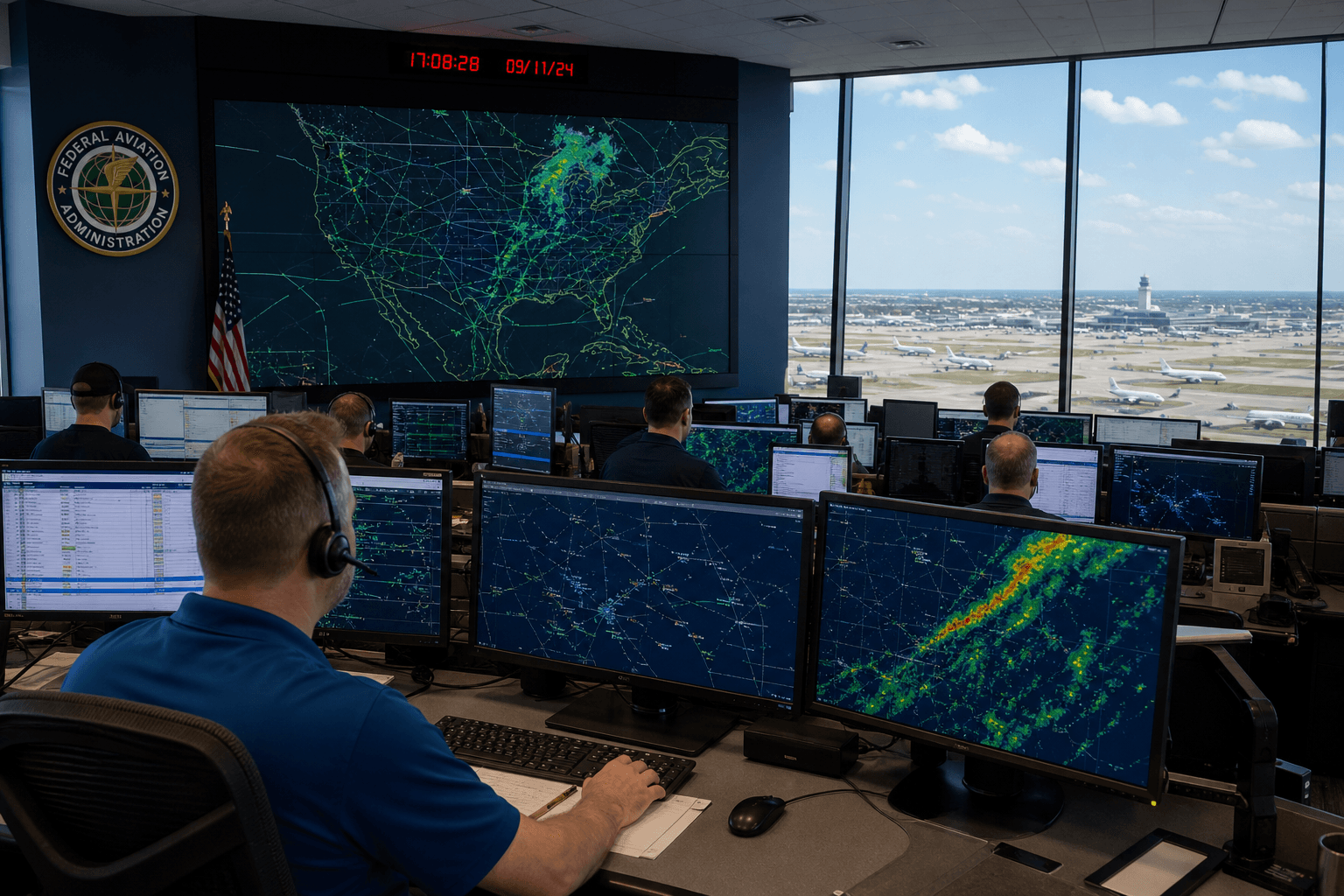
AI-generated illustration
FAA Grounds All U.S. Flights in Widespread Air Traffic Control Outage
A nationwide FAA ground stop was imposed at 3:54PM ET on Nov 13 due to communication failures affecting all major U.S. air traffic control centers, halting departures until at least 11:30PM ET.
The gist
FAA issued an unprecedented nationwide ground stop halting all U.S. flight departures amid communication outages at every air traffic control center.
Continuing coverage
All Faa →- FAA Ground Stop Sparks Confusion as Leadership Seeks $50 Billion for Modernization
- FAA Ends Nationwide Ground Stop After Air Traffic Control System Outage
- FAA Orders Nationwide Ground Stop as Air Traffic Control Communications Fail
- FAA Attributes Nationwide Ground Stop to Aging Telecom Equipment, Rules Out AI Involvement
- FAA Issues Nationwide Ground Stop Due to Air Traffic Control Communications Failure
On Friday, November 13, 2026, the Federal Aviation Administration (FAA) took the extraordinary step of imposing a nationwide ground stop effective at 3:54PM Eastern Time, suspending departures from airports across the United States. The order was prompted by widespread communication issues impacting all Air Route Traffic Control Centers (ARTCCs), crucial hubs for managing en route flights. The FAA communicated to pilots and aircraft operators that this measure was 'due to extraordinary circumstances and for reasons of safety,' instructing all departing flights to remain grounded until further notice. While inbound international flights were to be managed case by case, the ban on departures was initially scheduled through 11:30PM ET, illustrating the severity and complexity of the disruption.
The sudden halt in air traffic operations stemmed from widespread loss of communication frequencies and alert conditions at multiple ARTCCs, notably Boston Center, New York Center, Chicago Center, and New York Approach. Reports indicated that numerous control frequencies became unavailable, rendering sectors unable to manage traffic effectively. This communication blackout provoked what aviation insiders termed 'ATC Zero operations,' a state where airspace is effectively emptied and sterilized to mitigate risk. Despite the ground stop's scale, airborne flights were not immediately ordered to divert or land prematurely, distinguishing this event from historical crises like those on September 11, 2001.
Transportation Secretary Sean Duffy publicly acknowledged the grounding and confirmed the nationwide impact, emphasizing that FAA technical teams were actively investigating the root cause of the communication failure. The official statement stopped short of detailing the technical nature of the fault but confirmed that the problem spanned all ARTCCs. The FAA's decision marked the most significant ground stop in the United States in over 25 years, reflecting the critical nature of the air traffic control network’s vulnerability.
This outage comes amid the FAA's recent implementation of the SMART (Strategic Management of Airspace, Routes, and Trajectories) system, an AI-powered air traffic management tool designed to enhance efficiency and safety. The rollout of SMART had just commenced the same week, prompting speculation about a potential link. However, industry observers note that a software management system would less likely cause communication frequency failures across all ARTCCs, and no confirmation has surfaced relating the outage to SMART's deployment.
Further speculation considered cybersecurity incidents as a potential cause, given the scale and suddenness of the disruption. However, Secretary of Homeland Security Markwayne Mullin clarified that there was no evidence tying the outage to a cyberattack or terror event. Instead, officials described it as a telecommunications outage, though the incident raised questions about the robustness of redundancies in the national air traffic communication infrastructure.
The operational consequences were immediate and significant. Flights slated for departure were held on the ground, while ongoing arrivals continued, producing logistical challenges at airports where gate and parking space availability rapidly dwindled. Passengers experienced delays and cancellations during a busy travel period, with the grounding affecting crews, schedules, and connecting flights. The complexity of resuming normal operations after such an extensive interruption added to the uncertainty faced by airlines and travelers alike.
The scale of the disruption underscores the reliance of U.S. air traffic control on continuous, uninterrupted communications and highlights the nationwide impact when those systems falter simultaneously. Air traffic control serves as the backbone of aviation safety and efficiency, coordinating thousands of flights daily, and this incident revealed potential gaps in contingency measures for widespread communication loss. The FAA and Homeland Security agencies continued to assess the situation, emphasizing safety as the paramount concern throughout the disruption.
As investigations into the precise technical causes progress, FAA officials face pressure to enhance system resilience and restore confidence. Such events challenge the aviation community's preparedness for infrastructure failures in a modernized airspace environment increasingly reliant on digital communication networks. Airlines and travelers remain cautious as the FAA works to restore full operational capacity, mindful that future unforeseen outages could similarly disrupt the nation’s skies.
Originally reported by One Mile at a Time
Read more
All Aviation Safety →
FAA Issues Nationwide Ground Stop Due to Air Traffic Control Communications Failure
A nationwide ground stop was implemented Friday as FAA systems encountered widespread communications disruptions affecting all U.S. air traffic control centers.
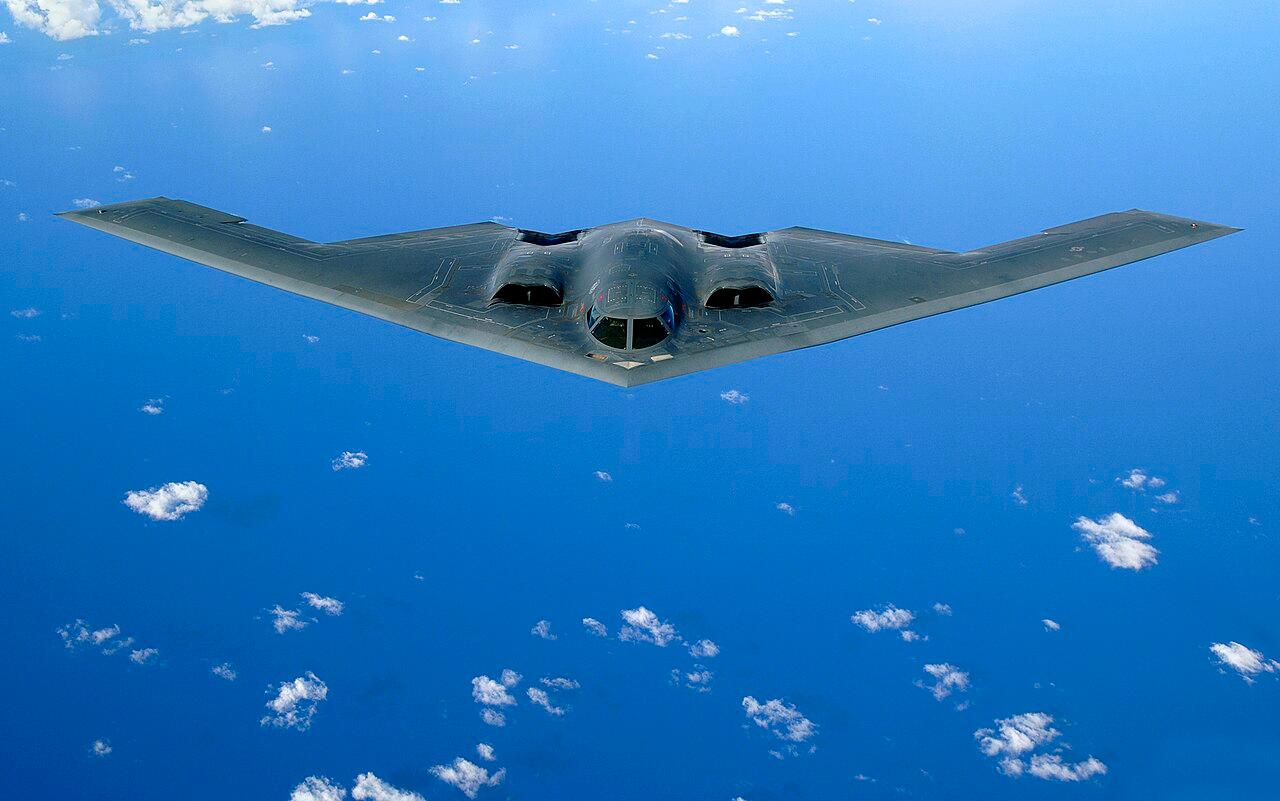
Northrop B-2 Spirit Bomber Balances Stealth and Subsonic Speed for Global Reach
The B-2 Spirit combines a flying wing design with stealth features and high subsonic speed to achieve intercontinental strike missions with precision payloads.

FlyExclusive Expands Fleet and Services by Integrating Fly Alliance Aircraft
FlyExclusive announces a strategic agreement to provide flight operations, management, and maintenance services for Fly Alliance's fleet, enhancing long-range and large-cabin offerings while maintaining Fly Alliance's brand identity.
FAA Ground Stop Sparks Confusion as Leadership Seeks $50 Billion for Modernization
Transportation Secretary Duffy and Homeland Security Secretary Mullin held a press briefing after the longest nationwide flight ground stop since 9/11, citing outdated infrastructure and conflicting causes while requesting major funding.
The Daily Touch & Go
The day's best aviation news in your inbox. Free, no spam.