

Image: High Contrast · CC BY 3.0 de · via Wikimedia Commons
Tail-strike and delayed liftoff mark Vietnam Airlines 787 takeoff in Munich
German investigators have confirmed that a Vietnam Airlines Boeing 787-9 experienced a tail-strike and a late rotation during takeoff from Munich airport on 15 August.
The gist
Vietnam Airlines Boeing 787-9 suffered a tail-strike and late liftoff after acceleration problems during an extended Munich runway takeoff.
Continuing coverage
All Vietnam Airlines →- Vietnam Airlines B787-9 Overruns Munich Runway with Late Rotation, Sustains Gear Damage
- Vietnam Airlines Boeing 787-9 Skids 120 Meters Past Munich Runway End During Takeoff
- Vietnam Airlines Boeing 787 overruns runway and suffers tail strike during Munich takeoff
- Cebu Pacific wet-leases A320neo to Vietnam Airlines for summer domestic routes
- Vietnam Airlines deploys A350 with rescue teams and aid to earthquake-hit Venezuela
German aviation authority BFU has verified that a Vietnam Airlines Boeing 787-9 operating from Munich to Hanoi struck its tailwheel at the moment of takeoff due to a late rotation. The twinjet used the full 4,000 meter length of runway 26L on 15 August at 13:57 local time but struggled to become airborne in a normal timeframe, eventually lifting off late near the runway's far end. After the event, the aircraft returned to Munich and landed safely over two hours later.
The BFU's investigation has identified tyre marks at the far threshold of runway 26L consistent with the tail-strike incident. These markings may indicate braking or other abnormal deceleration measures took place during the takeoff roll, despite the crew having already committed to rotation. The agency has retrieved the flight recorders from the aircraft and is analyzing recorded data to better understand the event, though no conclusions or detailed technical findings have yet been released.
Preliminary reports from Vietnamese media sources provide additional operational detail that illustrates the severity of the aircraft's acceleration problems. According to a report from Vietnam's civil aviation authority cited by VnExpress, the crew noticed their airspeed stopped increasing approximately halfway down the runway, only resuming acceleration after a brief delay. Such a failure to consistently build speed is unusual during a heavily loaded 787 takeoff, indicating potential mechanical or procedural factors impacting thrust or control.
The situation escalated as the aircraft approached V1 decision speed, the critical velocity at which a takeoff must either be continued or safely aborted. The crew observed a deceleration after passing V1 but deemed there was insufficient remaining runway to reject the takeoff. With runway length running out—they began rotation with roughly 300 feet of tarmac left—generating a tail-strike warning. This late rotation clearly contributed to the impact of the aircraft's tail on the runway surface.
Further complicating the flight crew's challenge were alerts concerning tyre pressure anomalies, suggesting possible tire damage occurring during the rolling sequence. On return to Munich, inspectors noted several main landing gear tyres were badly damaged, perhaps linked with the stress of the prolonged takeoff rollout and the tail-strike incident. Such tire damage poses operational risk and necessitates thorough post-flight inspection and maintenance.
Meteorological conditions at Munich Airport were favorable at the time, with light, variable winds and good visibility, reducing the likelihood that weather played a significant role. The investigation is focusing instead on technical, human, and organizational factors that may have contributed to the aircraft's underperformance during takeoff. Representatives from both Vietnamese and United States aviation authorities are cooperating in the inquiry alongside the BFU.
Despite the clear evidence of tail contact and delayed liftoff, investigators are not yet ready to speculate on root causes. The aircraft's systems and performance parameters at the accident moment remain under comprehensive review. Factors such as engine thrust settings, aircraft weight and balance, and pilot inputs during acceleration and rotation phases are expected to be evaluated in the official final report.
This event highlights the critical nature of speed monitoring and decision-making during takeoff, particularly regarding the V1 roll call point when pilots must swiftly choose to continue or abort. The apparently premature deceleration before reaching V1, followed by an abrupt late rotation, suggests a complex interplay of performance anomalies and cockpit response under time pressure.
As the ongoing probe progresses, the data analysis from the flight data and cockpit voice recorders will be vital in piecing together why the aircraft’s acceleration lagged and what led the crew to rotate so late with evident risk of tail contact. The findings will inform future operational safeguards, training, and aircraft performance monitoring to prevent recurrence.
Frequently asked questions
- What caused the Vietnam Airlines Boeing 787 to experience a tail-strike during takeoff?
- The tail-strike occurred due to a late rotation during takeoff, following a period where the aircraft's speed did not increase as expected, forcing the crew to rotate late near the runway end.
- Were there any signs of mechanical issues during the takeoff roll?
- Yes, the crew noticed a temporary stop in acceleration around halfway down the runway and received tyre pressure alerts, indicating possible mechanical concerns during the takeoff.
- What actions has the investigation authority taken regarding the incident?
- The German investigation authority BFU recovered and is analyzing the flight recorders and examined tyre marks on the runway, working with Vietnamese and US representatives to determine technical, human, and organizational factors involved.
Read more
All Aviation Safety →
Vietnam Airlines Boeing 787 overruns runway and suffers tail strike during Munich takeoff
A Vietnam Airlines Boeing 787 had an accident today while taking off on a long haul flight from Germany to Vietnam. Fortunately no one appears to have been injured, but I can't even begin to wrap my head around how something like this could happen… Vietnam Airlines 787 struggles to take off on very long runway This incident happened today (Saturday, August 15, 2026), and involves Vietnam Airlines flight VN34, scheduled to fly from Munich (MUC) to Hanoi (HAN). The flight was operated by a 10-year-old Boeing 787-9 with the registration code VN-A867 . At 1:57PM local time, the plane started its takeoff roll on runway 26L, which is 4,000 meters (13,123 feet) long. This is about as long as commercial runways get, so it's way longer than what even a fully loaded Dreamliner would need. However, something went seriously wrong with this takeoff. The plane accelerated down the runway… and kept accelerating, and accelerating, and accelerating. Eventually the plane seemingly overran the end of the runway, causing damage to runway lights. In the video you can see that huge clouds of dust rose around the aircraft, as the tail struck the ground. Fortunately the plane did manage to become airborne, though the crew immediately declared an emergency. The plane climbed up to 10,000 feet, and at that point the crew reported that they had an indicator that they had an issue with tire pressure. The plane circled around the area for around 90 minutes (either to burn or dump fuel), at which point the aircraft performed two low approaches over the runway, so damage could be assessed. Then the plane landed on runway 26R on the third approach, and it became disabled on the runway, closing the runway for an extended period of time. That landing was at 3:57PM, two hours after the plane first took off. The path for Vietnam Airlines flight VN34 Below is the takeoff video. Vietnam Airlines Boeing 787-9 Dreamliner reportedly overruns the runway during take-off from Munich. The aircraft is currently on approach to the airport after holding. Video: MunichAviation pic.twitter.com/qqbWSV2jrN — Breaking Aviation News & Videos (@aviationbrk) August 15, 2026 Then below is the landing video. Vietnam B787-9 appears to have shredded its tires on emergency return landing to Munich https://t.co/4ZvkFG1nXC pic.twitter.com/2Gz0ZiTLs8 — Breaking Aviation News & Videos (@aviationbrk) August 15, 2026 Below are pictures showing the tire damage and tail strike after the plane returned to Munich. Tail strike on VN-A867 + possible ELECTRIC BRAKE ACTUATOR ISSUES On Both MAIN GEAR. Vietnam Airlines 787-9 out of Munich today… very late rotation, almost full runway used, confirmed tail strike, then returned with multiple tires shredded. Electric Brake Actuator (EBA)… pic.twitter.com/d2t2mD52T5 — Fahad Naim (@Fahadnaimb) August 15, 2026 Confirmed tail strike damage on VN-A867 The whole tail strike module is gone. There's a clear puncture through the lower fuselage, with torn composite and heavy scrape marks running aft. This was not light contact… they must have been pulling hard to get it airborne. This jet… pic.twitter.com/WNBqFvzMzf — Fahad Naim (@Fahadnaimb) August 15, 2026 I think it's safe to assume that this plane will be on the ground for quite some time, and isn't going anywhere any time soon… What could possibly explain this messed up takeoff? Looking at the video of the takeoff, there's nothing that stands out to me as being particularly unusual. It looks like the plane is accelerating decently, the flaps are in use, etc. But the plane just keeps going and going. I tried to pull up the flight data through Flightradar24, which typically shows you the altitude and speed for a plane, but oddly there's a roughly five minute gap around the takeoff time. I'm not sure how we're supposed to interpret that. Flightradar24 data on this Vietnam Airlines flight Either way, it's hard to comprehend what happened here. If the pilots felt something was off during the takeoff roll, they'd logically abort the takeoff. And a 13,000+ foot runway is particularly long, so they should've had a major buffer here. Typically when we see incidents like this, it's because the takeoff performance for the plane wasn't calculated correctly (that's not to say that's the cause here, but I'm just saying that's the most common explanation for this kind of an incident). Did the crew not have the right "numbers" for this flight when determining takeoff performance? That mistake can happen sometimes, but typically pilots would catch the error, because something looks off. I mean, this was a long haul 787 flight, so pilots roughly know what kind of takeoff performance they should be expecting. Was there some technical or other glitch that prevented the plane from taking of when it was supposed to, or what? We'll have to wait for a full investigation, but everything about this incident is very strange. Bottom line A Vietnam Airlines Boeing 787 had a seriously messed up takeoff from Munich, as the plane overran the runway on takeoff, causing it to damage runway lights, strike its tail, and cause huge clouds of dust to rise. When the plane came back to land, it also had serious issues with its wheels, and the full damage of the tail strike was discovered. Particularly given how long Munich Airport's runway is, there's nothing about this that looks good… I'm curious to see what an investigation reveals. On the plus side, thank goodness no one was hurt, because it seems like this could've also had a much worse ending. What do you make of this Vietnam Airlines runway overrun in Munich?
Vietnam Airlines B787-9 Overruns Munich Runway with Late Rotation, Sustains Gear Damage
A Vietnam Airlines Boeing 787-9, registration VN-A867, operating flight VN34 from Munich to Hanoi , encountered a significant takeoff performance issue on 15 August 2026. The aircraft rotated extremely late on Runway 26L and became airborne near or beyond the runway end. ezstandalone.cmd.push(function () { ezstandalone.showAds(119); }); Takeoff Sequence The 787-9 commenced its takeoff roll on Munich’s 4,000-metre runway 26L. Ground footage shows the main landing gear remaining in contact until the final portion of the pavement. A large dust cloud rose as the aircraft lifted off. Preliminary reports from aviation sources indicate a late rotation accompanied by a tailstrike. The aircraft appears to have overrun the paved surface by approximately 120 metres. It then became airborne in the grass near the first row of approach lights and reportedly damaged runway edge lighting. ezstandalone.cmd.push(function () { ezstandalone.showAds(127); }); Immediate Crew Response After becoming airborne, the crew levelled off around 9,000–10,000 feet and entered a holding pattern in the Munich area. The aircraft was fuelled for the long-haul sector and therefore above maximum landing weight. The crew initiated fuel jettison and burned fuel for roughly 90 minutes to two hours. They also reported a tyre-pressure indication. Before committing to landing, the crew conducted one or more low approaches over Runway 26R, allowing ground personnel to visually assess the underside and tail section. ezstandalone.cmd.push(function () { ezstandalone.showAds(128); }); Vietnam Airlines Boeing 787-9 Dreamliner reportedly overruns the runway during take-off from Munich. The aircraft is currently on approach to the airport after holding. Video: MunichAviation pic.twitter.com/qqbWSV2jrN — Breaking Aviation News & Videos (@aviationbrk) August 15, 2026 Landing and Aircraft Condition The aircraft landed safely on Runway 26R. Multiple tyres on the left main gear failed or shredded during the landing roll, and the left main gear was observed trailing smoke. The aircraft became temporarily disabled on the runway and required towing. Airport rescue and firefighting services responded as a precaution. ezstandalone.cmd.push(function () { ezstandalone.showAds(129); }); Outcome and Investigation No injuries were reported among passengers or crew. Vietnam Airlines confirmed that the flight returned due to a technical issue, that standard procedures were followed, and that all occupants are safe. Munich Airport confirmed the extended takeoff roll and subsequent landing-gear and tyre damage. Germany’s Federal Bureau of Aircraft Accident Investigation (BFU) is examining the event. The precise cause — whether related to takeoff performance calculation, aircraft configuration, or another factor — remains under investigation. ezstandalone.cmd.push(function () { ezstandalone.showAds(130); }); Further technical details are expected once the formal investigation progresses.
Seven Passengers Sue Delta After Low-Speed Collision with Japan Airlines 787 at Seattle
Seven members of the same family are pursuing injury claims against Delta Air Lines after a Japan Airlines Boeing 787-9 struck the tail of their stationary Boeing 737-800 at Seattle-Tacoma International Airport (SEA) in February 2025. The litigation is notable because the collision occurred at roughly 2.3 mph (3.7 km/h), and the National Transportation Safety Board (NTSB) recorded no injuries among the people aboard either aircraft.
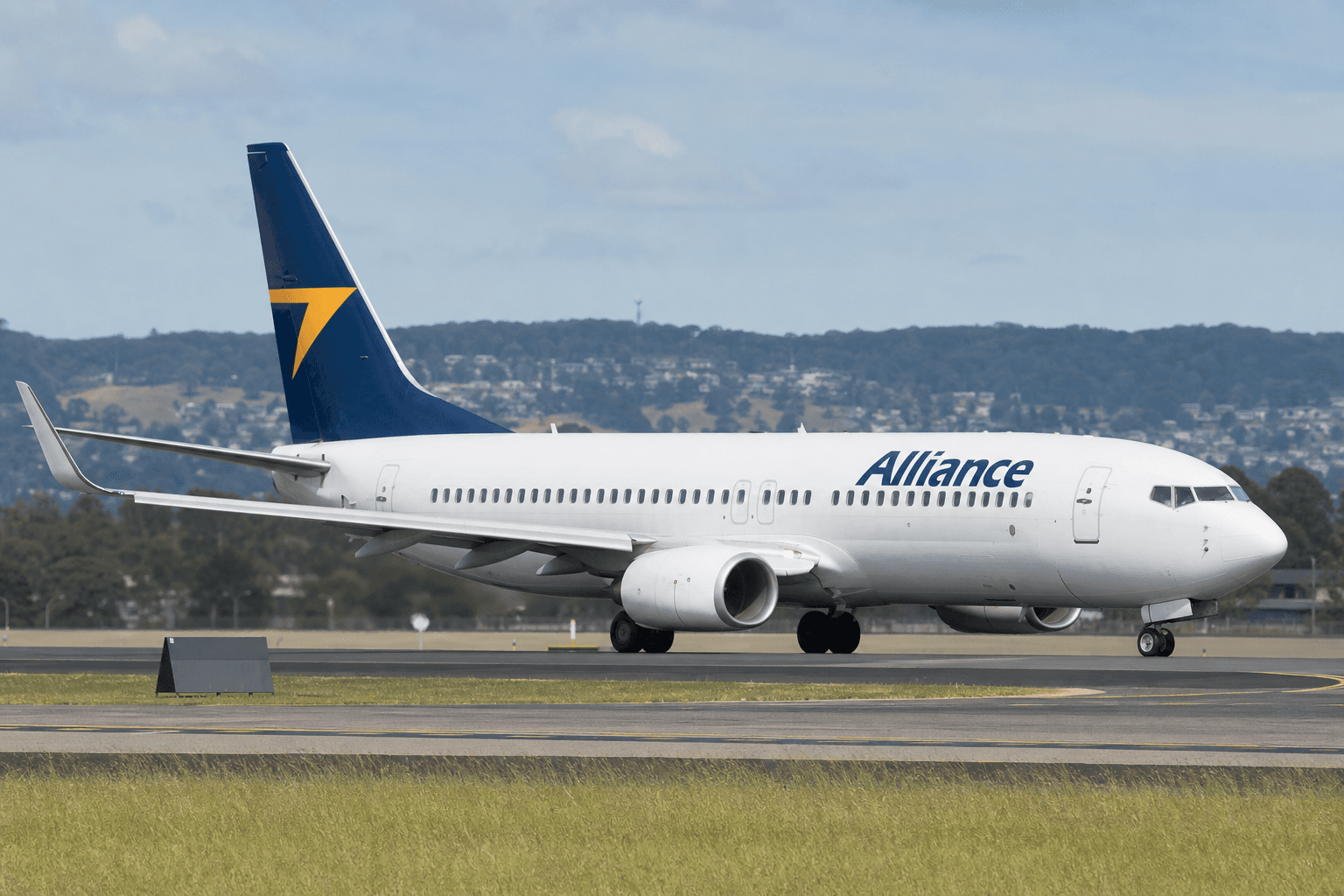
Steven Greenway appointed CEO of Alliance Airlines as Stewart Tully steps down
Alliance Airlines announced that aviation industry veteran Steven Greenway will take over as Chief Executive Officer starting October 1, 2026. He succeeds Managing Director and CEO Stewart Tully, who will step down after more than 11 years with the company. Alliance Airlines, under Alliance Aviation Services Limited, is an Australian provider of ACMI, contract, and charter airline services, operating a fleet of more than 70 aircraft. Tully will remain with the business until October 29, 2026, to help ensure a smooth leadership transition. Alliance said the change comes as the company moves into its next phase of strategic execution, following a revised wet lease agreement with Qantas and organizational changes announced to the market on August 5, 2026. Tully's 11-year tenure marked by growth, diversification Under Tully's leadership, Alliance expanded and diversified its operations, strengthened long-term customer relationships, and invested in fleet and engineering capability, helping reinforce the company's position as Australia's leading provider of specialized aviation services. Alliance Chair James Jackson credited Tully with an outstanding contribution to the company over many years, noting that he led the business through a challenging period and strengthened its overall strategy and operations. Jackson thanked Tully for his leadership and for agreeing to stay on through the transition period. Tully, in turn, said it had been a privilege to work alongside Alliance's talented people, experienced leadership team, and long-term customers and partners, adding that he is proud of what the company has achieved and confident in its future. Greenway brings 25 years of leadership across four continents Steven Greenway brings more than 25 years of international aviation leadership experience, having held chief executive and senior executive roles at major airline and aviation businesses across Australia, Asia, the Middle East, and North America. Most recently, he served as CEO of flyadeal, the Saudi low-cost carrier and subsidiary of the Saudia Group. Greenway's tenure at flyadeal, which began in 2024, saw the airline grow its passenger numbers by nearly a third, surpassing 10 million passengers annually for the first time. During that period, flyadeal also expanded its aircraft and route network and placed an order for 10 Airbus A330-900neo aircraft to enter the long-haul market, aligning with Saudi Arabia's broader push to grow its aviation sector under its Vision 2030 strategy. Greenway announced his departure from flyadeal on April 2, 2026, citing personal reasons and describing the role as an intensely demanding one, though he agreed to stay on in an advisory capacity through the end of 2026. Earlier in his career, Greenway held roles including Executive Vice President at WestJet and President of its subsidiary Swoop, CEO of reward-U, Chief Commercial Officer at Scoot, and partner at Mango Aviation Partners. Jackson welcomed Greenway to the role, saying the board is confident he is the right person to lead Alliance through its next phase as a FIFO-focused specialist aviation provider, building on the company's operational, commercial, and cultural foundations. Greenway said he was excited to lead Alliance and looks forward to working with the board and leadership team to strengthen the business while continuing to deliver strong service, safety, and reliability for customers. "Australia gave me everything growing up — the education, the opportunities, the foundation that took me around the world and back. The country has never left me, now it's my turn to give something back," Greenway reflected in his LinkedIn post. RELATED Steven Greenway steps down as flyadeal CEO after two years
The Daily Touch & Go
The day's best aviation news in your inbox. Free, no spam.