


uAvionix and Jeppesen ForeFlight Launch SkyPlay Integration for Seamless Cockpit Flight Planning
SkyPlay embeds ForeFlight's flight planning tools into panel avionics, enabling synchronized route management between tablets and cockpit displays.
The gist
SkyPlay lets pilots sync ForeFlight flight plans directly with panel avionics for streamlined route management without toggling devices.
Continuing coverage
All Flight Planning →- Jeppesen ForeFlight Launches AI-Powered ClearNOTAMs to Simplify Flight Planning
- Pilots urged to use updated airmets and sigmets for safer flights in changing weather
- Palm Beach International Airport Renamed to President Donald J. Trump International Airport on July 9
- NBAA Issues Comprehensive Guide for Business Aviation in FIFA World Cup 2026 Host Cities
A new integration named SkyPlay was unveiled by uAvionix and Jeppesen ForeFlight, aiming to revolutionize how pilots interact with electronic flight planning tools by embedding ForeFlight’s popular flight planning platform directly into aircraft panel-mounted avionics. This innovation targets the common challenge pilots face when managing flight plans, checklists, and charts between their electronic flight bags (EFBs) and onboard instrument panels. By integrating these functions, SkyPlay aims to create a seamless workflow inside the cockpit and reduce the need for constantly switching between devices while flying.
The public debut of SkyPlay is set to occur during EAA AirVenture in Oshkosh, Wisconsin, from July 20 to 26. Attendees will have the opportunity to use interactive live flight simulators demonstrating the integration at both uAvionix and Jeppesen ForeFlight exhibits. While the partners have announced the integration, details on pricing and availability will be shared at a later date, indicating that the product is still in its nascent stages.
The core functionality of SkyPlay allows pilots to plan flights remotely using an iPad or another suitable tablet device, then synchronize the flight plan and route data directly with the digital screens integrated into the cockpit. This dual-interface capability permits pilots to monitor and manage their routes seamlessly, whether using the familiar tablet interface before takeoff or the panel avionics during flight. This eliminates the redundant task of translating flight data between devices and streamlines cockpit operations, enhancing situational awareness and ease of use.
A major advantage of the SkyPlay system is its intuitive user interface that mirrors the workflows pilots already know from ForeFlight, minimizing the learning curve often encountered with new avionics suites. Pilots often have to adjust to differing interfaces between their electronic flight bags and the aircraft’s glass cockpit, a challenge SkyPlay intends to overcome by linking these systems directly.
In addition to the software integration, SkyPlay pairs the digital interface with physical multifunction control knobs designed for reliable operation even under heavy turbulence. These knobs are also compatible with pilots wearing flight gloves, ensuring that manual input remains practical and safe in diverse flight conditions. Importantly, the integration is planned to be compatible with both certified and experimental aircraft without necessitating a panel redesign, facilitating easier adoption across a wide range of general aviation aircraft.
Looking beyond the initial integration, uAvionix and Jeppesen ForeFlight plan to expand SkyPlay by introducing a suite of panel applications fully anchored in the ForeFlight environment. This roadmap suggests a future where more cockpit functions operate cohesively within a familiar digital ecosystem, potentially transforming the cockpit experience and further reducing the dependency on multiple disparate systems.
This initiative builds on recent moves by Jeppesen ForeFlight, which earlier in the year introduced an Emergency Glide Mode feature and formed partnerships with aircraft manufacturers like Tecnam. For example, Tecnam P2012 and P-Mentor owners benefit from integrated ForeFlight data within their Garmin avionics, along with subscriptions to Jeppesen NavData, Charts, and ForeFlight’s premium services. These developments collectively demonstrate the company’s commitment to advancing pilot tools via integrated digital solutions.
Furthermore, Jeppesen ForeFlight continues to innovate with applications such as ClearNOTAMs, an AI-powered app that simplifies complex NOTAM information by translating them into plain language with clear operational implications. This ongoing evolution underscores the company's focus on leveraging technology to make critical flight information more accessible, complementing the user-friendly approach embodied by SkyPlay.
By embedding flight planning directly into panel avionics, SkyPlay represents a significant step towards harmonizing ground-based flight preparation and airborne navigation. This integration promises to enhance pilot efficiency and safety by providing consistent situational awareness across multiple platforms, marking a meaningful advancement in cockpit interoperability.
Frequently asked questions
- What is SkyPlay and how does it integrate with ForeFlight?
- SkyPlay is a new integration that embeds ForeFlight’s flight planning tools directly into panel-mounted avionics, letting pilots sync flight plans between ForeFlight on tablets and cockpit digital screens.
- Will installing SkyPlay require changes to aircraft panels?
- No panel redesign is needed; SkyPlay is compatible with both certified and experimental aircraft, installing without significant modification to existing avionics.
- Where and when can pilots first experience SkyPlay?
- SkyPlay will debut publicly at EAA AirVenture in Oshkosh, Wisconsin, from July 20 to 26, where visitors can try it via interactive live flight simulators at uAvionix and Jeppesen ForeFlight exhibits.
Read more
All Aviation Safety →Pilots Urged to Rely on Airmets and Sigmets for Weather Safety
Most pilots can tell at least one story about a flight that did not go as planned because of unpredicted weather along the route. We all know that weather forecasts aren’t perfect, but that can lead to concerns regarding the safety of the flight.
Tecnam Builds Modern General Aviation Fleet Focused on Training, Commuter, and Private Markets
The global aviation industry faces a familiar tension with the promise of revolutionary technology on one hand and the immediate demands of operators, flight schools, and private owners on the other. Italian aircraft manufacturer Tecnam has built its strategy around refusing to choose between the two. In a conversation with FLYING , Giovanni Pascale Langer, Tecnam's managing director, laid out the company's vision across three growth pillars: professional flight training, commercial regional operations, and the private owner market. The Capua-based manufacturer believes pragmatism and innovation are not mutually exclusive as it tackles these challenges. "Our focus is strategically divided into three primary avenues: the professional flight training market, the commercial regional/utility sector, and the private owner market," Pascale said. On the training side, Tecnam knows the world needs airline pilots, and the academies producing them need modern, capable fleets. "There is an unprecedented global demand for airline pilots, and academies need modern, integrated fleets to prepare them," Pascale said. "We provide that complete ecosystem, from basic trainers to advanced IFR and multi-engine platforms." Tecnam P-Mentor, Belgium [Credit: Tecnam Aircraft] Rather than selling individual airframes, Tecnam offers a progression path from the single-engine Tecnam P2008 to the Tecnam P-Mentor for advanced instrument work, then to the multi-engine Tecnam P2006T. All of these are built around shared design logic and Garmin avionics. The result is a cohesion that keeps students inside one manufacturer's ecosystem from first flight to commercial rating. "A student can start in a single-engine P2008, move to the P-Mentor for advanced IFR, and transition to the multi-engine P2006T, all while staying within the same design logic and Garmin avionics environment," Pascale said, pointing to strong global adoption. "In Europe, academies like Canavia in Spain are flying their Tecnam fleets for over 1,000 hours per aircraft annually due to our dispatch reliability." The P-Mentor, Tecnam’s newest dedicated trainer, has drawn particular attention from flight schools due to its total cost of ownership. Pascale called it a "revolution in flight training," given that it bridges a gap between basic VFR trainers and expensive complex aircraft by packing a variable pitch propeller, simulated retractable gear, a ballistic parachute, and a full Garmin G3X Touch flight deck into a single certified airframe. Student Inside a Tecnam P-Mentor [Credit: Tecnam Aircraft] But the headline number is fuel burn. "The P-Mentor burns an incredible 14 liters per hour [3.7 gph]," he said. "When you compare that to traditional legacy IFR trainers, which typically burn anywhere from 8 to 10 gallons per hour of expensive avgas, the P-Mentor slashes fuel costs and carbon emissions by more than half." Tecnam P2012 STOL Landing at Saint Barthélemy Airport [Credit: Tecnam Aircraft] On the commercial side, the Tecnam P2012 Traveller continues to gain ground with Part 135 and commuter operators seeking modern replacements for aging Cessna 402s and Britten-Norman Islanders. The order book is incredibly strong and diverse, with repeat purchases from high-frequency operators across the United States, the Caribbean, Europe, and Australia. "What we hear consistently from operators is how transformative the modern avionics and dispatch reliability are for their bottom line," Pascale said. "The legacy aircraft they are replacing were great in their day, but they are 50-year-old designs requiring massive maintenance hours. The P2012 brings 21st-century aerodynamics, Garmin G1000 NXi glass cockpits, and a cabin volume that passengers actually enjoy, all while keeping piston-twin operating economics." Tecnam P2012 VIP Interior [Credit: Tecnam Aircraft] The P2012 line has also expanded into STOL and VIP configurations, broadening its reach into short-field island operations and premium charter. Underpinning all of it is Tecnam's vertically integrated manufacturing operation in Capua, which Pascale called an "absolute superpower." Where competitors have struggled with post-pandemic supply chain disruptions, Tecnam's in-house control of fuselage, wing, and component production has allowed it to maintain delivery timelines. "By controlling the manufacturing process at our Capua aerospace hub, we insulate our customers from the severe supply chain shocks that have plagued the rest of the industry," Pascale said. The company recently spun out Altair Solutions, an independent aftermarket support entity located adjacent to the factory, to handle Part 145 maintenance and FBO services. This move was designed to let the manufacturing side stay focused on production while operators get dedicated support infrastructure. Tecnam also occupies a distinctive position in the sustainability conversation. The company's H3PS program (a parallel hybrid-electric powertrain developed with Rolls-Royce and BRP-Rotax under EU Horizon 2020 funding) flew a modified P2010 in December 2021, making it the first general aviation aircraft with a parallel hybrid configuration to take flight. The demonstrator was primarily a research platform rather than a production precursor, but it proved that hybrid technology could deliver significant fuel savings and emission reductions in general aviation. "Currently, our R&D teams are evaluating how to best integrate the massive amount of data we collected into future scalable designs," Pascale said. While the industry debates distant zero-emission timelines, Tecnam is focused on what it can deliver now: efficient aerodynamics, lightweight construction, modern piston engines, and support for unleaded aviation fuels. P2012 Series Lineup [Credit: Tecnam Aircraft] "We are reducing emissions right now," Pascale said. "A Tecnam P2012 or P2006T burns a fraction of the fuel of the legacy turboprops or older pistons they replace." Tecnam's strategy is product-led in the North American market, where the manufacturer competes with other legacy brands that are household names. "When a U.S. buyer or flight school evaluates the lifecycle costs, the modern safety features, and the sheer ramp appeal of a Tecnam against a 40-year-old legacy design, the decision is very clear," Pascale said. Tecnam has built out a North American headquarters and parts distribution center in Sebring, Florida, and continues to appoint experienced sales directors and service centers across the Americas to close the support gap that has historically kept European manufacturers at arm's length from U.S. operators. If you've never sat in a Tecnam, the brand's Italian DNA is immediately apparent, as FLYING has discussed in the past . "When you sit in a Tecnam, you immediately notice the ergonomic brilliance, the exceptional visibility, and the modern glass cockpit," Pascale said. "But the real surprise comes when you take the controls. A Tecnam flies with a beautiful, harmonious balance. It's incredibly responsive and crisp, much like a high-performance European sports car, yet it remains remarkably forgiving and stable. It reminds pilots that an efficient, modern airplane doesn't have to be sterile. It can still be an absolute joy to fly." The FAA's Modernization of Special Airworthiness Certification (MOSAIC) rule is set to reshape the light sport aircraft landscape, with its LSA certification changes taking effect on July 24. MOSAIC replaces the legacy 1,320-pound weight limit with performance-based criteria, most notably a 59-knot clean stall speed threshold. This opens the door for four-seat aircraft, retractable landing gear, constant-speed propellers, and even twin-engine configurations within the light sport category. Tecnam P92 Echo MKII [Credit: Tecnam Aircraft] Tecnam has responded by launching its MOSAIK59 product family, a lineup of existing models engineered to meet the n
Oregon launches comprehensive public drone pilot training and testing framework
The Oregon Department of Aviation released a training and testing template July 10 for public agencies that operate drones. This new template provides additional model standards that public agencies may adopt and customize for pilot qualifications, recurrent training and public-safety missions. Training Beyond Part 107 The FAA requires Part 107 certificate holders to complete online recurrent training every 24 calendar months, in an effort to maintain aeronautical knowledge recency. Oregon's document goes further by adding written test questions, practical flight evaluations, emergency drills, airspace-deconfliction exercises, privacy and public-records training, maintenance requirements and launch-decision checklists. "This is the next step in building safe and accountable public agency drone programs in Oregon," Oregon Department of Aviation Director Kenji Sugahara said. "A policy tells an agency what the rules are. Training and testing show whether people can actually apply those rules in the field. That matters when drones are being used near roads, bridges, neighborhoods, emergency scenes, firefighters, patients, helicopters, or disaster areas." Public-Agency Requirements Oregon law already requires public bodies to register public-use drones with the state aviation department and submit annual reports. Those reports must summarize how frequently the aircraft were used, explain the primary purposes of the flights and direct the public to the agency's drone policies. Educational institutions register as drone users rather than registering each aircraft. The template is designed for cities, counties, state agencies, fire departments, emergency managers, transportation departments and other public bodies. Optional sections address Drone as First Responder programs, fire and EMS support, search and rescue, emergency management, mutual aid, remote operations and FAA-authorized flights beyond visual line of sight. The department said the document does not create new flight authority, authorize law enforcement activity or permit operations beyond FAA limits.
Large drone collides with LAPD helicopter over San Fernando Valley, forcing emergency landing
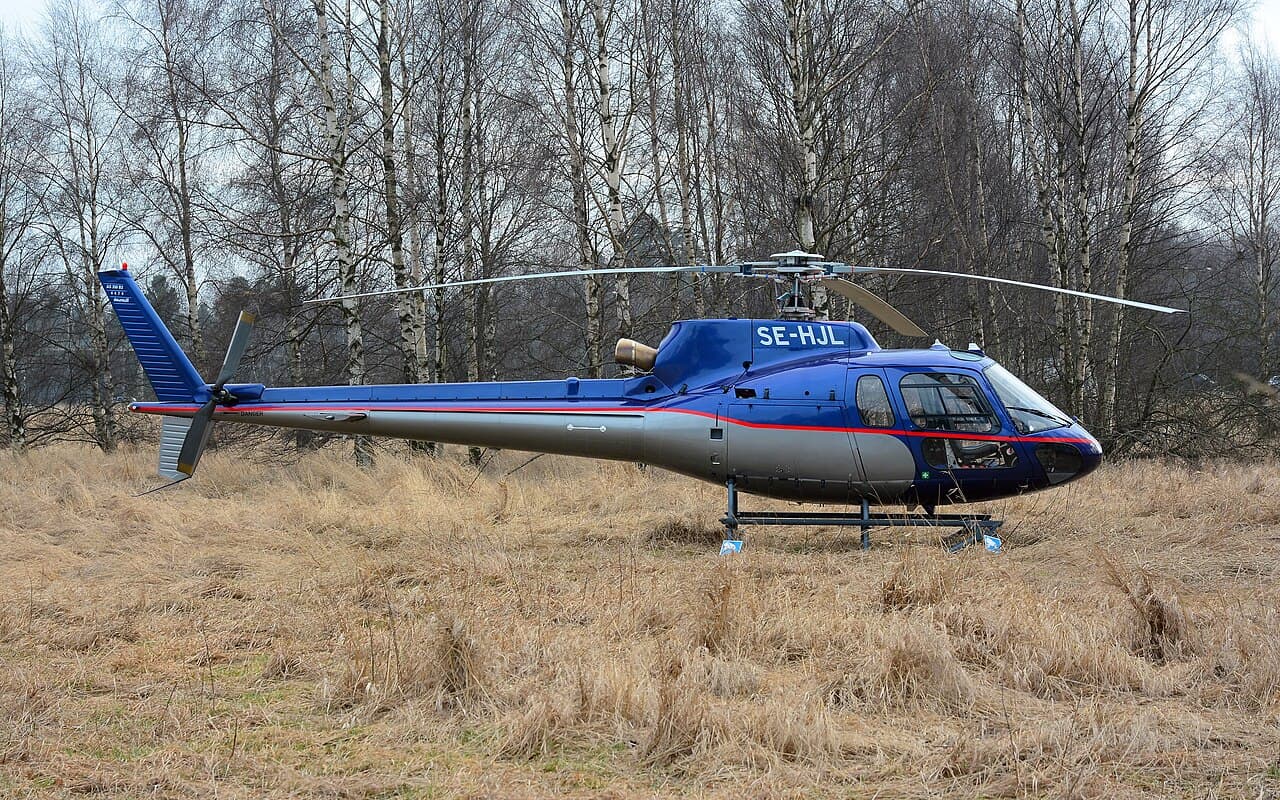
A large drone struck a Los Angeles Police Department helicopter during a patrol over the San Fernando Valley, damaging the aircraft's windshield and forcing the crew to make a precautionary landing. The Airbus AS350 was flying near the 101 Freeway and Reseda Boulevard in Tarzana shortly before 15:00 local time on July 7, 2026, when it collided with the drone, according to the LAPD and a preliminary Federal Aviation Administration (FAA) report. The pilot landed safely at nearby Van Nuys Airport (VNY). Neither of the two officers aboard the helicopter was injured. Authorities described the drone as measuring approximately three feet by three feet, considerably larger than most hobbyist drones. Investigators have not identified its make or model or the person operating it. The collision happened as firefighters battled a brush fire near the Encino Reservoir. An LAPD official said the drone operator may have been attempting to record the fire, although authorities have not determined whether the aircraft was deliberately flown near the helicopter. The FBI and FAA have opened investigations. Los Angeles Mayor Karen Bass called the incident "completely unacceptable" and warned drone operators against interfering with police and firefighting aircraft. "This is a warning to anybody who's flying a drone that interferes with Fire or Police: We will find you, you will be arrested, and you will be prosecuted," Bass said. Drones operating near wildfires can put a halt to aerial firefighting operations as crews cannot safely share the airspace with an unidentified aircraft. The FAA generally limits drones to 400 feet above the ground, with additional restrictions around airports and emergency operations. Authorities have not released photographs of the damaged helicopter or video showing the collision. The drone operator remained unidentified as of July 13. The incident is the latest collision involving a drone and a crewed aircraft in US airspace. The FAA receives thousands of reports each year involving drones operating near airplanes and helicopters, although confirmed midair collisions remain relatively rare.
The Daily Touch & Go
The day's best aviation news in your inbox. Free, no spam.