

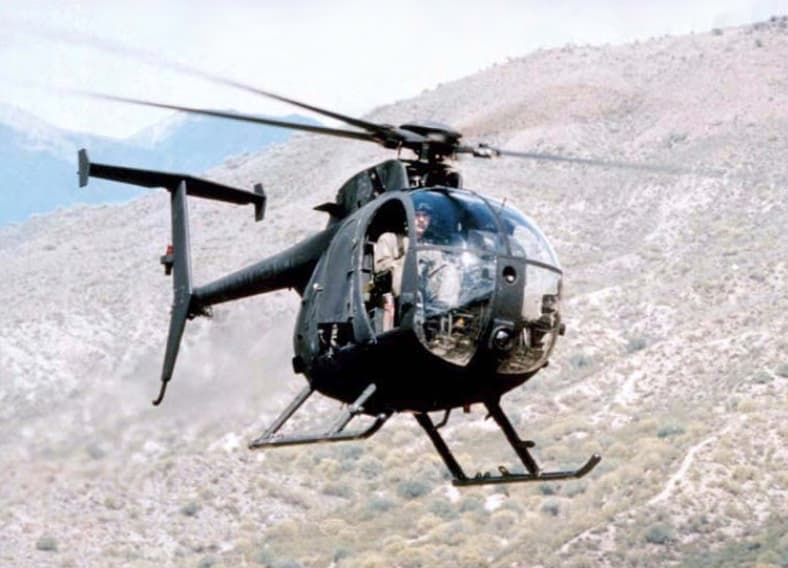
Image: US Army · Public domain · via Wikimedia Commons
US Senate drafts $127M plan to replace MH-6 and MC-130J aircraft lost in Iran rescue mission
The 2027 National Defense Authorization Act draft proposes $127 million for special operations aircraft destroyed during an April recovery operation in Iran.
The gist
Congress moves to fund replacement of special ops aircraft lost in Iran with $127 million earmarked in the 2027 defense bill.
The US Senate Armed Services Committee has introduced draft legislation aimed at replenishing special operations aircraft destroyed during a high-risk recovery mission in Iran earlier this year. The 2027 National Defense Authorization Act (NDAA) draft includes $127 million targeted specifically to replace four Boeing MH-6 Little Bird helicopters and two Lockheed Martin MC-130J Commando II transports lost in April's rescue operation of an American F-15E crew member shot down in Iran's Isfahan province.
During the recovery attempt, US special operations forces deployed MC-130J aircraft carrying MH-6 Little Birds on an improvised runway inside Iranian territory. The mission became compromised when the aircraft were caught in soft sand and could not be extracted, ultimately leading to their deliberate destruction by US troops to prevent capture. This incident represents only a fraction of the more than 40 US military aircraft lost in the broader Iran operation, which also involved fighter jets, tankers, an AWACS, and unmanned systems.
The NDAA draft allocates $72 million under rotary-wing combat losses for MH-6 helicopters and $55 million for AC/MC-130J fixed-wing aircraft losses. However, this funding falls short of replacing the total tally of lost equipment from the Iran mission. The bill also proposes zero funding for the L3Harris OA-1K Skyraider II turboprop, a favored Special Operations Command (SOCOM) close air support aircraft, cutting over $59 million requested in the previous fiscal year.
SOCOM follows a unique procurement process separate from the conventional US military services. While the Air Force acquires unmodified C-130J aircraft from Lockheed Martin, SOCOM converts them to the MC-130J Commando II configuration at the Special Operations Forces Support Activity (SOFSA) in Kentucky. According to Col. Justin Bronder, SOCOM’s head of fixed-wing procurement, the department will coordinate replacement aircraft purchases with the Air Force and modify them in-house.
The MC-130J production line at Lockheed Martin’s Georgia facility concluded in December 2024 after delivering 60 aircraft over 14 years. The standard C-130J remains in production, with 20 to 24 units delivered annually, providing a clear supply chain for replacement airframes.
Replacing the four MH-6 Little Birds is more complex. Although Boeing sustains the platform, these helicopters are modified commercial MD 530Fs transformed into military configurations by SOCOM at SOFSA. The service aims to upgrade the fleet to the A/MH-6R standard, incorporating new zero-hour fuselages from Boeing, reinforced airframes, and modern avionics. Currently, SOCOM procures brand-new fuselages instead of complete commercial helicopters for these remanufactures.
MH-6 helicopters are operated exclusively by the US Army’s 160th Special Operations Aviation Regiment, supplied by SOCOM. Both MH-6 troop transport and AH-6 light attack variants stem from the same MD 530F commercial rotorcraft, sharing drivetrain and cockpit systems. The funding in the Senate draft may cover purchasing new MD 530 airframes, given the $72 million allocation roughly equates to $18 million per aircraft—accounting for modification expenses.
Past orders for MD 530Fs under the Foreign Military Sales program—such as for the Afghan Air Force—demonstrate the Pentagon’s ability to acquire the baseline platforms necessary for SOCOM conversion. Given the unique tailoring and limited operational use of these aircraft, replenishing losses entails both procurement and extensive in-house modification work.
Read more
All Military/Defense →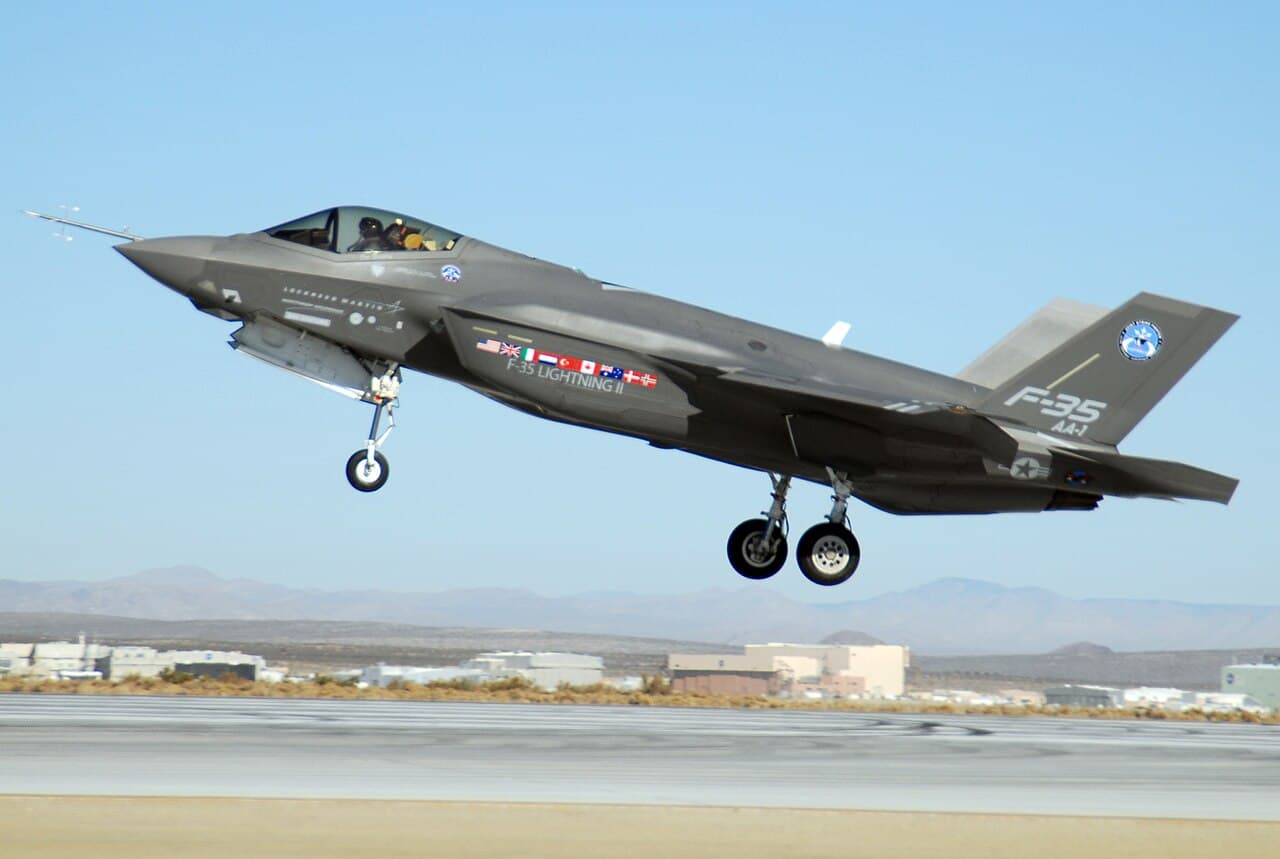
US Controls All F-35 Mission Data Updates, Grounding Allied Squadron Autonomy
The Lockheed Martin F-35 Lightning II is one of the most important weapon systems developed in the 21st century. It represents a major paradigm shift for air power not only in the US Air Force, but the Navy and Marines as well as 19 other US Allied partner nations around the world that are part of the global fleet. In addition to being the most expensive defense industrial project in history, it is also one of the most closely guarded classified projects to ever become a multinational defense program.
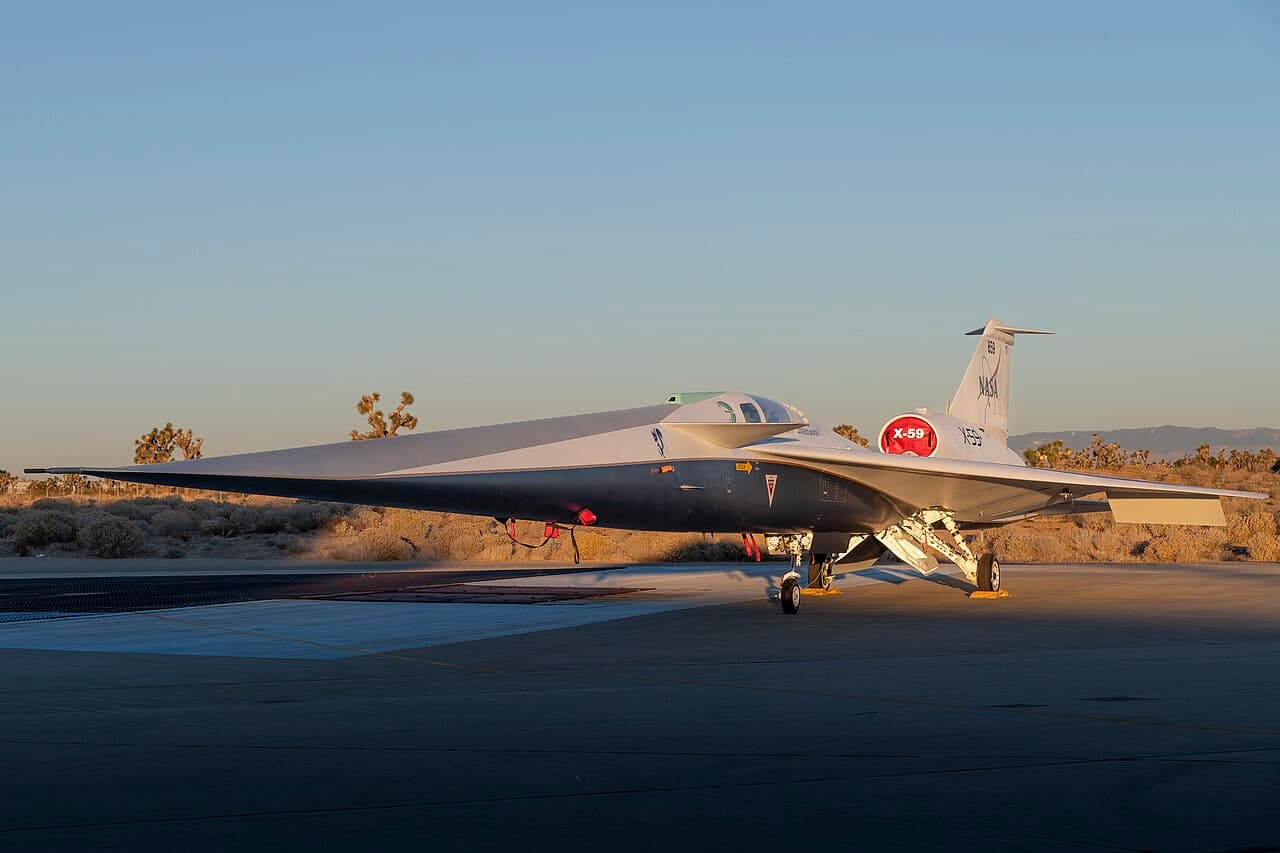
NASA X-59 Quesst Breaks Sound Barrier After Nearly Seven Months of Careful Test Flights
The NASA X-59 Quesst aircraft, built by Lockheed Martin Skunk Works, took roughly seven months from its first flight on October 28, 2025, to safely cross the sound barrier for the first time on June 5, 2026. Rather than immediately flying at full speed, experimental aircraft must undergo a careful process called envelope expansion. Even though the X-59 is intended to pioneer quiet supersonic flight for commercial airliners, engineers must slowly push the aircraft's limits to ensure it remains safe and controllable.
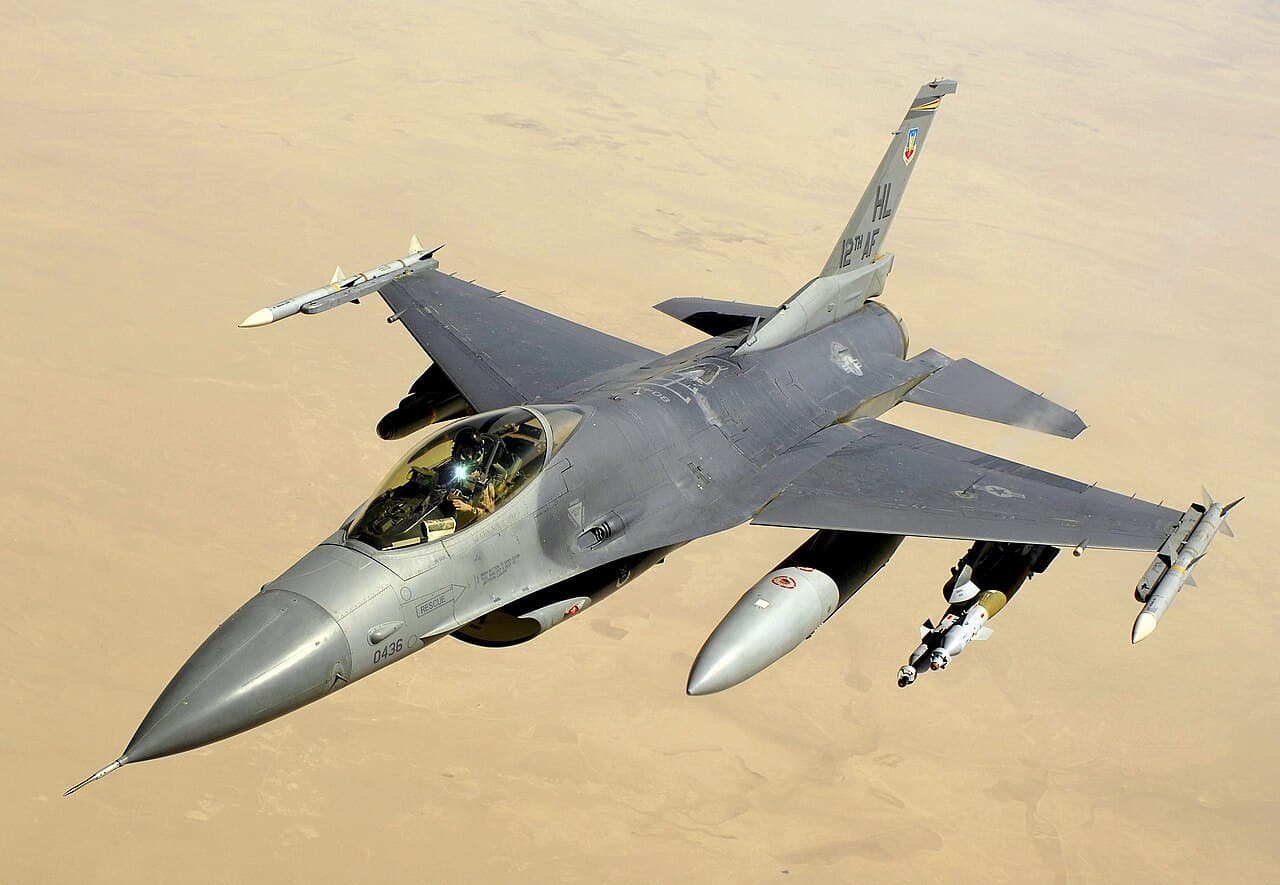
F-16 Viper Gets Major Combat Boost with New AN/APG-83 AESA Radar Upgrade
The Lockheed Martin F-16 Fighting Falcon, also known as the Viper, is no longer the premier lightweight fighter jet of the US Air Force, but it is far from irrelevant. As a much less expensive airframe than the more exquisite F-35 Lightning II, the Viper continues to roll off the assembly line. It is the most mass-produced supersonic fighter jet still in production today, with more than 4,500 examples having been delivered. Now, the existing fleet is also getting a major lethality upgrade in the form of the Northrop Grumman AN/APG-83 Scalable Agile Beam Radar.
Turkish Aerospace to Restart T-70 Helicopter Production After US Sanctions Lifted
Improved ties between Ankara, Washington lift T-70 programme. Turkish Aerospace (TAI) will resume production of the T-70 utility helicopter – a local variant of the Sikorsky S-70 – following sanctions relief from the US government. "The [T-70] programme has already started again," says TAI chief executive Mehmet Demiroglu, speaking at the recent Farnborough air show. "As of the beginning of this year, we reached an agreement with Sikorsky for another 39 units, and we received export licenses for that programme, so we don't see any problem." The sanctions originally stemmed from Ankara's decision to obtain Russia's S-400 surface-to-air missile system, a move that upset Washington. The administration of US President Donald Trump, however, has aimed to improve ties with Turkish President Recep Tayyip Erdogan. This includes sanctions relief, including the possibility of bringing Turkey back into the Lockheed Martin F-35 programme . Despite the warming ties, Demiroglu indicates that sanctions "inevitably" caused delays to the programme. He indicates that 38 T-70s were completed before the impact of sanctions were felt. The type is operated by the Turkey's air force and army, as well as parapublic agencies. Original plans had called for 109 T-70s to be produced by TAI. Demiroglu indicates that after the upcoming 39-unit batch an additional 32 could be produced, which would bring deliveries to the 109 figure. He hints that the full allotment of T-70s may be needed given that over 200 in-service Turkish military helicopters will be retired by 2040. "So, within that ten-year period the Turkish armed forces will need more than 200 platforms." Based on the S-70, the T-70 features a range of indigenous structures, avionics, and locally produced Tusas Engineering Industries T700 engines. He adds that work continues with the 11t T925 helicopter, which will serve in both civilian and military roles. In addition to supporting Turkish military replacement needs in the 2030s, he expects strong export demand for the type. He estimates overall demand for the platform, which is due to fly in 2027, could see TAI produce 400-500 examples.
The Daily Touch & Go
The day's best aviation news in your inbox. Free, no spam.