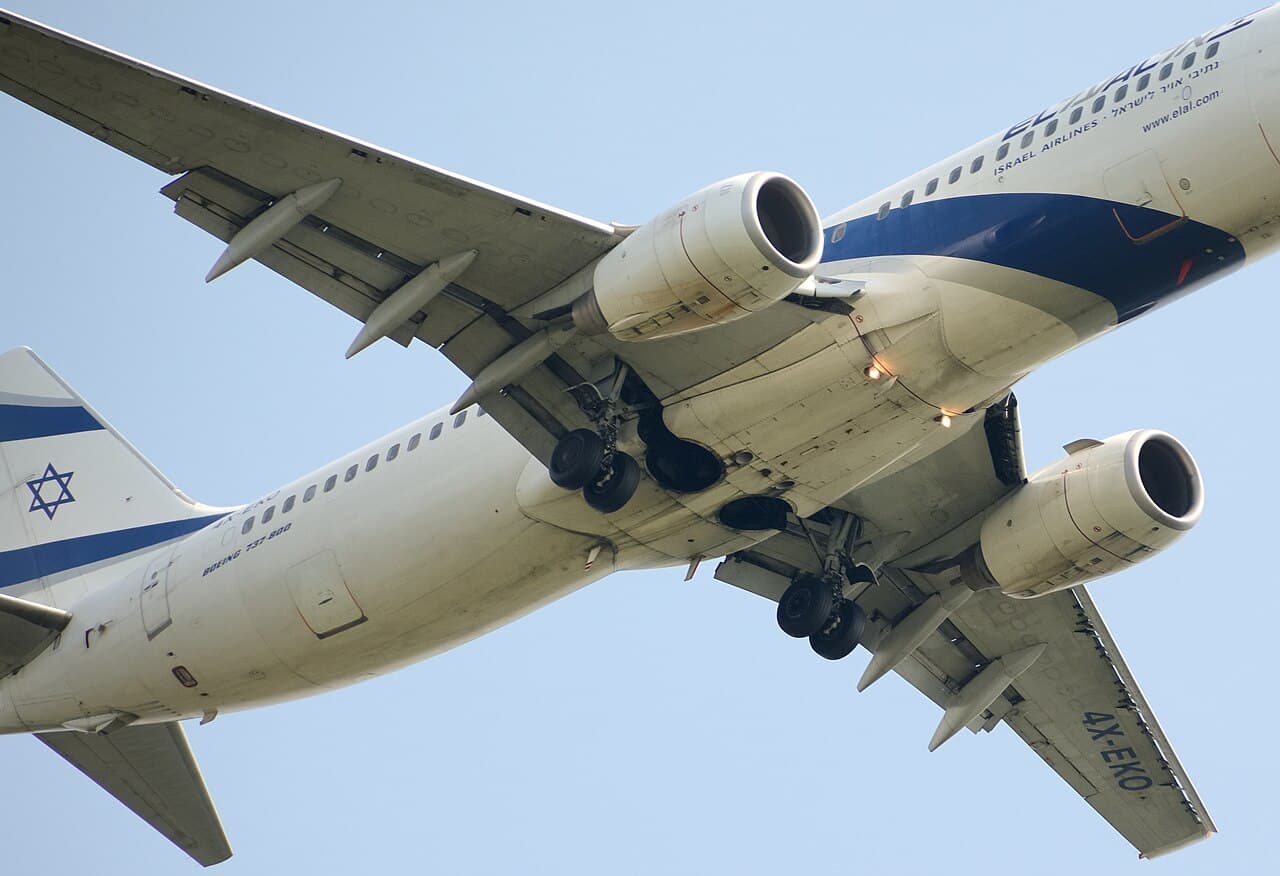
Image: Peter Haas · CC BY-SA 3.0 · via Wikimedia Commons
Defunct Cameroon Airlines Sues Boeing for $179M Over 1995 737-200 Crash
Cameroon Airlines alleges Boeing failed to warn pilots of engine failure and provide go-around training after 1995 crash killed 71, seeking $179 million damages.
The gist
Cameroon Airlines is suing Boeing for $179 million over a fatal 1995 crash blamed on engine failure and pilot training deficits.
Continuing coverage
All Boeing →- Legacy 1960s Boeing 737 Design Caps Economy Seat Width at 17 Inches
- Boeing's 737 MAX 7 Set for FAA Certification This Month, Boosting Southwest's Fleet Plans
- Boeing Ends Production of Boeing 777-300ER After Nearly Two Decades
- Boeing 777-9 Endures Over 63,000 Flight Cycles in Rigorous Fatigue Testing
- Boeing's Data-Driven Upgrade Set to Extend C-17 Globemaster Service Through 2075
A lawsuit filed last week accuses Boeing of liability linked to a fatal crash involving Cameroon Airlines Flight 3701 in December 1995. The Boeing 737-200, operating a flight from Cotonou to Douala, Cameroon, crashed near its destination with 76 people onboard. Tragically, 68 passengers and 3 crew members lost their lives when a compressor blade in one of the aircraft's Pratt & Whitney JT8D engines fractured, leading to critical power loss.
Investigations revealed that during the final approach, the aircraft experienced an engine power loss that destabilized the landing sequence. Approximately near touchdown, the crew attempted a late go-around maneuver, but the aircraft lacked sufficient speed and climb capability. The plane rolled sharply to the left, struck trees, and crashed into a mangrove area about a mile from the runway, ultimately being destroyed by fire. The cockpit voice and flight data recorders were lost due to the fire, complicating the investigation.
The official accident report concluded that the accident resulted from the fractured engine blade that caused loss of engine power and an improperly executed go-around initiated too late. Crucially, the pilots did not receive simulator training that included practicing go-arounds with one engine out, a factor that contributed to their inability to recover control. Cameroon Airlines’ successor company, Camair, has since implemented extensive simulator training that covers engine-out go-arounds and crew resource management enhancements.
Camair’s lawsuit argues Boeing is responsible for failing to equip the aircraft with an alert system that would warn pilots promptly of an engine power loss during critical phases of flight. In addition, Boeing allegedly did not provide scenario-specific training that would have prepared the crew to identify and safely execute a go-around under such conditions. According to Camair, these omissions led to the delayed recognition of engine failure, loss of control, and ultimately the fatal crash.
The damages sought by Camair total $179 million. This includes $40 million to replace aircraft lost to the crash, $130 million in operating losses accumulated since the airline’s closure, and $8.7 million for reputational harm. Since Cameroon Airlines ceased operations around 20 years ago, Camair has become its successor carrier and is now pursuing this legal claim in the US courts.
Boeing has responded by seeking to block the lawsuit, citing contractual protections in a Purchase Agreement from 1984. This agreement stipulates that Washington state law governs disputes, while the lawsuit was filed in Cameroon, which Boeing says breaches the contract. It further contains waivers releasing Boeing from liability for implied warranties and defects, and indemnifies Boeing and its staff against claims arising from post-delivery maintenance training and related support.
Washington state law generally upholds such waivers and limitations on commercial damages unless found unconscionable or public policy exceptions apply. Boeing’s defense suggests that even if the case proceeds, Camair’s stronger claims may lie with Pratt & Whitney, as the defective engine blade was central to the accident cause. Moreover, Cameroon Airlines’ own training deficiencies and pilot errors weigh heavily in assessing liability.
This litigation highlights ongoing challenges regarding manufacturer responsibilities for providing adequate warnings and training for emergency scenarios. The 1995 crash remains a tragic example of how equipment failure combined with insufficient pilot preparation can have catastrophic outcomes. The case’s resolution will clarify the enforceability of liability waivers and the extent of aircraft maker obligations to successor operators decades later.
Frequently asked questions
- What caused the Cameroon Airlines Flight 3701 crash in 1995?
- The crash resulted from a fractured compressor blade in the Pratt & Whitney JT8D engine causing power loss, followed by a late go-around attempt that led to loss of control and crash.
- Why is Cameroon Airlines suing Boeing 20 years after the crash?
- Cameroon Airlines alleges Boeing failed to install an engine power loss warning system and did not provide pilot training for engine-out go-arounds, contributing to the crash and is seeking $179 million in damages.
- What contractual defenses is Boeing using against the lawsuit?
- Boeing cites a 1984 Purchase Agreement requiring disputes be adjudicated under Washington law, containing waivers of liability for defects and indemnification for training-related claims, seeking to block the lawsuit.
Read more
All Aviation Safety →
NTSB Rebukes Ryanair CEO for Premature Comments on Engine Failure Accident
The head of the U.S. National Transportation Safety Board (NTSB) has accused Ryanair chief executive Michael O’Leary of violating international law over comments he made about the window blowout incident aboard one of the airline’s Boeing 737 jets over Greece earlier this month that partially sucked a 61-year-old passenger out of the plane. During a scheduled earnings call at the start of this week, the often outspoken O’Leary said that while he couldn’t “definitively” say what the cause of the accident was, "initial indications would suggest it looks like a foreign object damage to the engine.” O’Leary went on to say that the accident was not the result of the aircraft’s age or servicing. The NTSB has taken over responsibility for investigating the July 10 accident at the request of Greek authorities. The incident involved an 18-year-old Boeing 737-800, which was operating Ryanair flight FR-1879, a regularly scheduled service from Thessaloniki (SKG) to the German town of Memmingen (FMM) in Bavaria. Shortly after takeoff and while the aircraft was still in its initial ascent to cruising altitude, the right-hand engine suffered an uncontained failure, sending debris flying towards the fuselage of the plane. Some of that debris hit a cabin window, smashing through the various layers and causing an explosive depressurization. The 61-year-old Serbian passenger who was sitting beside this window was partially sucked outside, but thankfully did not sustain serious injuries. After declaring an emergency, the pilots returned to Thessaloniki, where the plane landed without further incident. In a new letter to Michael O’Leary, often styled as MoL, the NTSB’s chairwoman, Jennifer Homendy, reminded him of Ryanair’s responsibility under Annex 13 of the International Civil Aviation Organization (ICAO), which deals specifically with aircraft accident investigations. Under Annex 13, Ryanair has been designated as an accredited representative and technical adviser in the investigation, which is being led by the NTSB. One of the requirements of being an accredited representative or technical advisor in an official aviation accident is that information cannot be released without the express permission of the investigating authority – in this case, the NTSB. “The NTSB is currently investigating that accident and therefore, accredited representatives and their technical advisers are prohibited from making any comments regarding the potential cause of the event or otherwise conveying potential investigative information,” Homendy said in the July 22 letter, which was sent to MoL and the chief executive of Malta’s Bureau of Air Accident Investigation, Capt. Frank Zammit (the aircraft was registered to Malta Air, which is a wholly owned subsidiary of Ryanair). “The NTSB has not made any such determination, and our investigators have not yet ruled out age or servicing issues as contributing to this event,” the letter added. “Mr. O’Leary’s public statements violate Annex 13 as they provide an opinion and analysis of the accident and suggest potential areas of interest in the ongoing investigation.” “Because failure to comply with Annex 13’s restrictions, depending on the investigative relevance and accuracy of such information, may impact the integrity of the investigation, I urge Mr. O’Leary to refrain from further public statements regarding the investigation while it is ongoing.” The aircraft involved in the July 10 accident remains grounded. Investigators will not only want to establish whether a foreign object was responsible for the engine failure, but also that resulted in debris being sent flying towards the fuselage, causing the window blowout. A preliminary report that will describe the events of July 10 is expected to be released within weeks, but a full accident report could take many months to be completed.
Boeing returns to Farnborough Airshow with emphasis on rebuilding trust and safety
Boeing will be attending this year's Farnborough Airshow with a more confident approach after tapering its commercial activity in 2024 due to the Alaska 737-9 door plug incident. In July 2024, Boeing said its focus would be on "safety, quality and meeting customer commitments" and that it would reduce commercial planes on display and flight demonstrations. "The best way to build trust is through high-quality performance in our factories, one airplane at a time," Brendan Nelson, President of Boeing Global, said at the time. On July 13, 2026, Boeing laid out its plans for Farnborough Airshow 2026 , with Kelly Ortberg, Boeing's CEO, saying he was looking forward to "reconnecting with their customers and suppliers". "Every day is an opportunity to continue building trust as we focus on safety, quality and on-time performance," Ortberg said. Qatar Airways Boeing 787-9 Dreamliner at FIA 2024 (AeroTime) He added that Boeing would also be "strengthening its international partnerships built upon the full range of our commercial, defense and services capabilities". Following the Alaska Airlines 737 MAX 8 incident in January 2024, Boeing was forced to take a root and branch approach to its safety and quality procedures. The Federal Aviation Administration (FAA) also limited production levels at the Boeing factories, and the Boeing boss Dave Calhoun moved on from the company. This year Boeing's production and delivery rate is much improved with the planemaker finding its feet under Ortberg's leadership following a challenging period. Boeing displays at this year's Farnborough Airshow Although Boeing will not be exhibiting any aircraft itself, the planemaker will be represented through GE Aerospace's 747-400 flying testbed and a Qatar Airways 777-300. Qatar Airways also exhibited a Boeing 787 Dreamliner in 2024 despite the US planemaker not presenting a commercial aircraft itself. For the first time, the uncrewed MQ-28 Ghost Bat collaborative combat aircraft will debut on static display at the airshow. A US Army CH-47F Chinook and UK Joint Aviation Command CH-47 Chinook will also be exhibited for visitors to see. A full-size 777X interior section will be presented and so will a T-7 flight deck simulator, providing a hands-on experience of the fighter trainer's performance and capabilities. Boeing will also highlight its services offerings for government and commercial customers including parts, modifications, cabin products, digital services and training solutions. There will be the hope that Boeing is far more active with order announcements at this year's airshow. In 2024, against the backdrop of the Alaska incident, Boeing announced only 96 firm commercial aircraft orders and commitments, plus 22 options while Airbus received 164 orders. AeroTime will be on the ground at Farnborough Airshow 2026 to bring you the latest breaking news and industry unveilings. To get in touch regarding the airshow email: ian.molyneaux@aerotime.aero RELATED Airbus and Boeing set to win Philippine Airlines orders at Farnborough: Reuters
UK investigators probe limited clues in fatal Zeusch King Air crash at Southend
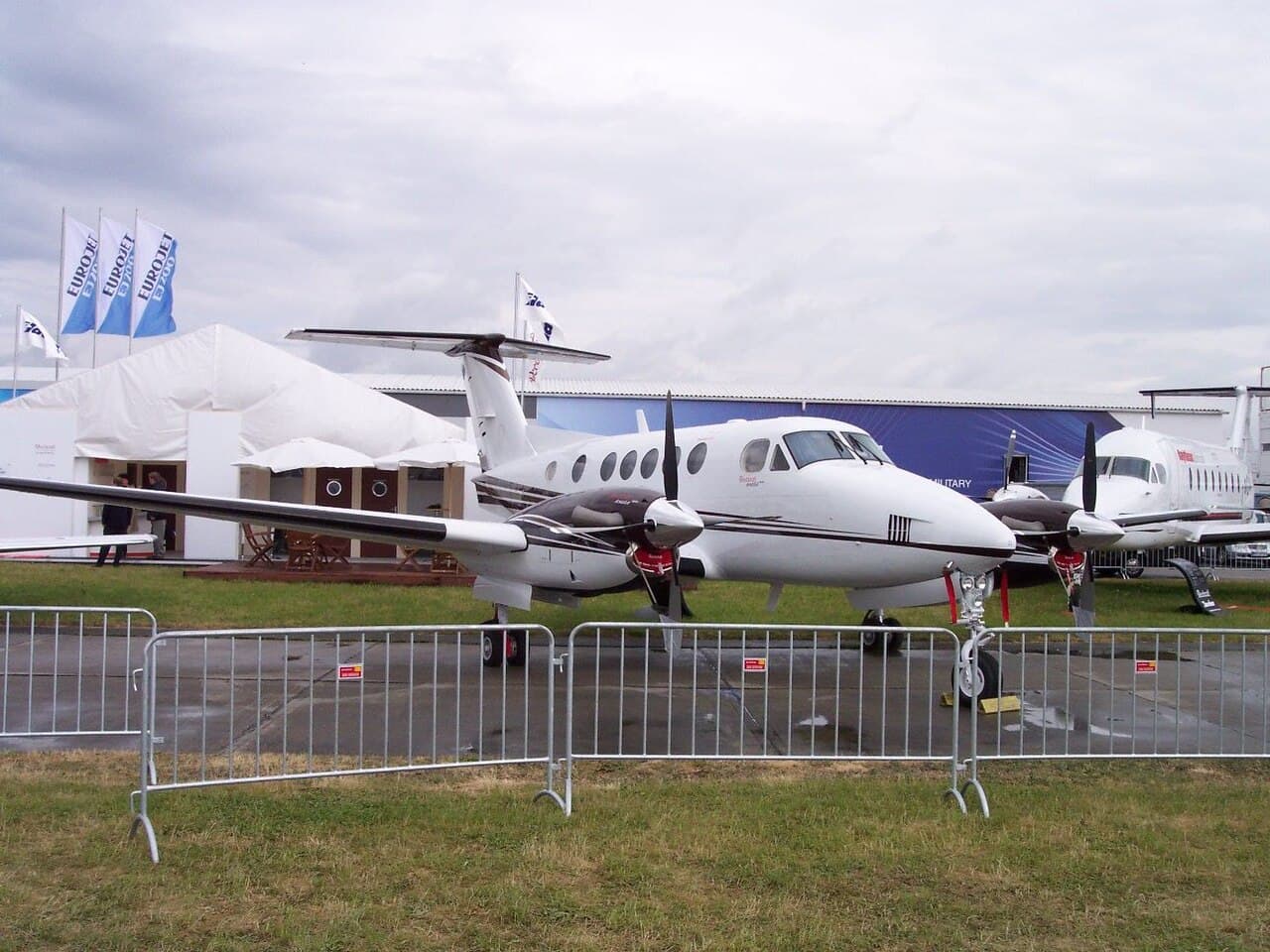
Fire and lack of recorder data left little evidence after loss of control at London Southend. UK investigators are still trying to determine the reasons behind the fatal loss of control involving a Zeusch Aviation Beechcraft B200 Super King Air at London Southend a year ago . The aircraft yawed slightly to the left just before rotating from runway 05, and then deviated "immediately" to the left of the centreline as it became airborne, says the UK Air Accidents Investigation Branch. It reached 70-80ft in height in a climbing left turn, its heading changing by 90°, before it descended and crashed within the airport perimeter. The inquiry says the flightpath has been established through a combination of ADS-B data, surveillance camera footage, and video from witnesses. But the aircraft was not required to carry a cockpit-voice or flight-data recorder, and the airframe was substantially damaged by the impact and post-crash fire. This meant "only limited physical evidence" remained, says the inquiry in an update on the 13 July 2025 accident. "Detailed examination of the aircraft and its components, while limited to some extent by the damage sustained, has been conducted in co-ordination with the relevant manufacturers," it adds. None of the four occupants survived the crash. "The investigation has focused on understanding the factors which contributed to the loss of control," says the inquiry in an update. "It is examining relevant technical, operational, human and organisational factors to determine if these aspects contributed to the accident." Bearing the Dutch registration PH-ZAZ, the aircraft had been bound for Lelystad in the Netherlands.
Beechcraft B200 crash at Southend Airport: AAIB details loss of control moments after takeoff
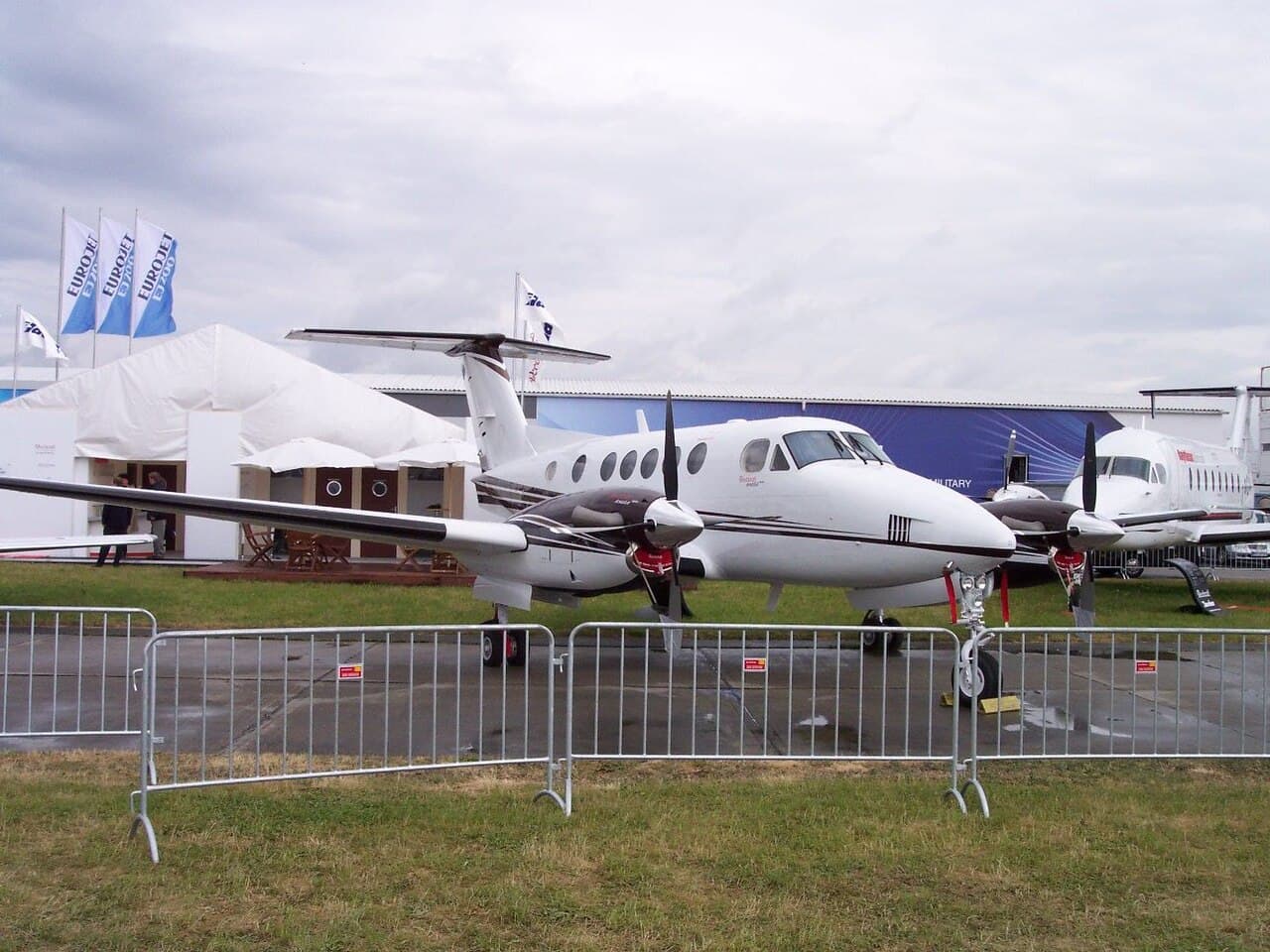
Investigators at the Air Accidents Investigation Branch (AAIB) have provided an update on the anniversary of the London Southend Airport (SEC) crash tragedy which killed all four people onboard the aircraft. On July 13, 2026, the UK's accident investigation team said due to the impact and ensuing post-crash fire, only limited physical evidence remained on the Beechcraft B200 Super King Air. The AAIB revealed that prior to rotation the aircraft yawed slightly to the left before experiencing a loss of control shortly after takeoff. "Once airborne, it immediately deviated to the left of the runway centerline in a climbing left turn. It reached an altitude of between 70 – 80 ft above the runway level, having turned through 90°, before descending towards the ground," the AAIB confirmed. The investigators said that much of their focus has been on trying to establish the factors which contributed to the loss of control. Technical, operational, human, and organizational factors are all being examined. BREAKING: A plane has crashed at London Southend Airport, sparking a massive fireball. pic.twitter.com/Sv2BQgLFQb — Weather Monitor (@WeatherMonitors) July 13, 2025 "Detailed examination of the aircraft and its components, while limited to some extent by the damage sustained, has been conducted in coordination with the relevant manufacturers," the AAIB added. The AAIB said it was able to establish the Beechcraft B200's flightpath by analyzing witness video, CCTV imagery, and ADS-B data. There was no requirement for either a flight data or cockpit voice recorder to be installed on the aircraft. The investigation is ongoing and a final report will be published once all investigation activities have been completed. "At this time, our thoughts remain with the families and friends of those who lost their lives in this accident and all those affected by it," the AAIB said in its statement. What happened during the Southend Airport crash? The Beechcraft B200 Super King Air, registered PH-ZAZ, crashed and erupted into a fireball at Southend Airport on July 13, 2026. The aircraft was operated by Zeusch Aviation, a company that provides medical evacuation and transplant flights, aerial mapping, relay flights, and aerial surveillance. Witnesses reported that the aircraft rolled to the left, nearly reaching an inverted position, before crashing. Two pilots, a doctor and a nurse were among those killed. The accident was the UK's most serious aviation incident in recent years. RELATED London Southend Airport suspends operations after Beechcraft B200 fireball crash
The Daily Touch & Go
The day's best aviation news in your inbox. Free, no spam.