

Image: Peter Haas · CC BY-SA 3.0 · via Wikimedia Commons
NTSB and Ryanair Disagree Over Cause of Malta Air Boeing 737 Window Blowout Incident
An uncontained engine failure and window blowout on a Malta Air Boeing 737-800 during ascent have prompted investigation amid conflicting statements on the root cause.
The gist
Ryanair blames foreign object damage for Malta Air engine failure; NTSB investigates possible metal fatigue and age-related factors in Boeing 737 incident.
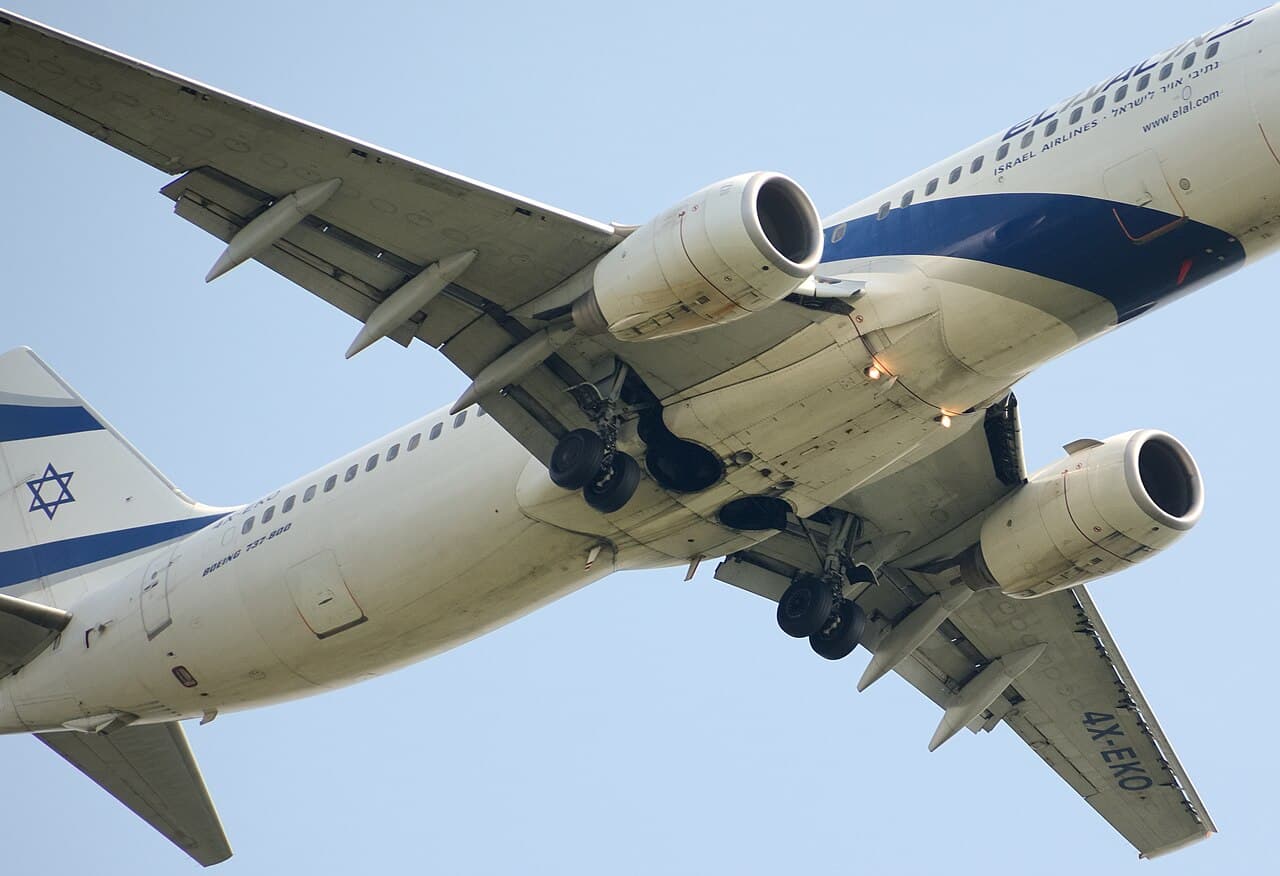
On July 10, a Malta Air Boeing 737-800 Next Generation model suffered a catastrophic uncontained engine failure shortly after takeoff from Thessaloniki Airport in Greece. The flight, operated under Ryanair's subsidiary Malta Air as FR-1879 bound for Memmingen, Germany, experienced rapid cabin decompression near 15,000 feet altitude. The event was caused by debris from the engine separating and striking the window next to seat 11F, which subsequently shattered. A 61-year-old Serbian passenger seated at that window was partially pulled through the broken opening by the decompression forces, though the flight crew managed to divert and safely land back at Thessaloniki about 75 minutes later.
Ryanair CEO Michael O'Leary publicly attributed the engine failure to foreign object damage (FOD) sustained during takeoff. However, the National Transportation Safety Board (NTSB) has not confirmed any definitive cause and is conducting a detailed investigation into the incident. The aircraft involved is an 18-year-old Boeing 737-800 delivered initially to Ryanair in 2008 before transferring to Malta Air in 2022. The NTSB remains cautious about ruling out potential mechanical fatigue or maintenance-related issues given the aircraft and engine age.
FAA Administrator Brian Bedford noted similarities between this event and previous uncontained engine failures on Boeing 737 Next Gen aircraft operated by Southwest Airlines. Those past incidents, occurring in 2016 and 2018, were traced to fatigue cracks in the turbine fan blades of the CFM56 engines. Those cracks eventually caused blade separation, leading to debris impacting fuselage components and sudden decompression events. The NTSB chair Jennifer Homendy has formally opposed O'Leary's early assertions, stating the agency has made no definitive conclusion and must thoroughly examine all evidence before issuing findings.
The Southwest Airlines accidents cited led to one passenger fatality on Flight 1380 in 2018, when decompression pulled the passenger partially out of a broken window, preventing recovery onboard. These prior investigations revealed that fan blade metal fatigue could go undetected using traditional visual inspections, requiring advanced non-destructive testing such as eddy current analysis to find subsurface cracks. This has led to regulatory actions requiring enhanced inspection protocols and structural reinforcements on affected fleets.
Currently, the NTSB has seized the failed engine components from the Malta Air aircraft and is performing detailed laboratory examinations on the fractured fan blades and surrounding engine structures. The results will be critical in determining whether this incident represents a case of foreign object ingestion or a systemic fatigue failure related to the engine model's service life or maintenance practices. While the FAA issued an Airworthiness Directive in 2023 mandating retrofits to engine cowlings aimed at containing blade separations, compliance deadlines extend to 2028, leaving potential exposure in the interim.
The investigation's outcome could have considerable implications for Boeing 737 NG operators worldwide, particularly those using CFM56 engines with similar characteristics. The NTSB’s thorough and meticulous review seeks to prevent recurrence of such hazardous events by identifying root causes involving design, maintenance, or operational factors. This incident underscores the complexities in aging airframe and engine fleets, balancing operational cost-efficiency with ensuring continued airworthiness and safety.
In contrast to Ryanair's initial comments, officials emphasize the importance of evidence-based findings over preliminary assumptions. The tension between the airline's quick claim of foreign object damage and the NTSB’s cautious approach highlights differing perspectives on responsibility and risk. Airline executives' eagerness to assign cause may reflect commercial considerations, while regulators uphold rigorous data-driven analysis as paramount to preserving trust in aviation safety systems.
Given the high-profile history of similar events, regulators and investigators will likely scrutinize maintenance records, inspection regimes, and possible metal fatigue development across the 737 NG global fleet. The investigative process includes metallurgical assessments to detect minute cracks invisible to surface inspections and evaluation of operational data logs. This comprehensive approach aims to uncover latent failures that standard procedures might miss, thereby enhancing future detection and prevention strategies.
This incident at Thessaloniki adds to a growing catalogue of engine-related safety challenges faced by aging narrowbody aircraft. Emerging findings from this investigation will influence not only Malta Air and Ryanair’s fleet management policies but also wider regulatory frameworks governing aircraft lifecycle management. The safety community and passengers alike await the final report that will shape operational standards and maintenance requirements for the Boeing 737 Next Generation fleet moving forward.
Frequently asked questions
- What caused the window blowout incident on the Malta Air Boeing 737?
- The window blowout was due to an uncontained engine failure of a CFM56 engine during climb out, which shattered the window next to seat 11F, causing rapid decompression.
- Has the NTSB determined the definite cause of the Malta Air engine failure?
- No, the NTSB has not made a final determination yet and is investigating all possible causes including foreign object damage and metal fatigue related to engine age.
- How is this Malta Air incident related to previous Southwest Airlines engine failures?
- Both involved uncontained engine failures on Boeing 737 Next Generation planes caused by fan blade fatigue cracks in CFM56 engines that led to blade separation and fuselage damage. Investigators are comparing faults to see if a similar metal fatigue issue occurred.
Read more
All Aviation Safety →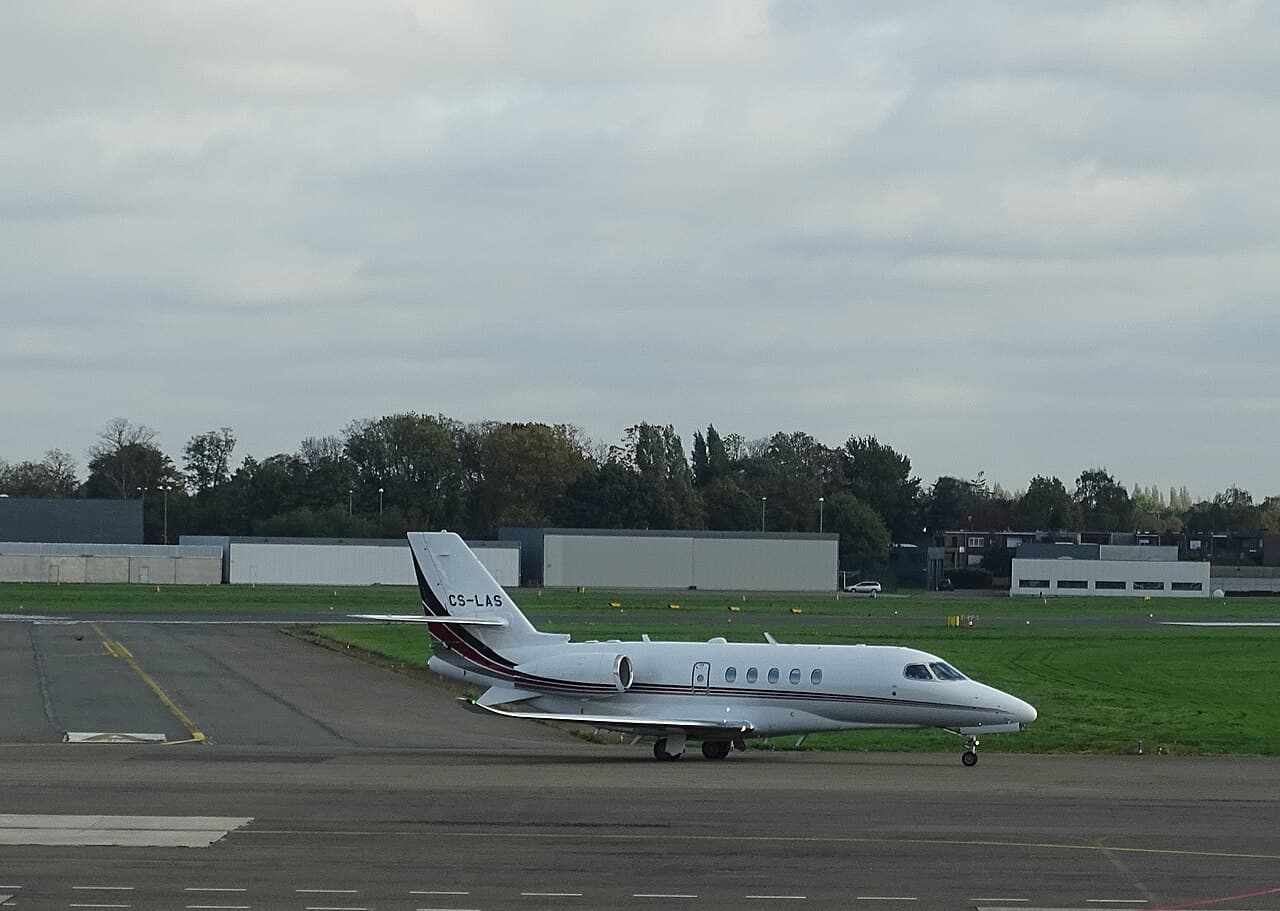
NTSB probes right engine starter generator failure in fatal Laredo NetJets Citation crash
Pilots aboard the Cessna Citation Latitude that crashed in Laredo, Texas, in June reported detecting an unusual vibration in the aircraft shortly after takeoff from Los Cabos, Mexico (MMSD), according to the preliminary report from the National Transportation Safety Board (NTSB). The aircraft, owned by fractional ownership company NetJets , was heading for Austin, Texas, when the flight crew notified the NetJets flight operations duty manager (FODM) about what they described as a "low frequency vibration and a humming noise. It sounds like a fan is on." The pilots stated they could feel it in the dashboard, saying it was steady during the climb but went away when the aircraft entered cruise flight. According to the NTSB report, NetJets maintenance control joined the call. READ MORE: NetJets Crash in Texas Kills 1, Injures 5 READ MORE: NetJets Takes Delivery of First Bombardier Global 8000 The captain stated that the vibration was "intermittent for a while, and now it is gone." "During the discussion, the flight crew received a Crew Alerting System (CAS) message related to the Air Data Computer (ADC), 'BOTH ON ADC 1.' The maintenance controller suggested that the vibration might be caused by an avionics cooling fan in the forward instrument panel. This idea was reinforced by the CAS message." The captain noted the vibration appeared to be cycling on and off, and asked if the vibration could be the ADC related to the fan. The crew continued to troubleshoot the issue, accomplishing the quick reference handbook procedure for the CAS message, and subsequently cleared the message. "After further discussion with the maintenance controller and FODM, it was determined that the flight could safely proceed to its planned destination and write up the vibration once the flight was completed," the report said. Around 10 p.m. CDT, as the airplane approached the U.S.-Mexico border, the flight crew received a "FUEL BST PUMP ON R" CAS message, which indicated the right fuel system had low fuel pressure. A few seconds later they received a "FUEL PRESS LOW R" CAS message, which indicated that the right fuel system pressure was low. Approximately three minutes later, two more CAS messages were displayed: "ELEC TRU FAIL R" and "WSHLD HEAT INOP R". Eleven minutes later, a "FUEL LEVEL LOW R" message was displayed. The flight crew declared an emergency with the Monterrey (Mexico) Area Control Center and was subsequently handed off to Houston Air Route Traffic Control Center (ARTCC) as they entered U.S. airspace. On the initial check-in with the Houston ARTCC, the flight crew reported a generator failure and "multiple other failures," and issues including "fuel level low." The crew requested to divert to Laredo International Airport in Texas, and were cleared to KLRD via radar vectors. When asked if they were ready for the approach or if they needed time to execute checklists, the flight crew stated that they were ready and requested a visual approach to a 5-mile final for Runway 36L. Houston ARTCC gave the crew a right 270-degree turn to allow them to lose altitude and get established on a 14-mile final to Runway 36L. The flight crew made contact with the tower at KLRD. While the airplane was on final approach, the right engine flamed out, followed a few seconds later by the left engine. The first officer, who was the pilot monitoring, asked ATC, "Is there a field off to our right?" ATC replied, "Negative, there are no other fields next to you." The first officer then asked if there were any open pastures or fields to their right and ATC replied, "It's just going to be the main highway, and that's just about it." The NTSB reports that video collected from several security and doorbell cameras show the airplane was on fire as it was on final approach. The flight touched down on the northbound lanes of Texas State Highway Loop 20, approximately 1 mile southeast of the airport. There was vehicular traffic on the road at the time. The jet sheared off several light poles and struck a vehicle before coming to a stop, straddling the edge of an overpass. The airplane came to rest laying on its right side with the rear cabin emergency exit on the ground and the main cabin door exit oriented upward. Good samaritans and law enforcement rushed to the burning wreckage, trying to break the windows to rescue the people inside. Eventually they were able to force open the main cabin door to rescue the five occupants. Local media reported there was a minor injury to a motorist and to police officers who assisted in the rescue. There were five minor injuries and one serious one to the occupants of the aircraft. The one fatality was identified as Joshua Baer, co-founder and CEO of Capital Factory, an Austin-based company created to help local entrepreneurs launch and grow businesses in Texas. Baer spent 20 years making Capital Factory one of the Lone Star State's most influential startup incubators and venture networks, connecting founders with investors, mentors, and corporate partners. Investigators Focus on Right Engine The wreckage was moved to a hangar for study. During the teardown of the engines, the NTSB investigation found the right engine starter generator was missing multiple screws from the outer housing. The starter generator interval overhaul was 1,200 hours, with the last one performed April 25, 2025. NTSB investigators noted the unit had 57.2 hours of time remaining until its next overhaul. Agency investigators removed the starter generator and found its shaft was bent and the cooling fan fractured. Multiple cooling fan blades and ball bearings were found when the generator was removed. There were circumferential scoring marks in the cooling fan shroud. The fuel tube assembly, starter generator, and multiple components were sent to the NTSB Materials Laboratory in Washington, D.C., for further analysis. The NTSB stressed that this information on the accident is preliminary. The final report is still several months away. The complete NTSB preliminary report can be found here .

Bahamas grounds Flamingo Air after fatal Cessna 402 crash near North Andros
The Bahamas Civil Aviation Authority (BCAA) has issued a mandatory suspension grounding all flight operations of Nassau-based regional carrier Flamingo Air following the fatal crash of one of the airline’s Cessna 402 aircraft. The regulatory directive forced the airline to immediately halt both scheduled and charter inter-island services throughout the Bahamian archipelago. The precautionary grounding […]
Passenger refuses to sit beside woman citing Sharia law, assaults flight attendant on Turkey-Germany flight
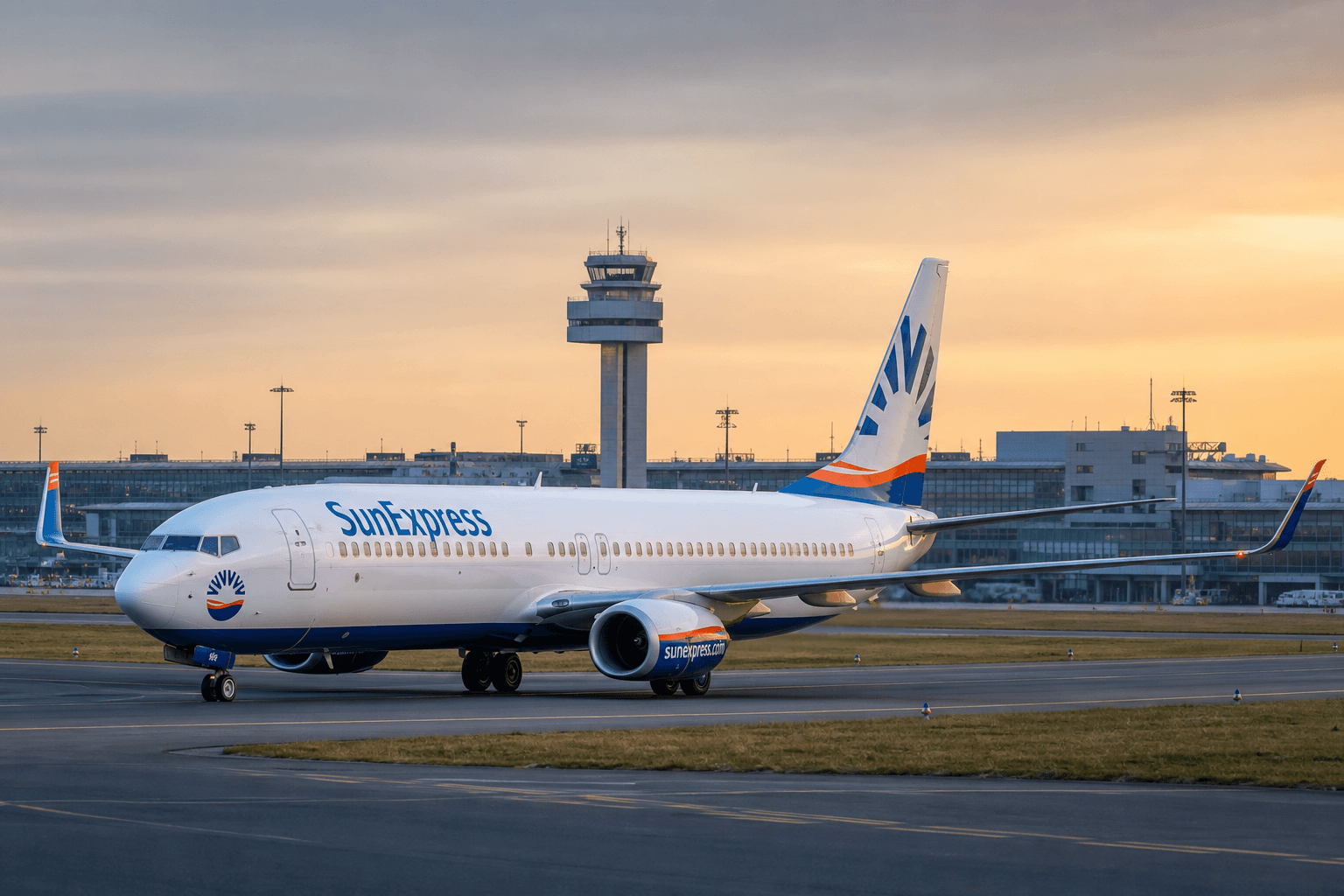
A German resident of Turkish descent was arrested upon landing on a flight from Turkey to Germany, after he refused to sit next to a female seat mate, only to then punch the flight attendant when she tried to help with the situation. The guy then proceeded to insult police officers in Turkish, leading to even more charges… talk about awful behavior. Passenger causes commotion on Turkey to Germany flight German media is reporting on an incident that happened on June 1, 2026, on a flight from Samsun, Turkey (SZF), to Dusseldorf, Germany (DUS). This happened on a SunExpress flight, with that being a leisure airline that's a joint venture between Lufthansa and Turkish Airlines. According to reports, the 29-year-old man ended up in a situation where he was sitting next to a female, which he wasn't comfortable with, claiming it was in violation of Sharia law. When the flight attendant confronted him, he reportedly punched her in the face. German Federal Police were called to the airport in Dusseldorf shortly before 7AM, to take a report of the assault. A criminal complaint was subsequently filed. The passenger confessed to the crime, though the conversation didn't go smoothly. The man reportedly insulted the police officers in Turkish, thinking they wouldn't understand. However, since one of the officers spoke Turkish, the man received an additional charge of insult, beyond his charge of assault. One detail that's not known is the context in which he ended up sitting next to a woman. Like, how did this incident only happen while the plane was in the air, and not on the ground in Turkey, before departure, since presumably he would've been offloaded at that point? This incident happened on a SunExpress flight This situation is obviously terrible on all levels Even as someone who isn't really religious, I think people are entitled to there sincerely held religious beliefs. However, if your religious beliefs impact the ability of others to go about their day, I think it's on the person with the religious beliefs to make accommodations, rather than putting that burden on others. On the topic of Sharia law, as you'd expect, different people have different interpretations. The idea is that direct contact and interaction with the opposite gender (if not related by blood, marriage, etc.) is only allowed for necessity. I guess the idea here is that if you're sitting next to someone on a plane you could accidentally touch, and that was presumably an issue for him. Now, let me point out that not all people with that general belief system interpret things that way, and many will view it as being fine to sit next to someone of the opposite gender on a plane. If this is really how the guy felt, he should've purchased an extra seat (which SunExpress allows) to prevent any potential touch. Of course the irony here is that he was so concerned about inadvertently making contact with a female, only to then… slap a female, which I'm pretty sure would qualify as direct contact. Then the icing on the cake here is that he insulted the police officers, which is a criminal offense in Germany, and it can even lead to imprisonment. Ouch all around… This guy should've purchased an extra seat, if it was so important Bottom line A passenger on a SunExpress flight had quite the meltdown, when he first refused to sit next to a woman, only to then punch the flight attendant when she tried to intervene. When the flight was met by police in Germany, he then insulted the officers, which is also a crime in Germany. While I respect sincerely held religious beliefs, this guy was 100% in the wrong on all counts here, and I imagine he'll be held accountable for his behavior. What do you make of this flight seating incident?

Oregon launches comprehensive public drone pilot training and testing framework
The Oregon Department of Aviation released a training and testing template July 10 for public agencies that operate drones. This new template provides additional model standards that public agencies may adopt and customize for pilot qualifications, recurrent training and public-safety missions. Training Beyond Part 107 The FAA requires Part 107 certificate holders to complete online recurrent training every 24 calendar months, in an effort to maintain aeronautical knowledge recency. Oregon's document goes further by adding written test questions, practical flight evaluations, emergency drills, airspace-deconfliction exercises, privacy and public-records training, maintenance requirements and launch-decision checklists. "This is the next step in building safe and accountable public agency drone programs in Oregon," Oregon Department of Aviation Director Kenji Sugahara said. "A policy tells an agency what the rules are. Training and testing show whether people can actually apply those rules in the field. That matters when drones are being used near roads, bridges, neighborhoods, emergency scenes, firefighters, patients, helicopters, or disaster areas." Public-Agency Requirements Oregon law already requires public bodies to register public-use drones with the state aviation department and submit annual reports. Those reports must summarize how frequently the aircraft were used, explain the primary purposes of the flights and direct the public to the agency's drone policies. Educational institutions register as drone users rather than registering each aircraft. The template is designed for cities, counties, state agencies, fire departments, emergency managers, transportation departments and other public bodies. Optional sections address Drone as First Responder programs, fire and EMS support, search and rescue, emergency management, mutual aid, remote operations and FAA-authorized flights beyond visual line of sight. The department said the document does not create new flight authority, authorize law enforcement activity or permit operations beyond FAA limits.
The Daily Touch & Go
The day's best aviation news in your inbox. Free, no spam.