

Image: San Diego Air & Space Museum · Public domain · via Wikimedia Commons
United Airlines CEO Explored Mergers With Delta and American Airlines, Both Declined
United Airlines CEO Scott Kirby pursued merger talks with Delta and American Airlines, aiming to create a mega-airline, but both rivals ultimately rejected the proposals.
The gist
United Airlines' CEO sought mergers with Delta and American Airlines, but neither carrier accepted the deal, despite potential to reshape the US market.
Continuing coverage
All Delta Air Lines →- Delta Air Lines Elevates Passenger Experience with Delta Sync Inflight Technology
- United CEO Proposed Merger With Delta Creating 35% U.S. Market Share
- Frontier Airlines to Launch Starlink Wifi Fleetwide, Surpassing Delta's Connectivity Offering
- Airlines Confirm Structural Shift with Sustained Fare Increases Amid Rising Fuel Costs
- Delta Plans Daily Los Angeles-Manila Flights Starting March 2027 With Airbus A350
Scott Kirby, chief executive of United Airlines, initiated discussions about potential mergers with two of the largest U.S. carriers: Delta Air Lines and American Airlines. Early in 2025, Kirby approached Delta, including speaking directly to its CEO, Ed Bastian, and Delta conducted preliminary due diligence on the merger idea before deciding against pursuing it. Months later, Kirby brought a similar proposal to American Airlines, seeking to merge and form a dominant airline in the U.S. domestic market.
The prospect of consolidation between any two of the 'US3'—United, Delta, and American Airlines—has historically been considered unrealistic due to antitrust concerns and the high market share these airlines command. Together, they hold approximately 52% of the U.S. domestic market. Kirby's efforts to broker combinations within these top-three carriers highlight a strategic attempt to capture over a third of this market through integration.
Kirby's approach toward these mergers marks a departure from traditional acquisition strategies focused on smaller carriers. Despite speculation, United previously ruled out piecemeal acquisitions of smaller airlines, including a public rejection of buying JetBlue, mainly due to concerns related to JetBlue's debt. Instead, Kirby has advocated for large-scale combinations to create the 'very best' airline globally, reflecting ambitious goals to reposition United at the forefront of the industry.
While Delta showed willingness to explore the idea with due diligence, it eventually chose to dismiss the merger. Conversely, American Airlines declined to engage in merger talks altogether, rejecting United's proposal both privately and publicly through stock market filings. This contrast in responses reveals differing strategic priorities among the top U.S. carriers and possibly reflects deep reservations about the competitive and regulatory implications of such mergers.
The timing of Kirby's overtures is notable against the backdrop of U.S. regulatory attitudes, particularly under the Biden administration, which has taken a tough stance on airline consolidation, as seen in blocking the JetBlue-Spirit Airlines merger. However, there is a perception that the current administration might be more receptive to mergers between major carriers, although former President Trump himself expressed opposition to a United-American merge potentially influencing the decision landscape.
Delta's market capitalization stands at about $48.18 billion, while United's is approximately $39.32 billion. This disparity indicates United would be the smaller party in any merger with Delta, complicating the potential partnership dynamics. Observers consider how leadership roles might be determined, especially with Kirby's ambitions possibly including remaining as chief executive of a merged entity, which would sideline counterpart executives such as Delta's Ed Bastian.
Kirby's expansive consolidation vision, while not embraced by Delta or American Airlines, underscores the growing pressures within the airline industry, including escalating fuel costs and competitive challenges. Smaller carriers face increasing difficulties, often leading to survival-driven mergers or acquisitions. Kirby’s strategy seeks to preemptively create a stronger competitive position by combining with another industry heavyweight, pushing beyond incremental growth via smaller acquisitions.
Despite the setbacks in garnering acceptance from his largest rivals, Kirby's outreach reflects a significant strategic intent to reshape the U.S. airline industry. His repeated attempts to pursue fundamentally transformative mergers reveal the scale of ambition driving United Airlines' leadership, even if regulatory and market realities constrain actual merger execution.
The failure of these merger talks with both Delta and American Airlines leaves United Airlines to continue navigating a competitive market structure dominated by the US3 without direct consolidation. Kirby’s efforts, nevertheless, signal ongoing merger interest at the highest levels and suggest that future shifts in regulatory or economic conditions could revive interest in large-scale airline mergers.
Frequently asked questions
- Did United Airlines attempt mergers with both Delta and American Airlines?
- Yes, United Airlines CEO Scott Kirby engaged in merger talks with Delta Air Lines in 2025 and later proposed a merger to American Airlines, but both carriers ultimately declined.
- What was the market impact if United merged with either Delta or American?
- A merger between United and either Delta or American would create a mega-airline controlling over a third of the U.S. domestic market, significantly changing the competitive landscape.
- Why did United Airlines reject acquiring smaller carriers like JetBlue?
- United, under Scott Kirby, rejected acquiring JetBlue due to concerns about the company's debt levels and prefers pursuing large-scale mergers rather than piecemeal growth through smaller acquisitions.
Read more
All Regulatory →
United Airlines sues insurer Homesite over $5 million cyber claim refusal after CrowdStrike outage
United Airlines is suing one of its cyber insurers after it refused to pay out a claim the Chicago-based carrier made following the infamous July 19, 2024, CrowdStrike outage, which bricked millions of computers running Windows software worldwide. In the immediate aftermath of the outage, United was forced to cancel 1,600 flights, and thousands more were delayed. Around 200,000 passengers were left stranded as the airline raced to restore its IT systems, resulting in losses totalling nearly $114 million. Thankfully, United had taken out a comprehensive insurance policy for just this kind of “catastrophic cyber event.” Specifically, United had created a so-called ‘insurance tower’ with nine different insurance companies providing a combined $200 million in coverage above a $50 million self-insured retention. The way this tower works is that United is responsible for the first $50 million of losses before it can start making claims for its various insurers. The first layer in this insurance tower was covered by AIG who agreed to pay out the full $15 million its coverage offered. The second layer was shared by Starr and Evanstan to a limit of $10 million. Both insurers paid out $5 million to reach this limit. The third layer was covered by Scottsdale, which also had a limit of $10 million, and this was paid out in full. The fourth layer was shared by Starr and Liberty, also to a $10 million limit. Again, both insurers paid out $5 million each. The fifth and final layer was shared by Indian Harbor and Homesite to a limit of $10 million. Indian Harbor paid out its share of $5 million, while Homesite, the final insurer in the tower, refused. “This case is about an insurer that took United’s premium, watched every other insurer… pay a valid claim in full, and then—standing alone against the unanimous judgment of seven other insurers—refused to honor its own policy,” lawyers acting on behalf of United wrote in an unusually strongly worded complaint filed in an Illinois district court earlier this week. “Homesite’s refusal is not a good-faith coverage dispute. It is an outlier position.” United’s lawyers explain that around $20 million of the losses it incurred from the CrowdStrike outage was from paying out compensation to passengers – something that it claims was required under federal mandate. Meanwhile, Homesite has allegedly claimed that United should have sought written permission before it paid out this compensation. “No insurer acting in good faith would demand that its policyholder choose between federal regulatory compliance and insurance coverage,” United’s lawyers add in their complaint. “The diametrically opposed positions taken by two insurers in the same layer… confirm that Homesite’s coverage denials are not the product of a good-faith evaluation of coverage but are instead driven by a desire to avoid its contractual obligations.” United is demanding a jury trial in this case, and, along with the $5 million it says it is owed by Homesite, the airline is also seeking a judgment declaring that Homesite acted in bad faith, pre and post-judgment interest, and other monetary damages.
American Airlines to Amend Downgrade Refund Policy Amid DOT Pressure
American Airlines is defending its right to refund only 40% when it downgrades a passenger, even if that leaves the carrier keeping thousands of dollars. It now promises a different calculation, but wants regulators to dismiss the complaint without making shortchanged customers whole.
United Airlines to Retire 80 Older Aircraft in 2027 as Boeing 737 Max 10 Joins Fleet
Number of retirements a "step up" from previous years, says the US carrier. United Airlines plans to retire 80 older, less fuel-efficient aircraft in 2027 amid a fleetwide cabin refresh that should help cut costs and improve margins. The new number of retirements is a "step up" from previous years, United chief financial officer Mike Leskinen said during the carrier's second-quarter earnings call on 16 July. This should help balance capacity with demand and help ensure the airline's entire fleet is retrofitted with upgraded interiors more quickly. As new aircraft enter the fleet, they will bolster United's "barbell approach", which matches newer, fuel-efficient aircraft to high-demand, profitable routes. Older aircraft with more dated cabins and higher costs can be "sat down" and only used when necessary in peak times. "It maximises not only profits, but it maximises return on invested capital to have a larger amount of these younger, more fuel-efficient aircraft," says Leskinen. United expects to take delivery of its first Boeing 737 Max 10 aircraft in 2027, with up to 20 expected next year and another 147 on order.. The more fuel-efficient new model will feature plenty of premium seats and will operate United's most important routes. "The Max 10 will be superior in every way," says the carrier's chief commercial officer, Andrew Nocella. Earlier in July, Boeing said it had started producing Max 10s on a new factory line in Seattle as it works toward securing US Federal Aviation Administration (FAA) certification for the narrowbody. Cabin upgrades across the fleet United reaffirmed its previous plan to add SpaceX's Starlink satellite Wi-Fi to 1,000 aircraft by the end of the year. "As fast as Starlink can produce the antennas for us, we're going to get them on the airplane," says chief executive Scott Kirby. "For premium customers that really want to be able to make sure they're connected with high speed, it is going to lead to big share gains for us." Other cabin refresh work – including increased premium seat capacity, upgraded seatback entertainment screens and larger overhead bins – is also under way, United says, which should help increase margins. Getting those margins to where United wants them, in the "mid-teens" will require "more structural changes in the industry", Kirby says, noting some competitors will lose money this year thanks to sharply higher fuel costs. "They have an awful lot of flying that loses money on an individual route basis. One way or another, that gets resolved over time," he adds.
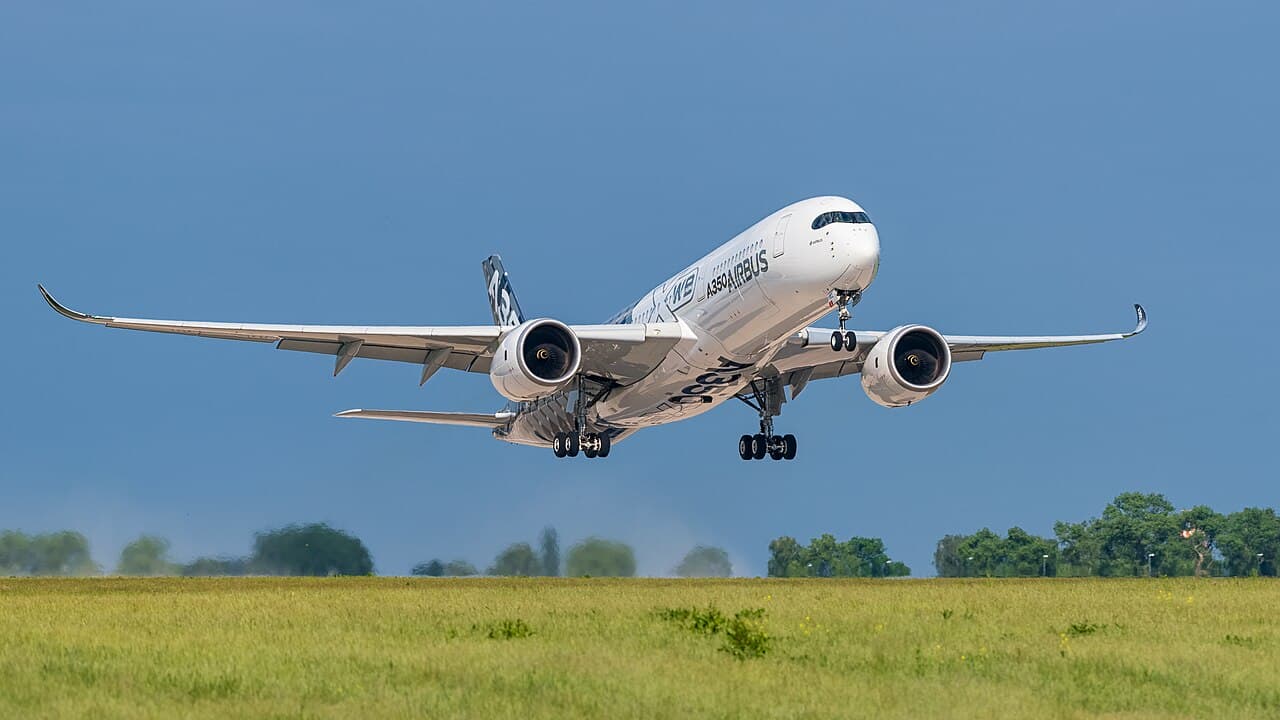
Delta to Launch Los Angeles-Manila Flights in March 2027 with Airbus A350
Historically, Delta Air Lines has shied away from ultra long haul flights, with a limited number of exceptions. However, that's slowly starting to change. Delta recently launched flights to Hong Kong (HKG) , and Riyadh (RUH) flights are expected soon as well. A few months back, Delta revealed in a regulatory filing that it plans to launch yet another route to Asia. Last week I wrote about how an announcement was imminent. Well, that has now been confirmed, as Delta has today unveiled details of its newest long haul route. Delta confirms March 2027 launch for flights to Manila Delta plans to launch nonstop flights between Los Angeles (LAX) and Manila (MNL) as of March 27, 2027. The flight will initially operate 3x weekly, before switching to daily as of June 7, 2027. Specifically, the flight is expected to operate with the following schedule: DL181 Los Angeles to Manila departing 11:50PM arriving 5:30AM (+2 days) DL180 Manila to Los Angeles departing 7:40AM arriving 6:05AM Delta plans to fly from Los Angeles to Manila The 7,305-mile flight will be operated by an Airbus A350-900, featuring the carrier's latest cabin products. The flight is blocked at 14hr40min westbound and 13hr25min eastbound. We've officially had a clue that this route would be added since October 2025, when a Delta executive revealed to employees internally that the airline plans to add flights to Singapore (SIN) and Manila (MNL). So while the Singapore service remains to be seen, the Manila flights are becoming a reality. LAX-MNL flights departing Manila at 7:40 A.M. will arrive in Los Angeles at 6:05 A.M. on the same day, while return flights will depart Los Angeles at 11:50 P.M. and arrive in Manila at 5:30 A.M. two days after departure. https://t.co/b37BKT8Dpm — JonNYC (@xJonNYC) July 17, 2026 I'm curious to see how Delta's Asia growth strategy plays out It's an interesting time for Delta when it comes to its Asia network: Historically, Delta's Asia network has been based so heavily around routing passengers through Seoul Incheon (ICN) with connections on joint venture partner Korean Air, which means Delta's actual list of nonstop Asia destinations has been very limited With Delta now taking delivery of a good number of long haul planes, including new "flagship" Airbus A350-1000 aircraft , the airline has big growth aspirations for the plane Delta's West Coast strategy has been a challenge — for a while we saw the airline growing in Seattle (SEA), setting that up as a transpacific gateway, but that airport is pretty maxed out in terms of capacity, and Delta is in the number two spot behind Alaska ; now we're seeing Delta try to grow greatly in Los Angeles (LAX) , which the airline sees as a "once in a generation" opportunity Los Angeles is probably the most competitive West Coast market among Asian carriers, and capacity is seemingly endless, and as a result, yields can be really rough; that's why none of the "big three" carriers have been able to achieve a dominant position at the airport I'm excited to see Delta's long haul network get more interesting, but there's no denying this strategy also faces some challenges. For one, US carriers have among the highest operating costs in the world for ultra long haul flights, given labor costs at US airlines. Beyond that, it's hard for Delta to be the leader across the Pacific, when they're competing against United, which not only has a very well established network, but also has a mega hub in San Francisco (SFO), which has a scale that Delta simply can't replicate in Los Angeles or Seattle. The Manila route specifically is also interesting, given that Philippine Airlines is joining the oneworld alliance , so might become a more competitive option for some. For that matter, the airline is also improving its passenger experience in premium cabins, with new planes and seats . United also added San Francisco to Manila flights in late 2023, though United is also a lot further along when it comes to the size of its Asia route network, and San Francisco is also a much bigger hub for the airline. So we'll see how this situation evolves. Admittedly airline economics have changed over the years, and routes no longer need to be wildly profitable directly, but instead, loyalty programs are also a big consideration. But still, I'm curious to see how this whole Asia network growth plays out for Delta. Can Delta make money flying from Los Angeles to Manila? Bottom line Delta plans to launch nonstop flights between Los Angeles and Manila as of late March 2027. The flight will initially operate 3x weekly, before moving to daily within a few weeks. Delta will use an Airbus A350 for the service, as it does for all of its Asia routes. Frankly, I'm excited to see Delta grow across the Pacific, given that United basically had Asia to itself among the "big three" US carriers, in terms of the size of its network. However, I'm just not convinced that Delta has a winning strategy here, at least in terms of this being profitable in the long run. What do you make of Delta's Manila plans?
The Daily Touch & Go
The day's best aviation news in your inbox. Free, no spam.