

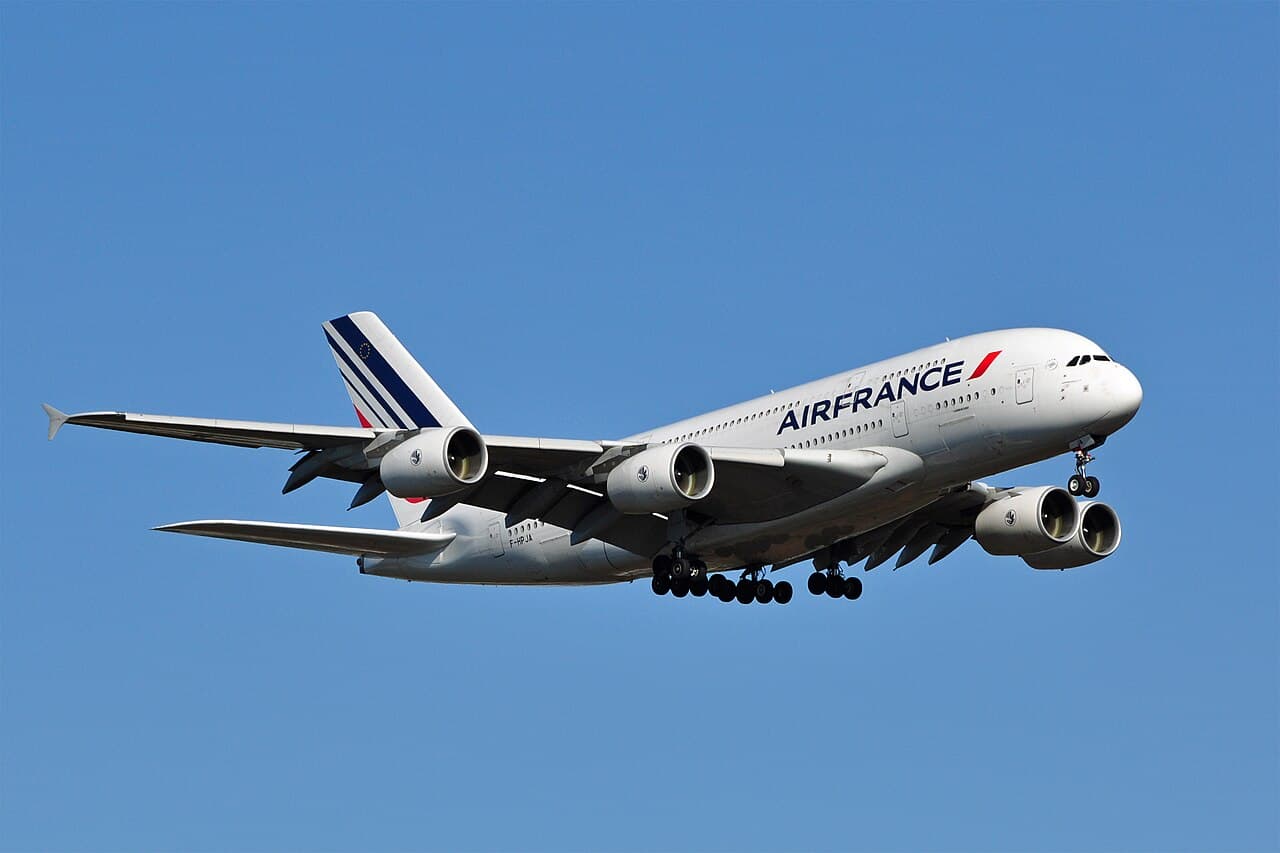
Image: Joe Ravi · CC BY-SA 3.0 · via Wikimedia Commons
Emirates Extends Airbus A380 Service by Cannibalizing Older Jets for Parts
Emirates plans to keep its Airbus A380 fleet flying until 2041 by using components from retired aircraft to maintain engines and airframes amid production line closure.
The gist
To operate Airbus A380s through 2041, Emirates is cannibalizing older jets for parts to sustain its fleet and engines.
The Airbus A380, famed as the only full-length double-decker in commercial aviation, faces sustainability challenges due to its production ending in December 2021 and limited operators keeping it active. Emirates remains unique by relying heavily on the A380, aiming to fly these aircraft well into the next decade, potentially until 2041. This ambition requires creative maintenance strategies including salvaging parts from older A380s to support the wider fleet's operations.
Emirates’ hub-and-spoke model based in Dubai still prioritizes the A380 for several reasons: its capability to transport large passenger volumes on congested routes where airport slots are limited, especially at major destinations like London Heathrow. Unlike other airlines pivoting to smaller twinjets for flexibility and economy, Emirates values the A380’s large premium cabins and signature onboard experiences, making the superjumbo a core brand asset and service element.
Since Airbus ceased A380 production after just 251 deliveries, airlines face challenges in sustaining parts supplies and maintenance capabilities. For Emirates, maintaining the A380 fleet is complicated by the aircraft’s age and dwindling commonality. A key element is the type of engines powering the plane: either the Engine Alliance GP7200 or the Rolls-Royce Trent 900. Emirates primarily operates GP7200-powered A380s, which dominate the fleet still in active service.
The Engine Alliance GP7200 initially offered a fuel burn advantage over the Trent 900 and demonstrated longer time-on-wing intervals at Emirates, reducing immediate maintenance frequency. However, owing to Emirates operating the largest and most intensively used A380 fleet worldwide, GP7200 engines accumulate higher flight hours and require more maintenance events overall. Hence, these engines experience accelerated aging compared to the Trent 900s on smaller fleets.
This operational intensity means Emirates’ GP7200 engines are both performing robustly and simultaneously aging faster. With a large number of aircraft flying substantial daily hours, the airline faces a higher number of engine retirements anticipated over the next decade. Therefore, Emirates must carefully manage its engine and airframe inventory to maximize fleet sustainability and economic viability.
To enable continued A380 operations through 2041, Emirates is cannibalizing retired A380 airframes and engines to harvest spares for the remaining aircraft. This approach helps mitigate part shortages caused by the program’s end and supports ongoing engine maintenance. It is a pragmatic strategy enabling the airline to leverage its significant investment in the superjumbo, preserve route capacities, and uphold its market differentiation.
The decision to sustain the A380 fleet reflects Emirates’ strategic emphasis on high-volume hub operations and premium cabin services rather than shifting entirely to smaller twinjets like many competitors. While challenging, this maintenance strategy allows Emirates to align fleet availability with network demand and airport slot constraints, particularly on some of its most critical long-haul routes.
Given the complexities of aging A380 engines and airframes as well as the discontinued production line, Emirates’ commitment to this aircraft type sets it apart in the industry. No other airline approaches this scale and longevity of A380 operations. The cannibalization of older aircraft underscores the challenges of sustaining large four-engine jets in a market favoring efficiency and flexibility but highlights the unique role the A380 continues to play in Emirates’ model.
Frequently asked questions
- Why is Emirates choosing to keep flying Airbus A380s until 2041?
- Emirates relies on the A380 for its high-capacity hub operations at Dubai, where limited airport slots make the superjumbo’s large passenger capacity advantageous for profitable routes.
- How does engine type affect Emirates’ Airbus A380 fleet maintenance?
- Emirates operates mainly GP7200-powered A380s, which accumulate more flight hours and require more maintenance due to intensive use, influencing which aircraft remain economical to fly or better used for parts.
- What strategy is Emirates using to support its aging A380 fleet amid discontinued production?
- Emirates cannibalizes older A380 airframes and engines to harvest spare parts, allowing sustained operations despite parts scarcity caused by the end of Airbus A380 production.
Read more
All MRO/Maintenance →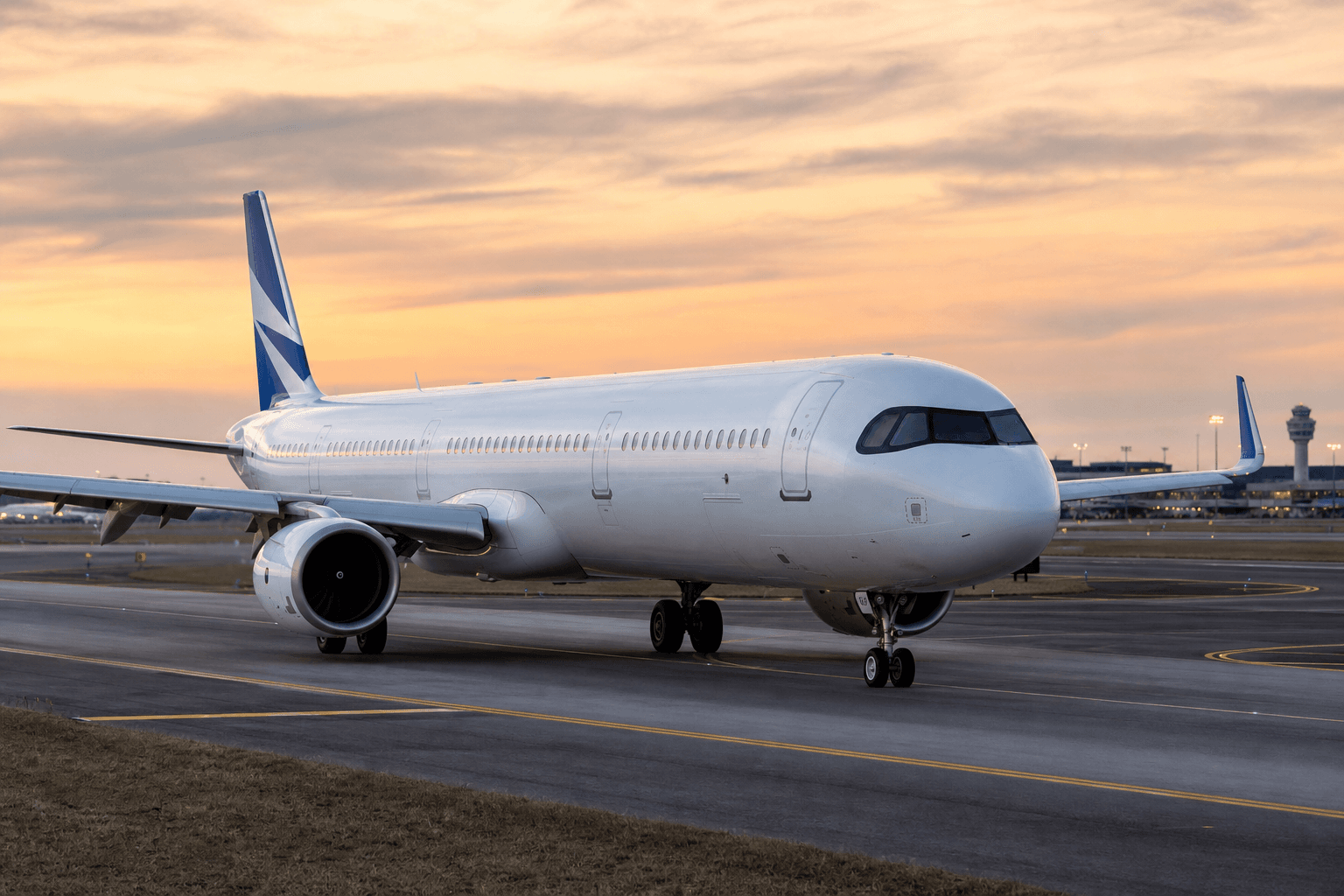
American Airlines Begins Unlocking A321XLR Business Class Suite Doors After FAA Approval
In late 2025, we saw American Airlines start to take delivery of Airbus A321XLRs , the carrier's new long range, narrow body planes (though they're initially being used primarily for premium transcontinental flights). These planes have new business class seats , and one of the features was supposed to be that they feature privacy doors. Initially the airline wasn't actually allowed to use those doors, though that's now changing. However, it's only happening over a few months. American gets A321XLR business class doors certified Aircraft seat certification is a real pain nowadays for airlines, and can greatly delay new aircraft. In the case of American's new A321XLR business class seats, they fortunately got certified pretty quickly… for the most part. The catch is that the seats have privacy doors, but up until now, they've been locked, and couldn't be used by passengers. American's A321XLRs have new business class seats That has now finally changed. As reported by JonNYC , the Federal Aviation Administration (FAA) has finally certified the doors for use, meaning these can now be opened and closed. However, the business class doors on all planes won't be unlocked overnight. Instead, the doors are initially being unlocked on one plane, with the registration code N302NY , which is also the most recent A321XLR that the airline took delivery of. Then over the coming weeks ("through the fall") the remaining planes will also have these suite doors unlocked, but with a phased approach. American notes how tech ops has to activate the doors. slight difference in statement on dates: pic.twitter.com/x7CQsxZI2p — JonNYC (@xJonNYC) July 18, 2026 Ultimately doors at business class seats aren't some sort of a game changer, though if the planes have them installed, then it's of course nice to have the option of using them. It's perhaps interesting to note that FAA requirements require more flight attendants when planes have suites with doors. You need one flight attendant for every 50 passengers (or fraction thereof), and then an additional flight attendant if there are doors. So since these planes are equipped with 155 seats and suites have doors, they require five flight attendants. Then again, that's the minimum number of flight attendants with which American staffs these flights anyway. I'm curious why the door activation takes so long American only has six A321XLRs, so I'm curious, does anyone have any theories as to why it's taking months to unlock these doors? The doors are physically on the planes, so my assumption was just that the "key" to unlock the doors wasn't being given to crews, to ensure that they weren't accidentally used. Is there more to this, and why is tech ops required to get involved? Like, how heavy is the maintenance required to complete this project? Or even with the FAA certifying the seats, is there some additional work required with each plane? American has actually had pretty good luck with seat certification, all things considered. United still doesn't have its new Dreamliner business class seat doors certified, while Delta seemingly can't get its new A321neo seats certified , to the point that the airline is likely ditching its seat manufacturer . American is only progressively unlocking business class suite doors Bottom line The FAA has finally certified American's new A321XLR business class suite doors. Up until now, these doors have been locked due to lack of certification, but that has finally changed. However, don't expect them to be in use across the fleet effective immediately. While one plane now has the doors unlocked (and it should start flying passengers today), the other planes will only be activated in phases, "through the fall."
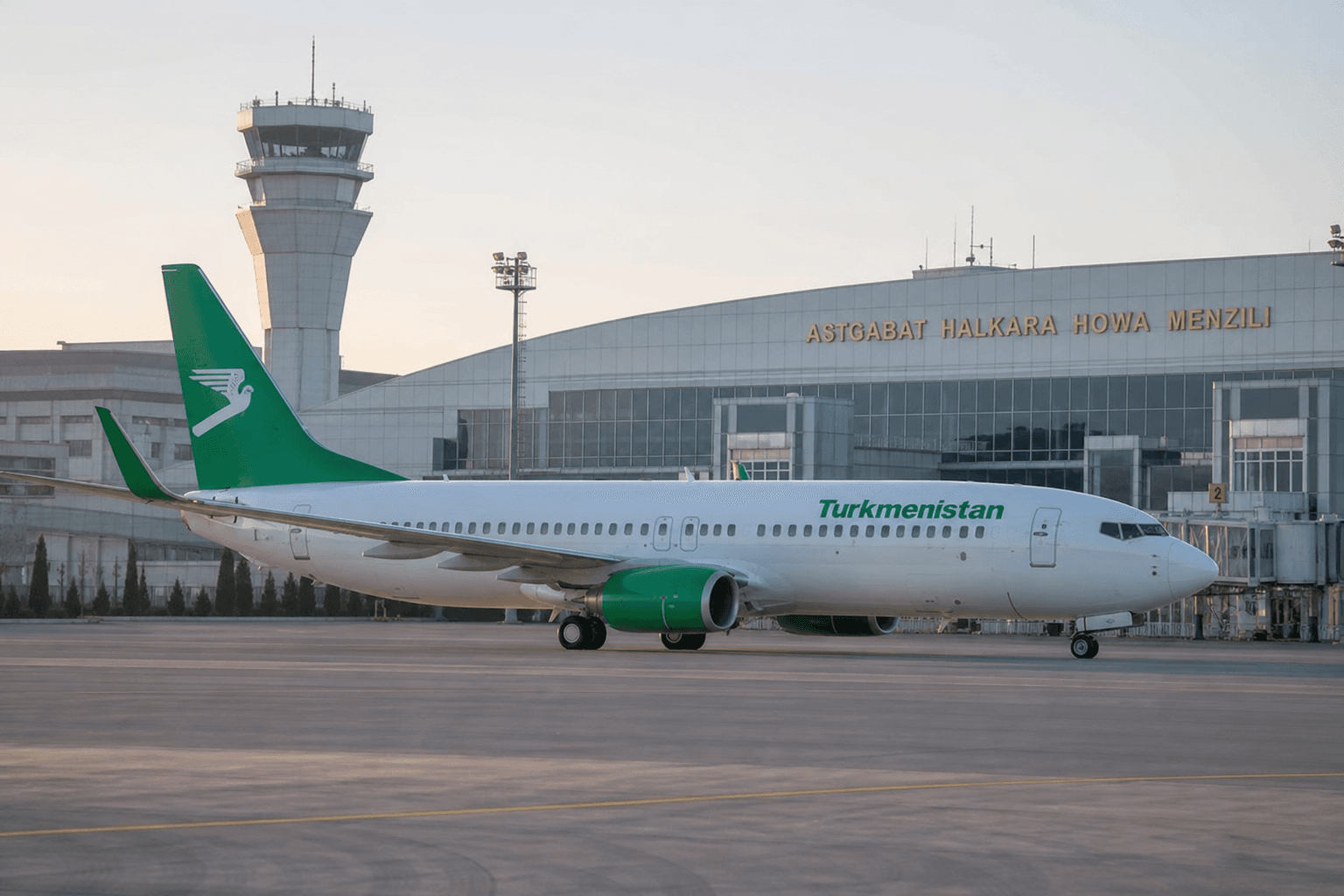
Inside Turkmenistan Airlines 737 Business Class: Unusual Service and Full Cabin on Ashgabat-Delhi Flight
Hello from India , as I just wrapped up my Turkmenistan Airlines adventure. In the previous installment, I've covered my flight in Turkmenistan Airlines' Boeing 777-300ER business class , as well as my odd transit experience at Ashgabat Airport (ASB) . In this post, I'd like to cover my connecting flight in Turkmenistan Airlines' Boeing 737-800 business class, on the 3hr5min flight from Ashgabat to Delhi (DEL). Well, this was definitely the stranger of the two flights. I got called out for taking pictures (fair enough), the cabin was completely full, the plane briefly turned around mid-flight, and the entire meal service was strange. Let me share some initial thoughts, and then soon I'll have a full trip report. Some Turkmenistan Airlines 737 business class observations Turkmenistan Airlines' 737 business class is reasonably comfortable, with recliner seats in a 2-2 configuration, perhaps a bit more spacious than you'd find in the US. Turkmenistan Airlines 737 business class cabin Turkmenistan Airlines 737 business class seats There was a limited selection of streaming entertainment, but no Wi-Fi. Turkmenistan Airlines 737 streaming entertainment I had heard that Turkmenistan Airlines and Ashgabat Airport are very strict about no photos being allowed, but I wasn't told anything on the first flight or at the airport, and I didn't hear any announcements or see any signs. I should also mention that I was being really careful with taking pictures to avoid being seen, and it worked. Well, on this flight, I got "caught" almost immediately upon boarding. I got to my seat, and a moment later the lead flight attendant yelled from the front of the cabin "photos are not allowed." Okayyy… well that complicates things. While my previous flight was very empty, with just two other business class seats taken, this flight was the opposite — every single seat on the plane was taken. What I found so odd is that I got onboard at the start of boarding, when business class was called. However, I must've had the cabin to myself for 30 minutes, before the other 15 seats suddenly all filled up at once. Were these last minute operational upgrades because economy was oversold, do premium passengers in Turkmenistan just like to board last, or what was going on? Very strange. Also, I had a slight bit of confusion when a while after takeoff we suddenly made a 180-degree turn, and headed back toward Ashgabat. Turkmenistan Airlines 737 business class overhead monitor I was worried what was going on — did some airspace close, was there a maintenance issue, or something else? Fortunately just minutes later we turned in the other direction again, as it seems we were put in a pretty wide holding pattern. I'd be fascinated to know the reason — is the airspace around Turkmenistan and Afghanistan that busy, or…? The views in this part of the world are just breathtaking, especially over Afghanistan. Turkmenistan Airlines 737 view over Afghanistan Turkmenistan Airlines' business class meal service is strange I must say, I found the meal service on this flight to be incredibly strange. There was a single flight attendant working business class, and she was quite friendly. On most airlines, you might find that they first serve everyone a round of drinks, or bring out meals to everyone pretty quickly. That wasn't the case here, as I ended up being served my meal 10 minutes before the descent started. How? Well, she served front to back (which is fair), but it seems it took an incredible amount of time to prepare each meal, so there was always like a 10-minute gap between meals being brought out. I've never seen anything like that before. The service was so slow that she'd then end up clearing trays of others before other people served in the first place. There were a couple of menus on the plane, and they'd be handed to the passengers who would be next to order. Below is what the menu looked like. Turkmenistan Airlines business class menu Let me point out this flight departed at 6:40AM, so my assumption was "oh, they're probably serving breakfast." I'm confused about the chicken breast with cheese sauce, mashed potatoes, and vegetables — is this a traditional Turkmen breakfast dish, or is the airline confused about what people in other parts of the world typically eat for breakfast? Anyway, I asked the flight attendant what kind of "meat" was being served with the pancakes, to which she replied… "we serve lunch." Lunch on a 6:40AM flight, when the menu also lists breakfast? Okay… so I ended up going for the beef stroganoff. As I observed the flight attendant serving meals to all the passengers in front of me, I noticed how it looked like she was just bringing out massive trays of paper and packaged things, at least from the angle I was seeing them. I was mighty curious what the meal would be like. I was finally served my meal 50 minutes before landing, which was just 10 minutes before we started our descent. Yes, that's how long it took for the meals to be served to other passengers. Below is how the meal was presented… wow. I'm so confused, because there's simply no space to actually place all of the things that are on the tray. Turkmenistan Airlines business class meal After I took off all the clutter, below is what the tray looked like. Talk about quite the selection of food! I was impressed by the quantity, and I thought the cherries were a cute touch. But in terms of quality, everything else was decidedly mid. Turkmenistan Airlines business class meal What I just couldn't wrap my head around is where everything was actually supposed to be placed. The meal tray took up the entire tray table, and was stacked high with things. Below is just part of the other items that were on the tray (I tried to take these pictures as subtly as possible, given the previous warning from the flight attendant). For example, it's one thing to give someone one package of nuts and dried fruit, but three packages?! To Turkmenistan Airlines' credit, I love the branding on everything… Turkmenistan Airlines business class meal accompaniments Bottom line I'm delighted I had the chance to fly Turkmenistan Airlines, as it has been on my list for a long time. While I'd love to visit the country, flying the airline fits in the "been there, done that" category. I actually think the airline offers great value given its low fares, but expect everything to be very bare bones. As someone who loves a unique passenger experience, I must say that if anything, I was disappointed that Turkmenistan Airlines wasn't a bit stranger. But hey, I realize that's a uniquely "me" observation. What's your take on this Turkmenistan Airlines 737 business class experience?
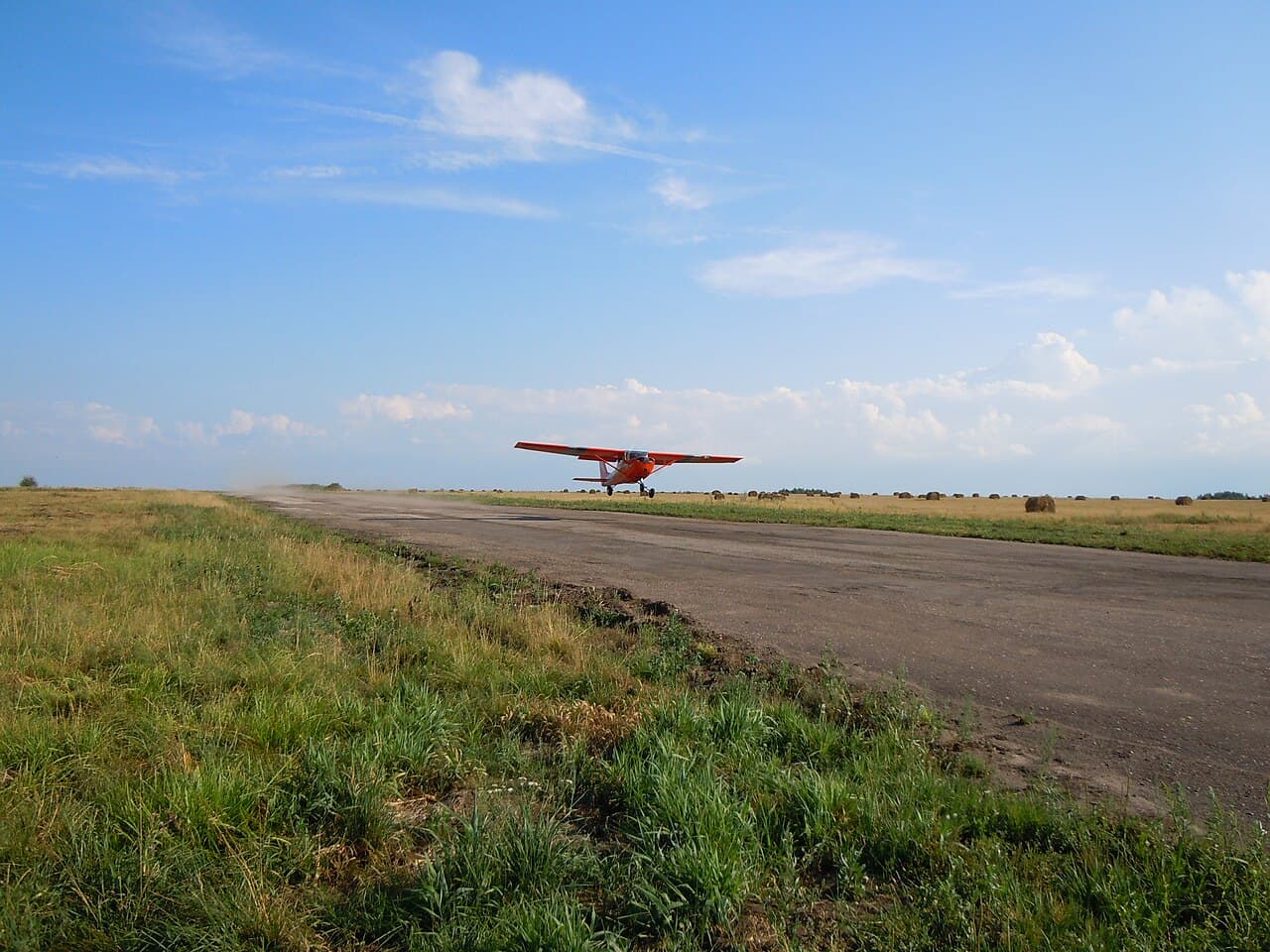
1966 Cessna 150G Offers Affordable Time-Building with Modern Avionics Upgrade
Every day, the team at Aircraft For Sale chooses an airplane that catches our attention because it is unique, a good deal, or has other qualities we find interesting. You can read Aircraft For Sale: Today's Top Pick at FLYINGMag.com daily. Today's Top Pick is a 1966 Cessna 150G. Serving as a backbone of flight training for decades, the Cessna 150 has built a legacy of forgiving handling and economic time building. This particular G-model serves as a prime opportunity for student pilots or private owners looking for an affordable platform that retains its original paint and interior while remaining mechanically sound. With 4,816 total hours on the airframe (TTAF) and a useful load of 470 pounds, the aircraft provides a highly dependable gateway to logging hours. Lifting the cowling reveals a proven 100 hp Continental O200-A powerplant that delivers highly economical operation. The engine shows just 646 hours since major overhaul (SMOH), offering plenty of time remaining for its next owner. Translating this power to thrust is a McCauley fixed-pitch propeller showing 1,487 hours since overhaul (SPOH). The aircraft also benefits from an auto fuel STC for added operational flexibility, Madras Super-Tips STC wingtips, and upgraded wingtip LED navigation and strobe lights. The flight deck immediately highlights the most impressive aspect of this time-tested trainer with a significantly upgraded avionics suite that transforms it into a capable modern instrument platform. The panel centers around dual Garmin G5 electronic flight instruments serving as the attitude indicator and HSI, alongside a Garmin GNC 355 nav/comm slaved to the G5 system. 1966 Cessna 150G [Credit: Seitz Aviation] Communication and airspace compliance are further supported by a Collins AMR-350 audio panel, an Appareo Stratus transponder equipped with ADS-B Out, and convenient Stratus USB charging ports for mobile devices. Ensuring immediate mechanical readiness for the buyer, this Cessna 150G is scheduled to receive a fresh annual inspection by Vertex Aviation prior to delivery. Listed at $44,500 , this Washington state-based trainer stands as an outstanding value for aviators seeking a reliable entry into aircraft ownership. If you're exploring ownership options, FLYING Finance can help get you airborne. Use our airplane loan calculator to estimate your monthly payments, or connect with an aviation finance expert at flyingfinance.com . FLYING Magazine: Why Aren't Cessna 140s/150s Considered Light Sport Aircraft? FLYING Magazine: Passenger Lands Cessna 150 After Pilot Incapacitation FLYING Magazine: I Learned About Flying From That: 18,300 Feet in a Cessna 150 Plane + Pilot : Incredible Plane: Cessna 150 Plane + Pilot : Cessna 150/152 The Aviation Consumer: Used Aircraft Guide: Cessna 150/152
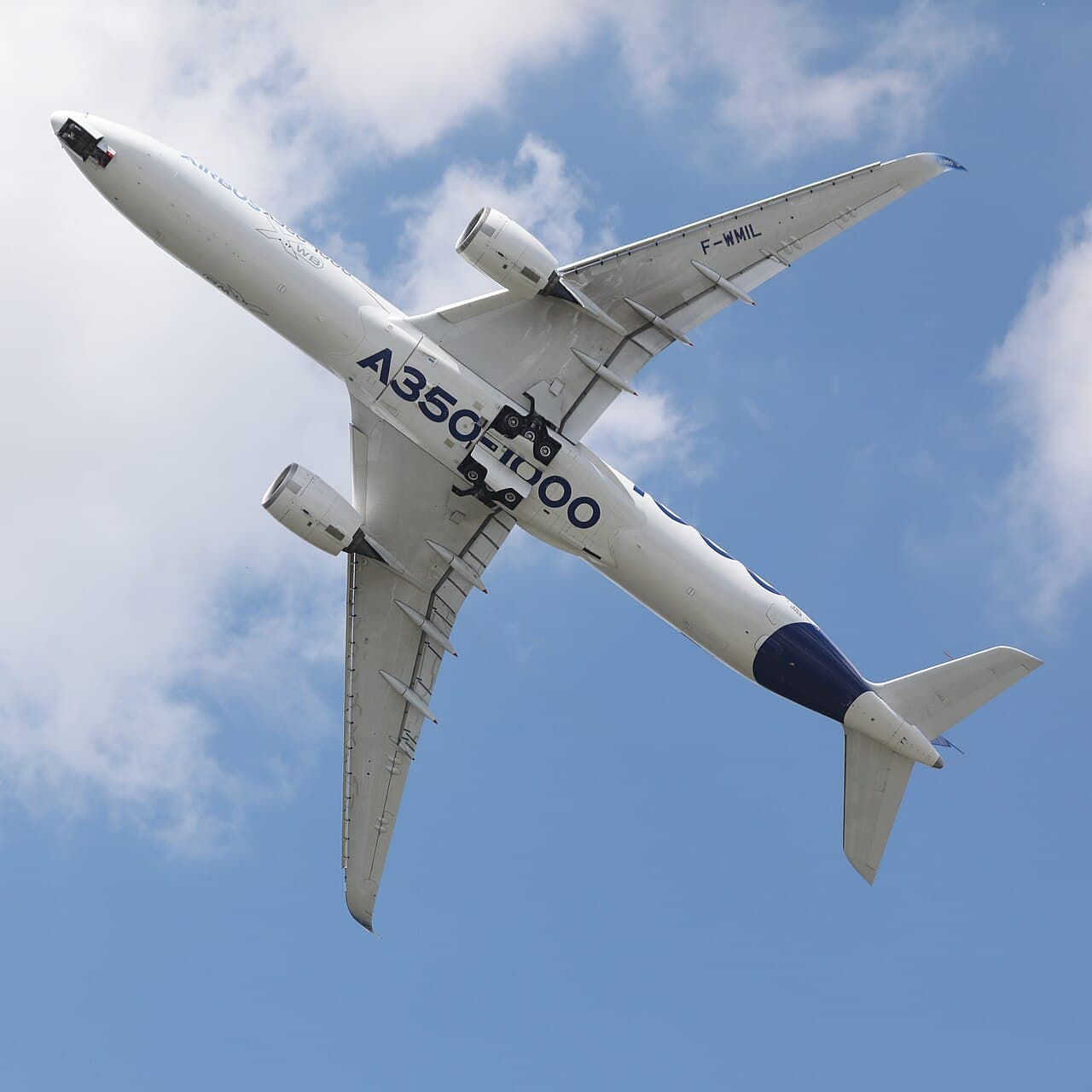
Lufthansa debuts its first Airbus A350-1000 adorned with centennial anniversary livery
Lufthansa is preparing to welcome its first Airbus A350-1000, an aircraft that carries added significance beyond its size. The aircraft, painted at Airbus's Toulouse facility in a blue design featuring a white crane graphic and the markings "1926 | 2026" and "100," is set to become the seventh addition to the airline's special fleet commemorating its 100th anniversary. According to the German flag carrier, painting the aircraft required roughly 432 liters of blue paint and 246 liters of white. From Toulouse to Munich The aircraft, which will carry the registration D-AIFA and the name "Deutschland," is scheduled to be transferred from Toulouse to Munich this fall 2026. Before the transport happens, it still needs to go through several test flights, additional interior work, and a final acceptance inspection. Lufthansa plans to hold an official naming ceremony at a later date. The delivery carries extra weight for the airline: this A350-1000 will be the 700th aircraft Airbus has delivered to the Lufthansa Group overall. A bigger sibling to the A350-900 At 73.8 meters long, the A350-1000 stretches about seven meters beyond the A350-900 already in Lufthansa's fleet. The larger aircraft is configured to carry up to 300 passengers across four cabin classes, including First Class, Business Class, Premium Economy, and Economy Class. Lufthansa has ordered 15 of the aircraft, with deliveries expected to continue through 2030. Part of an anniversary fleet This A350-1000 joins a growing group of Lufthansa aircraft featuring the special anniversary design. Other planes already flying with the livery include an A350-900, an A380, a Boeing 787-9, and a Boeing 747-8 on long-haul routes, along with two A320neo aircraft used on short- and medium-haul flights. According to Lufthansa, the distinctive paint scheme has drawn considerable attention from passengers and aviation enthusiasts alike since it began appearing on the airline's planes. RELATED Lufthansa Technik begins work on new 55,000m² MRO facility in Portugal
The Daily Touch & Go
The day's best aviation news in your inbox. Free, no spam.