

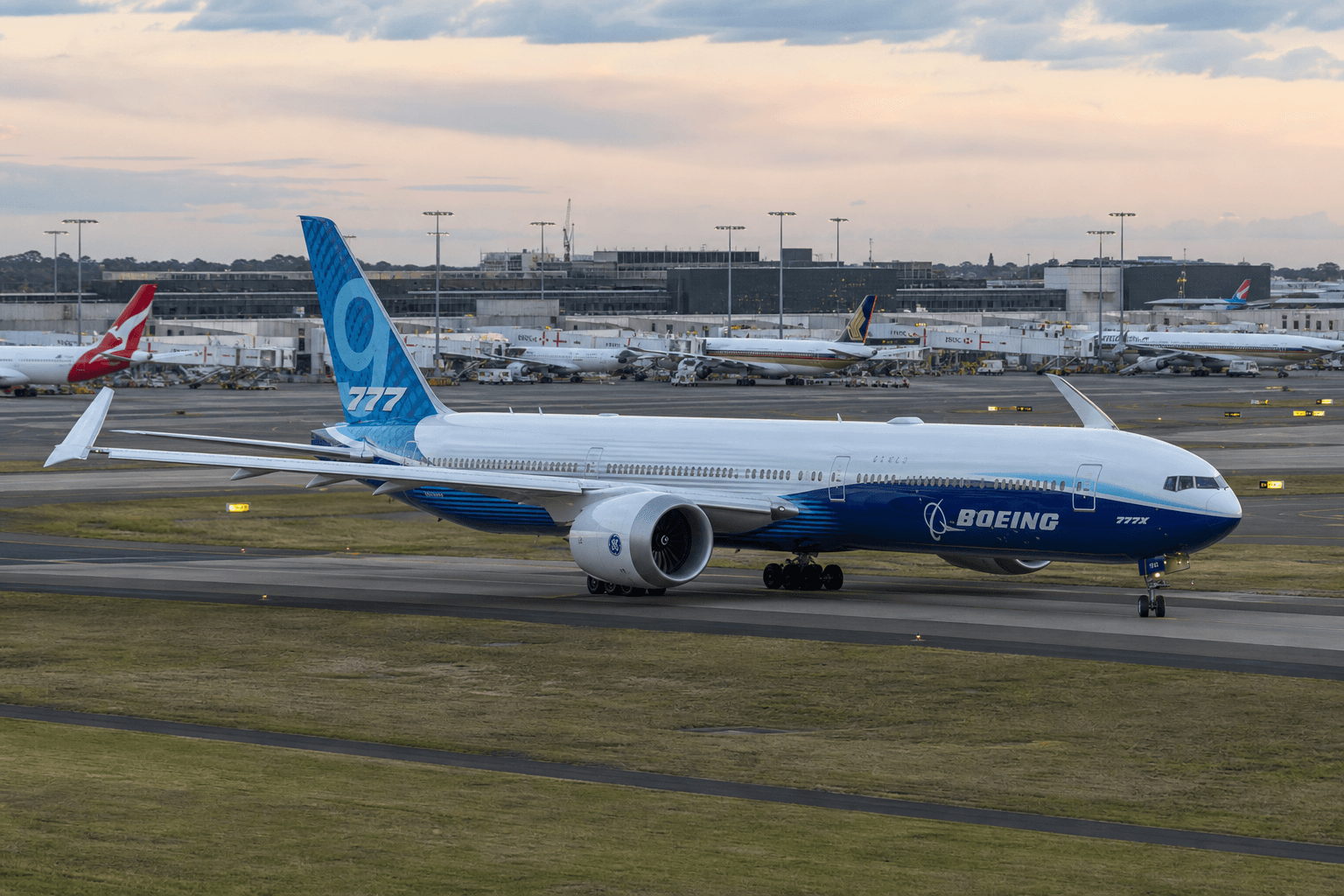
Illustration: The Touch & Go
Sydney Airport's Tight Space Requires Boeing 777X to Fold Wings at Gates
Boeing's 777X uses innovative folding wingtips to reduce wingspan on the ground, allowing operations at constrained airports like Sydney Kingsford Smith without costly infrastructure upgrades.
The gist
The 777X’s folding wingtips enable it to fit at Sydney’s tight gates, avoiding expensive airport modifications.
Continuing coverage
All Boeing 777x →The Boeing 777X, poised to redefine long-haul air travel, features an innovative solution to a significant operational challenge: its enormous wingspan exceeds traditional airport limits. To address this, Boeing engineered the world’s first folding wingtips on a commercial jet, allowing the outermost 11 feet 6 inches of each wing to pivot upward on the ground. This design permits a wingspan reduction from 235 feet 5 inches (Code F classification) down to 212 feet 9 inches (Code E), facilitating access to existing gates and taxiways without costly airport modifications.
This folding wingtip configuration is particularly vital for airports like Sydney Kingsford Smith Airport (SYD), where space constraints and proximity to water and urban development impose tight limits on aircraft movement and parking. Sydney’s international terminal apron remains one of the most space-constrained major hubs despite recent upgrades, with narrow taxiway separations presenting daily operational challenges for large aircraft.
Boeing’s move toward a dynamic wingspan was driven by the limitations inherent in ICAO’s aerodrome classification system, which assigns wingspan categories that dictate gate compatibility and taxiway clearances. A permanent Code F designation would have necessitated expensive pavement widening, blast fence relocations, and gate infrastructure changes, all requiring significant cooperation and investment from airports and airlines.
The 777X’s folding wingtips allow it to meet Code E dimensions on the ground, a category that includes aircraft like the Boeing 777-300ER and Airbus A350-1000, widely supported at existing international terminals worldwide. Aircraft ground controllers benefit from this seamless fit, as the 777X can taxi and park without special routing or clearance measures, maintaining safety margins established by ICAO without disruption to normal airport operations.
Engineering challenges extended beyond the mechanical design of the folding wing. The aircraft had to secure regulatory approval from authorities worldwide, which was enabled by ICAO’s Amendment 15 to Annex 14, Volume I in 2020, establishing standards for airplanes with folding wingtips. This regulatory update paved the way for the 777X to operate legally and safely under standard Code E airport requirements when its wingtips are folded.
Operational procedures at dimly spaced airports like Sydney must also consider environmental stresses. When folded vertically, the wingtips are exposed to intense lateral wind loads—up to 82 knots—demanding robust actuators and locking pins to prevent damage. Airlines must monitor real-time weather closely and may be required to either unfold the wings flat or brace the aircraft during severe storms, which introduces additional complexity for ground handlers.
Additionally, the tight taxiway geometry at Sydney spotlights the importance of precise mechanical function. For example, taxiways B10 and L run parallel only 262 feet apart; with wingtips folded, the 777X can negotiate this space, whereas the extended wing would breach clearance limits. The reliability of the folding mechanism is thus not just a convenience but critical to safe and efficient ground movement.
While the folding concept solves many issues, it also introduces novel failure scenarios. A mechanical or hydraulic failure preventing wingtip folding or locking would compromise taxiing or gate parking operations, requiring contingency procedures and possibly special equipment to manage the aircraft safely on the ground.
The 777X’s adaptive wing design marks a transformative step in widebody operations, combining advanced aerodynamics with practical ground considerations. By enabling the aircraft to integrate into existing airport infrastructure like Sydney’s, Boeing has addressed a hurdle that halted other large aircraft programs previously, such as the Airbus A380, which required costly gate accommodations due to fixed wingspans.
Read more
All Sustainability →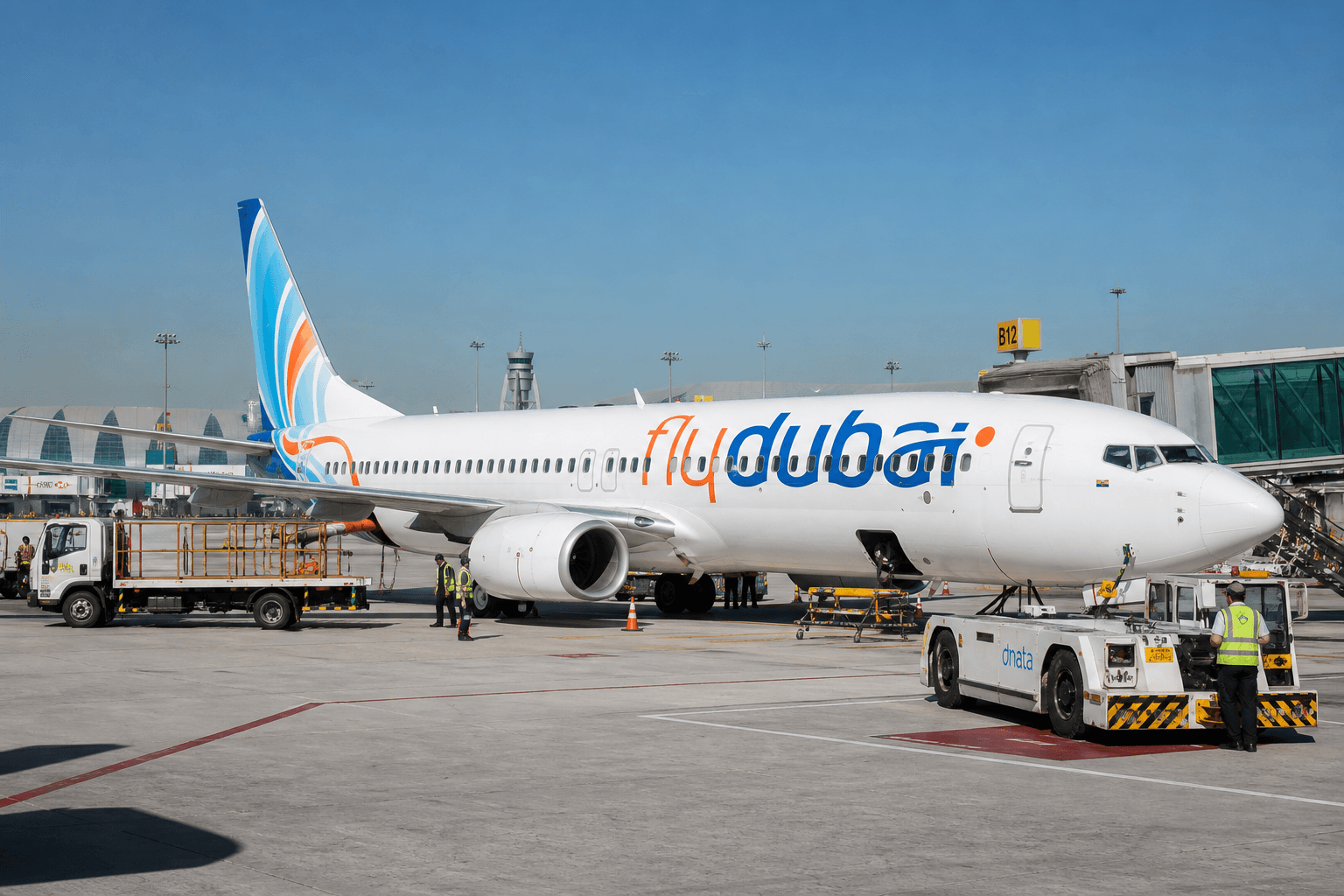
flydubai's single-engine taxiing program cuts emissions well above industry average
Small changes can make a big difference in aviation when extrapolated across a whole fleet.
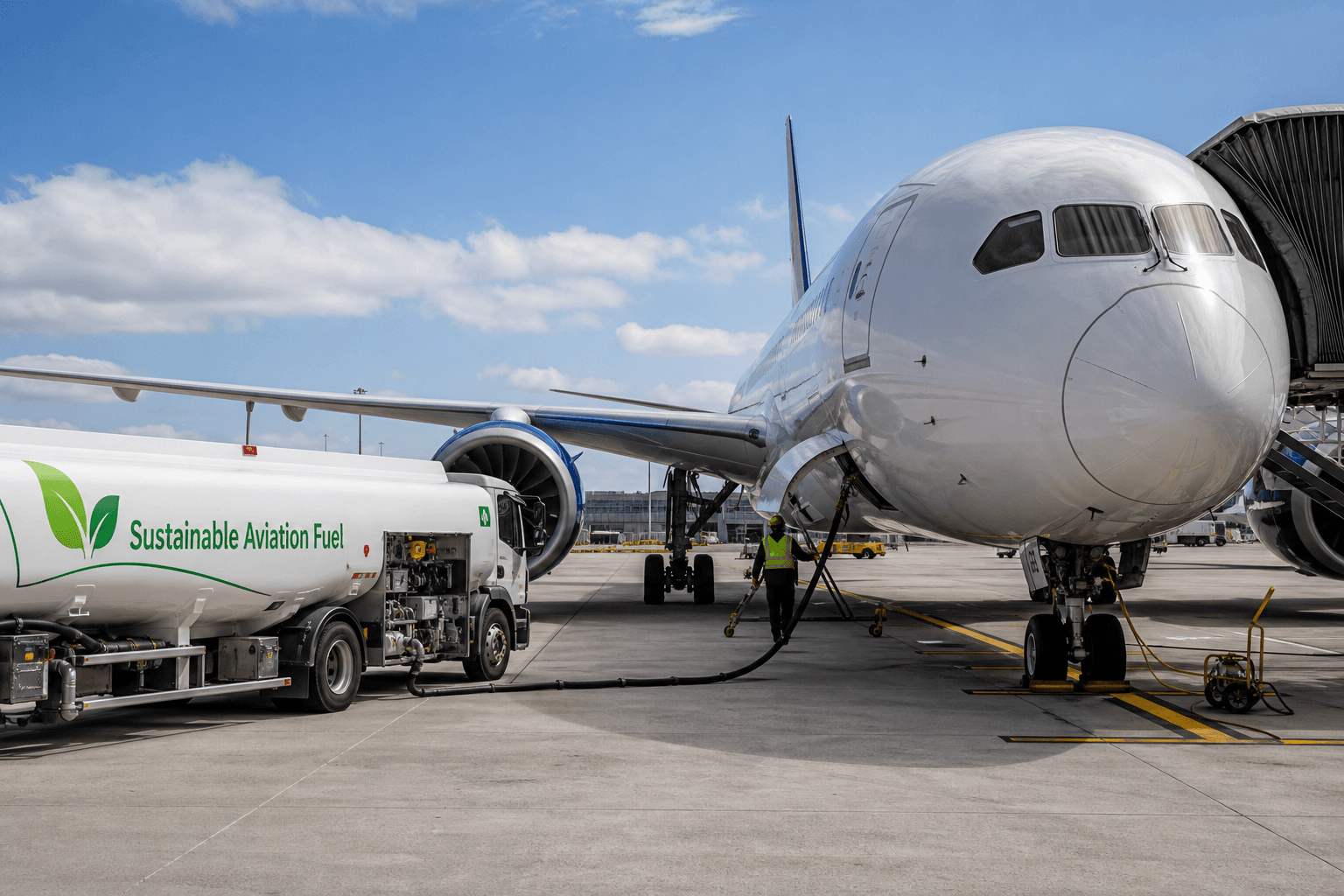
Aviation's 65% Sustainable Fuel Goal by 2050 Faces Serious Doubts Amid Supply and Policy Challenges
There are significant obstacles in the way for the airline industry to reach net-zero carbon emissions.
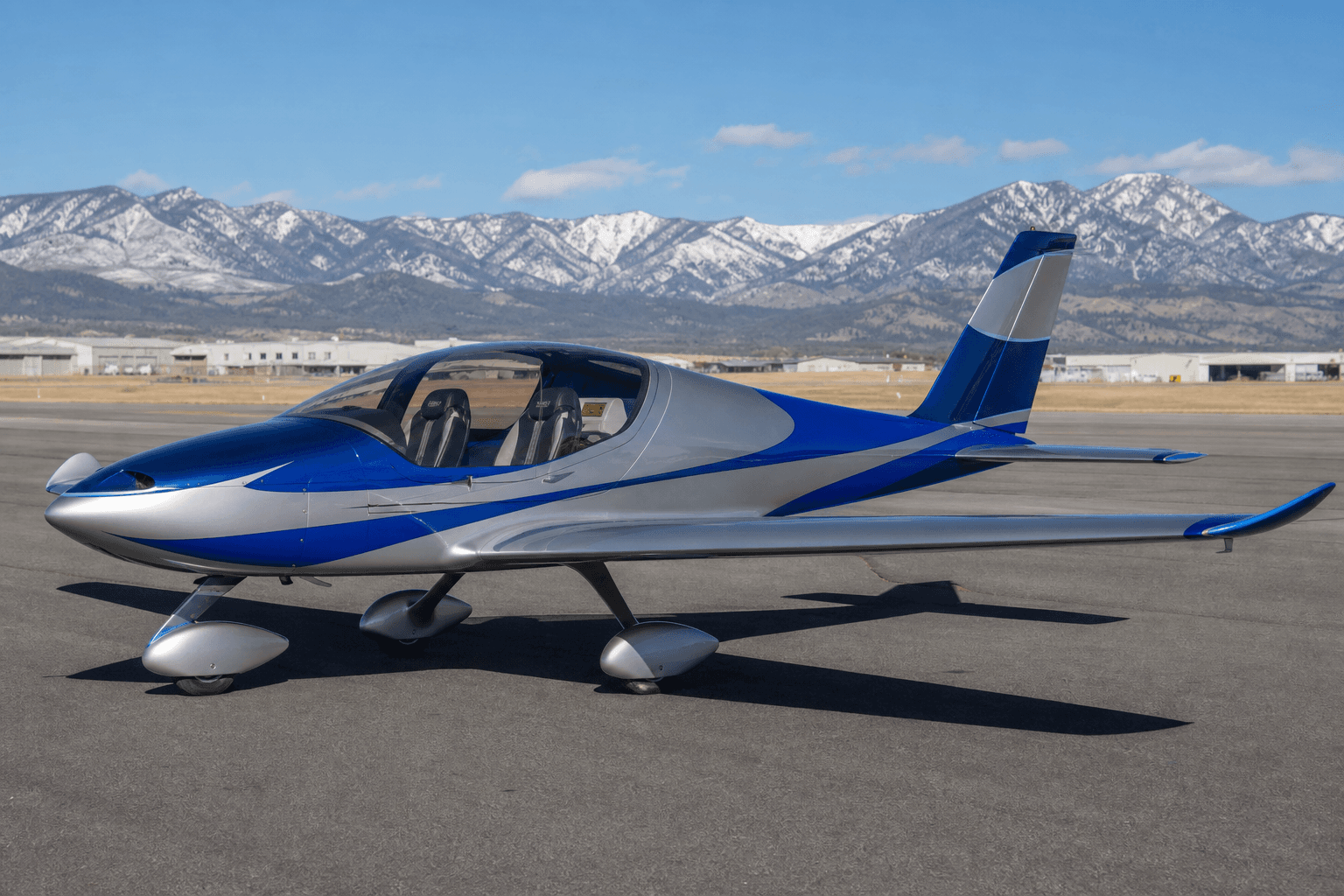
Bye Aerospace Close to First Flight of eFlyer 2 Electric Trainer
The Colorado firm is among a small group of developers working to bring all-electric pilot-training aircraft through certification. US start-up Bye Aerospace is nearing the first flight of its two-seat all-electric eFlyer 2 training aircraft and envisions a clear path to certification – possibly as soon as next year under new Federal Aviation Administration rules…
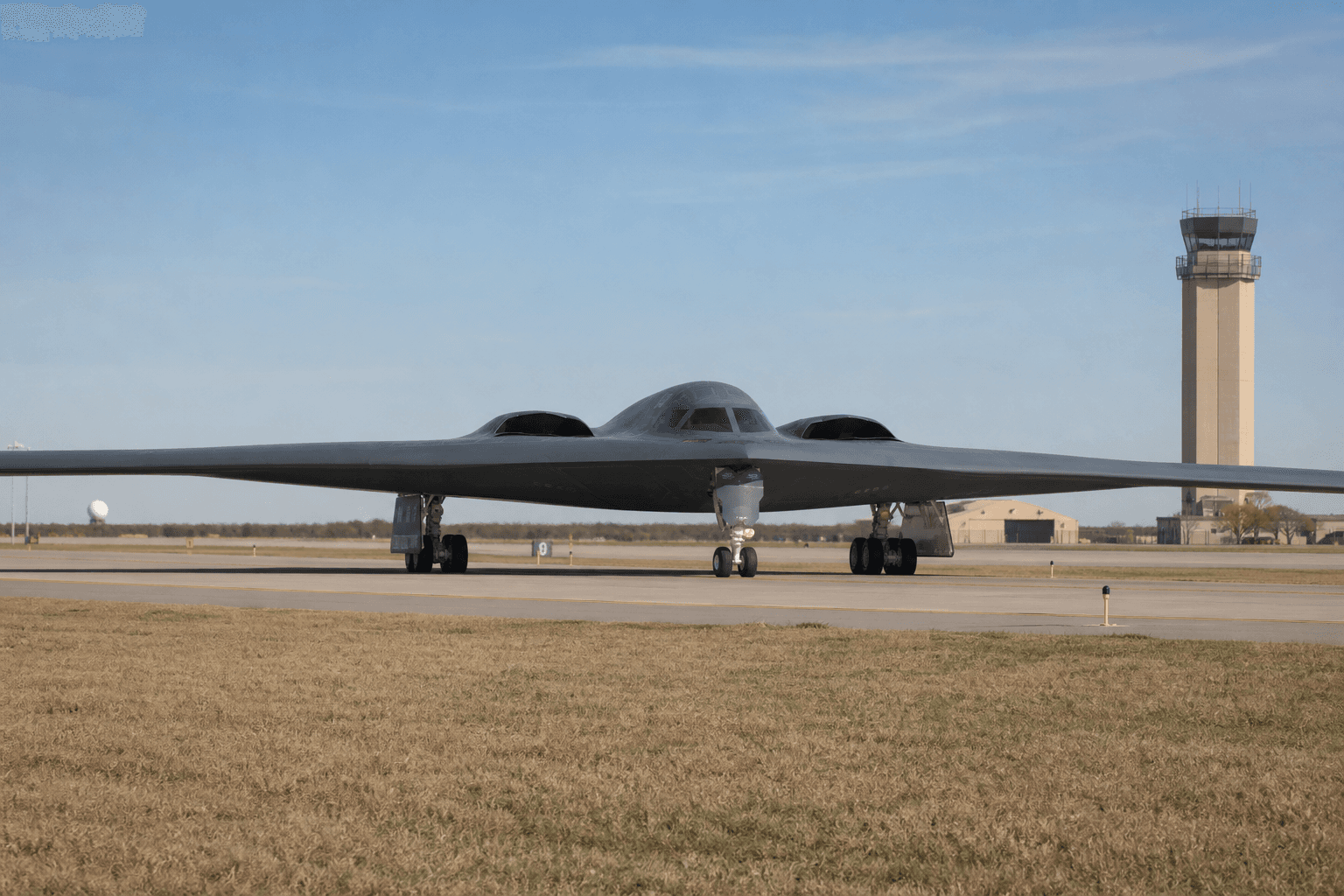
B-2 Spirit Bomber Equipped with Functional Crew Rest Facilities for Ultra-Long Missions
The Northrop B-2 Spirit is not designed for comfort; it is designed survive the first night of war. It is designed to be one of the first aircraft to kick in the proverbial door and carry out some of the operation's opening strikes. Unlike other bombers in service with the US, Russia, and China, it is able to penetrate enemy air defenses. To avoid the risk of being struck on the ground and to maximize surprise and uncertainty, these bombers often take off directly from their home base at Whiteman AFB, Missouri.
The Daily Touch & Go
The day's best aviation news in your inbox. Free, no spam.