

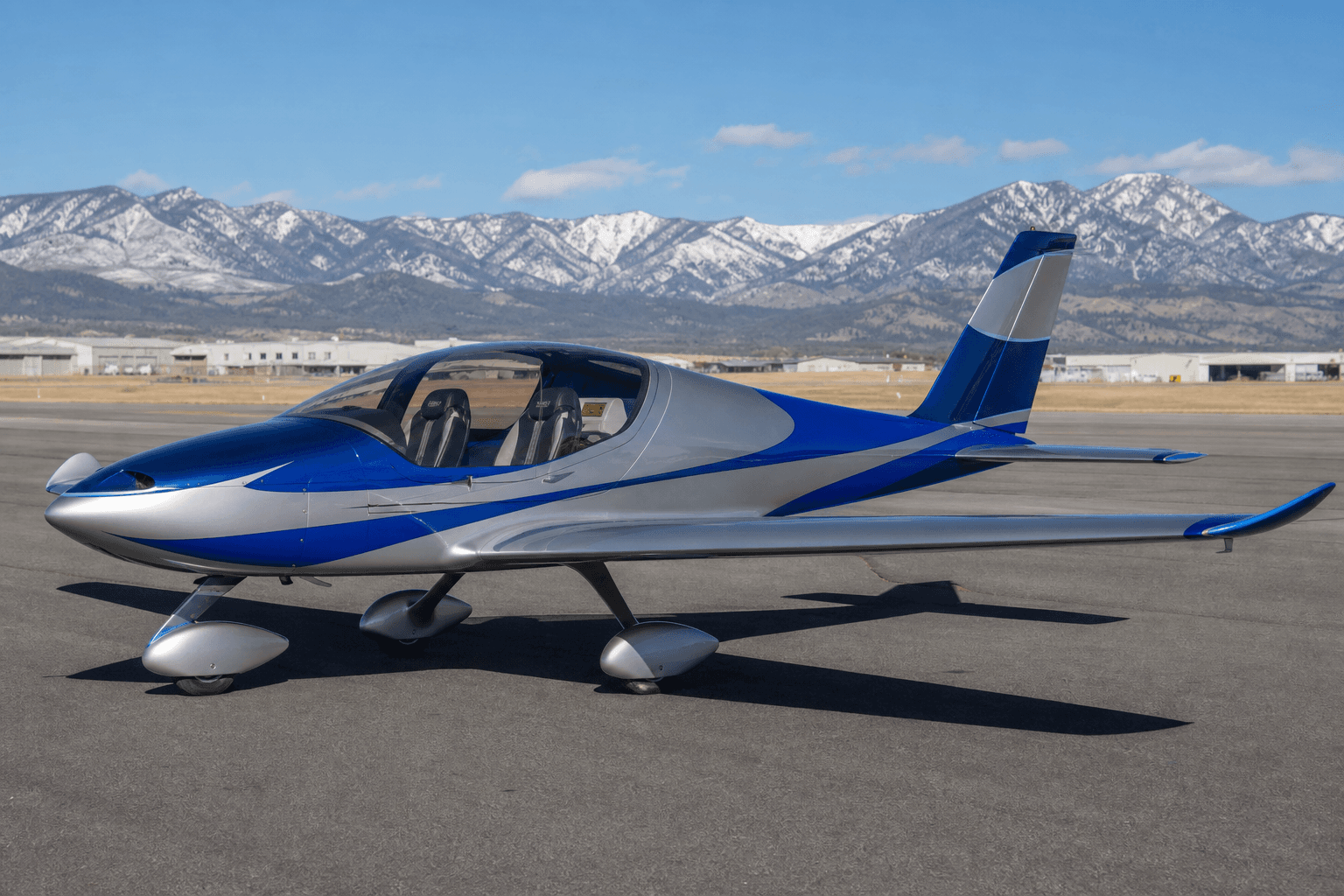
Illustration: The Touch & Go
Bye Aerospace Close to First Flight of eFlyer 2 Electric Trainer
Bye Aerospace prepares to fly its all-electric eFlyer 2 trainer soon, aiming for FAA certification possibly next year under new light-sport aircraft rules.
The gist
Bye Aerospace nears eFlyer 2 first flight and FAA certification with advanced two-seat electric trainer.
Continuing coverage
All Electric Aircraft →- Orlando International Airport to Build US's First eVTOL Vertistop with Flights Expected This Year
- North Central Texas Council Launches $1M Fund for eVTOL Airport Chargers
- FAA and BETA Technologies Launch eVTOL Integration Pilot Program with First Electric Cargo Flights
- Electric Aircraft Start Short Flights Between Hawaiian Islands in Early Trials
Colorado-based Bye Aerospace is on the verge of conducting the initial flight test of its eFlyer 2, a fully electric two-seat pilot training aircraft. The company anticipates this milestone within weeks, signaling a major advance in electric aviation training solutions. Chief Executive Roderick Zastrow emphasized readiness for this event after completing assembly and integration work at their Centennial Airport facility near Denver.
The eFlyer 2 incorporates a 125kW (167 horsepower) Safran ENGINeUS 100B1 electric motor, which is already certified in Europe. Bye Aerospace has finalized structural testing of the fuselage and wings, as well as installations including flight controls, brakes, and avionics. The avionics suite features Garmin G500 TXi touchscreen systems, and the airframe is built with advanced composite materials supplied by Toray Composite Materials.
Designed for efficiency, Bye Aerospace anticipates the eFlyer 2 to match the performance of conventional trainers like the Cessna 172, benefitting from an aerodynamically optimized shape and lightweight construction. The aircraft targets a flight endurance of two hours plus a 30-minute reserve, powered by high-energy density batteries from Magnix. These batteries can recharge in approximately 30 minutes, supporting typical pilot training cycles.
The eFlyer 2 contends with both conventional piston-powered trainers such as the Cessna 172 and Piper Archer, as well as existing electric offerings like the Pipistrel Velis Electro and the upcoming BRM Aero Bristell B23 Energic. Bye Aerospace projects that maintenance and energy expenses will be roughly 80% lower than traditional petrol-fueled trainers, offering a compelling cost advantage to flight schools and operators.
Beyond the two-seater, Bye Aerospace is advancing development of the eFlyer 4, a four-seat variant, and contemplating future models accommodating 6 to 9 passengers. This expanded portfolio addresses training and potentially small transport segments with zero-emission propulsion, positioning Bye as a significant player in sustainable aviation technologies.
Bye Aerospace initially pursued type certification under FAA Part 23 Amendment 64 rules, a performance-based framework for small aircraft certification. Although this approach is thorough, it requires extensive testing and documentation, with an expected timeline of several more years. The company has completed major portions of this process, including approximately 100 demonstration flights by a proof-of-concept prototype.
A new FAA regulation, Part 22, applicable from July 24, offers an alternative pathway for light-sport aircraft certification. This rule allows manufacturers to self-declare compliance, potentially accelerating certification and production timelines. Bye Aerospace may shift to this faster route, which could enable certification and first deliveries within 10 months, provided all testing documentation is comprehensive.
Customer interest in the eFlyer family appears strong, with agreements in place for over 1,100 aircraft including both the two- and four-seat models. Nearly 40% of these are secured by paid, non-refundable deposits, highlighting firm market demand. Notable customers include KLM Flight Academy and prominent U.S. training organizations such as Skyborne Airline Academy and Spartan College of Aeronautics and Technology.
As Bye Aerospace approaches the critical first flight milestone, it is also pursuing additional investment to support production ramp-up. The company anticipates this event will generate fresh investor enthusiasm, reflecting confidence in the electric trainer's commercial viability amid rising pilot demand fueled by increasing global air travel.
Read more
All Sustainability →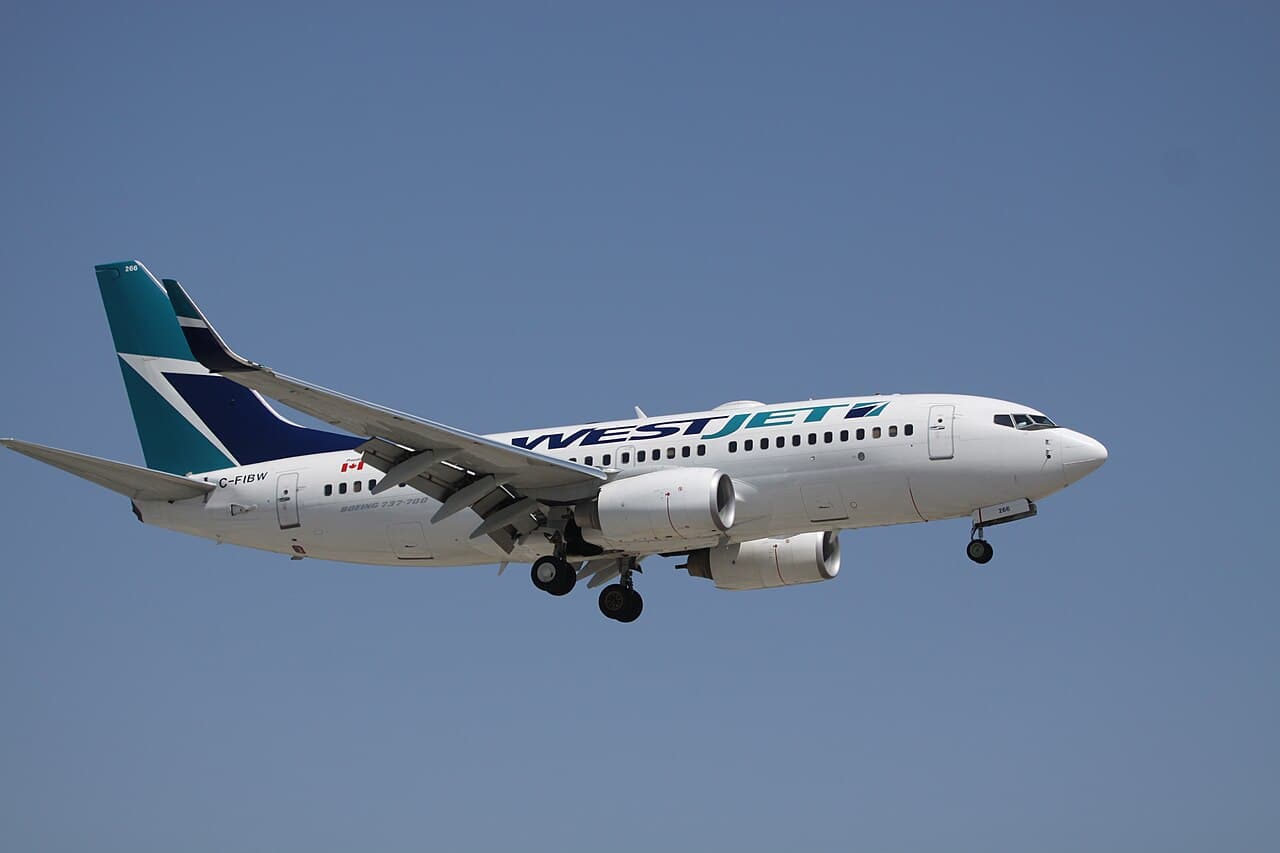
WestJet Flight Attendants Issue Strike Notice Over Unpaid Ground Work Dispute
Flight attendants at Canada’s second-largest airline, WestJet, have issued the Calgary-based carrier a 72-hour strike notice over a raging dispute over crew members being forced to work ‘for free’ after months of contract negotiations ended in an impasse between the airline and the Canadian Union of Public Employees (CUPE). Earlier this month, more than 4,000 WestJet flight attendants overwhelmingly backed strike action if the airline refused to pay them for the time that they are at work but not actually flying. Over 99.4% of flight attendants voted to support a walkout on a turnout of 97.3% of CUPE members. Under Canadian law, the union then had to enter into a 21-day cooling-off period, meaning that the earliest date that crew members can stage a crippling strike is August 2. At the heart of the dispute is the fact that traditionally, flight attendants in Canada have only been paid during the time that the plane is in motion, from the point that the aircraft pushes back from the gate to when it arrives at its destination. That means that flight attendants are effectively ‘working for free’ during boarding, which is often seen as one of the busiest and most stressful parts of the job. If a flight is delayed on the ground, flight attendants have to continue working without pay. The so-called ‘block hours’ approach to paying flight attendants was, until only recently, the dominant pay structure for flight attendants across North America. That, however, began to change in 2022, when Delta Air Lines became the first major carrier to offer ‘boarding pay’ at 50% of the usual flying pay rate. In the last few years, a slew of other carriers have followed suit, including American Airlines, United Airlines, Alaska Airlines, and several smaller regional carriers. Last Summer, flight attendants at Air Canada also secured boarding pay for the first time after a messy walkout, which flight attendants continued even after the government attempted to order crew members back to work. The CUPE union has warned the Carney government not to intervene and “respect the collective bargaining process between WestJet and its flight attendants.” In a statement issued on Thursday, Alia Hussain, President of the local CUPE 8125 union, which represents WestJet flight attendants, said: “We have been clear about what needs to change, and we have worked hard to reach a fair deal.” “The strike notice does not mean flight attendants want to go on strike. CUPE 8125 has been clear throughout negotiations that its goal is to reach a fair agreement without disrupting passengers or the travelling public,” the statement continued. “There's still time to avoid a strike,” Hussain added. “We want a fair contract for our members that recognizes the value of flight attendants' work and recognizes our position as employees of the second-largest carrier in Canada.” Hussain is calling on WestJet to re-enter into negotiations and reach a deal. If one cannot be reached, however, passengers should expect widespread disruption. In response to the strike notice, WestJet has issued its own 72-hour lockout notice. What that means is that flight attendants will be prevented from attending to work, even if they want to, cutting them off from pay. The other consequence of a lockout notice is that WestJet will not be able to operate. No flight attendants will be able to work, and the airline will have no other option but to ground its entire fleet, leaving tens of thousands of passengers stranded. “The decision to issue a lockout notice, in response to the actions taken by the union, was not one that was made lightly. We sincerely regret the inconvenience and uncertainty this continues to cause for our guests," commented WestJet chief executive Alexis von Hoensbroech. “Our commitment remains at the bargaining table, where we will continue to work around the clock to come to an agreement that provides value and meaningful improvements for our Cabin Crew and is sustainable for our company,” von Hoensbroech added. The amount of time that WestJet has to reach a deal is, in reality, less than 72 hours. If a deal can’t be reached in the next day or so, the airline will have to start activating plans to bring planes back to their respective bases before the strike starts. Without a deal, the only way that mass disruption can be avoided is if the government intervenes and orders flight attendants to turn up to work. However, as we saw last summer, Air Canada flight attendants and their union leaders were willing to disregard that order, risking jail time. Air Canada flight attendants secured boarding pay at an initial 50% of the normal pay rate, rising to 60% in 2026, 65% in 2027, and then topping out at 70% in 2028.
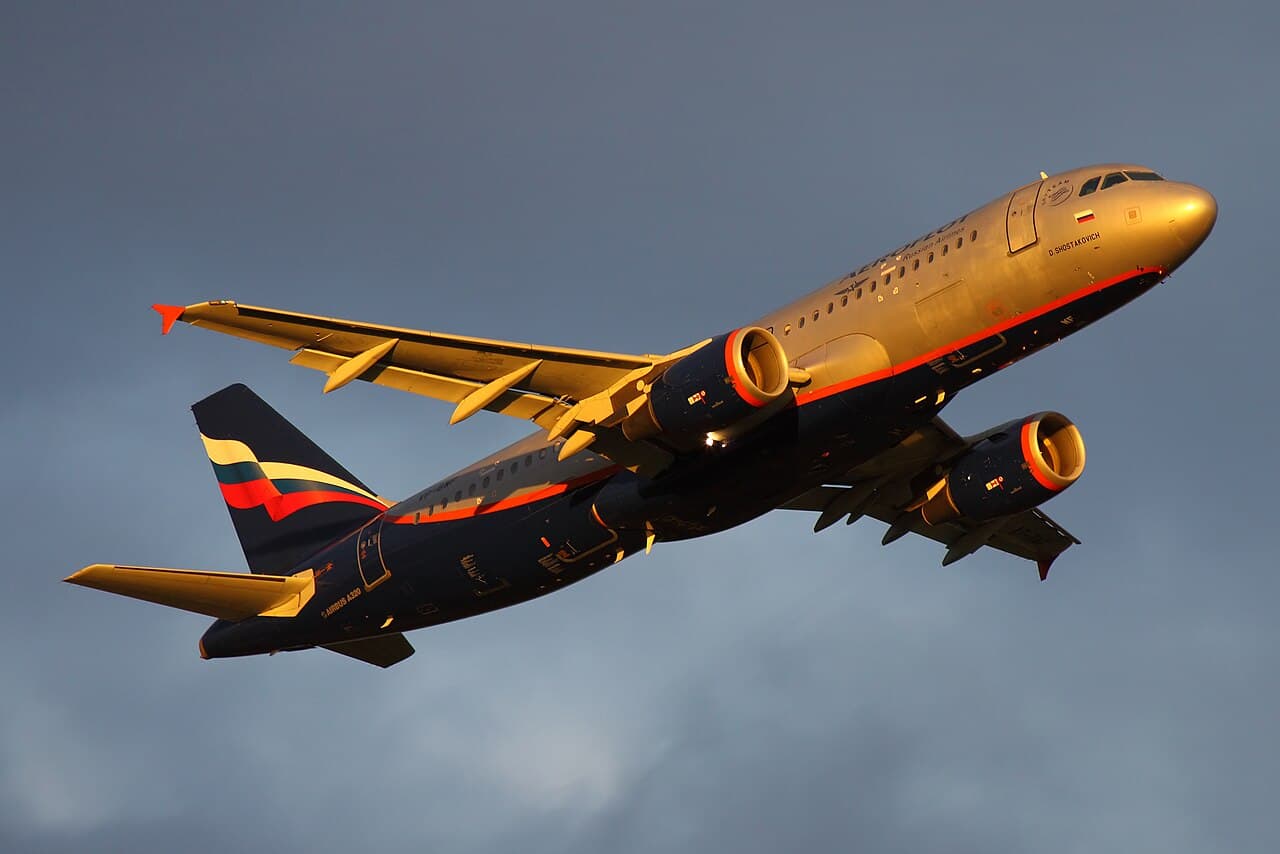
Airbus Posts Strong H1 2026 with 351 Aircraft Deliveries and Record Order Backlog
Airbus has reported robust performance in its commercial aircraft business for the first half of 2026, with higher deliveries, record orders, and solid revenue growth. ezstandalone.cmd.push(function () { ezstandalone.showAds(119); }); The results demonstrate the company’s ability to meet surging global demand while navigating supply chain and production challenges. In the first six months of 2026, Airbus delivered 351 commercial aircraft, up from 306 in H1 2025. This represents a significant step forward in the company’s ramp-up strategy. The deliveries comprised 44 A220s, 271 A320 Family aircraft, 10 A330s, and 26 A350s. ezstandalone.cmd.push(function () { ezstandalone.showAds(127); }); Strong Order Intake and Record Backlog Demand for Airbus aircraft remains exceptionally high. Gross orders reached 886 aircraft in H1 2026, compared to 494 in the same period last year. After cancellations, net orders stood at 821 aircraft — more than double the 402 net orders recorded in H1 2025. The company’s order backlog grew to 9,222 commercial aircraft at the end of June 2026. This massive backlog provides visibility for years of production and underscores Airbus’s leading position in the global commercial aviation market. ezstandalone.cmd.push(function () { ezstandalone.showAds(128); }); Revenue and Profitability Growth Revenues from Airbus’s commercial aircraft activities increased 15% year-on-year to €23.9 billion. This growth was primarily driven by higher delivery volumes and increased services business, though partially offset by a weaker US dollar. EBIT Adjusted for the commercial aircraft segment rose to €1,987 million, up from €1,714 million in H1 2025. The improvement reflects strong operational execution, despite headwinds from currency hedging rates. ezstandalone.cmd.push(function () { ezstandalone.showAds(129); }); Production Ramp-Up on Track Airbus continues to make steady progress on its ambitious production targets: A220 programme: Ramp-up ongoing, with a target of 13 aircraft per month by 2028. A320 Family: On track to reach 70-75 aircraft per month by end-2027, stabilising at rate 75 thereafter. A330 programme: Targeting rate 5 by 2029. A350 programme: Aiming for rate 12 by 2028. These rate increases are critical as airlines worldwide seek to modernise fleets with more fuel-efficient aircraft amid growing passenger traffic and sustainability pressures. ezstandalone.cmd.push(function () { ezstandalone.showAds(130); }); Photo Credit: Airbus Full-Year 2026 Guidance Unchanged Airbus reaffirmed its 2026 targets, assuming no major additional disruptions to global trade, air traffic, or supply chains. The company expects to deliver around 870 commercial aircraft for the full year. Overall group guidance remains intact, with targeted EBIT Adjusted of around €7.5 billion and Free Cash Flow before Customer Financing of around €4.5 billion. Chief Executive Officer Guillaume Faury noted that strong Q2 deliveries demonstrate effective execution in a complex environment. “We are ramping up across all businesses to meet the growing demand for our civil… solutions,” he said. ezstandalone.cmd.push(function () { ezstandalone.showAds(131); }); Photo Credit: Airbus Positive Outlook Despite Challenges While the first-half cash flow was negative due to planned inventory build-up for future ramp-up, Airbus maintains a healthy net cash position of €8.4 billion. The company continues investing in research and development (€1.464 billion group-wide in H1) to drive innovation in areas such as sustainable aviation fuels and next-generation technologies. The strong commercial performance highlights Airbus’s competitive strength in a recovering aviation market. With a healthy mix of narrowbody and widebody deliveries and a record backlog, the European manufacturer is well-positioned to capitalise on long-term industry growth. ezstandalone.cmd.push(function () { ezstandalone.showAds(132); }); As Airbus accelerates production rates and focuses on operational excellence, stakeholders will watch closely to see whether the company can sustain this momentum through the second half of 2026 and beyond. The results signal confidence in the future of commercial aviation and Airbus’ central role in it.
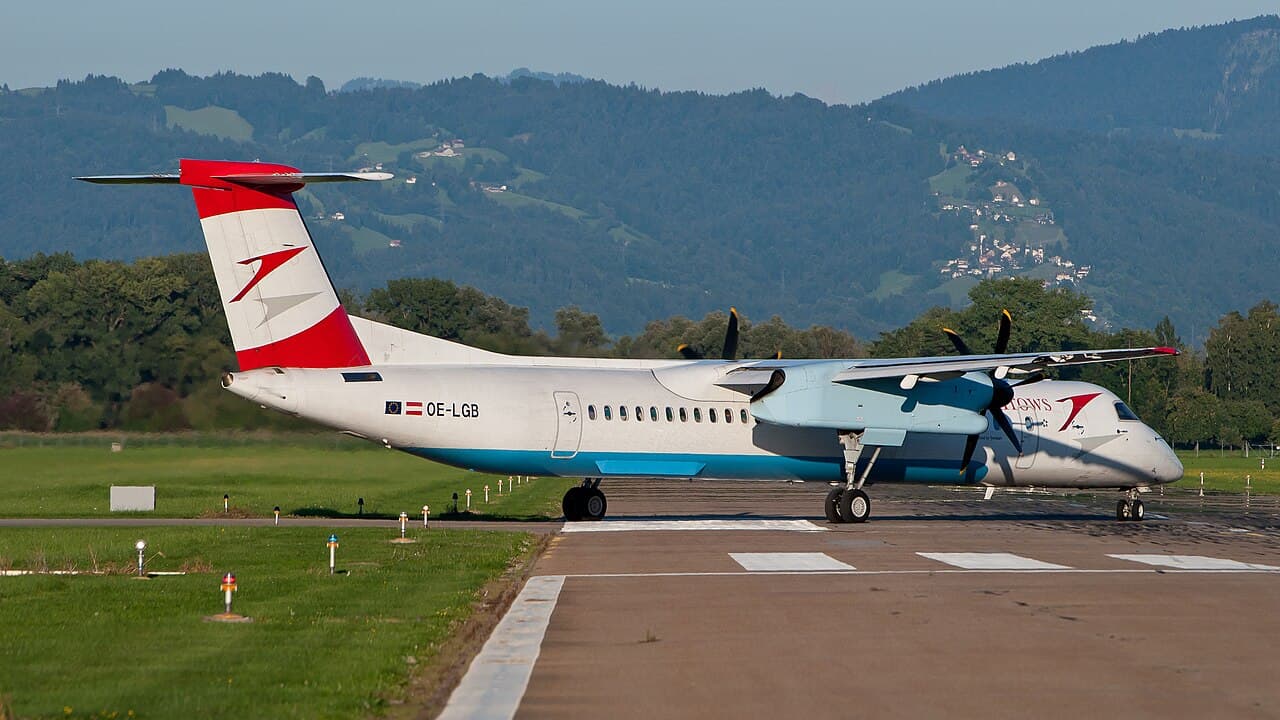
Porter Airlines Unveils Modernized Dash 8 Interiors Enhancing Regional Economy Travel
Porter Airlines is raising the bar for regional flying by refreshing the cabins of its entire De Havilland Dash 8-400 fleet. ezstandalone.cmd.push(function () { ezstandalone.showAds(119); }); The Toronto-based carrier is installing the latest Expliseat TiSeat 2V — the world’s lightest seat in its class — across all 29 aircraft. These upgrades, combined with new lighting and flooring, promise a noticeably more comfortable and modern experience for passengers on shorter routes. ezstandalone.cmd.push(function () { ezstandalone.showAds(127); }); The first refreshed Dash 8s are already flying, with the full fleet expected to feature the new interiors by fall 2026. This investment shows Porter’s ongoing dedication to “elevated economy” service, proving that comfort matters even on regional flights. Smarter, Lighter Seats for Better Comfort The star of the refresh is the new-generation TiSeat 2V from French manufacturer Expliseat. These seats feature redesigned cushions tailored specifically to Porter’s standards, updated tray tables, and built-in device holders that let passengers enjoy hands-free entertainment. First-row seats also receive special tray table upgrades for extra personal space. ezstandalone.cmd.push(function () { ezstandalone.showAds(128); }); Made with advanced carbon fibre and titanium, the TiSeat 2V remains exceptionally light. This design helps reduce overall aircraft weight, leading to lower fuel consumption and decreased CO₂ emissions over the aircraft’s lifetime. Passengers benefit from improved comfort without any reduction in legroom or changes to the cabin layout. Porter Airlines operates its Dash 8-400s in a comfortable two-by-two configuration with 78 seats total. There are no middle seats. Flyers in PorterReserve enjoy 32 inches of legroom, while PorterClassic offers 30 inches — generous dimensions for regional routes in Eastern Canada and the U.S. ezstandalone.cmd.push(function () { ezstandalone.showAds(129); }); Source: Expliseat website Additional Cabin Enhancements Beyond the seats, Porter is introducing several thoughtful upgrades: Mood lighting with modern LED technology Individual LED reading lights Fresh new carpeting throughout the cabin These changes create a brighter, more welcoming environment that aligns with Porter’s reputation for genuine hospitality and stylish service. Kent Woodside, Executive Vice President and Chief Operating Officer at Porter Airlines , explained the motivation. ezstandalone.cmd.push(function () { ezstandalone.showAds(130); }); “Our passengers told us that seat comfort is a meaningful part of their experience, even on shorter regional flights. Updating seats, along with other cabin upgrades, will noticeably refresh and modernize the overall environment.” He added that Porter aims to deliver a globally recognized flying experience and will continue prioritizing comfort. A Win for Regional Travellers Regional flights often receive less attention than long-haul journeys, yet they form a vital part of many trips. By focusing on these upgrades, Porter demonstrates that economy travel does not have to feel basic. ezstandalone.cmd.push(function () { ezstandalone.showAds(131); }); The combination of lightweight, supportive seats, better lighting, and a clean cabin helps reduce fatigue and improve the overall journey — whether flying for business or leisure. The partnership with Expliseat builds on years of collaboration. Jean-Francois Tessier, Vice President Sales North America at Expliseat , noted the shared commitment to innovative technology that boosts both passenger comfort and operational efficiency. Photo Credit: Porter Airlines A Continuing Commitment to Elevated Economy Porter Airlines has built its brand on offering more than standard economy. From its distinctive livery and friendly crew to these cabin investments, the airline consistently seeks ways to stand out in a competitive market. ezstandalone.cmd.push(function () { ezstandalone.showAds(132); }); The Dash 8 fleet serves key regional routes, making these improvements accessible to thousands of passengers every week. Legroom and seating configuration stay the same, preserving the popular no-middle-seat layout that travellers love. The focus remains on meaningful enhancements that passengers can feel immediately. As the refreshed aircraft spread across the network, flyers can look forward to a more comfortable, modern ride on Porter’s turboprops. ezstandalone.cmd.push(function () { ezstandalone.showAds(133); }); For those who value thoughtful details and genuine care in economy class, these updates reinforce why Porter continues to earn strong loyalty in Canadian aviation.
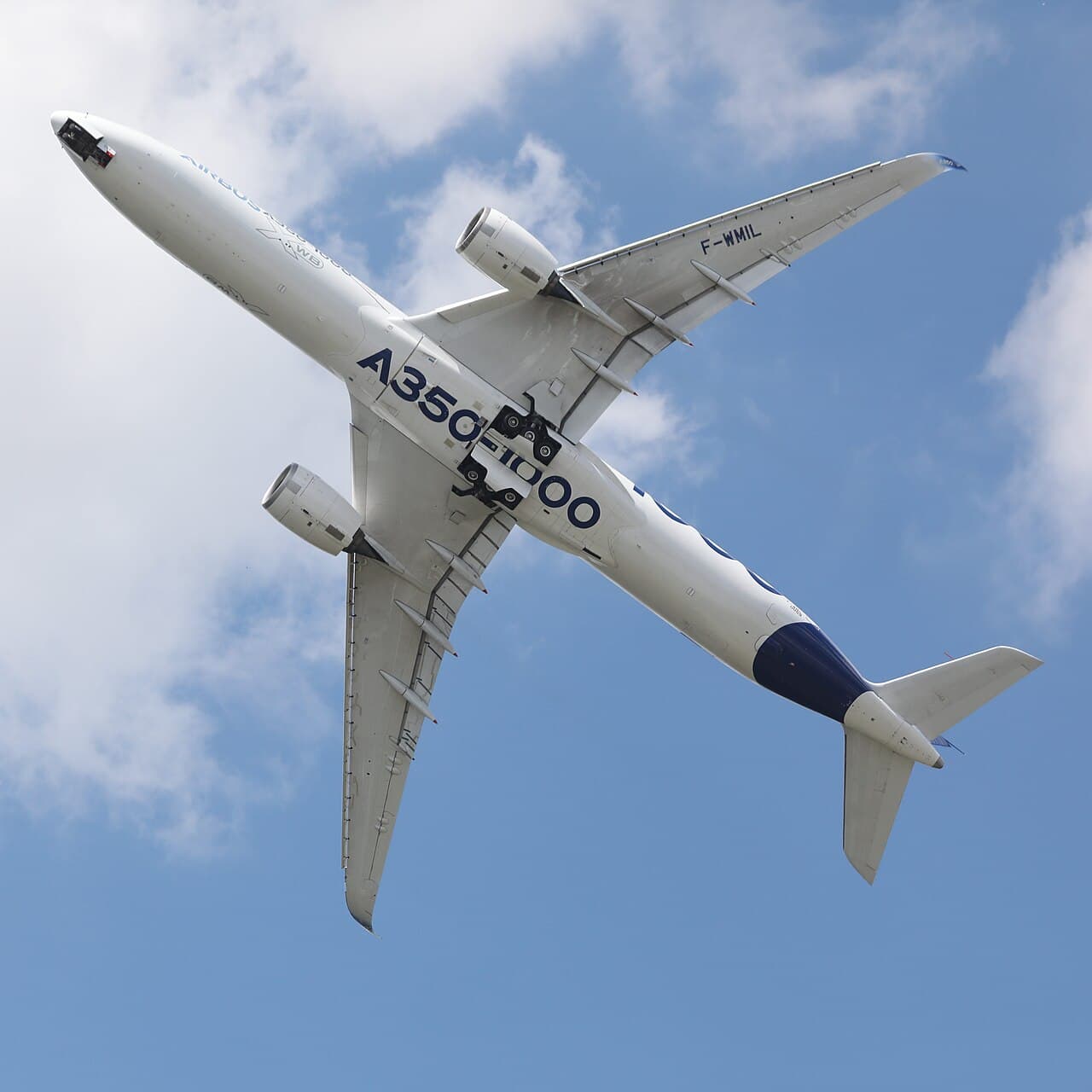
Lufthansa Readies First Airbus A350-1000 in Special 100th Anniversary Livery
Lufthansa continues to mark its 100th anniversary year in style. The airline is expecting delivery of its first Airbus A350-1000 in the coming weeks. This new jet has already been painted in a striking blue special livery that celebrates a century of aviation history. ezstandalone.cmd.push(function () { ezstandalone.showAds(119); }); The aircraft was painted at Airbus’s facility in Toulouse, France. It features a prominent white XXL crane motif along with the inscriptions “1926 | 2026” and “100”. Workers used 432 litres of blue paint and 246 litres of white paint to create this eye-catching design. This new jet will become the seventh aircraft in Lufthansa’s fleet to wear the special anniversary colours. ezstandalone.cmd.push(function () { ezstandalone.showAds(127); }); A Milestone Delivery for Lufthansa The A350-1000, registered as D-AIFA, carries the name “Deutschland.” An official naming ceremony will take place later. The aircraft is scheduled to fly from Toulouse to Munich this fall after completing necessary test flights, interior work, and final inspections. This delivery holds extra significance: it marks the 700th aircraft that Airbus has delivered to the entire Lufthansa Group. The long-haul jet will join Lufthansa’s growing fleet and help the airline modernize its operations while offering passengers enhanced comfort on international routes. ezstandalone.cmd.push(function () { ezstandalone.showAds(128); }); A350-1000: The Difference At 73.80 meters long, the A350-1000 is seven meters longer than the A350-900. This extra space allows the aircraft to seat up to 300 passengers across four classes: First Class, Business Class, Premium Economy, and Economy Class. Passengers can expect quieter cabins, better air quality, and improved lighting thanks to the A350 family’s advanced design. ezstandalone.cmd.push(function () { ezstandalone.showAds(129); }); Lufthansa has ordered a total of 15 A350-1000 aircraft. All are expected to arrive by 2030. These modern jets will replace older models and support the airline’s long-term growth strategy. Part of a Growing Anniversary Fleet The new A350-1000 joins an impressive lineup of aircraft already flying in the special blue livery. Long-haul routes currently feature an A350-900, an A380, a Boeing 787-9, and a Boeing 747-8. Two Airbus A320neo aircraft also wear the anniversary design on shorter routes. These special aircraft have drawn enthusiastic reactions from passengers and aviation enthusiasts worldwide. Plane spotters have gathered to photograph the distinctive blue jets, further marking the celebration of Lufthansa’s heritage. ezstandalone.cmd.push(function () { ezstandalone.showAds(130); }); Why the A350-1000 Matters for the Future The Airbus A350-1000 represents the latest in efficient wide-body technology. It offers lower fuel consumption and reduced emissions compared to older generation aircraft. This aligns perfectly with Lufthansa’s sustainability goals and its commitment to responsible growth. By introducing the larger A350 variant, Lufthansa can offer more seats on popular long-haul routes without increasing the number of flights. This approach helps balance capacity growth with environmental considerations. Looking Ahead As Lufthansa celebrates its centenary throughout 2026, the upcoming arrival of this specially liveried A350-1000 adds a powerful visual symbol to the festivities. The aircraft will not only connect passengers across continents but also represent the airline’s blend of tradition and innovation. ezstandalone.cmd.push(function () { ezstandalone.showAds(131); }); Travellers can look forward to experiencing the new jet on select routes once it enters service. With its advanced features and celebratory design, the A350-1000 is set to become a favourite among frequent flyers and aviation fans alike. Lufthansa’s investment in the A350 family demonstrates confidence in the future of premium air travel. As the airline continues to refresh its fleet, passengers will benefit from newer, more comfortable, and more efficient aircraft. This latest milestone reinforces Lufthansa’s position as a leading global carrier. The special livery serves as a flying tribute to 100 years of connecting people and cultures around the world. ezstandalone.cmd.push(function () { ezstandalone.showAds(132); });
The Daily Touch & Go
The day's best aviation news in your inbox. Free, no spam.