

Image: Marcos Corrêa/PR · CC BY-SA 4.0 · via Wikimedia Commons
Embraer C-390 Emerges as Leading Affordable Western Military Airlifter for Smaller Nations
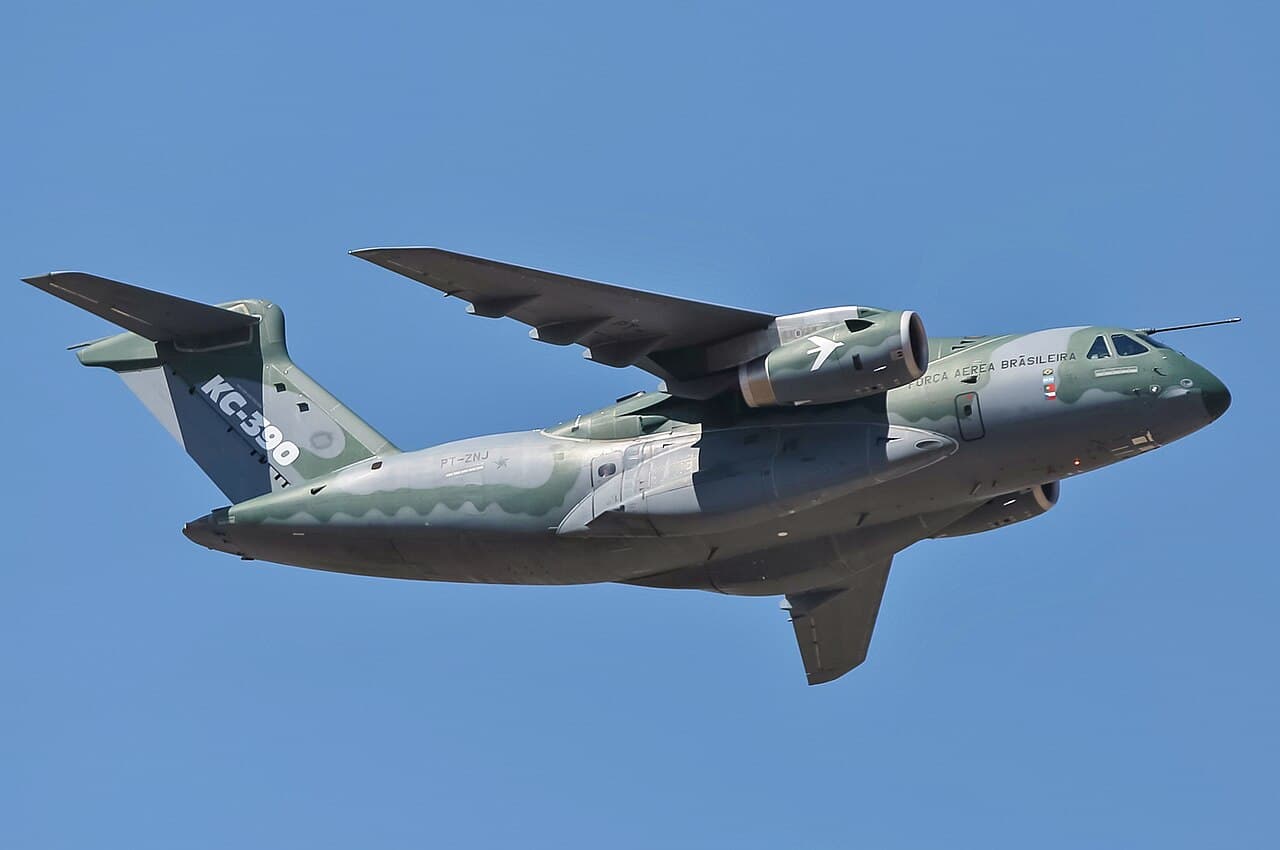
The Brazilian Embraer C-390 Millennium offers smaller countries a Western-made airlifter option, competing with the Lockheed Martin C-130J and Airbus transports.
The gist
The Embraer C-390 is becoming the go-to affordable Western military airlifter for smaller nations seeking modern transport aircraft.
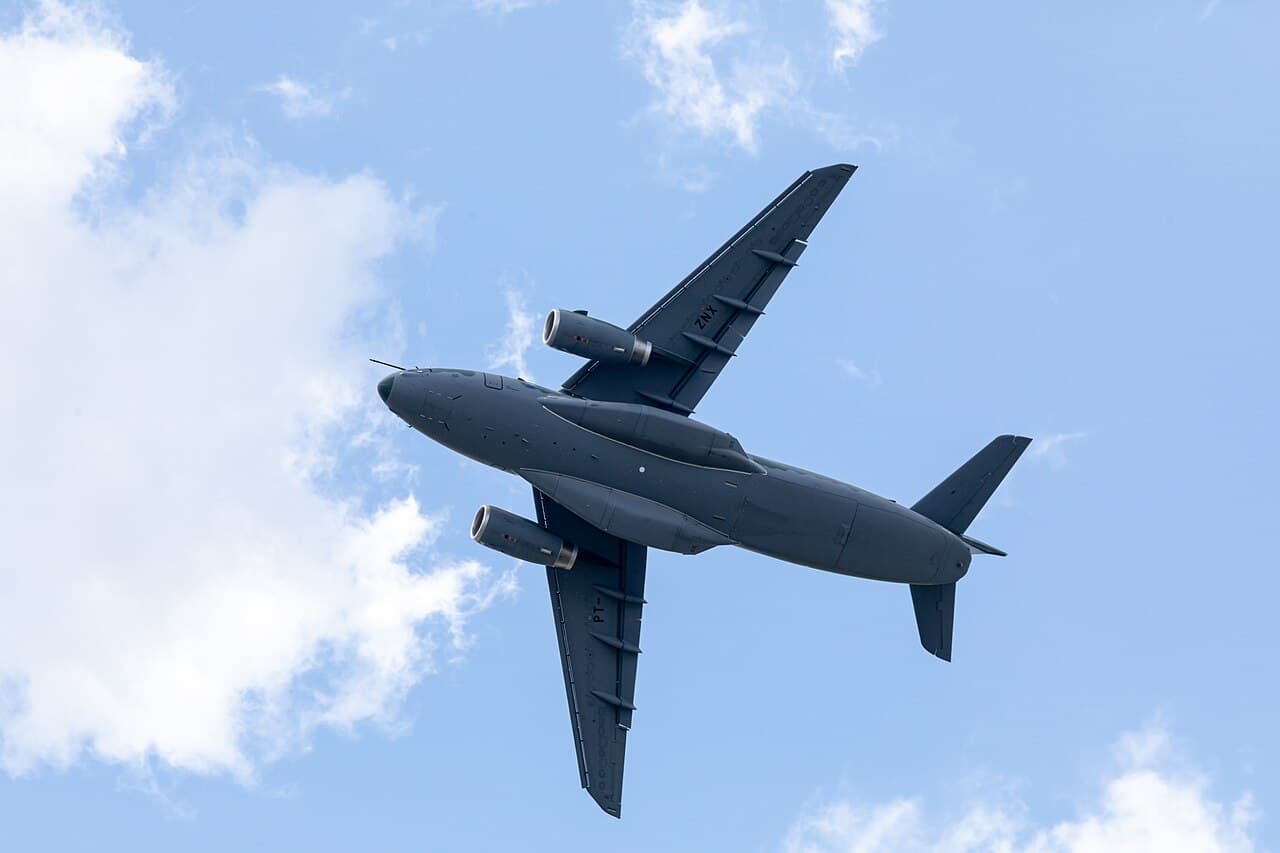
The Embraer C-390 Millennium, designed and assembled in Brazil with significant US and European component integration, is carving out a unique position in the Western military airlift market since entering service in 2019. Positioned as an alternative to the Lockheed Martin C-130J Super Hercules, the C-390 appeals especially to smaller air forces seeking a geopolitically acceptable option distinct from Russian and Chinese aircraft.
While Brazil is typically viewed as outside the traditional Western military-industrial complex, the C-390's production involves an international supply chain. Brazil undertakes the aircraft's design, final assembly, and key aerostructural components. The United States contributes roughly a quarter to a third of the aircraft's value, notably supplying the IAE V2500-E5 turbofan engines, avionics, and flight control systems. European countries including Germany, Czechia, Portugal, France, the UK, and Spain provide further structural parts, landing gear, and avionics, making the C-390 a multinational Western collaboration.
In terms of size and capability, the C-390 fills a niche between smaller turboprop transports like the Airbus C-295 and larger heavy airlifters such as the Airbus A400M Atlas. It carries up to 80 troops or 66 paratroopers with a maximum payload around 26,000 kilograms and cruises at about Mach 0.8, faster than its turboprop rivals. Compared to the C-295's 9,000 kg payload and the A400M's 37,000 kg, the C-390 offers a middle ground in payload and range with jet propulsion speed.
Its closest competitor, the Lockheed Martin C-130J, features a payload of approximately 20,000 kilograms and troop capacity up to 92, with a higher ferry range. While the C-130J boasts better capability operating from austere and short runways, the C-390 outperforms it with faster cruise speed and larger payload capacity. Procurement decisions between these two models often depend on mission requirements and budget, with both winning various export contracts.
The C-390's clientele has been expanding steadily. Current operators include Brazil with 19 units, Portugal with five, Hungary and the Czech Republic with two each. Future orders come from Austria, the Netherlands, South Korea, Sweden, Uzbekistan, and the UAE, reflecting growing confidence in the platform. These countries are largely replacing aging C-130H fleets or Soviet-era transports, seeking modern and cost-effective airlift solutions with Western interoperability.
This growth is crucial for sustaining and developing the C-390 program, as a larger user base improves upgrade potential, interoperability among allies, and economies of scale. The aircraft's success also challenges Lockheed Martin's dominance among medium military transports, providing a competitive alternative largely backed by Brazil's Embraer and a multinational Western industrial network.
In contrast, Ukraine's Antonov transport aircraft, once a major player in this segment, has seen production all but end due to political instability and conflict since 2014. This reduced competition further enhances the appeal and opportunity for the C-390 in markets seeking reliable Western-made tactical airlifters.
While Lockheed Martin's C-130J remains a proven and mature choice with operational advantages, the C-390's jet-powered speed and larger payload provide compelling operational benefits. The C-390’s role as a Western-approved, jointly produced airlifter has made it a key option for smaller or medium-sized nations seeking to modernize their airlift fleets within a geopolitical framework favoring NATO-compatible equipment.
The market for medium military airlifters continues to evolve, with speed, payload, operational flexibility, and geopolitical considerations shaping procurement. The Embraer C-390 Millennium exemplifies a modern approach, blending Brazilian aerospace capability with strategic partnerships, offering smaller nations an affordable yet advanced Western transport platform.
Frequently asked questions
- What makes the Embraer C-390 Millennium a viable option for smaller air forces?
- It offers a Western-approved medium airlifter with a payload larger than the C-130J, faster jet-powered speed, and multinational supply chain integration, all at an affordable scale for smaller nations.
- How does the C-390 compare to the Lockheed Martin C-130J Super Hercules?
- The C-390 carries a larger payload and is about 25-30% faster due to its jet engines, while the C-130J has better capability in austere and short-runway conditions and more established sustainment support.
- Which countries currently operate or plan to operate the Embraer C-390?
- Current operators include Brazil, Portugal, Hungary, and the Czech Republic, with future customers like Austria, the Netherlands, South Korea, Sweden, Uzbekistan, and the UAE.
Read more
All Military/Defense →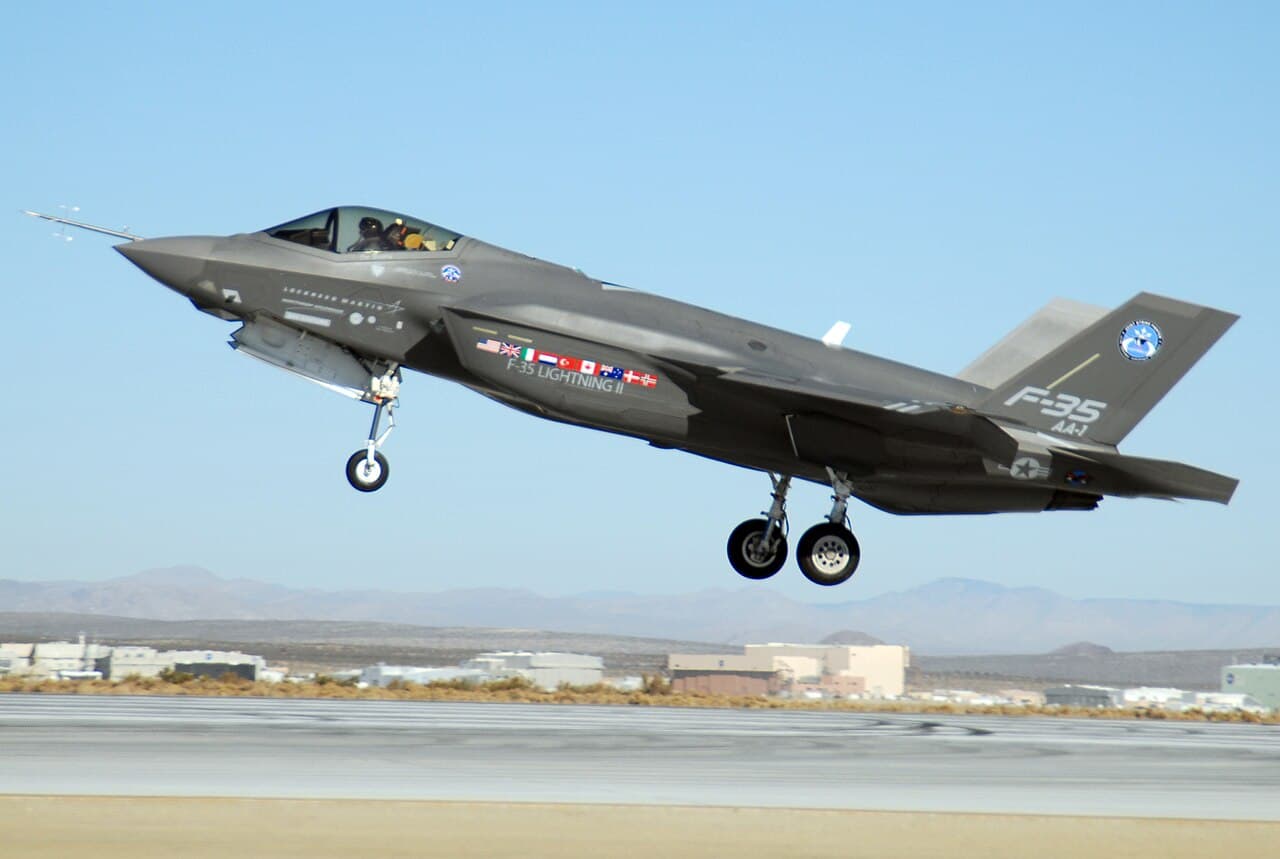
UK delays delivery of expanded F-35 fleet until early 2030s amid strategic and logistical challenges
Due to severe worldwide backlog pressures within the F-35 Joint Program Office and a strategic procurement delay by the Ministry of Defense, the United Kingdom will not receive any new Lockheed Martin F-35 Lightning II jets from its enlarged fleet order until the early 2030s. The upcoming batch introduces the F-35A variant to the UK fleet for the first time, intended to fulfill NATO nuclear-sharing missions.
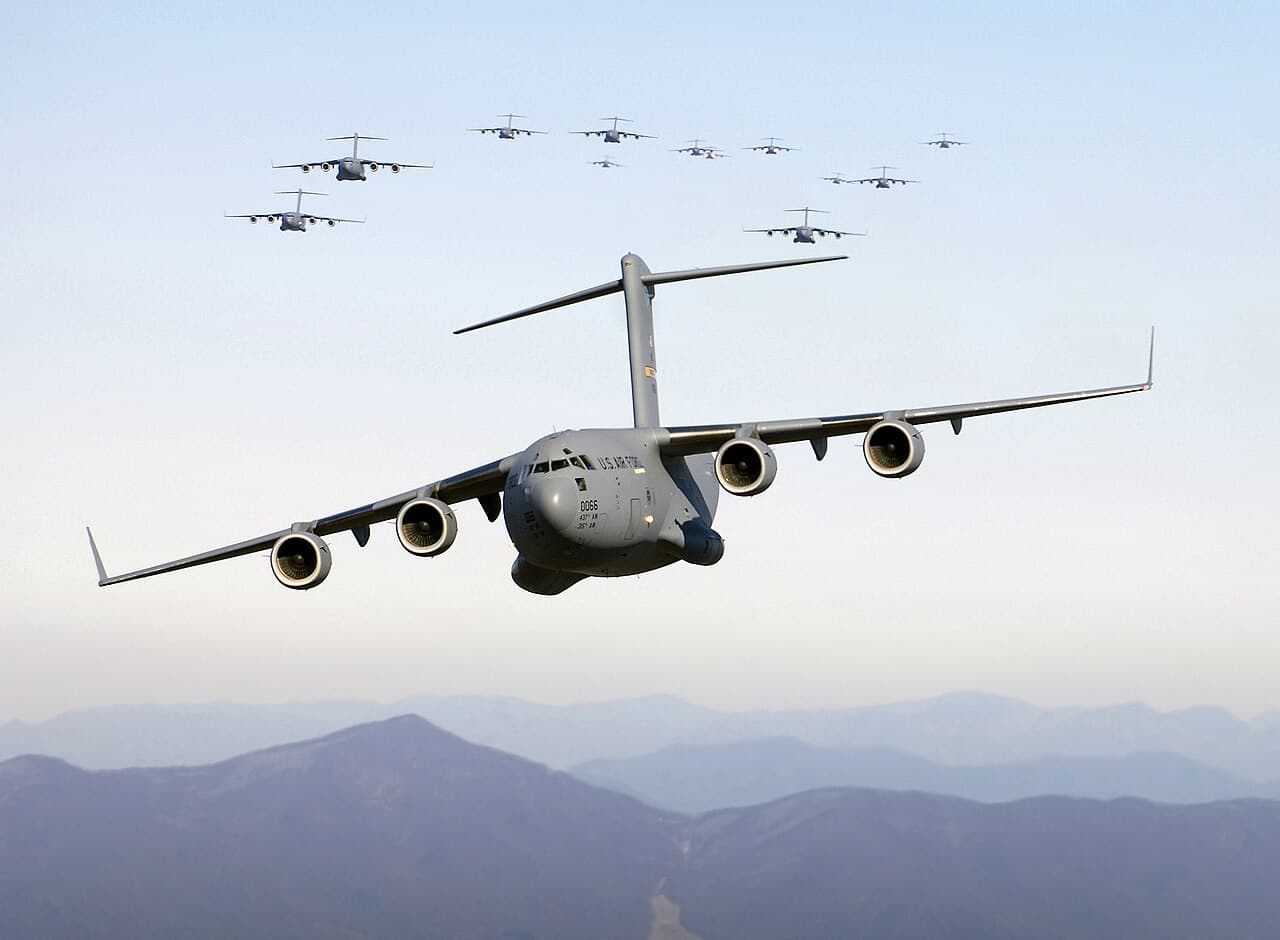
Boeing's Data-Driven Upgrade Set to Extend C-17 Globemaster Service Through 2075
The last McDonnell Douglas C-17 Globemaster III left the assembly line in 2015, and it is expected to remain a vital airlift platform of the US Air Force for decades to come. The last C-17 rolled out the doors just as Boeing absorbed the storied planemaker in one of the largest aerospace mergers in history. Now, as the caretaker of the Globemaster, Boeing is preparing to deliver a major upgrade through its new Aircraft Data Reasoner.
USAF Invests $143M in Software Upgrades to Keep C-5 Galaxy Airlifters Flying Until 2050
The largest aircraft in the United States Air Force's arsenal isn't the Boeing VC-25 (based on the 747) used for presidential transport, but rather the less glamorous Lockheed C-5 Galaxy . The C-5 is of a similar vintage as the 747 and was designed specifically as a military freighter, having only ever served for the USAF across the 56 years since its introduction. Despite its age, the USAF is firmly committed to the C-5 in its long-term fleet plan and will upgrade these aircraft.
Colombia orders two Embraer KC-390 Millennium airlifters for fleet modernization
Embraer announced on August 4, 2026, that the Fuerza Aeroespacial Colombiana (FAC) has signed a contract for two KC-390 Millennium multi-mission aircraft, making Colombia the first Latin American customer for the type outside Brazil and the 13th nation to order it. The FAC put the value of the contract at $366.4 million at fixed prices, with execution spread over four years. The package covers the two aircraft, mission equipment, initial training for pilots, maintenance technicians and mission support personnel, ground support equipment, and 24 months of integrated logistics support. Embraer said the deal also includes an offset program structured to meet Colombian regulatory requirements. Deliveries are scheduled for 2029 and 2030, with the first aircraft to be ferried from Embraer's Gavião Peixoto plant to CATAM air base in Bogotá. Replacing an aging Hercules fleet The purchase falls under the FAC's heavy tactical military transport requirement, part of a modernization plan the force ties to its Air and Space Development Strategy 2042 (EDAES 2042), formulated in 2019. Colombia's tactical airlift currently rests on a small fleet of Lockheed C-130B and C-130H Hercules, operated since the late 1960s and supplemented over the years by second-hand US transfers. That fleet came under scrutiny after a C-130H registered FAC-1016 crashed shortly after takeoff from Puerto Leguízamo on March 23, 2026, killing 70 of the 126 people on board. The decision was not entirely free of controversy. President Gustavo Petro directed the FAC to conclude negotiations with Embraer in July 2026, according to Infodefensa , before the force had completed a technical comparison that also included the Lockheed Martin C-130J Super Hercules and Airbus A400M. The FAC nevertheless maintained that its selection followed technical, legal and financial analyses conducted by its own personnel. Tanker role and Gripen interoperability Two Brazilian Air Force F-39E Gripen fighters refuel simultaneously from an Embraer KC-390 Millennium. (Credit: Embraer) Embraer said the aircraft will be delivered with connectivity allowing them to operate alongside the 17 Gripen E/F fighters Colombia ordered from Saab in November 2025 under a €3.1 billion contract. The KC-390 can be fitted with removable air-to-air refueling equipment, allowing it to serve as either tanker or receiver. Bosco da Costa Junior, President and CEO of Embraer Defense & Security, said the company was "honored by the FAC's decision to select the KC-390 Millennium," pointing to a relationship dating back more than 35 years to Colombia's purchase of the EMB-312 Tucano and later the A-29 Super Tucano. Embraer says the KC-390 carries up to 26 tons of payload at speeds of up to 470 knots and can operate from short or unpaved strips. Beyond Brazil, the type has been selected by Portugal, Hungary, South Korea, the Netherlands, Austria, the Czech Republic, Uzbekistan, Sweden, the United Arab Emirates, Slovakia and Lithuania [though the latter postponed the procurement – ed. note]. The Czech Air Force received its first aircraft on July 16, 2026.
The Daily Touch & Go
The day's best aviation news in your inbox. Free, no spam.