

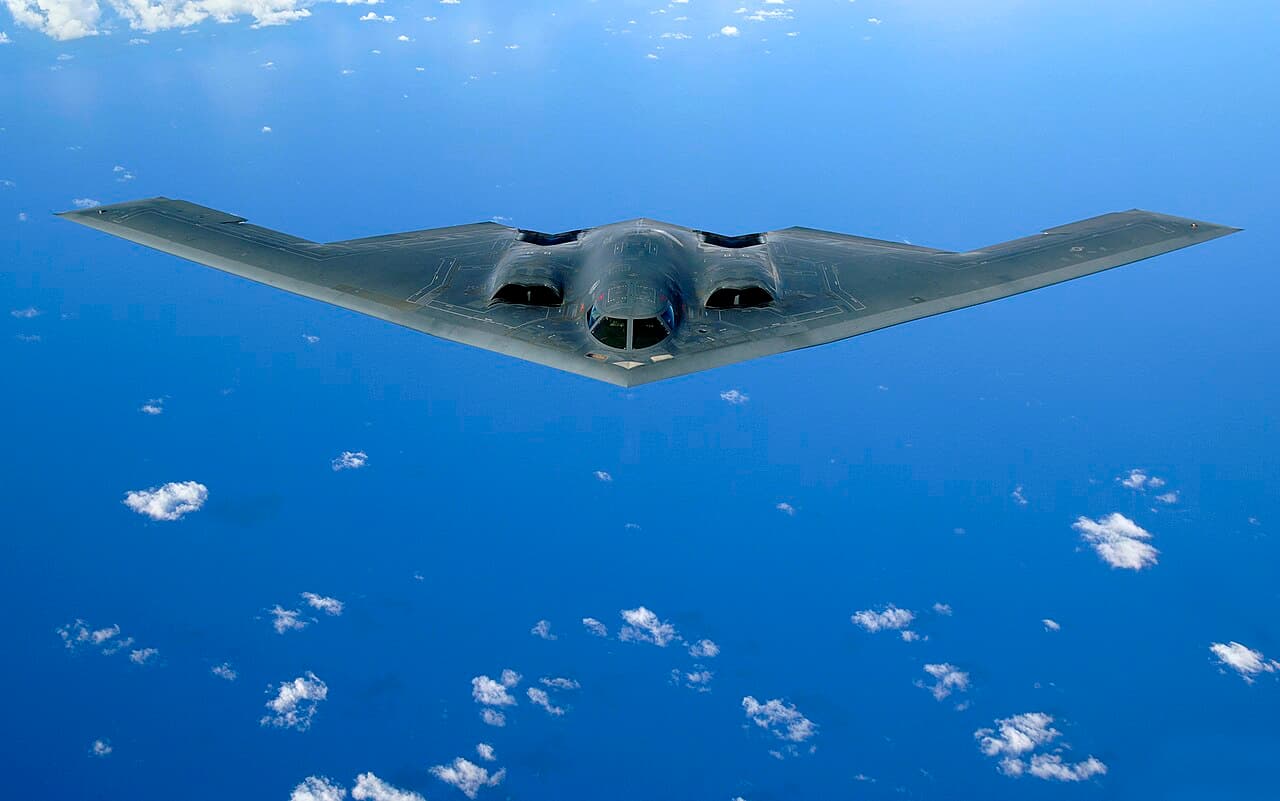
Image: U.S. Air Force photo/Staff Sgt. Bennie J. Davis III · Public domain · via Wikimedia Commons
B-2 Spirit's Cockpit Design Enables 40-Hour Missions with Enhanced Pilot Endurance
Northrop Grumman's B-2 Spirit bomber features a unique cockpit and automation systems that support its crews on missions lasting up to 40 hours.
The gist
B-2 crews endure marathon missions thanks to a specially designed cockpit and advanced automation ensuring pilot alertness and comfort.
Continuing coverage
All B-2 Spirit →The Northrop Grumman B-2 Spirit bomber is renowned for its ability to conduct some of the longest continuous missions in aviation history, with sorties measuring up to 40 hours. This remarkable endurance capability stems from the aircraft’s innovative design and technological systems that prioritize crew sustainability in flight. Unlike fighter jets that measure missions in minutes, B-2 crews face prolonged physiological challenges that the aircraft’s layout and automation help mitigate.
Fundamental to the B-2’s long endurance is its highly automated flight control system. The flying wing design, which lacks a conventional tail, requires constant adjustments to maintain stability. This task is managed by a quadruple-redundant fly-by-wire system that makes millions of tiny control surface movements, effectively smoothing out turbulence and providing a stable platform for pilots. Because of this automation, the bomber typically only needs one pilot to control the aircraft for extended periods, allowing workload sharing and periods of rest.
The spacious cockpit benefits from the aircraft’s bulbous flying wing shape, providing more room compared to traditional bombers. Pilots have access to features aimed at sustaining their physical and cognitive performance over multi-day flights, including highly adjustable ejection seats that recline up to 180 degrees and a folding cot for sleeping during the mission. Amenities such as a convection microwave oven and a hot cup allow crew members to consume hot, high-protein meals crucial for maintaining alertness and nutrition throughout the long sorties.
Biological necessities are also engineered into the aircraft to support extreme endurance. A compact galley and waste management system features a stainless-steel chemical toilet behind the pilot’s seat, integrated with the environmental control system to vent odors outside the aircraft, preserving air quality within the cockpit’s highly pressurized cabin environment. These accommodations help crews manage basic human needs without sacrificing mission readiness.
The stealth capabilities of the B-2 play a critical role in enabling such long missions. Its extremely low radar cross-section—comparable to a marble or honeybee—allows it to operate with minimal threat and without the need for constant evasive maneuvers or electronic jamming. This stealthy design lets crews maintain a relatively relaxed state and avoid the physical and mental strain typical of exposed bombers like the B-52, thus extending endurance.
Development of the B-2’s cockpit and crew resource management reflects a comprehensive approach to sustaining human performance on unprecedentedly long missions. Flight crews undergo rigorous, simulator-based training that can include nonstop 24-hour sessions, conditioning pilots to make decisions under fatigue. Meticulous pre-flight planning covers route, wakefulness cycles, and strategies to safely conduct complex phases such as nighttime aerial refueling, which involve continuous verbal communication and memorized visual cues.
The operational record of the B-2 underscores these design choices. For example, during Operation Enduring Freedom, B-2 crews flew 44-hour sorties covering thousands of miles between Missouri and Afghanistan, maintaining high precision while delivering multiple guided munitions. The aircraft’s ability to remain safely airborne provided crews the time needed to execute complex missions that would otherwise be physically and mentally prohibitive in less accommodating aircraft.
Ultimately, the B-2 Spirit’s cockpit and automation systems are integral to the aircraft’s role as a strategic asset. By combining stealth, advanced flight control, and focused human factors engineering, the bomber can sustain its human operators on the longest bombing runs in history, a capability unmatched by any other manned aircraft. This synergy between machine and crew underpins the B-2’s continued relevance in U.S. defense strategy.
Frequently asked questions
- How does the B-2 Spirit enable pilots to fly missions lasting up to 40 hours?
- The B-2 Spirit features a highly automated flight control system that allows one pilot to manage the aircraft while another rests. The cockpit includes a folding cot, microwave oven, chemical toilet, and reclinable seats to sustain pilot endurance over long flights.
- What role does stealth play in the B-2’s long endurance missions?
- The B-2’s extreme stealth reduces the need for evasive maneuvers or electronic jamming, allowing crews to operate in a lower-stress environment and maintain vigilance without physical strain, supporting mission durations of up to 40 hours.
- What kind of crew training supports the long-duration missions of the B-2 Spirit?
- B-2 crews undergo rigorous simulator training that includes nonstop 24-hour exercises to build fatigue resilience. They also plan sleep rotations, communication, and procedures for complex tasks like nighttime aerial refueling to maintain performance over extended sorties.
Read more
All Military/Defense →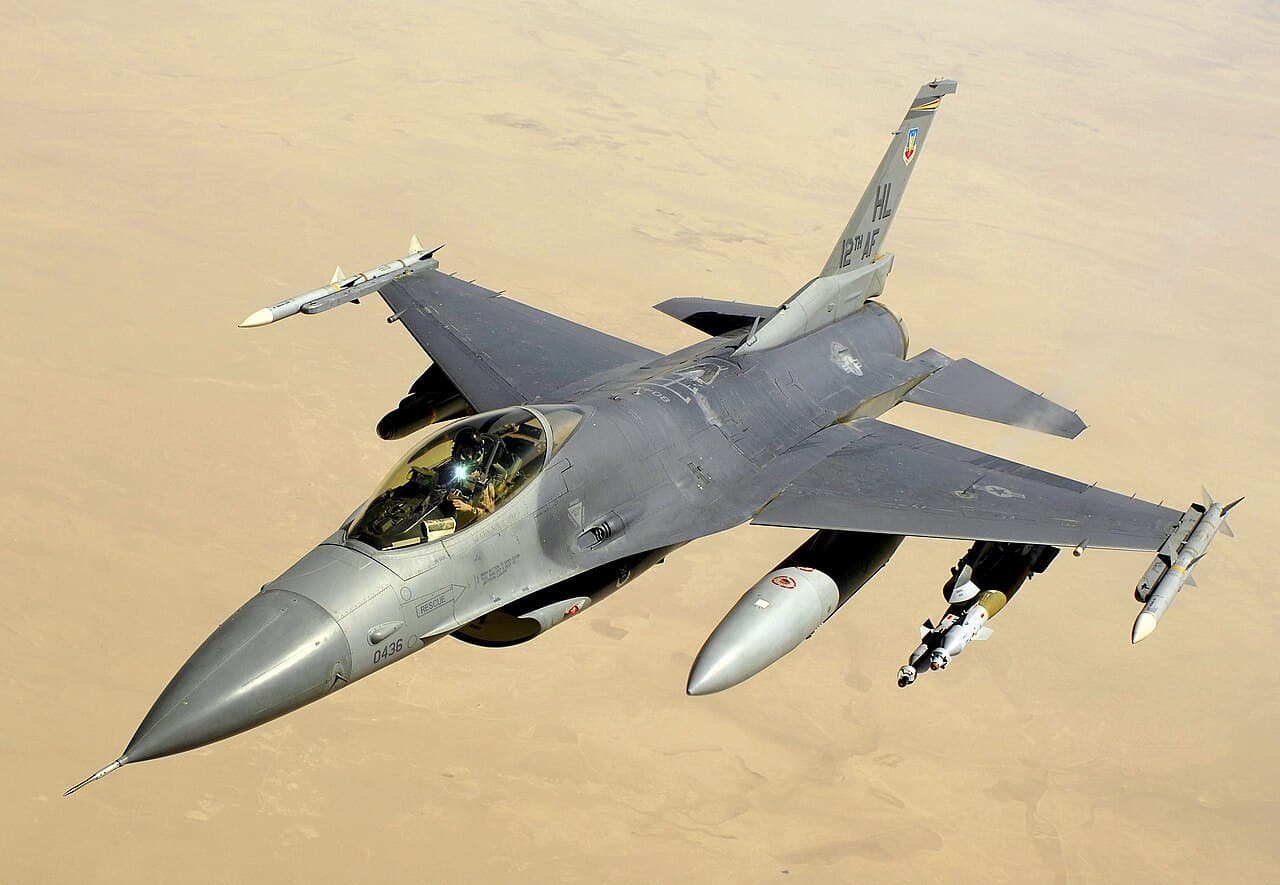
F-16 Viper Gets Major Combat Boost with New AN/APG-83 AESA Radar Upgrade
The Lockheed Martin F-16 Fighting Falcon, also known as the Viper, is no longer the premier lightweight fighter jet of the US Air Force, but it is far from irrelevant. As a much less expensive airframe than the more exquisite F-35 Lightning II, the Viper continues to roll off the assembly line. It is the most mass-produced supersonic fighter jet still in production today, with more than 4,500 examples having been delivered. Now, the existing fleet is also getting a major lethality upgrade in the form of the Northrop Grumman AN/APG-83 Scalable Agile Beam Radar.
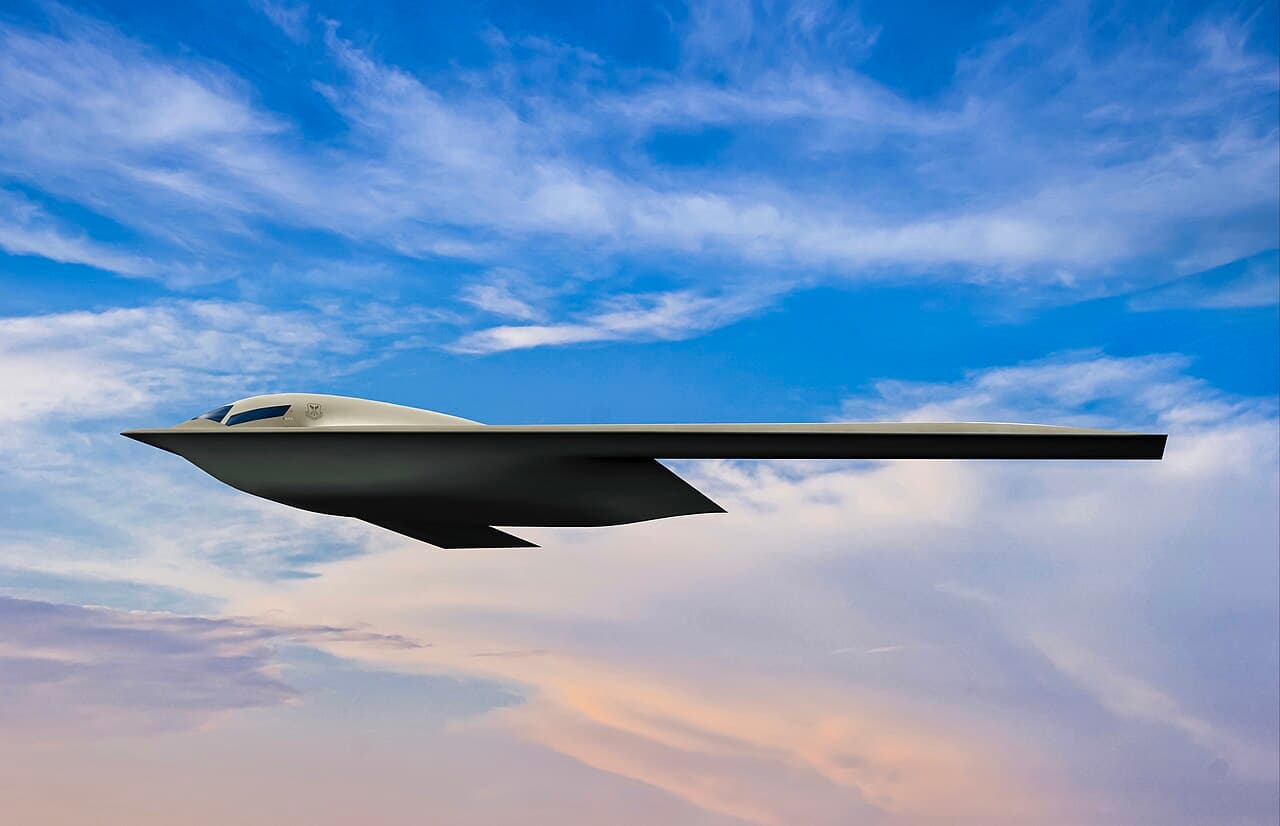
USAF to Convert B-21 Raider Test Jets Directly into Combat Bombers from 2027
The United States Air Force has a couple of test Northrop Grumman B-21 Raiders that are blurring the line between testing and fielding. The B-21 Raider is expected to enter service in 2027, making it the world's first all-new strategic bomber to enter service since the B-2 Spirit entered service in 1997. China is also working to develop its Xi'an H-20 stealthy strategic bomber, but it is unclear when it will enter service.
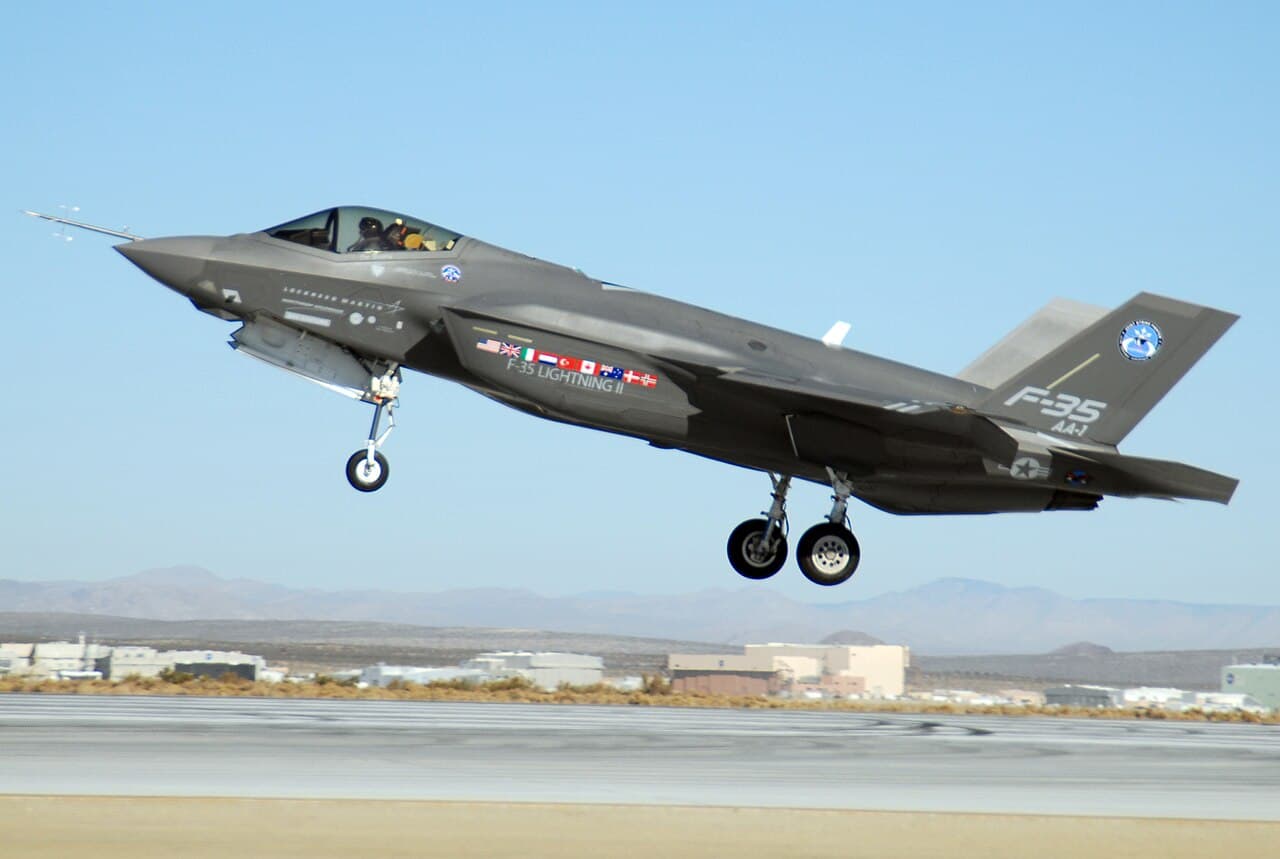
UK delays delivery of expanded F-35 fleet until early 2030s amid strategic and logistical challenges
Due to severe worldwide backlog pressures within the F-35 Joint Program Office and a strategic procurement delay by the Ministry of Defense, the United Kingdom will not receive any new Lockheed Martin F-35 Lightning II jets from its enlarged fleet order until the early 2030s. The upcoming batch introduces the F-35A variant to the UK fleet for the first time, intended to fulfill NATO nuclear-sharing missions.
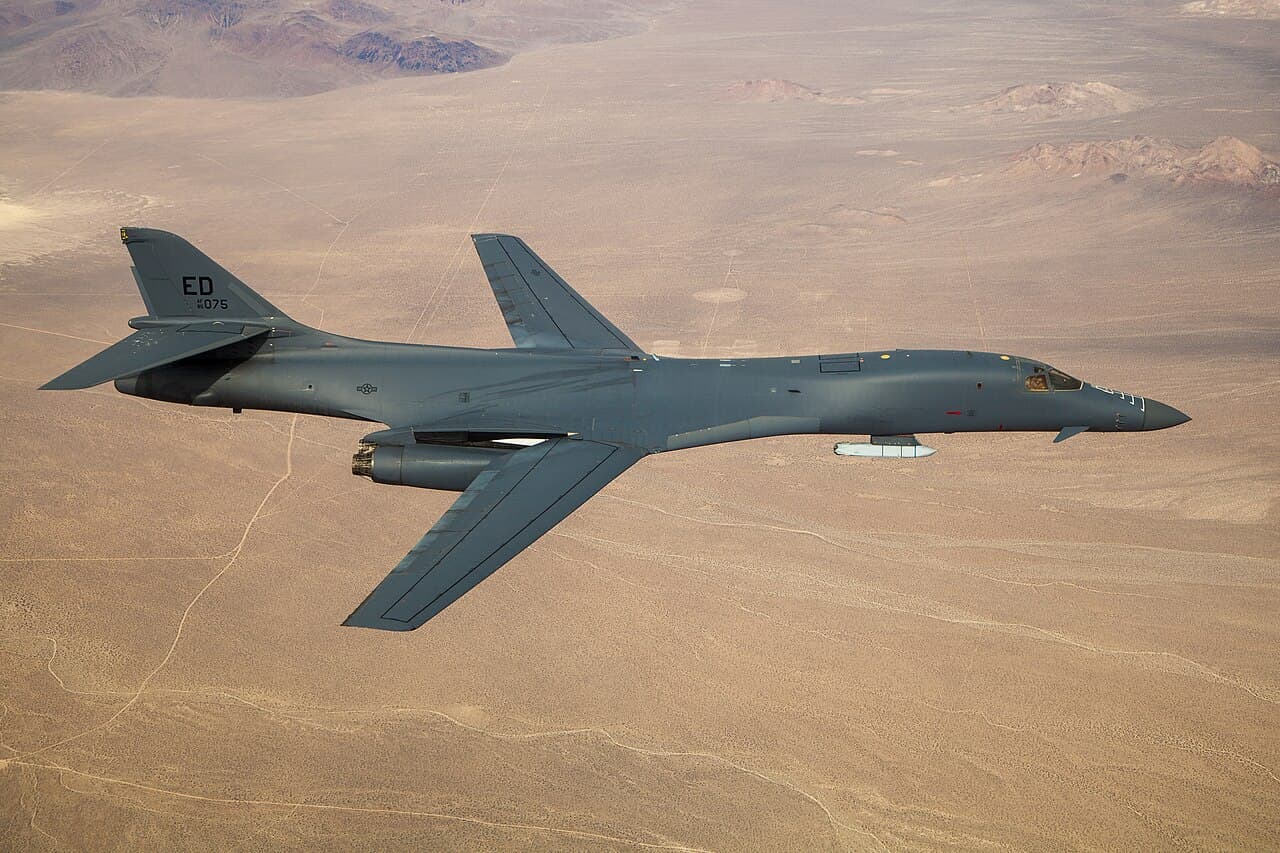
US Air Force Deploys Nearly One-Third of B-1B Bomber Fleet to RAF Fairford
At the peak of Operation Epic Fury (around late March 2026) , the US Air Force deployed around 15 B-1B Lancers and around six B-52H Stratofortresses at the UK's RAF Fairford airbase. The initial wave of B-1Bs arrived on or after March 6, with B-52s arriving soon after. As of the time of writing (late July), a large share of the Air Force's operational Rockwell B-1 Lancer fleet remains deployed at RAF Fairford.
The Daily Touch & Go
The day's best aviation news in your inbox. Free, no spam.