

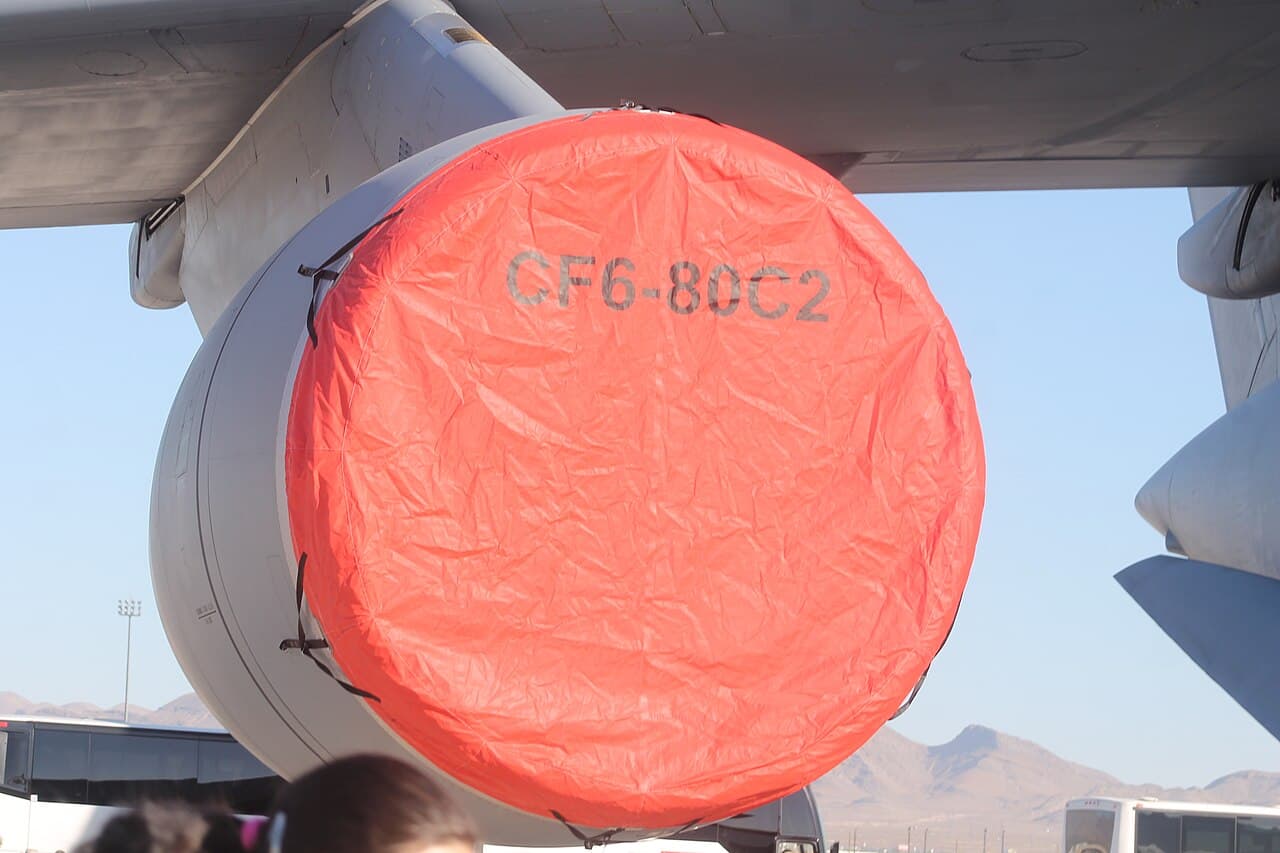
Image: Noah Wulf · CC BY-SA 4.0 · via Wikimedia Commons
USAF Invests $143M in Software Upgrades to Keep C-5 Galaxy Airlifters Flying Until 2050
The USAF commits $143 million to Lockheed Martin for software sustainment of the 1970-era C-5 Galaxy, alongside ongoing structural upgrades, extending service life past 2050.
The gist
USAF awards $143M to Lockheed Martin for C-5 Galaxy software updates, supporting service through 2050 alongside structural maintenance.
The United States Air Force is undertaking a significant investment to extend the operational life of its Lockheed C-5 Galaxy fleet well into the mid-21st century. In July 2026, the USAF awarded Lockheed Martin a $142.9 million indefinite-delivery, indefinite-quantity contract focused on software sustainment services for the C-5. This contract entails ongoing development, maintenance, and updating of the aircraft’s digital systems, ensuring compliance with modern air traffic control and navigation infrastructure.
The C-5 Galaxy, introduced into service in 1970, remains the largest aircraft in the USAF inventory. It was purpose-built as a heavy lifter capable of intercontinental strategic airlift missions, transporting outsized cargo loads that demand a spacious and robust airframe. With dimensions including a length exceeding 247 feet and a wingspan nearing 223 feet, the quadjet high-wing design can carry over 127 metric tons of payload, distinguishing it as a pivotal logistical platform for the USAF.
Lockheed Martin’s software services will be conducted out of two facilities, one in Marietta, Georgia, and another in Greenville, South Carolina. By managing aspects such as safety compliance and digital system performance, these updates are vital for integrating the aging airframes with contemporary military and civilian aviation systems. The contract duration extends to May 2032, providing flexibility while guaranteeing sustained software reliability and operational capability.
This recent software contract complements a separate maintenance agreement awarded in 2025 valued at $211.3 million, also to Lockheed Martin. That contract focuses on the physical upkeep of the C-5M Super Galaxy fleet, targeting structural integrity, corrosion prevention, and system repairs. Together, the dual contracts emphasize a holistic approach to fleet readiness: ensuring both the hardware and software components of the venerable C-5 are kept mission-ready.
The C-5 Galaxy fleet comprises updated Variant M aircraft, which include substantial enhancements over the original C-5A and B models, such as more fuel-efficient General Electric F138 engines derived from commercial designs. Despite being produced between 1986 and 1989 for the C-5B models, these aircraft continue to play an essential role in the USAF’s strategic airlift capabilities, underpinning global mobility operations.
Historically, the C-5 was selected over competitors by criteria emphasizing lifecycle cost and payload capacity. Its massive capacity of 36 standard pallets and capability to transport 73 passengers on an upper deck remain critical for rapid deployment of heavy and outsized equipment. This unparalleled airlift ability has sustained the C-5 as a cornerstone asset for over five decades amid evolving military logistics needs.
Beyond the substantial structural and software investments, the USAF’s decision to retain the C-5 fleet rather than procure a replacement indicates the aircraft’s unique capabilities remain unmatched by existing or foreseeable alternatives. Military priorities such as functionality, reliability, and maintainability take precedence over fuel efficiency, distinguishing USAF asset management strategies from commercial aviation norms.
The C-5 Galaxy’s longevity is consistent with a broader USAF practice of extending aircraft service life well beyond initial estimates, as seen with other legacy platforms like the B-52 Stratofortress and KC-135 Stratotanker. With proper maintenance—both physical and digital—the C-5 is expected to meet operational demands through at least 2050, continuing to support strategic air mobility requirements for decades to come.
Frequently asked questions
- Why is the USAF investing in upgrades for the C-5 Galaxy?
- The USAF is upgrading the C-5 Galaxy’s software and structural systems to extend the aircraft’s operational lifespan until at least 2050, ensuring it remains compatible with modern aviation systems and mission-ready.
- What does the $142.9 million contract cover?
- The contract covers software sustainment services, including development, updates, and maintenance of the C-5’s digital systems to maintain safety, performance, and compatibility with air traffic control and USAF infrastructure through 2032.
- How does the software contract relate to other C-5 maintenance efforts?
- The software contract complements a separate $211.3 million contract awarded to Lockheed Martin in 2025 covering physical maintenance and structural integrity of the C-5M fleet, together ensuring both hardware and software readiness.
Read more
All Military/Defense →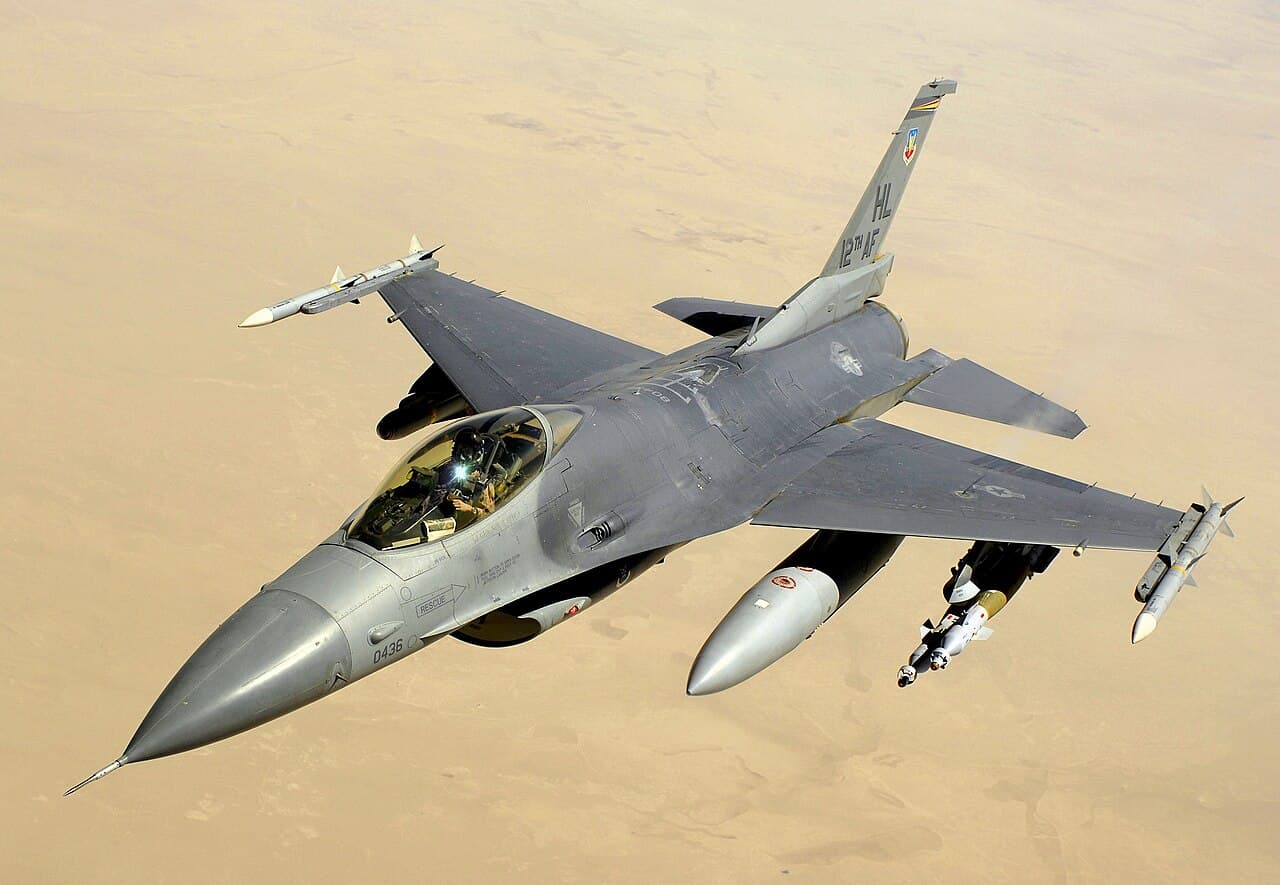
DARPA and US Air Force achieve AI-controlled flight in modified F-16s under VENOM program
DARPA and the US Air Force have flown a modified F-16 under the control of an artificial intelligence agent, moving autonomous combat testing from a one-off research project to actual modified frontline fighters. The service began flying VENOM-modified aircraft in June 2026 to confirm that the jets and their new systems operated safely. Test teams then allowed an AI agent to control an F-16 in flight in July, while a pilot remained in the cockpit to monitor the aircraft and take control if necessary. The program uses the name Viper Experimentation and Next-generation Operations Model–Autonomy Flying Testbed, or VENOM-AFT. Engineers equipped the F-16s with additional hardware, software and instrumentation that allow AI agents to fly the aircraft. DARPA said the modification automates the aircraft's flight controls and sensors without changing the F-16's core software. A human pilot can switch between conventional controls and autonomous operation during a flight. The pilot stays in the cockpit throughout the test and monitors the AI agent, aircraft systems and mission objectives. "These groundbreaking flight tests of VENOM-modified F-16s advance the infrastructure needed to develop trusted, autonomous air combat capabilities," DARPA Program Manager Brig. Gen. James Valpiani said. Valpiani said the system gives the Air Force and DARPA a faster way to develop and test AI tech for aerial combat. The Air Force did not discuss the specific maneuvers or mission tasks the AI performed during the recent test flights. It also did not identify the autonomy software or company behind the AI agent. DARPA says early sorties focused on confirming that the modified aircraft could fly safely with the VENOM equipment installed. Engineers completed months of engine runs, aircraft-system checks and simulation work before flight testing began. The program's ground-test work dated back to 2024. "Getting the aircraft into the air is always a monumental milestone for a complex test program," VENOM Test Pilot Tim Stevens said. "It represents years of design, modification and test planning poured into this project by a dedicated team of hundreds." The 40th Flight Test Squadron has led much of the early developmental testing at Eglin Air Force Base in Florida. The 53rd Wing and 96th Test Wing are also working together on the program with support from DARPA. VENOM expands on X-62 VISTA testing VENOM builds on earlier work with the X-62A Variable Stability In-flight Simulator Test Aircraft, or VISTA. DARPA used the heavily modified F-16 test aircraft to demonstrate AI-controlled air combat under its Air Combat Evolution program. The agency said an AI agent flew the X-62A during close-range dogfighting tests against human pilots. The X-62A remains a specialized, one-of-a-kind research aircraft. VENOM gives the Air Force a way to install and test autonomy systems aboard more conventional F-16s without redesigning the entire aircraft. The Air Force received the first three F-16s for VENOM conversion at Eglin in 2024. At the time, the service said developmental and operational test pilots would work from the same location, allowing them to share data and feedback directly with autonomy developers. The VENOM aircraft will now support DARPA's Artificial Intelligence Reinforcements program, which focuses on AI-controlled, multi-aircraft combat beyond visual range. DARPA plans to test autonomy software first aboard crewed F-16s and later transfer it to uncrewed combat aircraft. The program will also help the Air Force develop ways for pilots to direct groups of autonomous aircraft rather than control every movement individually. The work builds on the service's wider effort to field uncrewed combat aircraft alongside crewed fighters. The Air Force is currently testing the General Atomics YFQ-42A and Anduril YFQ-44A under its Collaborative Combat Aircraft program. The Air Force said the team will refine the aircraft and autonomy systems after each flight and gradually expand the complexity of the tests. It did not provide a schedule for the next phase of the program.
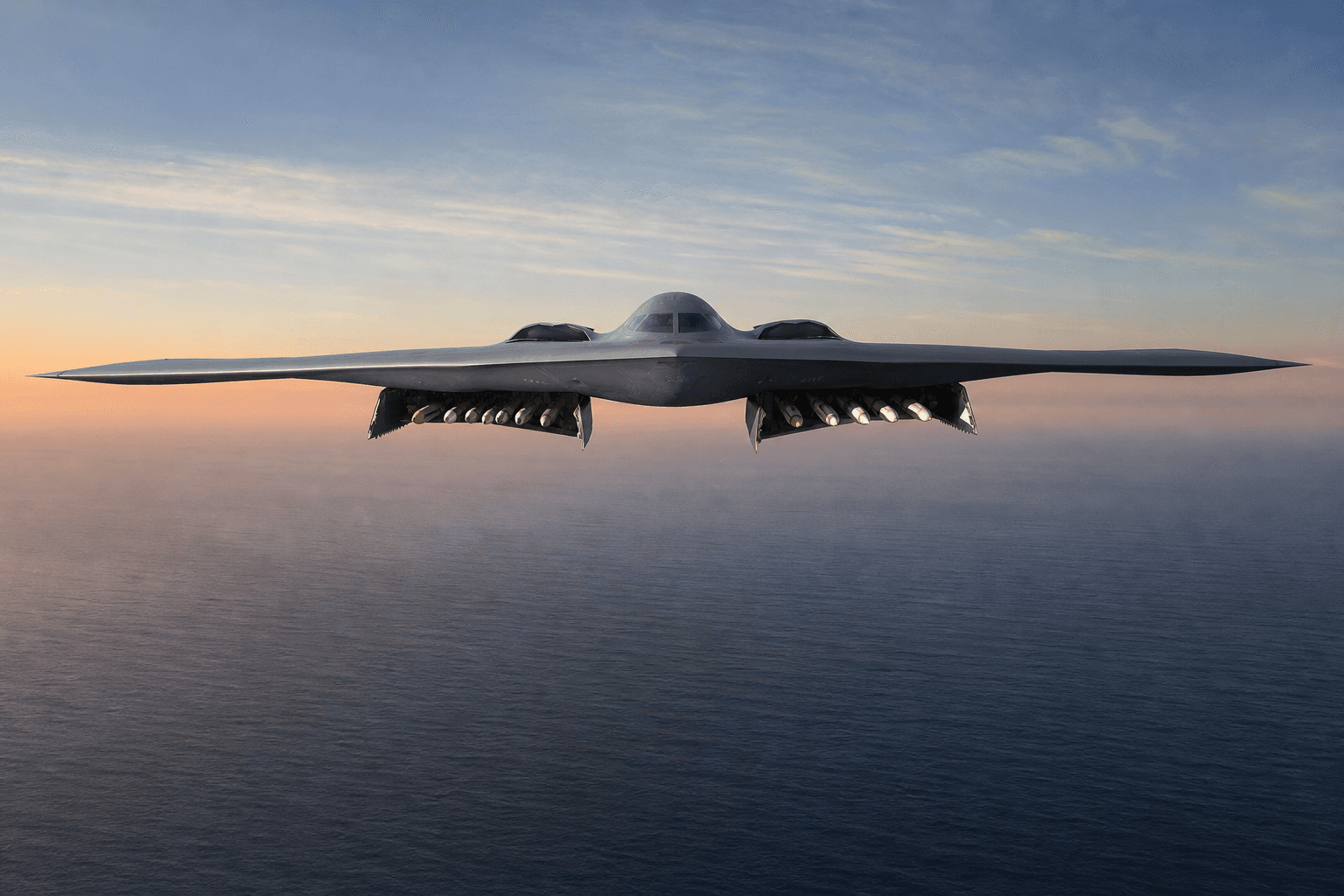
US Air Force Adapts 19 B-2 Stealth Bombers with Long-Range Anti-Ship Missiles in Pacific
The Indo-Pacific is possibly the most consequential area of operations for the United States (US) Military at the present time. This region, which had, since the conclusion of the Vietnam War, drifted ever farther from the US strategic focus, has recently witnessed a resurgence of strategic interest.
USAF Jet-Powered Combat Drone Launches Live AIM-120 Missile in Mojave Test
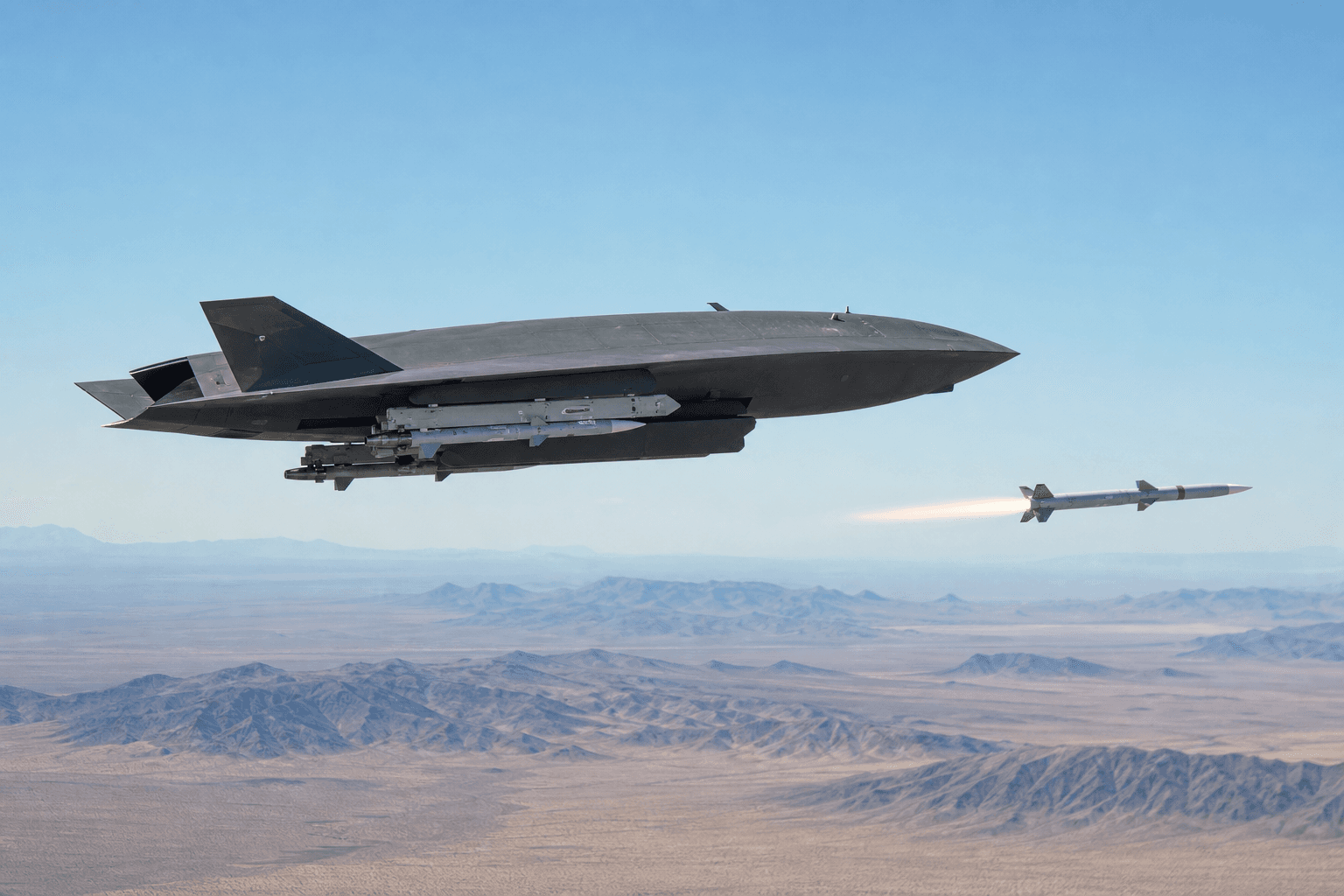
The US Air Force has fired a live air-to-air missile from a jet-powered combat drone for the first time, marking a major step in the development of uncrewed aircraft designed to fight alongside crewed warplanes. Anduril's YFQ-44A fired an AIM-120 Advanced Medium-Range Air-to-Air Missile at a target in restricted airspace over California's Mojave Desert, the Air Force said on July 15, 2026. The Air Force said the YFQ-44A carried out the targeting and launch sequence on its own, while a human operator retained control over the decision to fire. "CCA will not autonomously employ weapons," the Air Force said. "The decision to release any weapon system remains exclusively with a human operator, who maintains command and control of the platform at all times." The test was conducted with the 412th Test Wing's Air Dominance Combined Test Force, which includes military personnel, government employees and contractors. Testing began earlier in 2026 with inert captive-carry flights designed to collect handling data while the YFQ-44A carried the weapon. Later evaluations focused on the data link between the aircraft and missile and whether commands from the operator were executed correctly in a simulated environment. "Moving from inert carriage earlier this year to this weapon release demonstrates program maturity, allowing us to validate our digital integration models with actual data," Gen. Dale White, the Department of War's Direct Reporting Portfolio Manager for Critical Major Weapon Systems, said. The Air Force did not say whether the AIM-120 physically struck or destroyed an aerial target. It described the target as digital and the event as live-fire testing, meaning the missile itself was launched but the engagement relied on a simulated target track. Air Force Chief of Staff Gen. Ken Wilsbach called the test "an important next step" in the Collaborative Combat Aircraft program. "We're one step closer to delivering capabilities to the warfighter," Wilsbach said. YFQ-44A developed as autonomous fighter escort The YFQ-44A, originally known as Fury, is one of two aircraft selected for the first phase of the Air Force's Collaborative Combat Aircraft (CCA) program. The service is also testing General Atomics Aeronautical Systems' YFQ-42A. Both are intended to operate with crewed combat aircraft and carry out missions including reconnaissance, electronic warfare and air-to-air combat. The Air Force says the relatively affordable aircraft could fly ahead of crewed fighters into heavily defended airspace, reducing the risk to pilots. Anduril's aircraft carries weapons externally under its wings. The General Atomics design uses an internal weapons bay, a design that can reduce radar signature. The Air Force has described the aircraft as semi-autonomous rather than fully autonomous. They are expected to handle many flight and mission tasks with limited direct control, but humans will remain in the loop. The YFQ-44A weapons test follows the Air Force's decision to move both competing aircraft into a new phase of development and acquisition. The service has said it wants to field CCA faster and in larger numbers than a traditional crewed fighter program, using shorter development cycles and software that can be updated as threats change. "This latest milestone continues the rapid pace of developmental testing for safe and effective CCA operations," the Air Force said. The Air Force has not disclosed when the YFQ-44A conducted the missile launch or when it expects the aircraft to enter operational service.
Archer unveils Halo, an autonomous hybrid tiltrotor for commercial and parapublic markets
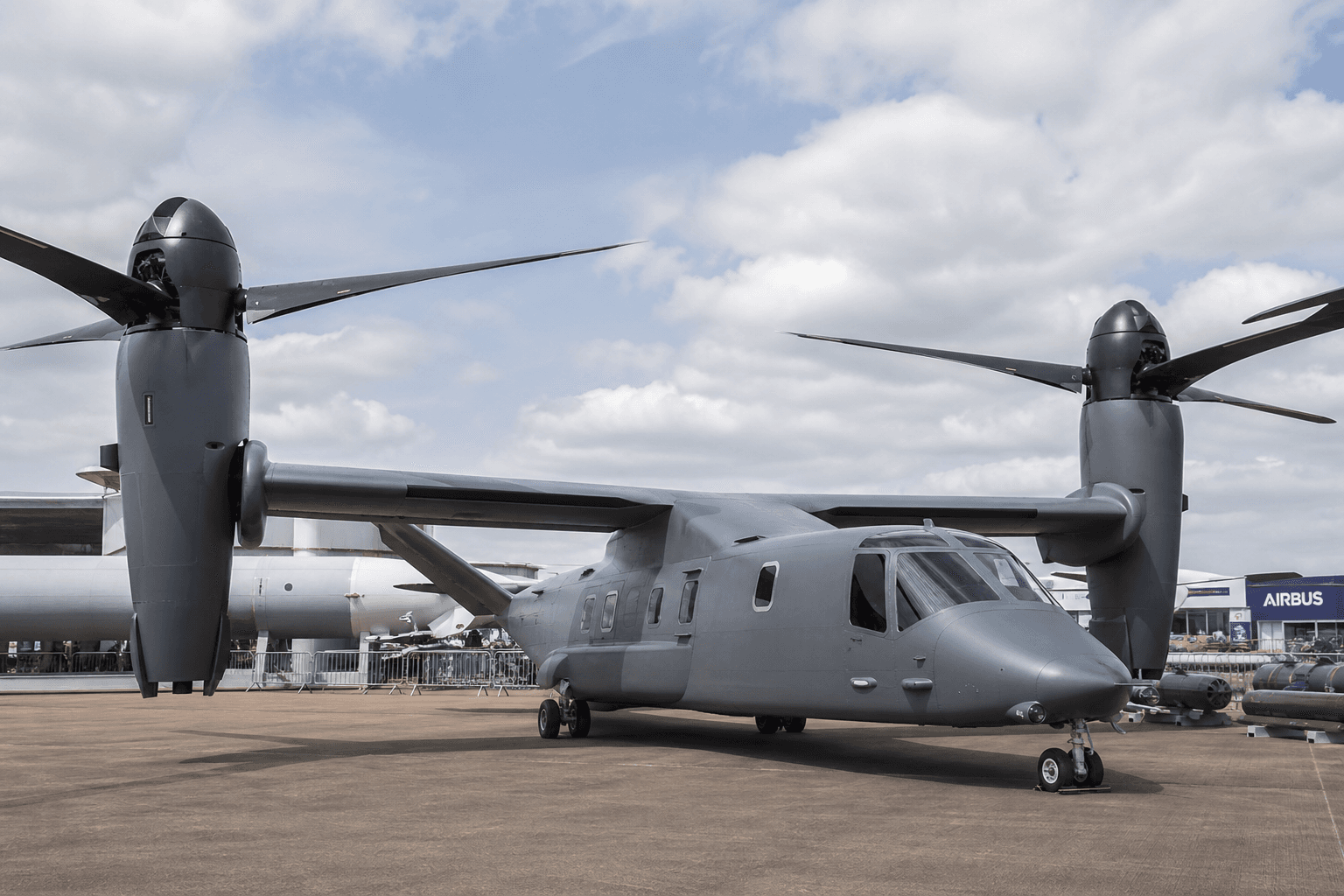
The new uncrewed tiltrotor will target commercial cargo and parapublic customers as a complement to the Midnight passenger aircraft. Electric aircraft developer Archer Aviation has unveiled a new concept for an uncrewed tiltrotor aimed at commercial cargo and parapublic operators. Revealed at the 2026 Farnborough air show, the Halo is a complement to the Thunder armed tiltrotor announced earlier at the Farnborough show by Archer and US defence start-up Anduril Industries. Both rotorcraft will use a common design, structure and drivetrain, all of which will be assembled by Archer. Airframes destined to become Thunder variants will be turned over to Anduril for militarisation, while Archer will handle Halo production entirely in-house. California-based Archer is best known for its developmental Midnight design – a multi-rotor, fully electric vertical take-off and landing (eVTOL) passenger craft that is still in the certification process. Corporate leaders in the eVTOL sector, including Archer, are on the hunt for alternative lines of business to the urban air mobility passenger market, which has been slow to develop. Defence was an early target, but it turned out that militaries had limited use for all-electric aircraft. Enter the pivot to hybrid-electric. “The feedback was there really isn’t a mission for a battery-electric e VTOL that solves a defence problem today,” says Archer’s chief technology officer, Tom Muniz. “I f we could solve some of the sort of range limitations that come with battery electric, there are some really interesting things that we could do.” Other eVTOL competitors, including Beta Technologies and Joby Aviation, have similarly unveiled hybrid-electric derivatives of their original battery-powered designs, partnering with established defence players to court military business. In Archer’s case, Muniz says the company was approached by Anduril to partner on a hybrid VTOL “t o address a very specific defence requirement set”. That co-development agreement generated both the Thunder and Halo. Although the Halo design will be commercially focused like Midnight, Muniz says that’s where the similarities end. “While Midnight [moves] people in and around cities or congested areas, with a pilot on board, t his new aircraft is autonomous, has a hybrid powertrain for very long range and substantially more payload and speed,” Muniz says. Concept renderings show a large fuselage with a roughly similar outer mould shape to the Bell-Boeing V-22 or Bell MV-75 tiltrotors. The Halo will use two wing-mounted nacelle assemblies that pivot up and down for transition between vertical and horizontal flight. However, the design will be far simpler than a conventional tiltrotor, owing to the use of electric motors rather than conventional turboshaft-powered rotors. “If you think about a vehicle like the V-22, there’s multiple gearboxes and power transmission shafts,” Muniz says. “For the Halo platform, it’s replaced by wires because it’s electric.” An onboard turboshaft engine will burn jet fuel, but that engine will be used to charge the electric drivetrain’s batteries, rather than directly powering the rotors. While commercial operations for Halo remain far off, initial flight testing will begin in the near future. Muniz says the design unveiled at Farnborough was finalised about a year ago, with prototyping now underway. “We’re now in the process of building the first flight articles for Halo,” he says. “ We’ll be in flight test next year.” The company sees support to offshore oil and gas operators, organ transplant flights, air cargo, medevac rescue flights, and search and rescue all as possible use cases for the hybrid tiltrotor.
The Daily Touch & Go
The day's best aviation news in your inbox. Free, no spam.