

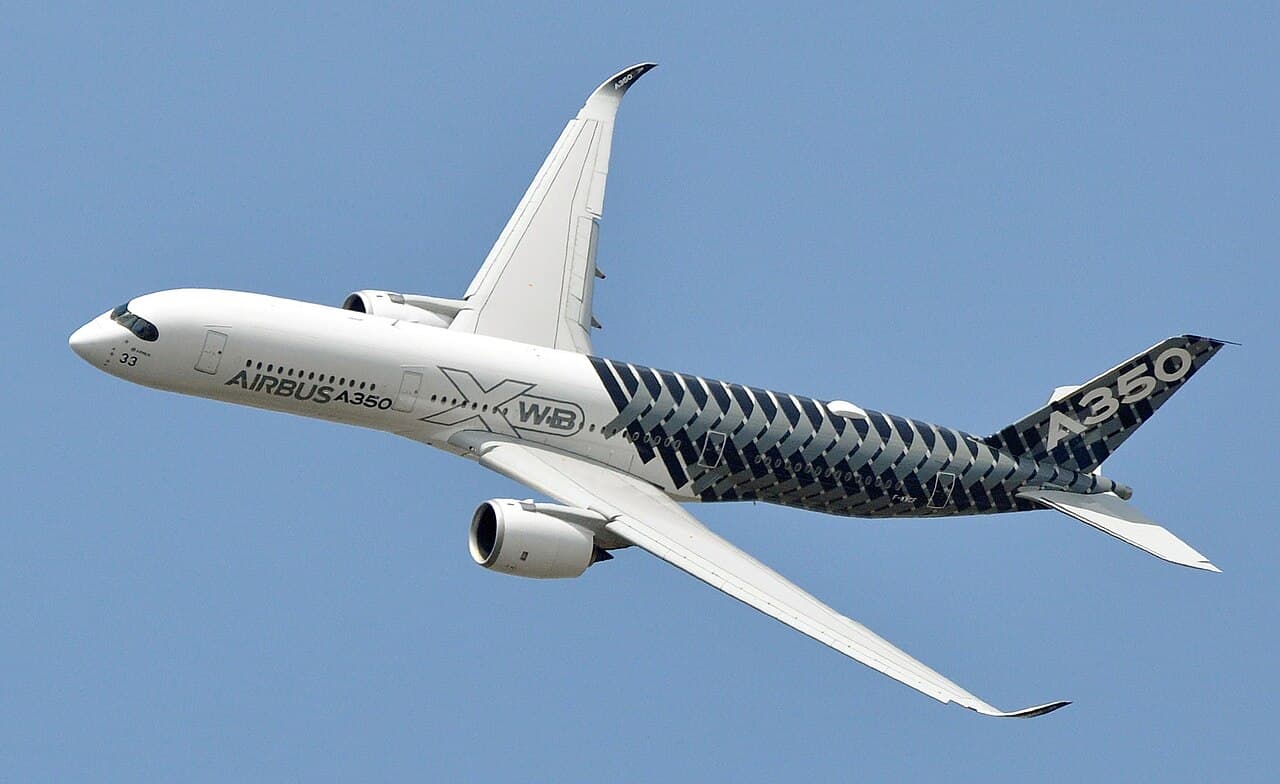
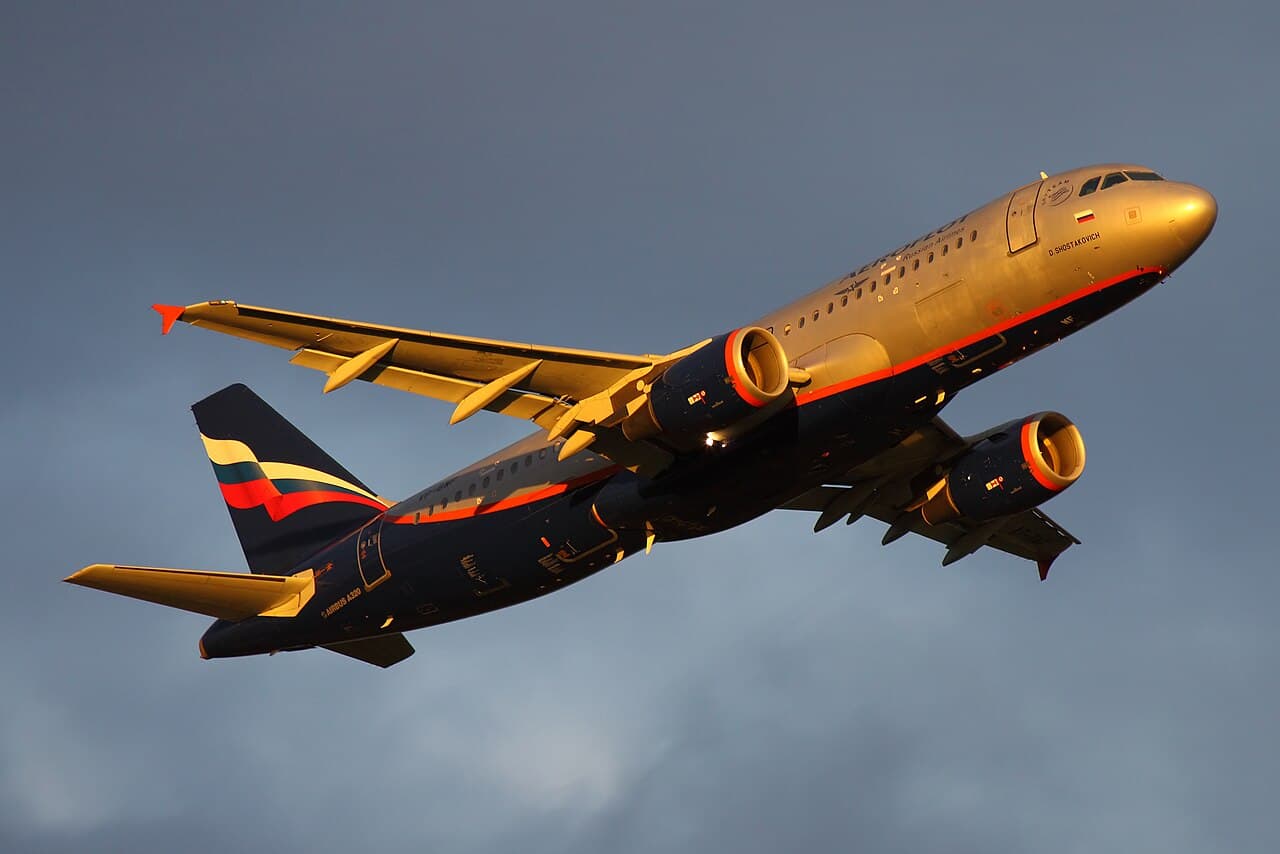
Image: Eric Salard · CC BY-SA 2.0 · via Wikimedia Commons
Philippine Airlines Debuts 10-Abreast Economy on Ultra-Long A350-1000 Flight
Philippine Airlines operates a 16-hour nonstop New York–Manila route aboard an Airbus A350-1000 with a pioneering 10-abreast economy layout, marking a first for full-service carriers on this aircraft type.
The gist
PAL flies the longest ultra-long-haul route with a unique 10-abreast economy cabin on its A350-1000, offering mixed comfort on a 16-hour nonstop from NYC to Manila.
Continuing coverage
All Ultra-Long-Haul →- Qantas A350-1000ULR completes 19-hour nonstop maiden flight from Toulouse to Melbourne
- Inside the Airbus A350's Concealed Crew Rest Compartment Beneath the Flight Deck
- Cathay Pacific to Operate 11 Ultra-Long Airbus A350 Routes of 14+ Hours in 2026
- Qatar Airways Sued After Teen Dies from Allergic Reaction on Doha-New York Flight
- Airbus to perform ultra-long 22-hour test flight of A350-1000ULR to Australia
Philippine Airlines (PAL) has become the first full-service airline to introduce a 10-abreast economy seating configuration on its Airbus A350-1000 aircraft, operating a nonstop ultra-long-haul route from New York JFK to Manila Ninoy Aquino International Airport (MNL). This long-distance flight covers 7,404 nautical miles (13,712 km) and represents the longest nonstop flight by great circle distance that the airline currently flies. The flight duration is approximately 16 hours, placing it among the longest commercial routes globally.
The carrier's use of a ten-abreast layout in economy challenges the traditional notion that such a dense seating arrangement is unsuitable for full-service operations, especially on ultra-long-haul aircraft such as the A350. Typically, A350s are configured nine-abreast in economy to enhance passenger comfort. However, the A350 NPS (New Performance Standard) variant features a wider cabin that Airbus promotes specifically to support a comfortable ten-abreast arrangement, which PAL has adopted with 17-inch wide seats.
The seats featured on PAL's A350-1000 economy cabin are ZIM ZP230 models, characterized by a modern design with quality finishes. Passengers have access to 13.3-inch 4K entertainment screens, USB-A and USB-C ports, and separate trays for meals and mobile devices. Despite these amenities, the narrower armrests and reduced shoulder space due to proximity to the sidewalls are notable. The cabin's overall aesthetic includes large overhead bins and mood lighting, contributing to a pleasant environment for a flight of this length.
Seat pitch is advertised at 32 inches, and the seat reclines about six inches with a sliding bottom portion designed to preserve personal knee space. However, some passengers report the seatback protrudes more than usual, reducing legroom and comfort compared to other carriers’ economy seats on long-haul aircraft. PAL complements the experience with a physical menu in economy, offering meal options that include pork or fish entrees, along with amenity kits consisting of a sleeping mask, socks, and hot towels—amenities typically reserved for higher classes or premium airlines.
The provisioning on meals reflects a full-service carrier’s approach, although the absence of spare vegetarian options on this specific flight highlights a potential area for improvement. Mid-flight snacks, such as leek-and-chicken empanadas, and a choice of breakfast items including prawns sarciado or eggs with hashbrowns, represent a better-than-average economy catering set for a transpacific flight. Service from cabin crew is described as friendly and approachable, enhancing the passenger experience.
WiFi connectivity on PAL's A350-1000 is provided by Viasat and offered complimentary onboard. Nonetheless, connectivity issues were noted, with some passengers experiencing difficulty connecting for several hours, though speeds improved once connected. This contrasts with other airlines employing Starlink internet, which currently offers superior performance in terms of speed and reliability.
This development by PAL marks a significant case study in aircraft cabin configurations on ultra-long-haul routes, balancing the airline’s goal of increasing passenger capacity without drastically diminishing comfort. The introduction of a 10-abreast economy configuration on the A350-1000, alongside the airline’s generous onboard service, could influence other carriers considering similar cabin layouts for long-haul operations.
For passengers, the trade-off involves choosing between seat width and the availability of seat amenities and services on such extended routes. While the broader A350 cabin permits innovation, the practical implications of shoulder space and aisle width remain key considerations for comfort over 16 hours of flying.
As ultra-long flights become more common, airlines like Philippine Airlines are at the forefront of adapting economy class designs to meet evolving demands while managing costs and capacity. PAL’s approach will likely draw attention from airlines and passengers alike, particularly those weighing comfort against configuration on lengthy transpacific segments.
Frequently asked questions
- What is unique about Philippine Airlines' A350-1000 economy cabin?
- Philippine Airlines is the first full-service airline to configure its Airbus A350-1000 with a 10-abreast economy seating layout, enabled by the aircraft's wider NPS cabin design.
- How long is the nonstop flight from New York to Manila operated by PAL?
- The nonstop route from New York JFK to Manila spans approximately 7,404 nautical miles, with a flight duration around 16 hours, making it PAL’s longest route by great circle distance.
- What onboard amenities does Philippine Airlines provide in economy on this ultra-long-haul flight?
- PAL offers 17-inch wide seats, 13.3-inch 4K screens, USB-A and USB-C ports, meal service with physical menus, amenity kits including a sleeping mask and socks, hot towels, and complimentary Viasat WiFi, though connectivity issues were reported.
Read more
All Airlines →
Airlines Embrace AI 'Surveillance Pricing' to Tailor Ticket Costs to Individual Buyers
The largest air carriers in the world are in a race to be the first to develop and implement a new way of calculating airfare: millions of variables analyzed by artificial intelligence down to the personal level of every single customer that logs in to book a ticket. The level of personalization has earned this new airfare pricing software the name surveillance pricing as it is intended to consider every detail of every individual customer down to device type, location, and loyalty status.
US-Bangla Airlines to Double Fleet with $1.5B Boeing Order
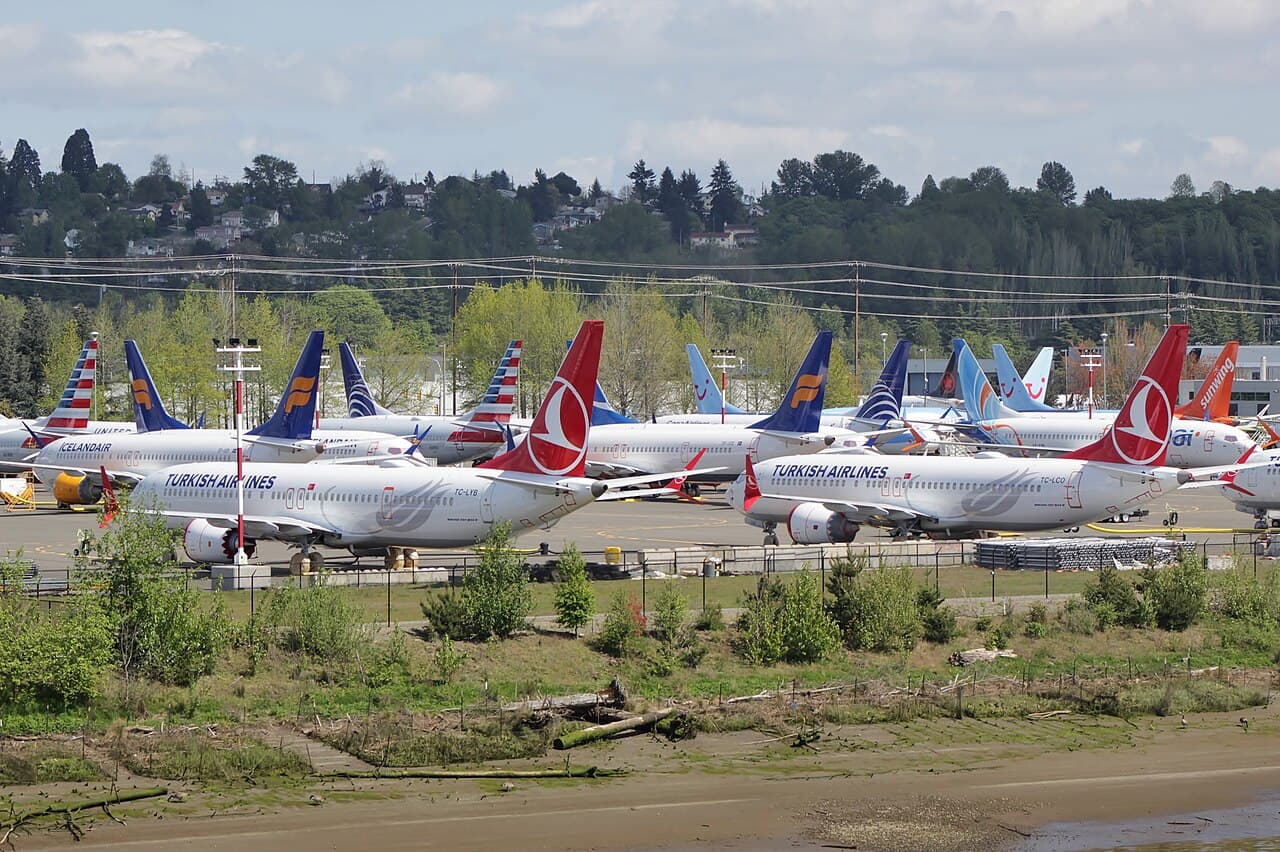
US-Bangla Airlines, Bangladesh’s leading private carrier, has formally announced the acquisition of 21 Boeing aircraft in a deal valued at approximately $1.5 billion. ezstandalone.cmd.push(function () { ezstandalone.showAds(119); }); This marks the largest single fleet expansion in the airline’s history and a significant milestone for Bangladesh’s aviation sector. The order includes 15 narrowbody Boeing 737 MAX 8 aircraft and six Boeing 737-800s. Deliveries are scheduled to conclude by the end of 2027. ezstandalone.cmd.push(function () { ezstandalone.showAds(127); }); The aircraft will be sourced through lease agreements with five international leasing companies. This move will nearly double US-Bangla’s current fleet of around 25 aircraft to approximately 46 planes. Strategic Growth and New Routes The expansion supports US-Bangla’s ambition to strengthen its regional presence and transform Dhaka, Chattogram, and Sylhet into key aviation hubs. ezstandalone.cmd.push(function () { ezstandalone.showAds(128); }); The new fuel-efficient jets will enable increased frequencies on existing routes and the launch of services to new destinations across South Asia, Southeast Asia, East Asia, and the Middle East. Planned cities include Bengaluru , Hyderabad, Colombo, Kathmandu, Beijing, Penang, Kuwait, and Madinah, subject to regulatory approvals. ezstandalone.cmd.push(function () { ezstandalone.showAds(129); }); Managing Director Mohammad Abdullah Al Mamun emphasised the broader vision. “This investment represents much more than fleet expansion. It reflects our long-term goal to evolve US-Bangla into a fully integrated global aviation group.” The airline is also investing in technology, maintenance, cargo, catering, and infrastructure. As part of workforce development, US-Bangla plans to sponsor training for 200 pilots and 100 certified aircraft maintenance engineers. This initiative will create hundreds of direct and indirect jobs while building skilled aviation professionals in Bangladesh. Photo Credit: Md Shaifuzzaman Ayon, CC BY-SA 4.0, via Wikimedia Commons Economic Impact and National Ambitions The announcement was made at the “Beyond with Boeing” event in Dhaka on July 29, 2026. It was attended by senior Bangladeshi government officials, U.S. Embassy representatives, Boeing executives, and leasing partners. ezstandalone.cmd.push(function () { ezstandalone.showAds(130); }); Speakers highlighted how the investment aligns with Bangladesh’s goal of becoming a regional aviation hub, supported by infrastructure upgrades like the new third terminal at Hazrat Shahjalal International Airport. Bangladesh’s international air travel market is estimated at $5.8 billion annually. However, foreign carriers currently dominate, leading to significant foreign currency outflow. By boosting local capacity, US-Bangla aims to capture more market share, promote tourism, enhance trade, and retain more revenue domestically. ezstandalone.cmd.push(function () { ezstandalone.showAds(131); }); This expansion complements the government’s earlier agreement for 14 Boeing aircraft for the national carrier Biman Bangladesh Airlines. Boeing Vice President Paul Righi welcomed the partnership, noting the aircraft will deliver improved fuel efficiency, reliability, and passenger comfort. These are key advantages for medium-haul operations in a competitive region. Future Outlook Founded in 2014, US-Bangla has grown rapidly into Bangladesh’s largest private airline by fleet size. The addition of these next-generation narrowbodies positions the carrier for sustained growth. ezstandalone.cmd.push(function () { ezstandalone.showAds(132); }); Longer-term plans include widebody aircraft for potential long-haul services to Europe, North America, and beyond. This bold investment comes at a time of rising air travel demand in South Asia. It underscores private sector confidence in Bangladesh’s economic trajectory and aviation infrastructure development. With strong on-time performance and a commitment to modernization, US-Bangla is well-placed to connect Bangladesh more effectively with the world while contributing to national economic goals. ezstandalone.cmd.push(function () { ezstandalone.showAds(133); });
ANA expands Embraer E190-E2 order with eight additional jets for flexible domestic service
Airline previously ordered up to 20 E190-E2s in 2025. Japan's All Nippon Airways has ordered eight more Embraer 190-E2s, as it looks to "flexibly respond" to future domestic travel demand. The order, approved by the airline's board on 29 July, comes on top of an existing order for up to 20 E190-E2s, which it announced in 2025. That commitment – firmed up at the Paris air show in 2025 – comprises 15 firm orders and five options. A stock exchange filing for parent ANA Holdings says the value of the latest order stands at around Y105 billion ($642 million). The additional aircraft are expected to be delivered from fiscal 2029, which begins on 1 April 2029, to 2032. The new aircraft will be operated by Tokyo-based codeshare partner IBEX Airlines, as part of ANA's plans to "outsource" its domestic operations. IBEX crew will operate these flights under ANA flight numbers. The two carriers will also "develop" their existing codeshare arrangement to a "comprehensive business partnership". Preparations are underway with the aim of starting the arrangement in 2029. The arrangement will allow both ANA and IBEX to "effectively utilise their management resources", while allowing ANA to retain its domestic network and achieving operational efficiency. IBEX currently operates a fleet of nine MHIRJ Aviation CRJ-700s, and these aircraft will be replaced by the new Embraer E2s. ANA had on previous occasions warned of the challenges posed by shifting demographics, especially as Japan confronts a shrinking population in the future.
Air New Zealand to Launch First International Flights at Western Sydney Airport in October 2026
Air New Zealand will become the first international airline to operate at Western Sydney International Airport (WSI), bringing direct flights from Auckland starting 26 October 2026. ezstandalone.cmd.push(function () { ezstandalone.showAds(119); }); As of mid-July 2026,less than 100 days remain until the milestone service begins. It will offer residents in one of Australia’s fastest-growing regions easier access to New Zealand and beyond. The new route marks a significant expansion for the airline’s trans-Tasman network. Air New Zealand already operates into Sydney Kingsford Smith Airport. It will now provide a convenient second option tailored to Western Sydney travellers. ezstandalone.cmd.push(function () { ezstandalone.showAds(127); }); Flight Schedule and Aircraft Air New Zealand will run three return services per week on Mondays, Wednesdays, and Fridays using fuel-efficient Airbus A320 and A321 aircraft. Auckland to Western Sydney: Departs 6:00 am, arrives 7:45 am. Western Sydney to Auckland: Departs 8:55 am, arrives 2:10 pm. ezstandalone.cmd.push(function () { ezstandalone.showAds(128); }); These day trips suit business travellers and short-break holidaymakers. One-way seat-only fares from Auckland start at NZD $319, with tickets now on sale via the Air New Zealand website. Connecting Communities and Boosting Tourism Western Sydney is home to more than 2.5 million people, including a large New Zealand community. Kath O’Brien, Air New Zealand’s General Manager Australia , highlighted the route’s importance. ezstandalone.cmd.push(function () { ezstandalone.showAds(129); }); “Flying directly into the region gives our customers another way to travel across the Tasman, while also strengthening business and tourism connections between New Zealand and Australia,” she said. The service benefits Kiwis visiting family or exploring attractions like the Blue Mountains. Sydney residents gain more choices for trips to New Zealand or onward connections to the Pacific and North America through Air New Zealand’s network. JordanElliott4642, CC BY-SA 4.0, via Wikimedia Commons WSI CEO Simon Hickey welcomed the announcement, noting strong growth in travel between Australia and New Zealand. “Both countries represent each other’s largest inbound market, with those numbers increasing each year,” Hickey said. ezstandalone.cmd.push(function () { ezstandalone.showAds(130); }); He praised the new terminal’s modern design, which features efficient digital check-in, retail options, comfortable seating with charging points, and scenic views of the Blue Mountains. A World-Class Airport Experience Western Sydney International Airport aims to deliver a smooth, passenger-friendly experience at its state-of-the-art 24-hour global gateway. Travellers can expect quick processing and pleasant surroundings, making journeys more enjoyable from the start. Air New Zealand brings a strong reputation for safety and service. Named the 2025 World’s Safest Airline by AirlineRatings.com, the carrier operates a modern fleet with an average aircraft age of under 10 years. ezstandalone.cmd.push(function () { ezstandalone.showAds(131); }); Its extensive domestic network across New Zealand and international routes to Australia, the Pacific, Asia, and North America – supported by Star Alliance partners – provide seamless connections for travellers. Photo Credit: Western Sydney International Airport Conclusion This new route reflects growing demand for convenient travel options between Australia and New Zealand. For Western Sydney residents, it reduces travel time to the airport and opens direct access to New Zealand’s landscapes, cities, and cultural experiences. For visitors heading the other way, it creates easier entry to Sydney’s western region and its attractions. ezstandalone.cmd.push(function () { ezstandalone.showAds(132); }); The launch strengthens economic and cultural ties across the Tasman while giving passengers greater flexibility. Air New Zealand’s commitment to Western Sydney International Airport signals confidence in the region’s future. As the countdown continues, excitement builds for the first international flight at this new gateway.
The Daily Touch & Go
The day's best aviation news in your inbox. Free, no spam.