

Illustration: The Touch & Go
Rolls-Royce and GE Engine Designs Diverge Amid Widebody Market Duopoly
Rolls-Royce and GE Aerospace dominate widebody aircraft engines with distinct philosophies influencing efficiency and thrust in commercial aviation.
The gist
Rolls-Royce and GE Aerospace lead widebody engine markets with contrasting designs balancing efficiency and power.
Continuing coverage
All Aviation Market →- Boeing deliveries lag behind Airbus after July slowdown in 2026
- Embraer E2 Jets Gain Ground in South America Against Airbus A220
- Airbus A350 Freighter Emerges as Significant Competitor to Boeing in Large Cargo Market
- Boeing Forecasts Nearly $5 Trillion Market for Aviation Services and 2.4 Million Jobs by 2045
- Boeing predicts steady 20-year aircraft demand despite current travel slump
The large widebody aircraft engine market is currently dominated by two major players: Rolls-Royce (RR) and GE Aerospace. Their histories and technological approaches have shaped their prominence as original equipment manufacturers (OEMs) in this sector, which covers engines for most commercial widebody aircraft in service and on order. While other companies like Pratt & Whitney once competed, the intense capital and technology demands have consolidated the market.
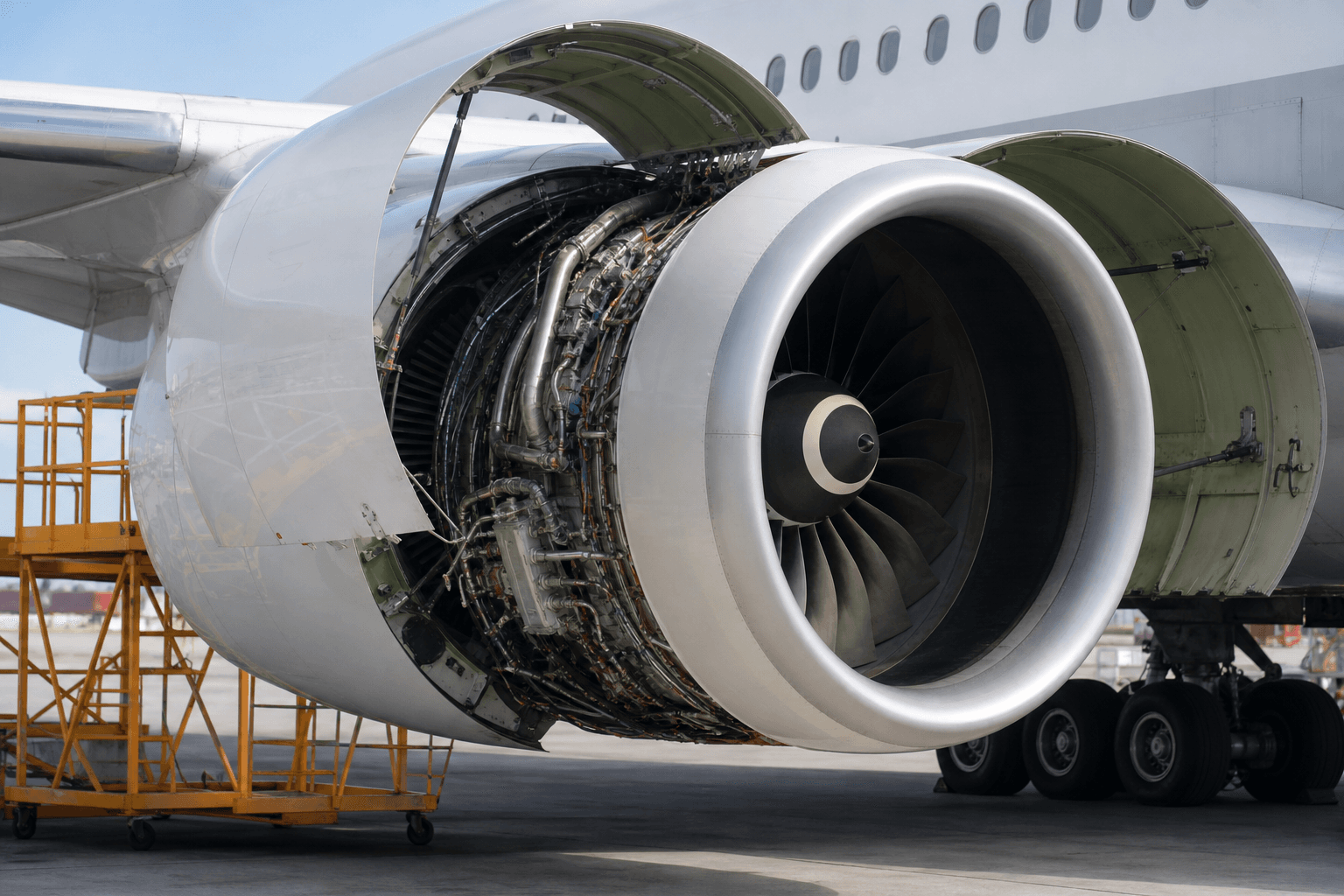
Rolls-Royce and GE Aerospace differ fundamentally in their design philosophies for aircraft engines. Rolls-Royce employs a three-spool core design in its Trent series, incorporating low-pressure, intermediate-pressure, and high-pressure spools. This architecture emphasizes mechanical harmony and targets long-term fuel efficiency and emissions reductions. Key outcomes include improved fuel economy, lower nitrogen oxide emissions, and reduced noise, aligning with environmental and operational cost goals.
Conversely, GE Aerospace uses a two-spool core design in engines like the GEnx and GE9X, focusing on simplicity and power. By reducing moving parts, GE achieves engines noted for higher peak thrust and ease of maintenance. This foundational difference makes GE’s approach centered on raw thrust capability and reliability, aiming for robust performance with streamlined upkeep requirements.
The operational impact of these designs is evident in their market penetration. GE’s engines power all current Boeing widebody aircraft, including the 767, 777, 777X, and the 787 Dreamliner, where GE engines have become the preferred choice. Rolls-Royce engines, meanwhile, are primarily found on Airbus widebody aircraft such as the A330neo and A350, where they serve as the main engine option, albeit less popular for the Dreamliner.
Material technologies used also reflect their approaches. Rolls-Royce extensively uses honeycomb titanium fan blades, contributing to durability and efficiency, whereas GE integrates advanced ceramic matrix composites, particularly in hotter engine areas, enhancing thermal performance and reducing weight. Both manufacturers operate engines with similar bypass and pressure ratios, around 9 to 10 bypass and near 50:1 pressure ratios.
In thrust capabilities, GE leads with the GE9X engine, boasting record test thrust of over 134,000 pounds-force and commercial ratings up to 105,000 pounds-force, significantly higher than Rolls-Royce’s Trent XWB-97 powering the A350-1000 with approximately 97,000 pounds-force. Yet in practice, thrust ratings vary considerably by aircraft needs, with each engine adapted to specific models rather than a simple size competition.
Future engine development further illustrates their strategic paths. GE is developing the RISE open-fan engine through its CFM International joint venture, targeting a 20% fuel efficiency improvement for a new generation of narrowbody aircraft engines aimed at the 2030s. This design removes traditional cowlings to allow larger fan blades, resembling turboprop configurations but promising turbofan efficiencies.
Rolls-Royce is advancing the UltraFan, a scalable, large-diameter engine designed for a 25% fuel efficiency gain over earlier Trent models. This engine features a 140-inch fan and scalable power range between 25,000 and 110,000 pounds-force thrust, underpinning RR’s ambition to re-enter the narrowbody engine market and compete against GE and Pratt & Whitney as Airbus and Boeing plan to replace their A320 and 737 families.
In the smaller aircraft segment, GE holds dominance in narrowbody engines through CFM International’s LEAP engine powering the Boeing 737 MAX, Airbus A320neo, and COMAC C919. Rolls-Royce, meanwhile, focuses on high-end business jets with its Pearl family engines powering models from Bombardier and Gulfstream. Pratt & Whitney maintains a significant position in regional and some business jet markets, completing the competitive landscape.
Frequently asked questions
- What are the main design differences between Rolls-Royce and GE widebody engines?
- Rolls-Royce uses a three-spool core design focusing on efficiency and emissions, while GE uses a simpler two-spool design prioritizing thrust and reliability.
- Which aircraft manufacturers do Rolls-Royce and GE primarily supply engines to?
- Rolls-Royce primarily supplies engines to Airbus widebodies, including the A330neo and A350, while GE predominantly powers Boeing widebodies like the 777 and 787 Dreamliner.
- What future engine projects are Rolls-Royce and GE developing for the 2030s?
- GE is developing the open-fan CFM RISE engine targeting 20% fuel efficiency gains for narrowbody replacements, while Rolls-Royce is working on the UltraFan aiming for 25% improvements and a return to the narrowbody market.
Read more
All Airlines →
Delta CEO Aims for Elite Global Status, But Operational Issues Undermine Claims
Ed Bastian wants Delta mentioned with Singapore Airlines and the best Asian and Middle Eastern carriers. Delta has a brand, but product consistency and service still fall short and once-vaunted reliabiltiy has faltered.
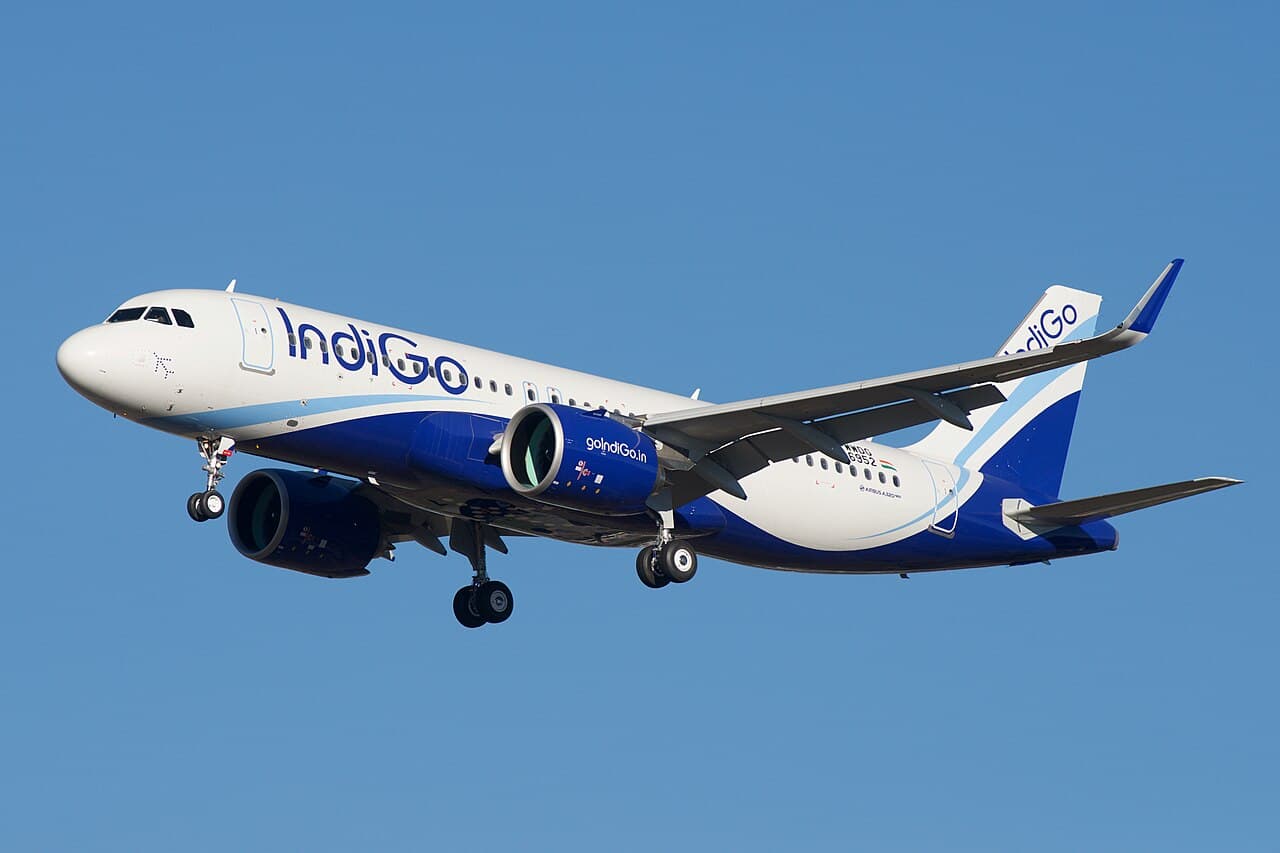
Lufthansa debuts Starlink internet on Airbus A320neo flight from Frankfurt to Rome
A mainline Lufthansa A320neo equipped with the satellite internet technology flew from Frankfurt to Rome.
Southwest Must Correctly Inform Flight Attendants on Religious Discrimination Rights
Southwest Airlines reinstated flight attendant Charlene Carter and helped pay a $946,102.87 judgment after a jury found it liable for religious discrimination case - it fired her at the behest of the union as a result of her speaking out with anti-abortion and anti-union messages. But the airline triggered a contempt fight by refusing to send flight attendants the message about their rights that the judge demanded.

Five Airlines Shift Long-Haul Routes From Widebodies to Airbus A321XLR in 2026
The Airbus A321XLR is one of the most impactful new airliners on sale, as it's a narrowbody airliner designed specifically for long-distance flights. While the Boeing 757-200 was prominently used on some long-haul routes in the past, this was never its original intended role, whereas the A321XLR uses the venerable A321neo platform and adds improvements to give it a range of 4,700 NM (8,700 km).
The Daily Touch & Go
The day's best aviation news in your inbox. Free, no spam.