

Image: Acroterion · CC BY-SA 4.0 · via Wikimedia Commons
Five Airlines Shift Long-Haul Routes From Widebodies to Airbus A321XLR in 2026
In 2026, airlines including IndiGo, Qantas, and Air Canada transition select long-haul flights from widebody aircraft to the fuel-efficient Airbus A321XLR, optimizing capacity and costs.
The gist
Five airlines are replacing widebody jets with the Airbus A321XLR on select long-haul routes to better match demand and lower operating costs.
Continuing coverage
All Qantas →- Steven Greenway appointed CEO of Alliance Airlines as Stewart Tully steps down
- Qantas A380 Flies Nearly 1,000 Passengers with Floodlight Left Inside Wing
- Singapore Airlines Faces Challenges With Largest Premium Economy Section on Ultra-Long Haul Flight
- Qantas Postpones First Airbus A321XLR International Flight to February 2027
- Qantas Operates 11 Ultra-Long Nonstop Flights with Melbourne-Dallas Route as Longest
The 2026 shift toward narrowbody jets like the Airbus A321XLR on long-haul routes represents a strategic reconfiguration of airline fleets focusing on efficiency and demand optimization. Unlike previous aircraft such as the Boeing 757-200—which was adapted for longer flights but not originally designed for them—the A321XLR was built with extended range capabilities, offering 4,700 nautical miles (8,700 km) to serve thinner, long-distance markets more economically. Airlines are increasingly deploying this aircraft to supplement or supplant widebodies especially on routes with moderate demand or during off-peak periods.
India’s largest carrier, IndiGo, typifies this trend. After experimenting with Boeing 777-300ERs and later leasing Boeing 787-9 Dreamliners, IndiGo is now phasing out 787 operations by October to suspend most long-haul flights with one notable exception: the Mumbai-Amsterdam route. This 3,707 NM route will soon be operated by the A321XLR, which IndiGo currently uses on destinations such as Athens, Istanbul, and the newly announced Denpasar service. The Mumbai-Amsterdam flight will mark the longest scheduled A321XLR operation to date with an 11-hour block time, factoring in airspace detours, demonstrating the narrowbody’s extended capabilities despite the challenging routing.
Qantas’s approach is somewhat unique among the group, as it initially focused the A321XLR on high-capacity domestic routes rather than international service. However, in 2027, Qantas plans to debut the A321XLR on its Brisbane-Manila route—previously flown by the A330-200 widebody. Although the A321XLR carries roughly 55 to 74 fewer seats than the A330-200, it presents a significant cost advantage due to its modern, fuel-efficient engines and smaller size, appealing for routes where demand does not justify a larger aircraft. Notably, while the A330 offers flat-bed seats, the A321XLR provides recliners and lacks seat-back entertainment, reflecting a tradeoff suited to Manila’s high volume but lower-yield market.
Air Canada also exemplifies the replacement of widebodies with the A321XLR on transatlantic routes from Montreal. The A321XLR supplanting the Boeing 787-8 on services to Toulouse, Berlin, Lyon, and Porto signals a shift toward matching capacity with market demand and controlling costs. While the 787-8 seats about 255 with a three-class configuration, the A321XLR’s capacity of 182 seats limits excess supply that could depress fares. Moreover, the A321XLR is offering a product upgrade on some routes, with lie-flat business seats replacing older configurations, enabling Air Canada to maintain yield integrity alongside operating efficiency.
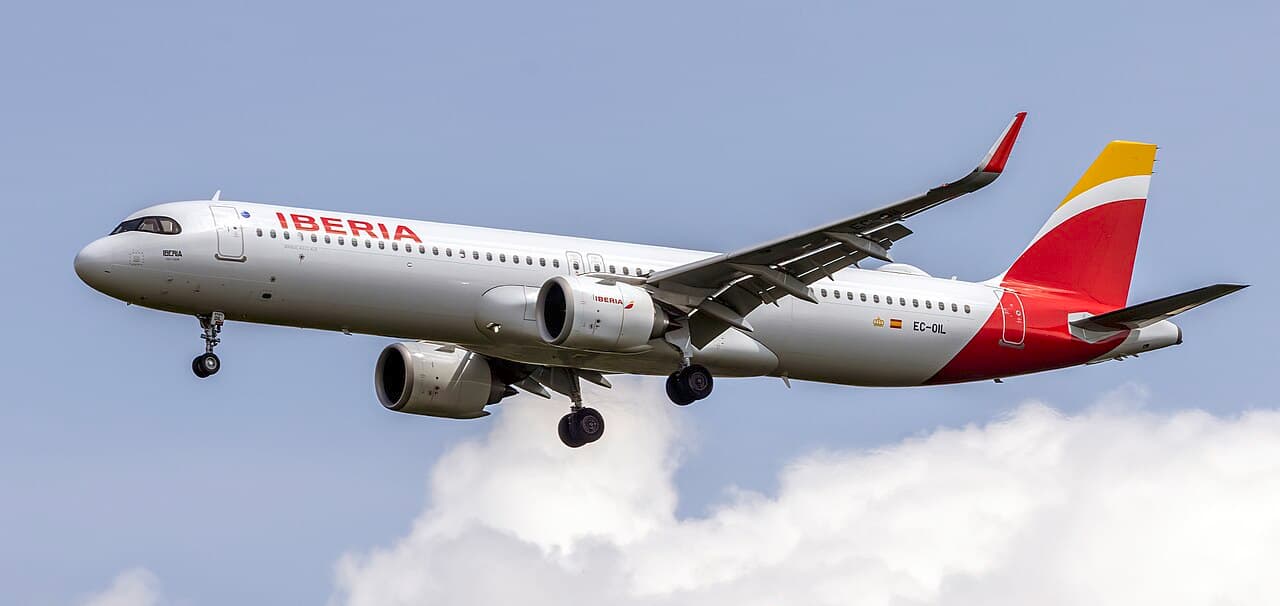
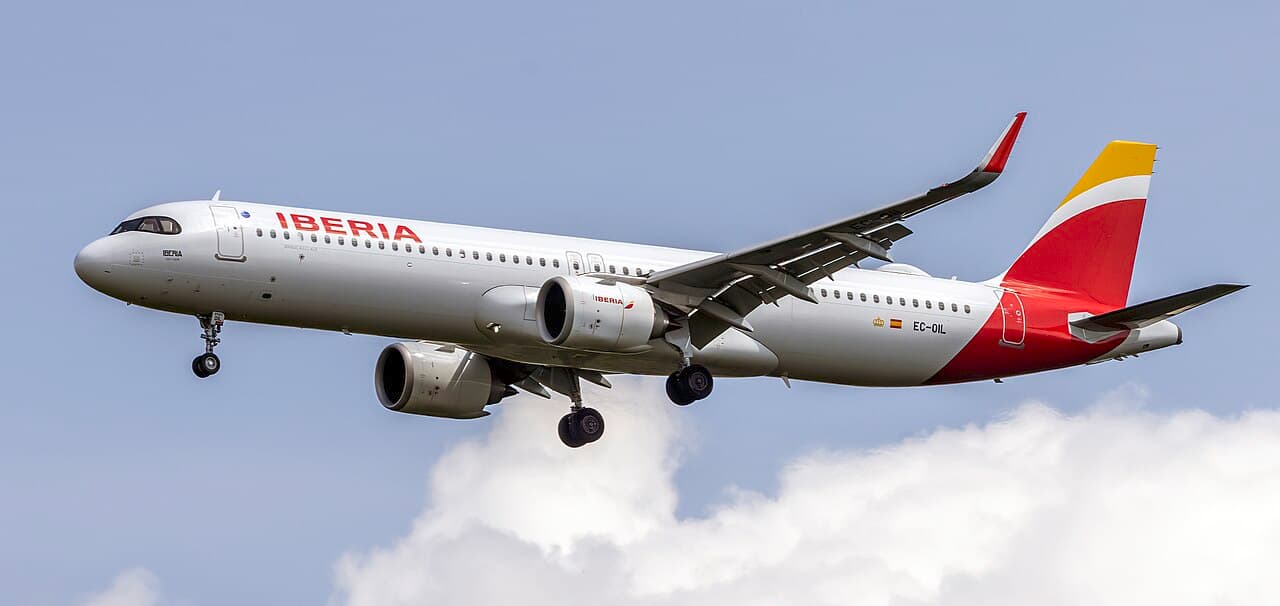
Iberia’s long-haul adjustment demonstrates the A321XLR’s role in extending year-round operations to routes previously limited to seasonal schedules. The Madrid to Washington DC route, traditionally served by a mix of Airbus A330 and A321neo aircraft subject to seasonal frequency cuts, now benefits from the economical A321XLR. This smaller aircraft allows Iberia to maintain consistent service through the winter months when demand is lower, particularly important for routes reliant on leisure traffic with pronounced seasonal fluctuations. The improved economics stem from reduced fuel use and right-sized capacity compared to the larger A330.
These examples illustrate a broader industry paradigm where airlines are increasingly leveraging the Airbus A321XLR narrowbody’s long-range and operational efficiency to optimize route networks. They can serve thinner markets directly, increase frequency with appropriately sized aircraft, and reduce widebody operating cost burdens on marginal demand days or seasons. While the A321XLR won't supplant widebodies on very high-capacity routes, it is shaping the landscape for medium-density long-hauls, enabling more granular capacity management and network expansion into cities previously unviable for direct long-haul service.
This evolution is underpinned by the A321XLR’s lineage from the successful A321neo platform, with improvements focusing on fuel efficiency and extended range. These characteristics suit modern airline strategies balancing sustainability and profitability amid fluctuating demand and cost structures. IndiGo’s extensive 69-aircraft order and Qantas’s integration plans reflect growing confidence in the type’s operational flexibility.
With new deliveries accelerating, airlines are poised to continue adjusting their fleet compositions, interleaving narrowbodies like the A321XLR with widebodies to sharpen their route economics. The substitution of widebody aircraft on specific long-haul segments challenges traditional notions of route-classification tied strictly to aircraft size, highlighting the importance of matching capacity precisely to market demand to maintain yields and profitability.
Frequently asked questions
- Why are airlines switching long-haul routes from widebody aircraft to the Airbus A321XLR?
- Airlines are switching to the A321XLR because it offers lower operating costs and better matches capacity to demand on thinner long-haul routes, enabling higher frequency and fuel efficiency.
- Which airlines are using the Airbus A321XLR on long-haul routes in 2026?
- IndiGo, Qantas, Air Canada, and Iberia are among the airlines deploying the A321XLR to replace widebodies on select routes such as Mumbai-Amsterdam, Brisbane-Manila, Montreal-Toulouse, and Madrid-Washington DC.
- How does the Airbus A321XLR compare to the widebody aircraft it is replacing?
- The A321XLR features fewer seats than typical widebodies like the Boeing 787 or Airbus A330 but consumes significantly less fuel, providing cost advantages on routes with moderate demand and enabling year-round service on seasonal routes.
Read more
All Airlines →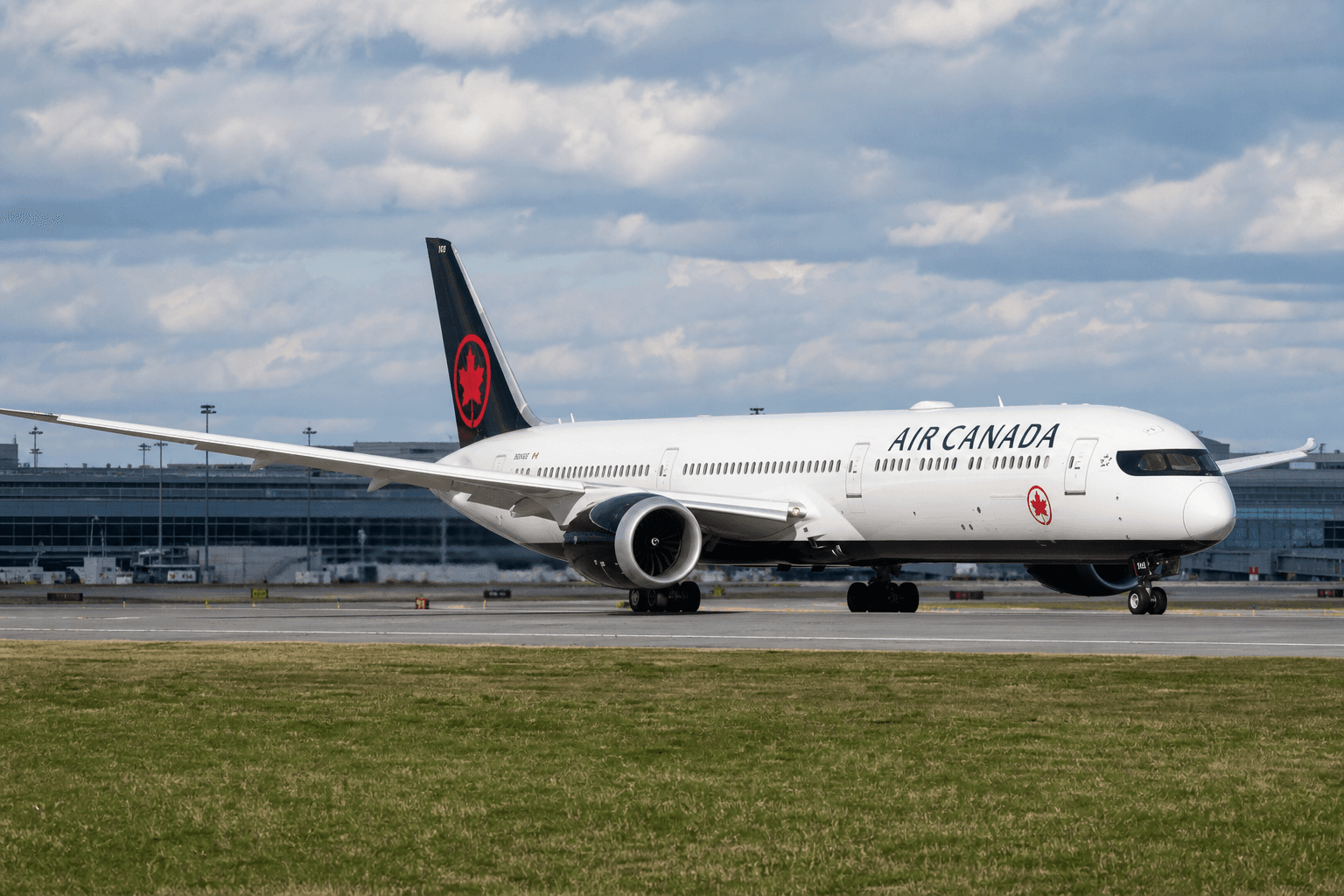
Air Canada Sets New Q2 Revenue Record Despite Rising Fuel Costs and Operational Hurdles
Air Canada reported strong second-quarter 2026 results driven by solid demand. The airline achieved record operating revenues of $6.3 billion. This marked an 11 per cent rise from the same period last year. ezstandalone.cmd.push(function () { ezstandalone.showAds(119); }); Demand stayed robust across the network. Premium and corporate travel performed well. Sixth Freedom traffic also contributed. Capacity grew just 0.3 per cent year over year. Weather disruptions in the later part of the quarter limited flight completion rates. This kept capacity slightly below the lower end of guidance. ezstandalone.cmd.push(function () { ezstandalone.showAds(127); }); Key Financial Highlights Adjusted EBITDA reached $719 million. This sat at the top end of the company’s second-quarter guidance range. The result came despite a 49 per cent jump in fuel expense. Operating expenses totalled $6.481 billion. This led to an operating loss of $215 million. The loss included $388 million in labour-related and other charges. ezstandalone.cmd.push(function () { ezstandalone.showAds(128); }); On an adjusted basis, the picture looked stronger. Air Canada posted adjusted pre-tax income of $77 million. Adjusted net income stood at $114 million, or $0.40 per diluted share. The reported net loss was $178 million, equal to $0.63 per diluted share. Adjusted CASM came in at 15.47 cents. Cash generation remained healthy. Net cash flows from operating activities totalled $651 million. Free cash flow reached $174 million. The airline used $125 million to repurchase more than six million shares. Its net leverage ratio held steady at 1.7.CEO ezstandalone.cmd.push(function () { ezstandalone.showAds(129); }); Photo Credit: Air Canada Comments on Performance President and Chief Executive Officer Michael Rousseau highlighted the quarter’s strengths. “Air Canada delivered record second-quarter operating revenues… supported by strong demand across our network,” he said. He pointed to diversified revenue sources, effective pricing, and focus on controllable costs. Rousseau also thanked employees for their commitment. He noted the company’s solid cash position and balance sheet. These factors support investment and shareholder returns. Looking ahead, Rousseau expressed confidence. He cited resilient premium and corporate demand, fare actions to offset fuel volatility, and disciplined cost control. ezstandalone.cmd.push(function () { ezstandalone.showAds(130); }); He also mentioned Anko van der Werff as his announced successor and the path toward an investment-grade rating in the mid-term. Photo Credit: Air Canada Updated Full-Year Guidance Air Canada reinstated and updated its full-year 2026 outlook. Adjusted EBITDA is now expected between $2.9 billion and $3.2 billion. This is lower than the previously suspended range of $3.35 billion to $3.75 billion. Capacity growth is forecast at 2.25 per cent to 3.25 per cent versus 2025. Adjusted CASM should rise 5 to 6 per cent from 2025 levels. Free cash flow is projected between $200 million and $500 million. ezstandalone.cmd.push(function () { ezstandalone.showAds(131); }); Assumptions include modest Canadian GDP growth and continued demand trends. The Canadian dollar is expected to average C$1.41 per U.S. dollar. Jet fuel is assumed at about C$1.38 per litre in the third quarter and C$1.29 in the fourth. The company plans to offset a significant portion of higher fuel costs through pricing and hedging. It also assumes $1 billion from planned sale-and-leaseback transactions in 2026. Longer-Term Outlook Air Canada continues to target operating revenues of approximately $30 billion by 2028. It aims for an adjusted EBITDA margin of at least 17 per cent that year. Aspirations for 2030 include further margin gains and strong free cash flow generation. ezstandalone.cmd.push(function () { ezstandalone.showAds(132); }); The results show Air Canada navigating higher fuel costs and one-time charges while capturing strong travel demand. Management remains focused on cost control, cash generation, and long-term value creation.
American Airlines Deploys Airbus A321XLR on Nine Routes with 155 Seats Each
American Airlines is set to be a major operator of the Airbus A321XLR . While present fleet data from ch-aviation shows that it currently has only seven units of the next-generation narrowbody twinjet at its disposal, its 44 outstanding orders for the type will bring its total to 51 in time. The carrier has configured these jets with 155 seats across three classes, making them ideal for long thin routes.
American Airlines Launches Six New Transatlantic Routes from US Hubs to Europe
American Airlines has added six new or returning nonstop transatlantic routes to its network in 2026, linking three major US hubs with European destinations. The routes connect some major US hubs with Scotland, Italy, Greece, Hungary and the Czech Republic. Launched between March and May, the services form part of American's largest summer schedule yet and strengthen its position across the Atlantic.
Southwest Must Correctly Inform Flight Attendants on Religious Discrimination Rights
Southwest Airlines reinstated flight attendant Charlene Carter and helped pay a $946,102.87 judgment after a jury found it liable for religious discrimination case - it fired her at the behest of the union as a result of her speaking out with anti-abortion and anti-union messages. But the airline triggered a contempt fight by refusing to send flight attendants the message about their rights that the judge demanded.
The Daily Touch & Go
The day's best aviation news in your inbox. Free, no spam.