

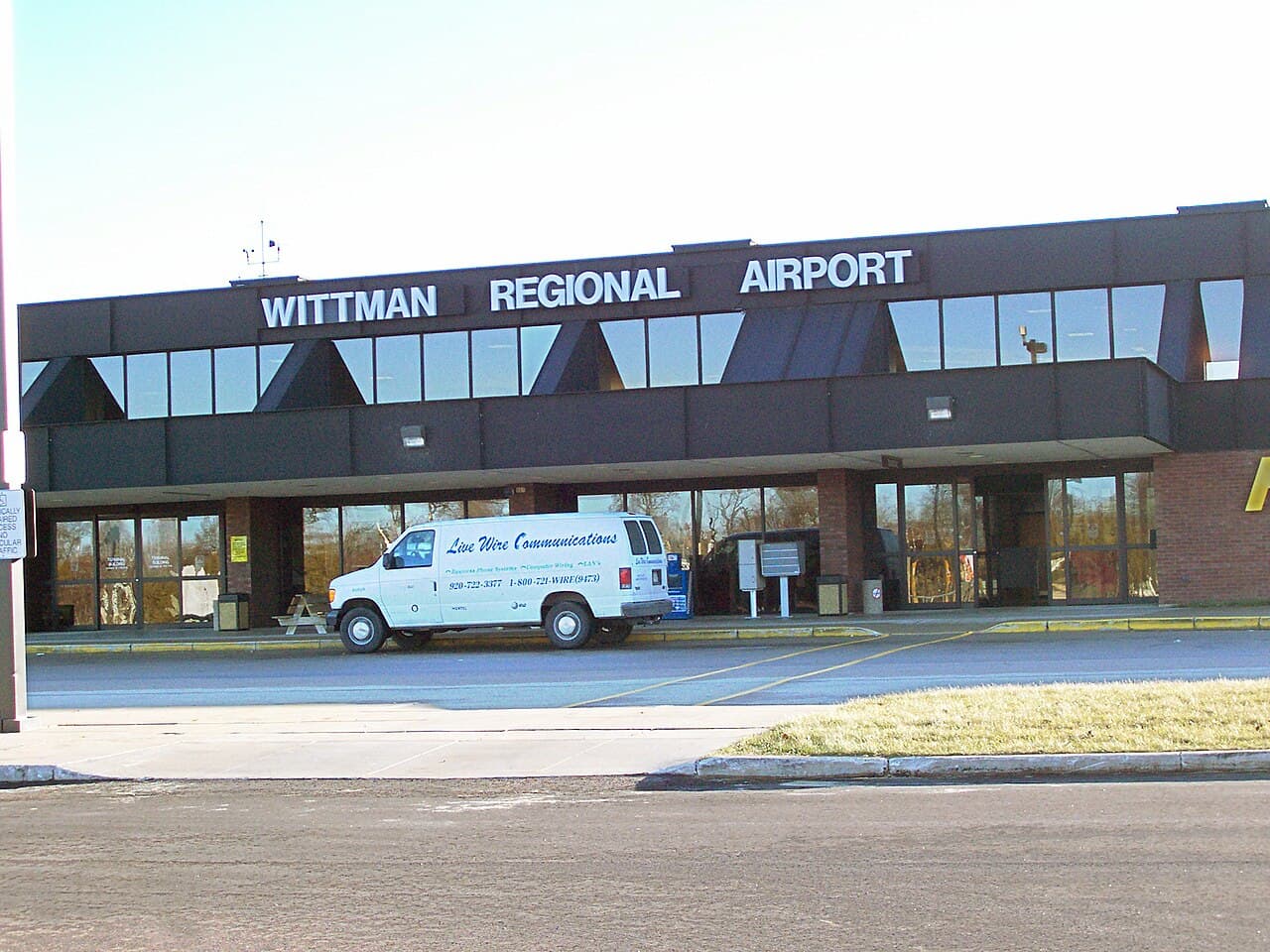
Image: self · CC BY-SA 2.5 · via Wikimedia Commons
EAA AirVenture Oshkosh 2026 Set to Host Over 10,000 Aircraft in Historic Aviation Gathering
From July 20-26, Wittman Regional Airport transforms into the world's busiest airspace hosting a weeklong celebration with military jets, vintage warbirds, and homebuilt aircraft.
The gist
EAA AirVenture Oshkosh 2026 will welcome more than 10,000 aircraft and 600,000 visitors for the world’s largest aviation event at Wittman Regional Airport.
Continuing coverage
All Eaa Airventure →- Wildfire smoke reduces visibility near Oshkosh ahead of AirVenture arrivals
- FAA Activates 2026 Oshkosh Flight Procedures for EAA AirVenture Operations
- Flying Bulls DC-6 returns to US for first time in 68 years with North American tour
- Pilots Gear Up for Structured Arrivals at Oshkosh AirVenture with Key Preparation Tips
- uAvionix and ForeFlight Launch SkyPlay Panel Avionics Platform at Oshkosh
Each summer, Wittman Regional Airport in Oshkosh, Wisconsin, metamorphoses into the world's busiest airport by aircraft movements as it hosts EAA AirVenture Oshkosh, the preeminent aviation gathering globally. For 2026, this weeklong event is scheduled from July 20 to 26, drawing more than 600,000 visitors and approximately 10,000 aircraft, showcasing an unprecedented variety of aviation types. From homebuilt aircraft to vintage warbirds and the newest military jets, the diversity at AirVenture is unmatched worldwide.
The event features a wide array of attractions catering to every aviation enthusiast. Daily flying displays captivate crowds with aerial acrobatics and historical reenactments. Static displays present hundreds of military and civilian aircraft, including rare and vintage models that are seldom seen outside specialized museums. Manufacturers like Boeing, Airbus, Textron, Cirrus, and Daher use this platform to unveil new aircraft models and innovations, underscoring the event's status as a hub for aerospace technology advances.
Attendees also benefit from numerous educational forums, workshops, and presentations delivered by aviation experts and industry veterans, fostering knowledge exchange among professionals and amateurs alike. One of the event’s highlights is the evening air shows that combine spectacular flying with entertainment, providing a dynamic experience beyond traditional air displays. Additionally, one of the aviation industry’s largest trade exhibitions runs concurrently, attracting vendors and suppliers worldwide.
The week preceding the official opening is renowned for its remarkable arrival procedures. Pilots from across the globe coordinate under widely-publicized FAA standard arrival routes for VFR traffic, converging hundreds to thousands of aircraft in a choreographed flow into Wittman Field. This orchestrated influx creates a unique and memorable spectacle, ranging from classic Piper Cubs to modern corporate jets, emphasizing the event's deep-rooted community and fellowship among aviators.
However, AirVenture Oshkosh 2026 faces a distinctive challenge this year due to extensive wildfires engulfing parts of Canada. Resultant smoke has drifted southward, affecting air quality and visibility conditions over Wisconsin. The National Weather Service issued advisories warning of potential visibility reductions and degraded air quality during peak arrival days, prompting increased caution among air traffic controllers and pilots operating in the already complex temporary airspace.
During early stages of the event week, visibility at Oshkosh occasionally dropped to approximately one mile, raising concerns about safe flight operations under Visual Flight Rules (VFR). In response, controllers have urged pilots to exercise conservative judgment and avoid attempting the signature arrival procedure if conditions prove inadequate. Meteorological forecasts indicate potential improvement in conditions as the week progresses, and organizers remain optimistic that the schedule and activities will proceed without significant disruption.
Adding to the event’s profile, several aviation media and enthusiast groups, including AirportSpotting, will provide live coverage from the ground. They plan to deliver frequent updates through social media and publish a comprehensive post-event review highlighting key announcements, extraordinary aircraft, and surprising moments to reach audiences who cannot attend in person. Such coverage extends the event’s visibility and enhances its global reach.
Moreover, exclusive content is being developed for premium subscribers, including a special USA 250th Anniversary issue that celebrates American aviation history alongside a detailed AirVenture 2026 retrospective. This initiative offers aficionados an in-depth perspective on the event's cultural and technological significance, further affirming the show as a pivotal moment in the annual aviation calendar.
For pilots and fans converging on Oshkosh, the event represents an unparalleled opportunity to experience the aviation spectrum in one place. From the roar of military jets to the serene elegance of vintage aircraft, the week's programming encapsulates a broad narrative of flight’s evolution and continual innovation, maintaining AirVenture’s legacy as the world's greatest aviation gathering.
Frequently asked questions
- When and where is AirVenture Oshkosh 2026 taking place?
- AirVenture Oshkosh 2026 will be held from July 20 to 26 at Wittman Regional Airport in Oshkosh, Wisconsin.
- How many visitors and aircraft are expected at AirVenture Oshkosh 2026?
- The event is expected to attract over 600,000 visitors and approximately 10,000 aircraft.
- What impact have Canadian wildfires had on AirVenture Oshkosh 2026 operations?
- Smoke from Canadian wildfires has caused reduced visibility and poor air quality over Wisconsin, leading to cautions by air traffic controllers for pilots to be conservative in their arrival decisions, although organizers expect conditions to improve during the event.
Read more
All Military/Defense →
Australia begins hunt for next-gen lead-in fighter trainer to replace Hawk 127s
The Australian government will explore several financing models to fill trainer requirement. Canberra has reached out to airframers as it explores possibilities to replace the Royal Australian Air Force's (RAAF’s) fleet of BAE Systems Hawk 127 advanced jet trainers. Designated Project Air 6002, the lead-in fighter training system (LIFTS) effort calls for a new aircraft that will train pilots for types such as the Boeing F/A-18F Super Hornet fighter, EA-18G Growler electronic attack jet, and the Lockheed Martin F-35A, according to an Australian government tender document. The requirement also is referred to as FLIF, for future lead-in fighter. The new aircraft will be required to enter service in the 2030s and help pilots develop skills ranging from general and instrument flying to air combat manoeuvres and integrating with other combat assets. "The system must have a sufficiently flexible architecture such that future capabilities can be introduced as future training requirements emerge," says the document. The aircraft could be acquired under several financial models including leasing, Foreign Military Sales, international cooperation, public private partnership, or working with foreign partners. The document does not list the number of aircraft to be obtained, or specifics about when the new type will attain initial and final operational capability. Cirium, an aviation analytics company, indicates that the RAAF operates 33 Hawk Mk-127s with an average age of 25.4 years. In April, the Australian Department of Defence's 2026 Integrated Investment Program document reiterated the need to replace the Hawks among other modernisation efforts. The replacement effort is likely to attract interest from companies such Boeing, Korea Aerospace Industries, and Leonardo.
Strait of Hormuz Tensions Push Airline Stocks Down as Fuel Costs Rise
Global Aviation Round-Up from Aircraft Value Intelligence (AVN) File photo Editor's Note: To watch a video report that concisely examines the themes of this article, click here . Geopolitical flashpoints have a way of upending the market’s priorities. Investors may spend weeks focused on inflation, interest rates, or corporate earnings, only to have an overseas conflict suddenly dominate trading. On Wall Street, the phenomenon is known as "headline risk." The latest example is unfolding in the Middle East. Renewed friction between the United States and Iran is putting the Strait of Hormuz back in the spotlight, injecting fresh uncertainty into global financial markets. One sector particularly hard hit is aviation. Last week at the NATO summit in Ankara, Turkey, President Trump declared that the Iran cease fire was "over." Subsequently, on July 13, Trump announced that the U.S. would be "taking over" the Strait of Hormuz and reinstating its naval blockade on Iran. The result has been a jittery stock market. Major indexes have swung sharply as traders react to each new development out of the Middle East, and some of the market’s biggest losers have been airline stocks. The connection isn’t hard to understand. The Strait of Hormuz is one of the world’s most important oil transit routes, carrying roughly one-fifth of global petroleum supplies. Whenever shipping through the narrow waterway appears threatened, oil traders immediately begin pricing in the possibility of supply disruptions. Even if those disruptions never materialize, crude prices can spike simply because the risk has increased. That’s bad news for an industry that runs on fuel. For most airlines, jet fuel ranks just behind labor as the largest operating expense. Fuel costs can account for 20% to 30% of an airline’s budget, so even a modest jump in oil prices can quickly eat into profit margins. Unlike energy companies, airlines don’t enjoy a windfall when oil climbs. In fact, they’re often caught flat-footed. Seats may have been sold months in advance at fixed prices, leaving carriers little choice but to absorb higher fuel bills until they can gradually adjust fares. That’s why airline stocks often sell off almost automatically whenever oil starts climbing on geopolitical fears. There’s another problem that doesn’t get as much attention: flight operations themselves. Carriers serving Europe, Asia, and the Middle East sometimes have to reroute aircraft to avoid conflict zones or closed airspace. Those detours burn more fuel, lengthen flight times, complicate crew scheduling, and raise operating costs. On a busy international network, those expenses can add up quickly. Taken together, higher fuel bills and longer routes create an unwelcome squeeze on profitability. Investors know the pattern well. When geopolitical risk rises, money tends to flow out of economically sensitive industries and into sectors viewed as safer. Airlines, cruise operators, hotels, and other travel-related businesses often come under pressure, while energy producers and defensive sectors such as utilities or healthcare attract fresh buying. That shift isn’t always a reflection of company fundamentals. It’s often a response to uncertainty itself, and Wall Street hates uncertainty. Past Is Prologue History offers plenty of examples. During the Gulf War, after the September 11 terrorist attacks, and during previous confrontations involving Iran, airline shares generally lagged the broader market. Once oil prices retreated and tensions eased, many carriers recovered. But investors who held through the volatility had to endure some rough stretches along the way. This latest episode has followed a familiar script. Reports of military escalation have pushed crude prices higher and weighed on airline shares. Headlines hinting at diplomatic progress have sparked equally swift rebounds. Those reversals have become almost routine, producing the kind of volatile trading sessions that can leave investors wondering whether they’re watching markets or ping-pong. Indeed, the almost predictable reaction of financial markets to news out of the Middle East has sparked concerns about insider trading. None of that necessarily changes the industry’s long-term outlook. U.S. airlines are generally in stronger financial shape than they were before the pandemic, and demand for both leisure and business travel has remained surprisingly resilient. Travelers have continued booking vacations and business trips despite higher ticket prices, giving carriers some pricing power that didn’t exist a decade ago. Still, there’s a limit to how much cost inflation airlines can pass along. If crude oil remains elevated for an extended period, analysts will almost certainly begin trimming earnings forecasts. Carriers with extensive international operations or limited fuel-hedging programs could face the greatest pressure. Aircraft manufacturers are affected as well. Notably, Airbus recently lowered its forecast for global aircraft demand over the next 20 years, citing the economic effects of the Iran conflict, trade tensions, and a softer-than-expected post-pandemic recovery. The broader market faces a similar dilemma. Higher energy prices can reignite inflation just as central banks have been looking for room to ease monetary policy. If oil stays expensive, policymakers may find themselves reluctant to cut interest rates, even if economic growth begins to cool. Liquidity is the lifeblood of equity markets; investors turn bearish when the monetary spigot tightens. For now, every development involving Iran, U.S. military policy, or commercial shipping through the Strait of Hormuz is likely to keep traders on edge. For airlines and the OEMs that serve them with aircraft, the flight path will probably remain bumpy for a while. John Persinos is the editor-in-chief of Aircraft Value Intelligence . Previously, John covered global financial markets as the editorial director of Investing Daily .
US Army Warrant Officer Pilots Differ in Pay and Roles from Commissioned Officers
In the armed forces of the United States of America, there are many different jobs and ranks assigned to aviation missions. In fact, all four service branches have their own pilot corps, including the Army and the Coast Guard. While the US Air Force, Navy, and Marines are better known for their fixed-wing tactical aviation, including many fighter jets, the Army has an enormous number of helicopters.
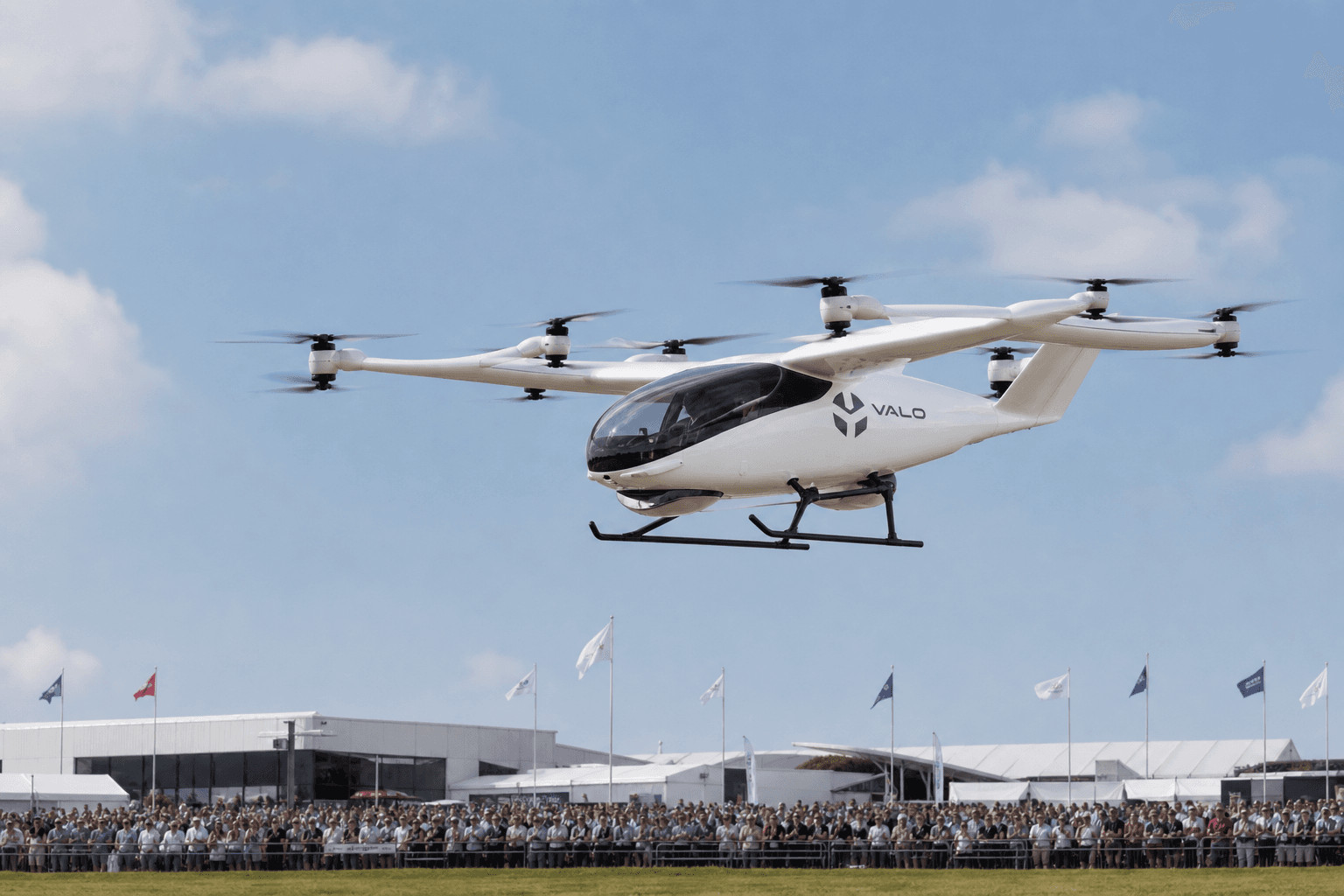
Vertical Aerospace to Perform First Public eVTOL Flights at Farnborough Airshow 2026
Vertical Aerospace (NYSE: EVTL), a pioneering company in UK electric aviation, is set to make history at the Farnborough International Airshow (20-24 July 2026). ezstandalone.cmd.push(function () { ezstandalone.showAds(119); }); The firm plans to conduct the first-ever public electric vertical take-off and landing (eVTOL) demonstration flights at the prestigious event. This milestone highlights Vertical’s rapid progress toward certification and eventual commercial operations. The demonstrations arrive at a pivotal moment for the company. In the past year, Vertical has achieved several major advancements. ezstandalone.cmd.push(function () { ezstandalone.showAds(127); }); It launched its commercial aircraft, named Valo, completed successful piloted transition flights, strengthened its financial position, and expanded its global network of technology partners. The company has also advanced its hybrid-electric defence initiatives while making steady headway in its certification programme. ezstandalone.cmd.push(function () { ezstandalone.showAds(128); }); Having proven the aircraft’s core capabilities, Vertical now shifts focus to the next critical stages: certification, industrialisation, and commercialisation. These efforts position the company to deliver sustainable, efficient air mobility solutions in the near future. Photo Credit: Vertical Aerospace Public Flights and Full-Scale Display At Farnborough, Vertical will showcase its progress in two key ways. Visitors will witness public piloted flights of the full-scale prototype, and they can explore a full-scale commercial model of Valo on the exhibition floor. ezstandalone.cmd.push(function () { ezstandalone.showAds(129); }); Stuart Simpson, CEO of Vertical Aerospace , expressed confidence in the company’s trajectory. “Vertical arrives at Farnborough with the key building blocks now in place,” he said. “Over the past year we’ve transformed the business – from launching Valo and achieving piloted transition to strengthening our financial position and expanding our industrial ecosystem. We’ve proven the technology.” “Our focus now is executing the roadmap to certification, industrialisation and commercial service. Every milestone we deliver reduces risk, strengthens our competitive position and brings us closer to building one of the world’s leading electric aerospace companies.” ezstandalone.cmd.push(function () { ezstandalone.showAds(130); }); Flight Demonstrations Open to the Public Vertical intends to perform public demonstration flights throughout the airshow week, marking the first time an eVTOL aircraft flies publicly at Farnborough. These flights remain subject to weather and regulatory approval. The planned demonstrations follow a recent decision by the UK Civil Aviation Authority (CAA) to expand Vertical’s Permit to Fly. This approval allows the company to operate public flights beyond its base at Cotswold Airport. Since receiving this authorisation, Vertical’s test pilots have successfully flown to multiple locations, including RAF Brize Norton, RAF Benson, Blackbushe Airport, and Farnborough Airport itself. ezstandalone.cmd.push(function () { ezstandalone.showAds(131); }); These operations have broadened the flight test programme and provided valuable experience across different operating environments. Such real-world testing is essential as the company moves closer to full certification and commercial service. Attendees interested in the latest flight schedules can join the Vertical Aerospace Farnborough International Airshow 2026 WhatsApp channel for real-time updates. Photo Credit: Gareth Iwan Jones Exploring the Valo Aircraft In Hall 4, visitors will have the opportunity to examine the full-scale commercial model of Valo up close and meet members of the team developing this advanced electric aircraft. The displayed model builds directly on the success of the flying prototype currently performing at the show. ezstandalone.cmd.push(function () { ezstandalone.showAds(132); }); Vertical brings one of the industry’s most robust technology ecosystems to Farnborough. The company collaborates with leading global partners, including Honeywell Aerospace, Aciturri, Evolito, Hyundai WIA, Syensqo, Sonaca, and Isoclima. It also holds approximately 1,500 conditional pre-orders from customers across four continents, such as American Airlines, Avolon, Bristow, GOL, and Japan Airlines. This week, Vertical announced a strategic partnership with Near Earth Autonomy. The collaboration aims to integrate advanced autonomous flight capabilities into Valo, supporting both future defence and commercial applications. ezstandalone.cmd.push(function () { ezstandalone.showAds(133); }); Leadership Voices on the Future of Air Mobility Throughout the week, Vertical’s executives will participate in high-level discussions about Advanced Air Mobility (AAM) and the path to commercial electric aviation. On Monday, 20 July (11:15–12:00) in Hall 3 – AGN Theatre 1L, Stuart Simpson will join a panel on “UK Leadership in Advanced Air Mobility.” Moderated by Sir Stephen Hillier, Chair of the UK Civil Aviation Authority, the session will explore how the UK can convert its early advantages in aircraft development, regulation, and operations into long-term commercial success. ezstandalone.cmd.push(function () { ezstandalone.showAds(134); }); Other confirmed speakers include representatives from Bristow Group, the CAA, NATS, and the Department for Transport. On Tuesday, 21 July (15:00–16:00), Simpson will take part in the “Inside the eVTOL Market” panel at the show’s inaugural Finance Summit in Hall 4. Hosted by Cantor Fitzgerald, the discussion will feature several prominent CEOs. This will include Kyle Clark of BETA, JoeBen Bevirt of JOBY, and Adam Goldstein of Archer Aviation. ezstandalone.cmd.push(function () { ezstandalone.showAds(135); }); The panel will examine the sector’s current progress and future vision. Image Credit: Vertical Aerospace Milestones on the Horizon As Vertical advances toward certification and entry into service, the company has outlined several important upcoming targets: Critical Design Review (CDR): Expected completion by the end of 2026. This review will establish the certifiable design baseline and pave the way for building and testing certification-conforming aircraft. Industrialisation: Opening the early production aircraft assembly facility in Q3 2026, followed by expansion of the Vertical Energy Centre in Q4 2026. Hybrid-electric Programme: Selection of a long-term turbogenerator supplier during 2026, ahead of hybrid-electric flight testing in the first half of 2027. ezstandalone.cmd.push(function () { ezstandalone.showAds(136); }); These planned achievements demonstrate Vertical’s clear and structured approach to bringing safe, sustainable electric flight to market. With strong partnerships, growing customer interest, and tangible technical progress, the company is well-positioned to play a leading role in the emerging advanced air mobility sector. Farnborough 2026 offers the public and industry stakeholders a unique opportunity to witness the future of aviation taking shape in real time. ezstandalone.cmd.push(function () { ezstandalone.showAds(137); });
The Daily Touch & Go
The day's best aviation news in your inbox. Free, no spam.