


US Army Warrant Officer Pilots Differ in Pay and Roles from Commissioned Officers
US Army helicopter pilots can be Warrant Officers or Commissioned Officers, each with distinct career paths and pay scales reflecting their leadership and flying duties.
The gist
In the US Army, commissioned pilots generally out-earn Warrant Officer pilots despite the latter’s focus on flying expertise and less leadership responsibility.
Continuing coverage
All Pilot Pay →- British Airways Widebody Captains Earn Up to £275,000 by 2026, Rookies Start Around £40,000
- Senior Pilots on Ultra-Long-Haul Flights Earn Record Pay as Global Contracts Shift in 2026
- Delta A350 and US Boeing 777 Pilot Pay Align Closely in 2026
- Southwest Airlines senior Boeing 737 captains earn over $450,000 in 2026 via unique Trip For Pay model
The United States Army operates one of the largest rotary-wing aviation programs within the U.S. military, with thousands of helicopters flown by both Warrant Officers and Commissioned Officers. Unlike other service branches, the Army uniquely employs Warrant Officers as pilots, who typically focus on flying and maintaining technical proficiency in specific aircraft such as the Apache or Black Hawk helicopters. These Warrant Officers are promoted from enlisted ranks after extensive training, contrasting with Commissioned Officers whose career paths emphasize broader leadership responsibilities and command roles.
Warrant Officers and Commissioned Officers follow separate career tracks with corresponding pay structures reflecting their roles. Warrant Officers concentrate primarily on the operation and mastery of particular aircraft, whereas Commissioned Officers are groomed for leadership positions managing thousands of troops and extensive military assets. This distinction results in Commissioned Officers generally earning higher salaries throughout their careers due to their higher rank on the military pay scale.
Military pay comprises base pay, tax-free housing and food allowances, and monthly flight pay incentives. Flight pay is uniform between the two groups and set by Congress based on years of aviation service, starting at $150 monthly and increasing to a maximum of $1,000 after 14 years. Warrant Officers, who typically remain in flying roles throughout their service, continue receiving flight pay until retirement, while Commissioned Officers may forfeit this pay if they move into non-flying leadership roles.
A newly commissioned Officer, often called a 'butter bar,' may initially earn less than a seasoned Warrant Officer due to the latter’s prior enlisted service. Over time, Commissioned Officers' pay surpasses that of Warrant Officers with gains in base pay and allowances, reflecting their rank progression from O-1 to potentially O-6. In contrast, Warrant Officers progress from WO1 to CW5, focusing on becoming technical flight experts rather than advancing into senior command roles.
Salary comparisons reveal that a Chief Warrant Officer 3 (CW3) earns between $54,000 and $95,000 depending on years of service, whereas a First Lieutenant (O-2) earns between $57,000 and $79,000. At higher ranks, pay differences widen; an Army Major (O-4) can make between $75,000 and $130,000, compared to a Chief Warrant Officer 5 (CW5) earning up to $130,000 but without the opportunity for promotion beyond this level or additional command pay.
Housing allowances play a significant role in overall compensation. Commissioned Officers receive larger Basic Allowance for Housing (BAH) than Warrant Officers of equivalent seniority, which allows for larger or higher-quality accommodations off-base. Both groups receive the same Basic Allowance for Subsistence (BAS), which covers food, and gain additional increases for dependents as well as Family Separation Allowance when deployed separately from family for extended periods.
Transitioning from military service to commercial aviation poses challenges especially for Army Warrant Officers. Since they primarily fly helicopters, they must undergo specialized rotor-to-fixed wing transition programs to qualify for airline pilot roles. Additionally, airline career progression depends on seniority, and military pilots leaving after a decade may start airline seniority earlier than those retiring after 20 years, affecting long-term earnings potential.
To retain skilled pilots, the Army uses retention bonuses awarded through an auction-style bidding system for senior Warrant Officers, who submit confidential bids to remain in service. This method aims to allocate budget efficiently while incentivizing pilots to continue military careers despite lucrative commercial airline opportunities. The competing factors of longevity, pay scales, and career aspirations shape decisions for Army aviators balancing military service with future commercial aviation interests.
Frequently asked questions
- Why do US Army Warrant Officer pilots earn less than Commissioned Officer pilots?
- Because Commissioned Officers hold higher ranks with broader leadership duties, their pay scales sit above those of Warrant Officers who focus primarily on flying roles.
- Do Warrant Officers and Commissioned Officers receive the same flight pay in the US Army?
- Yes, flight pay is fixed by Congress based on years of aviation service and is equal between Warrant Officers and Commissioned Officers.
- What career paths do Warrant Officers and Commissioned Officers follow in Army aviation?
- Warrant Officers concentrate on technical mastery of flight and typically remain pilots, while Commissioned Officers advance into command and leadership roles overseeing personnel and assets.
Read more
All Military/Defense →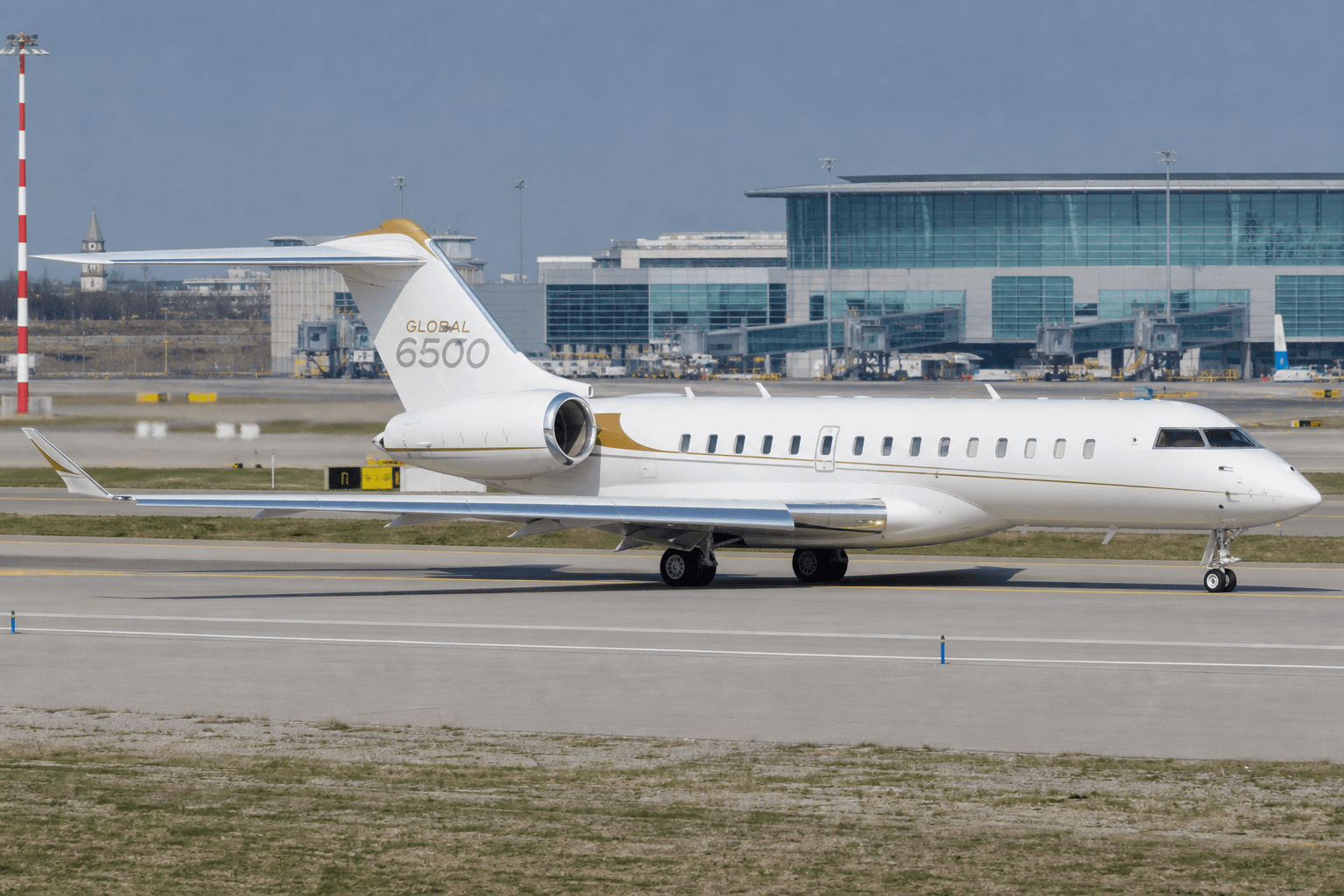
South Korea selects Bombardier Global 6500 jets for new electronic warfare fleet
South Korea has selected the Bombardier Global 6500 as the platform for a new pair of electronic warfare aircraft. Korean Air will purchase two Global 6500 business jets from Bombardier for conversion under South Korea's stand-off electronic warfare program, the Canadian manufacturer announced on July 14, 2026. The aircraft will be equipped to disrupt enemy radar, communications and other electronic signals while operating beyond the immediate reach of air and ground threats. Bombardier worked with Korean Air and South Korean defense company LIG Nex1 on the winning proposal. The companies marked the agreement during a signing ceremony in Seoul. Bombardier did not disclose the contract value, delivery schedule or details of the electronic warfare equipment that will be installed aboard the aircraft. "The Global 6500 aircraft is in demand around the world because of its performance and versatility," said Michael Anckner, Vice President of Worldwide Sales at Bombardier Defense. South Korea has now selected the Global 6500 for two separate special-mission aircraft programs. The country previously chose four Global 6500s for an airborne early warning and control fleet led by L3Harris. Those aircraft will carry sensors and mission systems used to monitor the airspace and direct military operations. The latest pair of aircraft will perform electronic attack missions, giving South Korea a planned fleet of six Global 6500-based military aircraft across the two programs. The Global 6500 is powered by two Rolls-Royce Pearl 15 engines. Its range, high-altitude performance and large cabin allow military customers to install sensors, operator consoles and communications equipment without developing a new aircraft from scratch. The business jet has attracted growing interest for surveillance, command-and-control and electronic warfare missions. The US Army also selected the Global 6500 for its High Accuracy Detection and Exploitation System, or HADES, intelligence and surveillance program. Bombardier delivered the first aircraft for that effort in 2024.
How the F-22's F119 Engine Overcame Long-Standing Fighter Jet Engine Trade-Offs
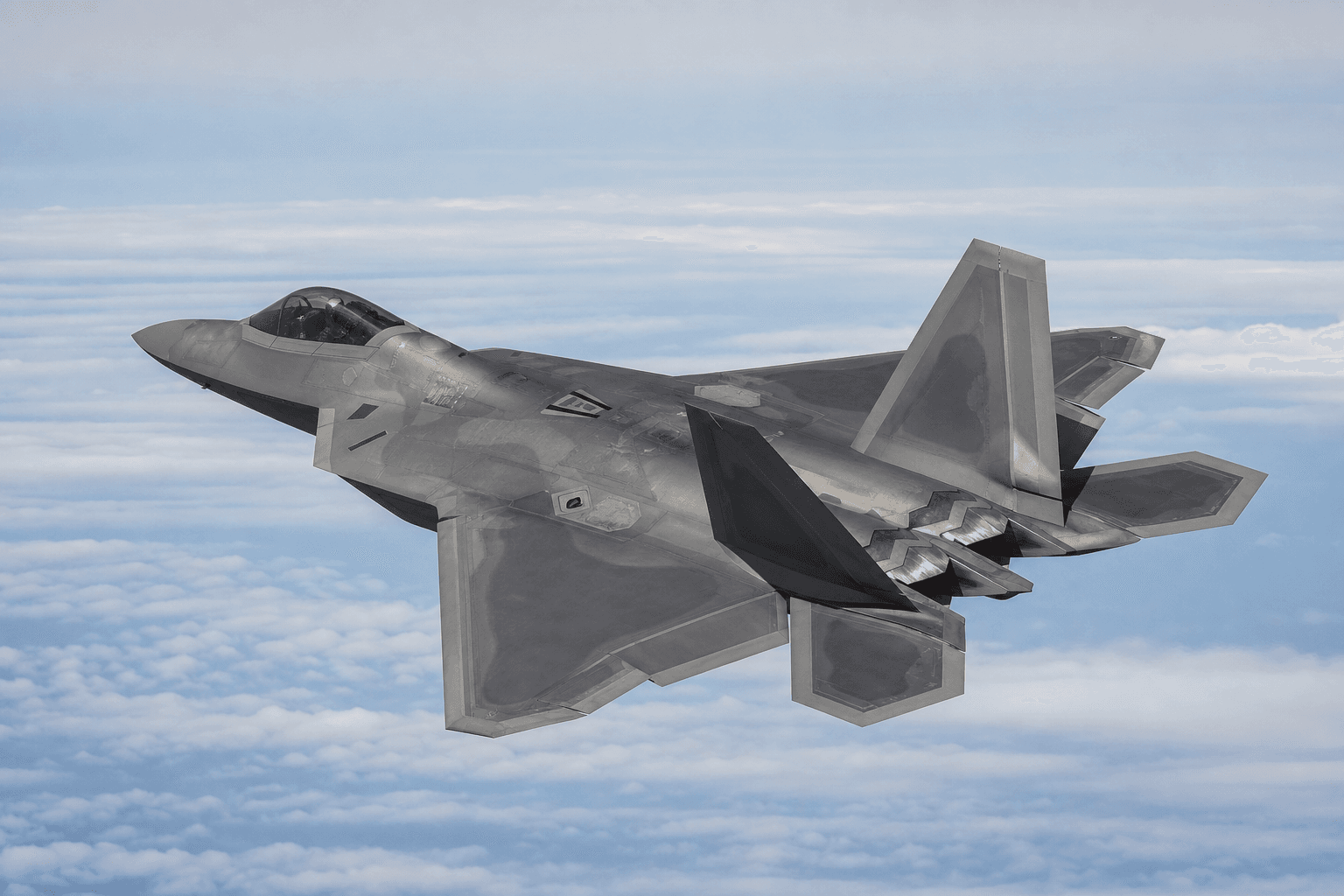
The Lockheed Martin F-22 Raptor was built as a generational leap over the existing F-15 Eagle. The F-15 Eagle was designed as an air superiority fighter , but by the 1980s, the Air Force felt it might not have the "unfair" advantage that they wanted, as the Soviet Union developed the Su-27 and MiG-29. The F-22 was initially designed as a late Cold War effort to overmatch any fighter jets the Soviets could field.
Europe's FCAS fighter program collapses amid industrial disputes and divergent military goals
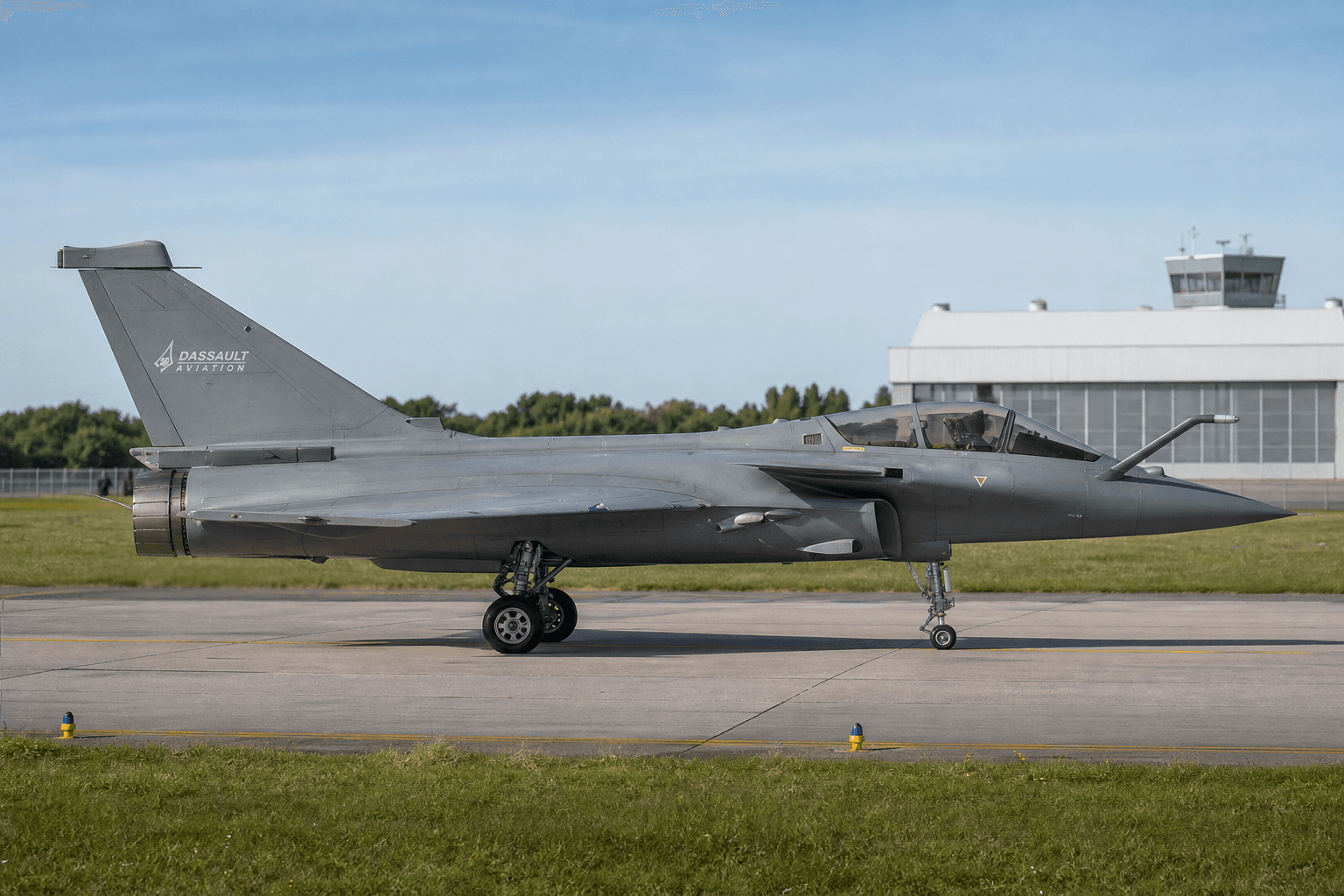
Where next for Europe’s future combat aircraft plans? Perhaps the most surprising thing about the collapse of the European Future Combat Air System (FCAS) programme was that it took so long to fall apart. Even from the outset you did not need to be an expert in business dynamics or industrial politics to see that the relationship between lead protagonists Airbus and Dassault Aviation was likely to be strained at best. French airframer Dassault is, like it or not, a fiercely independent entity with a chief executive in Eric Trappier for whom the adjective 'pugnacious' is tailor-made. Dassault thought it was to be fully in charge, the architect as the company phrased it, of the New Generation Fighter (NGF), the manned platform at the heart of FCAS. But faced with what it felt was the steady encroachment of Airbus onto its turf, tensions inevitably ratcheted up. Indeed, it was always going to be a challenge to yoke Dassault to a wider pan-European construct, particularly when it lacks the collaborative spirit that, thanks to its origins, is part of the Airbus DNA. There also seemed to be an inherent issue with what the three countries funding FCAS wanted to achieve with the NGF – France sought a replacement for the Rafale, including the naval version, while Germany and Spain targeted an air dominance fighter as a Eurofighter successor. Remember too that France and Dassault have history here: originally part of the Future European Fighter Aircraft programme – the precursor to the Eurofighter – the pair left, to develop the Rafale independently, due to disagreements over design authority and operational requirements. Sound familiar? But with the dust now settling on the inherently fissiparous FCAS project, the question becomes: what next? Can France and Dassault proceed once more in splendid isolation? At a technological level, almost certainly, after all, whatever criticism can be laid at the airframer's door, it does not lack for design and manufacturing nous. However, the stumbling block may be the eye-watering sums needed to bring a sixth-generation fighter into service. German industry, with some Spanish contribution, has already announced the ' Team Gen 6 ' grouping that it says is willing to work with any interested party to advance the interests of European sovereignty. Mind you, it is unclear who else is available. At this stage, ushering Germany and Spain into the Global Combat Air Programme being progressed by Italy, Japan and the UK – seemingly harmoniously so far – seems challenging, if not outright impossible. That leaves Sweden, which is still mulling options for a successor to its current Saab Gripen E. Mind you, with relations between Paris and Stockholm ever-closer – notably, France is acquiring at least two Saab GlobalEye surveillance jets – perhaps a different marriage of convenience could be contemplated? Equally, perhaps the real lesson from the debacle is that agility is key: many of the capabilities envisioned for the broader FCAS project – the system of systems concept – are already being tested or deployed by adversaries. Whichever direction Europe's new divorcees take – remarriage or remaining single – the watchword for a future fighter, now more than ever, is the need for speed.
Australia's Top End hosts 19 nations and 100 aircraft for Exercise Pitch Black 26
Australia's Northern Territory will serve as a hub of international air power from July 20 to August 7, 2026, as 19 partner nations take part in Exercise Pitch Black 26, a three-week air combat training exercise. The exercise officially launched on July 16, 2026, when Royal Australian Air Force (RAAF) Air Commodore Matthew McCormack, who is commanding this year's edition, joined detachment commanders from participating countries at RAAF Base Darwin. In total, the exercise has brought 100 aircraft and 2,500 personnel from around the world into RAAF Bases Darwin and Tindal, turning both installations into temporary centers of multinational air operations. As #PitchBlack26 heats up, we're shining a spotlight on the combat support teams who keep the mission moving. No. 23 Squadron at RAAF Base Amberley is supporting international tanker aircraft and ensuring safe, efficient airfield operations pic.twitter.com/06Q5MF0z0l — Royal Australian Air Force (@AusAirForce) July 17, 2026 Why the Northern Territory is an ideal training ground #image_title The location is far from incidental. Northern Australia is home to one of the largest military training areas in the world, offering vast, largely unrestricted airspace that few other regions can match. This degree of space matters for an exercise built around modern fighter aircraft, many of which need significant room to operate at full capability. McCormack pointed to that airspace directly, noting that some of the world's most advanced fighters require exactly the kind of operating room that the Top End provides. As #PitchBlack26 heats up, we're shining a spotlight on the combat support teams who keep the mission moving. No. 23 Squadron at RAAF Base Amberley is supporting international tanker aircraft and ensuring safe, efficient airfield operations pic.twitter.com/06Q5MF0z0l — Royal Australian Air Force (@AusAirForce) July 17, 2026 What Exercise Pitch Black training involves At its core, Pitch Black is built around large-force employment missions, exercises that bring together fighter aircraft, intelligence, surveillance, and reconnaissance platforms, air mobility assets, and command-and-control elements in scenarios meant to mirror real-world combat conditions. McCormack described the exercise as war fighter-focused, designed to expose both Australian aviators and their international counterparts to complex, high-end air combat scenarios. The goal, he said, is to sharpen decision-making and tactical skill while preparing participating forces to operate effectively in contested environments. Building relationships that extend beyond the flightline While the flying is the centerpiece, McCormack suggested the exercise carries value that extends well beyond the aircraft themselves. With so many nations training side by side, Pitch Black gives participants a chance to understand how other air forces operate, something that he feels would pay dividends if those same nations should ever need to work together in real conflict. That collaboration isn't limited to pilots. Aircrew, mission planners, engineers and support personnel from across the participating nations are all working together throughout the exercise, building the kind of professional familiarity that underpins effective coalition operations when it matters most. Staged every two years, Pitch Black has become one of the Royal Australian Air Force's signature international exercises, combining demanding air combat training with a rare opportunity for allied air forces to train, coordinate and build trust together at scale. RELATED Royal Australian Air Force announces Exercise Pitch Black for July-August 2026
The Daily Touch & Go
The day's best aviation news in your inbox. Free, no spam.