

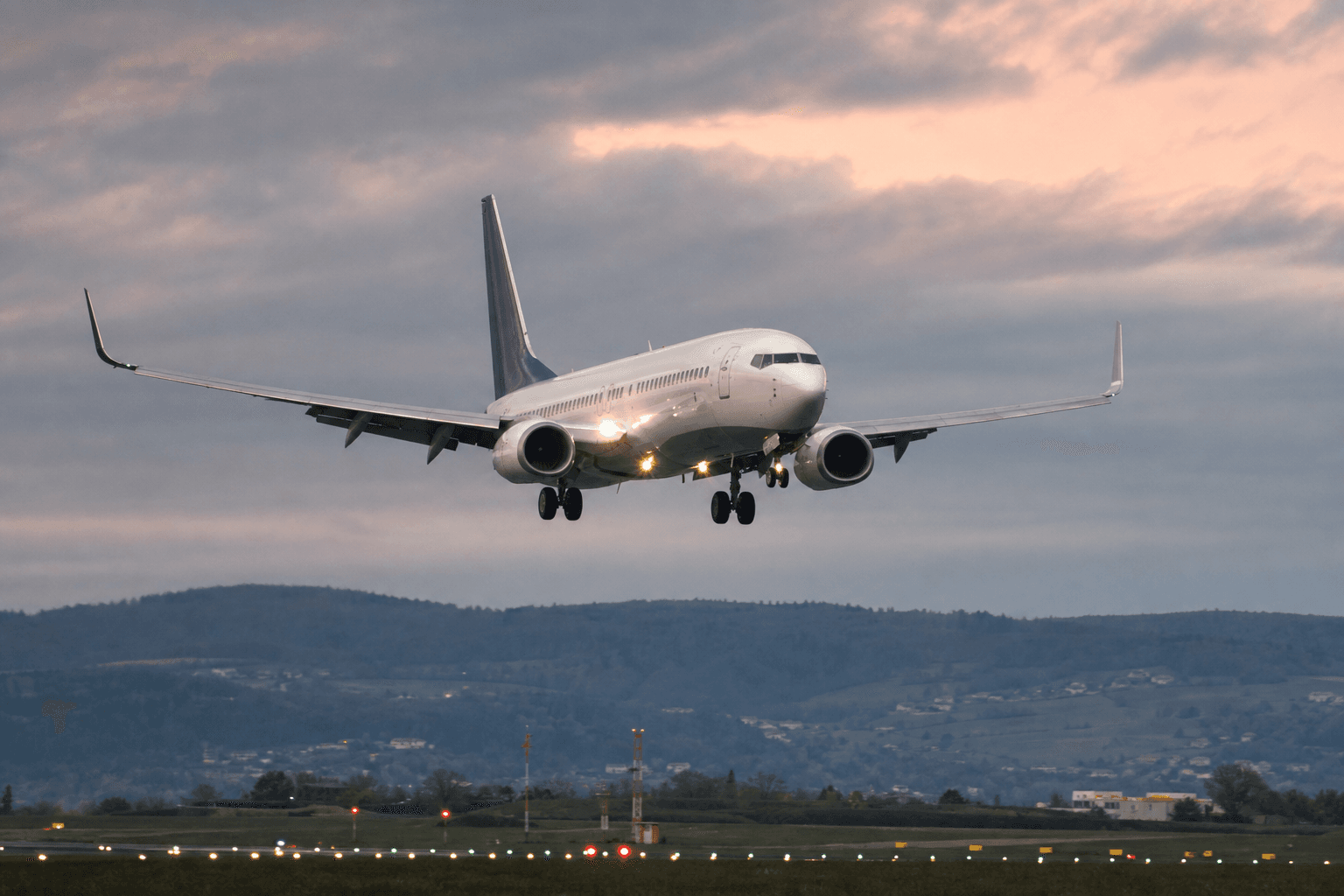
Illustration: The Touch & Go
Ryanair 737 Diverts to Brest After Runway Closure at Nantes by Iberia Emergency Landing
A Ryanair flight carrying a Boeing 737-800 was forced to divert to Brest Bretagne Airport due to a runway closure at Nantes following an emergency by an Iberia CRJ-1000.
The gist
Ryanair's 737-800 declared a fuel emergency and diverted to Brest after an Iberia CRJ-1000 emergency blocked Nantes runway.
Continuing coverage
All Ryanair →- Ryanair and Cebu Pacific Lead World in Economy Seat Density with Ultra-Compact Cabins in 2026
- Ryanair Flights Often Operated by Subsidiary Airlines Including Buzz and Malta Air
- Ryanair CEO Michael O'Leary Signs Extension to Lead Until 2032 in €150M Deal
- Ryanair CEO Michael O'Leary Renewed Through 2032 with New Share Option Deal
A Ryanair Boeing 737-800 operating flight FR5448 was compelled to divert to Brest Bretagne Airport (BES) after its intended landing at Nantes-Atlantique Airport (NTE) was disrupted by an emergency incident. The disruption stemmed from an Iberia Mitsubishi CRJ-1000 that triggered an emergency landing on the runway, leading to its closure. This unexpected situation forced Ryanair’s aircraft to declare a fuel emergency before diverting.
The incident commenced when the Iberia CRJ-1000 executed an emergency landing at Nantes, which then resulted in the runway being blocked and closed for traffic. The closure meant all arriving flights had to vacate or divert, prompting Ryanair’s FR5448 to initiate contingency plans. This included declaring an emergency due to the aircraft’s low fuel status as it could no longer hold or divert within a safe timeframe.
With the Nantes runway unavailable, Ryanair opted to divert to Brest Bretagne Airport in France as a safer alternative to land. This decision was supported by real-time flight tracking data from Flightradar24, which recorded the Boeing 737-800’s trajectory towards Brest. The flight landed safely albeit under emergency conditions, highlighting the pressing nature of fuel management in diversion scenarios.
This event underscores the operational challenges airlines face when dealing with unexpected runway closures, especially when aircraft are low on reserves. A timely diversion decision can be critical to maintaining safety margins. Ryanair’s declaration of an emergency status before landing was consistent with standard protocol for handling fuel depletion risks during diversion.
Runway closures due to emergency landings or incidents are relatively rare but create immediate cascading effects on other scheduled flights. Airports like Nantes must rapidly manage air traffic flow in such events, working closely with airlines to coordinate alternate arrangements. The choice of Brest Bretagne Airport as an alternate emergency landing site reflects its logistical suitability and proximity.
Ryanair’s Boeing 737-800 is a workhorse of its fleet, frequently operating on short- to medium-haul European routes with high passenger turnover. The ability to divert to nearby airports such as Brest helps mitigate risk when faced with operational interruptions. Meanwhile, Iberia’s CRJ-1000 emergency landing at Nantes triggered swift responses to maintain airport safety and minimize passenger disruption.
This incident may prompt re-examination of emergency and diversion protocols by both airport authorities and airlines. Efficient runway clearance and quick communication channels are vital to prevent delays and reduce risk when one flight’s emergency directly impacts others. Aviation safety continues to rely heavily on coordinated response in these dynamic events.
Going forward, monitoring low-fuel situations when diversions are imminent will remain a priority for airlines operating in busy European airspace. The proximity of suitable alternate airports like Brest can prove crucial in such emergencies. This event serves as a reminder of the highly interdependent nature of airport operations and aircraft safety contingencies.
Read more
All Aviation Safety →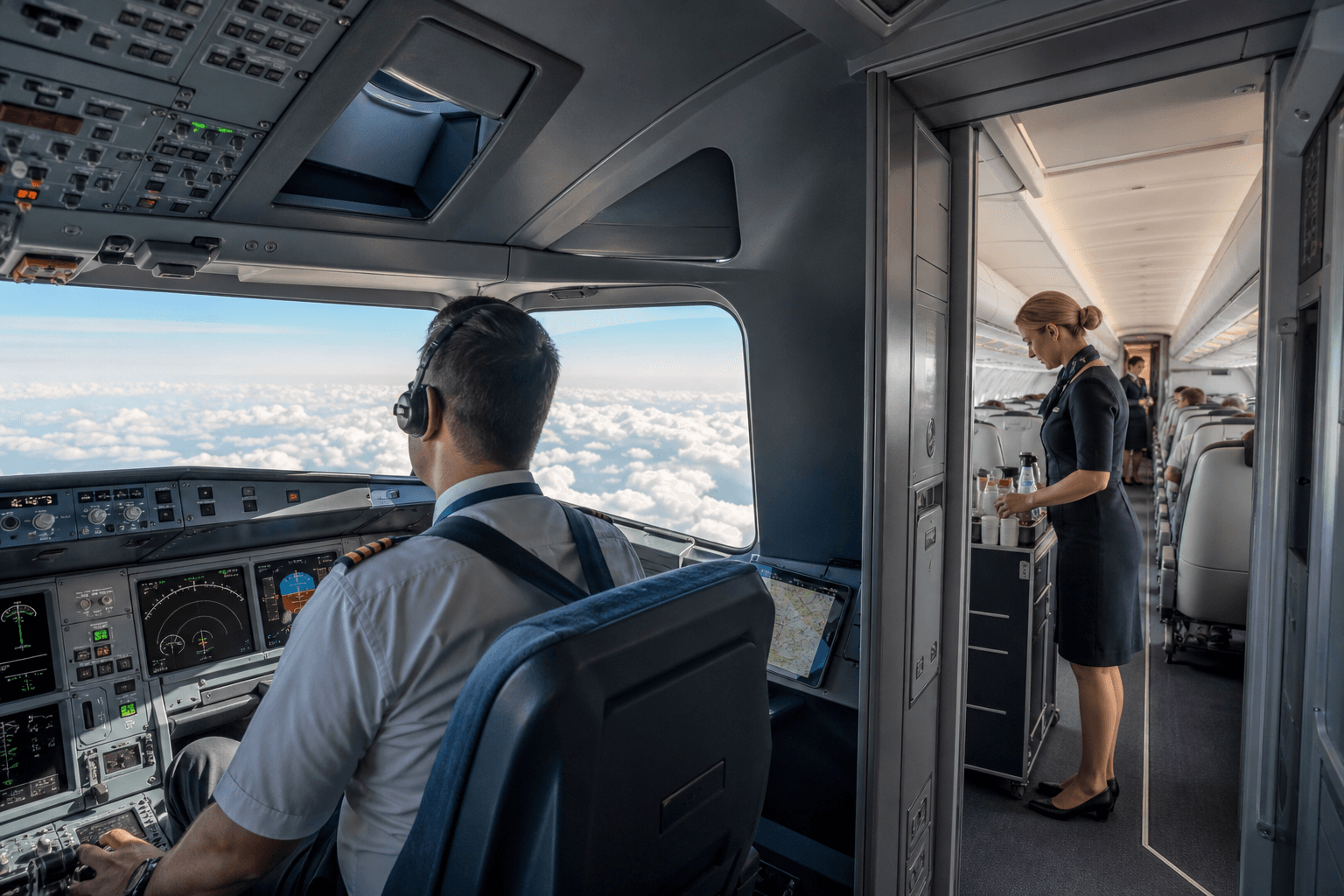
FAA proposes to block state meal and rest break laws for airline crews
The Federal Aviation Administration (FAA) is moving to stop US states and local governments from applying their own meal and rest-break laws to airline pilots and flight attendants after court rulings allowed California-based flight attendants to pursue claims against airlines under state labor law. The FAA published a notice of proposed rulemaking on July 6, 2026, seeking to clarify that federal duty and rest rules for flightcrew members and flight attendants override state and local break requirements. The issue centers on whether pilots and flight attendants can be covered by the same state labor laws that require other workers to receive meal or rest breaks at set intervals, or whether airline crew breaks should be governed only by federal aviation rules. The FAA says airline crews are different from most other workers because they must remain available during a duty period to perform safety tasks, including while an aircraft is in flight. Some state laws require workers to be relieved of all duties during a meal or rest break. The FAA says that standard cannot always apply to pilots and flight attendants, who may need to respond to emergencies, medical events, unruly passengers, evacuations or other safety issues. The FAA "proposes to clarify that FAA regulations governing flightcrew member and flight attendant duty and rest periods preempt all State and local meal and rest break requirements," the agency said in the proposed rule. The FAA also said US state meal and rest-break requirements are preempted by the Airline Deregulation Act of 1978 if they significantly affect airline prices, routes and services. The proposed rule would amend Part 117, which covers flightcrew duty and rest limitations, and Part 121, which governs domestic, flag and supplemental airline operations. The agency said recent litigation prompted it to review how its crew duty and rest regulations interact with state labor laws. The FAA cited cases involving Virgin America and SkyWest Airlines flight attendants as part of the background to the proposal. In Bernstein v. Virgin America, California-based flight attendants sued Virgin America over alleged violations of California labor law, including meal-break and rest-break requirements. Virgin argued that the state break rules were preempted by federal aviation law and the Airline Deregulation Act, but the US Court of Appeals for the Ninth Circuit rejected those arguments and upheld rulings in favor of the flight attendants on the break claims. The FAA also cited Wilson v. SkyWest Airlines, a case brought by two California-based flight attendants who alleged that SkyWest failed to provide meal breaks, rest breaks and compliant wage statements under California law. A federal district court found that the break claims were not preempted by federal aviation law or the Airline Deregulation Act. Those cases centered on whether California meal and rest-break rules could apply to flight attendants. California generally requires a 30-minute meal period when employees work more than five hours and a second meal period when employees work more than 10 hours. The US Department of Labor lists 21 states or jurisdictions with meal-period requirements for adult private-sector workers. It lists seven states — California, Colorado, Kentucky, Minnesota, Nevada, Oregon and Washington — as having both meal-period and rest-period requirements. The FAA said applying different state requirements to airline crews could create operational problems for carriers. The agency said airlines might have to carry additional crewmembers, block passenger seats, remove passengers from flights or alter service to comply with state break rules. The FAA said those changes could affect the price, route or service of air transportation. The FAA said its proposal would not prevent airlines from allowing pilots and flight attendants to eat, drink or use the restroom during duty periods. Instead, the agency said airlines would remain responsible for managing those needs while keeping crewmembers available for safety duties. The proposal also notes that some flight attendant breaks are already covered by collective bargaining agreements, airline policies or crew resource management procedures. California amended its labor code in 2023 to exempt certain flight attendants from standard meal and rest-break requirements when they are covered by a collective bargaining agreement that addresses breaks. The FAA said not all airlines and flight attendants are covered by such agreements. Comments on the proposed rule are due by September 4, 2026.
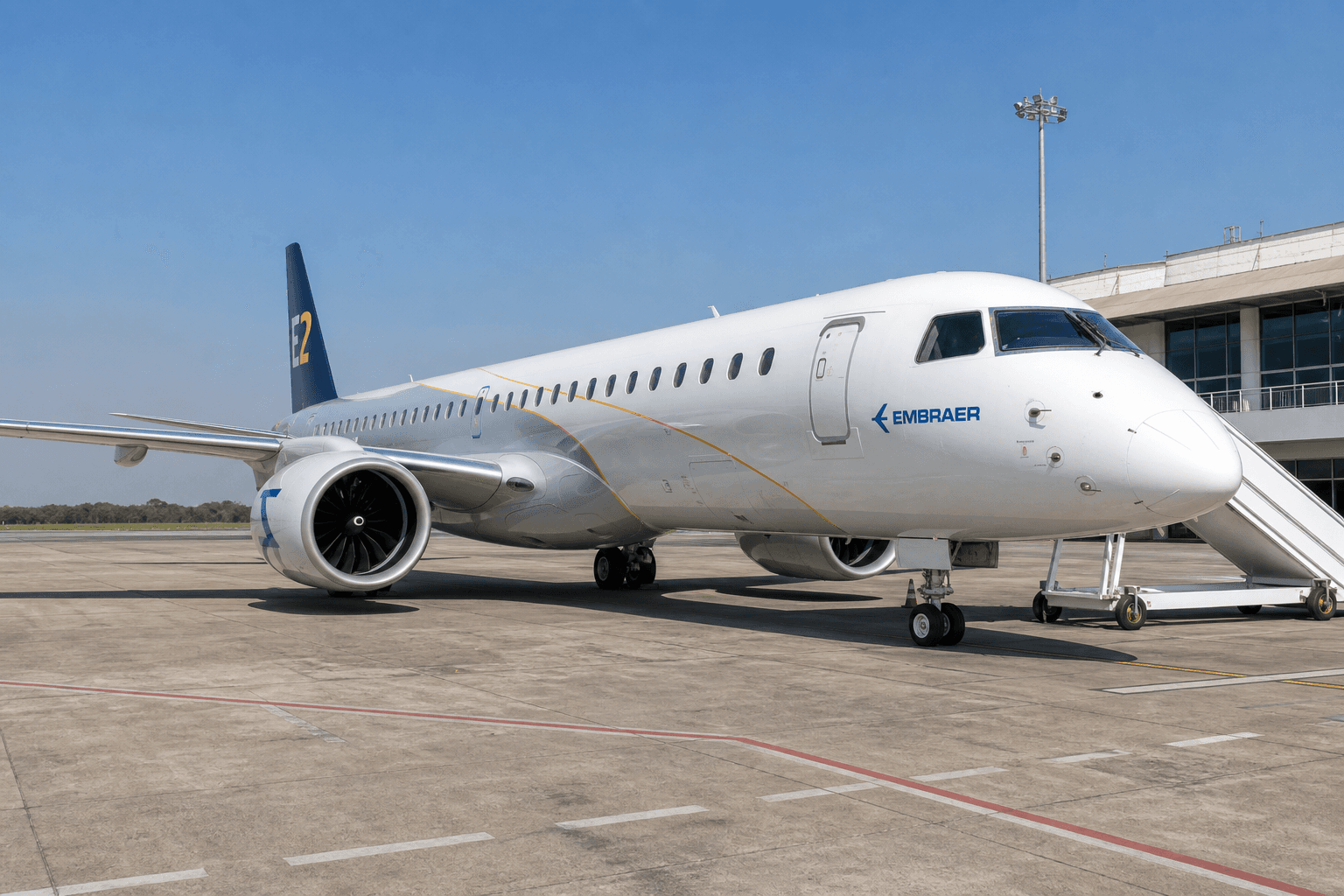
India's DGCA certifies Embraer E190, E195 and E195-E2 aircraft expanding regional jet options
India's Directorate General of Civil Aviation (DGCA) has certified multiple Embraer aircraft from the E-Jets family, including the E190, E195, and the E195-E2. On July 7, 2026, Embraer announced that following the DGCA's type certification of the E175 in 2023, more of its commercial aircraft will now be available on the Indian market. "We welcome the type certification of Embraer's aircraft and thank the DGCA for its thorough assessment," Raul Villaron, Senior Vice President Sales and Marketing, Head of Region Asia Pacific, Commercial Aviation, said. "With remarkable performance, economics, and passenger comfort, Embraer's E-Jets are set to reshape regional aviation in India and support the Indian government's UDAN vision." Embraer's most advanced aircraft, the E195-E2, has already been certified by the Federal Aviation Administration (FAA), the European Aviation Safety Agency (EASA), and National Civil Aviation Agency of Brazil (ANAC) in 2018 and 2019, respectively. "The E-Jets offers enhanced range of up to 7-hours and performance capabilities to operate from challenging airports with short runways or low pavement strength," Adity Shekhar, Regional Vice President, Sales, Embraer, said. "This certification enables us to support airlines expanding their networks and opening unique routes by tapping into 'blue ocean' opportunities that are too small for a large narrowbody or too far for a turboprop." Embraer Embraer's regional jets align with the Indian government's UDAN program, which is designed to develop regional airports, enabling more people to fly. These efforts have included the improvement and building of airports in Tier 2 and Tier 3 cities in India and a subsidy program to facilitate the rural population accessing regional air services. "Embraer has a strong and growing presence in India, with nearly 50 aircraft across 11 different Embraer models currently in operation spanning commercial aviation, defense, and business aviation," a spokesperson for Embraer said. This includes India's Star Air which operates a fleet of 11 Embraer E175 and ERJ145 aircraft. In February 2026, Adani Defense & Aerospace and Embraer announced an enhanced Memorandum of Understanding (MoU) aimed at establishing a Final Assembly Line (FAL) for the E175 regional jet in India. RELATED Embraer posts strongest second-quarter deliveries in 16 years
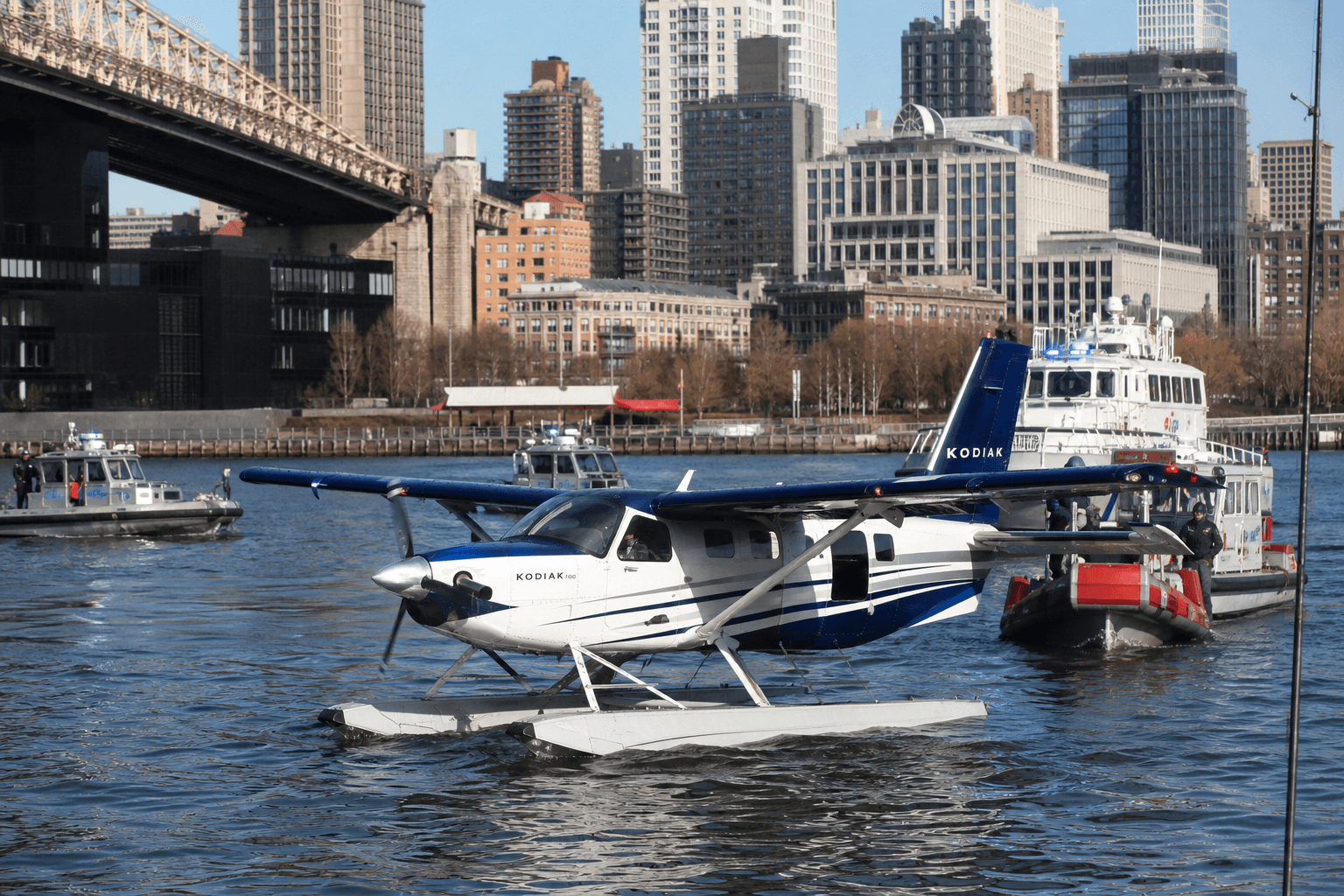
Kodiak 100 Seaplane Makes Hard Landing on New York's East River; No Serious Injuries Reported
The operator of a Kodiak 100 turboprop that made a hard landing on New York City's East River on Sunday said it is investigating the cause of the accident. Acadian Seaplanes, which offers chartered flights in the U.S. Northeast and between Florida's mainland and coastal islands, said in a LinkedIn post that the aircraft sustained "structural damage during the landing rollout" after touching down on the river around noon EDT Sunday. Per air traffic control audio, the accident occurred near the New York Skyports Seaplane Base (6N7) near East 23rd Street in Manhattan. Acadian said the seaplane's flight crew "responded immediately and in accordance with their training," working with controllers at LaGuardia Airport (KLGA), police, and firefighters to evacuate six passengers "without injury." The New York City Fire Department (FDNY) said in a statement to People magazine that eight occupants were removed from the plane, with two suffering "minor injuries" and refusing medical attention. The FAA in a statement also said there were eight occupants aboard the seaplane. It added that the "hard landing" caused the plane's wing struts to "snap." Video of the incident appears to show the aircraft hitting a wave before landing, damaging its left float, which may have caused damage to the wing. WATCH: Video captures moment seaplane crashes in the East River near a marina in New York City https://t.co/6E0oCyqybF pic.twitter.com/0KPAeqHOaK — Breaking Aviation News & Videos (@aviationbrk) July 5, 2026 Acadian said it is conducting a "thorough investigation" with the FAA and National Transportation Safety Board (NTSB) to determine the cause of the accident and identify any corrective actions. "The safety of our passengers, crew, and the public remains our highest priority," Acadian wrote on LinkedIn. "Safe and efficient seaplane operations are the foundation of our business, and we remain fully committed to maintaining the highest standards of safety in every aspect of our operations." Per FAA records, the single-engine Kodiak 100 was manufactured last year. Its owner requested that personal identifying information be withheld from public records. The Daily Mail reported that Acadian was operating the flight on behalf of Blade Air Mobility, which owns private terminals throughout Manhattan. "There were a lot of ferries in the vicinity and there may have been wind at the last second," per a Blade company source quoted by The Daily Mail . "The waves they create can be a problem as you try to land on the water." Though flight data for the aircraft that crashed, registration N726SH, is unavailable, a second seaplane that responded to the accident, registered N555NL, departed East Hampton Airport (KJPX) at 10:38 a.m. Sunday. Per air traffic control (ATC) audio, a mayday call came into the LaGuardia control tower around noon, and police quickly responded to the damaged aircraft. LaGuardia controllers diverted at least one aircraft that had planned to land at the seaplane base. The pilot of N555NL confirmed to a police helicopter circling the accident site that there were multiple passengers on board, with no apparent injuries. Around 12:04 p.m., the helicopter said the New York City Police Department's (NYPD) Harbor Unit was in contact with the seaplane crew. By 12:06 p.m., the helicopter confirmed that passengers were deplaning onto an NYPD harbor boat. The Kodiak 100's floats may have played a role in minimizing the damage to the aircraft and its occupants. Typically, a hard landing in a float plane is akin to hitting a large pothole with a car and bending the rim of a wheel.
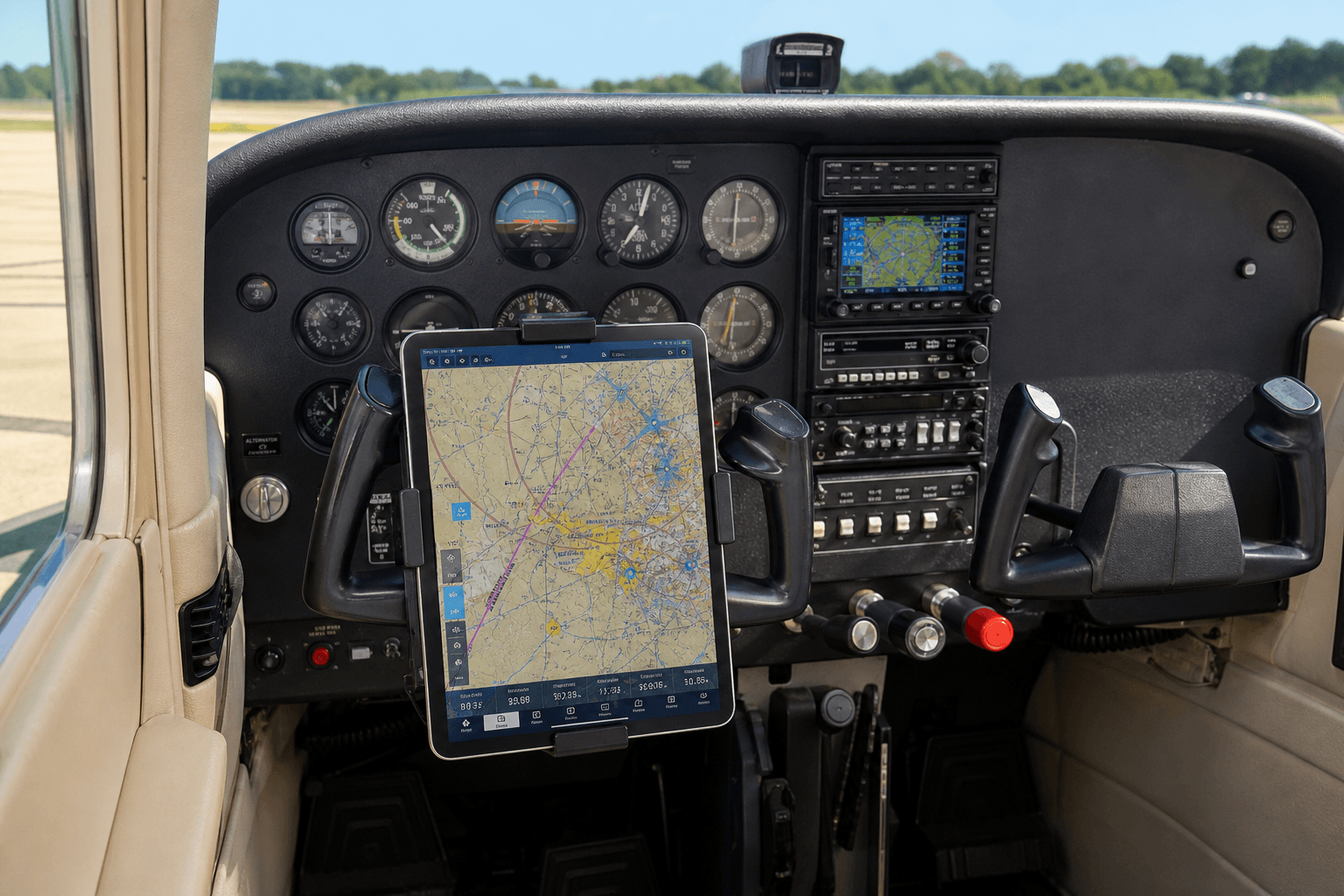
Pilots Urged to Secure Cockpit Gear to Prevent Hazards and Distractions
The learner showed up early for his IFR lesson with his tablet EFB ( electronic flight bag ) and spent the next 15 minutes trying to secure it in the aircraft. The tablet measured 8 by 11, and he wanted to use a yoke mount he had before in a Mooney. I don't know if it was the yoke on the Cessna 172 or the tablet, or the mount, or a combination—but it just didn't work. The tablet was too large and heavy, got in the way of the controls, and blocked the view of the instrument panel. Undaunted, we attempted a few flights with the tablet on the learner's lap. It was awkward and unstable, and scared both of us when it made a loud noise when it fell off his leg during a steep turn and landed hard on the floor of the aircraft. This was one of those times when the EFB intended to be used for navigation and situational awareness became a distraction rather than a help. In the worst case, it can become a hazard. READ MORE: When GPS Fails: Lessons From a Fatal Air Ambulance Crash READ MORE: Beat the Heat: Mastering Density Altitude One of my former students learned this the hard way. During an aerobatics lesson she was struck in the head by an EFB still attached to the kneeboard. It was her instructor's kneeboard that became a projectile when the leg strap failed. It's not just pilot gear that can go rogue. A mentor of mine shared a cautionary tale about a flight he did with his wife in their SkyCatcher that turned dramatic when they hit some turbulence and her purse—in his words—"barfed." He was assaulted by a hostile lipstick, giving him a large bruise under his eye. The lesson here is to make sure everything is secure in the cockpit. If you're not using it, keep it tucked away and secured. That means a pen, pencil, flashlight, E6-B, tablet, phone, or even plastic-laminated checklist can potentially do damage if they hit you just right. This concept can be convoluted. One particular learner tossed the checklist in the back seat after the engine run-up was complete. I was the fill-in instructor that day and asked why he did that. He said he wanted to make sure it was "out of the way," and "we were just in the pattern." I retrieved the checklist with the admonishment "we're not done with that yet" and instructed him to put the checklist in the bulkhead pouch next to his leg, clip it to his kneeboard, or place it under his right thigh so it wouldn't become a projectile or go missing. He was surprised, as he only used the flow of GUMPS check for landing. He experimented with all three locations for checklist storage and decided the kneeboard with the checklist open to the page pertinent to the flight worked the best for him, and he learned the art of "flow, and verify with the checklist." Having the right kneeboard is critical for cockpit organization. Finding the right one for you is very much trial and error. It may change, depending on the aircraft you're flying. As I write this I am working with an IFR candidate who is very happy with the kneeboard he received for Christmas that's specifically designed to hold an EFB. It's solid enough to keep the unit from sliding yet has a small enough profile that it doesn't get in the way of the yoke. I envied the latter, as the very first kneeboard I owned is missing an inch after I took a hacksaw to it when the yoke of the Cessna 172RG I did my commercial training in kept jamming it when I pulled the yoke full aft. Since the invention of EFB there has been an explosion in the creation of external mounts to secure it. Again this is trial and error. You can attach them to an arm extending from the floor, panel, etc. I'm not a fan of putting it up on the glareshield, although I know those who have and sent the magnetic compass into a tizzy and actually scratched the interior of the plexiglass windscreen. Neither is a good thing. Some mounts come with clips or suction cups, allowing them to attach to the aircraft. Be careful of anything that attaches to the windscreen side window because it blocks part of the view. Don't forget to have a reliable power source, including a cord that connects to the aircraft if appropriate. I've learned to carry two power cords for the unit just in case one fails or the learner forgets theirs, although savvy instructors use the EFB running out of battery as a realistic distraction. Please don't be the learner who thinks having a tablet and two backup phones will keep you from having to navigate with Mark 1 Eyeball during a check ride. Several DPEs I know tell me about failing all electronic means of navigation in the cockpit as a means to ascertain the applicant is capable of pilotage and dead recockoning. Apparently there are pilots who rely heavily on the magenta line to tell them where they are even in VFR conditions and, when it is taken away, they struggle. I thought this was hyperbole until I flew a stage check with an applicant who appeared to be genetically attached to his tablet. His regular CFI was trying to break him of the habit of being head down in the cockpit. Luckily, in the Seattle area we have some beautiful scenery and humongous landmarks you can't miss on a clear day—such as the cities of Seattle, Tacoma, Olympia, a couple of military bases, Mount Rainier, and Puget Sound. To wean him off the tablet we did a VFR flight sans EFB specifically to overfly the military bases (making proper radio calls to obtain permission to transition their Class D airspace) and then over the sound to look for whales. I am part of a whale observation group, and the position of the whales are shared online. You can't be head down in the cockpit when looking for whales. They don't show up on the ADS-B. You need your head on a swivel with eyes outside and mind your altitude so you're at least 2,000 feet above the creatures. By the end of the flight the learner was an "outside man." Learning had taken place.
The Daily Touch & Go
The day's best aviation news in your inbox. Free, no spam.