

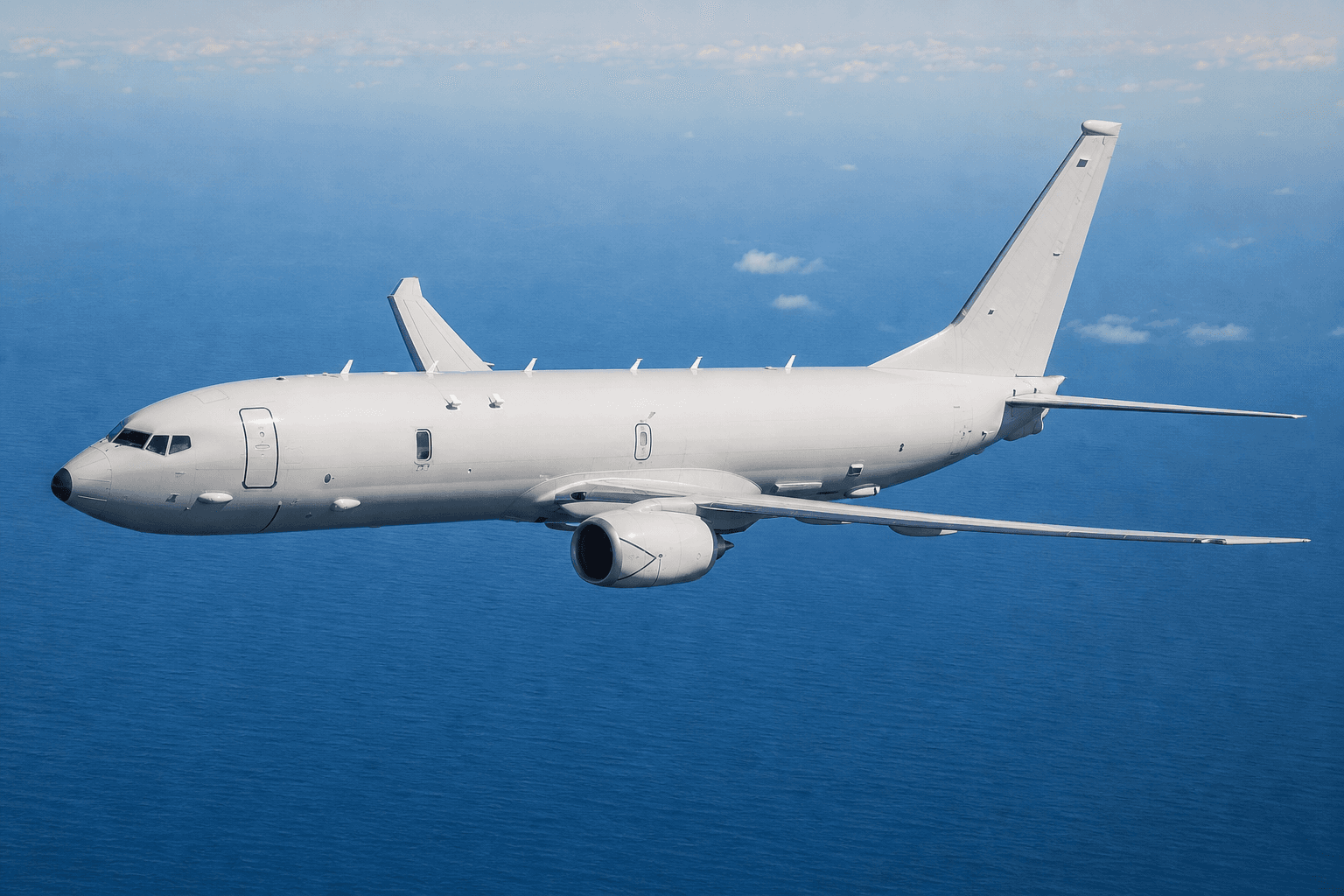
Illustration: The Touch & Go
US Navy P-8 Poseidon excels at high-altitude missions despite low-level flight capability
The P-8 Poseidon maritime patrol aircraft can fly just 200 feet above waves but mainly operates at high altitudes for superior sensor performance and mission versatility.
The gist
While capable of low flight, the US Navy's P-8 Poseidon primarily flies high for better range, sensor reach, and multi-mission roles.
Continuing coverage
All Us Navy →The Boeing P-8A Poseidon, used by the US Navy, succeeded the venerable Lockheed P-3C Orion, marking a significant evolution in maritime patrol aircraft design. Unlike its turboprop predecessor designed in the Cold War era, the Poseidon is based on a modified Boeing 737 Next Generation, outfitted with turbofan engines and a vastly upgraded sensor suite. This gives it capability far beyond anti-submarine warfare, extending to broad intelligence, surveillance, and reconnaissance missions over oceans and land.
One often-asked question regards the P-8’s ability to fly extremely low—around 200 feet above waves—to detect submarines. Technically capable of such low-level flight, the Poseidon rarely operates at this altitude in practice. Its advanced sensors and engines perform optimally when cruising at altitudes up to 41,000 feet, delivering more effective coverage and longer range, which aligns with modern naval tactics emphasizing high-altitude surveillance.
A key difference separating the P-8 from the P-3C is the absence of the magnetic anomaly detection (MAD) system. The P-3’s MAD boom enabled it to detect submarines by sensing metal submerged close to the surface, which required very low flight. The P-8, however, relies on processing data from multi-static sonobuoy fields deployed over wide areas, a method better suited for high-altitude operation. Removing the heavy MAD system has also increased the Poseidon’s range and speed capabilities.
The P-8’s multi-sensor radar, the AN/APY-10, along with sophisticated electronic support measures, enables it to act as an airborne network node for maritime patrol. Beyond submarine hunting, the Poseidon undertakes missions including electronic intelligence gathering, surface warfare tracking, and overland reconnaissance. Its high-altitude operations expand the radar horizon dramatically compared to the P-3, allowing wider area surveillance with greater efficiency.
In anti-submarine warfare, the Poseidon incorporates the High Altitude Anti-Submarine Warfare Weapon Capability (HAAWC), a guidance kit attaching GPS and wings to the Mk 54 torpedo. This innovation allows P-8 crews to drop torpedoes from altitude, striking submarines without needing to approach at low level for a direct water entry, thereby reducing risk and increasing tactical flexibility.
The Poseidon works in tandem with the MQ-4C Triton unmanned aircraft system. The Triton conducts long-duration, high-altitude maritime surveillance, scanning millions of square miles with a 360-degree radar. When the Triton detects potential targets like submarines or vessels, it relays precise data to the P-8, which then rapidly moves to investigate with sonobuoys and, if required, deploys weaponry. This collaboration extends the reach and endurance of US naval reconnaissance.
Strategically, the P-8 plays a critical role in the Indo-Pacific region’s vast maritime domains, integrating into a resilient 'kill web' network rather than a linear kill chain. It exchanges information with manned and unmanned platforms, ships, space-based assets, and coalition partners to enhance situational awareness and coordinated response against sophisticated adversaries such as China's stealth fighters and anti-access systems.
The ability of the P-8 to communicate with fifth-generation stealth aircraft like the F-35 further amplifies its role. F-35s provide stealthy target acquisition inside contested zones, feeding information back to the P-8 for wider dissemination. This capability ensures the Poseidon remains a vital aerial command and control hub, even in high-threat environments, blending seamlessly with joint and allied military units across multiple domains.
Read more
All Military/Defense →
Wreckage of missing K2 Airways 737-400 freighter found off Pakistan coast
Aircraft lost contact over water while en route from United Arab Emirates to Pakistan. Pakistani search and rescue authorities have found wreckage from the K2 Airways Boeing 737-400 freighter which was declared missing during a flight between Sharjah and Karachi on 7 July. The Pakistani airports authority says the country's navy and the maritime security agency have "successfully located and identified" debris from the twinjet, adding that it was recovered about 53nm south of the coastal region of Ormara. Karachi-based K2 Airways states that the aircraft had five crew members on board when it disappeared over the Arabian Sea. Pakistan’s civil aviation authority says the crew “reported navigational system issue” at 21:18, and was in contact with Karachi area control centre. However, the aircraft was then seen on radar displays to be “rapidly descending” with a “rapid heading change” and contact was lost at 21:21, with the jet 155nm west of Karachi. K2 Airways says it was carrying two pilots, two engineers and a loadmaster. "Search and rescue operations are being conducted by the concerned organisations," it states. Public flight-tracking data, yet to be verified, suggests the aircraft was cruising at 35,000ft, some 1h 20min after departure, when it deviated from its heading and lost altitude over the Arabian Sea. The airline adds that it is "fully co-operating" with the Pakistan civil aviation authority and other agencies. It identifies the missing twinjet as AP-BOI, a 1999 airframe formerly in service with Aeroflot and Garuda Indonesia before being converted to a freighter. The company has not specified the nature of any cargo on board, and whether it included any hazardous goods. K2 Airways is a relatively young carrier, having been established in 2018. The company says its first aircraft arrived in Karachi two years ago, in July 2024.
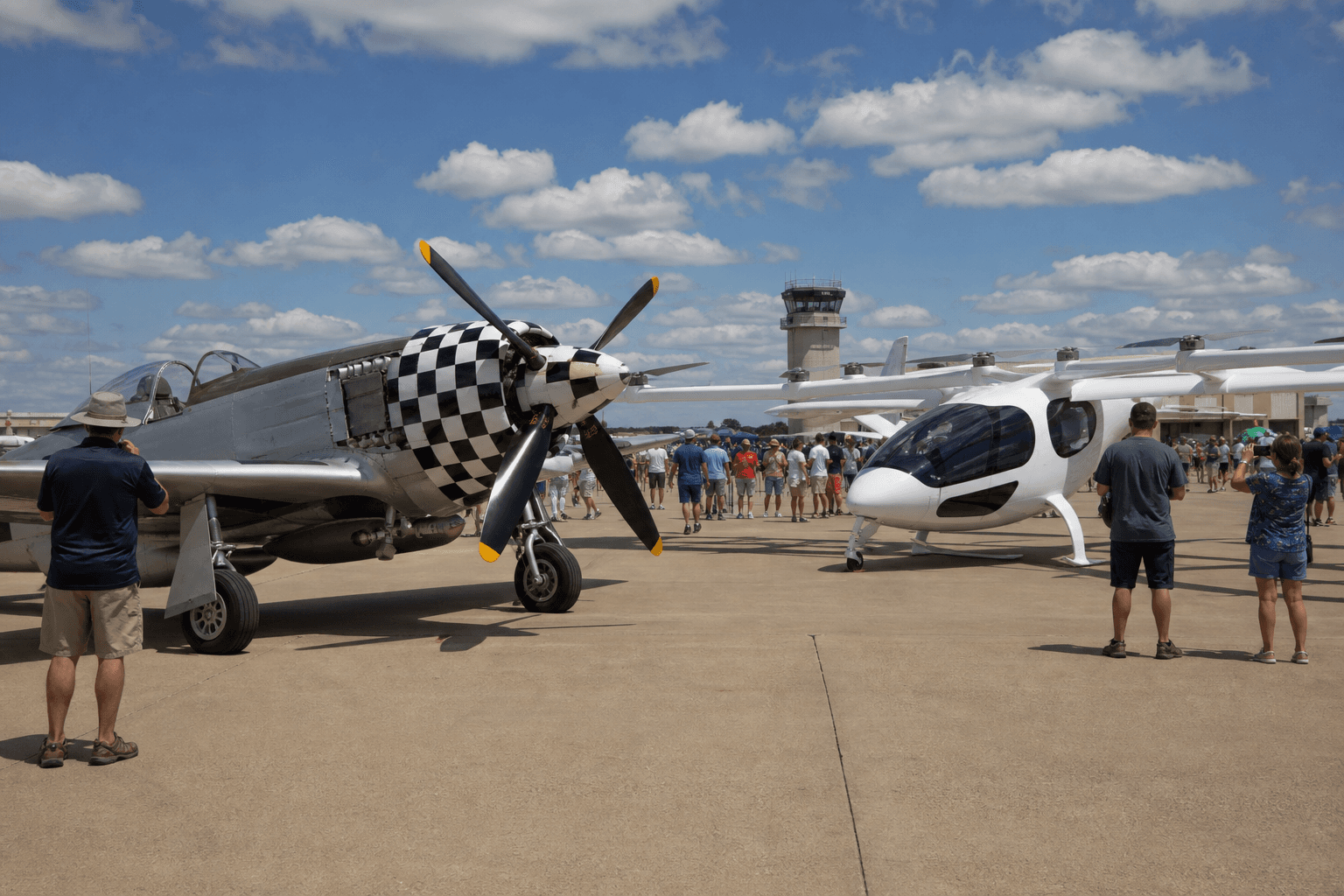
EAA AirVenture Oshkosh 2026 to Showcase Cutting-Edge Aviation Technology and Historic Warbirds
What to expect at EAA AirVenture Oshkosh 2026 and an interview with the Manager of Onsite Learning at the Smithsonian's National Air & Space Museum. Also, how L3Harris converted the Qatari-gifted 747 into Air Force One, the Cirrus TRAC10, window seat lawsuits, a rule change to allow supersonic flight over the United States, and an update on Boom Supersonic's strategy for its self-developed Symphony engine. Image by Linda and Lily. Guest Dick Knapinski is Director of Communications for the Experimental Aircraft Association ( EAA ). He has served in that capacity since 2010 and has been with the organization since 1992. Dick serves as the liaison between the media and EAA throughout the year, particularly during EAA AirVenture Oshkosh , the world’s largest fly-in convention. The event runs July 20-26, 2026. Dick Knapinski Boeing Plaza will be packed with aircraft to celebrate the aviation technology theme. Currently planned innovation displays for July 21 include BETA Technologies, Bye Aerospace, Jetson, American Drone, MagniX, Zipline, Embry-Riddle Aeronautical University, Airhart Aeronautics, Merlin Labs, Amazon Delivery, and Starlight Productions. In addition to the displays on Boeing Plaza, Bye Aerospace, Jetson, BETA Technologies, American Drone, and ScaleWings plan to fly during the afternoon air show. Drone delivery company Wing will display the latest developments in its operations at Twilight Flight Fest. Learn more about the AirVenture Airshows and performers , Aircraft Anniversaries & Gatherings , Authors Corner , AviationTech , KidVenture , and the Fly-In Theater . Rare warbird static/flying displays will include the B-29 “Doc,” as well as a rare Consolidated PB4Y and the CAF’s B-24 Liberator on static display at Boeing Plaza. Vicky Benzing will fly her P-51 “Plum Crazy,” and Bernie Vasquez will demo a Republic P-47 Thunderbolt in afternoon shows. The Aviation Gateway Park will spotlight helicopters, advanced vertical lift platforms, and eVTOL aircraft through static displays and interactive exhibits. Before joining EAA, Dick built a broadcasting career in Wisconsin, including stints as Program Director at WNBI Radio, News Director at WMGV Radio, and Station Manager at WLFM-FM/Wisconsin Public Radio. He also spent years as a sportswriter for the Appleton Post-Crescent. Dick holds a private pilot certificate and remains active as a writer and spokesperson for EAA. Aviation News How was the new Air Force One prepared for flight? The two permanent VC-25 replacements were selected in 2015, and the $3.9 billion fixed-price contract was signed in February 2018. Boeing began physical refurbishment work in February 2020 on two 747-8I airframes originally built for the bankrupt Russian carrier Transaero. Boeing has already reported $2.5 billion in losses on the program. The current delivery target for the first jet is between 2027 and 2028, with the second jet to follow later. The ex-Qatari 747-8 “bridge” aircraft was gifted to the U.S. Air Force in May 2025 and entered service on July 1, 2026. L3Harris did the conversion in about 10 months. The quick conversion was accomplished due to several factors: Pre-staged employees operated on a 24/7, three-shift structure. (Boeing has worked a normal single-shift industrial pace, with no incentive to surge, staff once costs started ballooning.) The bridge aircraft came with a luxury interior. (Boeing's jets had incomplete interiors – basically shells.) Missing VC-25 elements. Reports (unconfirmed by the government) include no evidence of defensive countermeasures and a lack of EMP hardening. L3Harris didn’t out-engineer Boeing. They ran a 24/7 surge crew on a plane that already had a finished VIP interior, targeted a much narrower requirement (“executive airlift” vs. full presidential command-post survivability), and the government has not been forthcoming about which hardened-aircraft features (EMP shielding, missile countermeasures, full secure comms suite) were omitted. See also: Trump wants the $400M Qatari-gifted new Air Force One to be the centerpiece of his presidential library. But there's a problem . Cirrus launches TRAC10, a new light aircraft for the flight training market Purpose-designed for flight schools and to be powered by a turbocharged Rotax 916 iSc FADEC engine, the plane has a three-seat interior, a Garmin flight deck, and the Cirrus Airframe Parachute System. Cirrus says they have 100 orders from 13 flight schools. United Airlines must face lawsuit over ‘window seats’ that lack windows Not every "window seat" has a window. Sometimes it has a wall. That's just the way it is. But last August, some passengers filed class actions against United Airlines and Delta Air Lines, claiming that the carriers failed to properly disclose the lack of a window during the booking process. United claimed that “window seat” described the seat’s location and did not contractually promise that the seat would, in fact, have a window. In San Francisco, U.S. District Judge James Donato rejected the airlines' request to dismiss the suit. New Rule Clears Way for Quiet Supersonic Flights By way of history: The FAA issued 14 CFR § 91.817 in April 1973, prohibiting civil aircraft from flying at speeds exceeding Mach 1 over land in the United States. The ban came as a result of early Air Force and NASA-controlled boom tests over cities, concerns over the Boeing 2707 SST program, and the impending arrival of the Concorde. NASA’s X-59 QueSST is flying specifically to gather community-response data on its “quiet boom” design. In a Notice of Proposed Rulemaking ( Proposed rule: Enabling Supersonic Overland Flight ), the FAA is looking to replace the blanket Mach-1 ban with a noise-based standard. Supersonic flight over land would be permitted if the boom signature falls under a certain loudness threshold. The NPRM states, "Manufacturers have demonstrated it is possible to fly supersonic aircraft without sonic booms reaching the surface by using sonic boom abatement techniques, making complete prohibition on civil supersonic flight outside of test areas no longer appropriate and an unnecessary restraint on the growth of the U.S. aviation sector." The NPRM shifts the regulatory trigger from speed to noise. Right now, § 91.817 just bans anything faster than Mach 1 over land. The proposed rule keeps that structure but adds an exception: an operator may exceed Mach 1 if it can demonstrate that the sonic boom’s overpressure at the surface does not exceed 0.11 pounds per square foot (psf). This NPRM only covers en-route/overland boom noise. A separate rule on takeoff/landing noise is expected later this year, with both rules targeted for finalization by mid-2027. The comment period ends August 17, 2026, at 11:59 PM EDT. Boom Supersonic Q2 2026 Update The FAA proposal to change from speed regulation to noise regulation is something Boom Supersonic and others have been seeking. In the Boom Supersonic Q2 2026 Update video, Blake Scholl reveals Boom's strategy for the Symphony engine. The company intends to market a variant of the engine for behind-the-meter power generation that AI companies can utilize for power. In large part, the engine OEMs wouldn’t develop an engine for the Overture because the huge development cost couldn’t be covered by the expected engine volume. So when Boom announced it was developing its own engine, the business case was unclear. But by focusing on the ground power generation market, Boom can spread development costs over a greater number of engines. Also, that revenue stream would generate cash flow for the Overture program. National Air and Space Museum Celebrates 50 Years With Opening of Five New Galleries Hillel attended the Smithsonian's National Air & Space Museum media preview of the opening of the five galleries. Last episode, we listene
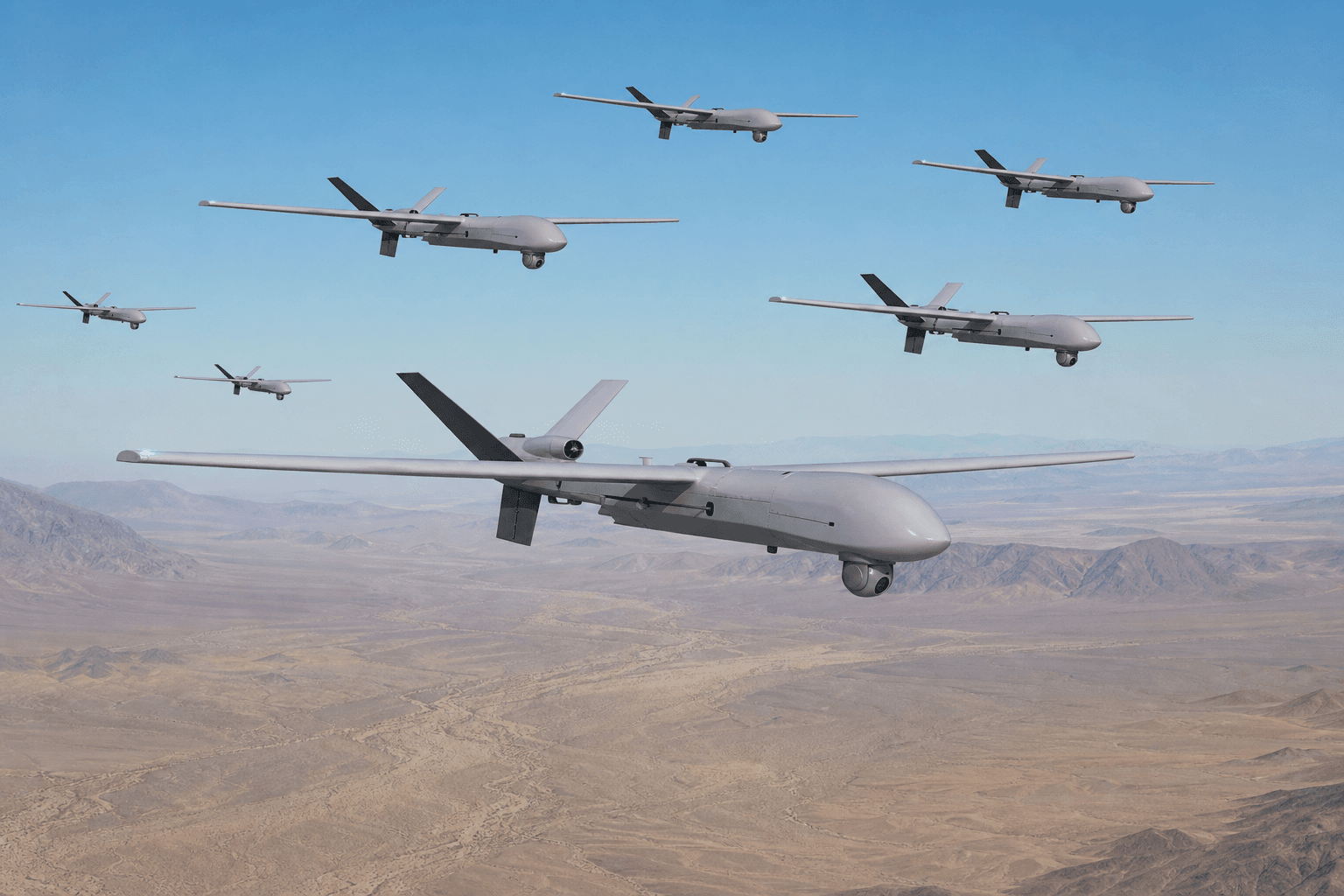
US Defense Innovation Unit seeks low-cost attritable drone to replace MQ-9A Reaper
The “Massed Modular Aircraft” tender envisions an uncrewed system that can be produced in large enough quantities at a low enough cost to be considered attritable in combat. The US military’s Defense Innovation Unit (DIU) has released a solicitation for a new low-cost, high-volume uncrewed aircraft that can perform the missions of the General Atomics MQ-9A Reaper. Dubbed the “Massed Modular Aircraft”, the programme envisons a modular UAS that can provide what the DIU describes as a “risk-tolerant option” in the air domain. “The joint force’s reliance on low-density, high-value ‘exquisite’ (>$30 million) manned and unmanned aircraft is unsustainable against adversaries utilising layered defences enabled by increasingly low-cost antiaircraft capabilities,” the DIU says. “This drives the joint force into unacceptable compromises: either operate safely outside a threat zone – negatively impacting mission effectiveness – or manoeuvre inside a threat engagement zone with increased levels of attrition.” At least 24 US MQ-9As were lost in combat during the heaviest fighting of the US-Israeli air campaign over Iran throughout February, March and April. USAF chief of staff General Kenneth Wilsbach has described the uncrewed strike and reconnaissance platform as the “most valuable player” of the air war. “We get a lot of utility out of them and don't put our folks at risk," Wilsbach said during congressional testimony in May. However, the campaign revealed some limitations of the Reaper platform, namely that it is vulnerable to modern air defences (at least in the manner employed by the Pentagon) and neither easy nor cheap to replace when lost. In fact, General Atomics shuttered the MQ-9A production line in 2025 due to a lack of new US orders. The company is currently assembling MQ-9B SkyGuardians at a sticker price of around $30 million. The new MMA concept aims to address both issues by focusing on a design that can be produced at high rates for a much lower cost. Rather than improving survivability, the aircraft will instead be built with high rates of attrition in mind. “By deploying large groups of risk-tolerant MMA, the joint force can overwhelm enemy defences even while experiencing numerous MMA losses,” the DIU says. Although no specific target is provided regarding production volume, the tender notes the goal is to field “many aircraft at once” to ensure a “persistent, overwhelming [and] credible threat despite inevitable attrition.” Specific technical attributes listed in the MMA solicitation include a payload capacity of at least 1,270kg (2,800lb), an unrefuelled combat radius of at least 2,300nm (4,260km) while carrying payload, and the ability to self-deploy one-way at least an 8,000nm. MMA designs must also offer the ability to be outfitted with a variety of sensor payloads, including full-motion video, in order to fully replicate the mission set of the MQ-9A. General Atomics is offering the MQ-9B options to the US Air Force as an MQ-9A successor. The new B-variant is on contract with the UK, Canada, Poland, Belgium, Denmark, India, Taiwan, Germany, Japan and US Special Operations Command. Source: General Atomics Interestingly, autonomy is listed in the tender only as a secondary attribute with the ability to operate with a “one-to-many operator-to-UAS control ratio”. The MQ-9A is a remotely piloted aircraft with one pilot flying one vehicle. Other secondary attributes include a true airspeed of at least 200kt, the ability to operate from a runway of 6,000ft or shorter, 25kW of onboard power generation and 5kW of cooling. Design submissions are due by 23 July, with companies required to deliver a full-scale prototype for flight testing within 21 months of receiving an award. Although DIU prototyping contracts do not guarantee a subsequent deal for rate production, the agency seems inclined to move forward with operational fielding of the MMA. The tender notes the DIU is targeting 2031 for initial operating capability, defined as 20 mission-ready aircraft delivered to an operational unit and able to be deployed. General Atomics has pushed back on the notion that all of the MQ-9A’s capabilities can be replicated at a fraction of the cost. The company’s senior communications director, C. Mark Brinkley, previously described that idea as a “wonderful dream” and counters that the MQ-9 series remains “the best value for dollars out there today”. “General Atomics sells real airplanes, at scale, all around the world,” Brinkley said in May. “We are offering the US Air Force modular options for MQ-9B, at a price that reflects the [Department of War’s] requirements and can be delivered today, not someday.” Between the remaining spare parts in storage and a number of company-owned Reapers, General Atomics says it could produce between five and ten MQ-9As to offset the Pentagon’s recent combat losses . Although bearing a similar name, the MQ-9B is essentially a new aircraft, one designed to comply with civil aviation regulations. It boasts a larger 24m (79ft) wingspan, significantly improved 40h of flight endurance and automatic take-off and landing. The MQ-9B is also available in a maritime-configured SeaGuardian variant.
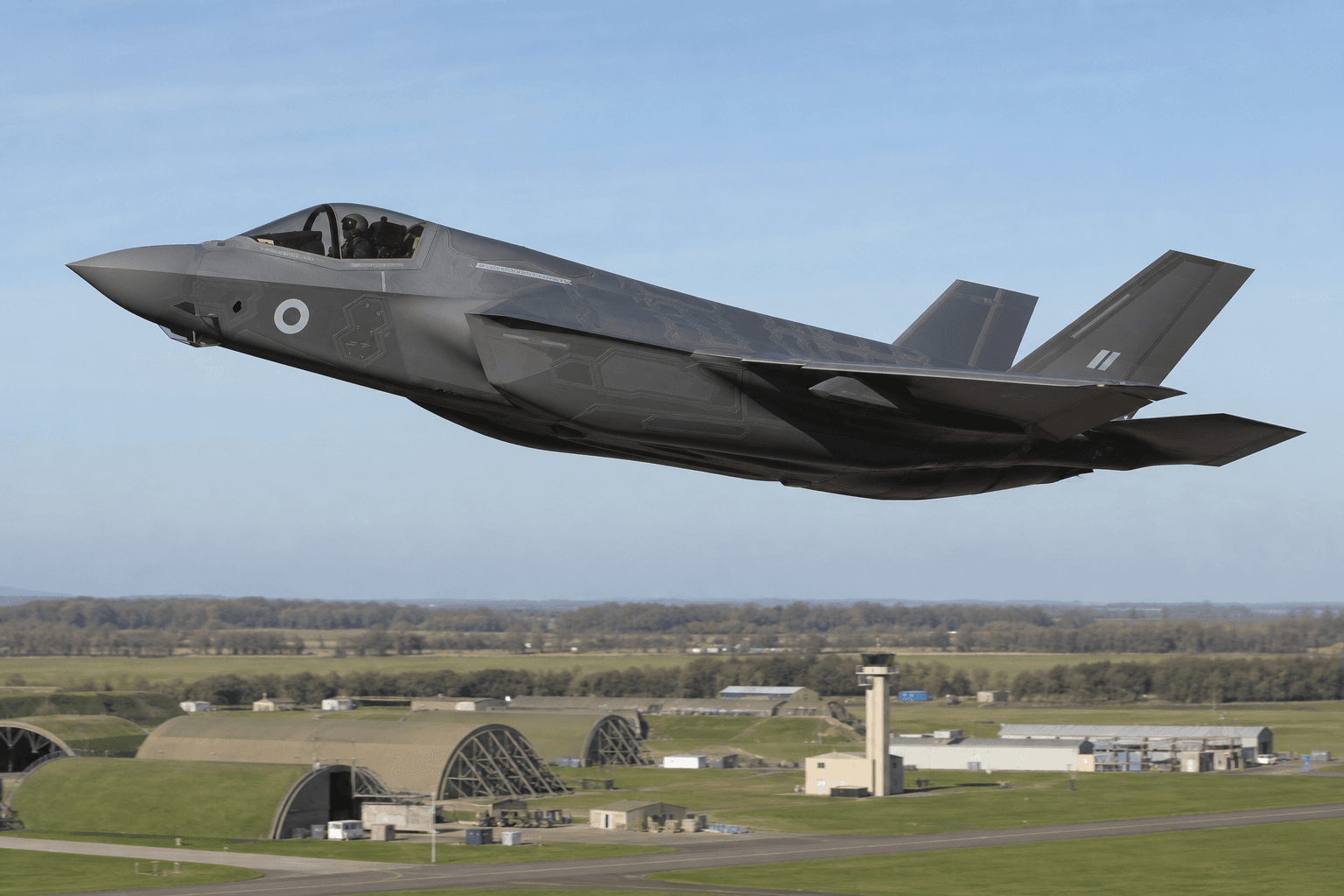
UK confirms purchase of 12 F-35As to restore RAF nuclear strike role
The UK's Defence Investment Plan, published on June 30, 2026, confirms funding for 12 Lockheed Martin F-35A fighters…
The Daily Touch & Go
The day's best aviation news in your inbox. Free, no spam.