

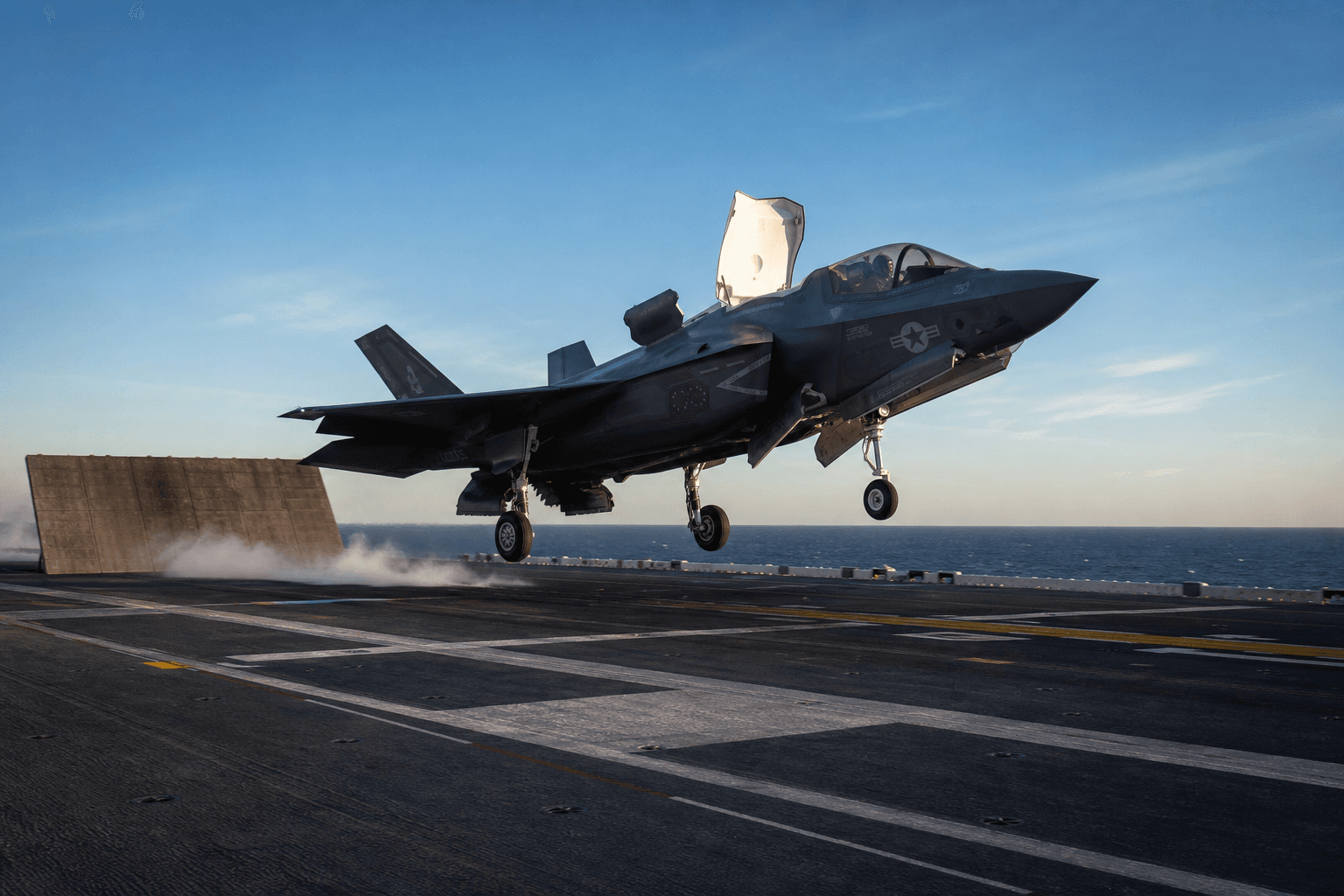
Illustration: The Touch & Go
US Marine F-35B Pilots Leaving for Airlines Offering Pay Nearly Double
Marine Corps faces pilot retention challenges as commercial airlines offer significantly higher salaries and more stable lifestyles than military aviation.
The gist
Marine F-35B pilots quit for airlines that pay about twice as much and offer better quality of life.
Continuing coverage
All F-35b →The US Marine Corps continues to grapple with pilot retention issues among its fast jet aviators, particularly those flying the F-35B Lightning II. Despite efforts to maintain and expand the cadre, many Marine pilots are leaving for commercial airline careers that offer considerably higher compensation and lifestyle benefits. This attrition is part of a broader trend affecting fast jet pilots across the US military services, including the Air Force and Navy.
Marine fighter pilots in the US military all receive the same base pay, determined solely by rank and years of service, regardless of aircraft type. This means a Marine F-35B pilot’s base salary matches that of Air Force or Navy pilots of comparable rank. However, total compensation diverges considerably due to flight pay, deployment bonuses, allowances, and other factors. Military pilots typically earn between $120,000 and $200,000 annually when all pay components are combined.
In contrast, seasoned commercial airline pilots can earn salaries exceeding $450,000 per year, sometimes more than double military pay. Early-career commercial pilots may make similar or slightly more than junior military aviators, but the pay gap widens sharply as civilian pilots advance in seniority. This stark difference in earning potential is a major driver for military aviators transitioning to the airline industry.
Beyond pay, Marine Corps pilots face distinct challenges that contribute to retention difficulties. They operate within Marine Expeditionary Units aboard amphibious assault ships, enduring cramped living quarters, prolonged deployments, and high operational tempos. In addition, Marine aviators are regarded primarily as Marine officers first, with flying duties secondary. Many pilots are assigned to ground roles such as Forward Air Controller, which can reduce flight hours and operational flying satisfaction compared to their Air Force counterparts who focus more exclusively on aviation.
To address these challenges, the Marine Corps has been implementing Force Design 2030 aviation restructuring and Talent Management 2030 initiatives since the early 2020s. These measures include reducing squadron aircraft numbers, such as trimming F-35B squadrons from sixteen to ten jets, and divesting aging platforms like the MV-22 tiltrotor. The goal is to lower pilots' operational tempo and increase flight time per aviator, key factors influencing retention.
The retirement of legacy aircraft, notably the AV-8B Harrier II—which concluded its service with the Marine Corps in 2026—has reshaped the aircraft pipeline and pilot composition. Most former Harrier pilots transition to the F-35B due to transferable skills, and they are prioritized for retention and retraining. This gradual phase-out helped maintain continuity in pilot experience and instructional capabilities during the fleet transition.
In 2026, the Marine Corps fields approximately 205 F-35B aircraft with plans to expand to 280 according to official figures. This makes the Corps one of the largest military pilot communities globally, numbering around 3,500 active pilots. However, retention shortfalls hover near 600 pilots, particularly acute within fixed-wing fast jet communities. These shortages strain training pipelines and operational readiness.
The allure of commercial aviation jobs offering better pay, more predictable schedules, stable home bases, and improved quality of life is difficult for the Marine Corps to counter. Airline pilots avoid extended sea deployments and intense non-flying duties, focusing primarily on flying operations in comfortable conditions. The disparity illustrates the ongoing challenge the military faces in balancing demanding expeditionary missions with competitive compensation to retain elite aviation talent.
Read more
All Military/Defense →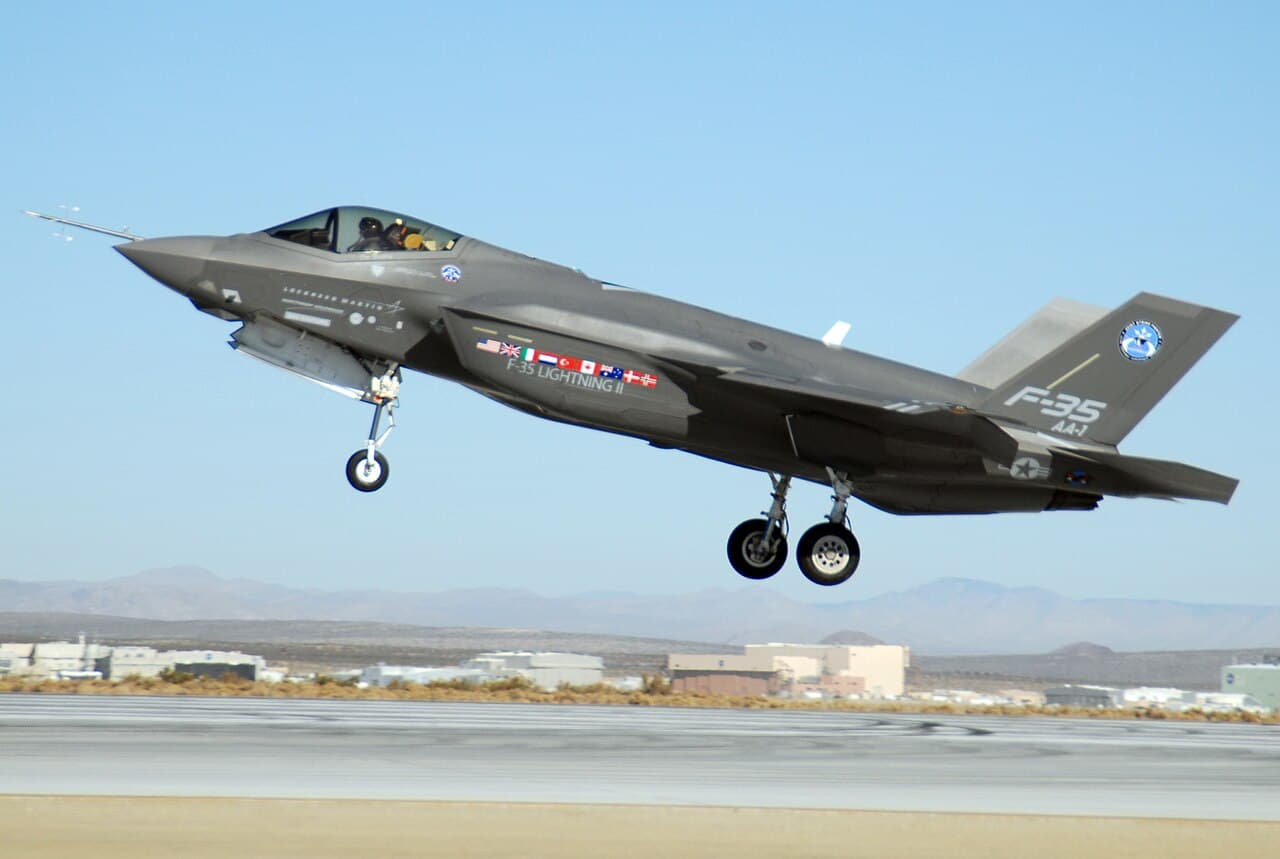
World's Stealth Fighter Landscape in 2026 Divided Between F-35 Allies and Sino-Russian Blocks
According to TheWorldData's 2026 F-35 statistics roundup , the global Lockheed Martin F-35 fleet has already passed 1,300 aircraft delivered across 17 or more nations, dwarfing every other stealth fighter program combined. Everyone else on Earth flying stealth fighter jets in 2026, such as China, Russia, and their allies, is flying something else entirely, built by a different country, sold under different rules, and answering to a different set of allies.
UK delays delivery of expanded F-35 fleet until early 2030s amid strategic and logistical challenges
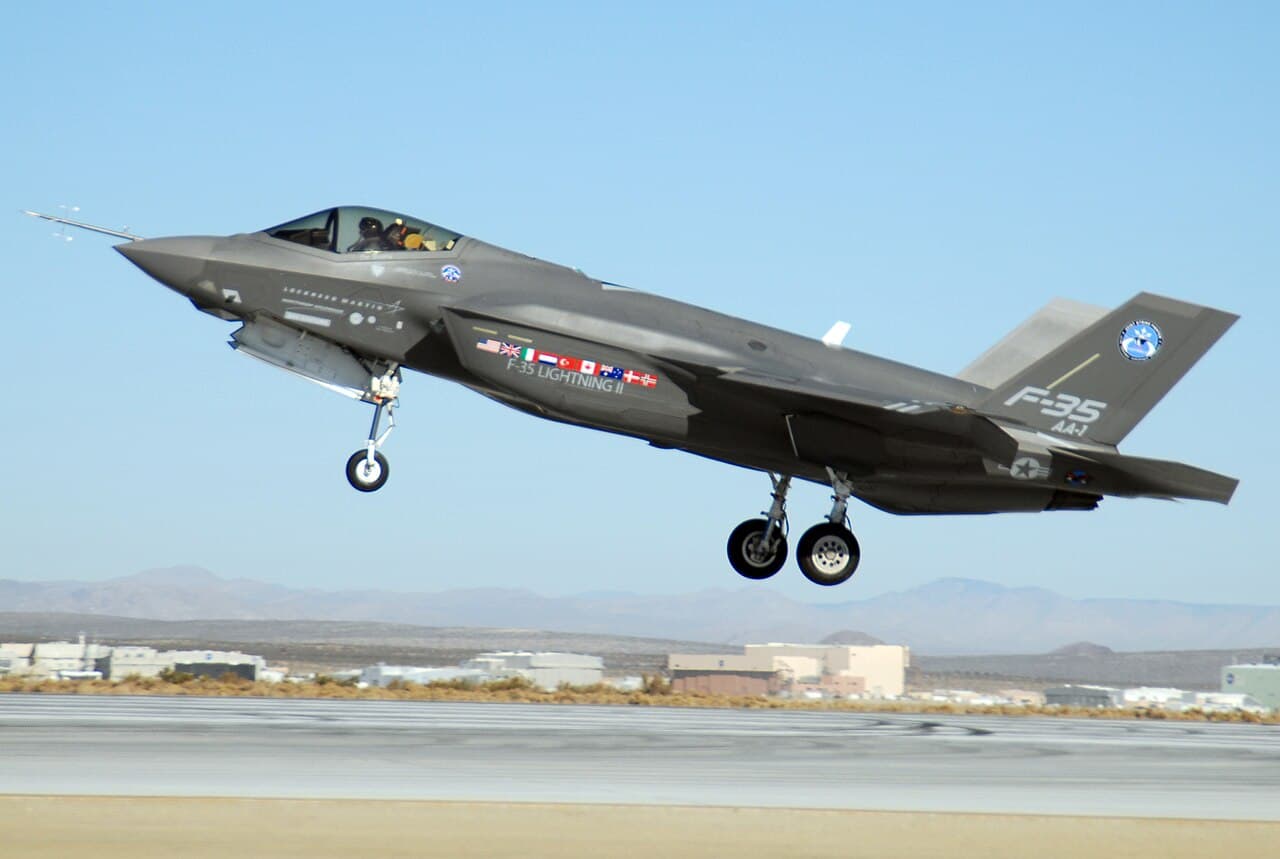
Due to severe worldwide backlog pressures within the F-35 Joint Program Office and a strategic procurement delay by the Ministry of Defense, the United Kingdom will not receive any new Lockheed Martin F-35 Lightning II jets from its enlarged fleet order until the early 2030s. The upcoming batch introduces the F-35A variant to the UK fleet for the first time, intended to fulfill NATO nuclear-sharing missions.

United Airlines expands Denver training center adding 40 new CAE flight simulators
United Airlines has completed the first phase of an expansion at its Denver Flight Training Center after adding 40 new CAE flight simulators. The additions include a combination of full-motion flight simulators and fixed training devices. United now operates 52 full-motion simulators and 34 fixed devices at the training center, which the airline describes as the largest pilot training facility in the world. The 22-acre campus in Denver's Central Park neighborhood includes eight buildings and nearly 700,000 square feet of training space. United said it can train as many as 860 pilots per day and conduct more than 32,000 training events annually. The center operates around the clock for 362 days each year. It is United's only pilot training facility, serving nearly 18,000 active pilots as well as newly hired flight crews. United pilots complete simulator sessions during initial qualification and return to Denver for recurrent training every nine months. "This expansion reflects the strength of a partnership built over more than four decades," CAE President and CEO Matthew Bromberg said. "We're proud to support United with the training technology, expertise and reliability needed to prepare pilots at scale." United opened a new 150,000-square-foot building at the campus in 2024 as part of the expansion. The airline invested more than $145 million in the facility, which was designed to accommodate additional full-motion simulators, fixed training devices, classrooms and support areas. The project, which kicked off in 2022, has created more than 300 additional jobs at the training center. United said approximately 1,600 of its more than 11,400 Denver-based employees now work at the training center in positions including flight instruction, evaluation, scheduling, pilot hiring and flight standards. United has invested $370 million in the campus since 2016. The training center was originally constructed between 1966 and 1968 as part of the former Stapleton Airport complex and has served as the airline's main pilot training facility since then. The airline is already preparing for another expansion near Denver International Airport (DEN). Denver City Council approved a rezoning request in July 2026 for two parcels of undeveloped land that United purchased in 2023. United expects to begin construction on the next phase in 2027 and place the additional training facility into operation by 2030. It will operate alongside the existing Central Park campus. The airline has hired more than 9,500 pilots since announcing its United Next growth strategy in 2021. It added approximately 700 pilots during the first part of 2026 and plans to hire hundreds more before the end of the year. United also operates its Aviate pilot career program, the United Aviate Academy in Goodyear, Arizona, and a pathway for active-duty US military pilots. The airline said nearly 600 military pilots have joined United through that program since 2024, with another 500 expected to make the transition by the end of 2027.
Whisper Aero's Ultra-Quiet Electric Engines Power First Piloted Flights in Tennessee
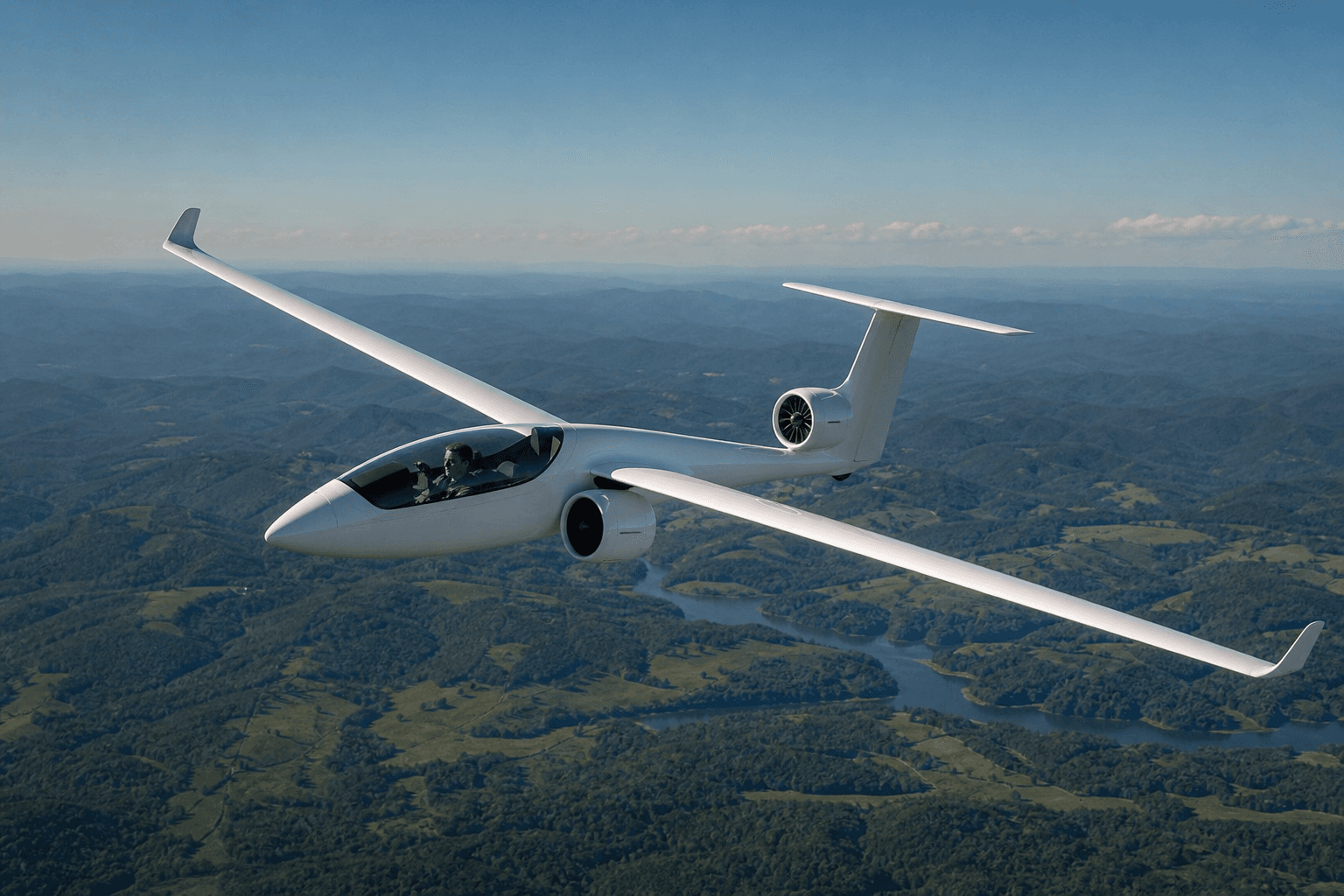
An electric aircraft engine designed to reduce operational noise to a whisper is now powering piloted aircraft. Whisper Aero on Wednesday revealed that its "ultra-quiet" eQ250 electric ducted fan propulsion system is being put to the test in Tennessee under an FAA special airworthiness certification. The company said it installed a pair of eQ250s on a modified Aériane Swift 3 glider, with which test pilot Zac Majors conducted three flights spanning 130 minutes, or about 43 minutes on average. Majors said the aircraft, which the company refers to as the Whisper Powered Swift, produced more thrust and was quieter than the standard propeller version of the glider, "but still great handling." "[I] could really do whatever I wanted with it," Majors said in a statement. "Look forward to flying it again." Fortunately for him, the campaign is only just beginning. Whisper plans to continue testing the Swift in Tennessee before advancing to flight tests and evaluations with "government customers" later this year. The company is under contract with the U.S. Air Force to develop a new family of quiet, efficient, autonomous aircraft for contested logistics, with initial testing planned for 2027. How It Works The eQ250 is the flagship product of Whisper's electric quiet (eQ) engine series. According to the company, it produces up to 85 pounds of static thrust for fixed-wing aircraft. It can also power Group 3 uncrewed aircraft systems (UAS)—which have maximum weight of 1,320 pounds and speed under 250 knots—or larger drone platforms. The specialized electric ducted fans are 10 inches in diameter and produce about 20 dB less noise than "comparable quiet propulsion systems," while also being 20 percent more efficient, according to Whisper's website . For short takeoff and landing (STOL) aircraft, the eQ250 is designed to enable coefficients of lift as high as 14. The propulsion system is intended to unlock short-to-medium-range regional air mobility services using small airports. The idea is similar to Electra's concept for "direct aviation," which involves the company's "ultra-short" takeoff and landing EL9. The goal is to replace trips that would take about 90 minutes driving with air service that takes closer to 20 minutes. Whisper said the Swift's 26:1 lift-to-drag ratio made it ideal for evaluating handling qualities and the propulsion system's performance, integration, and acoustics. Video: Whisper Aero The glider's eQ250s are powered by five Epic 1.0 Energy modules from Whisper partner Electric Power Systems (EPS). According to EPS, they provide 60 minutes of usable flight time with 30 minutes of reserve for trainer, eVTOL (electric vertical takeoff and landing), and "thin-haul" aircraft, which are used for very short trips with a handful of passengers. Whisper said the aircraft "completed its planned objectives," which included validating its propulsion integration, battery, control, and other systems. At full throttle at 100 feet agl, Whisper said the engines were quieter than the airframe itself. Ian Villa, co-founder and chief operating officer, told The Air Current that the glider can generate substantial noise without engines. Flown during the early morning, the aircraft produced about 52 dB(A) of noise compared to 34 dB(A) background noise, Whisper said. "The ability to fly within the soundscapes of even rural environments…will be critical for flights of FAA MOSAIC aircraft," the company added. The Modernization of Special Airworthiness Certification (MOSAIC) took effect in phases over the past few months and permits electric propulsion systems in the light-sport aircraft (LSA) category. More to Come Whisper said the test campaign "reduces risk" for the eQ250's larger civil and defense applications. The company is developing its JetFoil integration for STOL and VTOL aircraft, designed to enable runway independence. The JetFoil distributes ducted fan engines across the entire leading edge of the wing and would enable near-vertical takeoffs with 50 feet of ground roll. Whisper claims it will do so using half the thrust of tilt-rotor VTOL aircraft while offering more range and double the payload. Villa earlier this year told FLYING that Whisper is in talks with government customers to build and fly JetFoil-equipped prototypes, the idea being that they could be transitioned to commercial manufacturers who could bring them to market. For example, one could swap the de Havilland Twin Otter's high wing for a JetFoil and hybrid-electric powertrain. Whisper said the testing will further support its Collaborative Logistics Aircraft (CLA) program with the U.S. Air Force. The CLA concept is similar to the service's Collaborative Combat Aircraft (CCA) framework, which pairs crewed fighter jets with uncrewed "loyal wingmen." Instead, CLA aircraft would carry between 500 and 3,000 pounds of cargo and operate from austere or degraded runways. Whisper is studying two CLA concepts that incorporate 12 and 30 eQ250 engines on the leading edge of the wing, using the JetFoil integration. According to the company, at 250 knots, the CLA aircraft would generate reduced noise and heat signatures compared to models they could replace. Whisper in May 2025 said that initial CLA flight testing would begin in 2027 at White Sands Missile Range in New Mexico. The company has also shared concepts for a regional Whisper Jet and more robust 100-seat model, both based around its ducted fan and eQ technology.
The Daily Touch & Go
The day's best aviation news in your inbox. Free, no spam.