

Image: Thomas Nugent · CC BY-SA 2.0 · via Wikimedia Commons
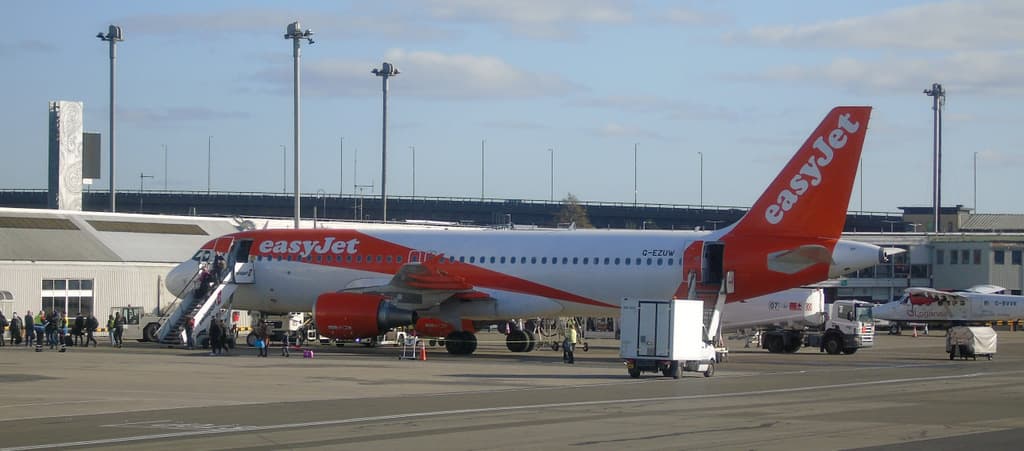
easyJet Q2 profits plunge 70% amid Middle East conflict fuel cost surge
easyJet reports second-quarter pre-tax profit falling to $113 million from $382 million, hit by soaring fuel prices and reduced bookings following the Middle East conflict onset.
The gist
Fuel price spikes from Middle East conflict slash easyJet's Q2 profits by 70%, with booking demand also weakened.
Continuing coverage
All Financial Results →easyJet’s second-quarter financial results reveal a sharp drop in profitability as the airline grapples with the fallout from the Middle East conflict. The airline's profit before tax fell 70% year-on-year, shrinking from $382 million (£286 million) in Q2 2025 to just $113 million (£85 million) in Q2 2026. This steep decline was primarily driven by elevated fuel costs and weakened consumer demand triggered by geopolitical tensions starting in March.
Fuel expenses surged by $140 million (£105 million) compared to the previous year, exacerbated by rising fuel prices on the airline’s unhedged fuel consumption. Fuel prices peaked at nearly $1,800 per metric ton in April, significantly higher than prices hedged by easyJet. The company reported hedging 62% of its fuel needs for the first half of 2026 at an average price of $754 per metric ton, and 37% for the second half at $777 per metric ton. However, these hedges only partly insulated the airline from the sharp market price rise, which stood at $1,275 per metric ton as of July 20, 2026.
Despite the profit turmoil, easyJet’s group revenue grew modestly by 2%, reaching $3.99 billion (£2.98 billion) in Q2 2026, up from $3.90 billion (£2.92 billion) a year earlier. This slight uptick reflects continued robust late bookings amid the travel recovery, although it was insufficient to counteract the negative impacts of higher fuel prices and cautious consumer sentiment post-conflict.
easyJet CEO Kenton Jarvis acknowledged the challenges but noted resilience in customer demand, driven by attractive pricing and an excellent operational performance. Jarvis highlighted strong late booking trends throughout the quarter even as overall booking patterns weakened following the start of the conflict. He observed a closing load factor gap for peak summer months and an extension of the booking curve as travelers prioritized trips amid improved consumer confidence.
The airline’s capacity plans reflect cautious optimism, with Available Seat Kilometers (ASK) forecast to grow by 6% year-on-year and an expected 3% increase in seats offered. This growth comes as easyJet continues to navigate the volatile fuel market while seeking to maximize network optimization and demand.
Organizationally, easyJet announced a leadership transition with COO David Morgan stepping down to return to flying duties as a pilot. Sophie Dekkers, the current Chief Commercial Officer, will serve as interim COO until September 1, 2026, when Daniel Skjeldam joins as permanent CCO. Skjeldam brings experience as a Non-Executive Director at Norwegian Air Shuttle and will lead efforts to launch a new loyalty program, pursue premiumization opportunities, and bolster business travel revenues.
This financial update arrives against the backdrop of takeover interest from investment firms Apollo and Castlelake, intensifying speculation about easyJet's strategic future. The airline emphasized its focus on delivering value amid external pressures from fuel markets and geopolitical uncertainties.
easyJet’s ability to adapt its commercial strategy and fleet utilization while managing elevated costs will be critical to navigating the remainder of 2026. The company’s hedging strategy and operational execution will remain key monitoring points as fuel markets and global conflict dynamics continue to evolve.
Frequently asked questions
- How much did easyJet's profit before tax decline in Q2 2026 compared to last year?
- easyJet's profit before tax fell by 70%, from $382 million in Q2 2025 to $113 million in Q2 2026.
- What impact did fuel prices have on easyJet's financial results?
- Fuel costs increased by $140 million year-on-year due to higher prices on unhedged fuel, peaking at around $1,800 per metric ton in April, significantly impacting profits.
- What changes in easyJet's leadership were announced?
- COO David Morgan is retiring from his role to return as an easyJet pilot, with Sophie Dekkers acting as interim COO until Daniel Skjeldam joins as permanent CCO on September 1, 2026.
Read more
All Airlines →
Former United CEO Signals Investor Interest in Acquiring U.S. Airlines Amid Low Valuations
Former United CEO Oscar Munoz says sophisticated investors who once avoided airlines are now studying cheap U.S. carriers, and he expects more deal "noise" soon after earnings season.
Qatar Airways Shifts New Zealand Flights From Adelaide to Melbourne Starting December
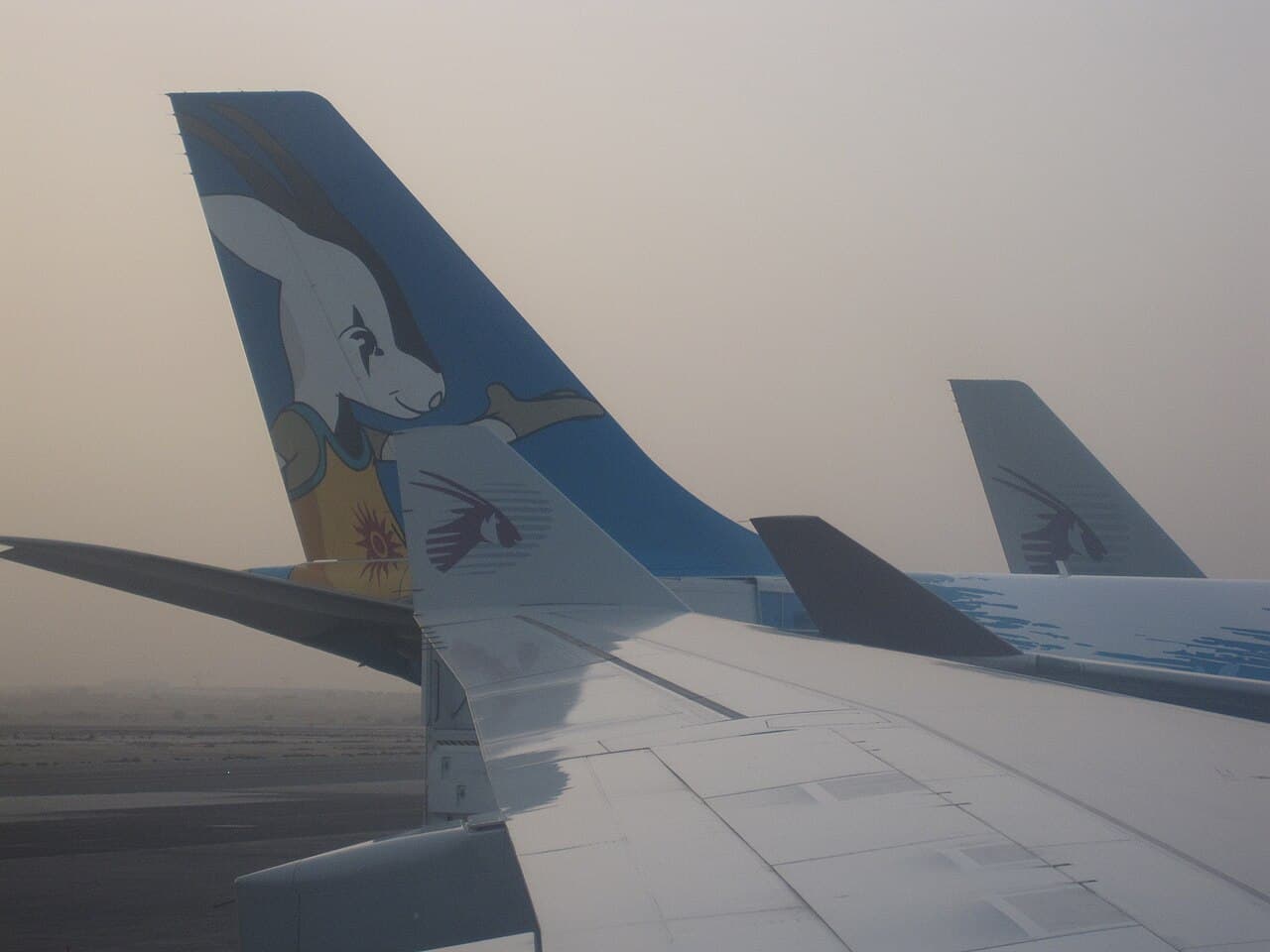
No airline's route network is static, which is usually a good thing . Changes always occur, mainly because of performance or opportunity. In the latest update, Qatar Airways has revealed a notable adaption to its sole New Zealand service.
Airlines Shift Fleet Design to Expand Premium Cabins, Shrinking Economy Seating
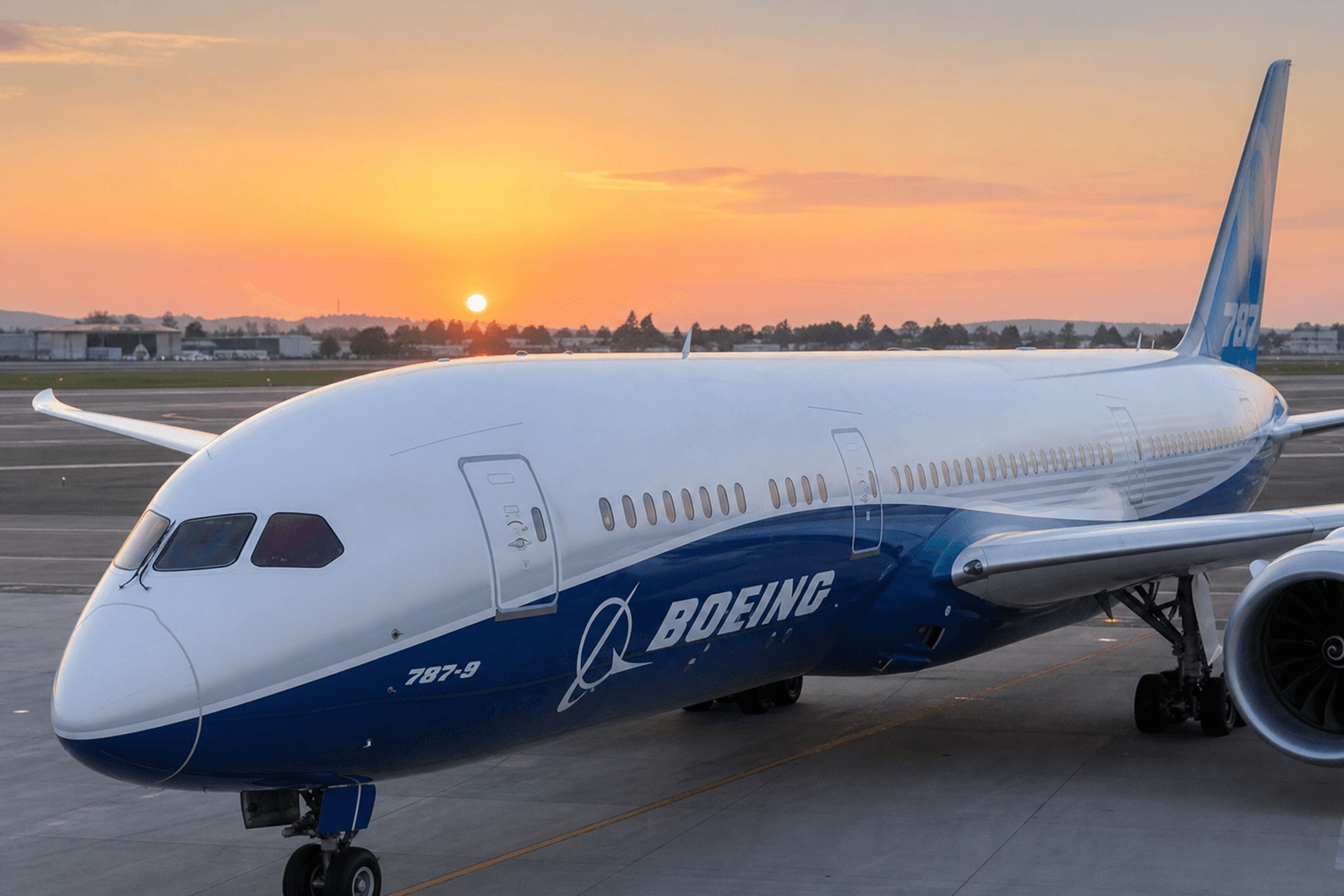
For years, the airline industry has promoted premium cabins as an optional upgrade for travelers seeking extra comfort, additional space, or a more refined experience. Business class, premium economy, and other enhanced seating products were traditionally viewed as extras rather than the foundation of an airline's commercial strategy, while standard economy class remained the core product that filled most aircraft and generated the majority of passenger traffic across domestic and international networks.
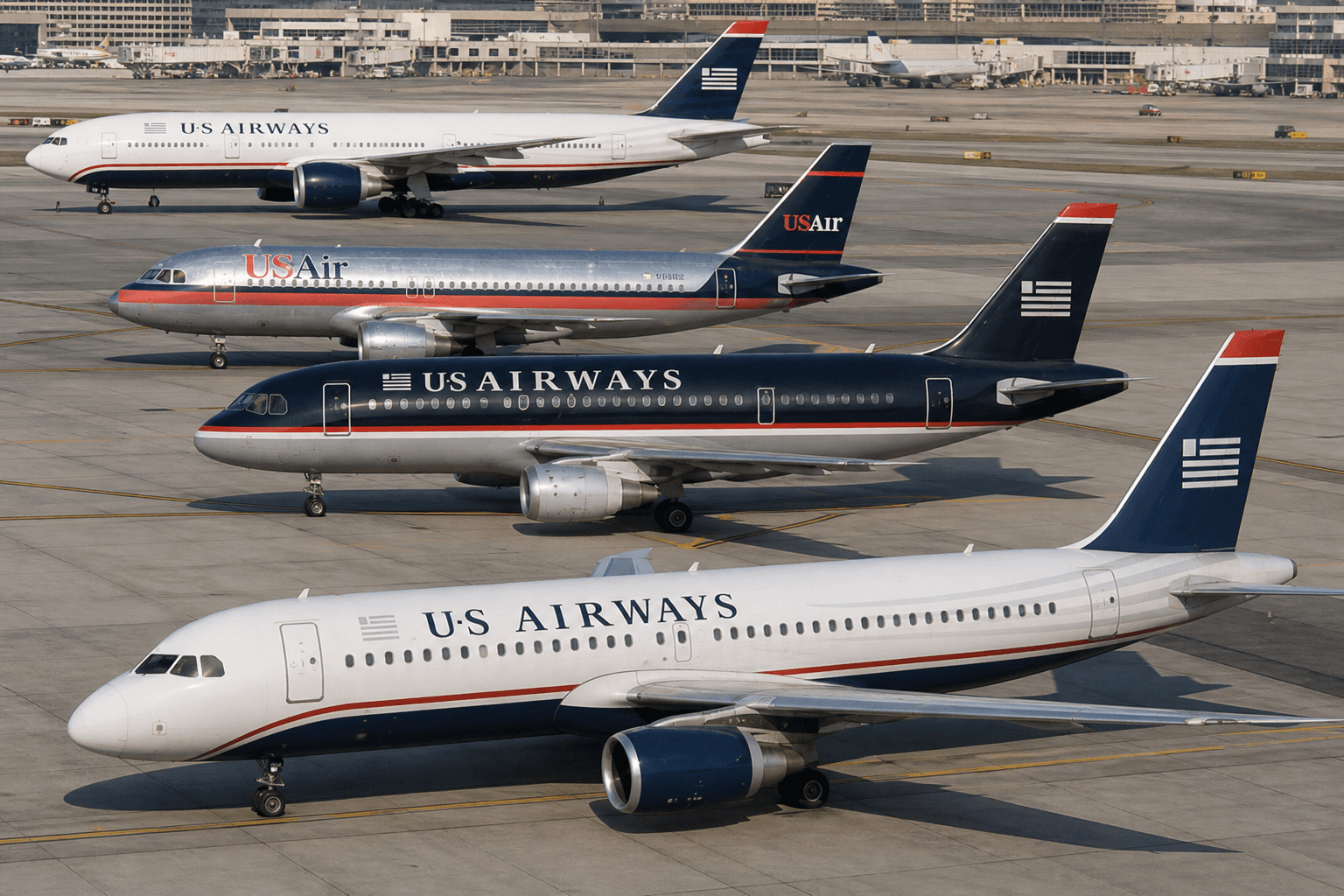
USAir's journey from a regional carrier to a cornerstone of American Airlines
For more than half a century, USAir and its successor, US Airways, were among the best-known names in American aviation. From humble beginnings serving small communities in the northeastern United States, the airline grew into one of the country’s largest carriers before ultimately disappearing into American Airlines. Along the way, it operated an extraordinary variety of aircraft, pioneered major airline mergers and became a familiar sight at airports across North America and Europe. The Origins: Allegheny Airlines Allegheny DC-9. Photo: Dean Faulkner The story begins not with USAir, but with Allegheny Airlines. Founded in 1939 as All American Aviation, the company initially transported mail using small aircraft before expanding into passenger services after the Second World War. In 1953 it adopted the name Allegheny Airlines, reflecting its growing network across Pennsylvania, Ohio and the Mid-Atlantic states. During the 1960s and early 1970s, Allegheny became one of the United States’ “local service airlines”, connecting dozens of smaller communities with larger cities. Its fleet included Convair 440s, Martin 2-0-2s, Convair 580s and Douglas DC-9s, building a reputation for dependable regional service. Building a National Airline A Lake Central Nord 262. Photo: Michael G Smith Airline deregulation in 1978 transformed the US aviation industry and presented Allegheny with an opportunity to expand far beyond its traditional markets. The airline had already begun growing through acquisition. It absorbed Lake Central Airlines in 1968 and Mohawk Airlines in 1972, greatly expanding its route network throughout the eastern United States. Recognising that the Allegheny name no longer reflected its ambitions, the airline rebranded as USAir in 1979. The new identity signalled its intention to become a truly national carrier, with Pittsburgh emerging as its principal hub. Additional hubs developed at Philadelphia, Charlotte and Baltimore as the airline steadily expanded across the country. A Fleet Every Enthusiast Remembers Joseph Vallowe, CC BY-SA 4.0 <https://creativecommons.org/licenses/by-sa/4.0>, via Wikimedia Commons USAir became synonymous with one of the most varied fleets in North America. The Boeing 727 formed the backbone of the airline throughout the 1980s, operating everything from short commuter routes to longer domestic services. Alongside them flew large fleets of Douglas DC-9s and the Boeing 737. A classic USAir F28. Photo: Kev Cook Perhaps most distinctive were the airline’s Fokker F28 Fellowship jets. USAir became one of the world’s largest operators of the Dutch-built regional jet, using it extensively on shorter routes where larger aircraft would have been uneconomic. By the 1990s, the airline had modernised with Boeing 737 Classics, Airbus A319s, A320s and A321s, eventually becoming one of Airbus’ largest North American customers. Widebody operations also developed, with Boeing 767s and later Airbus A330s opening routes across the Atlantic to Europe. Expanding Through Mergers Piedmont operated Boeing 767-200s. Photo: Aero Icarus Like many US airlines, USAir grew significantly through acquisitions. In 1987 it purchased Pacific Southwest Airlines (PSA), famous for its smiling aircraft liveries and extensive California network. The following year it acquired Piedmont Airlines, gaining valuable hubs in Charlotte and Baltimore together with a modern fleet and an extensive route system throughout the eastern United States. These mergers transformed USAir from a predominantly northeastern airline into one of America’s largest carriers. They also brought together three of the country’s most recognisable airline liveries under a single brand. From USAir to US Airways By the mid-1990s, the airline wanted an identity that better reflected its international ambitions. In 1997, USAir officially became US Airways , accompanied by a refreshed dark blue livery and an increasing emphasis on transatlantic services from Philadelphia and Charlotte. The airline continued expanding internationally while strengthening its domestic network, eventually joining the Star Alliance in 2004 before later becoming a member of the Oneworld alliance. Difficult Years US Airways fleet. Photo: Michael Bludworth The early 2000s proved exceptionally challenging. Following the terrorist attacks of 11 September 2001, US Airways suffered a dramatic decline in passenger demand. Combined with rising fuel prices and intense competition from low-cost carriers, the airline entered Chapter 11 bankruptcy protection twice, in 2002 and again in 2004. Despite these setbacks, the airline survived through restructuring, cost-cutting and strategic changes that allowed it to continue operating. America West Changes Everything Paul Carter from Vancouver, WA, CC BY 2.0 <https://creativecommons.org/licenses/by/2.0>, via Wikimedia Commons One of the most significant moments in the airline’s history came in 2005. US Airways merged with America West Airlines, itself a successful carrier based in Phoenix. Interestingly, although the combined airline retained the better-known US Airways name, it was effectively managed by the former America West leadership. Phoenix became an important western hub alongside Philadelphia, Charlotte and Washington National, giving the airline a truly nationwide network. The Merger with American Airlines The final chapter began in 2013. US Airways merged with American Airlines to create what became the world’s largest airline at the time. Initially, both airlines continued operating separately while fleets, staff and reservation systems were integrated. The final US Airways-operated flight took place on 16 October 2015, when Flight 1939 flew from San Francisco to Philadelphia—a flight number chosen to honour the year All American Aviation had been founded. With that, the US Airways brand quietly disappeared after 36 years, although its corporate history stretched back more than seven decades. A Lasting Legacy Photo (c) American Airlines Today, USAir and US Airways live on through American Airlines. Although the name has disappeared, USAir’s influence on modern American aviation remains unmistakable. Its network, its fleet, its hubs and its people all became part of today’s American Airlines, ensuring that one of America’s most recognisable airlines continues to shape air travel long after its final flight. American Airlines also honours its memory through heritage livery jets depicting US Airways, Allegheny, America West and PSA Airlines. What are your memories of USAir or US Airways? Did you ever fly with them? Leave a comment below.
The Daily Touch & Go
The day's best aviation news in your inbox. Free, no spam.