

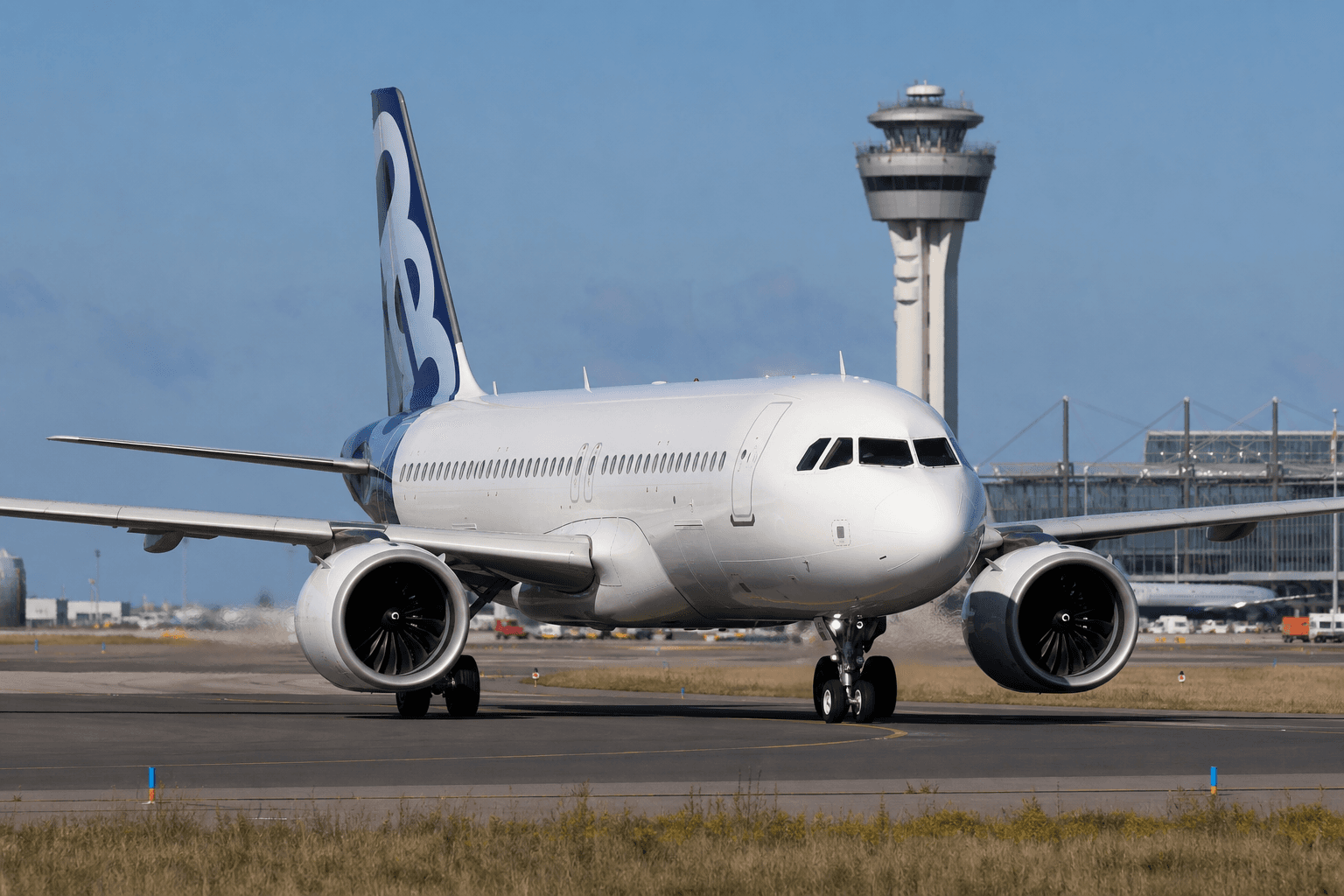
Illustration: The Touch & Go
IndiGo selects Honeywell avionics and power units for 810 A320neo jets
Indian carrier IndiGo will outfit its incoming Airbus A320neo-family aircraft with Honeywell Aerospace avionics and auxiliary power systems, marking the largest equipment deal in Honeywell's history.
The gist
IndiGo places record order for Honeywell avionics and power systems on 810 new A320neo-family jets, boosting global fleet expansion.
Continuing coverage
All Fleet Expansion →- Lufthansa debuts its first Airbus A350-1000 adorned with centennial anniversary livery
- WestJet to lease first Boeing 737 Max 10, delivery expected by year-end
- TAP Air Portugal to Expand Fleet by 24 Airbus Jets After Restructuring Completion
- Hainan Airlines Plans to Acquire 40 Airbus A320neos from 2028 to 2032
- Air China expands fleet with 15 A350-900s and 40 A320neos for Shenzhen Airlines
At the 2026 Farnborough Airshow, Honeywell Aerospace announced a landmark agreement with IndiGo to equip 810 of the Indian low-cost carrier’s incoming Airbus A320neo-family aircraft. This deal encompasses key avionics systems including weather radar, traffic collision avoidance, and flight management, along with Honeywell’s 131-9A auxiliary power units (APUs) for the new jets. The components will also receive Honeywell’s aftermarket support over the aircraft lifecycle.
This agreement represents Honeywell Aerospace’s largest ever win for new-aircraft selectable equipment, underscoring a major milestone for the newly independent division following its separation from Honeywell Corporation in June 2026. The scale demonstrates strong market trust in Honeywell’s proven aerospace technologies, particularly in a highly competitive narrowbody aircraft segment dominated by the Airbus A320neo family.
IndiGo’s current fleet comprises more than 300 A320ceo and neo aircraft in active service, with an additional 70 stored. Its massive outstanding orderbook of 810 A320neo and A321neo jets signals aggressive fleet expansion targeting enhanced regional and international reach. The Honeywell systems will be standard across this substantial order, confirming the carrier’s commitment to integrating advanced, reliable avionics and power solutions in its growth trajectory.
Honeywell Aerospace’s product suite selected includes the latest weather radar system capable of providing pilots with critical real-time storm and turbulence detection, traffic collision avoidance systems designed to improve flight safety, and next-generation flight management systems that optimize routing and fuel efficiency. The 131-9A APUs facilitate ground and inflight electrical power generation and environmental control, essential for operational reliability and passenger comfort.
Anthony Florian, Honeywell president of global commercial aftermarket services, highlighted the importance of this partnership in accelerating the aerospace firm’s expansion strategy. He emphasized that IndiGo’s confidence in Honeywell’s suite reflects the superior technology, durability, and support network underpinning the agreement. Honeywell will provide dedicated aftermarket services to ensure peak performance and minimize aircraft downtime.
IndiGo’s chief executive designate, Willie Walsh, noted the strategic significance of the deal for the airline’s transformation into a truly global carrier. Equipping the new jets with Honeywell’s avionics and APUs supports IndiGo’s goals of operational excellence, enhanced reliability, and delivering a seamless experience for its growing international customer base.
The scope of IndiGo’s fleet expansion reflects strong market conditions in Asia and demand for air travel connectivity across regional and international networks. Integration of state-of-the-art Honeywell systems is expected to underpin enhanced operational efficiencies, safety, and sustainability initiatives as the airline scales.
This deal also marks a defining moment following Honeywell Aerospace’s spin-off, confirming its ability to secure large-scale contracts independently. With this multi-year supply and aftermarket agreement, Honeywell Aerospace cements a crucial partnership with one of the world’s largest narrowbody operators during a pivotal growth phase.
As IndiGo begins inducting the new A320neos and A321neos featuring Honeywell avionics and APUs from 2027 onward, it sets a new standard in narrowbody fleet modernization and service continuity. This agreement is likely to influence competitive dynamics in the Indian and global low-cost carrier markets, given the operational and technological edge conferred by these advanced aerospace systems.
Frequently asked questions
- What components will Honeywell supply for IndiGo's new A320neo-family aircraft?
- Honeywell will provide weather radars, traffic collision avoidance systems, flight management systems, and 131-9A auxiliary power units for IndiGo’s incoming A320neo-family jets.
- How many aircraft are involved in IndiGo's deal with Honeywell Aerospace?
- The agreement covers 810 Airbus A320neo-family aircraft that IndiGo has on order.
- What is the significance of this deal for Honeywell Aerospace?
- This is the largest new-aircraft-selectable equipment win in Honeywell Aerospace’s history and marks a major milestone following its independence from Honeywell Corporation.
Read more
All Airlines →
United Airlines Allows Flight Attendants to Drink Alcohol While Deadheading Under Strict Conditions
United Airlines flight attendants can drink while on duty in one narrow situation: when they are deadheading as passengers, out of uniform, and not expected to work another flight that day.

How Crews and Aircraft Separation Amplify Flight Delays Even After Weather Clears
Airlines often blame weather even after skies clear because the disruption has scattered aircraft, pilots and flight attendants across the network. After a storm delayed my American Airlines flight at Washington National, a missing crewmember exposed how separating planes and crews can turn one late arrival into delays across multiple flights.
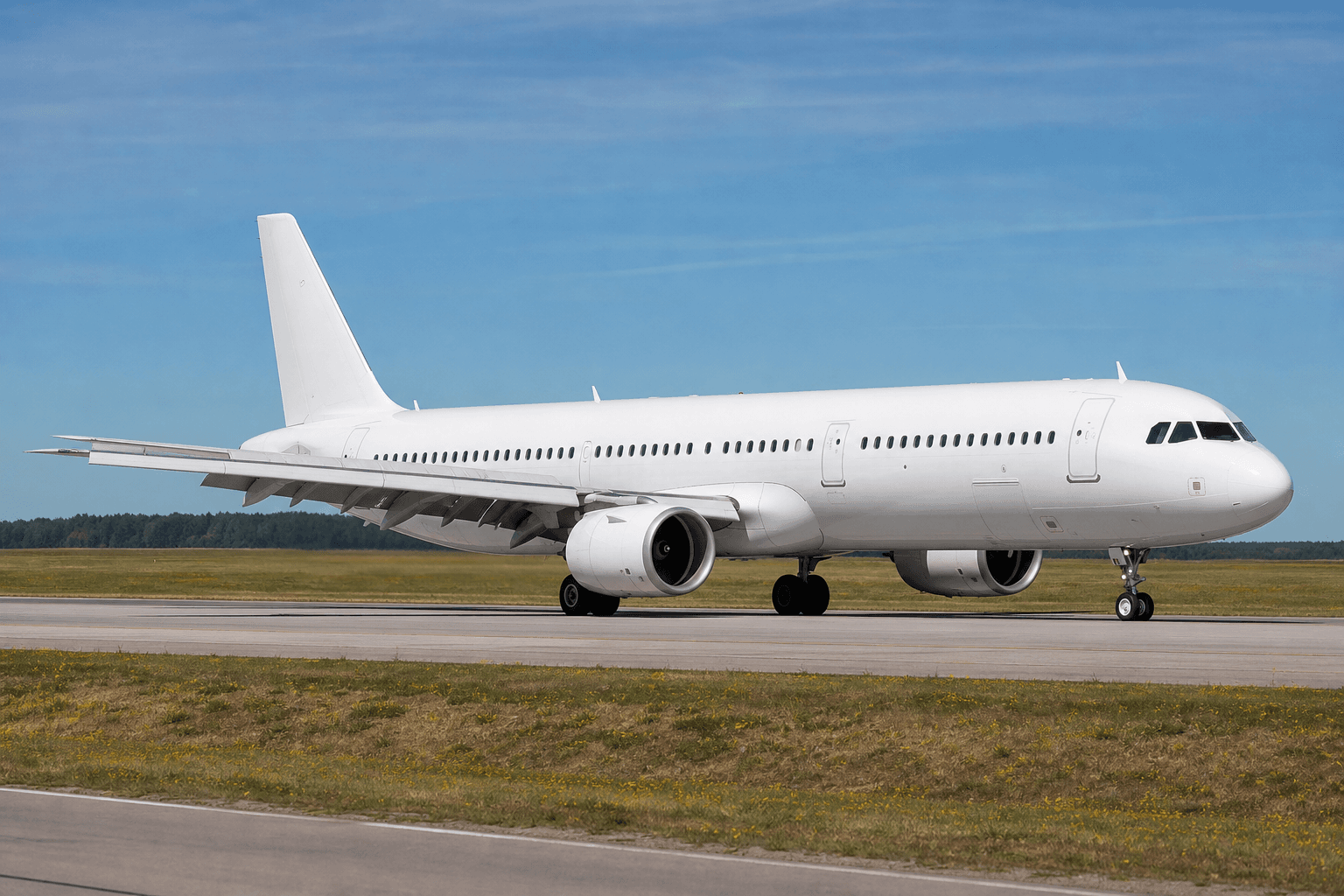
Airbus to upgrade A321neo with A321XLR wing design and single-slotted flaps
Airbus to incorporate batch of improvements on popular single-aisle model, and test production maturity of some on A320neo line. Airbus is to migrate A321XLR technology – including its revised wing design – to the A321neo, while other enhancements for the single-aisle family will initially be applied to the A320neo before being transferred up to the larger variants. The long-range XLR includes a lighter wing with a single-slotted inboard flap, and this will be incorporated into the regular A321neo, which currently uses a double-slotted design. A321neos will take advantage of a take-off performance improvement system which introduces intermediate flap positions, and works in conjunction with the single-slotted flap arrangement. The changes are part of a package of incremental improvements known as STEP4. A321neos will also benefit from new flight-control laws, the lighter electronic ‘e-rudder’, forward cabin temperature zones, and updated multi-functional runway lights. Head of A320-family development Torsten Hartung says the airframer is putting the "good ingredients" from the XLR onto the popular A321neo platform – the A321neo had a backlog of over 5,600 orders at the end of June. But the STEP4 enhancement will also entail new modifications which Airbus is to apply initially to the A320neo, as a low-risk measure to ensure production maturity before transferring them to the higher-rate A321neo, including the XLR variant. The A320neo will notably receive a new 'cobra' duct for the auxiliary power unit – mounted in the top of the fuselage, and aimed at enhancing cabin air quality – and corrosion-prevention measures such as titanium cabin rails. "The baseline A320neo is the first model to incorporate and prove the new modifications," says STEP leader for A320 family programme development Martin Schnoor. “Where we physically change the aircraft we decided to apply it first on A320neo in order to learn and see how well things are going." Once integration on the A320neo line is smooth, the new modifications will be made to the A321neo and XLR. Schnoor says deliveries of initial STEP4 A320neos are beginning, with the first A321neos and XLRs set to follow after a year. The A320neo has a different wing to the A321neo, but Airbus is ultimately aiming to migrate as many XLR innovations, outside of wing-related changes, to the A320neo as it can. Airbus says STEP4 will also eventually deliver further enhancements across the family, such as cabin-floor reinforcement, to account for changing standards in the weight of passengers and baggage, and a standardised flight data interface and management unit.
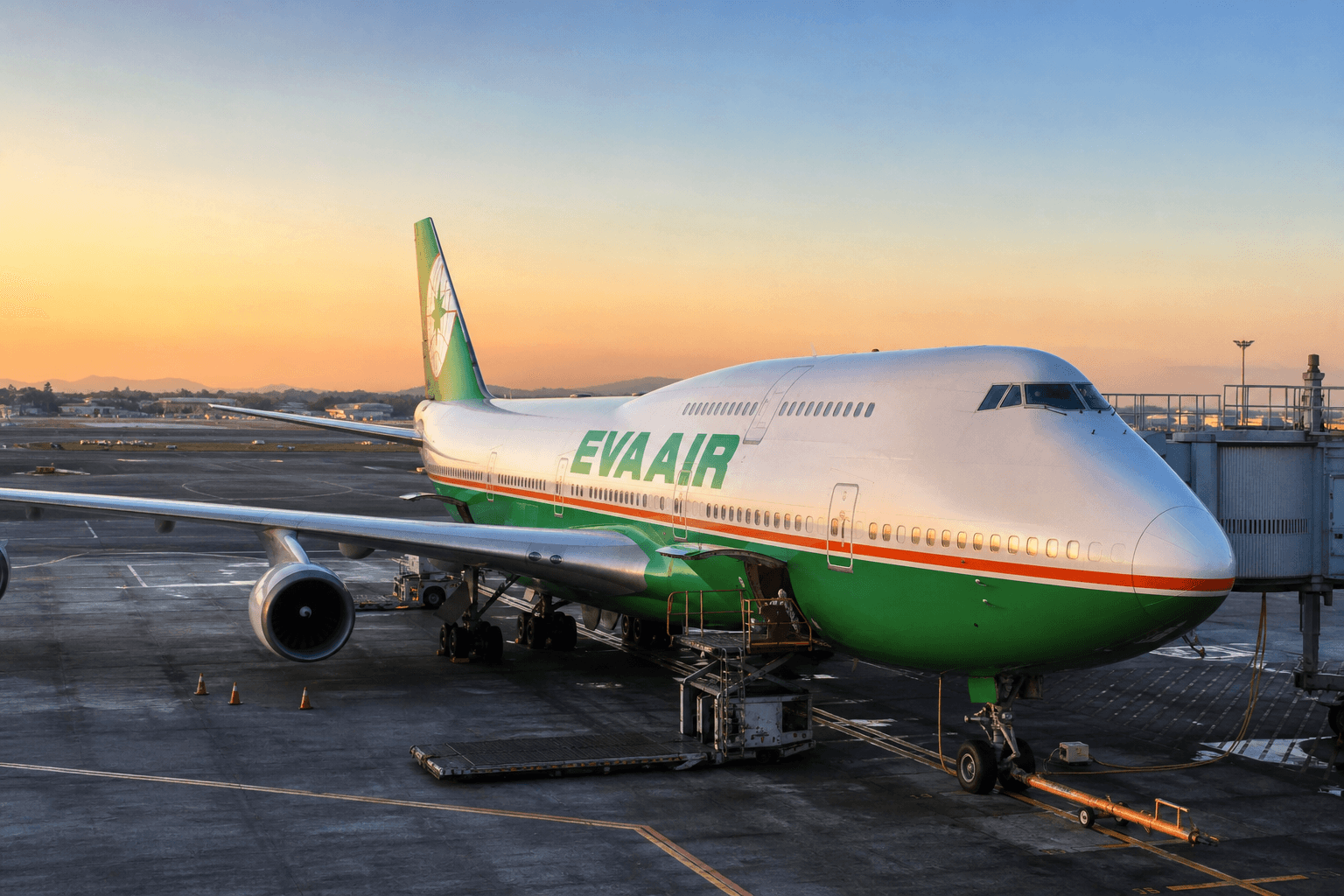
EVA Air Pioneered Premium Economy, Reshaping Long-Haul Travel Since 1992
Today, Premium Economy has become one of the most important cabin classes in long-haul aviation. Airlines across the world now rely on the product to bridge the gap between economy affordability and business class comfort, offering wider seats, improved dining, and additional personal space for travelers willing to pay slightly more for a better experience.
The Daily Touch & Go
The day's best aviation news in your inbox. Free, no spam.