

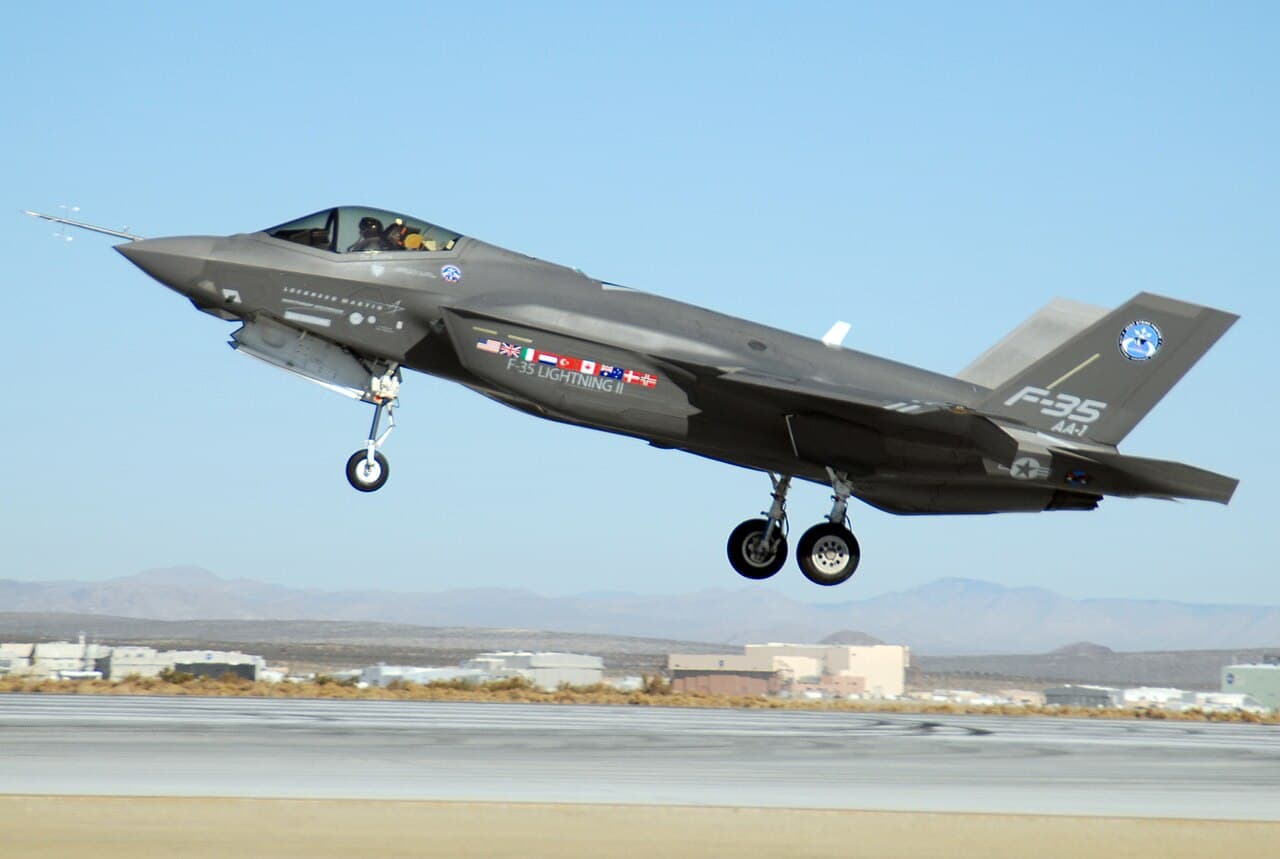
Image: U.S. Air Force photo/Senior Airman Julius Delos Reyes · Public domain · via Wikimedia Commons
Lockheed Martin Q2 2026 earnings surge on eased prior contract losses and strong missile sales
Lockheed Martin reported an 11% rise in Q2 2026 sales to $20.1 billion, with net earnings jumping to $1.8 billion thanks to improved contract results and missile program growth.
The gist
Lockheed Martin's Q2 2026 profit soared to $1.8 billion as prior-year contract losses faded and missile production surged.
Continuing coverage
All F-35 →- At Least 15 F-35s Delivered Without Required Equipment Since May 2025
- USAF Plans 267 F-15EX Fighters to Complement Growing F-35 Fleet as 'Missile Trucks'
- Canada Quietly Advances F-35 Fighter Jet Payments Amid Public Debate on Purchase
- UK F-35s intercept Russian Tu-142 near Royal Navy carrier HMS Prince of Wales
- Trump signals lifting Turkey sanctions and reconsiders F-35 sales amid S-400 dispute
Lockheed Martin delivered a robust financial performance in the second quarter of 2026, with sales increasing 11% to $20.1 billion and net earnings reaching $1.8 billion, or $7.94 per share. This stands in stark contrast to the same period last year, when the defense giant reported net earnings of just $342 million, or $1.46 per share. Much of this sharp turnaround is attributed to the absence of one-time losses that had heavily impacted the company's 2025 results, particularly in relation to a classified Aeronautics contract and helicopter programs in Canada and Turkey.
The prior-year quarter had seen Lockheed Martin absorb approximately $1.6 billion in program losses, affecting its Aeronautics division and two key helicopter initiatives: Canada's Maritime Helicopter Program and Turkey's Utility Helicopter Program. The removal of these extraordinary charges in 2026 has materially improved profitability metrics, though genuine operational growth also contributed, with increased production notably on the F-35 fighter jet and multiple missile programs.
Operational cash flow further illustrated the company’s improving financial health. Lockheed Martin generated $3.2 billion in cash from operating activities during Q2 2026 compared to just $201 million in the previous year’s quarter. Free cash flow was also positive at $2.9 billion, a significant rebound from a negative $150 million. These cash flow figures underscore stronger earnings quality and enhanced capital efficiency during the period.
Lockheed Martin's order backlog reached a record $230 billion, up from $193.6 billion at the end of 2025. A key contributor to this growth was the signing of a multi-year $35 billion contract with the Missile Defense Agency to manufacture Terminal High Altitude Area Defense (THAAD) interceptors. This deal reflects Lockheed’s strategic emphasis on modernizing munitions production, which company CEO Jim Taiclet described as foundational to the firm’s 21st Century Security strategy.
The quarter showcased solid sales growth across all four of Lockheed’s business segments. Missiles and Fire Control posted the highest sales increase, jumping 19% to $4.1 billion driven primarily by escalated production of PAC-3 and THAAD missile defense systems, along with the Precision Strike Missile program. Aeronautics sales grew 9% to $8.1 billion, buoyed by greater volume on F-35 contracts. Similarly, Rotary and Mission Systems expanded 9% to $4.4 billion, and the Space division’s sales rose 6% to $3.5 billion.
Despite the strong revenue gains, aircraft delivery figures were mixed. Lockheed’s F-35 deliveries fell sharply to 19 jets in the quarter, down from 50 in the previous year. In contrast, C-130J cargo aircraft deliveries increased notably to seven, up from just one a year earlier. Deliveries of government helicopters declined slightly to 16 from 24, illustrating some variability in production pacing across programs.
Encouraged by its Q2 results, Lockheed Martin raised its full-year 2026 guidance. The company now anticipates approximately 8% sales growth, a 28% increase in segment operating profit, and free cash flow exceeding $7 billion, an upward revision from prior forecasts. CEO Taiclet highlighted that the improved outlook is a direct consequence of the company’s strategic focus on integration, partnerships, and operational excellence, emphasizing that strong customer demand complements these efforts.
Lockheed Martin is also advancing manufacturing capacity through strategic partnerships, including collaborations with General Motors Defense in the United States and Rheinmetall in Europe to co-produce ATACMS missiles. The company also showcased rapid innovation, such as advancing its Sanctum counter-drone system from concept to live-fire testing within 45 days, integrating battle management, radar, launcher, and missile components into one system.
This second-quarter rebound positions Lockheed Martin firmly on a growth trajectory, clearing the hurdles set by prior contract challenges. With record backlog levels and increased production of next-generation missiles and aircraft, the company continues cementing its role in modernizing U.S. and allied defense capabilities across multiple domains.
Frequently asked questions
- What caused the significant profit increase for Lockheed Martin in Q2 2026?
- The profit increase was mainly due to the absence of $1.6 billion in one-time contract losses from 2025, plus growth in missile and F-35 production volumes.
- Which Lockheed Martin business segment saw the largest sales growth in Q2 2026?
- The Missiles and Fire Control segment saw the largest sales growth at 19%, driven by PAC-3, THAAD, and Precision Strike Missile programs.
- How did Lockheed Martin's aircraft deliveries in Q2 2026 compare to the prior year?
- F-35 deliveries dropped to 19 from 50, C-130J deliveries increased to 7 from 1, and helicopter deliveries decreased slightly to 16 from 24 year-over-year.
Read more
All Military/Defense →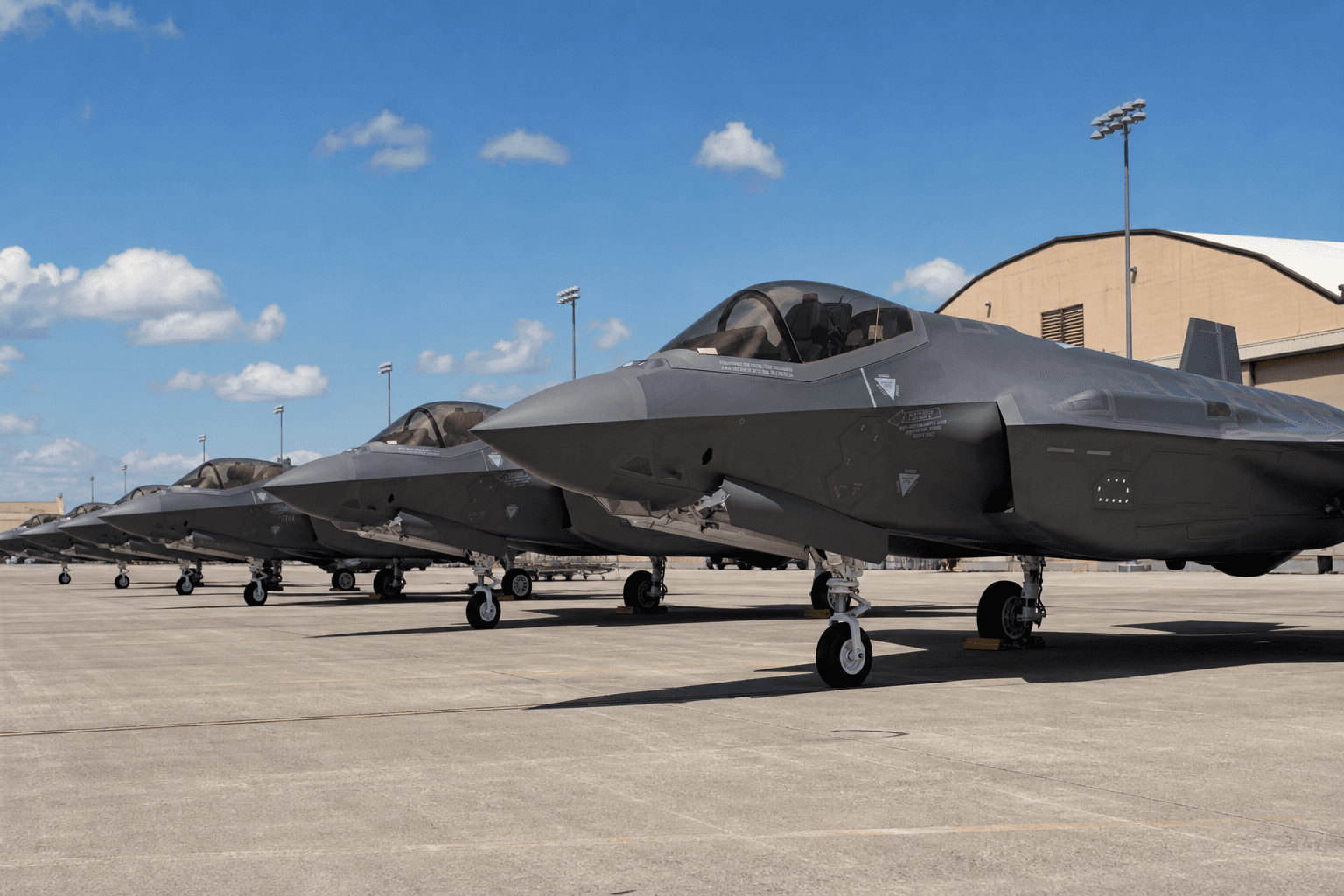
At Least 15 F-35s Delivered Without Required Equipment Since May 2025
Pictured is a U.S. Air Force photo of F-35A fighters at Jacksonville Air National Guard Base, Fla. on July 9, 2025. At least 15 F-35s built in the last year have lacked required equipment, according to a Defense Contract Management Agency (DCMA) list sent to sister publication Defense Daily after a Freedom of Information Act (FOIA) request. On Feb. 7, Defense Daily requested from DCMA a list of all Department of Defense Form DD-250s–Material Inspection and Receiving Reports–filed with the agency since May 2025, for all Lockheed Martin F-35 fighters delivered to the U.S. Air Force, U.S. Navy, and U.S. Marine Corps between May 1, 2025, and Feb. 6, 2026. When a military service accepts a system but does not mark it as delivered because of material shortfalls, that system is "DD-250ed" and is in a not operationally ready-supply (NORS) status until the gaps are filled. The signing of the "receipt"–the DD-250–marks a transfer in ownership from the contractor to the federal government. Nine "DD-250ed" F-35s are on the list provided by DCMA on July 13 in response to the FOIA request–one Marine F-35B to be delivered/ferried to VMFA-533 at Marine Corps Air Station Beaufort, S.C., three Navy F-35Cs to be delivered/ferried to VFA-125, a fleet replacement squadron at Naval Air Station Lemoore, Calif., one F-35A to be delivered/ferried to the 325 th Fighter Wing, a training wing at Tyndall AFB, Fla., and four F-35As to be delivered/ferried to the 125 th Fighter Wing, an Air National Guard domestic air defense wing. Asked why each of the above nine aircraft were "DD-250ed," the F-35 Joint Program Office (JPO) wrote in a July 14 email that "we cannot detail the specific equipment shortfalls, resolution timelines, or variant mix of these aircraft." "Due to program security reasons, we are protecting any additional information with enhanced security measures," according to the JPO. In addition to the above nine aircraft, six Marine Corps F-35s are in NORS status as "DD-250ed." Marine Lt. Gen. Gregory Masiello, the director of the F-35 Joint Program Office (JPO), testified last month that "we have accepted six aircraft for the Marine Corps that do not have a radar installed" because the Marine Corps is awaiting the installation of the Northrop Grumman [NOC] APG-85 radar, which the Pentagon expects to field in the first half of 2028. The APG-85 is critical to the 55 upgrades in the Block 4 program–22 of which have fielded so far, including seven last year, and six on target for this year, according to Masiello. For full functionality, the APG-85 and Block 4 require 62 kilowatts to 80 kilowatts (kW) of cooling versus the 32 kW on the plane now. The current mission capable rate of the F-35 is 56 percent, and the full mission capable rate is 25 percent. Radar mountings in the F-35's nose are different for the current APG-81, also by Northrop Grumman, and the APG-85–a difference which has helped complicate fielding of the new radar that was to deliver with F-35 Lot 17. The Air Force has been considering an APG-81/APG-85 dual-mount bulkhead, though the latter may take two years to field. The service's fiscal 2027 future years defense plan (FYDP) contains $133 million in fiscal 2031 for retrofitting 14 F-35As with APG-85s–a unit cost of $9.5 million per radar, and outside the FYDP the service said it plans to spend about $1.6 billion to retrofit another 167 jets with the APG-85. The first signed DD-250 for an F-35 in Lot 17 was on July 8, 2025, for an F-35A delivered/ferried the next day to the 125th Fighter Wing in Jacksonville, according to the list provided by DCMA in response to the FOIA request. Radar-less F-35s must fly with nose ballast to balance the fighter during flight. Temporarily radar-less fighters are not unprecedented. For example, in the late 1960s, McDonnell Douglas, now part of Boeing, put lead in the nose of the F-4J for the Navy/Marine Corps due to late deliveries of the fighter's government furnished equipment radar by Westinghouse, now part of Northrop Grumman, and in the 1980s, the Panavia Tornado F2 interceptor had so-called "Blue Circle" concrete in the nose due to delays in the development of the fighter's Foxhunter radar by GEC-Marconi, now part of BAE Systems. British Aerospace, Germany's MBB, and Aeritalia built the Panavia Tornado. Those companies are now part of BAE Systems, Airbus, and Leonardo, respectively. A version of this story originally appeared in sister publication Defense Daily .
USAF Plans 267 F-15EX Fighters to Complement Growing F-35 Fleet as 'Missile Trucks'
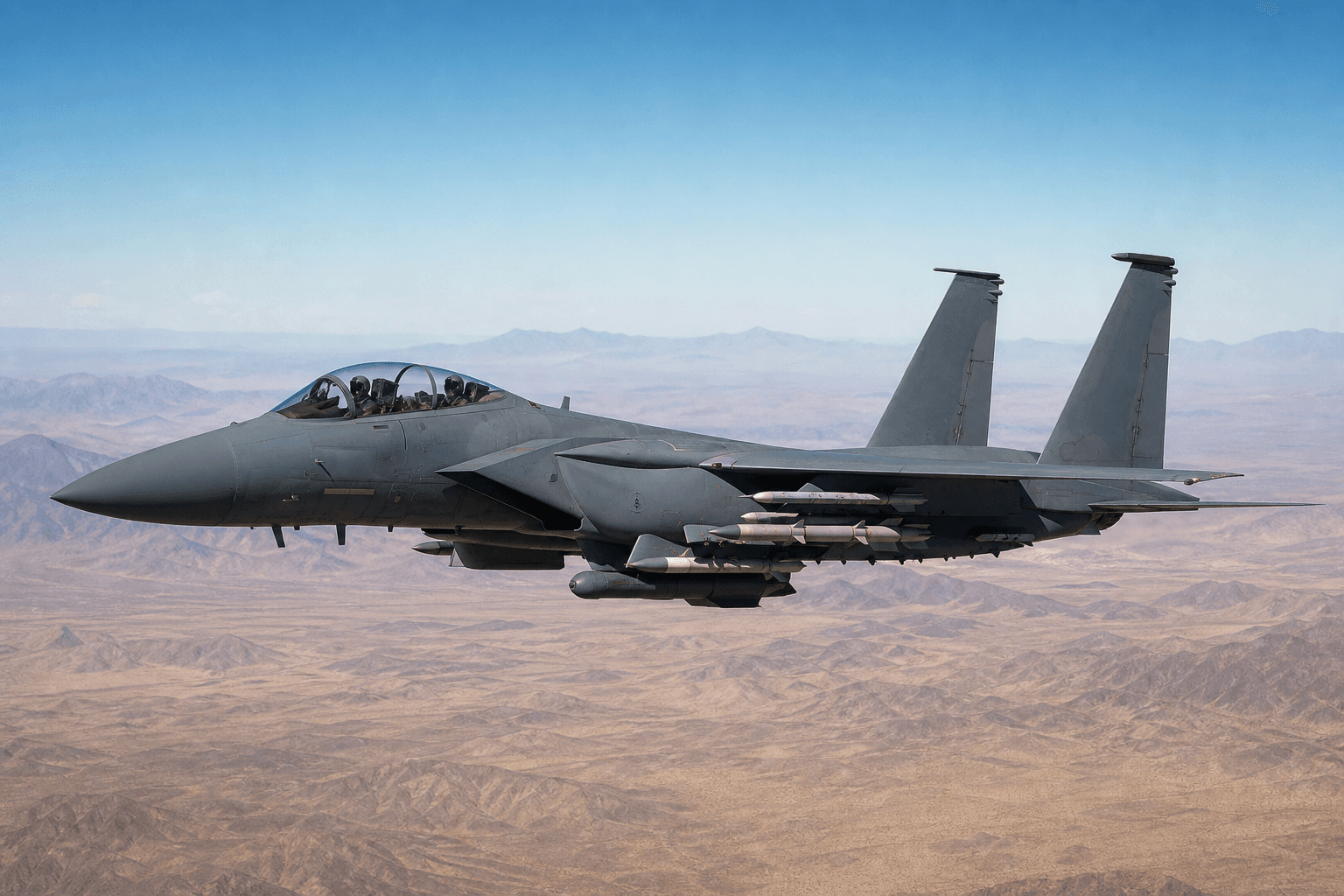
The Lockheed Martin Lightning II fighter jet is the world's most advanced fighter and is taking its place as the second-most in-service fighter jet in the world (depending on how the numbers are counted). At the same time, the Air Force is planning to double the number of F-15EXs it is procuring to 267. Importantly, this is not so much increasing its F-15 fleet as it is intended to recapitalize the aging F-15E fleet as they age out and retire .
Boeing's Data-Driven Upgrade Set to Extend C-17 Globemaster Service Through 2075
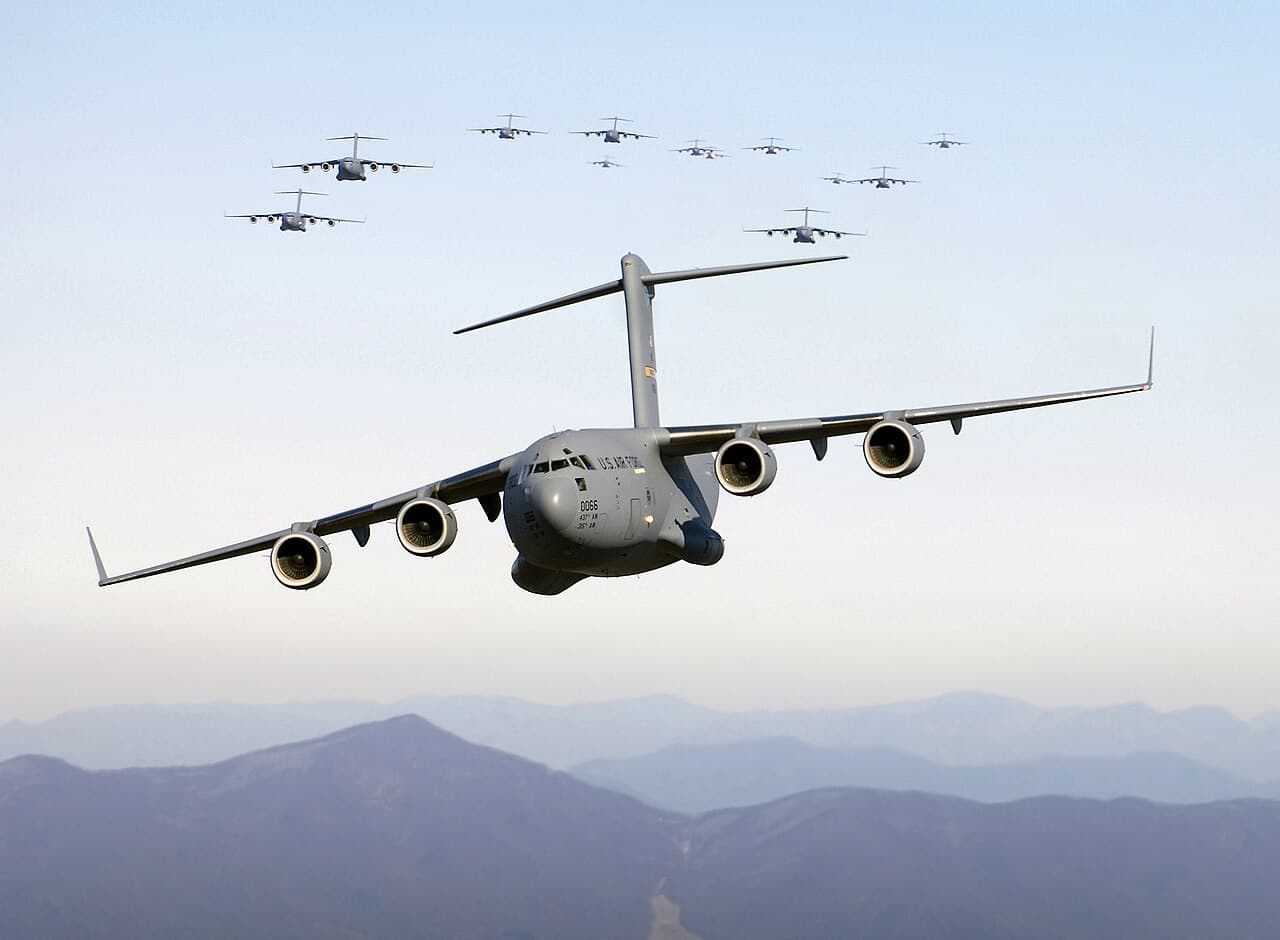
The last McDonnell Douglas C-17 Globemaster III left the assembly line in 2015, and it is expected to remain a vital airlift platform of the US Air Force for decades to come. The last C-17 rolled out the doors just as Boeing absorbed the storied planemaker in one of the largest aerospace mergers in history. Now, as the caretaker of the Globemaster, Boeing is preparing to deliver a major upgrade through its new Aircraft Data Reasoner.
Archer unveils Halo, an autonomous hybrid tiltrotor for commercial and parapublic markets
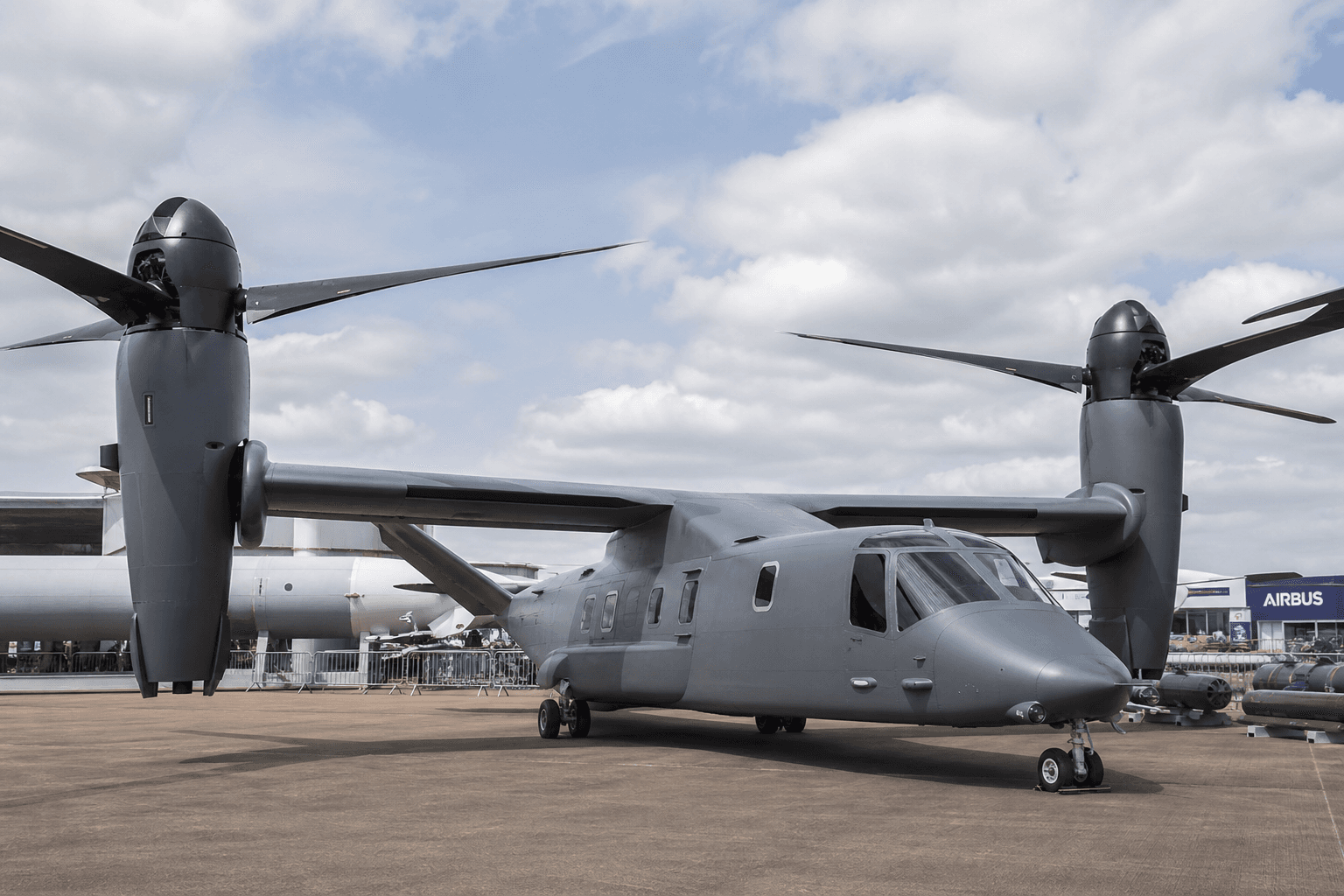
The new uncrewed tiltrotor will target commercial cargo and parapublic customers as a complement to the Midnight passenger aircraft. Electric aircraft developer Archer Aviation has unveiled a new concept for an uncrewed tiltrotor aimed at commercial cargo and parapublic operators. Revealed at the 2026 Farnborough air show, the Halo is a complement to the Thunder armed tiltrotor announced earlier at the Farnborough show by Archer and US defence start-up Anduril Industries. Both rotorcraft will use a common design, structure and drivetrain, all of which will be assembled by Archer. Airframes destined to become Thunder variants will be turned over to Anduril for militarisation, while Archer will handle Halo production entirely in-house. California-based Archer is best known for its developmental Midnight design – a multi-rotor, fully electric vertical take-off and landing (eVTOL) passenger craft that is still in the certification process. Corporate leaders in the eVTOL sector, including Archer, are on the hunt for alternative lines of business to the urban air mobility passenger market, which has been slow to develop. Defence was an early target, but it turned out that militaries had limited use for all-electric aircraft. Enter the pivot to hybrid-electric. “The feedback was there really isn’t a mission for a battery-electric e VTOL that solves a defence problem today,” says Archer’s chief technology officer, Tom Muniz. “I f we could solve some of the sort of range limitations that come with battery electric, there are some really interesting things that we could do.” Other eVTOL competitors, including Beta Technologies and Joby Aviation, have similarly unveiled hybrid-electric derivatives of their original battery-powered designs, partnering with established defence players to court military business. In Archer’s case, Muniz says the company was approached by Anduril to partner on a hybrid VTOL “t o address a very specific defence requirement set”. That co-development agreement generated both the Thunder and Halo. Although the Halo design will be commercially focused like Midnight, Muniz says that’s where the similarities end. “While Midnight [moves] people in and around cities or congested areas, with a pilot on board, t his new aircraft is autonomous, has a hybrid powertrain for very long range and substantially more payload and speed,” Muniz says. Concept renderings show a large fuselage with a roughly similar outer mould shape to the Bell-Boeing V-22 or Bell MV-75 tiltrotors. The Halo will use two wing-mounted nacelle assemblies that pivot up and down for transition between vertical and horizontal flight. However, the design will be far simpler than a conventional tiltrotor, owing to the use of electric motors rather than conventional turboshaft-powered rotors. “If you think about a vehicle like the V-22, there’s multiple gearboxes and power transmission shafts,” Muniz says. “For the Halo platform, it’s replaced by wires because it’s electric.” An onboard turboshaft engine will burn jet fuel, but that engine will be used to charge the electric drivetrain’s batteries, rather than directly powering the rotors. While commercial operations for Halo remain far off, initial flight testing will begin in the near future. Muniz says the design unveiled at Farnborough was finalised about a year ago, with prototyping now underway. “We’re now in the process of building the first flight articles for Halo,” he says. “ We’ll be in flight test next year.” The company sees support to offshore oil and gas operators, organ transplant flights, air cargo, medevac rescue flights, and search and rescue all as possible use cases for the hybrid tiltrotor.
The Daily Touch & Go
The day's best aviation news in your inbox. Free, no spam.