


Germany's first Quadriga programme Eurofighter completes maiden flight
Airbus Defence & Space successfully conducted the first flight test of Germany's initial Quadriga programme Eurofighter, marking a significant step in the delivery schedule for 58 jets.
The gist
Germany’s first Quadriga Eurofighter made its inaugural flight, advancing the delivery of 58 aircraft ordered under the new defence initiative.
Continuing coverage
All Fighter Jets →- US concerns rise as Canada debates Gripen jets alongside F-35A purchases
- France and Germany pivot defense strategy after joint fighter jet project collapse
- USAF Plans 267 F-15EX Fighters to Complement Growing F-35 Fleet as 'Missile Trucks'
- How the F-22's F119 Engine Overcame Long-Standing Fighter Jet Engine Trade-Offs
- Cathay Pacific A350 Intercepted by NATO Jets After Radio Silence Over Europe
Germany’s air defence modernisation progressed with the maiden flight of the first Eurofighter produced under its Quadriga programme. On 14 July, Airbus Defence & Space carried out the initial flight of the new Tranche 4 Eurofighter from its Manching final assembly site near Munich. This single-seat fighter, registered 34+02, represents the first of 58 aircraft ordered by the German government as part of its 2020 procurement plan.
During this critical production flight acceptance test, Airbus test pilot Stefan Auer pushed the fighter through an extensive evaluation lasting over an hour. The checks covered basic flight characteristics, engine performance, and the full spectrum of onboard systems, including flight control mechanisms, hydraulics, and electrical components. The comprehensive testing also focused on cockpit instrumentation and navigation aids, all of which performed flawlessly throughout the sortie.
The initial Quadriga order, handed down in 2020, encompasses a fleet composition of 30 single-seat and eight two-seat Eurofighter Typhoons. Airbus Defence & Space anticipates first deliveries to commence later this year, conditional upon the successful completion and receipt of further type certification required for operational clearance. Production and delivery of these jets are scheduled to continue steadily through to 2030.
In a parallel development, Germany expanded its Eurofighter fleet plans last year by signing a contract for 20 additional Typhoons, referred to as Tranche 5 aircraft. These subsequent jets are slated for delivery up until 2034, aligning with the German Air Force’s strategic trajectory to maintain a modernised and capable multirole fighter force well into the mid-21st century.
The Tranche 4 Eurofighter variant entering service under the Quadriga programme benefits from incremental enhancements over previous builds, including advanced avionics and improved weapon systems integration. This reflects Airbus Defence & Space’s ongoing commitment to evolve the Typhoon platform, ensuring it meets emerging operational requirements, including interoperability within NATO and compatibility with future air combat systems.
The Manching final assembly line, where the flight was staged, serves as the primary site for producing Germany’s Eurofighters. The facility's rigorous quality control and integration processes are pivotal in meeting demanding schedules and technical standards. The successful first flight is seen as a key milestone validating the assembly site's capabilities and signalling readiness for the next phase of deliveries.
Germany’s investment in the Quadriga programme underlines its commitment to sustaining a sovereign multirole fighter capacity amid a shifting security environment in Europe. The steady incorporation of new Eurofighters across the coming decade will replace aging platforms, enabling enhanced defence readiness. The programme also supports European aerospace industrial collaboration, with Airbus Defence & Space playing a central role in the Eurofighter consortium.
With the first Tranche 4 Eurofighter now airborne and upcoming type certification processes underway, Airbus is positioned to maintain its delivery schedule. This steady supply is essential to meet the operational timelines laid out by the German Air Force. The ongoing Quadriga programme continues to represent one of the largest contemporary European fighter procurements, reinforcing capability and industry employment simultaneously.
Frequently asked questions
- What milestone was achieved with the first Quadriga Eurofighter?
- The first Eurofighter built under Germany's Quadriga programme completed its maiden flight on 14 July 2026 from Airbus Defence & Space's Manching assembly site.
- How many Eurofighters has Germany ordered under the Quadriga programme?
- Germany ordered 58 Eurofighters in its initial Quadriga acquisition, including 30 single-seat and eight two-seat aircraft, with deliveries planned through 2030.
- What are the delivery and certification timelines for these Eurofighters?
- The first deliveries are expected later in 2026, pending type certification, with deliveries continuing to 2030 for the Tranche 4 jets, and up to 2034 for an additional tranche of 20 aircraft.
Read more
All Military/Defense →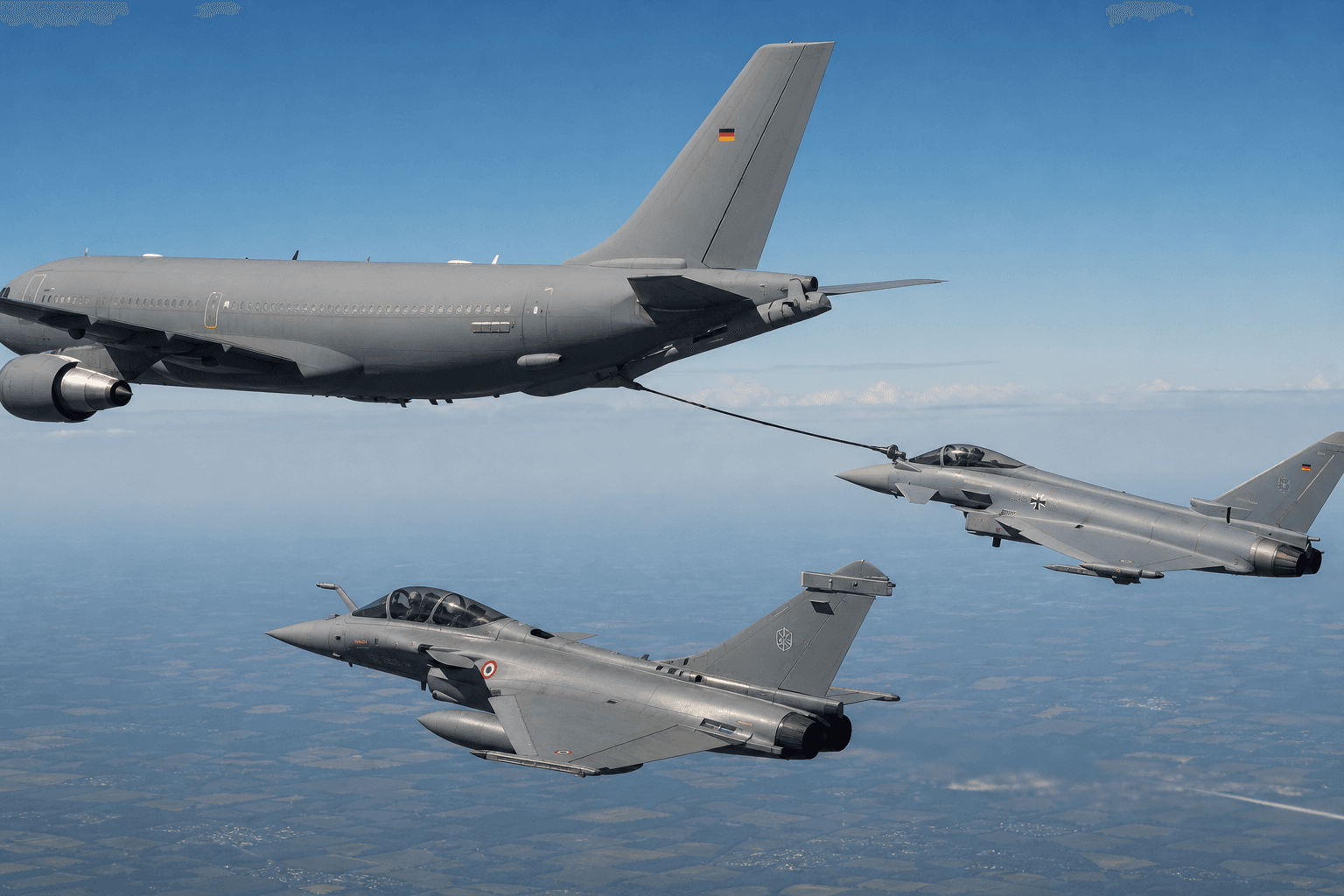
France and Germany pivot defense strategy after joint fighter jet project collapse
France and Germany have formally shifted their defense relationship away from the wreckage of a failed joint fighter jet program. President Emmanuel Macron and Chancellor Friedrich Merz met near Cologne on July 17, 2026, to move toward new areas of cooperation, including nuclear deterrence. Macron and Merz then chaired the annual Franco-German government consultations at Augustusburg Castle in Bruehl, a site specifically chosen for its history: French President Charles de Gaulle and German Chancellor Konrad Adenauer laid the groundwork for a Franco-German friendship treaty there in 1962. En Allemagne, le Conseil des ministres franco-allemand que nous co-présidons aujourd'hui avec le Chancelier Friedrich Merz doit nous permettre de renforcer notre compétitivité, notre sécurité et notre défense et la résilience de nos démocraties. Le réflexe franco-allemand… https://t.co/9utgniu3Ni — Emmanuel Macron (@EmmanuelMacron) July 17, 2026 A show of force at Noervenich Alongside the government consultations, the two countries will hold a Franco-German Defense and Security Council meeting at the Noervenich Luftwaffe air base, underscoring the push for European rearmament amid concerns over Russia and a less reliable American security commitment. On July 16, 2026, two French Rafale jets, capable of carrying nuclear weapons, were deployed to Noervenich, while a German Eurofighter was refueled mid-air by a French aircraft, a Luftwaffe spokesman told AFP. The French presidency says the goal for the July 17, 2026 talks is to move past symbolism and advance "concrete" projects, an explicit attempt to recover from the collapse of the Future Combat Air System (FCAS), the countries' joint sixth-generation fighter jet program, which ran aground in June 2026. How the fighter jet program began FCAS was launched in 2017 by Macron and then-German Chancellor Angela Merkel. Positioned as Europe's flagship sixth-generation combat air program, it came with an estimated price tag of roughly €100 billion. The project centered on a manned New Generation Fighter, paired with a 'combat cloud' architecture meant to link aircraft, drones and satellites into a single digital system. In October 2019, the two governments met in Toulouse to resolve early friction over how the work would be divided and succeeded in producing an arms export agreement covering jointly developed weapons. Under the deal, one country would automatically approve arms sales if its share of the selling price fell below a threshold rumored at around 20%. Both governments called it proof of mutual trust, a condition for the success of FCAS and the parallel Main Ground Combat System tank program. Where it fell apart The industrial workshare dispute between Airbus, representing Germany and Spain, and France's Dassault, proved to be the program's fatal obstacle. Tensions became public in February 2026, when Merz questioned openly whether a single aircraft platform could meet both countries' requirements, since France needed a nuclear-capable, carrier-compatible jet, whereas Germany did not. A mediation effort launched after a Macron-Merz dinner in Brussels on March 18, 2026, collapsed a month later, after the mediator concluded that a jointly-built crewed fighter was no longer realistic. At an informal EU summit in Cyprus on April 23, 2026, Macron and Merz sent the decision back to their defense ministries, with Macron insisting two days later that the program was "not at all" dead. The core issue never changed. Dassault's Eric Trappier repeatedly demanded the lead role, rejecting equal footing with Airbus, and a reported personal appeal from Merz failed to change his position. Germany's new national aviation strategy, adopted by cabinet on June 10, 2026 and unveiled at the ILA Berlin air show, states that Airbus must co-lead any future German combat aircraft program. Spain, the program's third partner, had already hedged by funding an Airbus-Indra study into its own combat air system. Belgium, an observer since 2024, went further. After Merz's February remarks, Defense Minister Theo Francken declared the program dead, and Brussels announced plans to buy 11 additional F-35A jets instead. Two countries, two fighter jets With the joint fighter program dead, France and Germany are now pursuing separate sixth-generation aircraft. Dassault will develop France's jet independently, backed in part by more than €4 billion allocated to the Rafale F5 standard. Airbus is to lead Germany's program, with Spain expected to remain involved. The company has also opened talks with Sweden's Saab, seen in Berlin as a more cooperative partner. Both programs are expected to produce aircraft during the early 2040s. Despite the split, the two countries plan to keep developing the combat cloud architecture that formed FCAS's other core pillar, with responsibilities for that piece expected to come up for discussion at the July 17, 2026 council. RELATED Germany, France abandon joint FCAS fighter after industry deadlock
USAF Plans 267 F-15EX Fighters to Complement Growing F-35 Fleet as 'Missile Trucks'
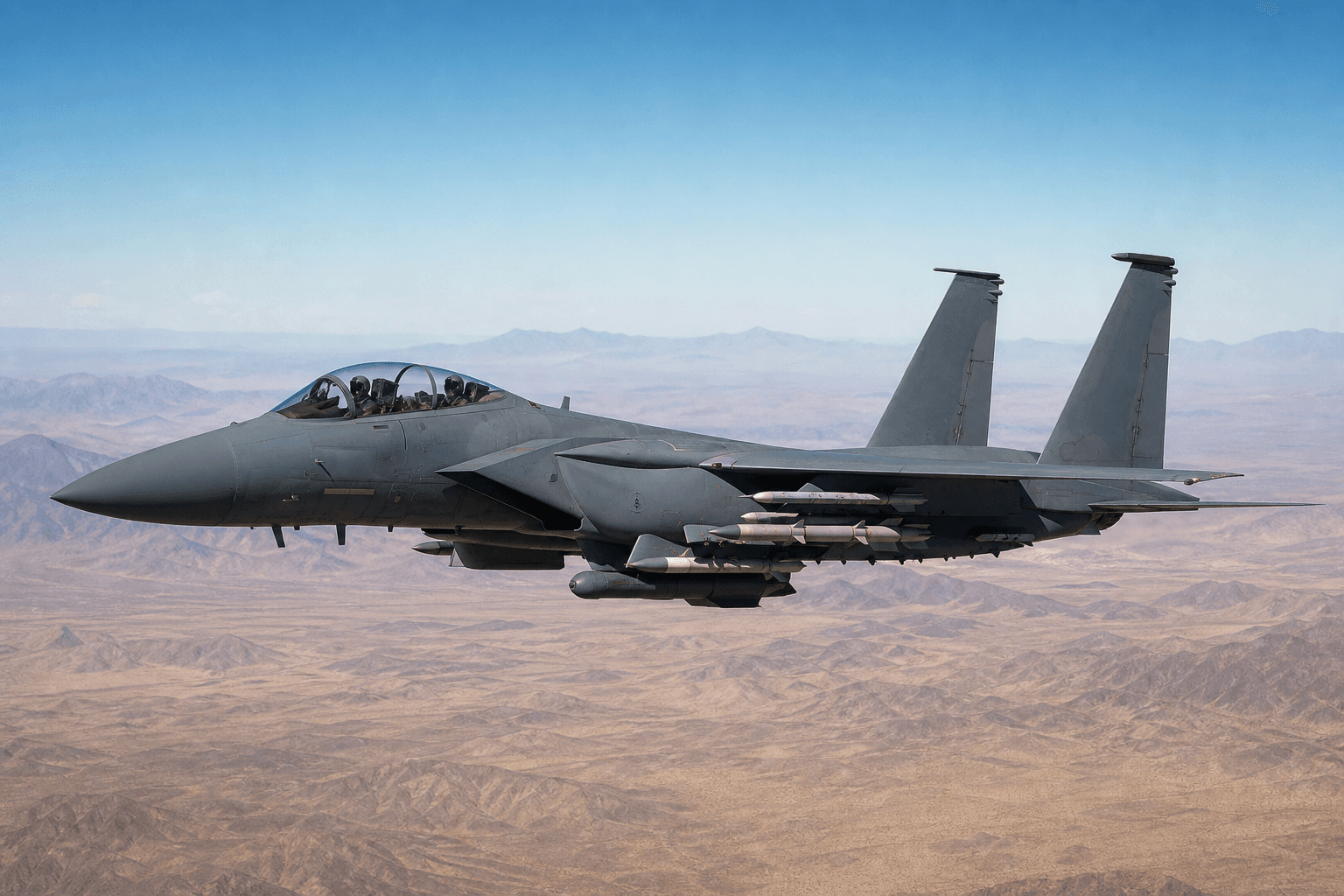
The Lockheed Martin Lightning II fighter jet is the world's most advanced fighter and is taking its place as the second-most in-service fighter jet in the world (depending on how the numbers are counted). At the same time, the Air Force is planning to double the number of F-15EXs it is procuring to 267. Importantly, this is not so much increasing its F-15 fleet as it is intended to recapitalize the aging F-15E fleet as they age out and retire .
How the F-22's F119 Engine Overcame Long-Standing Fighter Jet Engine Trade-Offs
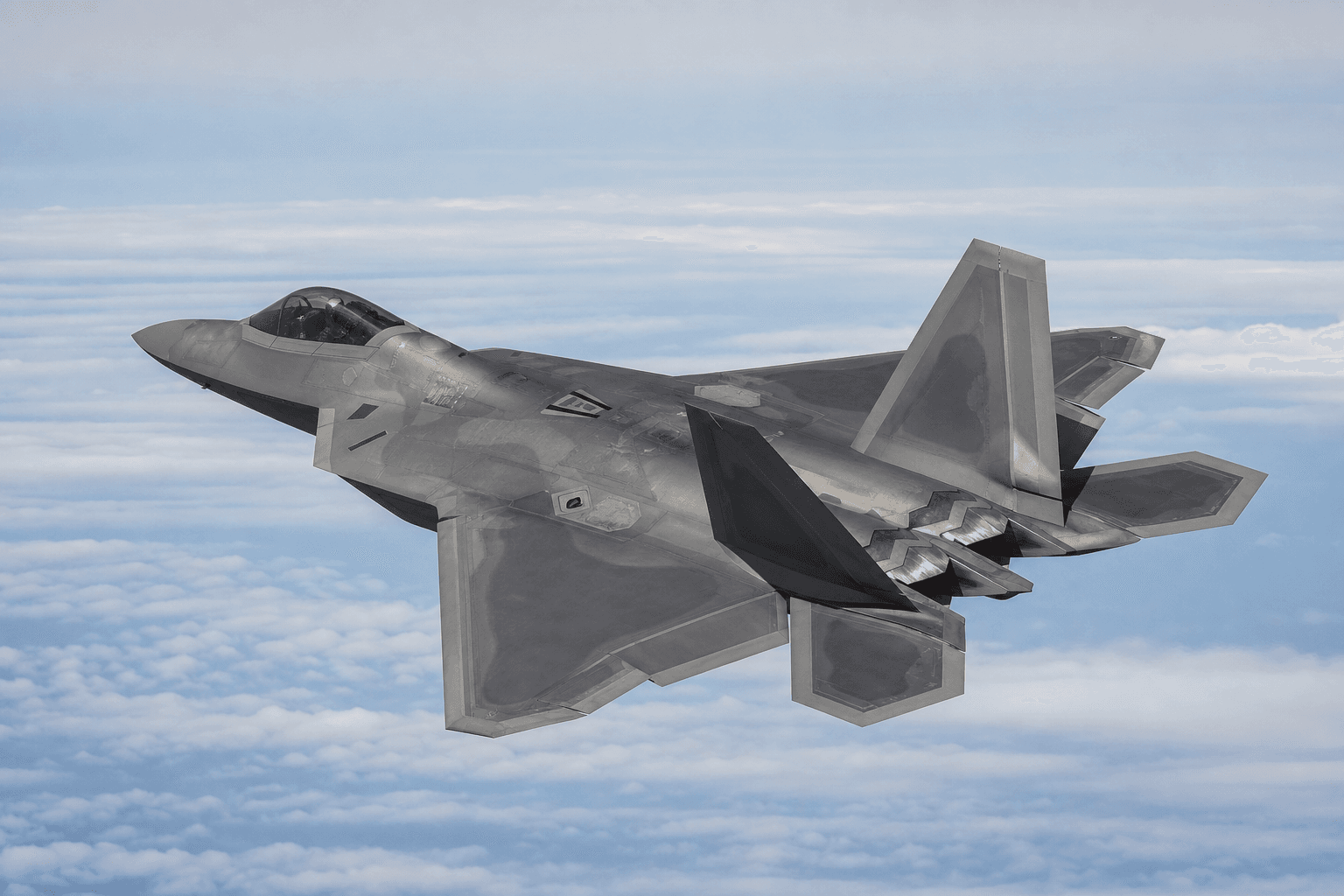
The Lockheed Martin F-22 Raptor was built as a generational leap over the existing F-15 Eagle. The F-15 Eagle was designed as an air superiority fighter , but by the 1980s, the Air Force felt it might not have the "unfair" advantage that they wanted, as the Soviet Union developed the Su-27 and MiG-29. The F-22 was initially designed as a late Cold War effort to overmatch any fighter jets the Soviets could field.
Boeing to Introduce MQ-28 Ghost Bat for UK Collaborative Combat Aircraft Program
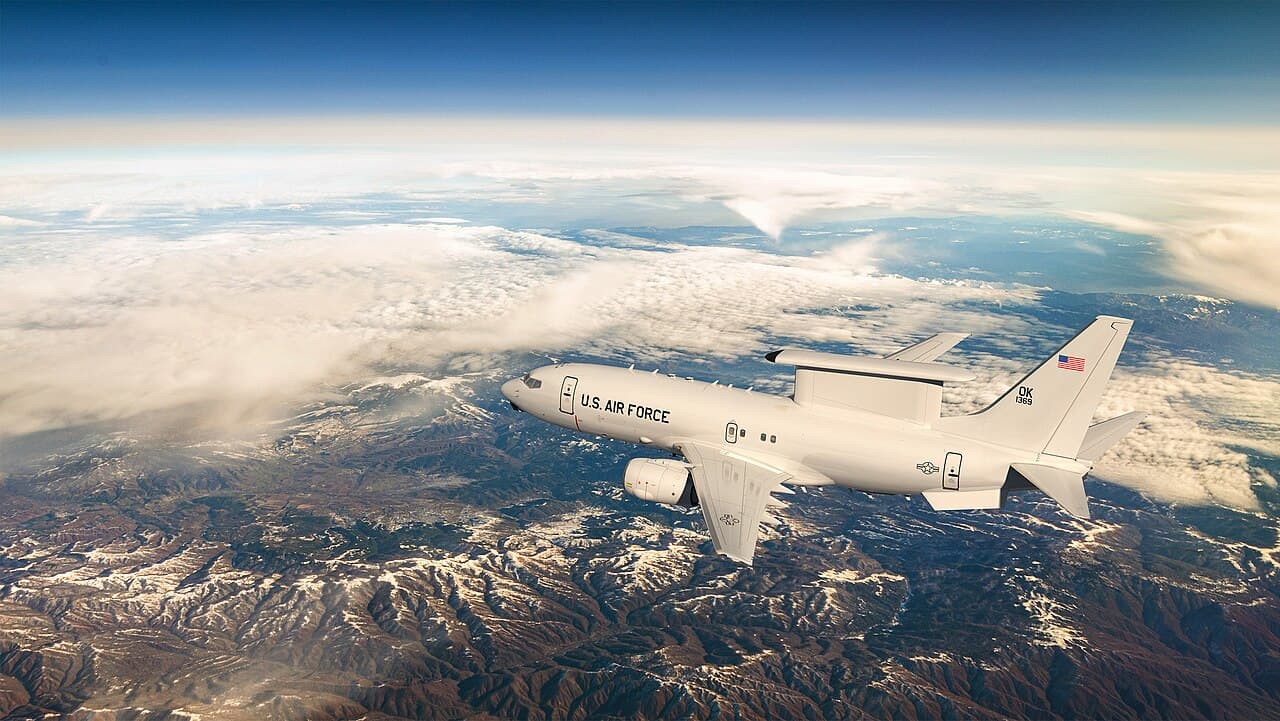
Australian-developed CCA aimed at future operational requirement. Boeing will be promoting its MQ-28 Ghost Bat at the Farnborough air show, in anticipation of a future UK requirement for an operational collaborative combat aircraft (CCA). "We definitely see some applicability in terms of its capability, and certainly in terms of its maturity to the UK armed forces," says Thom Breckenridge, managing director of Boeing Defence UK. "BD UK could be an important partner in sustainment and potentially other pieces, when we think payload or otherwise," he said during a pre-show briefing on 13 July. The UK's recently published Defence Investment Plan (DIP) details a CCA demonstration activity which will see a UK system flown before 2030, describing such a platform as an " autonomous fighter jet ". It did not, however, provide any firm detail about a possible future acquisition. "We are very enthusiastic about the platform and the capability, and certainly see applicability for MQ-28 in the UK," Breckenridge says of the Australian-developed Ghost Bat. "The maturity of the platform relative to competitors sets it apart, in addition to the unique capability and the way it was developed," he claims. Boeing also will use the 20-24 July event to promote its T-7A Red Hawk, which is among several likely competitors for the Royal Air Force's (RAF's) future jet trainer requirement. "We think it's the best answer for the UK's JTS [jet training system] competition," says Boeing Defence UK fixed-wing director Ben Kelsey. "It brings not just an aircraft but a ground-based training system, and synthetic alongside live training, in a way that we think answers the UK's needs better than any other solution." The process of selecting a replacement for BAE Systems' Hawk T2 remains at an early stage, with the DIP outlining an initial £360 million ($482 million) through the rest of this decade towards a fleet recapitalisation that also will provide new aircraft for the RAF's Red Arrows aerobatic display team. "We are thinking about how we position that [proposal] best for the UK," Kelsey says, referring to a letter of intent signed last November under which BAE would perform final assembly of the T-7 if it is selected for RAF service. "We will be looking with interest at the RFP [request for proposals] as that evolves over the next few months," he says, with Boeing committed to "bringing as much [work] as possible into UK suppliers". Boeing Defence UK will in December mark the 30th anniversary of its formation, with the company having grown from an initial six employees to a current total of 2,000. Its personnel are located at multiple military sites, among them Lossiemouth, Waddington, Wattisham, along with Bristol and Gosport. Its main activities include delivering comprehensive support for the RAF CH-47 Chinook and British Army AH-64E Apache helicopters, and for the RAF's P-8A Poseidon maritime patrol aircraft. It also delivers pilot and maintainer training for the air force's fleet of C-17 strategic transports, using a facility in Farnborough. "We are in places where the RAF or the army are, and we are working alongside them every day," Breckenridge notes. The company is also supporting the ongoing introduction of the E-7A Wedgetail airborne early warning and control system, with the first of three 737NG-based examples having been undergoing testing since May at RAF Lossiemouth in Scotland. The RAF’s first of three E-7A Wedgetails arrived at its Lossiemouth base in May. Source: Crown Copyright "We are looking forward to seeing E-7 go through flight trials over the coming months and then get into service in due course, as well as seeing the next couple of aircraft get finished," Kelsey says. "We have got some work ahead of us with the RAF as we go through that final testing stage, but we have got a dedicated, focused team who certainly see the need to get that capability completed and handed over. "The need to get E-7 into service is clear, and we are very focussed on that. But we are very focussed also on making sure that the product is safe and to the quality level that we'd expect, so that it delivers as we know it can, as a world-beating capability."
The Daily Touch & Go
The day's best aviation news in your inbox. Free, no spam.