

US concerns rise as Canada debates Gripen jets alongside F-35A purchases
Canada's defense plans to balance Saab Gripen fighters with F-35As prompt US worries over NORAD integration and national security cooperation.
The gist
US wary of Canada's Gripen talks amid fears over NORAD compatibility and reduced F-35A orders impacting air defense.
Continuing coverage
All Fighter Jets →- Germany's first Quadriga programme Eurofighter completes maiden flight
- France and Germany pivot defense strategy after joint fighter jet project collapse
- USAF Plans 267 F-15EX Fighters to Complement Growing F-35 Fleet as 'Missile Trucks'
- How the F-22's F119 Engine Overcame Long-Standing Fighter Jet Engine Trade-Offs
- Cathay Pacific A350 Intercepted by NATO Jets After Radio Silence Over Europe
Canada is currently navigating a critical moment in its fighter fleet modernization, weighing the acquisition of Swedish Saab JAS 39 Gripen jets alongside an existing commitment to the Lockheed Martin F-35A Lightning II. This dual procurement consideration has drawn attention from the United States, which remains cautious about the implications for continental defense and allied interoperability, particularly concerning NORAD obligations.
The Canadian government has a firm program of record for 88 F-35A aircraft to replace its aging CF-18 Hornet fleet. So far, it is contracted to receive 16 jets, with deliveries expected to begin in 2026. These initial aircraft will be used for training purposes as the Royal Canadian Air Force prepares to transition to a fifth-generation fighter.
Historically, Canada has faced delays and challenges in fully replacing its CF-18s, which are becoming increasingly obsolete compared to other nations’ fighter capabilities. The United States and Australia have already retired their F/A-18 Hornets, with Australia substituting a mix of Super Hornets and F-35As. Canada's adoption of the F-35A aligns with maintaining high interoperability standards with its NATO and NORAD partners.
At the heart of US concerns is NORAD, the North American Aerospace Defense Command, which requires seamless integration of Canadian fighters into a highly classified system with the US controlling key communication and identification modes such as IFF Mode 5 and missile defense datalinks. While the Saab Gripen is NATO-compatible and supports Link 16 communication, it currently lacks certification for NORAD's unique and tightly controlled system environment.
Canada’s prior assessment in 2021 deemed the Gripen adequate for basic duties but insufficient for full NORAD responsibilities. Saab has claimed it can meet NORAD compliance requirements, yet no detailed solution has emerged that satisfies US standards, leaving interoperability questions unresolved. US officials, including Ambassador Pete Hoekstra, have publicly dismissed the Gripen as an inferior and less interchangeable product compared to the F-35.
This debate touches on broader geopolitical and national security concerns. The US views Canadian air sovereignty as essential to protecting continental airspace, given Canada's geographical position as a northern gateway. From the Canadian perspective, however, reliance on US-controlled technology generates fears of diminished sovereignty and dependency, particularly given the F-35's embedded US software and sustainment ecosystem, which could theoretically be restricted or controlled by American authorities.
Technical comparisons favor the F-35A across many operational parameters relevant to Canadian defense needs. Notably, the F-35A’s extended internal fuel capacity offers superior range critical for patrolling Canada's vast northern territories. In contrast, the Gripen’s capacity is limited, especially when operating from short, unprepared runways where carrying full fuel loads becomes unfeasible.
Furthermore, a leaked Canadian Department of National Defense capability assessment scored the F-35A at 95% compared to a 33% rating for the Gripen-E, underscoring a significant gap in military capabilities. Experts like David Perry from the Canadian Global Affairs Institute characterize this difference as a clear and substantial margin, reinforcing the F-35A as the more capable platform for Canada's defense requirements.
Despite the Gripen’s reputation for lower acquisition costs and ruggedness, these factors do not outweigh the strategic necessity of full NORAD integration and advanced capability. The US concern is less about financial aspects and more about ensuring Canada can effectively police its airspace in alignment with North American defense imperatives. The ongoing discussion over reducing the F-35A order heightens US apprehension about the future readiness and interoperability of Canadian air defenses.
Frequently asked questions
- Why is the US worried about Canada acquiring Saab Gripen fighters?
- The US is concerned the Gripen is not certified to integrate with NORAD, which relies on US-controlled systems and secure data links essential for North American air defense interoperability.
- What is Canada's current plan for replacing its aged CF-18s?
- Canada has a program to replace its CF-18 fleet with 88 F-35A fighters, with 16 aircraft contracted for delivery starting in 2026, although it is considering supplementing this with Saab Gripen jets.
- How does the F-35A compare to the Gripen in terms of suitability for Canadian defense needs?
- The F-35A has superior military capabilities, longer range, and full NORAD compatibility, which are critical for Canada's vast northern airspace, whereas the Gripen scored significantly lower in these areas.
Read more
All Military/Defense →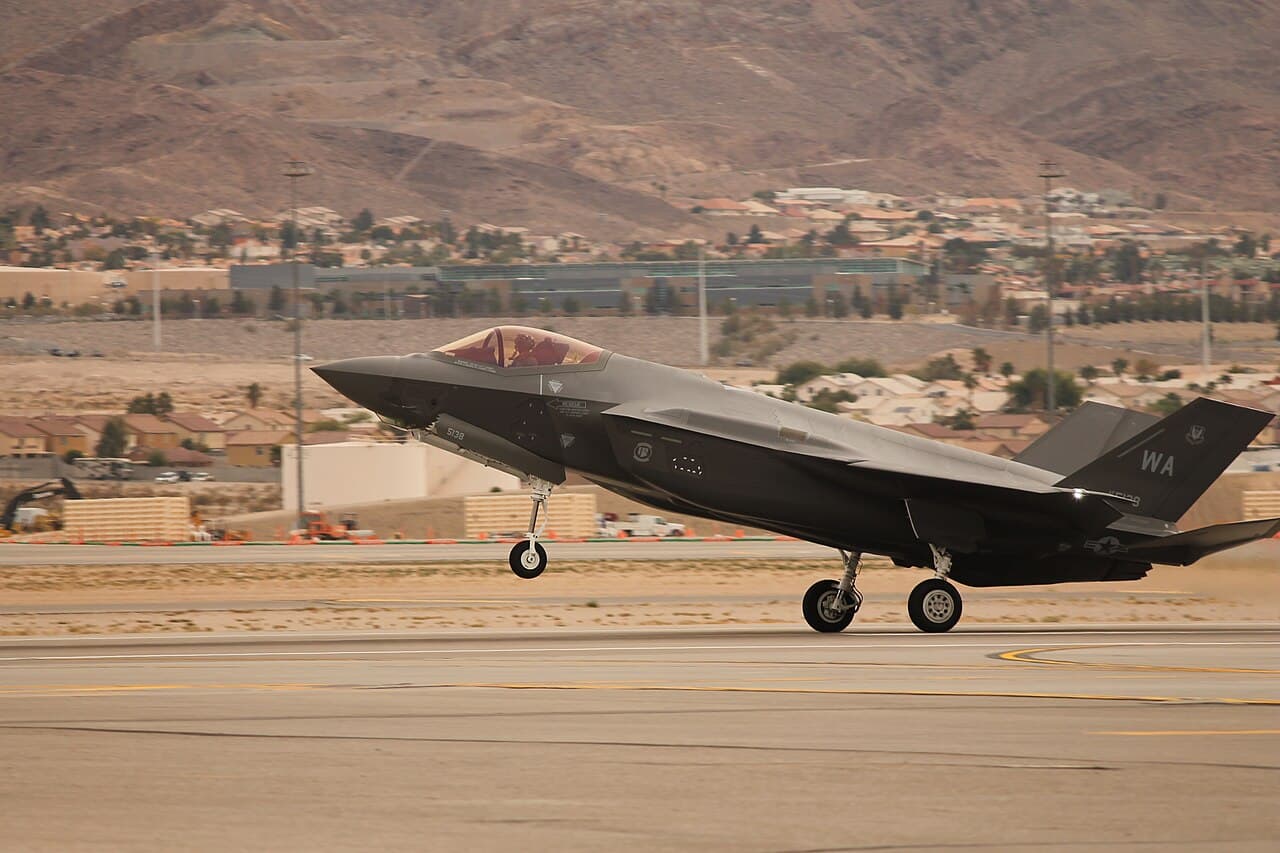
UK RAF evaluates total F-35A fleet size to restore nuclear-capable airforce role
Initial purchase of 12 conventional take-off jets will support operational conversion unit, service says. The UK Royal Air Force (RAF) is working to determine its future fleet requirement for the Lockheed Martin F-35A, as the service works toward regaining an air-launched nuclear weapons capability from next decade. Speaking at the Global Air & Space Chiefs' Conference (GASCC) in London on 15 July, Air Vice-Marshal Jim Beck, the RAF's director capability & programmes, referred to a planned purchase of 12 F-35As, recently confirmed within the UK's Defence Investment Plan . First details of the acquisition had emerged as part of London's Strategic Defence Review publication of June 2025, with the dozen conventional take-off and landing aircraft to be acquired alongside 15 short take-off and vertical landing F-35Bs: the latter variant is already flown by the RAF and Royal Navy. At that time, the UK Ministry of Defence said fielding the F-35A would enable London to work towards supporting NATO's dual-capable aircraft (DCA) mission for the first time since the late 1980s. "We did not buy those [F-35As] for dual-capable aircraft [DCA] capability – we bought them for our [operational] conversion unit," Beck says. "At the same time we stated we will get back into the dual-capable aircraft role, supporting NATO: the two are separate," he states. "We are doing the analysis to understand the size and posture of the force that we will need to undertake it," he says of the planned DCA commitment. "The mission is very specific – it is to reintegrate the Royal Air Force into NATO's nuclear burden-sharing framework," Beck says. Additional RAF F-35As involved in the role would be armed with US-supplied B61-12 tactical nuclear bombs, while their operation also would depend on NATO-operated boom-equipped tankers, as the UK currently lacks that capability. "The next part is for us to understand DCA, standardise that into our joint training and longstanding partnership with our NATO and European DCA partners," Beck says. "This is one of the most important moves we have made as the RAF for a generation," he notes of the planned reintroduction of the lapsed capability. Addressing the importance of the UK reinstating its defensive capability in support of NATO, he notes: "Make no doubt about it: Russia does not have a 'nuclear taboo' and if it needs to in warfare, it will release a tactical nuke.” The RAF has not had an air-launched nuclear weapon in its inventory since the retirement of its last Panavia Tornado-borne WE177 free-fall bombs in 1998. Also speaking at the GASCC event, French air force Lieutenant General Stephane Virem, commander, strategic forces, outlined the operational activities required to maintain readiness in the aerial nuclear strike role. France's strategic forces – which use the Dassault Aviation Rafale, along with submarine-launched nuclear weapons – participate in over 70 exercises each year, including four major activities performed under the name Operation Poker. "French deterrence is not a theoretical concept – it is operational, tested and continuously adapted for the changing environment," Virem says. Meanwhile, Dr Brendan Mulvaney, director of the China Aerospace Studies Institute (CASI) at the US National Defense University, points to Beijing's massive investment in nuclear weapons, noting that it is expected to have 1,000 nuclear missiles in its arsenal by 2030. "Today's environment is not a return to the Cold War, it is something that is far more complex," he says. "The People's Liberation Army is fundamentally changing how it thinks about its hardware, and its underlining strategic posture. "The visible evidence of this is considerable. We at CASI are tracking the construction of over 300 new missile silos in western China, and the shift to solid-fuel allows them a more rapid response, dramatically reducing their launch preparation time."
France and Germany pivot defense strategy after joint fighter jet project collapse
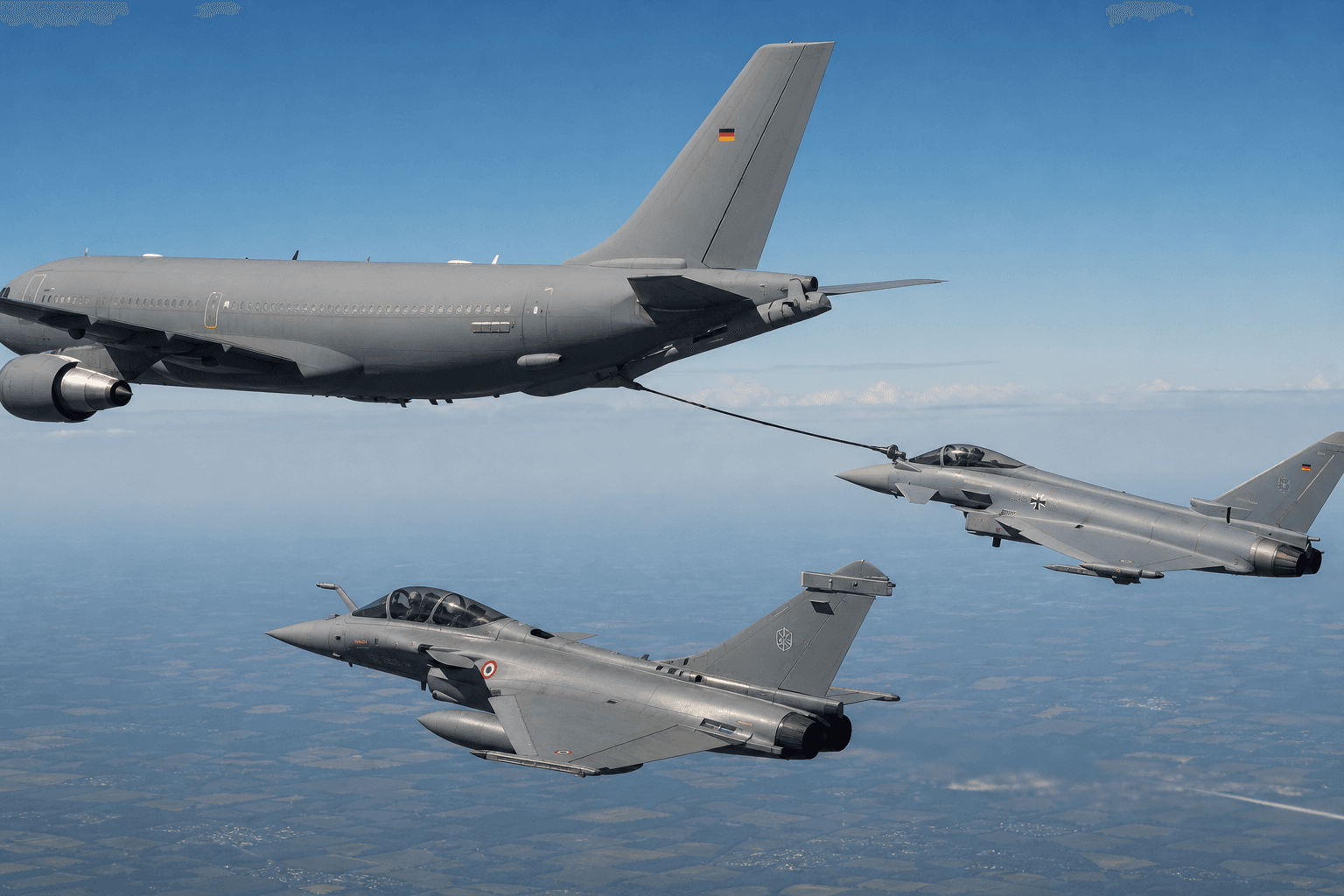
France and Germany have formally shifted their defense relationship away from the wreckage of a failed joint fighter jet program. President Emmanuel Macron and Chancellor Friedrich Merz met near Cologne on July 17, 2026, to move toward new areas of cooperation, including nuclear deterrence. Macron and Merz then chaired the annual Franco-German government consultations at Augustusburg Castle in Bruehl, a site specifically chosen for its history: French President Charles de Gaulle and German Chancellor Konrad Adenauer laid the groundwork for a Franco-German friendship treaty there in 1962. En Allemagne, le Conseil des ministres franco-allemand que nous co-présidons aujourd'hui avec le Chancelier Friedrich Merz doit nous permettre de renforcer notre compétitivité, notre sécurité et notre défense et la résilience de nos démocraties. Le réflexe franco-allemand… https://t.co/9utgniu3Ni — Emmanuel Macron (@EmmanuelMacron) July 17, 2026 A show of force at Noervenich Alongside the government consultations, the two countries will hold a Franco-German Defense and Security Council meeting at the Noervenich Luftwaffe air base, underscoring the push for European rearmament amid concerns over Russia and a less reliable American security commitment. On July 16, 2026, two French Rafale jets, capable of carrying nuclear weapons, were deployed to Noervenich, while a German Eurofighter was refueled mid-air by a French aircraft, a Luftwaffe spokesman told AFP. The French presidency says the goal for the July 17, 2026 talks is to move past symbolism and advance "concrete" projects, an explicit attempt to recover from the collapse of the Future Combat Air System (FCAS), the countries' joint sixth-generation fighter jet program, which ran aground in June 2026. How the fighter jet program began FCAS was launched in 2017 by Macron and then-German Chancellor Angela Merkel. Positioned as Europe's flagship sixth-generation combat air program, it came with an estimated price tag of roughly €100 billion. The project centered on a manned New Generation Fighter, paired with a 'combat cloud' architecture meant to link aircraft, drones and satellites into a single digital system. In October 2019, the two governments met in Toulouse to resolve early friction over how the work would be divided and succeeded in producing an arms export agreement covering jointly developed weapons. Under the deal, one country would automatically approve arms sales if its share of the selling price fell below a threshold rumored at around 20%. Both governments called it proof of mutual trust, a condition for the success of FCAS and the parallel Main Ground Combat System tank program. Where it fell apart The industrial workshare dispute between Airbus, representing Germany and Spain, and France's Dassault, proved to be the program's fatal obstacle. Tensions became public in February 2026, when Merz questioned openly whether a single aircraft platform could meet both countries' requirements, since France needed a nuclear-capable, carrier-compatible jet, whereas Germany did not. A mediation effort launched after a Macron-Merz dinner in Brussels on March 18, 2026, collapsed a month later, after the mediator concluded that a jointly-built crewed fighter was no longer realistic. At an informal EU summit in Cyprus on April 23, 2026, Macron and Merz sent the decision back to their defense ministries, with Macron insisting two days later that the program was "not at all" dead. The core issue never changed. Dassault's Eric Trappier repeatedly demanded the lead role, rejecting equal footing with Airbus, and a reported personal appeal from Merz failed to change his position. Germany's new national aviation strategy, adopted by cabinet on June 10, 2026 and unveiled at the ILA Berlin air show, states that Airbus must co-lead any future German combat aircraft program. Spain, the program's third partner, had already hedged by funding an Airbus-Indra study into its own combat air system. Belgium, an observer since 2024, went further. After Merz's February remarks, Defense Minister Theo Francken declared the program dead, and Brussels announced plans to buy 11 additional F-35A jets instead. Two countries, two fighter jets With the joint fighter program dead, France and Germany are now pursuing separate sixth-generation aircraft. Dassault will develop France's jet independently, backed in part by more than €4 billion allocated to the Rafale F5 standard. Airbus is to lead Germany's program, with Spain expected to remain involved. The company has also opened talks with Sweden's Saab, seen in Berlin as a more cooperative partner. Both programs are expected to produce aircraft during the early 2040s. Despite the split, the two countries plan to keep developing the combat cloud architecture that formed FCAS's other core pillar, with responsibilities for that piece expected to come up for discussion at the July 17, 2026 council. RELATED Germany, France abandon joint FCAS fighter after industry deadlock
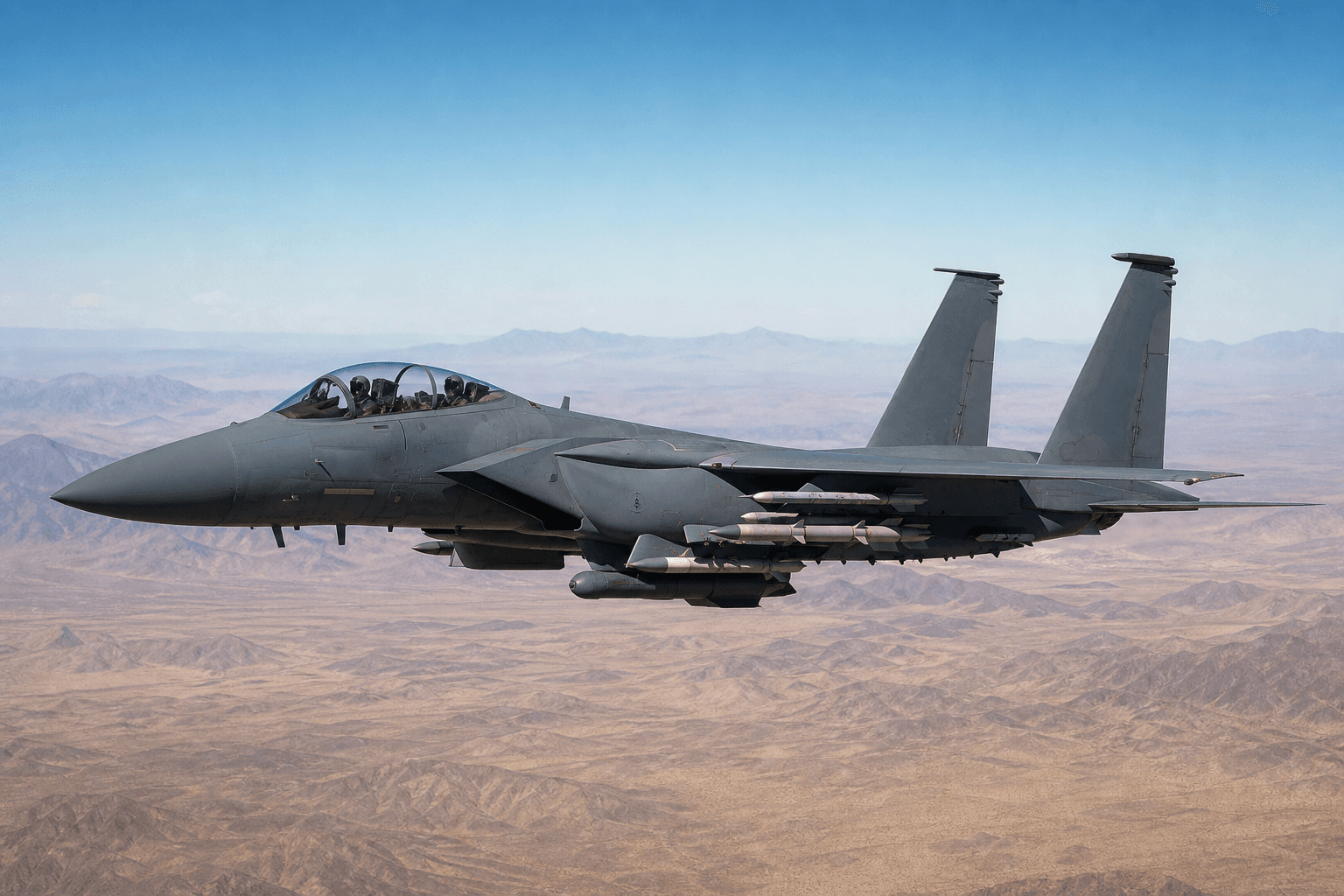
USAF Plans 267 F-15EX Fighters to Complement Growing F-35 Fleet as 'Missile Trucks'
The Lockheed Martin Lightning II fighter jet is the world's most advanced fighter and is taking its place as the second-most in-service fighter jet in the world (depending on how the numbers are counted). At the same time, the Air Force is planning to double the number of F-15EXs it is procuring to 267. Importantly, this is not so much increasing its F-15 fleet as it is intended to recapitalize the aging F-15E fleet as they age out and retire .
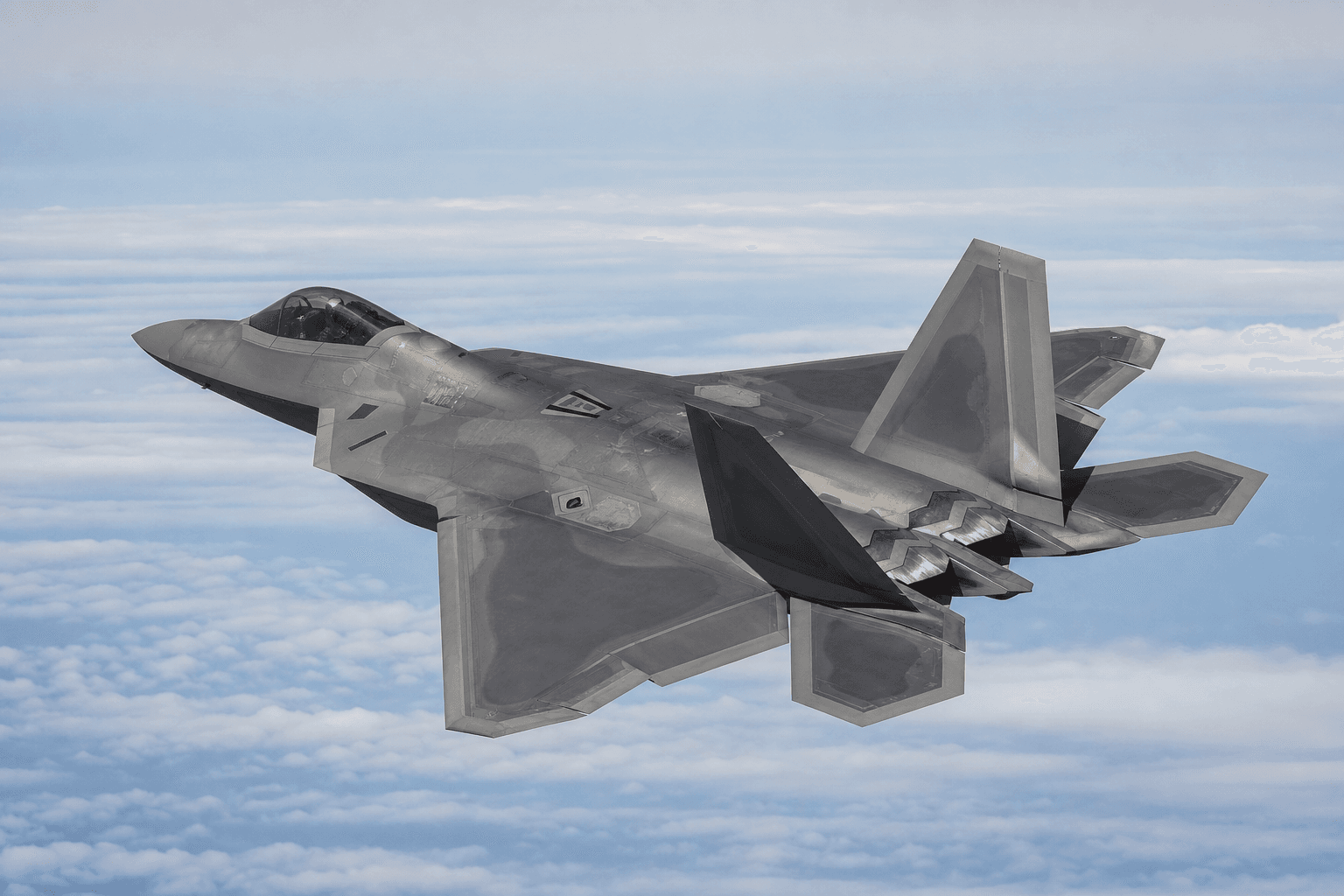
How the F-22's F119 Engine Overcame Long-Standing Fighter Jet Engine Trade-Offs
The Lockheed Martin F-22 Raptor was built as a generational leap over the existing F-15 Eagle. The F-15 Eagle was designed as an air superiority fighter , but by the 1980s, the Air Force felt it might not have the "unfair" advantage that they wanted, as the Soviet Union developed the Su-27 and MiG-29. The F-22 was initially designed as a late Cold War effort to overmatch any fighter jets the Soviets could field.
The Daily Touch & Go
The day's best aviation news in your inbox. Free, no spam.