

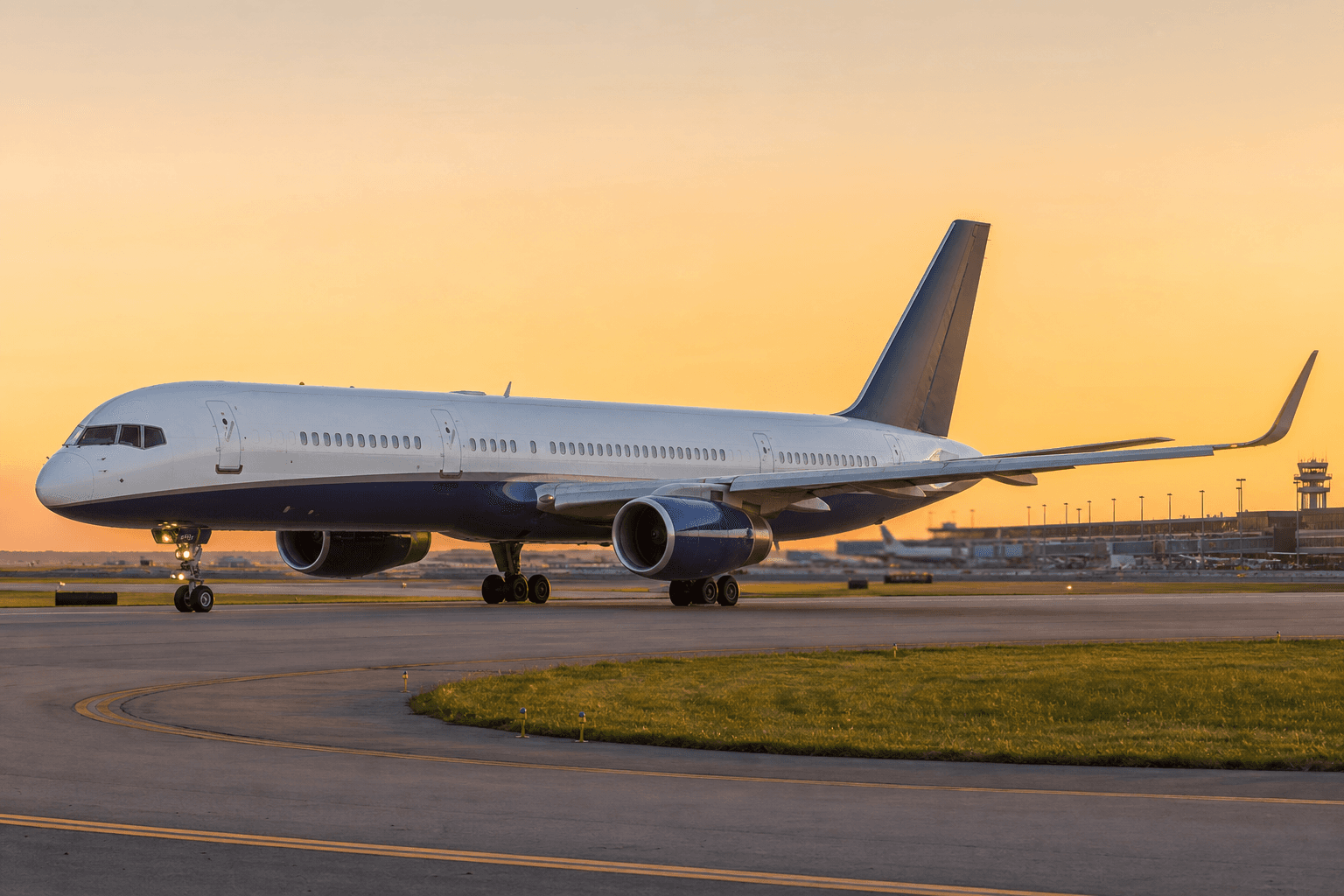
Illustration: The Touch & Go
Why Allegiant Air Operated Boeing 757s to Reach Hawaii and Beyond
Allegiant Air flew six secondhand Boeing 757-200s between 2010 and 2017 to establish nonstop leisure routes to Hawaii and increase mainland capacity.
The gist
Allegiant Air operated Boeing 757s from 2010-2017 to serve Hawaii and boost route capacity before retiring them for maintenance cost reasons.
Continuing coverage
All Boeing 737 Max →- Alaska Airlines Launches New Daily Boise-Honolulu and Weekly Spokane-Honolulu Boeing 737 Routes
- United Airlines Expands Airbus A321neo Orders Amid Boeing 737 MAX 10 Delays
- American Airlines Teases Five New International Routes to Europe and Latin America
- Vueling to Launch Boeing 737 MAX 8-200 on Mediterranean and European Routes in December 2026
- Singapore Airlines Operates 11 Boeing 737 MAX Routes Up to Nearly 7 Hours
Allegiant Air, primarily recognized today for its Airbus A320 family and newer Boeing 737 MAX 8 jets, once operated a fleet of Boeing 757-200 aircraft during the 2010s to extend its leisure route network. This strategic move addressed the airline’s inability to reach Hawaii nonstop with its existing MD-80 fleet. By acquiring six used 757s from UK leisure carrier Thomson Airways starting in 2010, Allegiant gained the range and capacity to serve long-haul leisure destinations previously out of reach.
The Boeing 757-200s were key to Allegiant’s expansion into the lucrative Hawaii market, a destination the MD-80s could not access due to range limitations. These 757s, delivered originally from Boeing to Thomson, came equipped with ETOPS certification, enabling safe extended overwater flights crucial for the Pacific routes. Allegiant’s investment to acquire and prepare the jets ranged from $75 to $90 million, reflecting a significant financial commitment to this new model and market strategy at the time.
The first 757 joined Allegiant’s fleet in May 2010, with subsequent deliveries continuing until November 2012. The peak utilization of these aircraft came in 2013 when Allegiant operated close to 2,900 flights using the 757 across its network. While Hawaii was a highlight—serving Honolulu from Las Vegas—the aircraft also serviced a variety of domestic routes, increasing capacity on longer and higher-demand sectors.
Data from 2013 highlight key routes flown by Allegiant’s 757s. Flights from Las Vegas to Bellingham operated daily, and nearly 175 flights connected Las Vegas to McAllen. The Las Vegas to Honolulu route, emblematic of Allegiant’s leisure strategy, featured approximately 136 757 rotations that year. This diverse utilization demonstrated the 757’s role not only in long-haul service but also in augmenting the airline’s mainland domestic operations.
However, by the mid-2010s, Allegiant’s 757s had aged, with the fleet requiring extensive D check maintenance. Faced with the cost and downtime of such overhauls, Allegiant elected to retire the aircraft starting in 2017. The last 757s left the fleet in October that year, marking the end of a seven-year chapter in Allegiant’s operational history with this wide-body capable craft.
Since then, Allegiant has concentrated on modernizing and standardizing its fleet around narrowbody jets. Today, it operates 128 twinjets dominated by Airbus A319s and A320s while reintroducing Boeing into its lineup through 20 Boeing 737 MAX 8-200 aircraft and additional orders for the 737 MAX 8 variants. The younger MAX fleet, averaging just over a year old, signals Allegiant’s renewed focus on fuel efficiency and long-term operational cost savings, distinct from the older 757 era.
Allegiant's earlier utilization of the Boeing 757 illustrates its pragmatic approach to matching aircraft capability with market demand. The 757s allowed the airline to seize a foothold in Hawaii, a major leisure destination, leveraging long-range and ETOPS capabilities. The subsequent shift back to newer narrowbody jets reflects both evolving business models and advances in aircraft technology enabling efficient operation of comparable routes.
Frequently asked questions
- Why did Allegiant Air acquire Boeing 757-200 aircraft in 2010?
- Allegiant Air acquired used Boeing 757-200s in 2010 to serve nonstop flights to Hawaii, which its existing MD-80 fleet could not reach due to range limitations.
- How many Boeing 757s did Allegiant operate and for how long?
- Allegiant Air operated six Boeing 757-200s from 2010 through 2017, retiring them as maintenance costs became prohibitive.
Read more
All Airlines →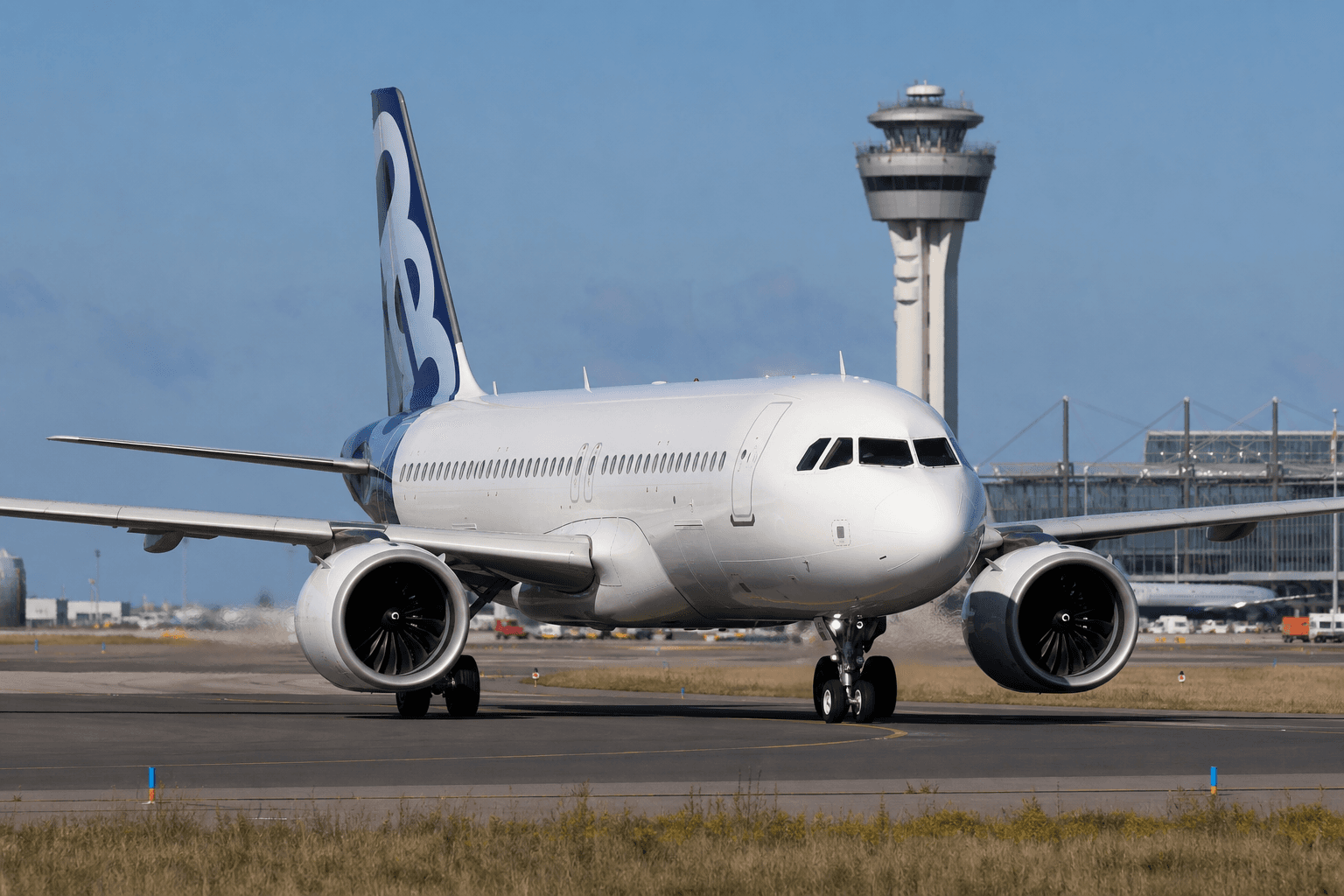
IndiGo selects Honeywell avionics and power units for 810 A320neo jets
US manufacturer Honeywell Aerospace opened the Farnborough air show on 20 July by announcing a massive component deal with Indian carrier IndiGo. The airline will equip 810 incoming Airbus A320neo-family jets with Honeywell Aerospace’s avionics and power systems. Honeywell will also support those components in the aftermarket. The agreements mark a major win for newly independent Honeywell Aerospace, which completed its separation from longtime parent Honeywell in June. “This agreement represents the largest new-aircraft-selectable equipment win in Honeywell Aerospace history, accelerating the company’s expansion,” Honeywell says. The aerospace giant will supply the weather radars, traffic collision and avoidance systems, flight management systems and 131-9A auxiliary power units found on IndiGo’s incoming aircraft. “The scale of IndiGo’s fleet expansion – and their decision to rely on Honeywell Aerospace’s advanced products – underscores the strength of our technology and demonstrates the confidence customers place in Honeywell Aerospace,” says Honeywell president of global commercial aftermarket services Anthony Florian. IndiGo chief executive designate Willie Walsh adds that the agreement will support the carrier’s ongoing “transformation into a truly global airline” and support Indigo’s “reliability, operational excellence and seamless customer experience”. IndiGo has more than 300 A320s already in service and another 70 in storage, and its 810 outstanding orders include A320neos and A321neos, Cirium fleets data shows.
United Airlines Allows Flight Attendants to Drink Alcohol While Deadheading Under Strict Conditions
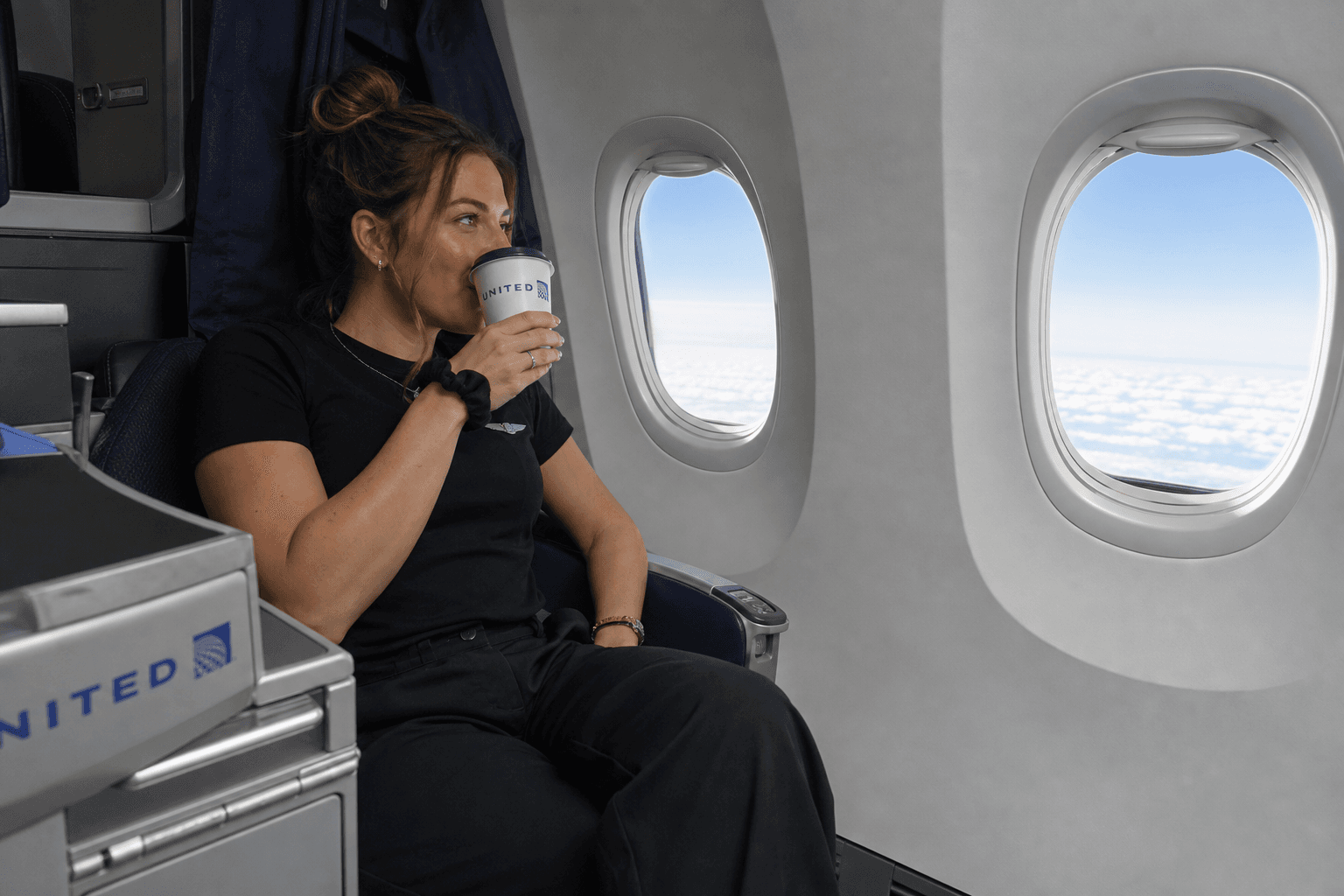
United Airlines flight attendants can drink while on duty in one narrow situation: when they are deadheading as passengers, out of uniform, and not expected to work another flight that day.
How Crews and Aircraft Separation Amplify Flight Delays Even After Weather Clears
Airlines often blame weather even after skies clear because the disruption has scattered aircraft, pilots and flight attendants across the network. After a storm delayed my American Airlines flight at Washington National, a missing crewmember exposed how separating planes and crews can turn one late arrival into delays across multiple flights.
Airbus to upgrade A321neo with A321XLR wing design and single-slotted flaps
Airbus to incorporate batch of improvements on popular single-aisle model, and test production maturity of some on A320neo line. Airbus is to migrate A321XLR technology – including its revised wing design – to the A321neo, while other enhancements for the single-aisle family will initially be applied to the A320neo before being transferred up to the larger variants. The long-range XLR includes a lighter wing with a single-slotted inboard flap, and this will be incorporated into the regular A321neo, which currently uses a double-slotted design. A321neos will take advantage of a take-off performance improvement system which introduces intermediate flap positions, and works in conjunction with the single-slotted flap arrangement. The changes are part of a package of incremental improvements known as STEP4. A321neos will also benefit from new flight-control laws, the lighter electronic ‘e-rudder’, forward cabin temperature zones, and updated multi-functional runway lights. Head of A320-family development Torsten Hartung says the airframer is putting the "good ingredients" from the XLR onto the popular A321neo platform – the A321neo had a backlog of over 5,600 orders at the end of June. But the STEP4 enhancement will also entail new modifications which Airbus is to apply initially to the A320neo, as a low-risk measure to ensure production maturity before transferring them to the higher-rate A321neo, including the XLR variant. The A320neo will notably receive a new 'cobra' duct for the auxiliary power unit – mounted in the top of the fuselage, and aimed at enhancing cabin air quality – and corrosion-prevention measures such as titanium cabin rails. "The baseline A320neo is the first model to incorporate and prove the new modifications," says STEP leader for A320 family programme development Martin Schnoor. “Where we physically change the aircraft we decided to apply it first on A320neo in order to learn and see how well things are going." Once integration on the A320neo line is smooth, the new modifications will be made to the A321neo and XLR. Schnoor says deliveries of initial STEP4 A320neos are beginning, with the first A321neos and XLRs set to follow after a year. The A320neo has a different wing to the A321neo, but Airbus is ultimately aiming to migrate as many XLR innovations, outside of wing-related changes, to the A320neo as it can. Airbus says STEP4 will also eventually deliver further enhancements across the family, such as cabin-floor reinforcement, to account for changing standards in the weight of passengers and baggage, and a standardised flight data interface and management unit.
The Daily Touch & Go
The day's best aviation news in your inbox. Free, no spam.