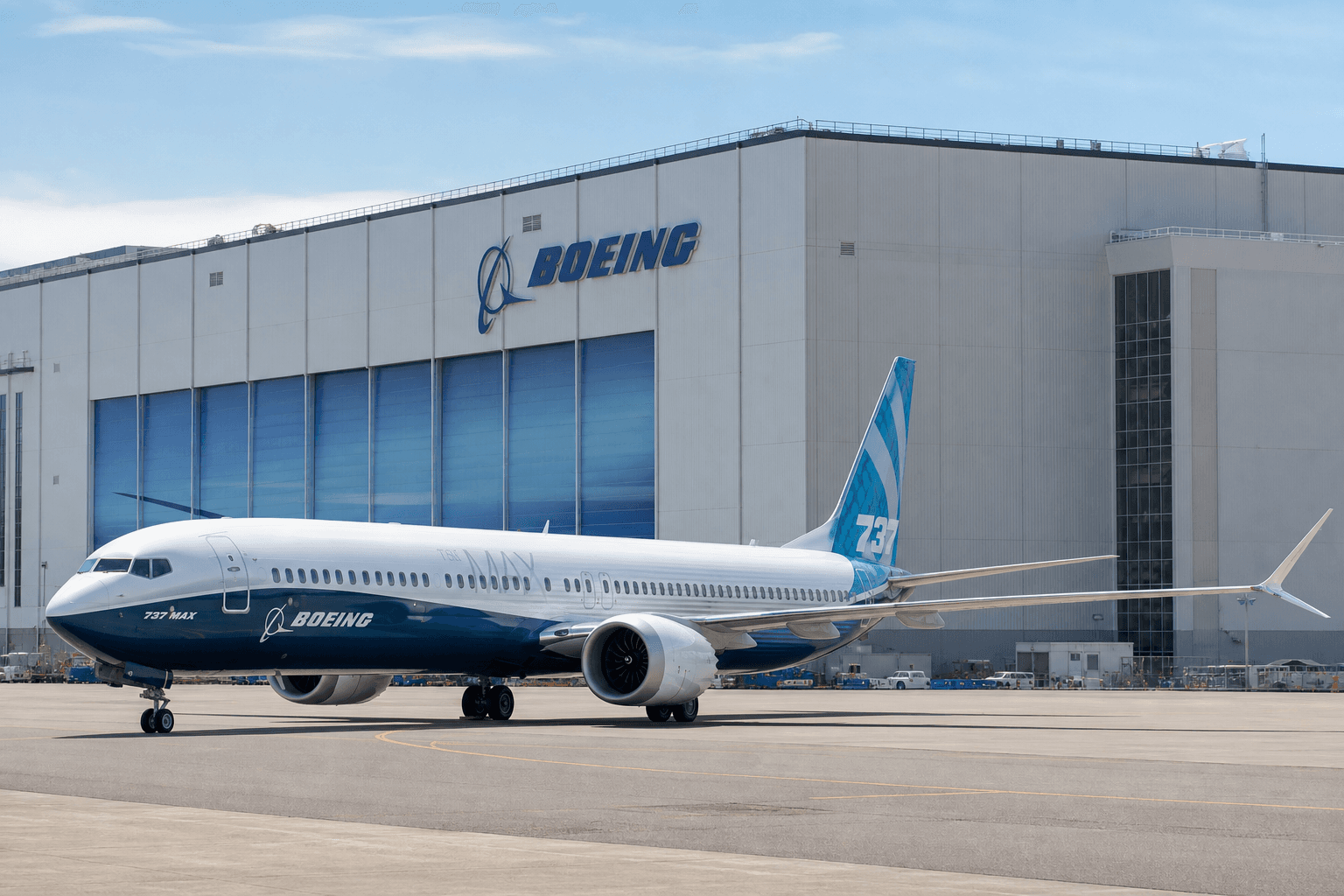
Illustration: The Touch & Go
Boeing Plans New Clean-Sheet Jet After Completing 737 MAX and 777X Certification
CEO Kelly Ortberg confirms Boeing will start funding a new all-new airliner program by 2030 after finalizing current 737 MAX and 777X certifications.
The gist
Boeing will shift engineering resources to a new aircraft development by 2030 after certifying its 737 MAX and 777X jets.
Continuing coverage
All Boeing →- Boeing Forecasts Nearly $5 Trillion Market for Aviation Services and 2.4 Million Jobs by 2045
- Boeing predicts steady 20-year aircraft demand despite current travel slump
- Boeing dismantles never-flown 777-9 amid costly rework and program delays
- Boeing returns to Farnborough Airshow with emphasis on rebuilding trust and safety
- South Korea upgrades F-15K fleet with advanced BAE EPAWSS electronic countermeasures
Boeing CEO Kelly Ortberg announced a major strategic move to launch the company's first all-new airplane design in two decades, targeting funding initiation by 2030. This plan is contingent on completing certification processes for the remaining 737 MAX variants, including the MAX 10, and the long-delayed 777X widebody model. Ortberg highlighted that finishing these pivotal programs will stabilize the company financially and free key resources to develop the next generation aircraft.
The announcement, disclosed just before the 2026 Farnborough Airshow, underscores Boeing's intention to focus on maturing its existing commercial aircraft programs before turning to the future. Boeing has been heavily engaged in rectifying issues tied to the 737 MAX, which was grounded worldwide for nearly three years following two fatal crashes and follow-up safety incidents. Similarly, the 777X program has faced protracted entry-into-service delays, with deliveries now expected to commence in 2027 instead of the originally planned 2020 debut.
The upcoming new model, colloquially dubbed the 797 by industry watchers, is expected to succeed the 737 MAX as Boeing's narrowbody flagship. Unlike the earlier mid-market aircraft concepts abandoned in recent years, the new jet is rumored to be a scalable single-aisle design family, accommodating passenger capacities ranging from approximately 160 to 240 seats. This architecture aims to bridge the gap between the existing 737 MAX and larger models such as the 757 and 767, which Boeing currently does not offer direct replacements for.
Boeing's current backlog emphasizes the commercial importance of the MAX lineup. With over 7,000 unfilled orders, the MAX has been Boeing's fastest-selling aircraft historically despite the setbacks. The Federal Aviation Administration recently restored Boeing's authority to issue its own airworthiness certificates, a privilege rescinded in 2019 after the MAX accidents. This regulatory milestone reflects the company's improvements in safety culture and quality control, which have facilitated gradual production ramp-ups to more than 40 units per month.
The company is also refining manufacturing approaches, exemplified by the introduction of a new 'North Line' in Everett, Washington, primarily focused on the 737 MAX 10. This new production line highlights Boeing's shift towards modular construction techniques designed to increase factory efficiency and aircraft configurability. Concepts developed through the MAX, 787 Dreamliner, and 777X programs will inform the design and production methodologies for the new 797 family, promising enhanced fleet commonality and operational flexibility for customers.
Boeing's strategy reflects the need to regain competitive ground lost to Airbus, which has seen commercial success with its A321neo and extended-range variants filling the market space Boeing vacated after shelving its 757 successor plans. Airbus is simultaneously advancing its own next-generation aircraft initiatives, which could reach market ahead of Boeing’s new model, capitalizing on steadier program schedules and market presence. The competition intensifies Boeing's imperative to deliver a breakthrough aircraft that appeals to airlines operating legacy Boeing fleets as well as those seeking new efficiency standards.
Ortberg emphasized the company's commitment to sustaining full support for the existing airframe lines throughout the transition, ensuring operational reliability for jets currently in service. To maintain momentum, Boeing invests considerable focus on finalizing certifications and ramping production before allocating engineering and financial capacity to the new development. This phased approach aims to stabilize the company’s financial and operational foundations before embarking on a new aircraft program.
With the aviation industry closely watching Boeing’s next moves, the certification successes of the 737 MAX variants and 777X will serve as a critical gauge of Boeing’s industry position. The forthcoming introduction of the 797 family is set to tackle a historically challenging market segment by offering greater flexibility in seating capacity and promising advances in manufacturing. Boeing’s approach signals a cautiously optimistic shift that capitalizes on current program completions to fuel innovation for the future of commercial aviation.
Frequently asked questions
- When does Boeing plan to start funding its new clean-sheet aircraft program?
- Boeing plans to begin funding its first new clean-sheet aircraft program in about 2030 after finalizing certification of its 737 MAX and 777X models.
- What current Boeing programs must be completed before the new aircraft program begins?
- Boeing needs to complete certification and maturation of the remaining 737 MAX variants and the 777X widebody before shifting resources to the new aircraft development.
- What is the expected passenger capacity range for the upcoming Boeing 797 aircraft family?
- The new Boeing 797 is speculated to be a scalable single-aisle aircraft family with capacities ranging from approximately 160 to 240 seats.
Read more
All Regulatory →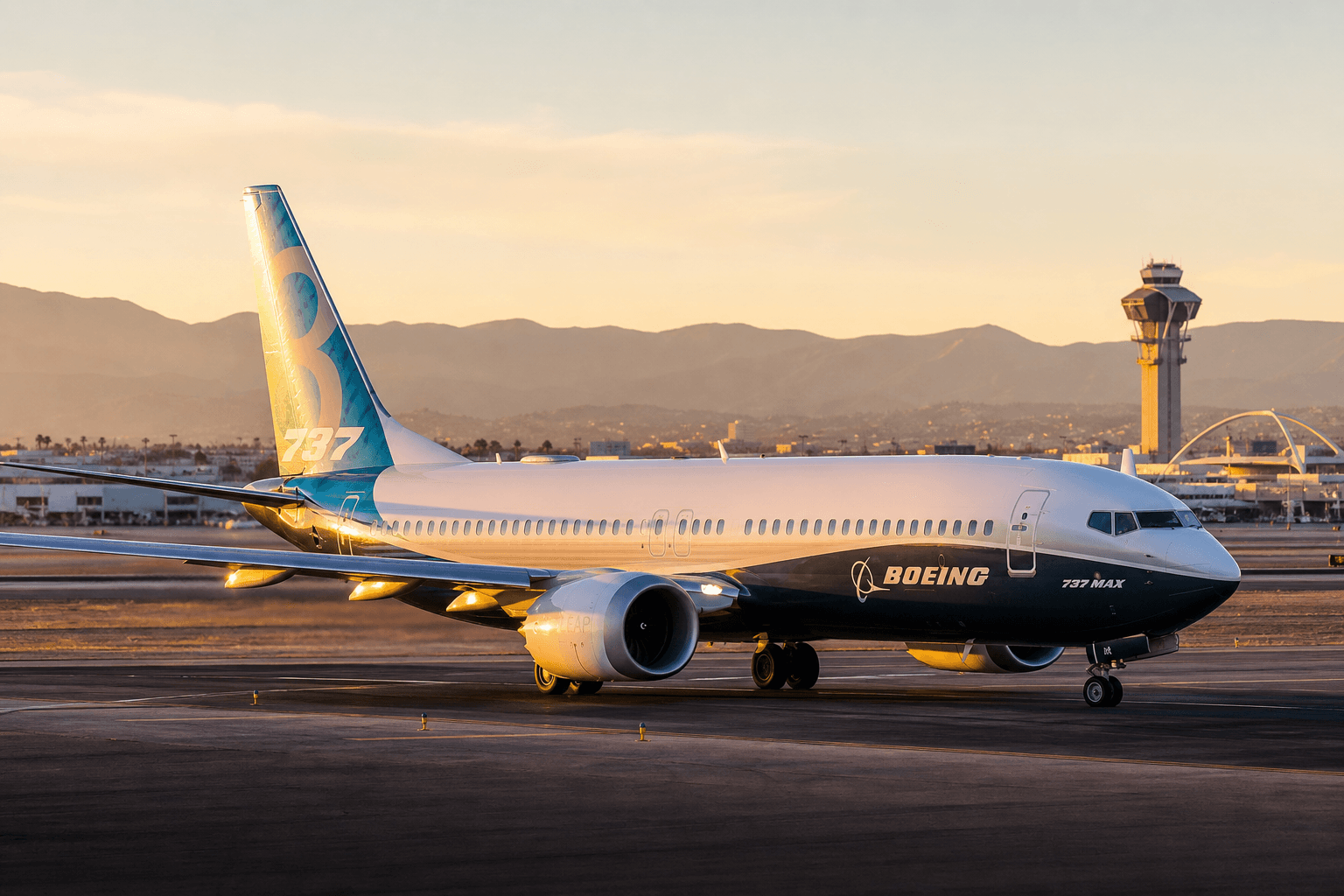
FAA Restores Boeing's Authority to Certify New 737 MAX and 787 Jets
Starting July 20, Boeing will again issue final airworthiness certificates for newly built 737 MAX and 787 aircraft—authority the FAA reserved after fatal crashes and production failures. The agency says eight months of alternating inspections produced comparable quality findings, while federal audits and production oversight will continue.
Boeing launches fourth 737 MAX final assembly line at Everett facility
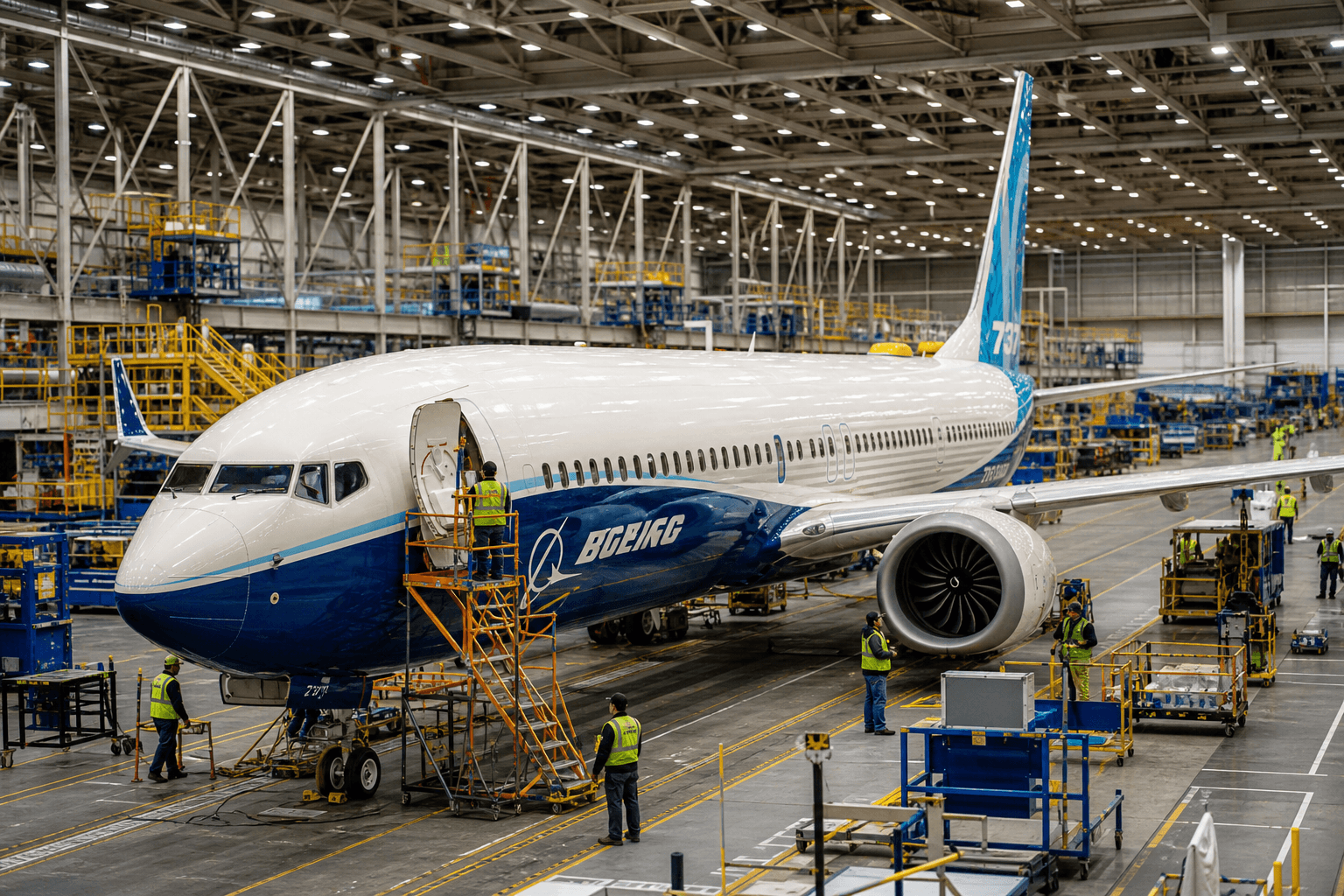
Boeing has opened a fourth 737 MAX final assembly line at its factory in Everett, Washington, marking the first time in more than 50 years that the 737 has been built outside Renton. Production began on the first aircraft on July 6, 2026, with Boeing formally marking the opening of the new North Line four days later. The line occupies space in the Everett factory that was originally built for widebody aircraft, including the 747. The first 737 moving through the line is a 737 MAX 10. Boeing did not publicly identified the customer for that airplane. The new line is designed around the same production process used at Boeing's three existing 737 lines in Renton, about 40 miles south of Everett. Boeing said that should allow teams at both sites to share procedures and production improvements. The North Line will not immediately result in a sharp increase in monthly output. Boeing plans to use the first aircraft for low-rate initial production, giving workers time to test the line, complete regulatory and compliance work and make changes before output increases. The company is currently raising 737 production from 42 to 47 aircraft a month. Once the Renton lines stabilize at that level, the Everett line is expected to provide the additional capacity needed to reach 52 aircraft a month and potentially higher rates later. Boeing has more than 4,000 737 MAX aircraft in its backlog, enough to keep the program busy into the 2030s at current production rates. The added line gives the manufacturer more room to work through those orders while reducing its dependence on three assembly lines at a single site. The Everett line will also handle aircraft that require more time than Boeing's standard production flow. Boeing said that could include jets with more complex interiors or additional work that would otherwise slow one of the Renton lines. Boeing first announced the Everett expansion in January 2023. The factory had available space after the end of 747 production and the consolidation of 787 final assembly in South Carolina. Everett continues to build the 767 and 777 families. The opening comes as Boeing works to rebuild 737 output following years of production interruptions and increased regulatory scrutiny. The Federal Aviation Administration (FAA) imposed limits on 737 production after a door plug separated from an Alaska Airlines 737 MAX 9 shortly after takeoff in January 2024. Boeing has since been increasing output in stages while working with the FAA and suppliers. Boeing said it will not move to higher production rates until the manufacturing system is stable and meeting its quality targets. The company built the first 737 near Seattle before moving the program to Renton in 1970.
Boeing 737 MAX Surpasses 7,200 Orders, Becoming Company's Best-Selling Aircraft
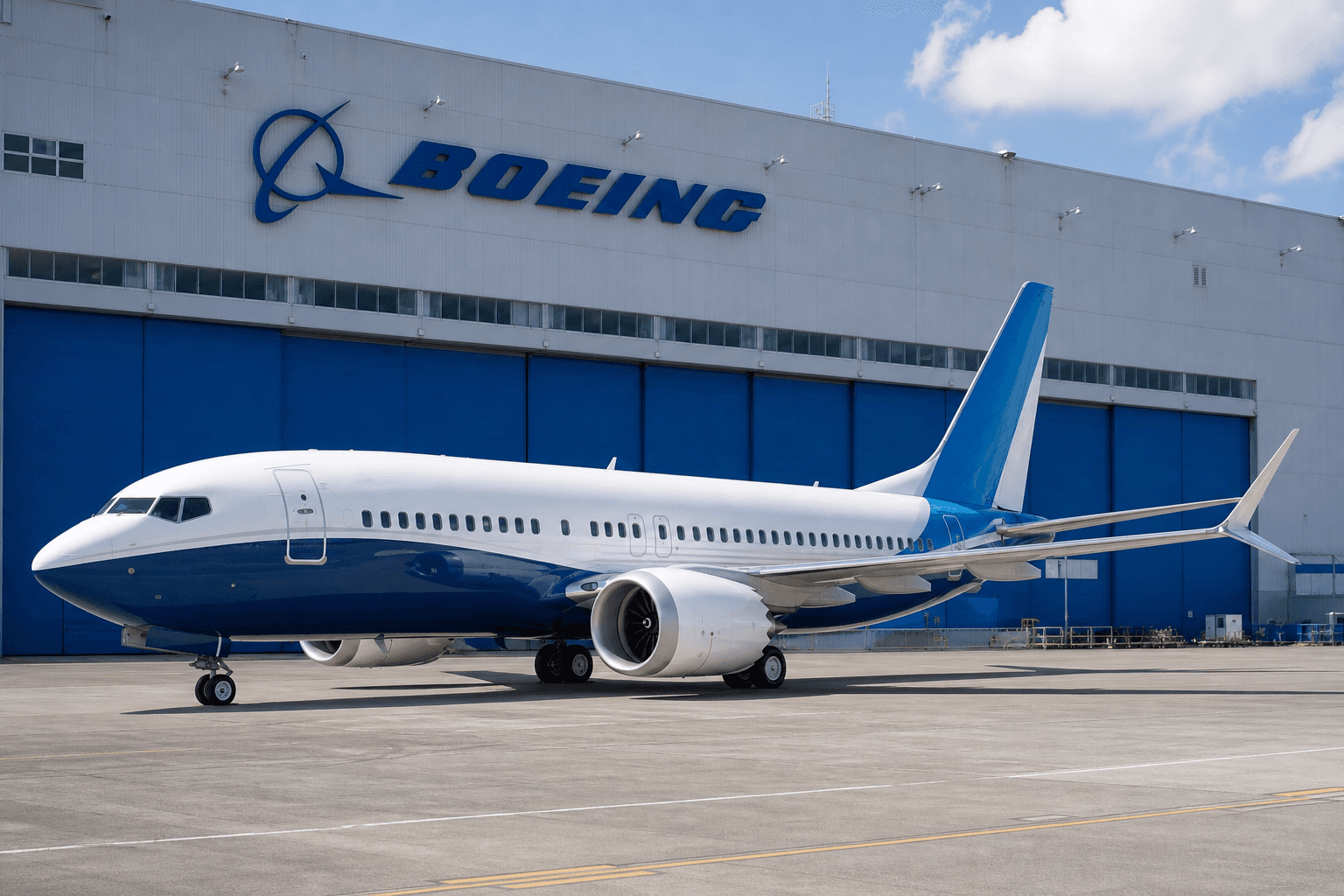
As the Boeing 737 MAX series nears the final stages of certification for its highly anticipated MAX 10 and MAX 7 variants, the order book has filled up to epic proportions. With the backlog that accumulated after the first quarter of 2026, Boeing is slated to deliver 7,206 airframes of all variants, which makes it the best-selling aircraft in the historic plane maker's history.
Boeing launches 737 Max assembly at new Everett North Line to boost production
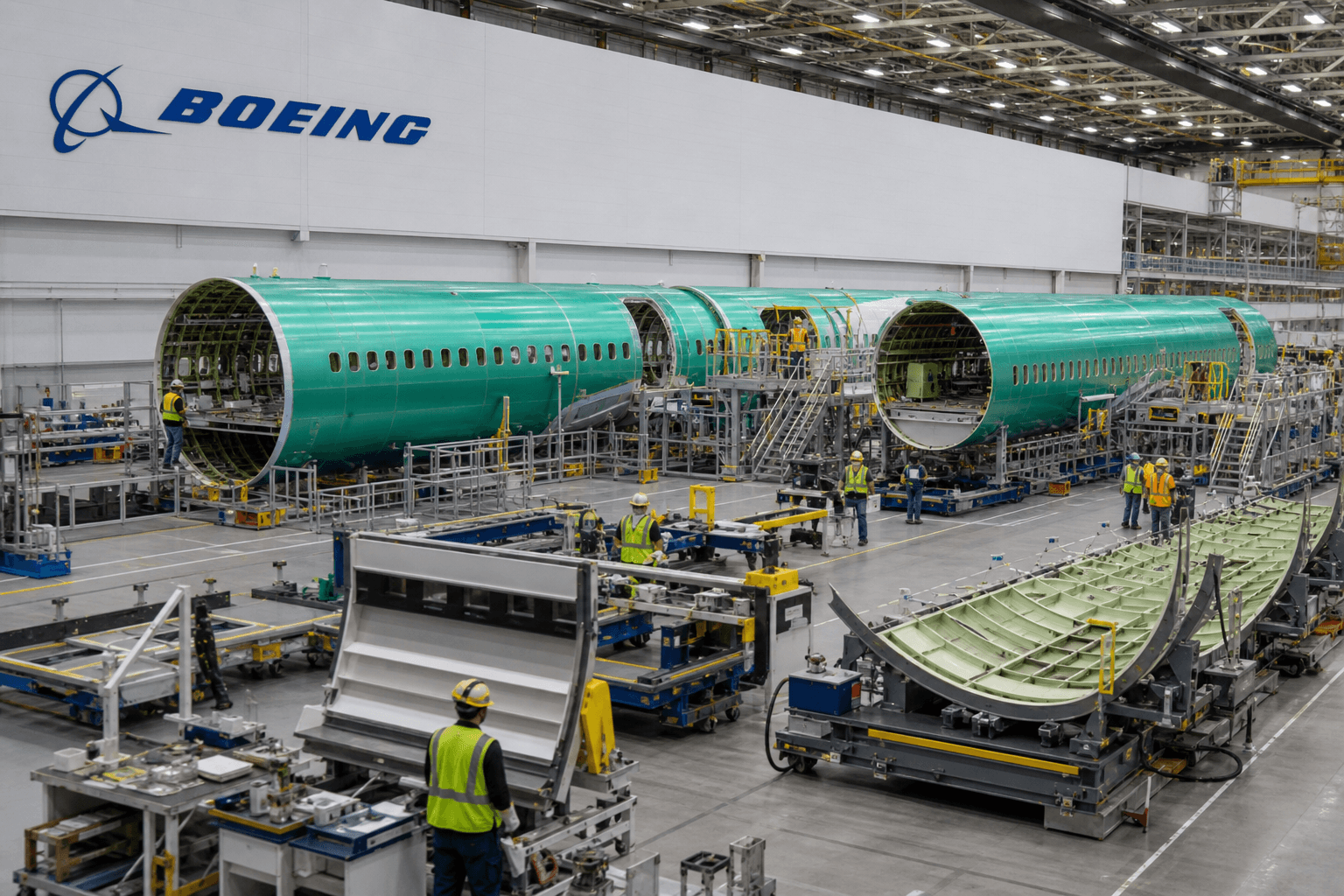
The company intends for the new line to help it achieve a production rate of 52 737s monthly. Boeing has started assembling the first 737 Max on its new line in Everett, marking the start of production at a site the company says will enable it to further accelerate 737 output. The airframer disclosed the milestone in an internal company message on 6 July, saying it began producing the jet on that day and that it will hold a ribbon-cutting ceremony there on 10 July. Boeing has for decades only produced 737s at its Renton facility south of Seattle but several years ago began planning to assemble them also on the new “North Line” at its Everett site north of Seattle. Boeing has said the additional capacity will enable it to ramp production without sacrificing quality. “Boeing teammates began assembling a 737 Max airplane on the new North Line on Monday, marking the start of 737 production at the Everett site. The team worked on the fuselage in the systems installation tool, replicating the build process used on the three 737 production lines about an hour south in the Renton factory,” a message posted to Boeing’s news site reads. The company freed up space in Everett in recent years after ending 747 production entirely and moving all 787 production to its site in North Charleston, South Carolina. The North Line is in the space where Boeing formerly produced 787s. Throughout the last decade, Boeing had assembled 53 737s monthly in Renton. But output slowed following the 737 Max grounding and subsequent Covid-19 pandemic. The company has struggled recently to ramp up production amid persistent quality problems that prompted the Federal Aviation Administration to cap output. Supply chain shortages were also a factor. The supplier issues have since eased, and the FAA has lifted its caps. As a result, Boeing’s production cadence has accelerated, with the company now moving from a rate of 42 to 47 737s monthly. Boeing aims to boost production to 52 jets monthly with assistance from the North Line. Additional rate hikes are also planned. “The build process in Everett will largely be the same as in Renton, apart from the production of the wings. Wings will continue to be built by teammates in Renton and then the 737 Wing Transport Tool will ferry them to Everett for final assembly,” Boeing’s internal message says. The exact composition of the new wing transport system has not immediately been made clear. While the North Line has been designed to accommodate production of all four 737 Max variants, Boeing has said it will initially produce only Max 8s, 9s and 10s – but not Max 7s – in Everett. The Max 7 and Max 10 are not yet certificated but Boeing says it expects to achieve those approvals this year. Workers at the North Line include new employees and those transferred from Renton and another Boeing site in Moses Lake, Washington. Boeing plans first to operate the North Line at "low rate initial production" — a reduced pace that will enable it to closely monitor the production system and demonstrate to the FAA that processes there conform to those in Renton — a requisite for Boeing to receive FAA approval to operate the North Line under its existing 737 production certificate. Boeing previously aimed for the North Line to be running in the second half of 2024 but delayed the plan after the FAA capped 737 output .
The Daily Touch & Go
The day's best aviation news in your inbox. Free, no spam.