

Doubling B-21 Raider Production Faces Major Hurdles Despite $10 Billion Funding Boost
US Air Force aims to increase B-21 Raider bomber output by 25%, but doubling production in the near term remains unlikely due to supply chain and facility limits.
The gist
Although funding boosts increase B-21 production by 25%, doubling output soon is constrained by supply chains and infrastructure at Plant 42.
Continuing coverage
All Military Aviation →- RAF Coningsby: UK's Premier Base for Typhoon Jets and Historic Battle of Britain Aircraft
- USMC F-35Bs Demonstrate Unique Finnish Highway Landing Amid NATO Exercise
- Massive multi-branch flight display celebrates US 250th anniversary over Washington DC
- US Marine F-35B Pilots Leaving for Airlines Offering Pay Nearly Double
- US and China Stand Alone in Ability to Independently Build True 6th-Gen Fighters
The Northrop Grumman B-21 Raider program remains on schedule as it transitions from low-rate production to full serial production, yet rapidly doubling its output is not feasible in the near term. Currently, the US Air Force operates up to three prototype B-21s used primarily for testing, with the first flight having occurred in 2023 and initial service slated for 2027. As the program moves toward delivering operational aircraft, the Air Force aims to increase annual production from about seven to eight planes to nine or ten, following a recent funding increase of roughly $4.5 billion dedicated to expanding capacity.
At its core production facility, Air Force Plant 42 in Palmdale, California, Northrop Grumman manufactures the B-21 Raiders. This site is the same where the B-2 Spirit stealth bomber was built during the 1990s, allowing Northrop to leverage decades of experience in stealth bomber manufacturing. Instead of establishing new locations, efforts focus on maximizing output at Palmdale and bolstering the existing supplier base, which remains a critical component of production capacity.
Northrop Grumman’s approach to the B-21 development integrates advanced manufacturing technologies, including digital simulation and augmented reality tools. These innovations enable technicians to anticipate and resolve manufacturing challenges before physical assembly, increasing the efficiency of test planning and flight test data collection. This technological edge has contributed to the program’s comparative timeliness and budget discipline—remarkable for an aerospace project of such complexity.
While Northrop Grumman leads final assembly, stealth design, and systems integration, the vast majority of the B-21’s components come from a network of Tier 1 subcontractors. Major players include BAE Systems, which handles defense electronics and electronic warfare components; Collins Aerospace, responsible for avionics and flight control systems; and Pratt & Whitney, which produces the bomber’s specialized non-afterburning engines derived from F135 core technology. Spirit AeroSystems and GKN Aerospace also supply key composite structural elements, further emphasizing the distributed nature of the supply chain.
Challenges in scaling production arise primarily from these subcontracted components and supply chain logistics. Increasing deployment from the current baseline to 25% more aircraft annually requires each tier supplier to expand their manufacturing capabilities in alignment with Northrop’s schedule. Such expansions are capital and time intensive, meaning doubling output to 15-20 aircraft per year involves significant logistical hurdles and lead times that extend beyond immediate budget injections.
The growing strategic urgency placed on the B-21 program by evolving geopolitical threats underscores why acceleration is a priority. The Air Force contemplates increasing its intended fleet size from at least 100 bombers to as many as 145 or even 200 in the future. However, the constraints imposed by physical manufacturing capacity, workforce availability at Plant 42, and component supply continuity place real limits on rapid production scale-up.
Additionally, Northrop Grumman’s financial commitment to the B-21 is now substantial, with the bomber accounting for approximately 10% of the company’s revenue, supplemented by their work on related defense projects like the LGM-35 Sentinel missile. This concentrated investment affirms the importance and complexity of the program but also highlights how incremental output increases require coordinated effort across multiple defense sectors.
Thus, while the Air Force and Northrop Grumman have successfully maintained a streamlined development and introduction timeline for the B-21 Raider, the constraints of existing facilities and the intricacies of its supply network limit the feasibility of rapidly doubling production in the short term. The program’s forward plan focuses on a more measured increase to around ten aircraft annually, balancing urgency with practicality in industrial capability.
Read more
All Military/Defense →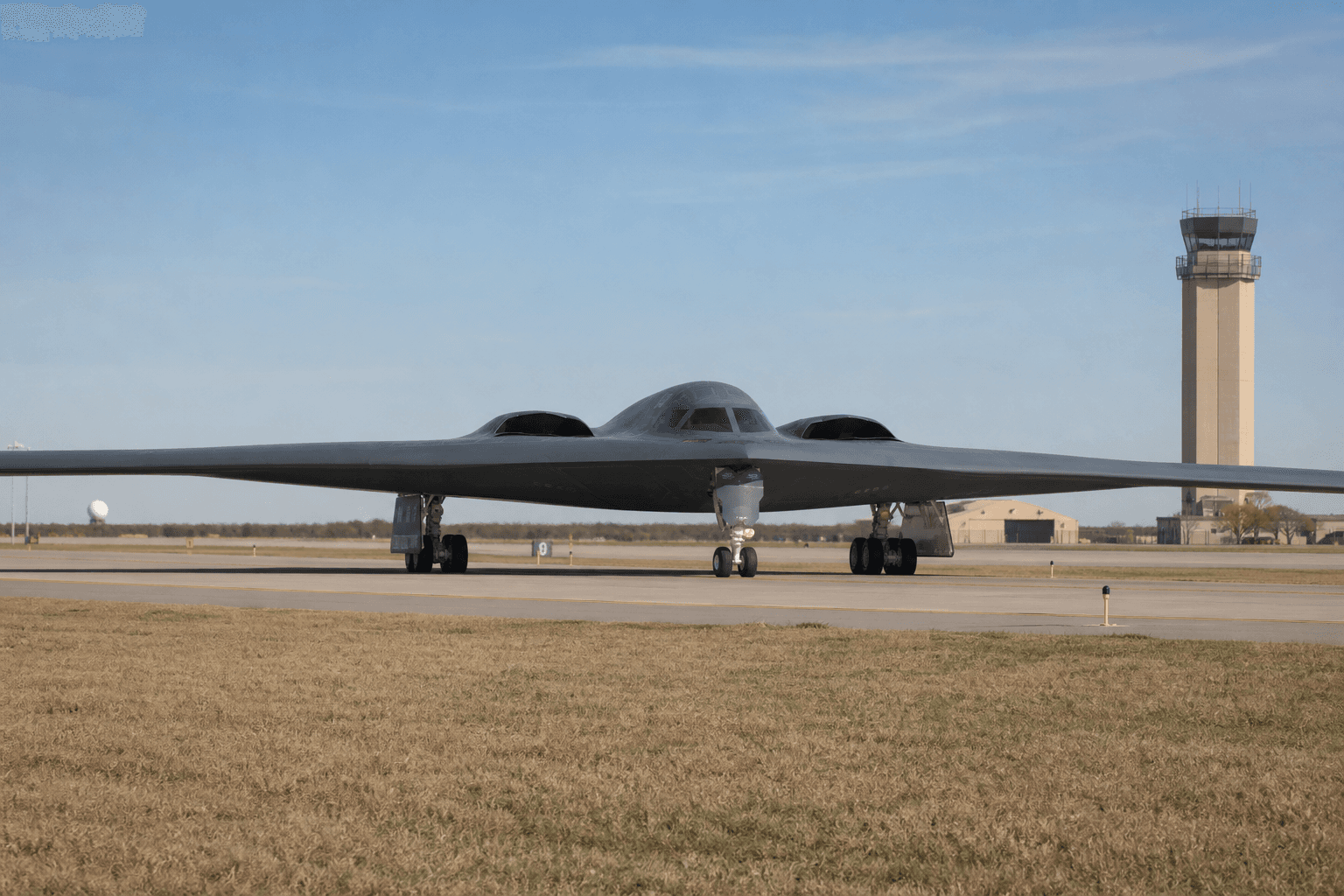
B-2 Spirit Bomber Equipped with Functional Crew Rest Facilities for Ultra-Long Missions
The Northrop B-2 Spirit is not designed for comfort; it is designed survive the first night of war. It is designed to be one of the first aircraft to kick in the proverbial door and carry out some of the operation's opening strikes. Unlike other bombers in service with the US, Russia, and China, it is able to penetrate enemy air defenses. To avoid the risk of being struck on the ground and to maximize surprise and uncertainty, these bombers often take off directly from their home base at Whiteman AFB, Missouri.
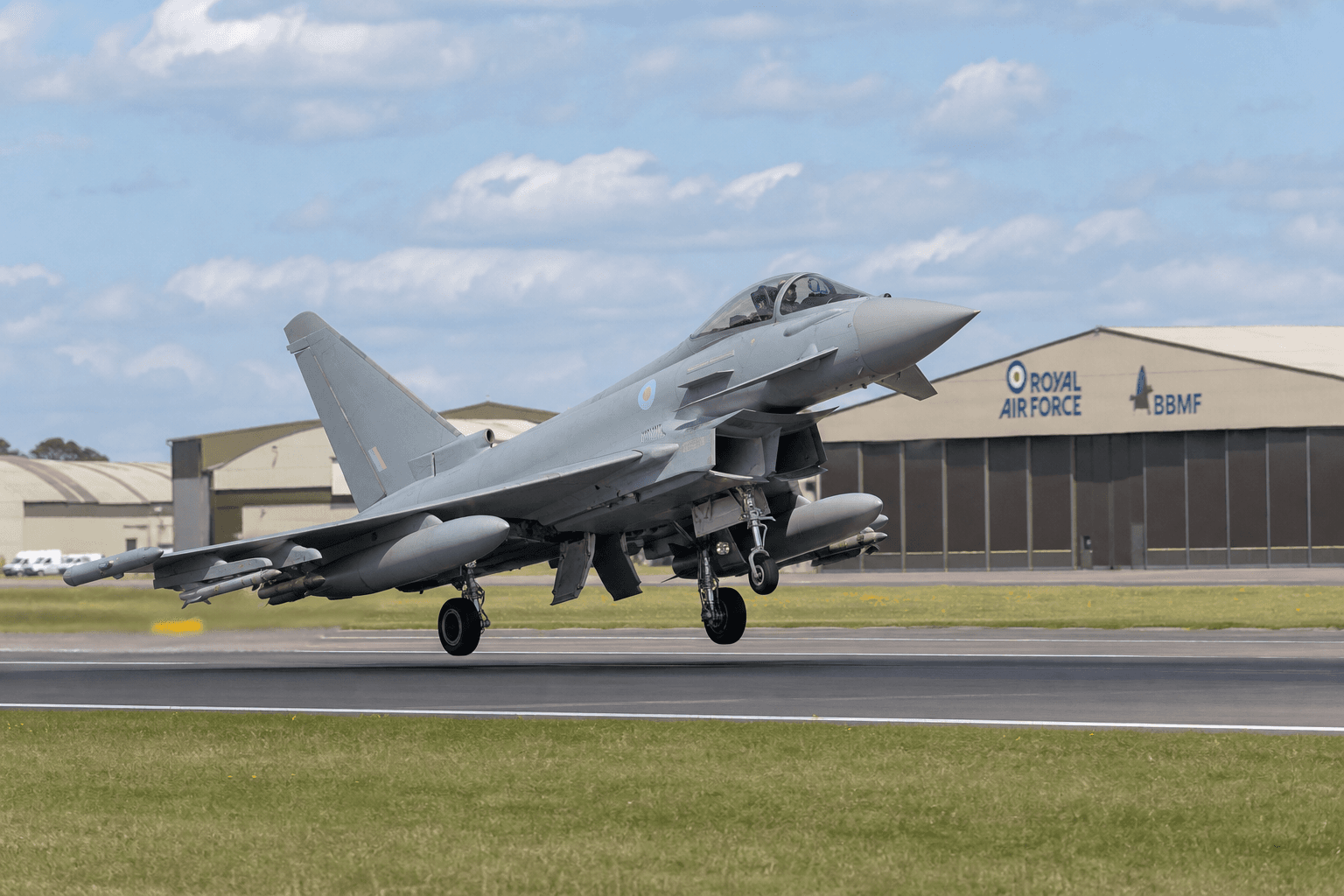
RAF Coningsby: UK's Premier Base for Typhoon Jets and Historic Battle of Britain Aircraft
Few military airfields in the UK are as rewarding for aviation enthusiasts as RAF Coningsby . Home to the Royal Air Force’s frontline Typhoon force and the world-famous Battle of Britain Memorial Flight, the Lincolnshire base offers a fascinating mix of modern combat aircraft and priceless Second World War classics. On almost any visit, there’s the chance to watch cutting-edge fighters carrying out training sorties before seeing an 80-year-old Spitfire or Lancaster taxi out for a commemorative flight. Located in the heart of what became known as ‘Bomber County’ , RAF Coningsby is surrounded by aviation history. Alongside nearby RAF Waddington, RAF Cranwell and the former bomber stations that once dotted Lincolnshire, it remains one of Britain’s premier aviation destinations and a must-visit location for military aircraft spotters. A Brief History of RAF Coningsby RAF Coningsby opened in 1940 during the Second World War as one of the many bomber stations built across Lincolnshire to support RAF Bomber Command. Initially home to Whitleys before receiving Avro Lancasters, the station became an important operational base from which crews flew missions over occupied Europe. Following the war, Coningsby entered the jet age, operating a succession of famous aircraft including the English Electric Canberra, Avro Vulcan and Panavia Tornado F3. Since 2005, it has become one of the principal operating bases for the Eurofighter Typhoon , cementing its role at the forefront of UK air defence. Today, while many of Lincolnshire’s famous wartime bomber stations have disappeared or become museums, Coningsby remains a fully operational RAF station, continuing the county’s proud aviation tradition while preserving its remarkable heritage through the Battle of Britain Memorial Flight . Aircraft and Squadrons RAF Coningsby is one of the Royal Air Force’s busiest fast-jet stations and serves as a major centre for Typhoon operations. The station is home to: No. 3 (Fighter) Squadron – Frontline Eurofighter Typhoon FGR4 unit. No. XI (Fighter) Squadron – Another operational Typhoon squadron responsible for UK air defence and overseas deployments. No. 29 Squadron – The RAF’s Operational Conversion Unit, responsible for training new Typhoon pilots before they join frontline squadrons. Coningsby also hosts the Battle of Britain Memorial Flight , whose hangars house the Flight’s priceless collection of historic aircraft. While these aircraft fly only on selected training and display sorties, spotting one alongside modern Typhoons is an unforgettable experience. Thanks to the station’s operational tempo, visitors can often expect multiple Typhoon departures and recoveries during weekdays, together with occasional visits from other RAF, NATO and international military aircraft. Visit the Battle of Britain Memorial Flight Visitor Centre No visit to RAF Coningsby is complete without spending time at the Battle of Britain Memorial Flight Visitor Centre . Situated just outside the station, the Visitor Centre offers guided tours of the BBMF hangars, where visitors can get remarkably close to the Flight’s legendary aircraft, including the Avro Lancaster , Supermarine Spitfires , Hawker Hurricanes and Douglas Dakota . It’s a rare opportunity to see these historic aircraft undergoing maintenance and learn about the engineering expertise required to keep them airworthy. If you’re planning a spotting trip to Coningsby, combining it with a BBMF tour makes for an outstanding day out. ( You can read our full guide to visiting the BBMF Visitor Centre here .) Plane Spotting at RAF Coningsby Whether you’re hoping to photograph Typhoons launching on Quick Reaction Alert training sorties, capture a Lancaster taxying past in the sunshine, or simply enjoy one of Britain’s most historic military airfields, RAF Coningsby rarely disappoints. Below, we’ve rounded up the best spotting locations around the airfield, together with advice on photography, runway usage and the best times to visit. Spotters Car Park Along Dogdyke Lane there is a car park situated at the end of runway 07 (postcode LN4 4TE). From here you can sit and watch or photograph movements on the runway (however 25 departures are a little high by this point). There's usually plenty of spotters around, and vans selling food and drink. BoBMF Layby A little further up Dogdyke Lane is a layby next to the fence which looks out onto the Battle of Britain Memorial Flight hangar and apron. It's great for seeing these aircraft coming and going, and you can also see Typhoons parked up beyond. Runway 25 The B1192 runs past the end of runway 25. To get there you can continue past spot 1, then turn left onto New York Road and left onto the B1192/Langrick Road, heading north. Just before the traffic lights at the end of the runway is some rough ground on the left, in a farmer's field. You can pull onto here and park (with a donations box for local charity). If aircraft are landing on 25 this is a great spot for photography. Discover 150 More Spotting Locations Across the UK and Ireland If you enjoy exploring airports like RAF Coningsby, our Airport Spotting Guides: UK & Ireland (2nd Edition) is the perfect companion. This comprehensive guide features 150 airports, military airfields and aviation museums across the UK and Ireland, with detailed spotting locations, photography advice, runway information, visitor facilities and practical tips to help you make the most of every visit. Whether you’re watching Typhoons at Coningsby, airliners at Heathrow, maritime patrol aircraft at Lossiemouth or classic warbirds at Duxford, it’s an essential reference for every aviation enthusiast. Available in print from our online shop and major booksellers, it’s the ideal resource for planning your next spotting adventure—and a book you’ll return to time and time again. Get Your Copy Here
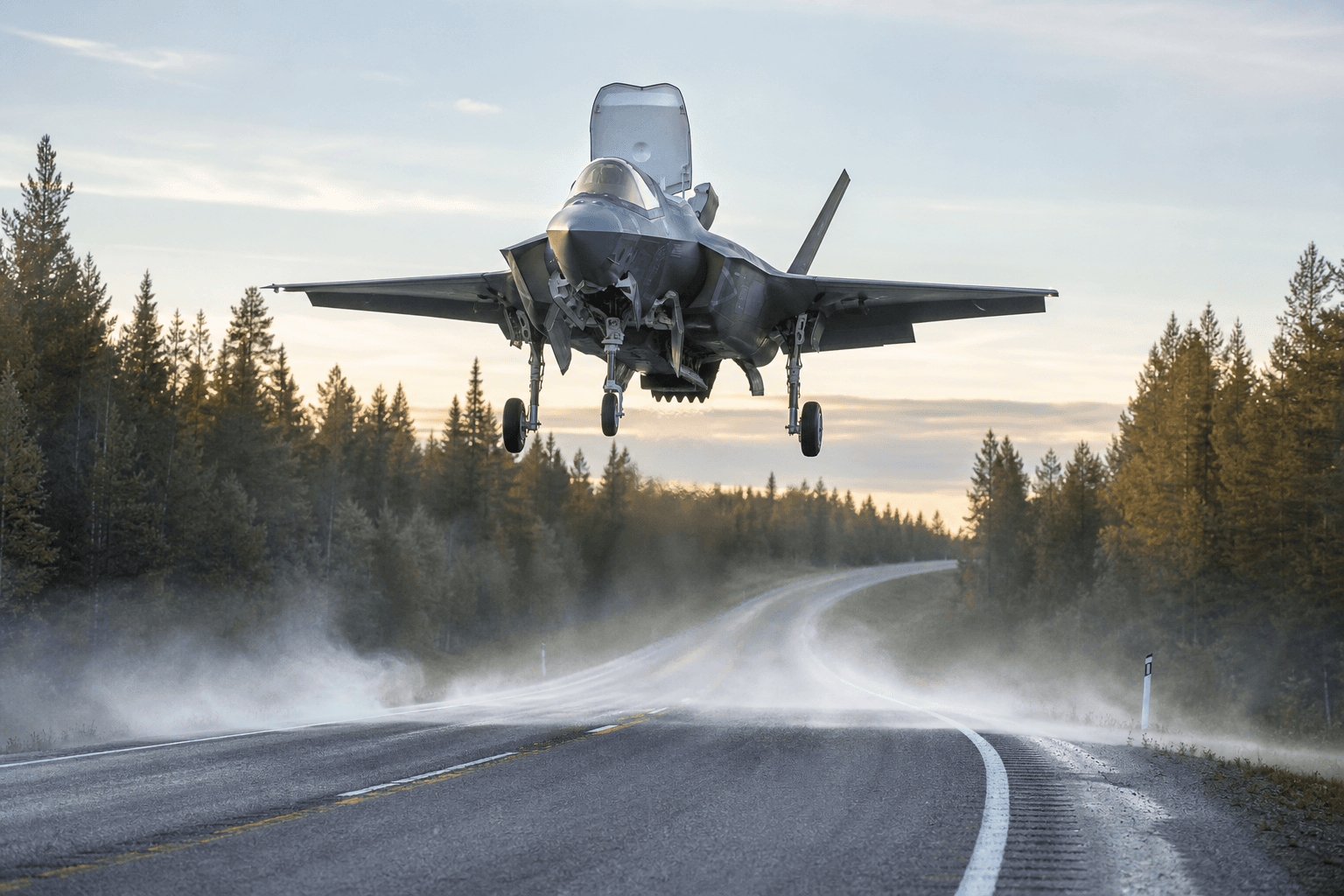
USMC F-35Bs Demonstrate Unique Finnish Highway Landing Amid NATO Exercise
How the F-35B's lift fan allows NATO jets to operate from Finnish roads and why that capability matters near Russia.

Trump's $400M Qatari-Gifted Boeing 747-8 Faces Uncertain Future at Miami Presidential Library
Trump's $400M Boeing 747-8 Air Force One faces legal, political, and logistical hurdles that could block its Miami presidential library future.
The Daily Touch & Go
The day's best aviation news in your inbox. Free, no spam.