

Illustration: The Touch & Go
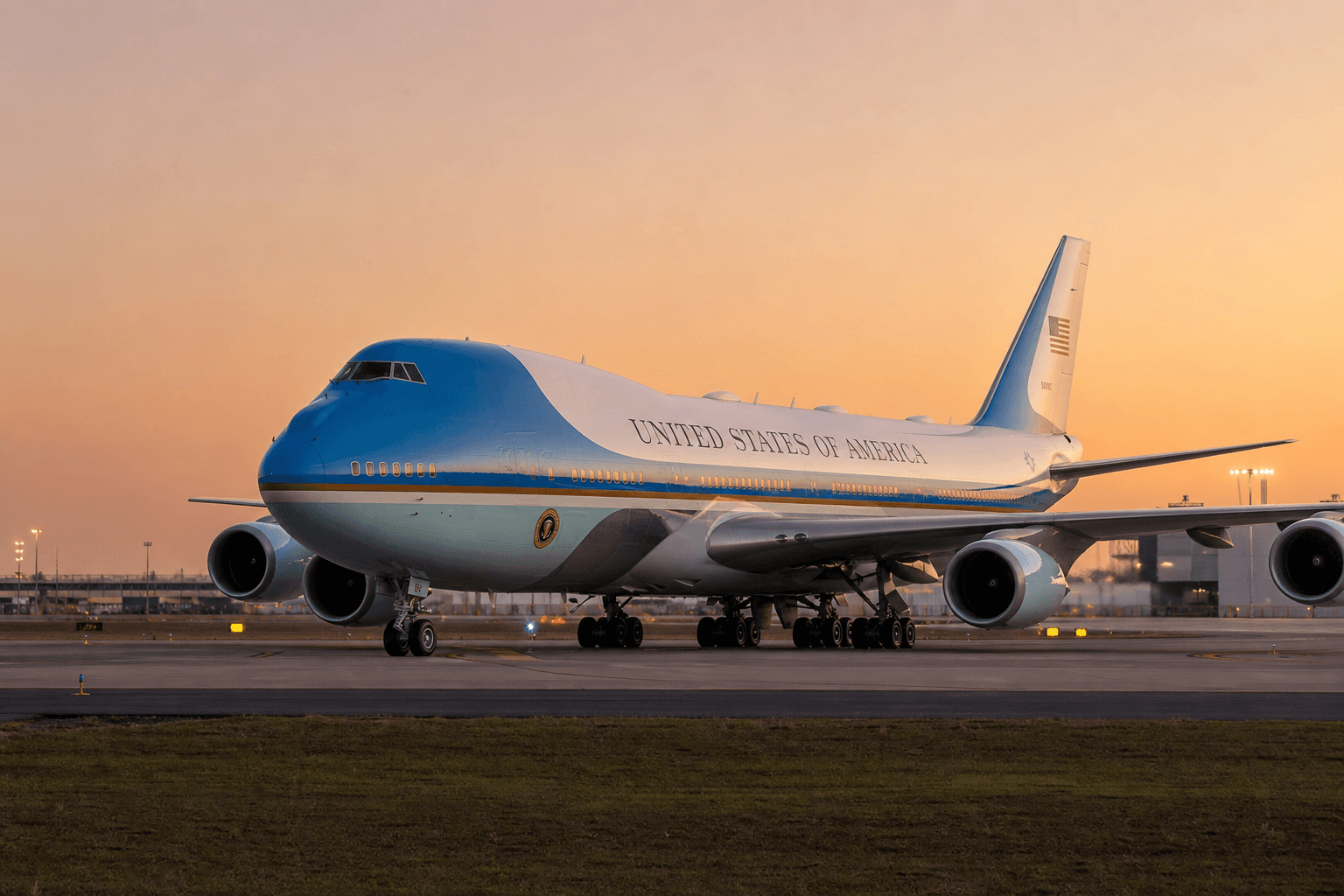
Trump's $400M Qatari-Gifted Boeing 747-8 Faces Uncertain Future at Miami Presidential Library
A luxury Boeing 747-8 gifted by Qatar, serving as a temporary Air Force One, may never permanently be housed at Trump's planned Miami presidential library due to legal, political, and logistical hurdles.
The gist
Trump’s donated 747-8 Air Force One faces legal and operational barriers to becoming a permanent exhibit at his presidential library.
Former President Donald Trump recently utilized a Boeing 747-8 Intercontinental jet gifted by the Qatari royal family, marking its debut as a VIP-configured Air Force One. Valued at approximately $400 million, this aircraft serves as a ‘bridge’ Air Force One amid delays in Boeing’s VC-25B replacement program. Trump has publicly expressed the intention for this aircraft to eventually anchor his planned presidential library in Miami, envisioning it as a centerpiece exhibit enhancing the visitor experience.
The donation’s legal permissibility has been thoroughly reviewed. White House Counsel and the Department of Justice have concluded that accepting the aircraft does not contravene federal law or the Constitution’s emoluments clause, which regulates gifts from foreign governments to U.S. officials. Attorney General Pam Bondi and White House legal adviser David Warrington have also endorsed the transfer of ownership to a presidential library foundation before the end of Trump’s term, with a target date no later than January 1, 2029. Notably, all costs related to military modifications and operations of the aircraft currently fall under USAF responsibility.
Despite this legal clearance, substantial political and operational challenges remain. The aircraft’s current designation as a ‘bridge’ Air Force One means it fills the gap until Boeing delivers the new VC-25B aircraft, anticipated perhaps around 2028 or later. This operational role suggests the aircraft could remain in active presidential use beyond Trump’s presidency if mission requirements dictate. Air Force leadership has consistently emphasized that presidential mobility, security, and communications are paramount, with Gen. Dale White noting mission demands will determine how long the aircraft stays in service.
A further complication is the role that future presidential administrations and Congress will play in determining the aircraft’s fate. Since retired military aircraft allocations fall under Air Force control, subsequent administrations might decline to release the jet for a private library display, despite any preliminary agreements. Additionally, some members of Congress have already indicated possible opposition to transferring the aircraft into private ownership, raising prospects for legislative blocking or further delays.
From a historical standpoint, retired presidential aircraft typically enter museum custody after complete decommissioning. The Ronald Reagan Presidential Library is well-known for housing a retired Air Force One; however, that aircraft was transferred following its full retirement from active service. By contrast, Trump’s 747-8 remains an active government asset, heavily modified and maintained as part of the presidential fleet. This operational status could preclude participation in standard museum loan programs designed for fully retired aircraft.
Architectural and logistical obstacles also cast doubt on the feasibility of permanently installing the 747-8 within Trump’s Miami presidential library. The aircraft measures approximately 250 feet (76 meters) in length, presenting severe challenges for integration into a building, especially one resembling a skyscraper. Trump himself has described fitting the plane into a lobby as ‘a trick,’ underscoring the complexity of such a project. Similar museum installations have required extensive disassembly and phased reconstruction in specialized facilities, often outside dense urban areas.
Beyond the practical and legal issues, the aircraft has become a symbol within broader political discourse. Critics from both major parties question the optics and implications of accepting a luxury presidential jet from a foreign government, even though it is modified and operated by the U.S. Air Force. Supporters argue the aircraft serves a useful interim role at a time when the VC-25B replacement faces ongoing delays, filling a critical gap for presidential transport.
The ongoing uncertainty surrounding this Boeing 747-8 highlights the complex intersection of aviation logistics, international diplomacy, and presidential legacy planning. Whether it eventually becomes a permanent fixture at Trump’s presidential library or remains a government asset subject to future administration decisions remains unsettled. Congressional interventions or shifts in executive priorities could further influence the aircraft’s status in the years ahead.
Read more
All Military/Defense →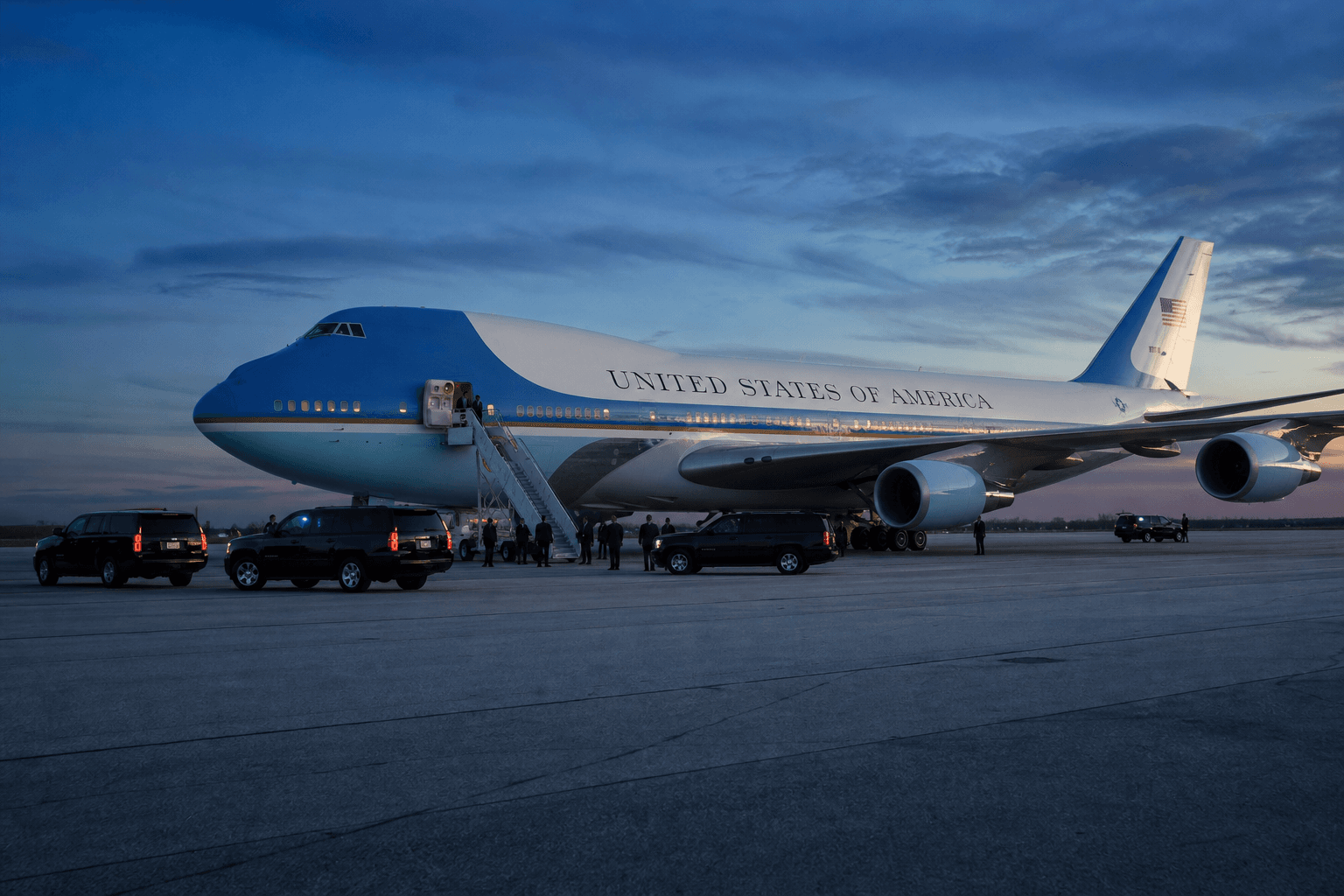
Trump Secretly Switched Air Force One Planes Twice in 2026 Iran Threat Operation
In an elaborate ruse straight out of a movie subplot, US President Donald Trump was secretly whisked off a Boeing 747 Air Force One in Turkey in July 2026, driven across the airport hidden inside a catering truck and flown to Britain aboard a Boeing 757 as part of an operation to protect him from a possible Iranian attempt on his life. The operation involved three presidential aircraft, a decoy flight carrying reporters who believed Trump was aboard and a second switch after landing in Britain that allowed the president to emerge publicly from the same 747 he had supposedly flown from Turkey. Trump had traveled to Ankara for a NATO summit aboard the recently converted Boeing 747-8 donated to the United States by Qatar. The aircraft, sometimes called the VC-25B Bridge, entered presidential service in July as an interim replacement while Boeing continues work on two new VC-25Bs. But Trump announced before leaving Turkey on July 8 that he would not use the new jet for the flight to Britain. Instead, he said he would take one of the older VC-25A Boeing 747-200Bs "for old time's sake," while the Qatar-supplied aircraft flew ahead to RAF Mildenhall so US service members there could see it. That was not what actually happened. The red-white-and-blue Qatar-supplied 747 departed Ankara first. Trump then arrived at the legacy robin's-egg-blue VC-25A, climbed the stairs in front of television cameras and waved before disappearing inside. Reporters and some White House staff prepared to travel aboard the aircraft believing the president was with them. Minutes later, a catering truck positioned against a door on the opposite side of the 747 was raised to the aircraft using its hydraulic lift. Trump and several aides secretly entered the truck through the aircraft door, were lowered to the ramp and driven across the airport to a waiting US Air Force C-32A. The C-32A is the military version of the Boeing 757-200 used by the Air Force to carry the vice president and other senior US officials. The type also regularly accompanies presidential trips as a backup aircraft and can carry the president when necessary. Defense Secretary Pete Hegseth boarded the C-32A separately using conventional stairs, helping make the aircraft's departure appear routine. He then flew with Trump to the UK. Meanwhile, the VC-25A departed Ankara with the White House press corps and some staff aboard, but without Trump. Reporters were instructed to keep the window shades in the cabin closed. The deception extended to the aircraft's electronic identity. The C-32A carrying Trump used the military call sign RCH18, or Reach 18, rather than Air Force One, and was not readily visible on public flight-tracking services. The legacy VC-25A continued toward the UK appearing to be the presidential aircraft. Details of the elaborate security operation were first reported by The Washington Post on August 10, 2026, with Reuters and other news organizations subsequently confirming key elements of the account. Air Force One is not the name of a particular airplane. It is the call sign normally assigned to any US Air Force aircraft carrying the president. In this case, hiding which aircraft actually carried Trump was the centerpiece of the clandestine operation. The C-32A carrying Trump reached RAF Mildenhall at about 22:20 local time, several minutes before the VC-25A carrying the press. Trump was later seen walking down the stairs of the VC-25A at Mildenhall at 22:56, meaning he had been moved from the C-32A back aboard the 747 after the two aircraft arrived. Exactly how that transfer was carried out has not been disclosed. The public appearance preserved the impression that Trump had flown aboard the VC-25A all the way from Ankara. After greeting US military personnel at Mildenhall, Trump walked to the Qatar-supplied 747-8 that had arrived earlier and boarded it for the flight back to the United States. The Secret Service made a hasty decision to concoct the plane-switching plot after US intelligence identified a threat against Trump or his aircraft as tensions between Washington and Tehran suddenly escalated during the NATO summit. Turkey shares a long border with Iran, and the operation took place shortly after the US renewed military strikes against Iran. The threat also came shortly after Trump began using the Qatar-supplied 747-8. The aircraft underwent a rapid conversion for presidential service but does not have all of the defensive capabilities installed on the highly modified VC-25As. It is expected to undergo security upgrades before returning to service soon. White House Communications Director Steven Cheung said there are "many enemies of America" targeting Trump and that officials use every available tool to protect him. Using another aircraft to disguise a president's movements is not unprecedented. President Bill Clinton flew into Pakistan aboard an unmarked aircraft in 2000 while the more recognizable Air Force One served as a decoy. US officials say similar tactics have been used on other occasions when threats warranted.
Whisper Aero's Ultra-Quiet Electric Engines Power First Piloted Flights in Tennessee
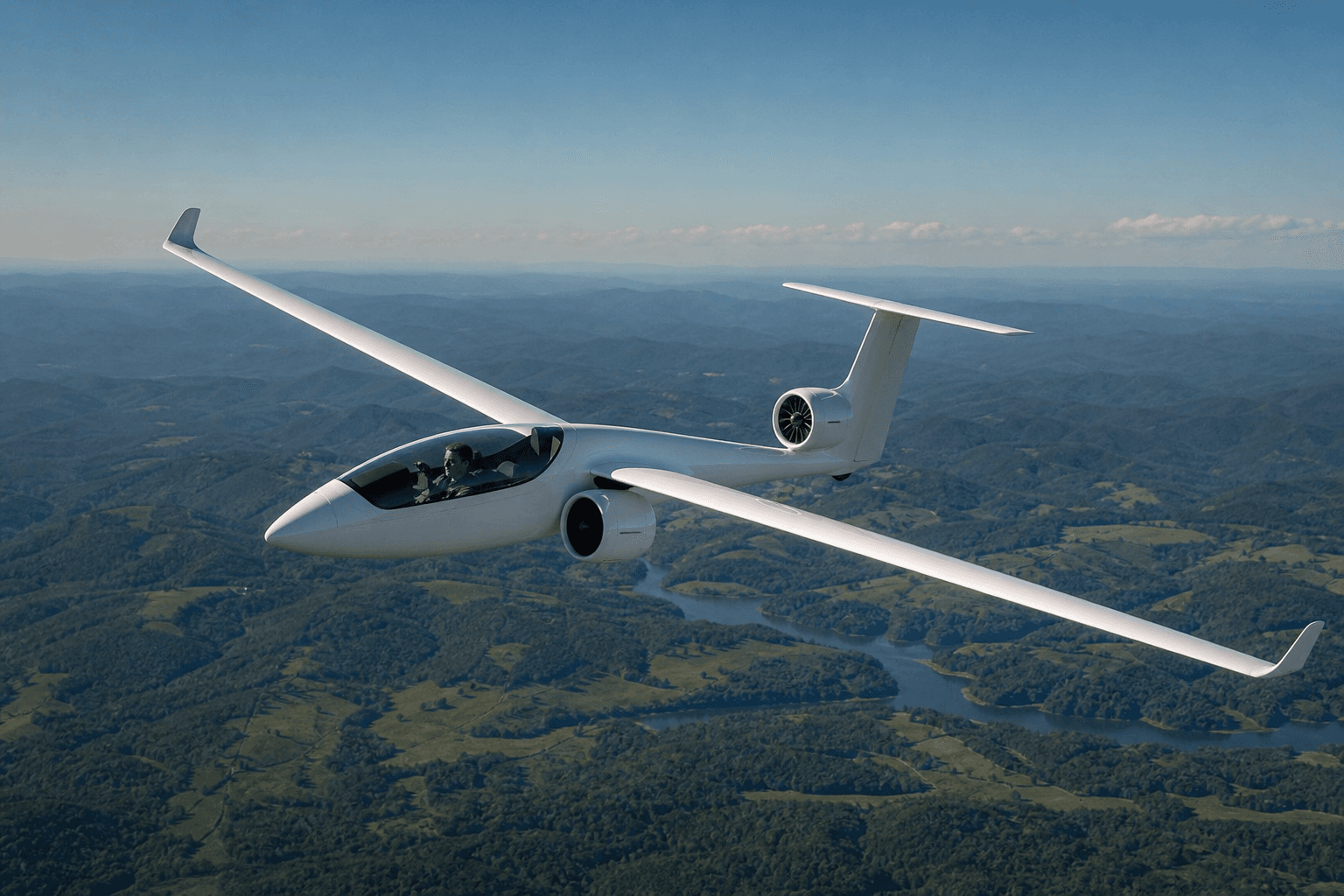
An electric aircraft engine designed to reduce operational noise to a whisper is now powering piloted aircraft. Whisper Aero on Wednesday revealed that its "ultra-quiet" eQ250 electric ducted fan propulsion system is being put to the test in Tennessee under an FAA special airworthiness certification. The company said it installed a pair of eQ250s on a modified Aériane Swift 3 glider, with which test pilot Zac Majors conducted three flights spanning 130 minutes, or about 43 minutes on average. Majors said the aircraft, which the company refers to as the Whisper Powered Swift, produced more thrust and was quieter than the standard propeller version of the glider, "but still great handling." "[I] could really do whatever I wanted with it," Majors said in a statement. "Look forward to flying it again." Fortunately for him, the campaign is only just beginning. Whisper plans to continue testing the Swift in Tennessee before advancing to flight tests and evaluations with "government customers" later this year. The company is under contract with the U.S. Air Force to develop a new family of quiet, efficient, autonomous aircraft for contested logistics, with initial testing planned for 2027. How It Works The eQ250 is the flagship product of Whisper's electric quiet (eQ) engine series. According to the company, it produces up to 85 pounds of static thrust for fixed-wing aircraft. It can also power Group 3 uncrewed aircraft systems (UAS)—which have maximum weight of 1,320 pounds and speed under 250 knots—or larger drone platforms. The specialized electric ducted fans are 10 inches in diameter and produce about 20 dB less noise than "comparable quiet propulsion systems," while also being 20 percent more efficient, according to Whisper's website . For short takeoff and landing (STOL) aircraft, the eQ250 is designed to enable coefficients of lift as high as 14. The propulsion system is intended to unlock short-to-medium-range regional air mobility services using small airports. The idea is similar to Electra's concept for "direct aviation," which involves the company's "ultra-short" takeoff and landing EL9. The goal is to replace trips that would take about 90 minutes driving with air service that takes closer to 20 minutes. Whisper said the Swift's 26:1 lift-to-drag ratio made it ideal for evaluating handling qualities and the propulsion system's performance, integration, and acoustics. Video: Whisper Aero The glider's eQ250s are powered by five Epic 1.0 Energy modules from Whisper partner Electric Power Systems (EPS). According to EPS, they provide 60 minutes of usable flight time with 30 minutes of reserve for trainer, eVTOL (electric vertical takeoff and landing), and "thin-haul" aircraft, which are used for very short trips with a handful of passengers. Whisper said the aircraft "completed its planned objectives," which included validating its propulsion integration, battery, control, and other systems. At full throttle at 100 feet agl, Whisper said the engines were quieter than the airframe itself. Ian Villa, co-founder and chief operating officer, told The Air Current that the glider can generate substantial noise without engines. Flown during the early morning, the aircraft produced about 52 dB(A) of noise compared to 34 dB(A) background noise, Whisper said. "The ability to fly within the soundscapes of even rural environments…will be critical for flights of FAA MOSAIC aircraft," the company added. The Modernization of Special Airworthiness Certification (MOSAIC) took effect in phases over the past few months and permits electric propulsion systems in the light-sport aircraft (LSA) category. More to Come Whisper said the test campaign "reduces risk" for the eQ250's larger civil and defense applications. The company is developing its JetFoil integration for STOL and VTOL aircraft, designed to enable runway independence. The JetFoil distributes ducted fan engines across the entire leading edge of the wing and would enable near-vertical takeoffs with 50 feet of ground roll. Whisper claims it will do so using half the thrust of tilt-rotor VTOL aircraft while offering more range and double the payload. Villa earlier this year told FLYING that Whisper is in talks with government customers to build and fly JetFoil-equipped prototypes, the idea being that they could be transitioned to commercial manufacturers who could bring them to market. For example, one could swap the de Havilland Twin Otter's high wing for a JetFoil and hybrid-electric powertrain. Whisper said the testing will further support its Collaborative Logistics Aircraft (CLA) program with the U.S. Air Force. The CLA concept is similar to the service's Collaborative Combat Aircraft (CCA) framework, which pairs crewed fighter jets with uncrewed "loyal wingmen." Instead, CLA aircraft would carry between 500 and 3,000 pounds of cargo and operate from austere or degraded runways. Whisper is studying two CLA concepts that incorporate 12 and 30 eQ250 engines on the leading edge of the wing, using the JetFoil integration. According to the company, at 250 knots, the CLA aircraft would generate reduced noise and heat signatures compared to models they could replace. Whisper in May 2025 said that initial CLA flight testing would begin in 2027 at White Sands Missile Range in New Mexico. The company has also shared concepts for a regional Whisper Jet and more robust 100-seat model, both based around its ducted fan and eQ technology.

Six U.S. Combat Aircraft Lost and Crew Rescues Highlight Operation Epic Fury's Tough Toll
Since Operation Epic Fury was launched on February 28, 2026, 42 American aircraft have been lost in combat. Of those, 24 were MQ-9 Reaper drones and one an exceptionally rare MQ-4C Triton drone. The remaining were crewed aircraft, with four shot down and two destroyed on the ground by enemy fire.
US Military Pilots Weigh Retirement Benefits Versus Airline Pay After Service
The aviators of the US Armed Forces face a crossroads when they come to the end of their minimum active-duty service commitments. All the branches of the Department of Defense have their own core of professional aircrew. In the US Air Force and Army, the contracts to be a professional flyer come with a ten-year commitment. Meanwhile, the US Navy and the Marines have a slightly shorter minimum duty at eight years.
The Daily Touch & Go
The day's best aviation news in your inbox. Free, no spam.