


Illustration: The Touch & Go
Honeywell Aerospace spins off as independent company to sharpen market focus
Honeywell Aerospace has formally separated from Honeywell International to operate publicly on Nasdaq, aiming to boost investment and growth across its core aerospace sectors.
The gist
Honeywell Aerospace is now a standalone public company, positioning itself for focused growth and innovation in aerospace markets.
Continuing coverage
All Business Jets →- Owning a Bombardier Challenger 300 Beats Chartering Beyond 300 Flight Hours Annually
- Bombardier delivers 200th Challenger 3500 jet to Ferrari heir Piero Ferrari
- Embraer Unveils Phenom 300EV With Garmin Emergency Autoland and Enhanced Safety Features
- Emerging Two-Hangar Trend Sees Pilots Balancing Business Jets with Personal Backcountry Aircraft
- Textron Aviation unveils Cessna CJ3 Gen2 and King Air 360 Crimson at Oshkosh 2026
Honeywell Aerospace has officially completed its separation from Honeywell International, becoming a publicly traded independent company as of June 29, 2026. This corporate spin-off enables the aerospace manufacturer to concentrate more fully on its key market segments and operational priorities. The transaction marks the final phase in Honeywell International's strategic division into multiple standalone entities, designed to unlock value and provide each business with greater operational focus.
The newly independent Honeywell Aerospace now trades on the Nasdaq exchange under the ticker symbol HONA. Shareholders of Honeywell International received one share in Honeywell Aerospace for every two shares previously held in the parent company. This restructuring leaves Honeywell International primarily as an automation and control systems business, after divesting its advanced materials segment in 2025 and the aerospace business in 2026.
Honeywell Aerospace comprises three principal business units: Engine & Power Systems, Control Systems, and Electronic Solutions. In 2025, the Engine & Power Systems division generated approximately $5.4 billion in revenue, producing key powerplant offerings such as the HTF7000 turbofan. These engines power a variety of business jets including the Bombardier Challenger 300 and 350, Cessna Citation Longitude, Gulfstream G280 and G300, and Embraer Praetor 500 and 600 models. The unit also supplies turbofans for jet trainers, turboshafts for helicopters, and auxiliary power units, serving a broad spectrum of aerospace customers.
The Control Systems segment earned about $5.2 billion in 2025 by delivering vital aerospace components including environmental control, motion control, anti-ice, lighting, braking, and cabin pressure systems. Complementing this, the Electronic Solutions group posted $6.8 billion in revenue and focuses on avionics, air data systems, radios, navigation equipment, electromagnetic defense products, and components for space applications. Together, these divisions underpin Honeywell Aerospace’s broad product portfolio across commercial, business, and military aviation.
Charlotte, North Carolina remains a key hub following the spin-off, as Honeywell Aerospace inherited its headquarters and operational infrastructure from the legacy Honeywell conglomerate. The spin-off reflects a strategic pivot aimed at leveraging a more streamlined operating model to boost investment, innovation, customer responsiveness, and profitability within the aerospace industry.
Honeywell Aerospace CEO Jim Currier emphasized that becoming an independent company signifies a new era enabling the firm to better serve customers and shareholders. Under independent stewardship, the company intends to drive profitable growth by reinforcing supply chains, expanding market positions, and utilizing capital discipline to fund innovation. The CEO views the spin-off as a means to eliminate distractions and legacy constraints faced within a large conglomerate structure.
Market analysts have responded favorably to the spin-off, noting that the aerospace business had at times suffered from insufficient focus and investment under Honeywell International. By becoming standalone, Honeywell Aerospace is positioned to reenergize product development and improve customer service initiatives. Industry observers expect the company’s renewed emphasis on aerospace markets could elevate competitive performance and support long-term profitability.
This transition follows Honeywell International’s broader initiative begun in 2024 to simplify its portfolio into three separate companies. The first stage was the divestiture of its advanced materials business in 2025. Now with aerospace operating independently, Honeywell International concentrates on automation, while each former division gains autonomy to tailor strategy and operations more closely to their specific industry dynamics.
Honeywell Aerospace’s strategic move arrives during a period of increasing demand for advanced aerospace systems in commercial business jets, military trainers, and space components. Its product range, backed by robust 2025 revenues across engine, control, and electronic divisions, provides a broad and resilient foundation. The spin-off equips Honeywell Aerospace to capitalize on evolving market requirements and technology advancements with dedicated resources and focused management oversight.
Read more
All MRO/Maintenance →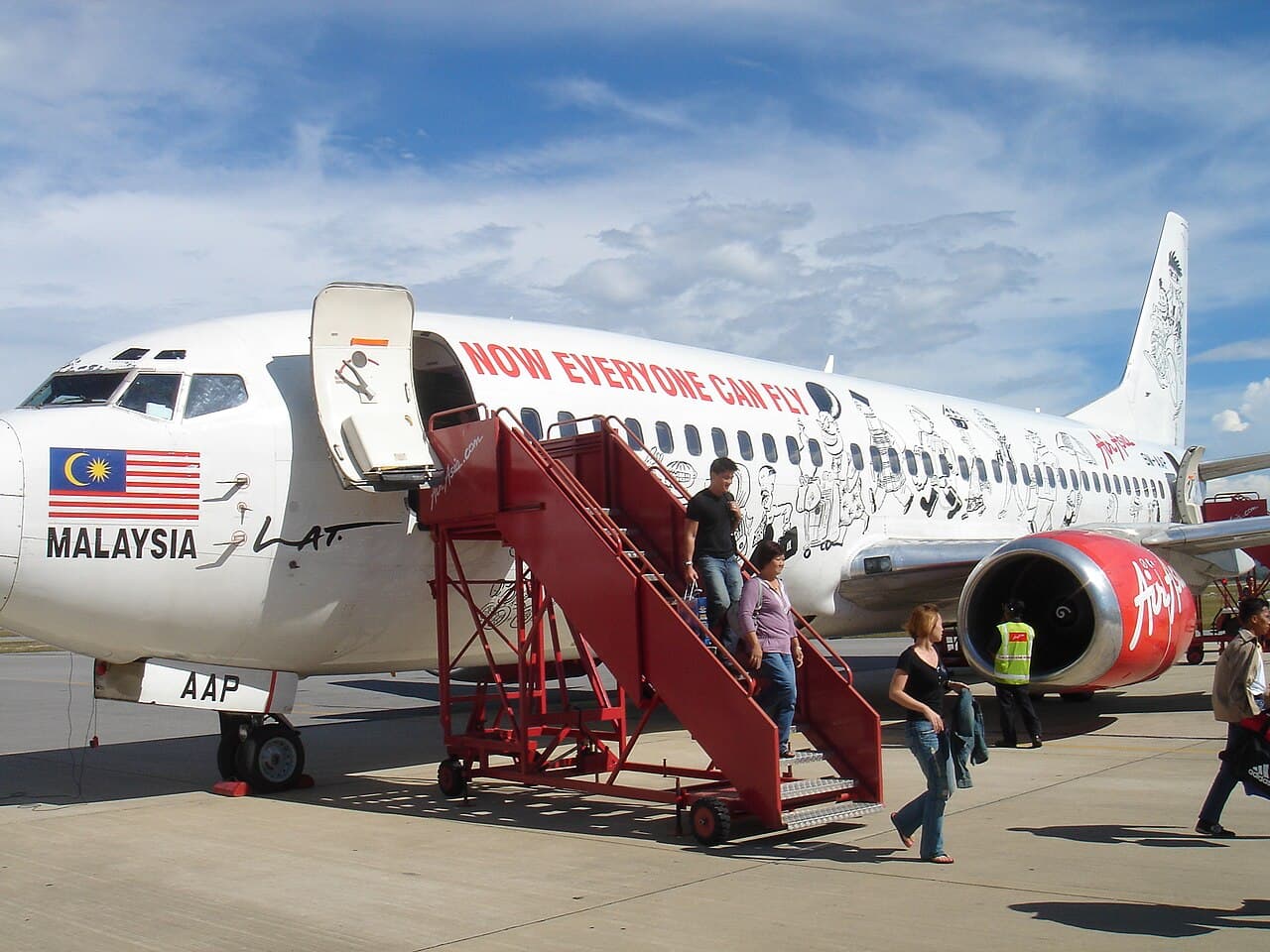
AirAsia delays Bahrain hub and London flights amid fuel cost surge and capacity cuts
Low-cost group plunges to quarterly loss on high fuel costs AirAsia Group has again delayed the launch of its Bahrain hub – as well as flights to London – in a bid to "preserve capital", and as part of a wider network "reset". The low-cost airline group says it will postpone the launch to 2027, but stops short of specifying a launch timeline. It would only say that it was doing so to "preserve capital, conserve liquidity, and prevent near-term long-haul margin dilution". Flights to Bahrain and London – AirAsia's return to Europe after 14 years – were to have started on 26 June, but the war in the Middle East, and the consequent spike in fuel prices, complicated its plans. By June, executives said the flights would be launched "some time" in August, citing a dip in jet fuel prices. The latest delay comes as the group, which has units in Malaysia, Thailand, Indonesia, the Philippines and Cambodia, restructures its operations to mitigate the spike in fuel prices. For the April-June quarter, group capacity was down 11% year on year "to protect unit margins against extreme spot fuel volatility". "Capacity shifted quickly to routes with stronger demand as conditions evolved, such as away from soft regional sectors toward high-yielding core domestic and high-density…trunk routes [in Southeast Asia]," notes AirAsia. AirAsia adds that its short-haul operations in Thailand, the Philippines, and Indonesia, and long-haul operations from Malaysia were loss-making during the quarter, while Malaysia and Cambodia short-haul operations were in the black. As part of its network restructuring, it permanently axed 33 "unviable" routes operated by its Indonesia and Philippines units, while further suspending 17 routes across the group. AirAsia will further cut capacity in the July-September quarter, with ASKs expected to decline 20-25% year on year. However, it expects to "fully" ramp up operations for the peak fourth-quarter. At the same time, AirAsia says it expects to remove 25 older aircraft – including 17 early returns – from its fleet this year, with no new deliveries expected until 2027. For the April-June quarter, AirAsia Group reported a loss after tax of MYR831 million ($203 million). In the same period last year, the group posted a pro-forma profit after tax of MYR919 million. The group's fuel expenses for the quarter was up 58%, outpacing reductions in maintenance and user charges. At the same time, AirAsia also took on foreign exchange losses during the period.
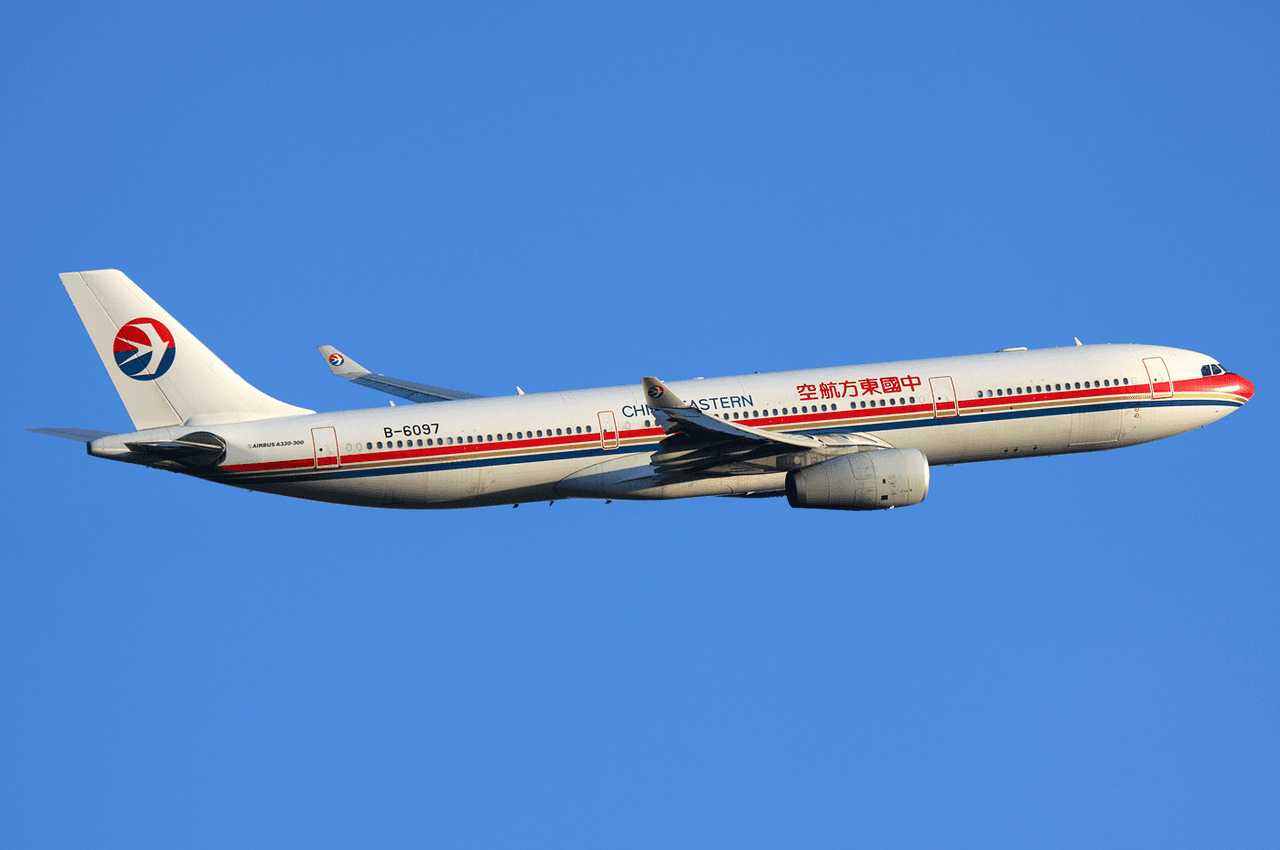
SWISS Begins Retrofit of A330-300s with New SWISS Senses Cabins Including First Class Redesign
In 2025, SWISS introduced new cabins for its long haul aircraft ( including an all-new first class and business class ), in a project that's known as SWISS Senses . SWISS is part of Lufthansa Group, so these cabins are essentially identical to the new Lufthansa Allegris concept , but with different branding. These new SWISS Senses cabins were first rolled out on newly delivered Airbus A350-900s , though we know that SWISS also plans to reconfigure its existing jets with these new seats. There's an exciting update, as the first Airbus A330-300 is currently being reconfigured with SWISS Senses cabins. SWISS Senses coming to Airbus A330-300 fleet SWISS has confirmed that it has started the project of reconfiguring Airbus A330-300s with new cabins. This work is taking place in Hong Kong (HKG) — the first plane with the registration code HB-JHC arrived in Asia on July 20, and is expected to be there for some time. So far, the existing cabins have reportedly been removed from the aircraft, and it's also undergoing heavy maintenance (a C-check), so there's a lot of work to be done. It always takes longer for the first aircraft to be reconfigured, given that new seats have to be certified on the aircraft . We know that Lufthansa Group has had quite some challenges with certification of new cabins, so we'll see how this all plays out, since the airline group doesn't have a great track record. However, assuming things go relatively smoothly, the plan is for the retrofit project to be put into full motion once the prototype is certified and back in service, so hopefully that's before the end of the year. At that point, the expectation is that one plane will be reconfigured every six weeks. SWISS' fleet consists of 14 A330s, so you'd expect the entire project to take right around 84 weeks, or a little over 19 months. Realistically, I expect it'll be around the spring of 2028 when the A330 project is complete, best case scenario. More realistically, I'd guess it'll wrap up in the summer or fall. The plan is then to reconfigure the fleet of 12 Boeing 777-300ERs. We'll see with exactly what timeline this starts. The project could start once the A330 retrofit is complete, or who knows, it could also start before then. SWISS is reconfiguring its Airbus A330s How the layout of SWISS Airbus A330-300s will change As SWISS reconfigures its Airbus A330-300s, what should we expect, exactly? Currently, SWISS' A330s have 236 seats, including eight first class seats, 45 business class seats, and 183 economy class seats. Old SWISS A330-300 seat map Once reconfigured, SWISS' A330s will have 225 seats, including three first class suites (one double suite), 43 business class seats, 28 premium economy seats, and 151 economy class seats. New SWISS A330-300 seat map So we're no doubt seeing a significantly better product across the board. However, with the introduction of SWISS Senses, we're seeing a five seat reduction in first class, a two seat reduction in business class, a new premium economy cabin with 28 seats, and a 32 seat reduction in economy class. One wild aspect of the SWISS Senses cabin on the A330 is that the first class is apparently too heavy for the plane, and could cause a weight and balance issue. As a result, the airline is installing a 1.5-ton weight in the back of the aircraft , to prevent that from being an issue. That's not exactly ideal, eh? Anyway, I'm going to be very curious to see how these A330s look once reconfigured. The cabins of these planes are tired, and in particular, SWISS' A330 business class leaves a lot to be desired. SWISS' A330 business class is outdated at this point It remains to be seen how tight the premium cabins on these planes feel, though. In economy, the A330 is a joy, given its 2-4-2 layout (meaning each row has two sets of seat pairs). The overall cabin is 17 inches narrower than on the A350 (where the SWISS Senses cabins debuted), so I'm sure this will be felt in business class, though the first class cabin feeling is what interests me most. The new SWISS Senses business class is great Keep in mind that there's a double suite in center of first class , and that feels tight on the A350, assuming you're two people ( it's the same as in Lufthansa Allegris ). I have to imagine it'll feel significantly more constrained on the A330. I imagine the double suite will be tight on the A330 Bottom line SWISS has started the project of retrofitting its Airbus A330 fleet with new cabins. The plane will be getting the new SWISS Senses concept with four classes of service. While SWISS Senses debuted on the A350, it's great to see the carrier's tired A330s get some love as well. The first plane is currently in the "shop," and it'll likely be a few months before it's ready to go, given that it's the prototype. Once this plane is back in service, expect planes to be reconfigured one after the other, with each taking around six weeks. Here's to hoping the certification process goes smoothly, given Lufthansa Group's track record. What do you make of SWISS' A330 retrofit plans?
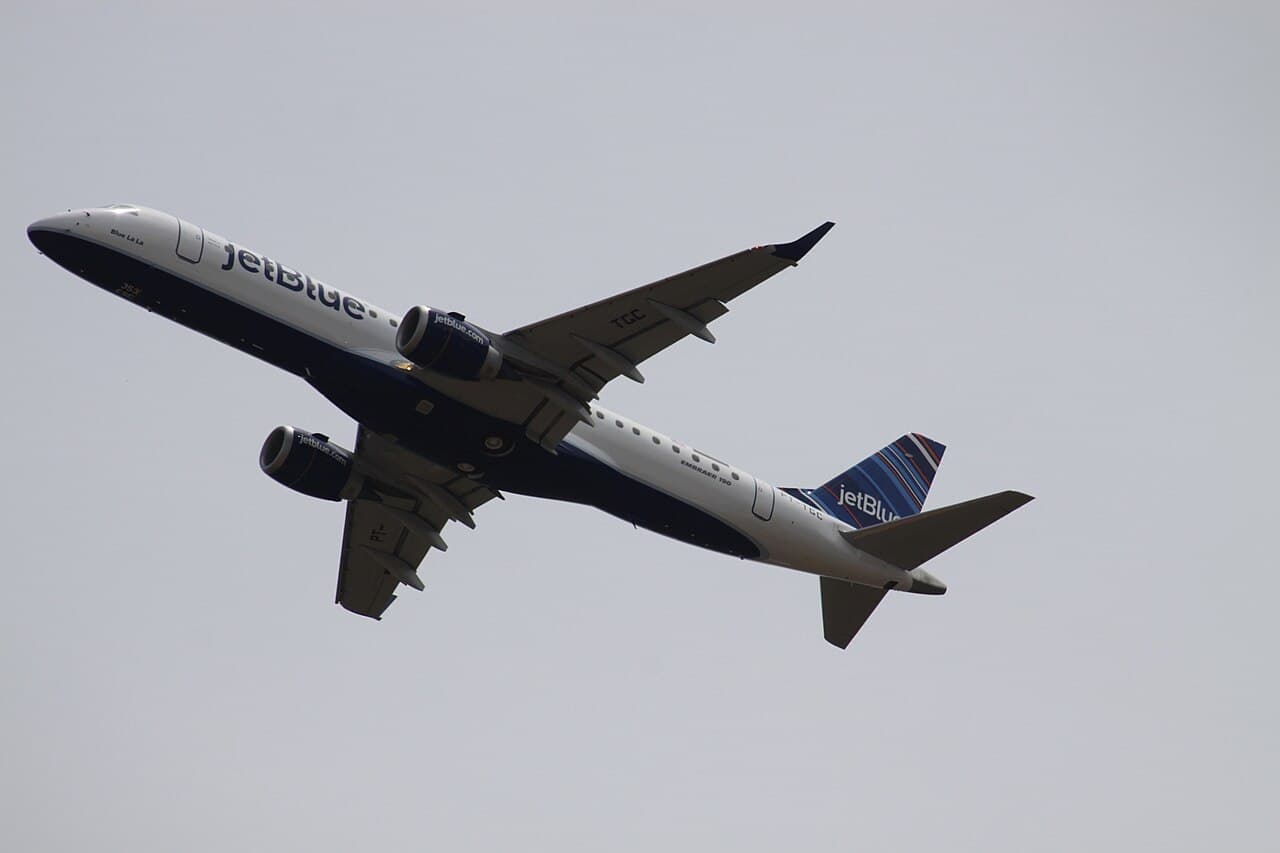
JetBlue Unveils Four-Cabin Fare Model Introducing BlueFirst Base Premium Option
New York-based JetBlue Airways is preparing to launch an all-new first class product for flights configured without its existing flagship "Mint" service. Dubbed "BlueFirst," this is the first conventional premium cabin to be offered on JetBlue flights without Mint seats configured.
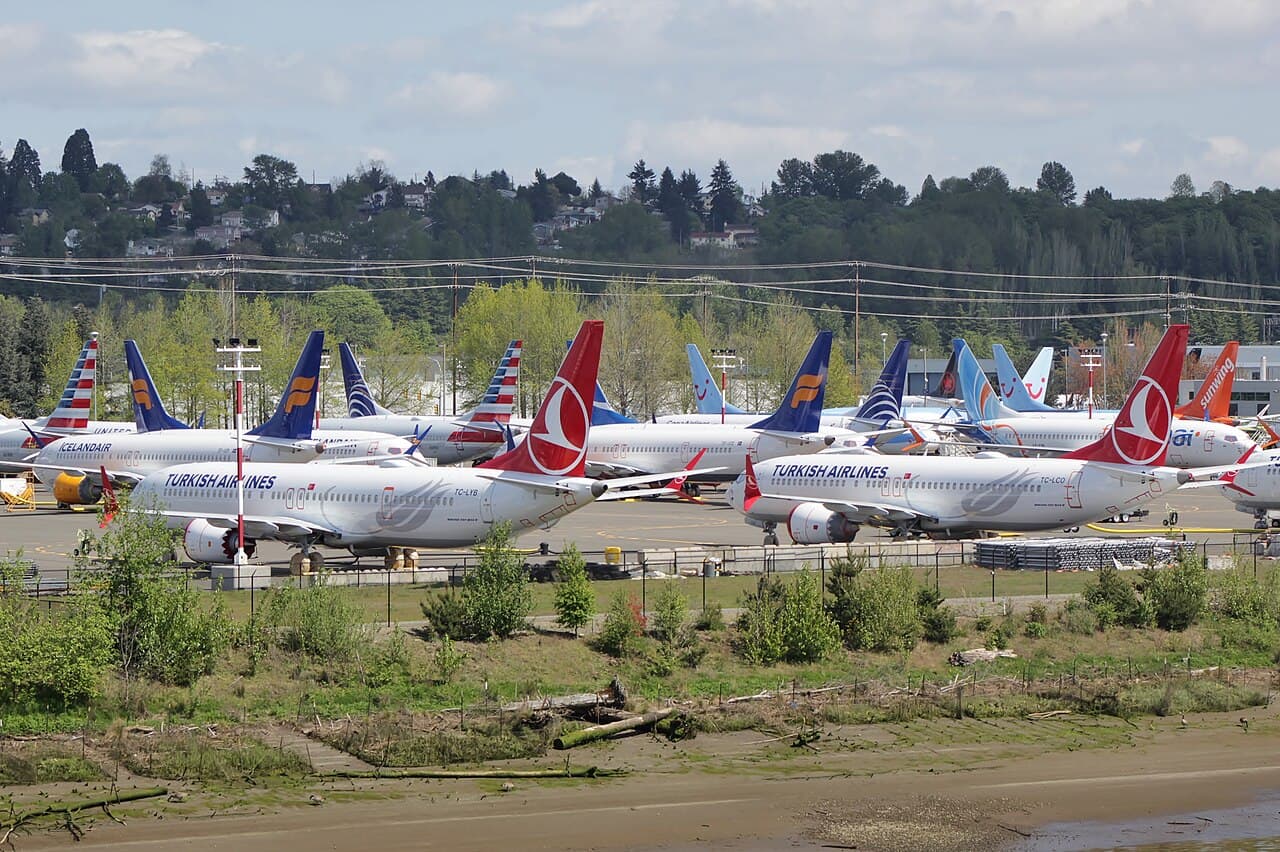
FAA Orders $2.66M Seat Inspections on 453 Boeing 737 MAX Jets Amid Certification Oversight
The FAA has recently permitted Boeing to independently issue airworthiness certificates for new examples of its 737 MAX and 787 models, but just a week after Boeing was granted this privilege (which it historically held for decades but was suspended in recent years), the FAA has proposed a new airworthiness directive (AD) regarding improperly installed seats on hundreds of 737 MAXs. It's not actually unusual for the FAA and other regulators to issue ADs, but it does signal that the FAA is only stepping up its oversight of Boeing.
The Daily Touch & Go
The day's best aviation news in your inbox. Free, no spam.