

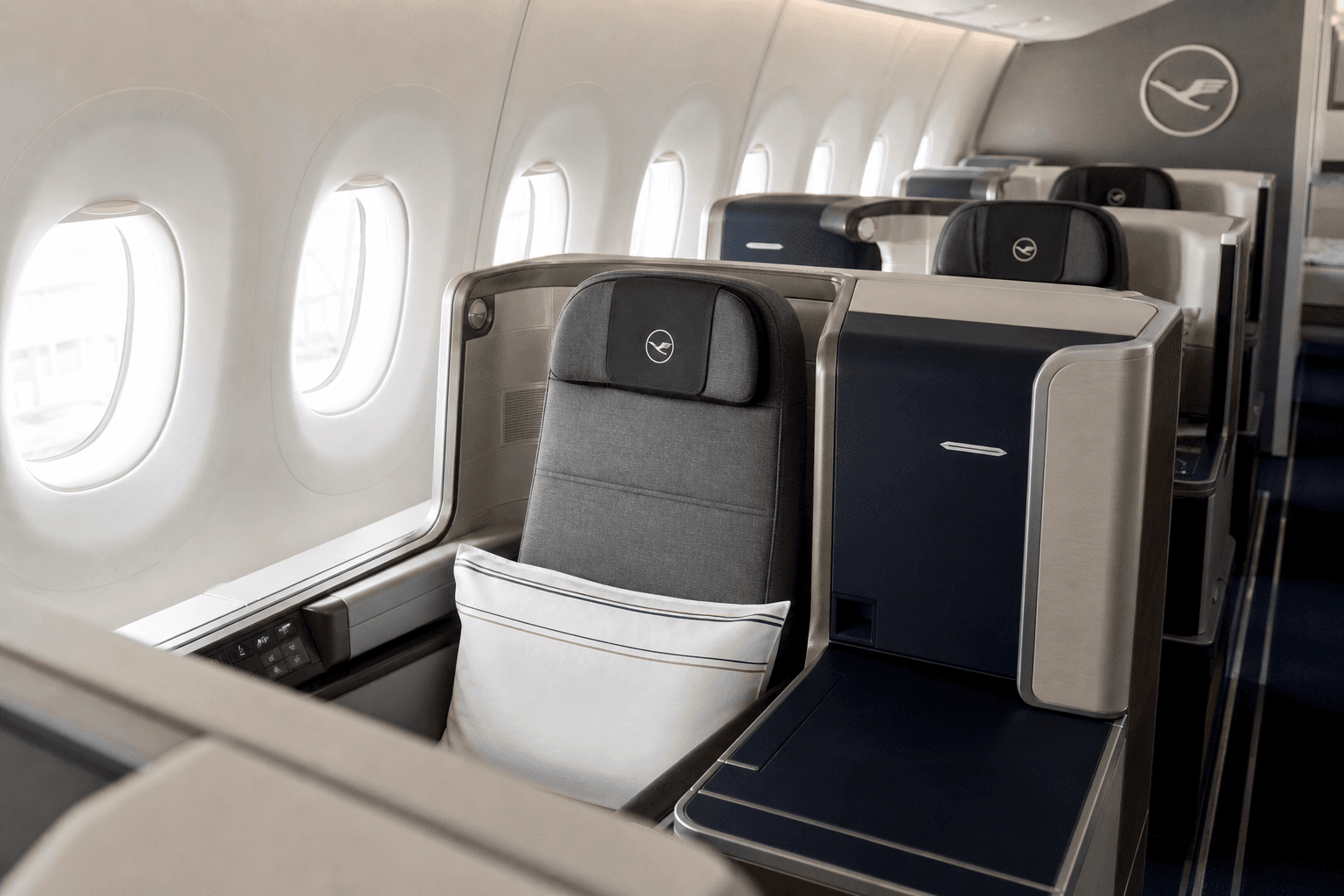
Illustration: The Touch & Go
Lufthansa Unveils All-New Allegris Business Class With Paid Seat Selection and Tiered Comfort Levels
Lufthansa's Allegris cabin divides business class into five seat types requiring extra fees for premium features like window seats and extended beds, challenging long-standing norms.
The gist
Lufthansa introduces a new business class with variable seats and charges fees for preferred spots, including windows and suites, redefining premium air travel.
Continuing coverage
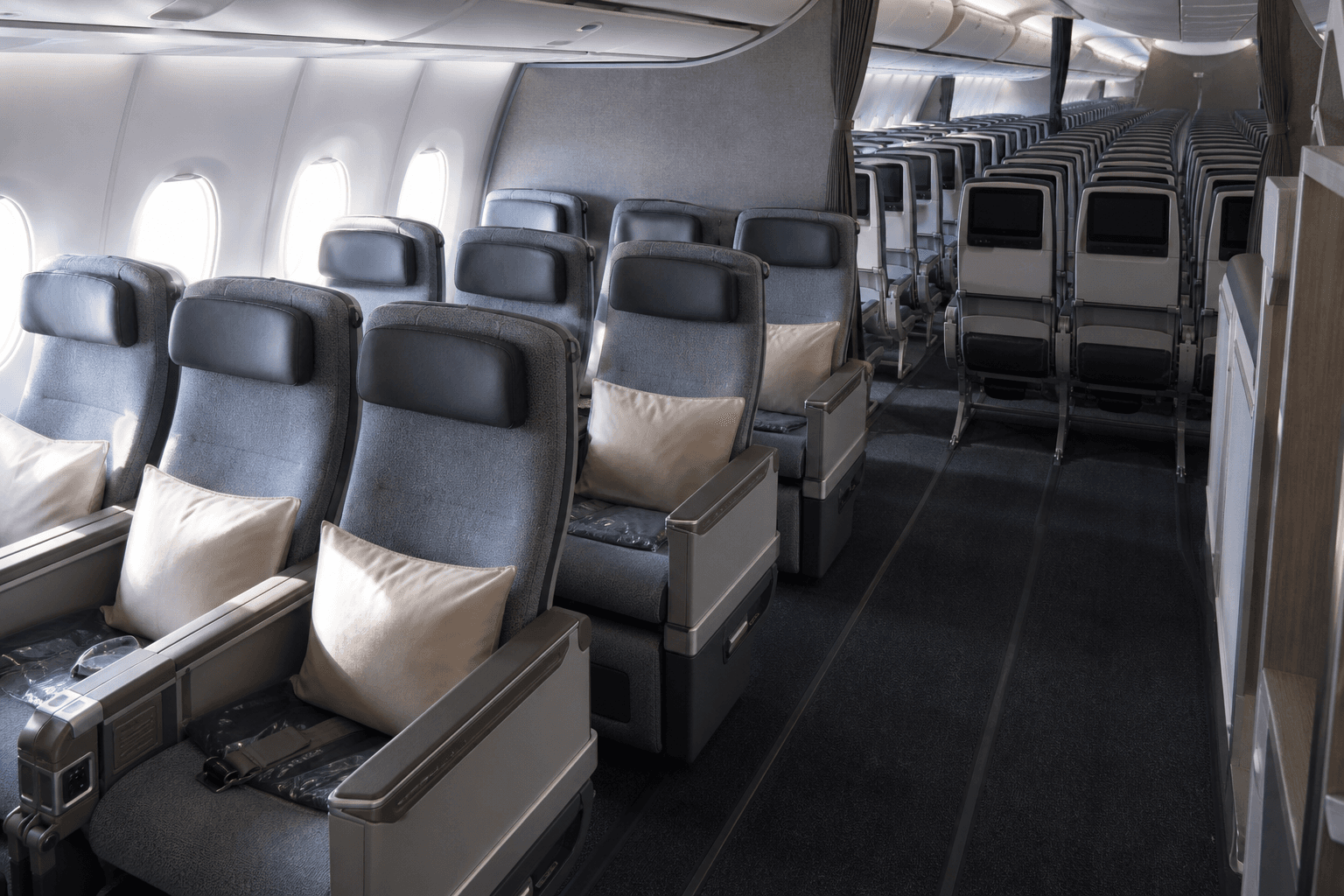
All Ancillary Revenue →Lufthansa has launched its innovative Allegris business class cabin on the Airbus A350-900, fundamentally reshaping what travelers can expect from premium international air travel. Uniquely, the new configuration breaks from a long tradition of uniformity across business cabins by offering five distinct seat categories, each with different spatial and privacy features. Instead of a flat business class experience, passengers now face a complex landscape of seat options, many requiring additional fees beyond the base ticket price. This introduces a new commercial model where the physical attributes of a seat themselves become ancillary products for purchase.
Historically, international business class cabins provided an egalitarian experience where all passengers enjoyed similar seat dimensions and privacy levels, barring natural variation by location. Lufthansa’s Allegris product abandons this approach by creating an asymmetrical cabin layout, carefully engineering each seat with unique characteristics. These range from first-class-like suites at the front of the aircraft, featuring high walls and closing doors, to 'Extra Space' throne seats with large consoles, to privacy-enhancing window seats, and even longer beds designed for tall flyers. This level of in-cabin differentiation is unprecedented among network carriers.
Implementing such a varied cabin brought logistical challenges as well. Ground staff and reservation systems must now accommodate the finer granularity in seat assignments, which complicates passenger re-accommodation during irregular operations. Unlike previous uniform cabins where any business class seat was a fair substitute, allegris requires careful matching to maintain seat-type parity, lest travelers are downgraded inadvertently. This operational complexity reflects how Lufthansa has reimagined the business class seat from a simple commodity to a digital asset that can be dynamically priced and assigned.
At the heart of the new model is a multi-tiered ancillary fee structure for seat selection. Booked passengers receive a ‘Classic’ business class seat by default, typically aisle-adjacent with minimal privacy, and must pay extra for preferred seats. Upcharges vary substantially, with front-row suites demanding fees between 400 and 600 euros per flight segment. Other options like 'Extra Space' seats charge between 130 and 230 euros, while privacy windows and long beds cost between 100 and 170 euros. Such pricing transforms what was once a uniform fare into a customizable product, allowing Lufthansa to monetize seat desirability and cabin location more directly than ever before.
This change dovetails with the introduction of the new Business Light fare category, a lower-cost option that removes certain traditional business class amenities. Most notably, Business Light passengers do not receive complimentary seat selection and are auto-assigned standard seats during check-in, unable to access premium seat variations without paying the seat fees. Additionally, baggage allowances are halved under this fare, increasing potential ancillary revenue streams for Lufthansa from overweight bags or multiple checked pieces that were once included free of charge.
The impact on corporate travelers and elite frequent flyers is significant. Corporate travel policies which approve business class travel based on fare codes may overlook the necessary budget for these additional seat fees, complicating expense approvals. Furthermore, Lufthansa’s top-tier frequent flyers, who historically enjoyed free seat selection across cabins, now confront fees under Business Light conditions. This marks a departure from long-standing industry norms where elite status conferred unconditional ancillary privileges, highlighting a strategic shift in loyalty program benefits and customer segmentation.
The introduction of Allegris and its unbundled ancillary model signals Lufthansa’s willingness to challenge legacy carrier conventions and adopt pricing tactics more common among low-cost and hybrid carriers. By disaggregating the business class experience into separate chargeable components, Lufthansa gains granular control over passenger segmentation and revenue optimization. While passengers gain more choice over their cabin environment, these choices come with complex cost implications, elevating the need for shopper savvy and corporate policy adjustments.
From an engineering and regulatory perspective, the Allegris cabin represents a bold experiment. Airlines have generally avoided creating such asymmetric seating to reduce maintenance and scheduling complexity, yet Lufthansa has treated spatial variation as a strategic tool rather than a compromise. The tailoring of seat shapes and layouts aims to meet a broader spectrum of passenger needs more precisely but requires sophisticated inventory and customer service systems to mitigate operational risks. This may reflect a growing trend where cabin design integrates tightly with revenue management strategies.
Lufthansa’s move may prompt reassessment across the industry on how premium cabins are merchandised and engineered. If successful, other major carriers could follow with similar tiered seating and ancillary fee structures, reframing business class travel as increasingly modular and monetized. At the same time, the customer experience may grow more fragmented as passengers must navigate intricate fare and seating options rather than rely on old assumptions of uniformity in premium cabins.
Read more
All Airlines →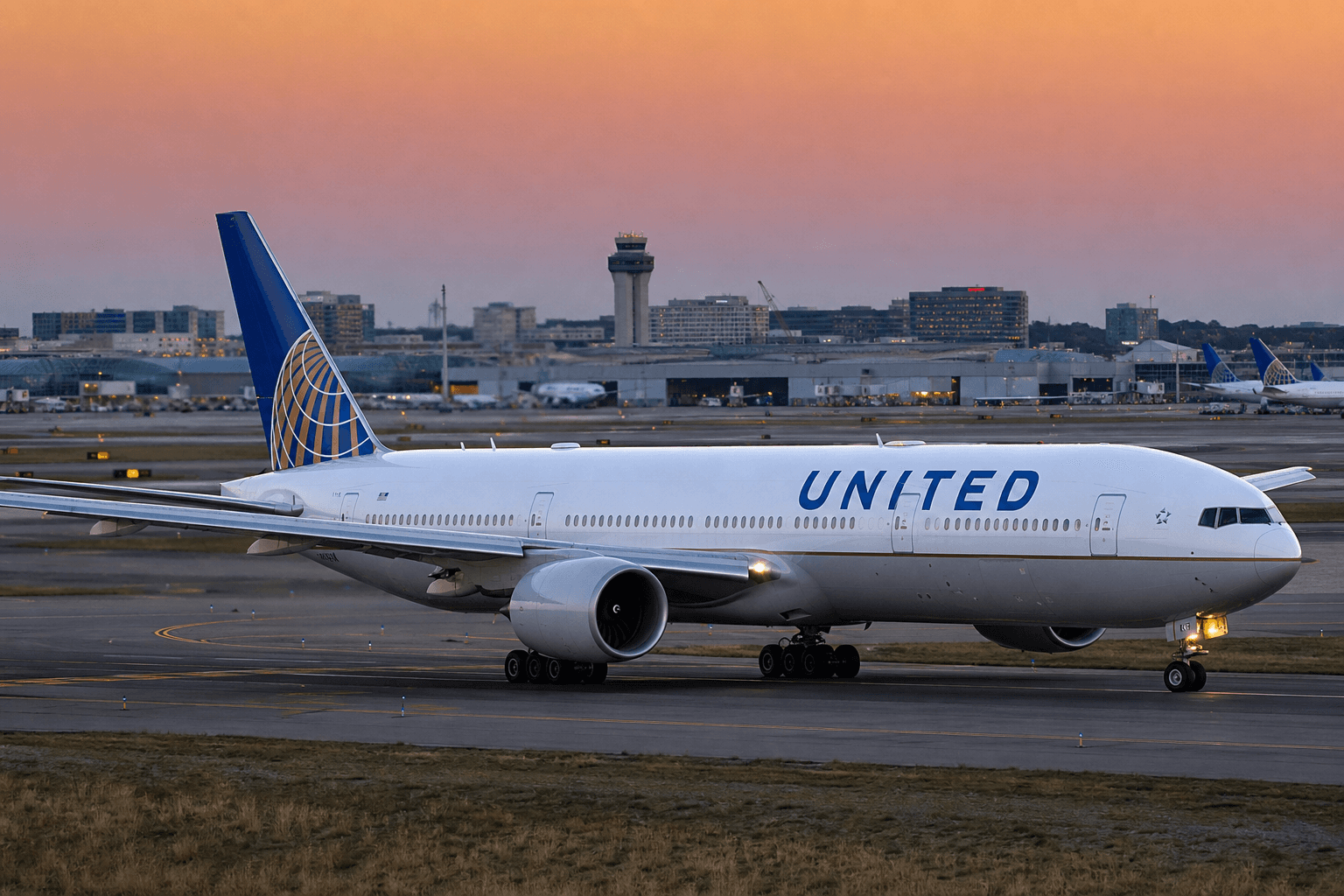
United Airlines CEO predicts just two US premium carriers amid mixed passenger experiences
United CEO Scott Kirby says there may be room for only two premium U.S. airlines, but passengers keep posting photos and complaints that make United's own case harder. Also new Priority Pass-accessible grab-and-go Atlanta "lounge," a DCA shutdown for the DC Grand Prix, Ritz-Carlton Pentagon City inspection issues, and a car hitting an aircraft at Milan Linate.
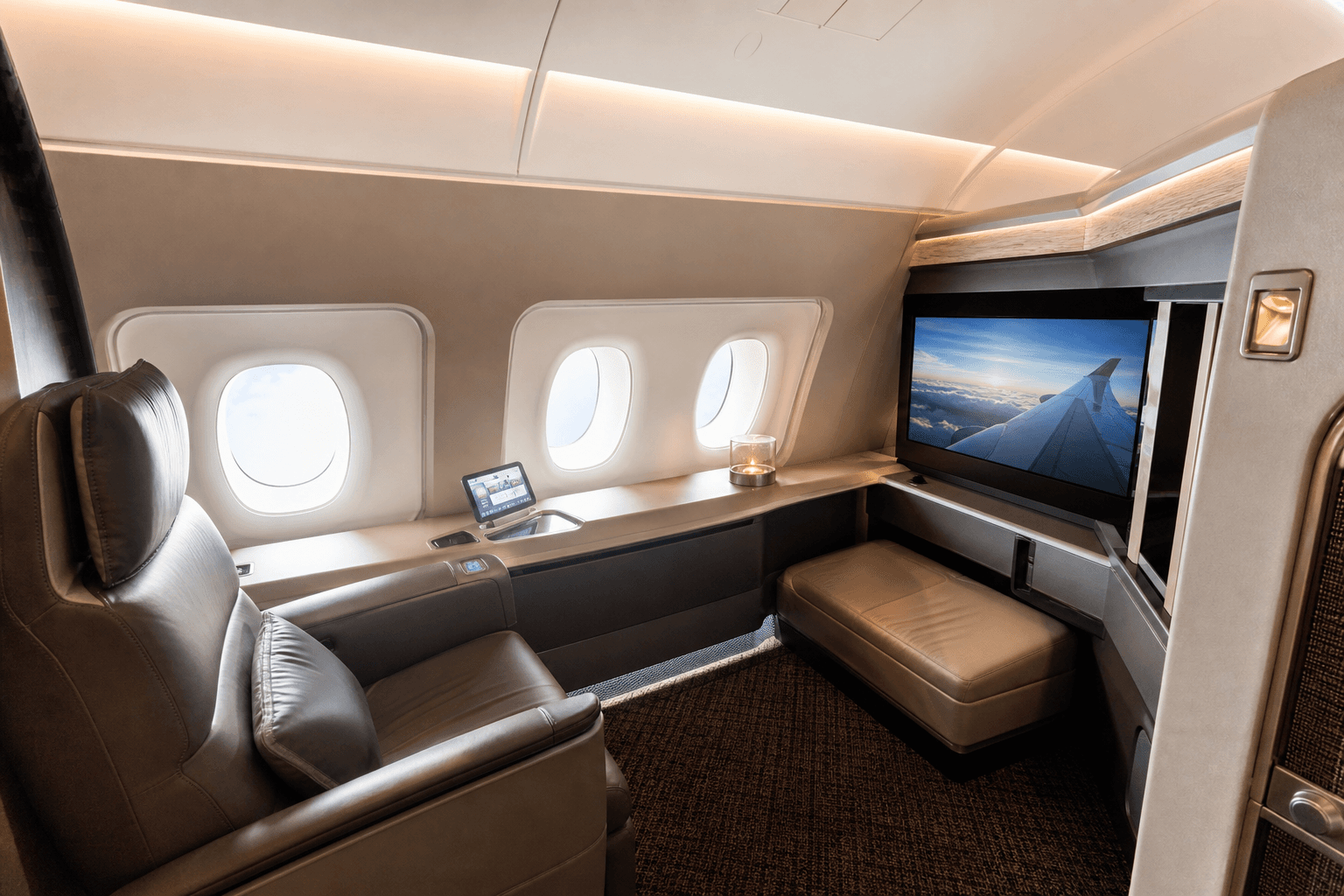
Top 5 Airlines Offering the Most Luxurious First Class Suites in 2026
The first class cabin is always seen as the ultimate in luxury with lavish features that many can only dream of. Business class has evolved into a more extensive product, with lie-flat beds and now private suites, and with more business class products than ever, first class has become more exclusive and somewhat rare on long-haul international flights.
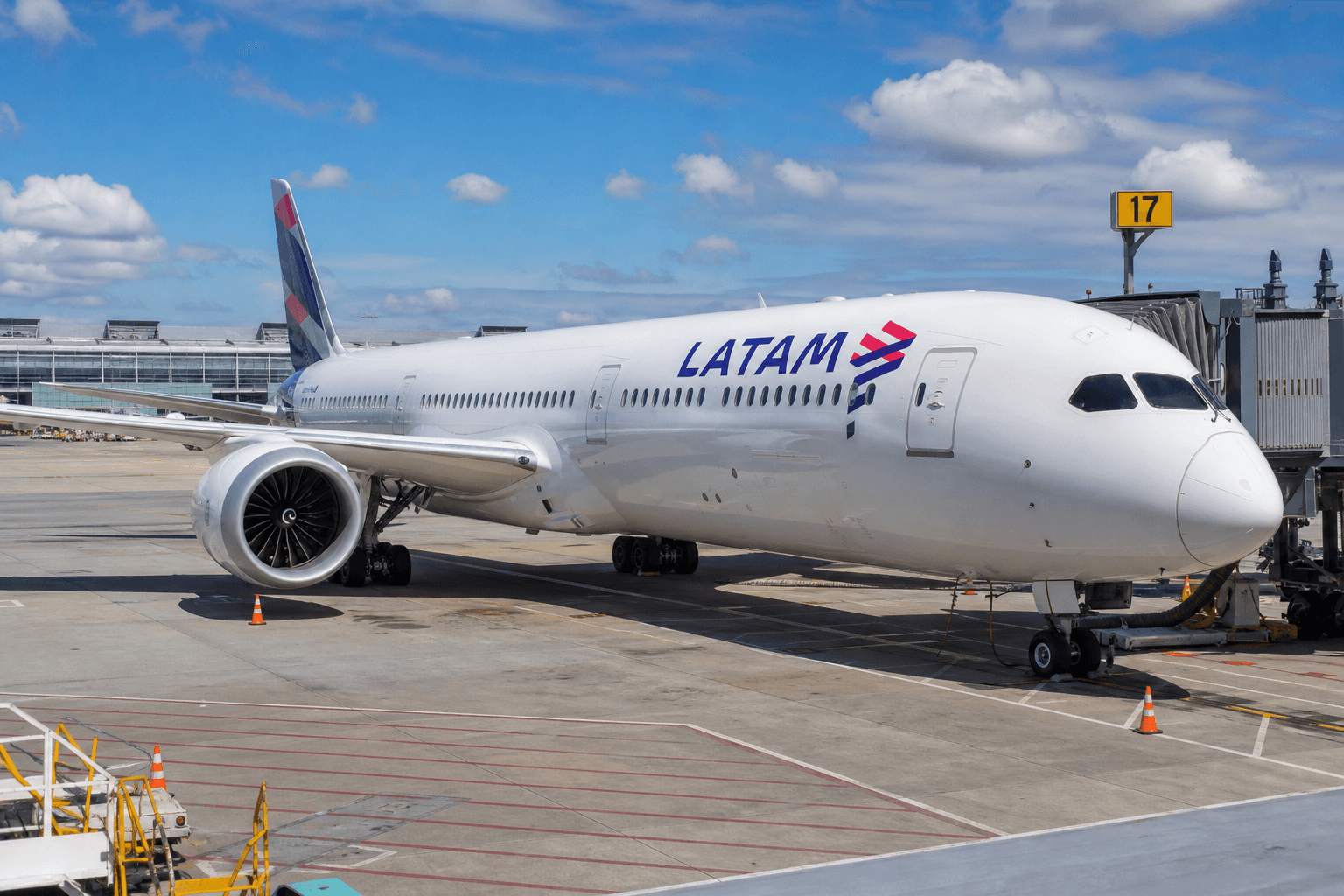
LATAM Airlines posts $227 million Q2 profit amid strong premium demand
Resilient demand for premium seats and from loyalty programme members kept LATAM in the black. LATAM Airlines Group was able to pass to customers much of the increase in fuel prices in the second quarter thanks to strong travel demand, especially for premium seats and from member of its loyalty programme. The company reported an adjusted operating profit of $227 million for an adjusted operating margin of 5.4% during the three months ending in June. Its revenue increased 28% year on year to $4.2 billion, driven by an 18% year-on-year increase in revenue per available seat kilometre, allowing LATAM to recapture much of the additional $700 million fuel expense it paid in the period. LATAM’s second-quarter expenses jumped 39% year on year to $4.0 billion. "The combination of effective execution, commercial flexibility and the resilience of LATAM's diversified business model allowed the group to increase unit revenues this quarter [and] successfully mitigate a substantial portion of that [fuel] impact," said Ricardo Dourado, the chief financial officer of LATAM, during an earnings call on 5 August. Premium-seat sales and demand from loyalty programme members showed "greater resilience" than overall demand in the second quarter, he adds. LATAM is investing in new business-class suites and premium-economy seats for its widebody Boeing 787s. Installations began in 2025 and continue across the fleet. It is also expanding the number of premium-economy seats on its narrowbody fleet of Airbus A320-family aircraft and plans to introduce the seats on Embraer 195-E2s scheduled to enter service in November. LATAM initially plans to fly E195-E2s to four new destinations and on eight new routes in Brazil. The aircraft will allow it to expand and tailor capacity on existing routes to better match demand at various times of day, chief executive Roberto Alvo says. Looking ahead, LATAM reinstated its guidance despite what Alvo says remains a "highly dynamic" market. The company expects to grow capacity, measured in available seat kilometres, 8-9% in 2026 and forecasts a 2026 adjusted operating margin of 12-13%. LATAM is scheduled to take delivery of 15 A320neo-family aircraft, one 787-9 and 12 E195-E2s in the second half of 2026, its latest fleet plan shows. It forecasts adding 27 aircraft to its fleet in 2026, bringing its fleet to 410 aircraft at year-end. LATAM can retire older Airbus A319s if the demand environment weakens, Alvo says.
Airlines Abandon Middle Tier as Premium and Ultra-Budget Classes Dominate Market
Across the airline industry, it seems that the traditional middle tier of commercial air travel is on its way to the history books. It has always been common to see legacy carriers and low-cost airlines alike depend on a standardized main cabin product to generate steady baseline revenue. Today, that undifferentiated middle is rapidly disappearing as commercial aviation splits into two profitable extremes: high-yield premium cabins at one end and unbundled ultra-budget fares at the other.
The Daily Touch & Go
The day's best aviation news in your inbox. Free, no spam.