


Illustration: The Touch & Go
Pilots Urged to Secure Cockpit Gear to Prevent Hazards and Distractions
Pilots and instructors emphasize the importance of properly securing electronic flight bags and other cockpit items to avoid dangerous distractions and injuries during flight.
The gist
Improperly secured cockpit gear like tablets can cause distractions or injuries, stressing the need for careful organization in the cockpit.
A recent wave of incidents highlights the risks posed by unsecured cockpit equipment, particularly electronic flight bags (EFBs), and everyday items during flight. Inadequately securing these items can lead to dangerous distractions and even physical harm, say flight instructors and pilots with firsthand experience. One instructor recounted a lesson where a learner struggled to mount an oversized tablet designed as an EFB, resulting in the device falling onto the aircraft floor during a steep turn, startling both pilot and instructor and causing concern about cockpit distractions.
The incident involved a tablet measuring 8 by 11 inches, which proved incompatible with a yoke mount intended for a different aircraft model. The tablet’s size and weight interfered with the controls and obstructed vital instrument panel visibility. Attempts to use the tablet on the pilot’s lap only introduced instability and increased distraction risk. This scenario underscores how, if not properly secured, modern cockpit technology can be more hazardous than helpful.
More serious lessons come from reported injuries caused by loose cockpit gear. One former student was struck by an EFB left attached to an instructor’s kneeboard during an aerobatics lesson when the kneeboard’s leg strap failed, turning the equipment into a dangerous projectile. Such incidents demonstrate that not only electronic devices but also traditional gear must be fastened securely to prevent harm during sudden aircraft maneuvers or turbulence.
Beyond electronics, personal items can also become threats. A pilot flying with his wife in a small two-seat aircraft experienced facial bruising caused by his wife’s purse contents dislodging during turbulent conditions. This episode inspired the colorful metaphor of a hostile lipstick attack, reminding pilots that all unsecured items, however mundane, may become airborne hazards in-flight.
Flight instructors stress the ongoing need for pilots to maintain discipline in cockpit organization. Even small common items—pens, flashlights, laminated checklists, or phones—can become dangerous if they break loose. One instructor encountered a student who tossed a checklist into the backseat during a traffic pattern, assuming the flight was nearly complete. The instructor insisted on storing it properly using pouches or kneeboards to prevent loss or dangerous movement, teaching the student the value of continuous checklist use and secure storage.
Choosing appropriate kneeboards is critical for cockpit efficiency and safety. Some kneeboards are designed to accommodate tablets securely without obstructing controls. Preferences can vary depending on aircraft type, requiring pilots to experiment to find the best option. Enhanced kneeboards with EFB mounts strike a balance between stability and minimal interference with cockpit operation, illustrating evolving adaptations to modern electronic workflows.
The proliferation of external mounts for tablets presents further options and challenges. Pilots can affix these to the control yoke, panel, or floor, but each location carries trade-offs, such as obstructed views or instrument interference like compass distortion. Mounts with suction cups or clips must avoid blocking windows or visibility to maintain situational awareness while keeping gear secured. Power management—bringing multiple cords or ensuring aircraft power supply—is another critical detail to prevent devices from becoming distractions due to battery failure.
Instructors also warn against overreliance on electronic navigation aids. Some check pilots simulate failures of all electronic means to test candidates’ proficiency in traditional navigation techniques such as pilotage and dead reckoning. Pilots overly reliant on moving map displays may struggle when forced to revert to basic visual navigation, which remains essential for safety, particularly in visual meteorological conditions.
A training example involved weaning a student off constant tablet use by conducting a VFR flight over prominent local landmarks like Seattle, Tacoma, and Mount Rainier, as well as military bases requiring coordinated radio communication and airspace clearance. The flight also incorporated whale watching, an activity needing undivided visual attention outside the cockpit. By the end, the pilot shifted from being head-down to actively scanning the environment, gaining crucial situational awareness skills essential for safe flying.
Read more
All Aviation Safety →
FAA seeks to block state meal and rest break rules for flight crews nationwide
The FAA is seeking to block state and local governments from setting meal and rest period requirements for flight crews and flight attendants , asserting that those breaks are adequately covered by federal law. According to a notice of proposed rulemaking (NPRM) published in the Federal Register this week, the agency would add language to parts 117 and 121 that clarifies the federal preemption of state and local laws governing these rest periods. Whereas previous rulemaking has centered on crew breaks between shifts , the new proposal tackles breaks during duty, including while flying. Per the Department of Labor , there are 21 states that set meal period requirements for private sector employees, seven of which also have rest period requirements. At issue is whether those rules cover flight crews and flight attendants. The FAA in its NPRM argued that a "patchwork" of state and local break requirements violates the Airline Deregulation Act (ADA) of 1978, which prohibits any law that creates a "significant impact" on airline prices, routes, or services. Federal preemption, it said, would create uniform requirements across states that reduce operational disruptions for carriers. However, federal district and appellate courts in recent years have come to the opposite conclusion. Flight crews and flight attendants who have sued airlines over violations of state or local break requirements have often prevailed, allowing them to claim damages. The FAA in the NPRM said that "recent litigation" spurred its rulemaking—"most notably" a pair of decisions handed down by the courts in 2021. What the FAA Proposes The FAA in a 2022 final rule changed its requirement for scheduled rest periods for flight attendants assigned to duty periods of 14 hours or less, raising it from as low as eight hours to at least ten. This week's proposal addresses break requirements during rather than between shifts. One rationale provided by the agency is that fragmented state and local rules are untenable for carriers. It said such a framework may require them to staff additional flight attendants, raise costs, or remove passengers from flights, leading to operational impacts and violating the 1978 ADA. The FAA does not propose any new federal laws regarding aircrew break requirements. Instead, it argues that the status quo of "rules about duty periods, collective bargaining agreements (CBA) reached between air carriers and labor unions, and…specific air carrier crew resource management procedures" adequately strikes a balance between aviation safety and crew health. Notably, the proposal would require Part 121 certificate holders to ensure that flight attendants remain available for safety duties—including responding to medical emergencies or dealing with unruly passengers—during their breaks. The FAA contended that it mitigates fatigue by regulating rest between rather than during shifts. "The primary mission of flight attendants is to ensure safety, a role that is undermined if a flight attendant is legally 'off-duty' during an emergency," the agency said. However, the regulator also proposes that carriers ensure flight attendants have enough time to eat, drink, or use the restroom. Other employees covered by state and local rules receive uninterrupted meal and rest periods. Comments on the proposal are due September 4, after which time the FAA may modify it. Why Now? The FAA specifically called out two legal rulings as the basis for this week's proposal. In 2021, the 9th U.S. Circuit Court of Appeals held that California's meal and rest requirements for flight attendants are not preempted by the ADA or other federal laws. The ruling came after California-based flight attendants sued Virgin America over failing to meet the state's mandates, which include 30-minute meal breaks for employees who work more than five hours. As a result, flight attendants were allowed to pursue claims. Alaska Airlines acquired Virgin during the case, Bernstein et al. v. Virgin America, and became a codefendant. The carrier appealed the decision to the Supreme Court, which declined to review it. Alaska later secured an Association of Flight Attendants-backed aircrew exemption and backtracked on threats to close its California crew bases over the decision. However, it failed to secure a similar exemption in Washington state. Following the case, California in 2023 exempted flight attendants from state break requirements when they are covered by certain Railway Labor Act collective bargaining agreements (CBAs). The FAA in the NPRM noted that not all airlines are covered by these CBAs. In another 2021 ruling referenced by the FAA, Wilson v. SkyWest Airlines, the U.S. District Court for the Northern District of California made a similar finding. It likewise sided with flight attendants who sued SkyWest, reiterating that federal laws do not preempt state or local rules. In another case, which the FAA did not cite, American Airlines in 2023 reportedly settled with California flight attendants, who had sued over alleged wage and meal break violations, for about $24 million. Cementing the federal preemption of these state and local laws will likely be cheered by airlines who have contended with lawsuits from unhappy personnel. The proposal may also face pushback from unions representing flight crews and flight attendants. In the Bernstein case, the Association of Flight Attendants filed a friend of the court brief urging the court to side with Virgin flight attendants. "Instead of preemption, AFA pushed the airlines to resolve the operational challenges of meal and rest law through a legislative fix that would codify our rights to bargain over these provisions," the union wrote in a 2022 news release .

TezJet grounded after Boeing MD-83 landing gear collapse at Bishkek Manas Airport
Accident at Bishkek Manas airport occurred just a month after Kyrgyzstan was removed from European blacklist. Kyrgyz authorities have temporarily suspended the operations of carrier TezJet after one of its Boeing MD-83s has suffered a landing-gear collapse while taxiing for the runway at Bishkek's Manas airport. The airport operator states that the accident occurred as the twinjet prepared to depart for Osh on 7 July. "After taxiing and reaching take-off position during pre-flight procedures, the left main landing-gear collapsed," says the company. "As a result, the aircraft listed to the left, touched the runway with its left wing, and came to a stop." None of those on board was injured, the airport operator adds. Images from the scene identify the MD-83 involved as EX-80003, a 1996 airframe originally delivered to Korean Air. The tail-cone of the aircraft, which serves as an evacuation exit, appears to have been jettisoned during the occurrence. Work is under way to remove the jet from the runway. Manas has a single runway, designated 08/26. Kyrgyzstan had been subject to a European Commission blanket blacklisting for some 20 years, a restriction which was only removed in early June based on evidence of substantial safety improvement. The Kyrgyz state civil aviation agency is investigating the occurrence. "Until the necessary verification activities are completed, a decision has been made to temporarily suspend the operation of TezJet aircraft," says the airport operator. "This is a purely preventative measure aimed at ensuring the highest level of flight safety." The aircraft had arrived from Osh earlier in the day. Manas airport will remain closed until around 06:00 on 8 July. "Flight safety remains our highest priority," says the airport operator, adding that schedule disruption is possible.
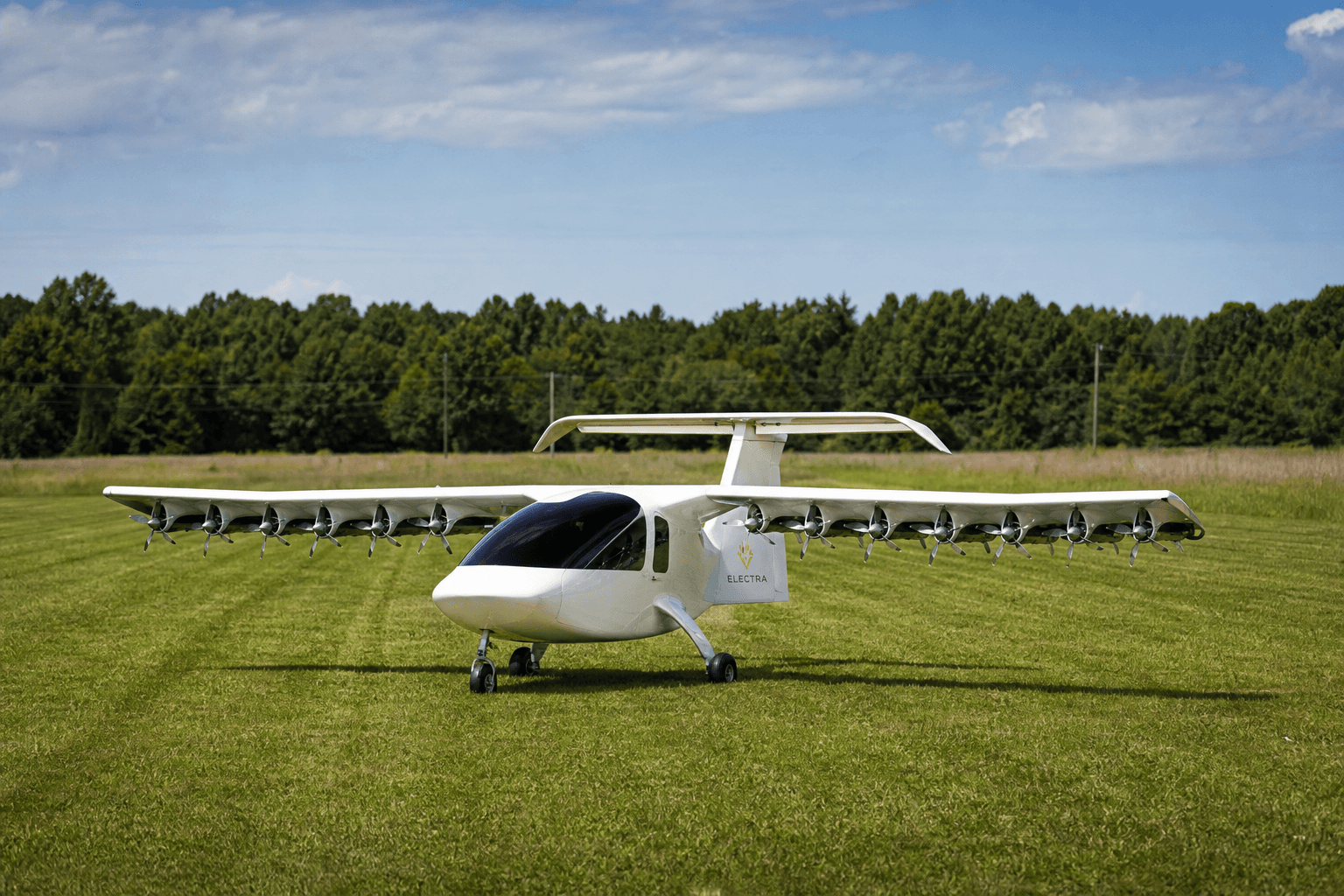
FAA Sets Certification Rules for Electra EL9 Ultra Short Hybrid-Electric Aircraft
The FAA has approved a set of airworthiness and environmental regulations that will apply to the Electra EL9 Ultra Short, marking a significant step toward the introduction of hybrid-electric aircraft. Electra this week said the agency closed the G-1 issue paper for the EL9, which is intended for operations out of soccer field-sized spaces requiring only 150 feet for takeoff and landing. The approved G-1 establishes a formal certification basis for the aircraft under Part 23 regulations. In other words, it creates a framework for Electra to prove that the EL9 can meet the same safety standards required of existing commercial aircraft. The company said it submitted its Part 23 type certification application in November. Beyond outlining which airworthiness and environmental regulations—such as those governing aircraft noise—will apply to the EL9, the G-1 lays out any special conditions or equivalent level of safety (ELOS) findings that Electra is required to meet. Marc Allen, CEO of Electra, said in a statement that the milestone "reflects the hard work and productive collaboration between Electra and the FAA, who are working together to make the future of aviation real." Electra said the G-1 establishes the "regulatory foundation" for the EL9's novel features, including its blown-lift propulsion system that redirects airflows over large flaps and ailerons and into the ground. That allows the model to take off at a leisurely 35 knots, hence the low runway requirement. The G-1 also covers the aircraft's distributed electric propulsion system—comprising eight Evolito electric engines spread across the front of the wing—and digital fly-by-wire control system. The latter is built around Honeywell flight control computers and manipulates aerodynamic surfaces as well as the electric motors. It is designed to reduce pilot workload and support handling at low speeds. Electra's certification progress could have implications for the broader electric aviation industry. The firm joins Joby Aviation, Archer Aviation, and Beta Technologies as some of the only developers of passenger-carrying electric aircraft to obtain G-1 approval. Airbus is also developing a hybrid propulsion system that combines electricity with hydrogen, producing water as the only byproduct, though the project is in the nascent stages. Other competitors, such as Maeve Aerospace, have struggled to stay afloat . NASA in particular views Electra's technology as potentially transformational. The space agency picked the company for its Advanced Aircraft Concepts for Environmental Sustainability (AACES) 2050 initiative, asking it to develop the core technologies and design concepts for a new generation of all-electric commercial airliners. In June, Electra unveiled its concept for a hybrid-electric "double bubble" airliner that could fly up to 100 passengers. The partners will jointly study the concept, which is intended to improve fuel efficiency. What's Next? For Electra, the next phase of EL9 type certification will be the FAA's approval of a G-2 issue paper, which creates a "compliance checklist." Essentially, the G-2 describes how the EL9 will show compliance with each regulation that is outlined in the G-1 certification basis. "This stage will guide how Electra demonstrates that the aircraft meets the FAA-approved certification basis through engineering analysis, ground and flight testing, inspections, conformity activities, and certification data," said JP Stewart, Electra's senior vice president for product development. The company will also need to submit and receive approval for project-specific certification plans, which are non-legally binding, mutual statements of intent between the FAA and applicant that set expectations for the project. The idea is to hold each side accountable to its plans. After that, Electra will need to build and fly type-conforming aircraft internally. It has validated the aircraft's 150-foot ground roll with a two-seat demonstrator, the EL2 Goldfinch, but the EL9 has yet to fly. Electra anticipates the larger, flagship model's debut in 2027 or 2028. Then, Electra will need to complete more flying, this time with FAA personnel on board, during type inspection authorization (TIA). Once TIA is complete, and the agency has confirmed that the conforming aircraft meets the G-1 certification basis using the approved G-2 checklist, type certification can be formally issued. Per Electra, the company's team of engineers collectively has developed or certified more than 40 prior aircraft. The EL9 could be one of the first hybrid-electric aircraft to routinely fly passengers. At full capacity of 3,000 pounds, or a pilot plus nine passengers and 50 pounds of luggage each, it has a projected range of 330 nm, cruising at 175 knots. Per Electra, it will produce only 75 dBA of noise during takeoff and landing. Those features—combined with the ultra short takeoff and landing capability—are designed to open up operations away from airports. The EL9 is intended to use ultra-short "access points" that could be installed on rooftops, parking lots, fields, barges, malls, casinos, or even ski resorts. With access points, Electra estimates the EL9 could save travelers hours on more than 2,600 routes spanning 50 to 265 miles that are suboptimal for driving, but lack routine commercial air service. It believes it will need to produce 12,000 to 16,000 aircraft to meet demand for the first decade of its operations. Electra calls this vision " direct aviation ," and the company made significant progress toward realizing it this week after signing an agreement with Signature Aviation and UrbanV. The deal will see the partners explore the installation of access points across Signature's network of private aviation terminals. Beyond NASA, Signature, and UrbanV, the U.S. Air Force, Army, and Navy have all shown interest in the EL9.
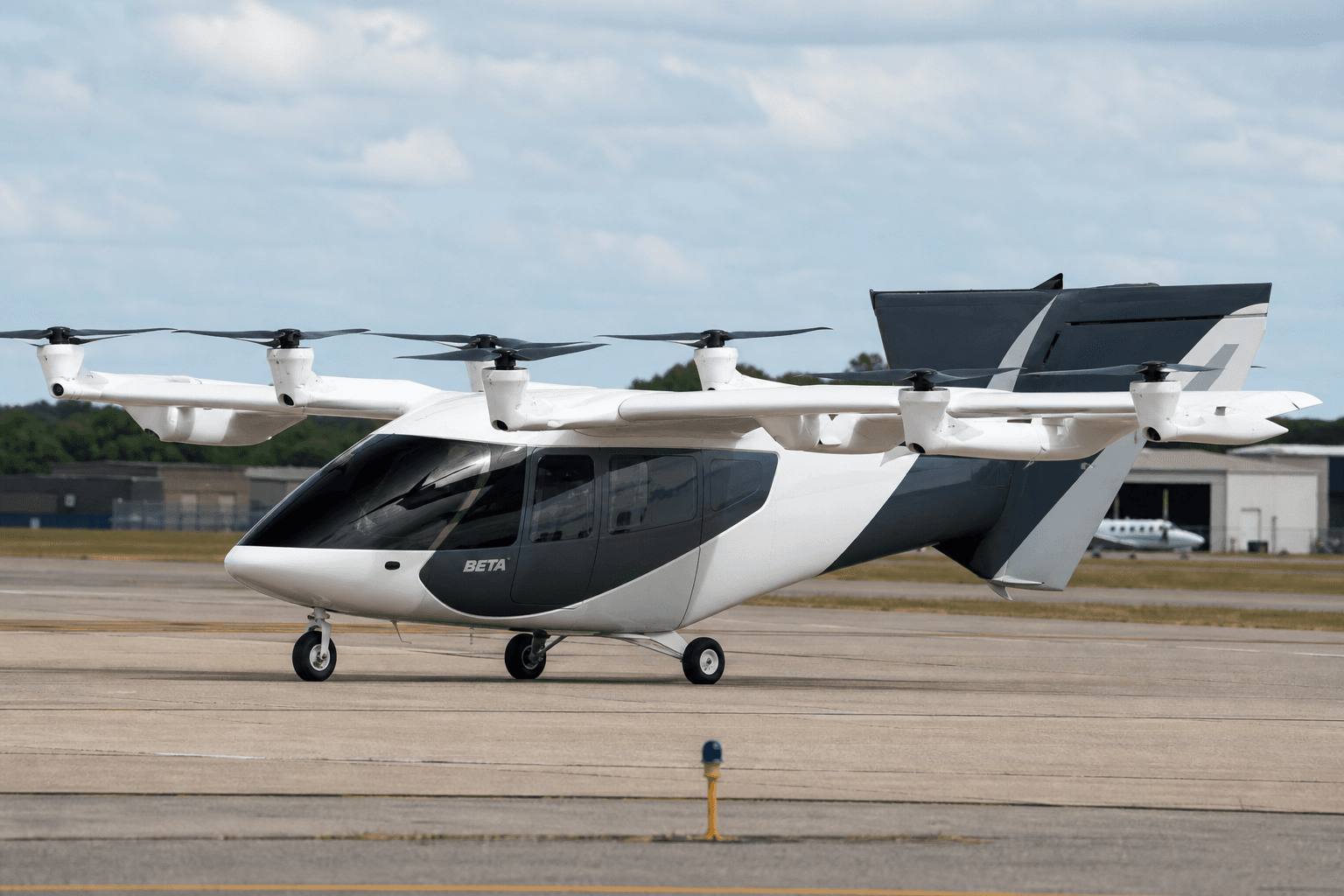
FAA and DOT Launch Multi-State Trials for Electric and Autonomous Aircraft Integration
The FAA and U.S. Transportation Department's (DOT) highly anticipated trials of precertified electric air taxis, autonomous cargo drones, and other novel aviation technologies—expected to span at least three years and 26 states —are officially underway. The first operational flights under the agencies' eVTOL (electric vertical takeoff and landing) Integration Pilot Program (eIPP) comprised deliveries of manufactured organs in Maryland and Virginia, conducted using Beta Technologies' all-electric Alia CX300 aircraft. Beta aims to certify and commercially launch the model—which has a demonstrated range of 337 nm and intended top speed of 153 knots—within the next few years. Beta said Friday that its Alia family of aircraft—which also includes the eVTOL A250—have flown more than 160,000 nm across the U.S., Europe, Japan, and New Zealand. Nearly all of that flying was conducted under the company's market survey ticket. But the eIPP will permit Beta and other manufacturers' precertified aircraft to conduct operations that were previously not allowed, potentially including cargo and passenger flights for revenue. The flights will also generate data on how these activities can be safely integrated alongside regular air traffic. The FAA is not funding them, but it could use those insights to create future requirements governing how the new entrants are certified and regulated. The FAA in March announced the eight lead eIPP participants, each led by a state or local transportation agency. After that, participants began negotiating with the agency toward other transaction agreements (OTAs) that set specific requirements, such as for data reporting and the number of flight hours and demonstrations required. A Beta spokesperson said the recent Alia campaign was conducted under one of these OTAs, which means the eIPP has officially begun. Kristen Costello, who leads government and regulatory affairs for Beta, told FLYING earlier this year that the eIPP will allow the company, which does much of its flying abroad, to become more familiar with the U.S. operating environment. It expects to generate operational data on a larger scale than it has been able to previously. "It's not, 'Does the airplane work?'" founder and CEO Kyle Clark told FLYING in April. "It's, 'Does the airplane work every single day in IMC, with real operational payloads? Charge at the right rate? Does the training work? Do the service and reliability meet the standards that our customers expect?'" First eIPP Flights Beta said the inaugural campaign covered about 275 nm and comprised "routine operations" between four airports—Virginia Tech/Montgomery Executive Airport (KBCB) in Blacksburg; Charlottesville-Albemarle Airport (KCHO) in Virginia; Frederick Municipal Airport (KFDK) in Maryland; and Martin State Airport (KMTN) in Baltimore County, Maryland. The activities were conducted in partnership with the Pennsylvania Department of Transportation (PennDOT), Virginia Department of Aviation, and Maryland Aviation Administration. The manufactured organs are being developed by United Therapeutics, Beta's first investor and customer. Beta has already begun training the company's pilots to fly Alia. Per a recent Securities and Exchange Commission filing , United Therapeutics, which ordered an unspecified number of aircraft, pays Beta about $5 million annually in aircraft development costs. Beta has indicated that organ delivery will be one of Alia's first missions. It plans to test medical logistics throughout the eIPP and deliver the manufactured organs commercially once they become available. The company said Friday that United Therapeutics' subsidiary, United Bioelectronics, has advised it on aircraft autonomy, structures, and the deployment of electric charging infrastructure across 123 locations. "United Therapeutics contracted Beta to build an electric aircraft capable of delivering lifesaving cargo, and today we delivered on that agreement," Clark said in a statement. "Our long-term partnership with United Therapeutics has shaped Beta and our mission to build the aircraft, infrastructure, and operational ecosystem." United Therapeutics CEO Martine Rothblatt said in a statement that achieving the company's mission of saving millions of lives by delivering an unlimited supply of organs will require thousands of flights per day. The idea with Beta's Alia is to reduce the cost, improve the reliability, and lower the carbon footprint of those operations. But the Alia flights are only the beginning. PennDOT is leading a consortium of 18 states called the "Multistate Collaborative eIPP (MSCE) National Integration Complex." According to Anthony McCloskey, director of PennDOT's bureau of aviation, the group comprises three operators and four OEMs, three of which are Beta, Electra, and Pivotal. Electra plans to demonstrate 50-to-500-mile links between Atlantic City in New Jersey and locations such as Philadelphia International Airport (KPHL). Per a news release shared by Pivotal, Republic Airways is one of the other operators. The manufacturer of personal eVTOL aircraft said one goal of the consortium is to fly aircraft across state lines, within "heartland" regions that may lack reliable air service. The DOT said the PennDOT-led project will aim to "revitalize regional flights across the country, including routes similar to those supported through the Essential Air Service program." More to Come The FAA in 2024 published a special federal aviation regulation that set initial pilot training and operational requirements for eVTOL and other powered-lift aircraft. But they will expire after a decade, and regulators are working to develop permanent rules. The eIPP was established via a June 2025 White House executive order to help guide regulators as they complete that arduous task. It brings together state and local governments, manufacturers, operators, airports, and other partners at a scale not seen previously. Beta was selected for seven of the eight eIPP projects. But the program will also include electric air taxis from Archer Aviation, Joby Aviation, and Wisk Aero, hybrid-electric regional aircraft such as Electra's EL9, and autonomous cargo aircraft such as Elroy Air's Chaparral. Additional activities will be performed using Reliable Robotics' aircraft autonomy system and Ampaire's hybrid-electric powertrain, both of which are designed for retrofits. "Each eIPP project will showcase the broad public benefits of this technology—from moving people and cargo to supporting lifesaving emergency response—and the data we gather will help shape policies for safe, scalable operations nationwide,” said Chris Rocheleau, FAA deputy administrator, in a statement. As the eIPP progresses, it will touch an increasing number of states and incorporate more complex aircraft and operations. Beta has said it will initially conduct cargo operations using the conventional takeoff and landing CX300 before moving to passenger operations with the vertical takeoff A250. Wisk earlier this year told FLYING it plans to use helicopters and other aircraft before bringing its autonomous Generation 6 air taxi into the fold. Electra similarly will begin activities with its EL2 demonstrator before advancing to its flagship EL9 Ultra Short. Clark in June predicted that within three years, uncrewed, autonomous operations will become routine in several of the eIPP states.
The Daily Touch & Go
The day's best aviation news in your inbox. Free, no spam.