

Illustration: The Touch & Go
Kodiak 100 Seaplane Makes Hard Landing on New York's East River; No Serious Injuries Reported
Acadian Seaplanes reports structural damage following a hard landing near Manhattan's East 23rd Street, with all eight occupants safely evacuated and only minor injuries noted.
The gist
A Kodiak 100 seaplane made a hard landing on the East River near Manhattan; all eight onboard evacuated safely with minor injuries.
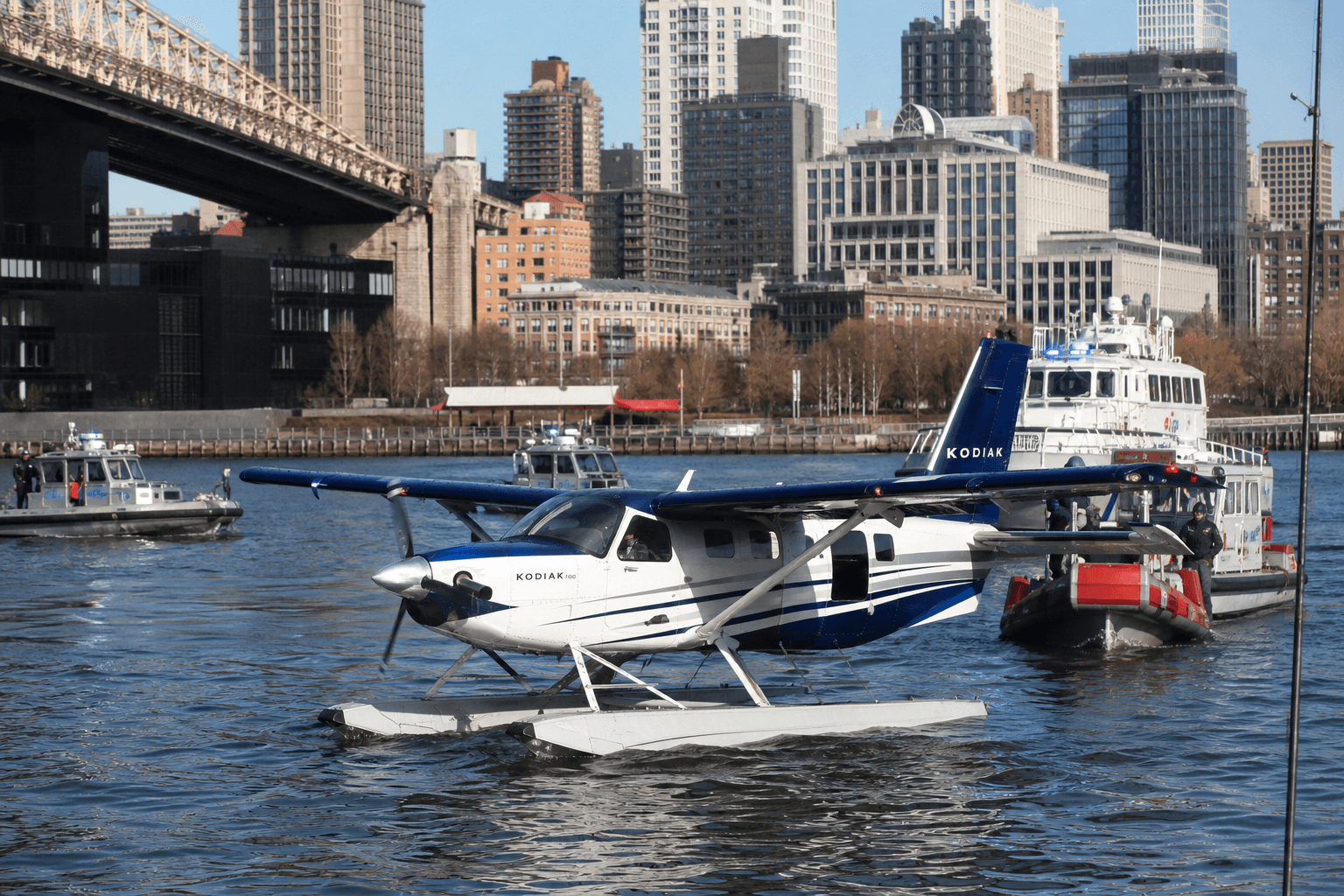
On Sunday around midday, a Kodiak 100 turboprop operated by Acadian Seaplanes experienced a hard landing on New York City’s East River just off Manhattan’s East 23rd Street. The incident occurred near the New York Skyports Seaplane Base (6N7) and caused notable structural damage to the aircraft. Despite the severity of the landing, the flight crew took immediate action by following established emergency procedures and coordinated with LaGuardia Airport authorities, local police, and firefighters to evacuate all occupants safely.
Acadian Seaplanes, a regional charter operator serving the U.S. Northeast and coastal routes in Florida, confirmed via LinkedIn that the aircraft sustained structural damage to its wing struts during the landing rollout. The company affirmed its commitment to safety and is working in concert with the FAA and NTSB to investigate the cause of the accident and implement any necessary corrections. The operator emphasized that the safety of passengers and crew remains their paramount concern.
According to statements from the New York City Fire Department and the FAA, there were eight individuals aboard the seaplane at the time of the accident. The FDNY reported that two occupants suffered minor injuries but declined medical treatment at the scene. Video clips circulating from the incident depict the aircraft encountering a wave just prior to touchdown, which reportedly damaged the left float and may have contributed to structural failure along the wing.
The seaplane involved, a single-engine Kodiak 100 built in 2025, was flown under registration N726SH. The aircraft owner requested that personal identifying information be kept confidential in FAA records. Reports from The Daily Mail indicated that Acadian was operating the flight on behalf of Blade Air Mobility, which manages private terminals in Manhattan. A Blade company source suggested that the presence of vessels producing wave turbulence and possible wind gusts complicated the final approach and landing.
An additional seaplane registered N555NL, departing East Hampton Airport earlier that morning, responded to the scene. Air traffic control audio revealed a mayday call triggered at approximately noon directed to LaGuardia's control tower, prompting swift police and emergency response. Authorities rerouted incoming flights to avoid congestion near the seaplane base during the rescue and recovery efforts.
The New York City Police Department’s Harbor Unit took over on-scene coordination alongside emergency services. Witness reports and helicopter confirmations indicated that passengers disembarked safely onto NYPD harbor boats within minutes of the aircraft’s water landing. The incident did not result in any severe medical emergencies, with all onboard accounted for and evacuated without life-threatening harm.
Special attention has been drawn to the Kodiak 100’s floats, which likely mitigated the severity of impact by absorbing some of the forces from the hard touchdown. Floatplanes can experience damage analogous to a hard pothole strike in automobiles, often causing bent rims or structural stress rather than complete failure. This characteristic may have played a crucial role in preserving occupant safety under adverse landing conditions.
Acadian's collaboration with federal agencies like the FAA and NTSB aims to thoroughly evaluate environmental factors such as wave patterns and wind conditions that may have led to the hard landing. This investigation will inform any safety enhancements or procedural updates for seaplane operations in urban waterways with complex traffic and environmental variables.
Safety remains an integral aspect of seaplane operations especially in confined and busy urban waterways like the East River. This event highlights the challenges inherent in landing floatplanes amid variable water conditions and multiple vessel traffic in such a densely populated area. The findings from the ongoing investigation may influence operational protocols or infrastructure considerations at locations including New York’s Skyports Seaplane Base.
Read more
All Aviation Safety →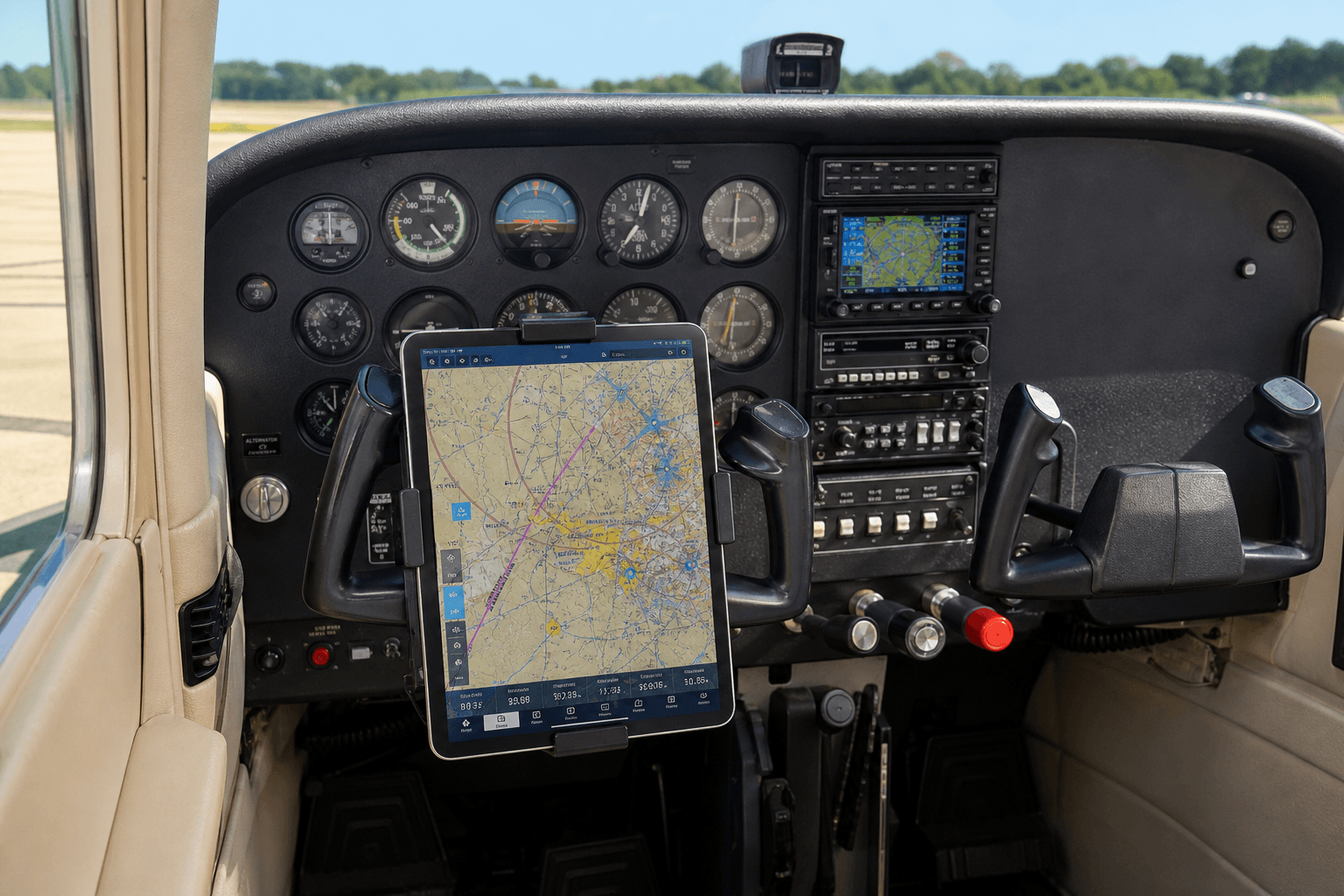
Pilots Urged to Secure Cockpit Gear to Prevent Hazards and Distractions
The learner showed up early for his IFR lesson with his tablet EFB ( electronic flight bag ) and spent the next 15 minutes trying to secure it in the aircraft. The tablet measured 8 by 11, and he wanted to use a yoke mount he had before in a Mooney. I don't know if it was the yoke on the Cessna 172 or the tablet, or the mount, or a combination—but it just didn't work. The tablet was too large and heavy, got in the way of the controls, and blocked the view of the instrument panel. Undaunted, we attempted a few flights with the tablet on the learner's lap. It was awkward and unstable, and scared both of us when it made a loud noise when it fell off his leg during a steep turn and landed hard on the floor of the aircraft. This was one of those times when the EFB intended to be used for navigation and situational awareness became a distraction rather than a help. In the worst case, it can become a hazard. READ MORE: When GPS Fails: Lessons From a Fatal Air Ambulance Crash READ MORE: Beat the Heat: Mastering Density Altitude One of my former students learned this the hard way. During an aerobatics lesson she was struck in the head by an EFB still attached to the kneeboard. It was her instructor's kneeboard that became a projectile when the leg strap failed. It's not just pilot gear that can go rogue. A mentor of mine shared a cautionary tale about a flight he did with his wife in their SkyCatcher that turned dramatic when they hit some turbulence and her purse—in his words—"barfed." He was assaulted by a hostile lipstick, giving him a large bruise under his eye. The lesson here is to make sure everything is secure in the cockpit. If you're not using it, keep it tucked away and secured. That means a pen, pencil, flashlight, E6-B, tablet, phone, or even plastic-laminated checklist can potentially do damage if they hit you just right. This concept can be convoluted. One particular learner tossed the checklist in the back seat after the engine run-up was complete. I was the fill-in instructor that day and asked why he did that. He said he wanted to make sure it was "out of the way," and "we were just in the pattern." I retrieved the checklist with the admonishment "we're not done with that yet" and instructed him to put the checklist in the bulkhead pouch next to his leg, clip it to his kneeboard, or place it under his right thigh so it wouldn't become a projectile or go missing. He was surprised, as he only used the flow of GUMPS check for landing. He experimented with all three locations for checklist storage and decided the kneeboard with the checklist open to the page pertinent to the flight worked the best for him, and he learned the art of "flow, and verify with the checklist." Having the right kneeboard is critical for cockpit organization. Finding the right one for you is very much trial and error. It may change, depending on the aircraft you're flying. As I write this I am working with an IFR candidate who is very happy with the kneeboard he received for Christmas that's specifically designed to hold an EFB. It's solid enough to keep the unit from sliding yet has a small enough profile that it doesn't get in the way of the yoke. I envied the latter, as the very first kneeboard I owned is missing an inch after I took a hacksaw to it when the yoke of the Cessna 172RG I did my commercial training in kept jamming it when I pulled the yoke full aft. Since the invention of EFB there has been an explosion in the creation of external mounts to secure it. Again this is trial and error. You can attach them to an arm extending from the floor, panel, etc. I'm not a fan of putting it up on the glareshield, although I know those who have and sent the magnetic compass into a tizzy and actually scratched the interior of the plexiglass windscreen. Neither is a good thing. Some mounts come with clips or suction cups, allowing them to attach to the aircraft. Be careful of anything that attaches to the windscreen side window because it blocks part of the view. Don't forget to have a reliable power source, including a cord that connects to the aircraft if appropriate. I've learned to carry two power cords for the unit just in case one fails or the learner forgets theirs, although savvy instructors use the EFB running out of battery as a realistic distraction. Please don't be the learner who thinks having a tablet and two backup phones will keep you from having to navigate with Mark 1 Eyeball during a check ride. Several DPEs I know tell me about failing all electronic means of navigation in the cockpit as a means to ascertain the applicant is capable of pilotage and dead recockoning. Apparently there are pilots who rely heavily on the magenta line to tell them where they are even in VFR conditions and, when it is taken away, they struggle. I thought this was hyperbole until I flew a stage check with an applicant who appeared to be genetically attached to his tablet. His regular CFI was trying to break him of the habit of being head down in the cockpit. Luckily, in the Seattle area we have some beautiful scenery and humongous landmarks you can't miss on a clear day—such as the cities of Seattle, Tacoma, Olympia, a couple of military bases, Mount Rainier, and Puget Sound. To wean him off the tablet we did a VFR flight sans EFB specifically to overfly the military bases (making proper radio calls to obtain permission to transition their Class D airspace) and then over the sound to look for whales. I am part of a whale observation group, and the position of the whales are shared online. You can't be head down in the cockpit when looking for whales. They don't show up on the ADS-B. You need your head on a swivel with eyes outside and mind your altitude so you're at least 2,000 feet above the creatures. By the end of the flight the learner was an "outside man." Learning had taken place.
FAA seeks to block state meal and rest break rules for flight crews nationwide
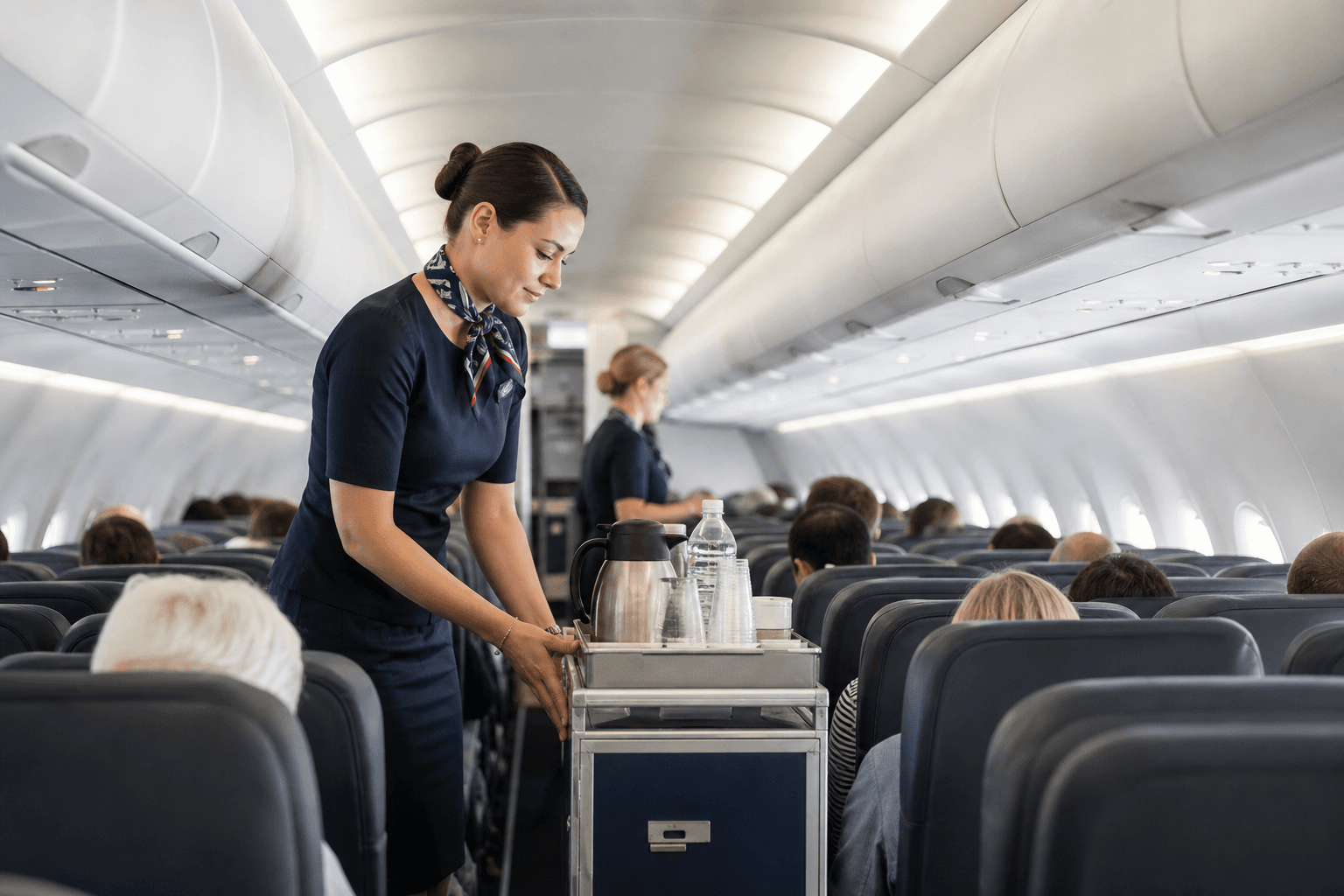
The FAA is seeking to block state and local governments from setting meal and rest period requirements for flight crews and flight attendants , asserting that those breaks are adequately covered by federal law. According to a notice of proposed rulemaking (NPRM) published in the Federal Register this week, the agency would add language to parts 117 and 121 that clarifies the federal preemption of state and local laws governing these rest periods. Whereas previous rulemaking has centered on crew breaks between shifts , the new proposal tackles breaks during duty, including while flying. Per the Department of Labor , there are 21 states that set meal period requirements for private sector employees, seven of which also have rest period requirements. At issue is whether those rules cover flight crews and flight attendants. The FAA in its NPRM argued that a "patchwork" of state and local break requirements violates the Airline Deregulation Act (ADA) of 1978, which prohibits any law that creates a "significant impact" on airline prices, routes, or services. Federal preemption, it said, would create uniform requirements across states that reduce operational disruptions for carriers. However, federal district and appellate courts in recent years have come to the opposite conclusion. Flight crews and flight attendants who have sued airlines over violations of state or local break requirements have often prevailed, allowing them to claim damages. The FAA in the NPRM said that "recent litigation" spurred its rulemaking—"most notably" a pair of decisions handed down by the courts in 2021. What the FAA Proposes The FAA in a 2022 final rule changed its requirement for scheduled rest periods for flight attendants assigned to duty periods of 14 hours or less, raising it from as low as eight hours to at least ten. This week's proposal addresses break requirements during rather than between shifts. One rationale provided by the agency is that fragmented state and local rules are untenable for carriers. It said such a framework may require them to staff additional flight attendants, raise costs, or remove passengers from flights, leading to operational impacts and violating the 1978 ADA. The FAA does not propose any new federal laws regarding aircrew break requirements. Instead, it argues that the status quo of "rules about duty periods, collective bargaining agreements (CBA) reached between air carriers and labor unions, and…specific air carrier crew resource management procedures" adequately strikes a balance between aviation safety and crew health. Notably, the proposal would require Part 121 certificate holders to ensure that flight attendants remain available for safety duties—including responding to medical emergencies or dealing with unruly passengers—during their breaks. The FAA contended that it mitigates fatigue by regulating rest between rather than during shifts. "The primary mission of flight attendants is to ensure safety, a role that is undermined if a flight attendant is legally 'off-duty' during an emergency," the agency said. However, the regulator also proposes that carriers ensure flight attendants have enough time to eat, drink, or use the restroom. Other employees covered by state and local rules receive uninterrupted meal and rest periods. Comments on the proposal are due September 4, after which time the FAA may modify it. Why Now? The FAA specifically called out two legal rulings as the basis for this week's proposal. In 2021, the 9th U.S. Circuit Court of Appeals held that California's meal and rest requirements for flight attendants are not preempted by the ADA or other federal laws. The ruling came after California-based flight attendants sued Virgin America over failing to meet the state's mandates, which include 30-minute meal breaks for employees who work more than five hours. As a result, flight attendants were allowed to pursue claims. Alaska Airlines acquired Virgin during the case, Bernstein et al. v. Virgin America, and became a codefendant. The carrier appealed the decision to the Supreme Court, which declined to review it. Alaska later secured an Association of Flight Attendants-backed aircrew exemption and backtracked on threats to close its California crew bases over the decision. However, it failed to secure a similar exemption in Washington state. Following the case, California in 2023 exempted flight attendants from state break requirements when they are covered by certain Railway Labor Act collective bargaining agreements (CBAs). The FAA in the NPRM noted that not all airlines are covered by these CBAs. In another 2021 ruling referenced by the FAA, Wilson v. SkyWest Airlines, the U.S. District Court for the Northern District of California made a similar finding. It likewise sided with flight attendants who sued SkyWest, reiterating that federal laws do not preempt state or local rules. In another case, which the FAA did not cite, American Airlines in 2023 reportedly settled with California flight attendants, who had sued over alleged wage and meal break violations, for about $24 million. Cementing the federal preemption of these state and local laws will likely be cheered by airlines who have contended with lawsuits from unhappy personnel. The proposal may also face pushback from unions representing flight crews and flight attendants. In the Bernstein case, the Association of Flight Attendants filed a friend of the court brief urging the court to side with Virgin flight attendants. "Instead of preemption, AFA pushed the airlines to resolve the operational challenges of meal and rest law through a legislative fix that would codify our rights to bargain over these provisions," the union wrote in a 2022 news release .
TezJet grounded after Boeing MD-83 landing gear collapse at Bishkek Manas Airport
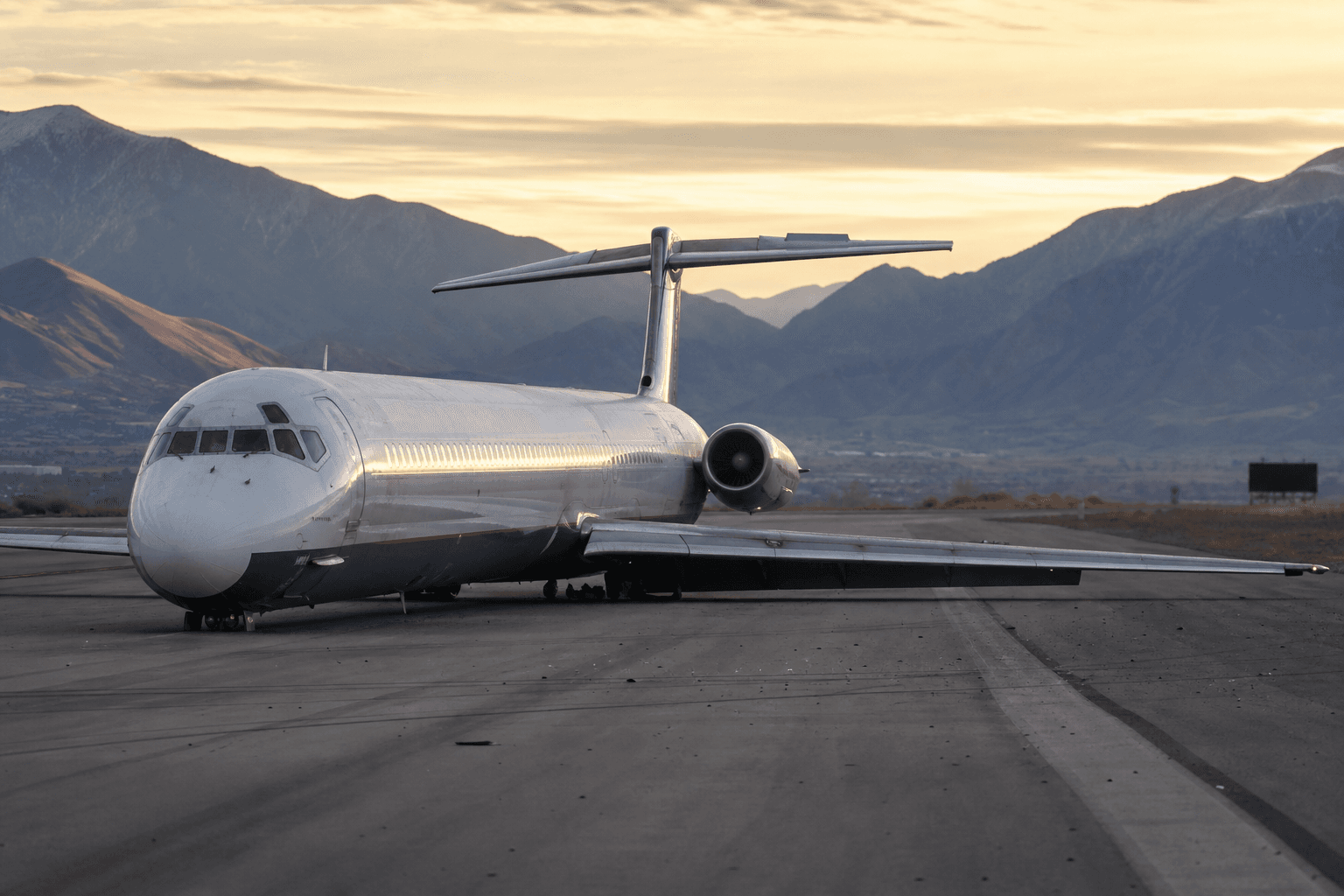
Accident at Bishkek Manas airport occurred just a month after Kyrgyzstan was removed from European blacklist. Kyrgyz authorities have temporarily suspended the operations of carrier TezJet after one of its Boeing MD-83s has suffered a landing-gear collapse while taxiing for the runway at Bishkek's Manas airport. The airport operator states that the accident occurred as the twinjet prepared to depart for Osh on 7 July. "After taxiing and reaching take-off position during pre-flight procedures, the left main landing-gear collapsed," says the company. "As a result, the aircraft listed to the left, touched the runway with its left wing, and came to a stop." None of those on board was injured, the airport operator adds. Images from the scene identify the MD-83 involved as EX-80003, a 1996 airframe originally delivered to Korean Air. The tail-cone of the aircraft, which serves as an evacuation exit, appears to have been jettisoned during the occurrence. Work is under way to remove the jet from the runway. Manas has a single runway, designated 08/26. Kyrgyzstan had been subject to a European Commission blanket blacklisting for some 20 years, a restriction which was only removed in early June based on evidence of substantial safety improvement. The Kyrgyz state civil aviation agency is investigating the occurrence. "Until the necessary verification activities are completed, a decision has been made to temporarily suspend the operation of TezJet aircraft," says the airport operator. "This is a purely preventative measure aimed at ensuring the highest level of flight safety." The aircraft had arrived from Osh earlier in the day. Manas airport will remain closed until around 06:00 on 8 July. "Flight safety remains our highest priority," says the airport operator, adding that schedule disruption is possible.
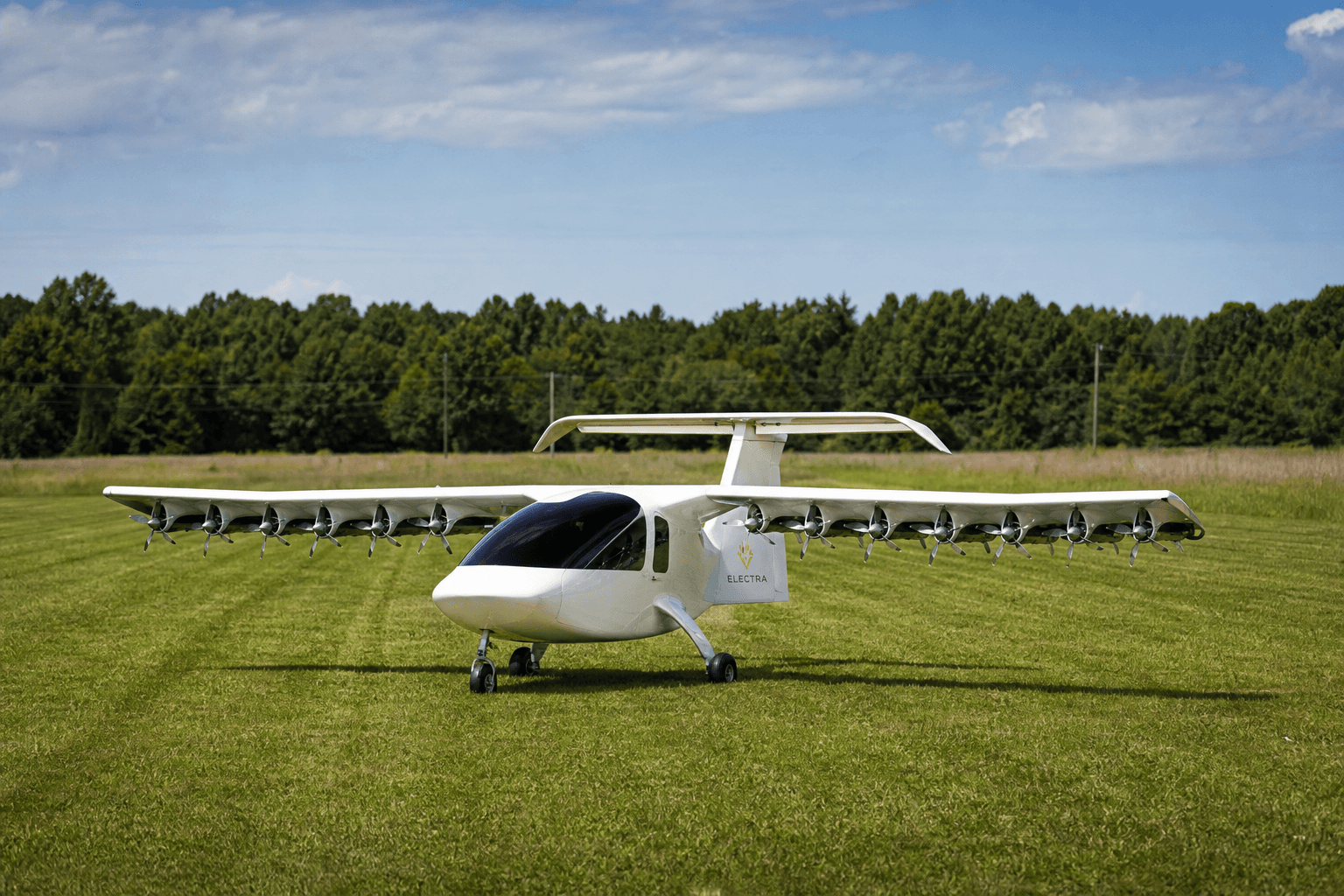
FAA Sets Certification Rules for Electra EL9 Ultra Short Hybrid-Electric Aircraft
The FAA has approved a set of airworthiness and environmental regulations that will apply to the Electra EL9 Ultra Short, marking a significant step toward the introduction of hybrid-electric aircraft. Electra this week said the agency closed the G-1 issue paper for the EL9, which is intended for operations out of soccer field-sized spaces requiring only 150 feet for takeoff and landing. The approved G-1 establishes a formal certification basis for the aircraft under Part 23 regulations. In other words, it creates a framework for Electra to prove that the EL9 can meet the same safety standards required of existing commercial aircraft. The company said it submitted its Part 23 type certification application in November. Beyond outlining which airworthiness and environmental regulations—such as those governing aircraft noise—will apply to the EL9, the G-1 lays out any special conditions or equivalent level of safety (ELOS) findings that Electra is required to meet. Marc Allen, CEO of Electra, said in a statement that the milestone "reflects the hard work and productive collaboration between Electra and the FAA, who are working together to make the future of aviation real." Electra said the G-1 establishes the "regulatory foundation" for the EL9's novel features, including its blown-lift propulsion system that redirects airflows over large flaps and ailerons and into the ground. That allows the model to take off at a leisurely 35 knots, hence the low runway requirement. The G-1 also covers the aircraft's distributed electric propulsion system—comprising eight Evolito electric engines spread across the front of the wing—and digital fly-by-wire control system. The latter is built around Honeywell flight control computers and manipulates aerodynamic surfaces as well as the electric motors. It is designed to reduce pilot workload and support handling at low speeds. Electra's certification progress could have implications for the broader electric aviation industry. The firm joins Joby Aviation, Archer Aviation, and Beta Technologies as some of the only developers of passenger-carrying electric aircraft to obtain G-1 approval. Airbus is also developing a hybrid propulsion system that combines electricity with hydrogen, producing water as the only byproduct, though the project is in the nascent stages. Other competitors, such as Maeve Aerospace, have struggled to stay afloat . NASA in particular views Electra's technology as potentially transformational. The space agency picked the company for its Advanced Aircraft Concepts for Environmental Sustainability (AACES) 2050 initiative, asking it to develop the core technologies and design concepts for a new generation of all-electric commercial airliners. In June, Electra unveiled its concept for a hybrid-electric "double bubble" airliner that could fly up to 100 passengers. The partners will jointly study the concept, which is intended to improve fuel efficiency. What's Next? For Electra, the next phase of EL9 type certification will be the FAA's approval of a G-2 issue paper, which creates a "compliance checklist." Essentially, the G-2 describes how the EL9 will show compliance with each regulation that is outlined in the G-1 certification basis. "This stage will guide how Electra demonstrates that the aircraft meets the FAA-approved certification basis through engineering analysis, ground and flight testing, inspections, conformity activities, and certification data," said JP Stewart, Electra's senior vice president for product development. The company will also need to submit and receive approval for project-specific certification plans, which are non-legally binding, mutual statements of intent between the FAA and applicant that set expectations for the project. The idea is to hold each side accountable to its plans. After that, Electra will need to build and fly type-conforming aircraft internally. It has validated the aircraft's 150-foot ground roll with a two-seat demonstrator, the EL2 Goldfinch, but the EL9 has yet to fly. Electra anticipates the larger, flagship model's debut in 2027 or 2028. Then, Electra will need to complete more flying, this time with FAA personnel on board, during type inspection authorization (TIA). Once TIA is complete, and the agency has confirmed that the conforming aircraft meets the G-1 certification basis using the approved G-2 checklist, type certification can be formally issued. Per Electra, the company's team of engineers collectively has developed or certified more than 40 prior aircraft. The EL9 could be one of the first hybrid-electric aircraft to routinely fly passengers. At full capacity of 3,000 pounds, or a pilot plus nine passengers and 50 pounds of luggage each, it has a projected range of 330 nm, cruising at 175 knots. Per Electra, it will produce only 75 dBA of noise during takeoff and landing. Those features—combined with the ultra short takeoff and landing capability—are designed to open up operations away from airports. The EL9 is intended to use ultra-short "access points" that could be installed on rooftops, parking lots, fields, barges, malls, casinos, or even ski resorts. With access points, Electra estimates the EL9 could save travelers hours on more than 2,600 routes spanning 50 to 265 miles that are suboptimal for driving, but lack routine commercial air service. It believes it will need to produce 12,000 to 16,000 aircraft to meet demand for the first decade of its operations. Electra calls this vision " direct aviation ," and the company made significant progress toward realizing it this week after signing an agreement with Signature Aviation and UrbanV. The deal will see the partners explore the installation of access points across Signature's network of private aviation terminals. Beyond NASA, Signature, and UrbanV, the U.S. Air Force, Army, and Navy have all shown interest in the EL9.
The Daily Touch & Go
The day's best aviation news in your inbox. Free, no spam.