


Illustration: The Touch & Go
London Gatwick's Summer 2026 Sees Over 230 Destinations via Record 63 Airlines
London Gatwick Airport prepares for summer with expanded routes to 230+ destinations and enhanced passenger facilities.
The gist
Gatwick Airport offers record 63 airlines and 230 destinations for summer 2026 alongside new tech and terminals upgrades.
Continuing coverage
All London Gatwick →- Air Transat Starts First Non-Stop Service Between London Gatwick and Ottawa
- Air Zimbabwe Resumes Nonstop Flights Between Harare and London Gatwick After 14 Years
- Wizz Air Opens New Year-Round London Gatwick Route to Chișinău Enhancing UK Connectivity
- Air Zimbabwe resumes Harare-London flights via ACMI deal with Spain's Plus Ultra
- US Firm Castlelake Plans £5.5B Takeover of easyJet, Raising Fleet and Route Questions
London Gatwick Airport is stepping into the summer 2026 travel season with one of its most extensive networks ever, offering passengers connections to over 230 destinations. The airport has secured partnerships with a record 63 airlines, reflecting an ongoing expansion of air services that cater to both short-haul and long-haul travelers. This growth includes the introduction of 11 new routes and collaboration with eight new airline partners launched earlier this year, indicating a sustained push to enhance Gatwick's role as a major European aviation hub.
Among the upcoming additions is Air Zimbabwe’s forthcoming direct service to Harare, signaling Gatwick’s commitment to expanding international connectivity beyond its traditional markets. Short-haul popular leisure destinations like Barcelona, Faro, and Dublin remain strong contributors to passenger demand, while long-haul locations such as Shanghai, Orlando, and Cancun attract families, holidaymakers, and expatriates alike. This blending of route options caters to a wide variety of travel purposes and demographics, enhancing the airport’s appeal.
Operationally, Gatwick anticipates its busiest days to fall on the first three Sundays of August, with approximately 900 flights scheduled each day to accommodate millions of passengers. To manage this peak volume effectively, the airport has invested heavily in passenger operations and infrastructure. Nick Williams, Gatwick’s Head of Passenger Operations & Service, emphasized readiness to provide a smooth start to vacations for travelers amid this surge in traffic.
Significant upgrades have been made to both terminals featuring refreshed departure areas that offer better seating, additional charging points, and improved accessibility to meet modern passenger expectations. In addition, innovative technology is being incorporated to streamline the travel experience. A notable example is the introduction of Stanley Robotics’ autonomous valet parking system, allowing drivers to leave their vehicles in a specialized cabin for robot-controlled parking, reducing wait times and enhancing convenience.
The retail and dining options at Gatwick have also seen expansion with a focus on local offerings and unique experiences. Highlights include Discover London stores emphasizing British regional products, the UK’s first airport outlet for bakery chain GAIL, and Venchi’s debut UK airport store offering premium Italian chocolates and gelato. These enhancements reflect Gatwick’s strategic approach to increasing non-aeronautical revenues and improving customer satisfaction.
As the second-largest airport in the UK, Gatwick serves around 43 million passengers annually and supports over 76,000 jobs, contributing approximately £5.5 billion in gross value added to the economy. Its proximity to London (28 miles south) and excellent transport connections make it a vital node for domestic and international travel. A significant sustainable growth programme is underway, with a £2 billion investment targeting net zero emissions by 2030 and capacity increases through the routine use of a Northern Runway.
Passengers are advised to prepare for their journeys with practical tips provided by Gatwick to ease travel stress. This includes updated regulations allowing children over three feet 11 inches to use eGates with adult supervision, pre-planning via road and rail updates, hydration at free water points, booking official parking in advance, and attention to security rules on liquids and device packing. These measures aim to maintain efficiency during the summer peak.
Gatwick’s combination of expanded flight options, modernized facilities, technological innovation, and environmental focus positions it to serve diverse passenger needs this summer. The airport’s ongoing efforts to enhance operational capacity and passenger experience are aligned with broader trends in the aviation sector, emphasizing both connectivity and sustainability.
Frequently asked questions
- How many airlines operate at London Gatwick during summer 2026?
- London Gatwick works with a record 63 airlines for the summer 2026 season, expanding its network and passenger options.
- What new passenger technologies are being introduced at Gatwick Airport?
- Gatwick is introducing Stanley Robotics' autonomous valet parking system, enabling drivers to leave vehicles for robot-controlled parking, enhancing convenience.
- Which new long-haul destinations are available from Gatwick this summer?
- New long-haul routes include Shanghai in China, Orlando in Florida, Cancun in Mexico, and an upcoming direct flight to Harare with Air Zimbabwe.
Read more
All Sustainability →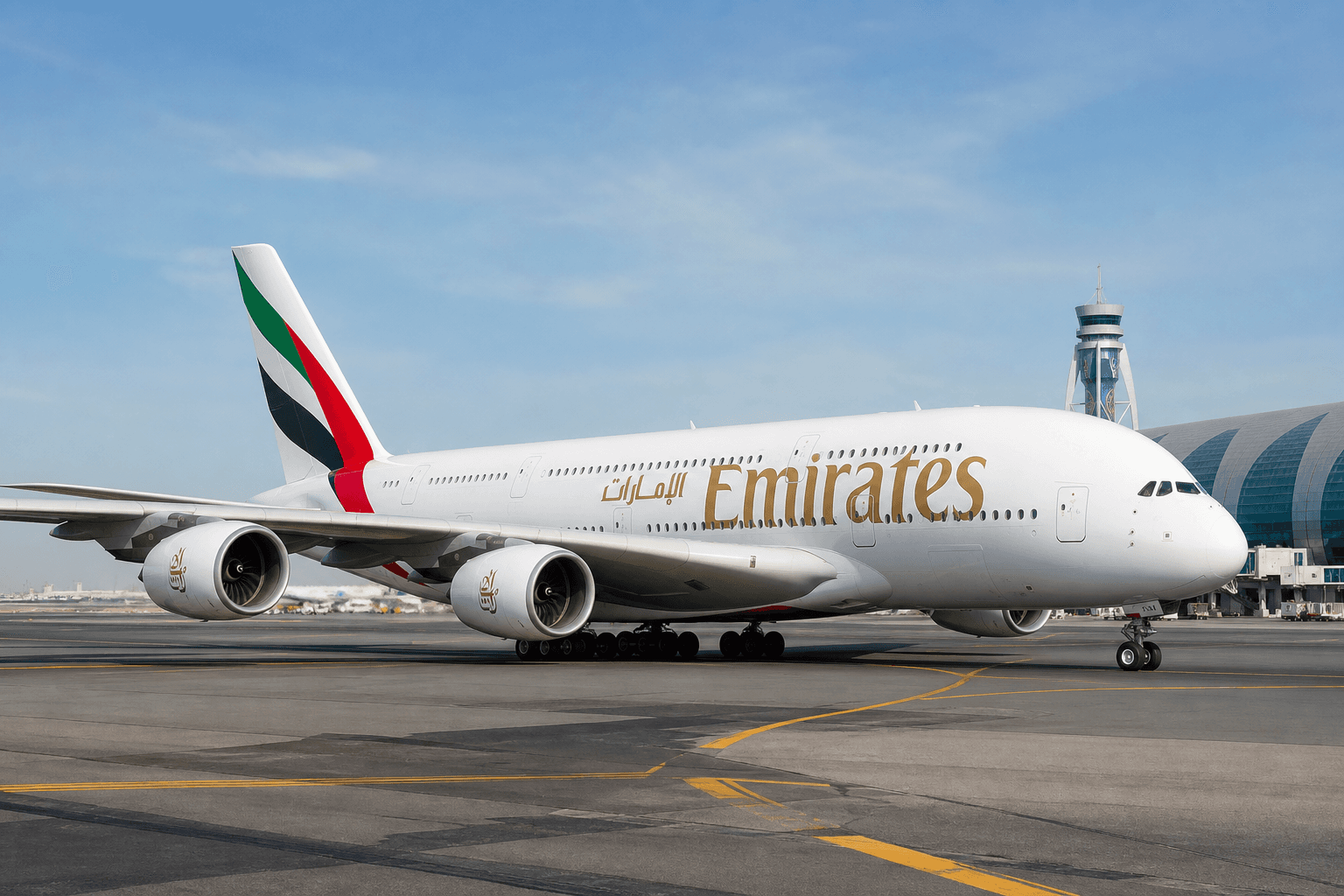
Emirates Completes 100th Cabin Retrofit in Record 44 Months
Emirates has successfully retrofitted its 100th aircraft under its ambitious cabin upgrade programme, the largest of its kind globally. ezstandalone.cmd.push(function () { ezstandalone.showAds(119); }); In just 44 months since November 2022, the carrier has refreshed 47 Airbus A380s and 53 Boeing 777s. The work was carried out at its state-of-the-art Engineering facilities in Dubai. This milestone represents a significant step in Emirates’ US$5 billion investment to elevate its onboard product. ezstandalone.cmd.push(function () { ezstandalone.showAds(127); }); By the end of December 2026, the airline expects to complete around 20 more aircraft, pushing it well past the halfway mark of its 219-aircraft target. The programme ensures every passenger enjoys consistent luxury, comfort, and modern amenities across the fleet. Massive Scale and Engineering Excellence The retrofit effort showcases extraordinary scale and precision. Emirates’ Engineering team, comprising over 400 engineers and technicians, has invested a total of 4.4 million man-hours. On average, the team completes about 28 aircraft per year. Each retrofit involves a complete nose-to-tail cabin refresh. ezstandalone.cmd.push(function () { ezstandalone.showAds(128); }); For an A380, engineers handle more than 4,000 parts, while a Boeing 777 requires over 2,500 parts. The interiors are fully disassembled, refreshed, and meticulously reassembled. To manage this complex operation, the team developed innovative solutions, such as using modified catering trucks to move large components inside the hangars. They also created zonal work tracking systems, specialized storage procedures, and custom equipment for accessing every area of the aircraft. ezstandalone.cmd.push(function () { ezstandalone.showAds(129); }); Emirates collaborated with over 100 suppliers to support this massive project, all executed entirely in-house in Dubai. This approach highlights the airline’s technical capabilities and commitment to maintaining tight schedules. Sir Tim Clark, President of Emirates Airline , commented on the achievement. “Our commitment to deliver best-in-class products across every cabin is an ongoing endeavour, and completing full cabin retrofits for 100 wide-body aircraft in 44 months is a significant achievement.” “Backed by a US$5 billion investment, it ensures our customers ‘fly better,’ with elevated luxury, comfort, and thoughtful detail throughout each cabin.” He praised the team for rewriting the rulebook on retrofitting the world’s largest passenger aircraft. ezstandalone.cmd.push(function () { ezstandalone.showAds(130); }); Premium Economy Rollout and Future Enhancements A standout feature of every retrofit is the addition of a new Premium Economy cabin. To date, more than 3,800 new Premium Economy seats have been installed. This has accelerated the product’s availability across Emirates’ extensive network, giving more passengers access to the highly praised experience. The programme continues to evolve. In May 2026, engineers completed a complex two-to-three class retrofit on an A380, introducing Premium Economy on the upper deck for the first time. Starting in October 2026, the next phase will bring 4K OLED HDR10+ seatback screens and new lightweight Safran Z400 seats, along with other upgrades. ezstandalone.cmd.push(function () { ezstandalone.showAds(131); }); Commitment to Sustainability Sustainability forms a key part of the initiative. Thousands of kilograms of high-grade leather, fabrics, and materials removed during retrofits are upcycled into limited-edition items under the ‘Aircrafted by Emirates’ collection, including luggage. The airline has also distributed over 4,000 backpacks made from repurposed Economy Class seat fabric to children in 11 countries. Conclusion Emirates first announced the retrofit programme in November 2021, initially targeting 105 aircraft. Strong customer demand led to expansions, reaching 191 aircraft by May 2024 and 219 by the end of that year. The first retrofitted Boeing 777 entered service in August 2024. ezstandalone.cmd.push(function () { ezstandalone.showAds(132); }); This programme reinforces Emirates’ position as an industry leader. Operating the world’s largest fleets of A380s and Boeing 777s, the airline continues to invest in its product to offer exceptional comfort, entertainment, and service on flights worldwide. With over half the fleet upgrades on track by late 2026, passengers can look forward to even more consistent, world-class experiences in the skies. Emirates’ in-house expertise and forward-thinking approach set a new benchmark for large-scale aircraft retrofits in commercial aviation.
Lufthansa's First Airbus A350-1000 Debuts in Special 100th Anniversary Livery
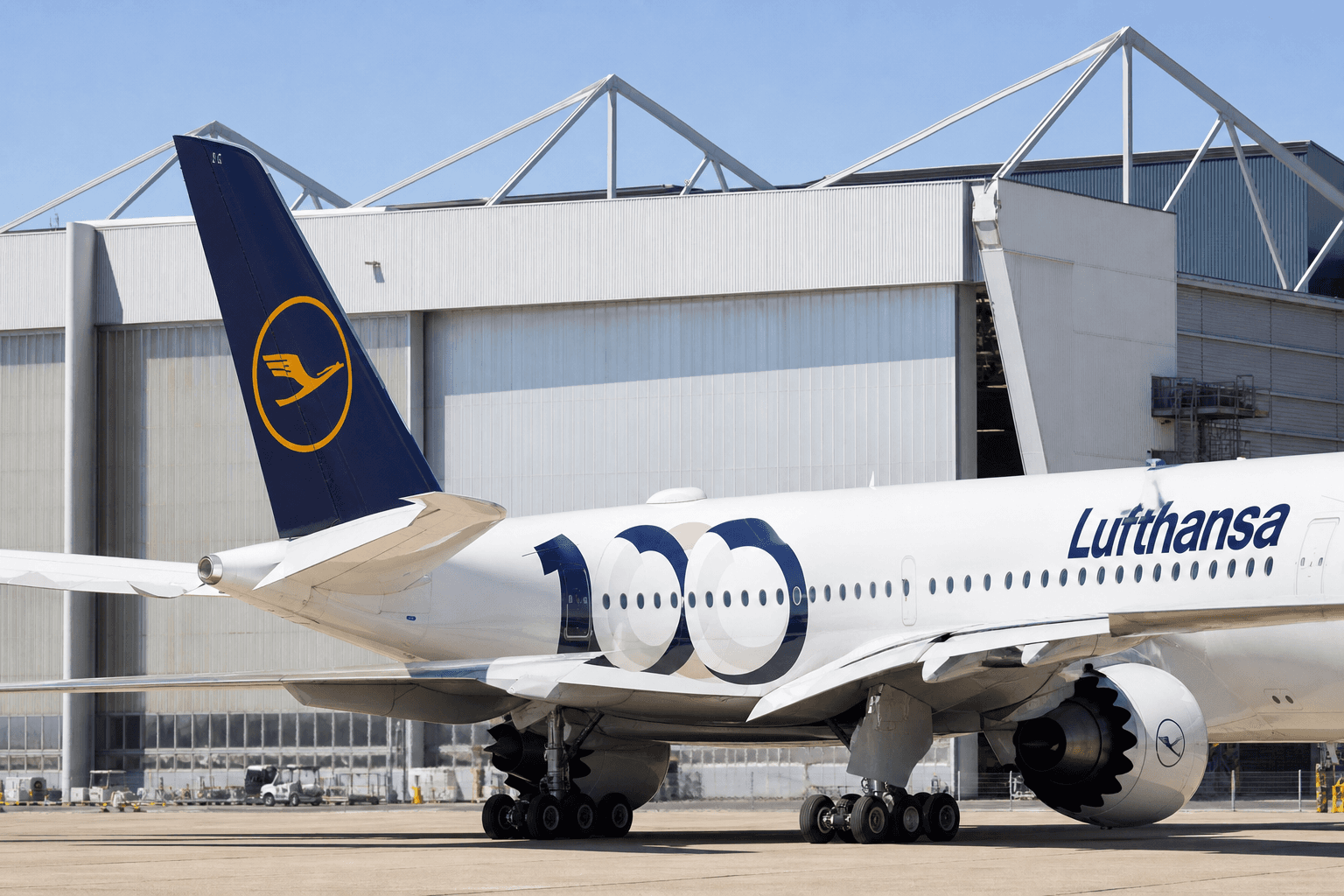
Lufthansa’s first Airbus A350-1000 has emerged from the paint shop in Toulouse wearing the airline’s striking special 100th anniversary livery, marking another milestone as it prepares to enter service later this year. The aircraft, registered D-AIFA , is the first of 15 Airbus A350-1000s on firm order for the German flag carrier and forms part of Lufthansa’s centenary celebrations, which are taking place throughout 2026. The eye-catching design features an oversized version of Lufthansa’s iconic crane logo sweeping across the rear fuselage, matching the commemorative scheme already carried by several aircraft in the airline’s anniversary fleet. These include a Boeing 787-9, Airbus A350-900, Airbus A380, Boeing 747-8 and selected narrowbody aircraft. New Flagship For Munich Following delivery from Airbus, D-AIFA will be based at Munich Airport , where it will operate alongside much of Lufthansa’s existing Airbus A350-900 fleet. Munich has become Lufthansa’s primary Airbus A350 hub in recent years, with the efficient twinjet operating many of the airline’s long-haul services from southern Germany. The arrival of the larger A350-1000 will further strengthen the airline’s premium long-haul operation from the airport. The Airbus A350-1000 is around seven metres longer than the A350-900 and offers greater passenger capacity while maintaining the type’s reputation for excellent fuel efficiency and reduced emissions. Lufthansa’s A350-1000 Fleet Lufthansa has ordered 15 Airbus A350-1000s , with options for a further 25 aircraft. The type will become the airline’s new flagship on many long-haul routes and is expected to feature Lufthansa’s latest Allegris premium cabin products throughout. The aircraft are intended to replace older four-engined Airbus A340-600s and provide increased capacity on high-demand intercontinental services while offering lower operating costs and improved environmental performance. With D-AIFA now painted in its commemorative colours, the aircraft is entering the final stages of preparation before delivery, ensuring Lufthansa’s newest flagship will also become one of its most distinctive as the airline celebrates 100 years since its founding.
United Airlines Accelerates Retirement of Aging Boeing 777-200s Amid Europe's Carbon Policies
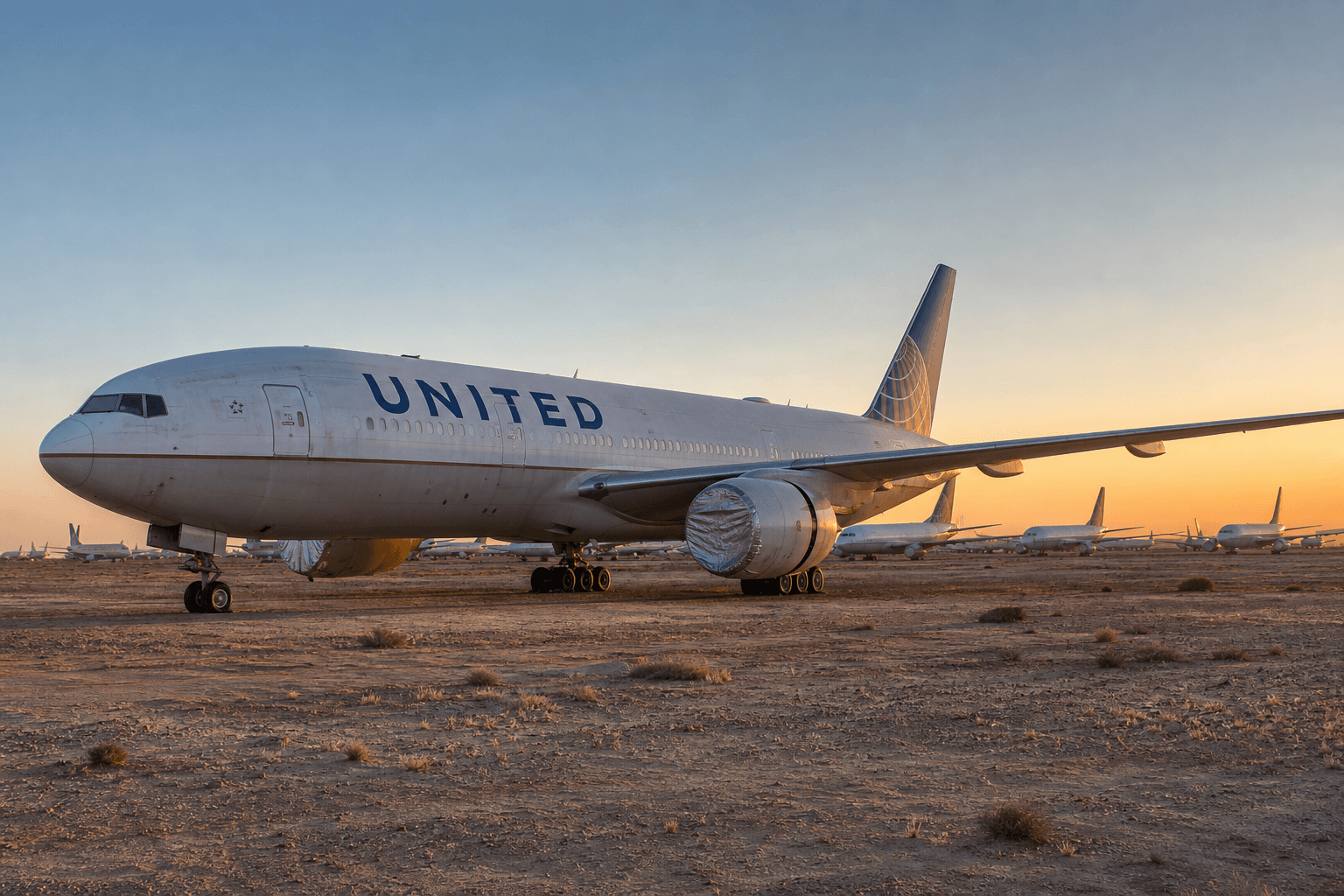
Europe's newest carbon rules do not ban older airliners, nor do they impose a direct tax on jet fuel. Yet 2026 is the year those policies began influencing which widebody aircraft airlines can afford to keep flying across the Atlantic. For carriers such as United Airlines , that shift reinforces the business case for retiring its nearly 29-year-old Boeing 777-200 aircraft in favor of newer, more efficient replacements.
CubCrafters Launches Carbon Cub ULT with Innovative Turbine Powerplant
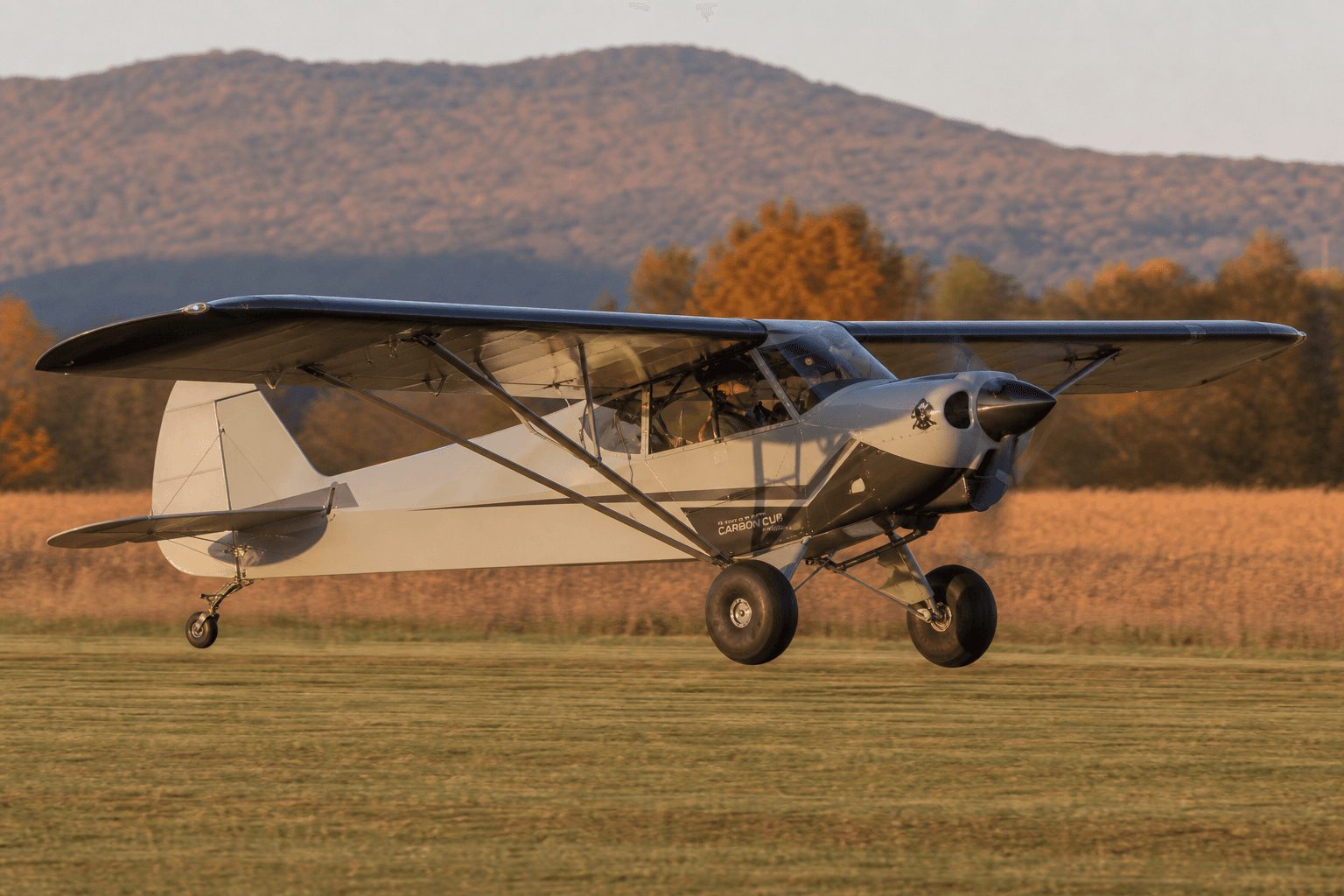
It's no secret here at Plane + Pilot that we aren't necessarily in the business of breaking aviation news. This magazine and its corresponding website is built around general aviation adventures—where to go, what to do, and who to see by way of your airplane. So if you're looking for every headline that hits the GA news cycle, you're probably in the wrong place. That said, when there's news that genuinely impacts the general aviation adventure community, you can bet I'm going to cover it. A few weeks ago, I got an insider tip that CubCrafters was preparing to unveil its latest project—the Carbon Cub ULT , powered by TurboTech's new TP-R90 regenerative turboprop. To say I was giddy when I first heard the news would be an understatement. But instead of simply rewriting the news release to chase clicks when the embargo lifted July 6, I decided I wanted to see the airplane with my own eyes before publishing the same story everyone else in aviation media was going to write. While I couldn't say for certain that I'd get the opportunity, I had a pretty good feeling I'd see the ULT during an exclusive CubCrafters content creator event near Bonanza, Oregon, this past weekend. So I decided to roll the dice. After arriving at the ranch in an orange FX-3 (with no one other than Luke Czepiela of Red Bull Air Race fame in the back seat), I immediately tracked down Jackie Burch to ask if we'd be getting a chance to see the new Cub in person. Burch couldn't confirm or deny anything, but there were a few people around who definitely knew the answer. Their reactions were enough for me to take my gamble as one that I would most certainly be winning. The following morning, I was standing near the hangar on a phone call when I suddenly heard an unmistakable whistle overhead. I knew experimental aircraft builders Mike and Mark Patey were expected at the event, so I assumed it was the sound of their Pilatus PC-12. But as I quickly repositioned myself for a better view of the runway, I quickly spotted the turbine powered ULT and a matching UL coming in for landing. CubCrafters vice president Brad Damm touched down the ULT in a perfect three-point attitude, giving everyone their first real look, and listen, to the airplane. Admittedly, when I first heard about the company's project a few weeks earlier, I wondered whether the proportions would work. I pictured an overly stretched nose and a cowling that looked forced simply to accommodate a turbine engine. But as Damm taxied in front of us, those concerns were put to rest. The airplane looked like it was seamlessly born for a turbine-powered backcountry mission. Despite the entirely new TurboTech powerplant, the airplane is unmistakably a CubCrafters product. The ULT shares the same airframe as the Carbon Cub UL, the manufacturer's Rotax 916 iS-powered light sport, which has only been in the marketplace since 2023. With an 860-pound empty weight, gross weight of 1,320, and useful load of around 460, the ULT fits well within the parameters for sport pilots under the FAA's new MOSAIC regulations. "We're doing everything so that it can be ASTM certified as a light sport," said Damm. Perhaps the icing on the cake? Despite being turbine powered, the TurboTech-equipped ULT requires neither a type rating nor a special endorsement. Pilots can simply climb in and enjoy its 120 mph cruise speed while burning just 9 gph. "All the money, time, and effort we invested to take weight out to make the UL transfers right over to this airplane," said Damm. "There's a few differences in the fuel system for the jet-A, but it has the same tanks in the wings. It has a really similar center of gravity, and I actually like the center of gravity a little bit better in [the ULT]. In the three years since the UL's debut, Damm and the CubCrafters team have been working diligently behind the scenes to dream up a platform that could offer turbine reliability, worldwide fuel alternatives, and a significant TBO (3,000 hours to be exact). But it all started with a little convincing from the TurboTech team at AERO Friedrichshafen three years ago. "I had flown turbine-powered Cubs years ago," said Damm. "But those were burning 30 to 40 gallons an hour down low, and you can't make an airplane out of that." After sitting down with the TurboTech team and drilling into the details, including questions about operating a turbine-powered, fabric-covered airplane from dry grass strips, Damm came away impressed. He took what he had learned back to the CubCrafters' engineering team, and got to work. Three years later, one week since its announcement, the ULT has received 12 deposits at a base price of $690,000. "To be honest my favorite part of this airplane is the cool factor. It's fun. It's exciting, and it's generated a lot of interest and a lot of controversy, but it's been a good opportunity for us to educate."
The Daily Touch & Go
The day's best aviation news in your inbox. Free, no spam.