

Image: U.S. Government Accountability Office from Washington, DC, United States · Public domain · via Wikimedia Commons
London Gatwick Handles 43.2 Million Passengers Annually Using Just One Runway
Despite having only a single active runway for commercial flights, London Gatwick Airport processed 43.2 million passengers in 2024, surpassing many multi-runway airports in traffic volume.
The gist
London Gatwick maximizes a single runway's efficiency to serve more passengers annually than many airports with multiple runways.
Continuing coverage
All London Gatwick →- London Gatwick's Summer 2026 Sees Over 230 Destinations via Record 63 Airlines
- Air Transat Starts First Non-Stop Service Between London Gatwick and Ottawa
- Air Zimbabwe Resumes Nonstop Flights Between Harare and London Gatwick After 14 Years
- Wizz Air Opens New Year-Round London Gatwick Route to Chișinău Enhancing UK Connectivity
- Air Zimbabwe resumes Harare-London flights via ACMI deal with Spain's Plus Ultra
London Gatwick Airport stands out in the global aviation landscape by managing to serve one of the highest passenger volumes in Europe using only one active runway for commercial operations. In 2024, Gatwick recorded approximately 43.2 million passengers, making it the second-busiest airport in Britain, which is remarkable given its runway infrastructure is far less extensive than many competitors. While most major hubs depend on multiple runways, Gatwick demonstrates that operational excellence can match or exceed physical expansion in throughput.
Though Gatwick has two runways visible in its configuration—the main runway stretching 10,879 feet and a shorter northern runway running almost parallel—the two runways sit merely 760 feet apart. Current international aviation safety protocols require greater distances for simultaneous independent operation of parallel runways, limiting Gatwick to just the primary runway during standard commercial activity. The secondary runway remains mostly in reserve for maintenance or emergency use, making Gatwick reliant on a single runway for nearly all arrivals and departures.
This single-runway setup has not deterred Gatwick’s growth across decades. The airport hosts a mixture of airlines ranging from low-cost carriers like easyJet, Wizz Air, and Vueling to major long-haul operators including British Airways, Emirates, Qatar Airways, Singapore Airlines, and Turkish Airlines. The mix presents unique operational challenges as aircraft of varying sizes and requirements—from Airbus A319s up to Airbus A380 superjumbos and Boeing 777-300ERs—must be efficiently sequenced on the same runway daily.
When compared internationally, Gatwick’s performance is striking. Airports such as Detroit Metropolitan (DTW), Orlando International (MCO), and Brisbane Airport (BNE) operate three or more runways but still fall short of Gatwick’s passenger numbers annually. These airports benefit from flexibility inherent in multiple runways, allowing them to mitigate scheduling delays and disruptions more easily. Gatwick, in contrast, leverages meticulous planning to maximize every available minute on its single runway.
A key to this efficiency lies in precision scheduling. Airlines operating at Gatwick receive highly regulated arrival and departure slots that are coordinated to fine-tune runway usage according to aircraft type, passenger demand, and air traffic control capacity. Such detailed planning minimizes idle time and ensures smooth transitions between landings and takeoffs. Gatwick’s collaboration with National Air Traffic Services and ground handlers helps maintain this delicate balance.
Further contributing to its efficiency is Gatwick’s focus on minimizing runway occupancy times—the duration aircraft remain on the runway from touchdown until vacating or from entering the runway to liftoff. By constructing a new Rapid Exit Taxiway, Gatwick has enabled aircraft to clear the runway faster, thus increasing capacity and operational resilience, especially during peak morning and evening periods. These incremental improvements sustain Gatwick’s declared capacity of 55 aircraft movements per hour, a notable figure for a single-runway airport.
This model of extracting maximum efficiency reveals Gatwick as a pioneer in embracing operational management over physical expansion. The airport’s success underscores how investment in infrastructure, while important, can be complemented or partially offset by advances in scheduling accuracy, air traffic coordination, and infrastructure optimization. Gatwick’s approach is a benchmark illustrating how airports with limited physical footprint could maintain high throughput with sufficient operational discipline.
Frequently asked questions
- How many runways does London Gatwick airport actively use for commercial flights?
- London Gatwick uses only one active runway for normal commercial operations; the secondary runway is reserved for maintenance or emergencies and not used simultaneously due to safety regulations.
- How many passengers did London Gatwick handle in 2024?
- In 2024, London Gatwick handled approximately 43.2 million passengers, making it the second-busiest airport in Britain by passenger numbers.
- What strategies does Gatwick use to manage high traffic volumes on a single runway?
- Gatwick employs precision scheduling of arrival and departure slots, close coordination with airlines and air traffic control, and infrastructure improvements like rapid exit taxiways to minimize runway occupancy and maximize throughput.
Read more
All Airports →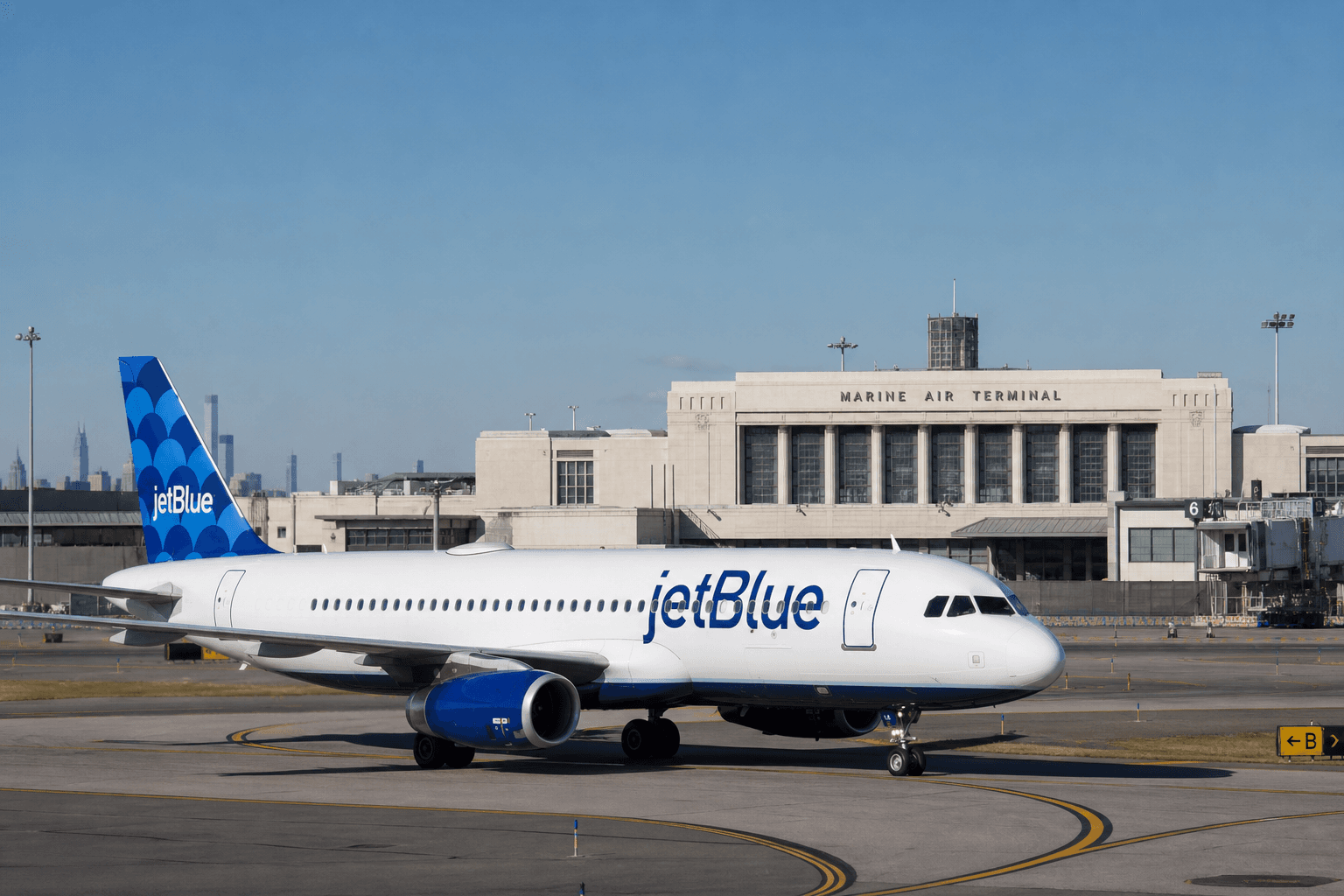
JetBlue Secures 22 Former Spirit Slots at LaGuardia for $58.5M, Plans Expansion
New York hometown airline JetBlue is celebrating the winning bid of $58.5 million to gain 22 ex-Spirit Airlines slots at LaGuardia Airport (LGA). Spirit, which ceased operations in May, held a strong portfolio at one of the country's most congested airports . This recent win for JetBlue will see an additional 12 daily round-trip flights.
Airbus A320 Pilots Routinely Shut Down One Engine During Taxi to Cut Fuel Use
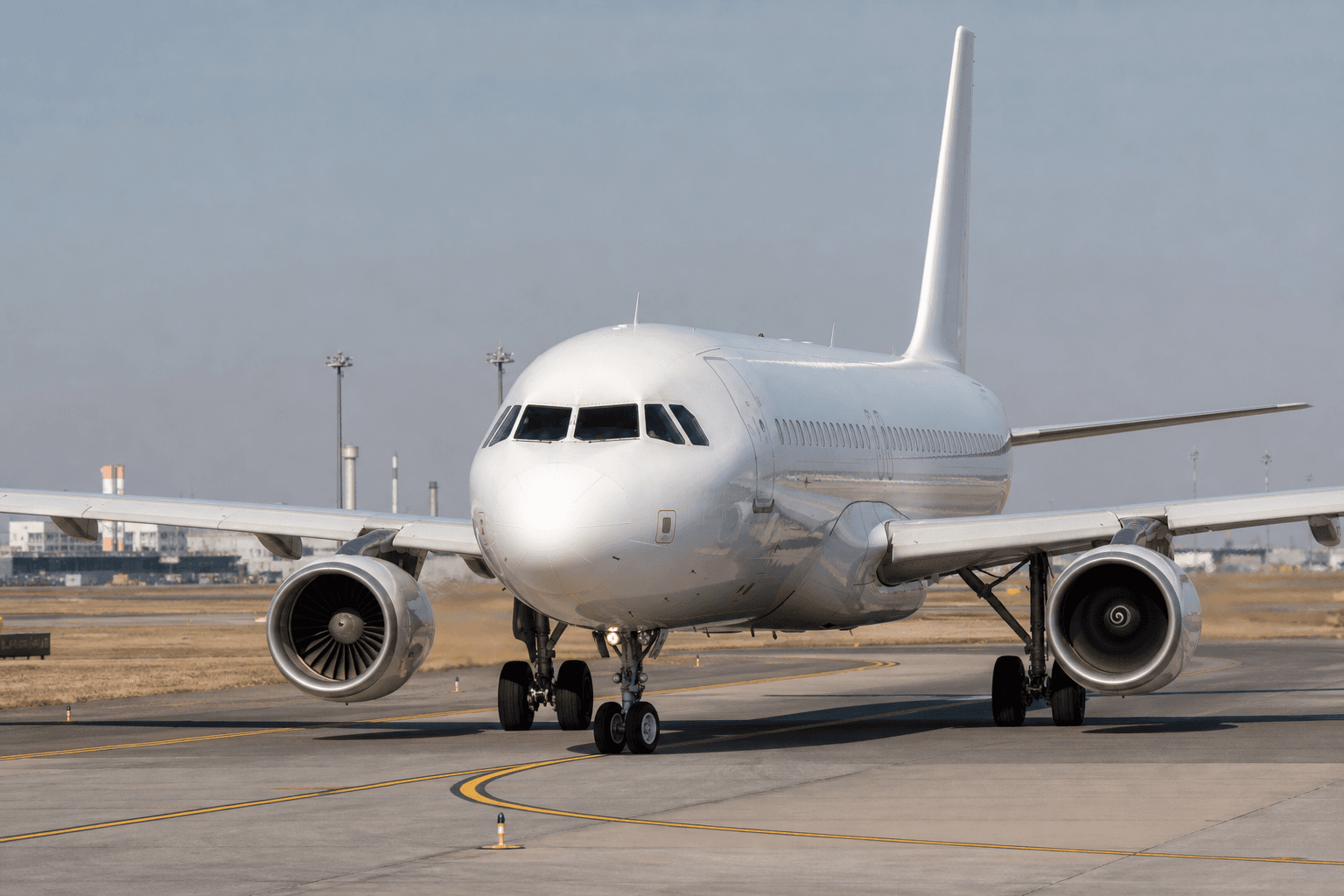
Passengers looking out of a terminal window or the cabin window of a modern Airbus A320 might occasionally notice a quiet, unexpected sight as the aircraft maneuvers toward the terminal or pushes back from the gate. A completely stationary fan blade can often be seen, while the opposite engine hums with operational power. This guide explores the engineering, operational logic, and hidden systems behind single-engine taxi procedures on the A320 family and why this even happens in the first place.
United Airlines Retracts Free Rebooking Policy for Flights Avoiding Donald J. Trump Airport
United Airlines has backtracked on an apparent policy that allowed passengers who no longer wanted to fly to Donald J. Trump International Airport in West Palm Beach to rebook for free on a flight to an alternative nearby airport. A couple of days ago, a leaked internal memo sent to United’s reservation agents suggested that the airline was aware that some passengers were uncomfortable with flying to the newly renamed airport, which was previously known as Palm Beach International Airport (PBI). If passengers contacted United’s reservation line because they no longer wanted to fly to Donald J. Trump Airport due to the name change, agents were instructed to say: “I understand that you'd rather not fly to this airport anymore. We can look at nearby airports like Fort Lauderdale or Miami instead. Is that an acceptable alternative?" The memo added that agents could use their “empowerment to offer acceptable alternatives” without needing to get approval from a manager. Flight changes could be made for free, which, in itself, was an unusual move. After the story was broken by Live and Let’s Fly , it quickly went viral, and it didn’t take long for United to start reviewing the memo. Now, the airline says the “message was poorly worded and not accurate.” That’s right, United isn’t denying the memo was shared with agents, or that anyone who read the message would think that passengers could rebook onto flights to alternative airports to deliberately avoid the DJT airport. Instead, United is simply saying that the meaning of the memo was different than what you or I believed it to mean. United Airlines is, however, making its position very clear: “United customers are able to make changes to a ticket without a fee for many reasons. However, our policy doesn't allow for changes because of an airport's name or three-letter code." The name change from Palm Beach International Airport to Donald J. Trump Airport officially took effect on July 9, just a few months after Florida Governor Ron DeSantis signed a new law that allows the state to name major commercial airports. Before the airport could be renamed, however, Palm Beach County had to enter into a licensing agreement with the President because he had trademarked his name. The board of commissioners approved the licensing agreement 4-3 in a highly contested vote. Public backlash to the renaming has been fierce, and many people have openly vowed to boycott the airport. United's online booking tool still doesn't accurately reflect the name and airport code change. At the time of publication, a dummy booking allowed us to search for flights from PBI, which is now officially known by the airport code DJT. When you click on any given flight for additional information, the flight is shown as operating from West Palm Beach, FL, US (PBI) and not from Donald J. Trump Airport (DJT). For those in the know, customers can search for flights to and from DJT via United's website, with the online booking tool correctly recognizing the airport code, but it then directs users to a results page that shows PBI.
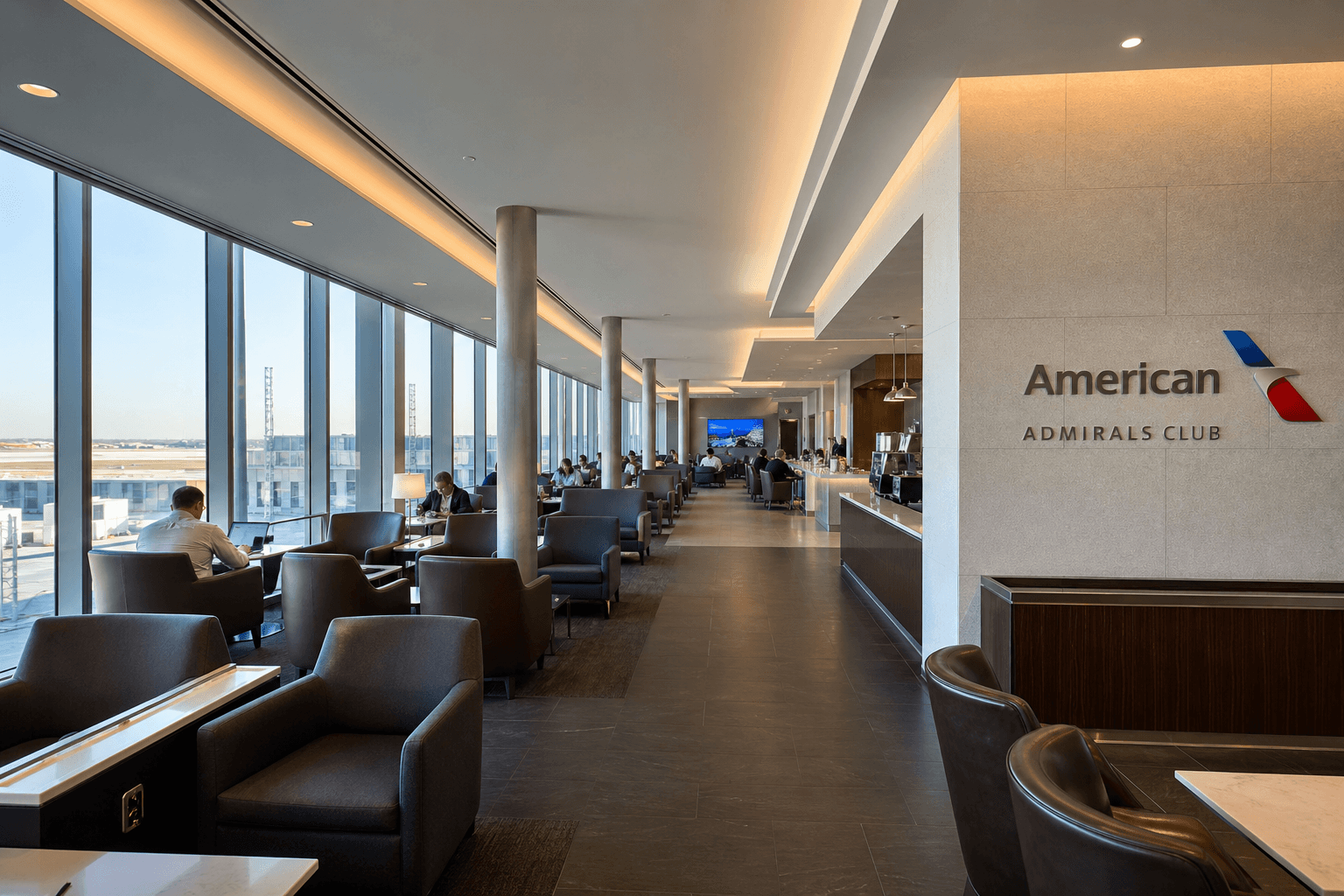
American Airlines Unveils New 37,000 Sq Ft Admirals Club and Grab-and-Go at Dallas-Fort Worth
American Airlines is building a 37,000 square foot Admirals Club lounge (terminal C) and a 'Provisions' grab 'n go (terminal F) at the Dallas – Fort Worth airport.
The Daily Touch & Go
The day's best aviation news in your inbox. Free, no spam.