

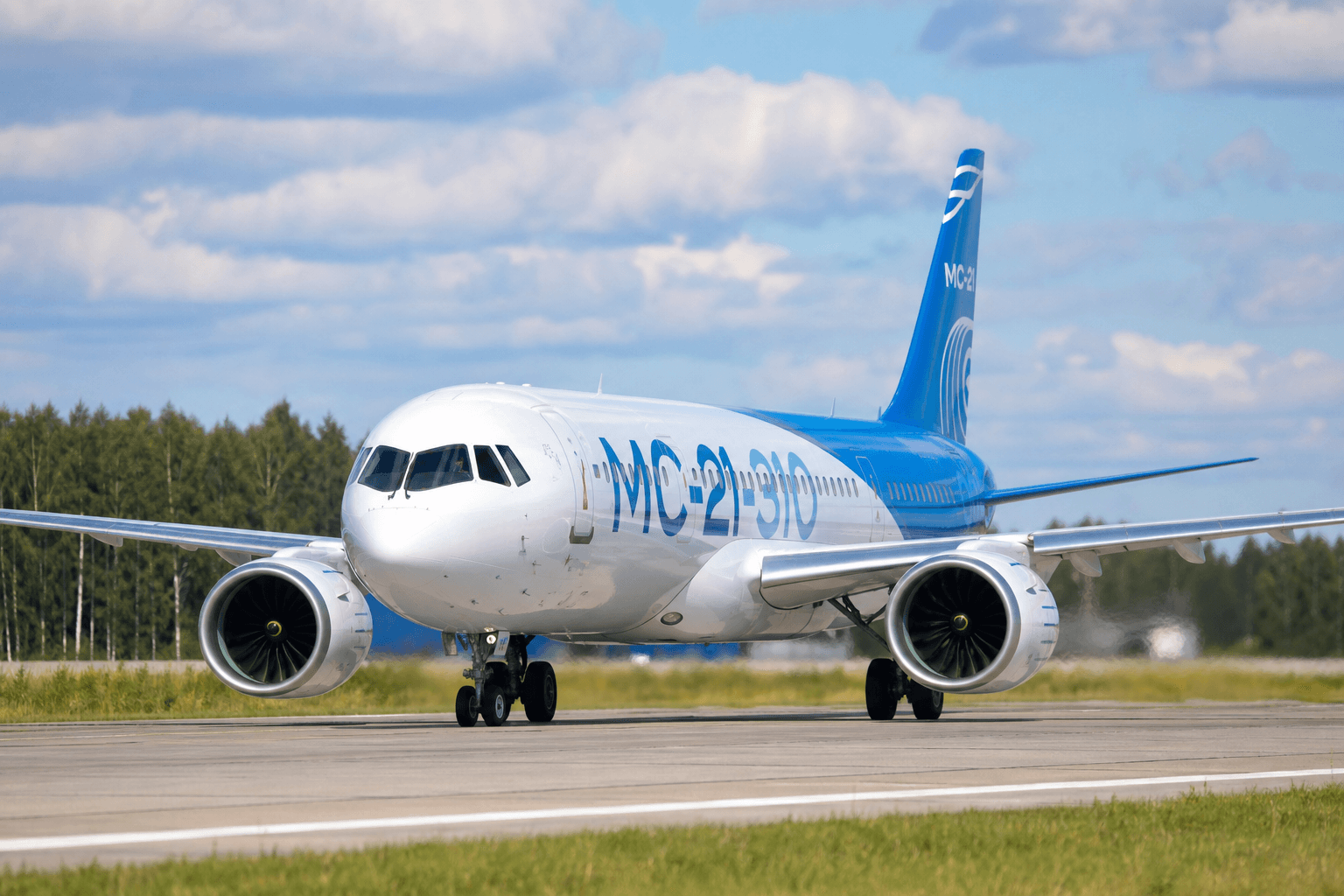
Illustration: The Touch & Go
Russian Yakovlev MC-21-310 achieves 2,050nm range with full payload in test flights
The MC-21-310 twinjet powered by Aviadvigatel PD-14 engines demonstrated a 2,050nm range carrying 175 passengers equivalent during certification testing.
The gist
Yakovlev’s MC-21-310 proves it can fly 2,050nm with full passenger load during recent operational tests.
Russia’s Yakovlev MC-21-310 regional jet achieved a significant milestone by completing a flight of about 2,050 nautical miles (3,800 kilometers) under conditions simulating a full passenger load. The aircraft, powered by Russian-made Aviadvigatel PD-14 engines, is currently progressing through its certification programme, aiming to enter operational service in the near future. This demonstration flight aimed to validate the aircraft’s key performance metrics with the equivalent of 175 passengers onboard, reflecting the intended two-class seating configuration for early deliveries.
The MC-21 series is Yakovlev’s answer to the competitive single-aisle market segment, designed to seat between 150 and 200 passengers depending on variant and configuration. During the recent test phase, engineers undertook a long-range flight profile intended to replicate real-world operating scenarios, including standard fuel reserves and allowances. Roman Taskaev, Yakovlev’s flight-test director, confirmed that all aircraft systems functioned normally throughout the test. He emphasised that the fuel balance standards — including the aeronautical reserve and diversion fuel — were fully met, underscoring the jet’s operational readiness.
The range recorded, 2,050nm, while notable, remains below the typical range of similarly sized Western competitors. By comparison, Airbus’ A320neo is commonly listed with a range around 3,400nm. The MC-21-310’s demonstrated range aligns with expectations given the aircraft’s initial engine and configuration choices. Vitaly Naryshkin, MC-21’s chief designer, indicated the tests were performed with passenger and payload weight tolerance matching those planned for initial customer deliveries, reinforcing the jet’s intended market positioning.
Additional performance verification took place focused on safety-critical phases of flight, such as takeoff capability under single-engine failure conditions. Yakovlev conducted specific takeoff tests simulating engine failure to assess the aircraft’s climb rate and acceleration. Civil aircraft flight-test department head Pavel Sokut highlighted that for twin-engine designs like the MC-21, takeoff under asymmetric thrust presents a key performance parameter, and results so far have remained within design limitations.
Engineering leadership confirmed that the configuration tested corresponds to the MC-21-310 production standard agreed with initial customers, featuring a 175-seat two-class layout. Anatoly Gaidansky, deputy managing director of Yakovlev’s engineering centre, articulated confidence that upcoming certification tests would replicate and validate these current flight findings. This step is crucial for the programme as it nears entry into service and certification approval from Russian aviation authorities.
The MC-21 programme has faced substantial challenges with its engine choice, initially intended to use Western powers but pivoting to Russian Aviadvigatel PD-14 units due to geopolitical constraints. The successful demonstration of range and operational parameters with the domestically produced engines marks a key moment in ensuring the program’s independent viability. Yakovlev aims to position the MC-21 as a modern, fuel-efficient alternative in Russia’s and neighboring markets’ regional jet sectors.
While the MC-21’s current range is shorter than some rivals, its performance in operational realism tests sets a foundation for future upgrades and operational deployment. Customers, including Russian carriers, have expressed interest in acquiring aircraft capable of reliable medium-haul service with domestic propulsion. Yakovlev’s ongoing certification work is critical to meeting these operational expectations and regulatory standards.
The recent flight tests also contribute to assessing the MC-21’s system reliability and safety under typical commercial use conditions. Ensuring robust performance in both normal and contingency scenarios supports the aircraft’s market credibility. With certification trials continuing, the programme is steadily advancing toward entering service despite external pressures affecting Russian civil aviation.
This successful demonstration builds toward establishing the MC-21 as a competitive regional jet option within Russia’s aviation market and potentially for export. Its domestic engine and design development reflect a broader strategic objective to advance indigenous aviation manufacturing capabilities. The sustained certification and testing efforts confirm the candidate aircraft’s credentials as Yakovlev prepares for eventual customer deliveries.
Read more
All Regulatory →
United Airlines Considers Buying Up to 20 Early Boeing 777-9 Jets
Boeing’s long-awaited 777-9 aircraft may soon find a new home with United Airlines. Industry reports suggest the U.S. carrier is in talks to acquire as many as 20 of the earliest-built 777-9 jets. ezstandalone.cmd.push(function () { ezstandalone.showAds(119); }); This potential deal could help Boeing clear early production airframes that have waited years for delivery. Why These Early 777-9s Are Still Available The 777X program, which includes the 777-9, faced significant certification delays. As a result, the first airframes rolled out years ago but remained undelivered. During this time, Boeing made numerous engineering updates and improvements. ezstandalone.cmd.push(function () { ezstandalone.showAds(127); }); These early jets now need more extensive modification work compared to newer aircraft rolling off the production line. The extra effort involves bringing them up to the latest standards before they can enter service. Launch customers for the 777-9 reportedly chose to wait for later-production examples. This shift left the early-build jets available for other interested airlines. United’s possible interest offers Boeing a practical way to place these aircraft as the program nears certification and entry into service. ezstandalone.cmd.push(function () { ezstandalone.showAds(128); }); Photo Credit: Boeing What This Means for United Airlines United Airlines already operates one of the world’s largest Boeing 777 fleets. Adding the 777-9 would strengthen its long-haul capabilities with next-generation efficiency and passenger comfort. The 777-9 is the largest variant in the 777X family. It promises better fuel efficiency, longer range, and a more spacious cabin than previous models. For United, these jets could serve high-demand international routes while lowering operating costs. ezstandalone.cmd.push(function () { ezstandalone.showAds(129); }); However, acquiring early-build aircraft comes with challenges. The required modifications may take extra time and resources. Still, securing up to 20 jets could give United a competitive edge in the widebody market without waiting for entirely new production slots. Boeing’s Path Forward with the 777X Boeing has worked hard to resolve certification issues for the 777X. The program represents a major update to the successful 777 family. With improved engines, composite wings, and modern avionics, the Boeing 777-9 aims to set new standards for twin-aisle aircraft. Placing early airframes with United would mark an important milestone. It would demonstrate progress toward final certification and help Boeing regain momentum in the widebody segment. No formal agreement has been announced yet. ezstandalone.cmd.push(function () { ezstandalone.showAds(130); }); Boeing has not confirmed any transaction with United. The reports remain speculative at this stage, but they highlight growing industry optimism about the 777-9’s future. Photo Credit: Boeing Broader Industry Impact The potential deal reflects current trends in aircraft manufacturing. Production delays often create opportunities for flexible operators to acquire aircraft at different stages of the build process. Airlines willing to invest in modifications can sometimes secure favorable terms and earlier delivery timelines. ezstandalone.cmd.push(function () { ezstandalone.showAds(131); }); For passengers, the 777-9 promises a quieter, more comfortable flying experience with larger windows and advanced cabin pressurization. United could use these features to differentiate its premium long-haul offerings. Conclusion As Boeing moves closer to certification, more clarity should emerge about the timeline for these early jets. Industry watchers will monitor developments closely, as any agreement could influence other carriers’ decisions regarding the 777X family. United Airlines has not publicly commented on the reports. The airline continues to modernize its fleet with a mix of new and used aircraft to meet growing global demand. ezstandalone.cmd.push(function () { ezstandalone.showAds(132); }); This possible acquisition of early-build 777-9s shows how delays in major programs can create unexpected opportunities. If the deal proceeds, it could benefit both United and Boeing while bringing advanced widebody aircraft into service sooner than expected.
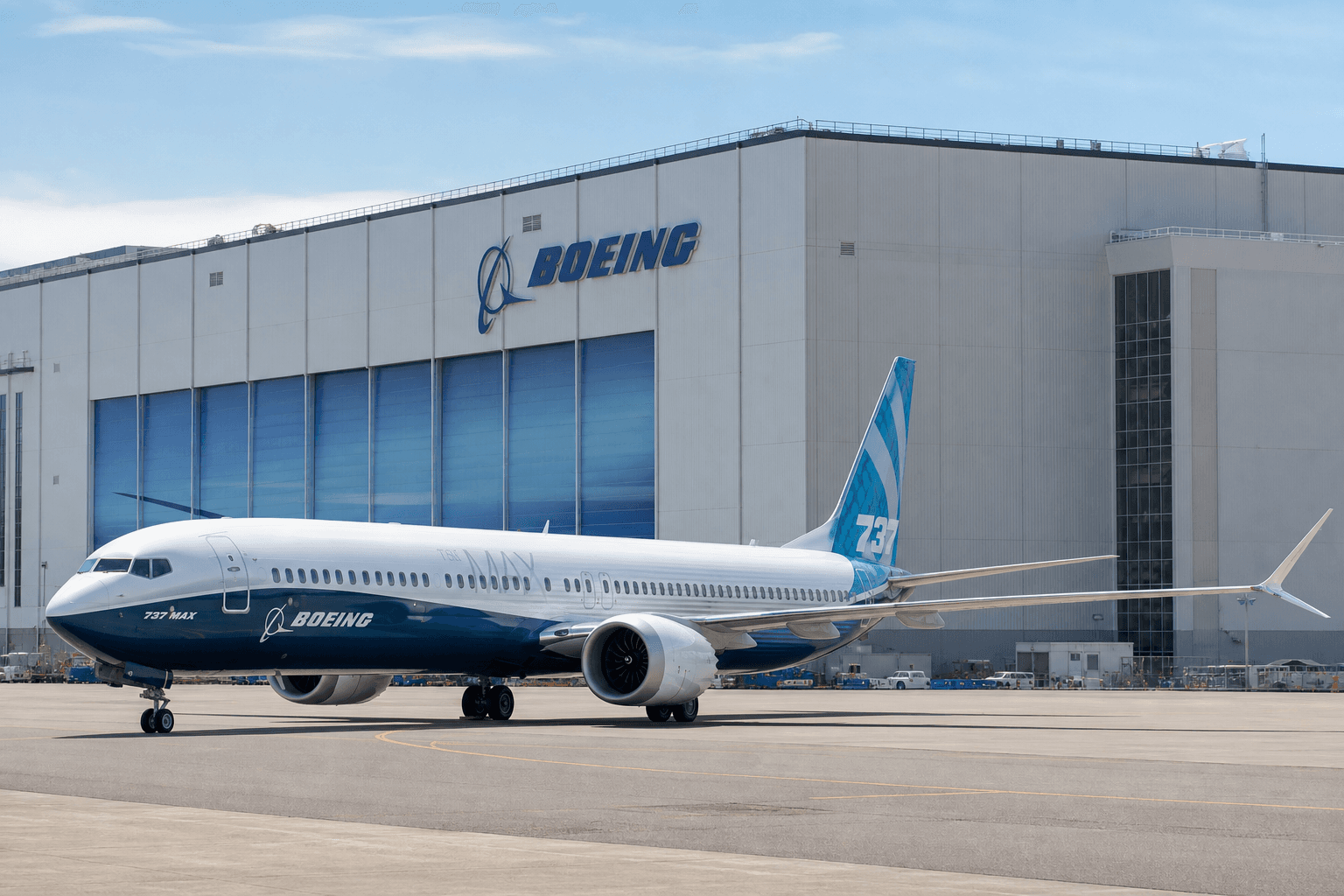
Boeing Plans New Clean-Sheet Jet After Completing 737 MAX and 777X Certification
Boeing Chief Executive Officer Kelly Ortberg told the Financial Times that his company will be ready to fund its first 'clean sheet' plane program in two decades by 2030. He expressed confidence that the final certification of the remaining 737 MAX variants and 777X widebody will bring the financial stability to launch its next all-new airliner design program.
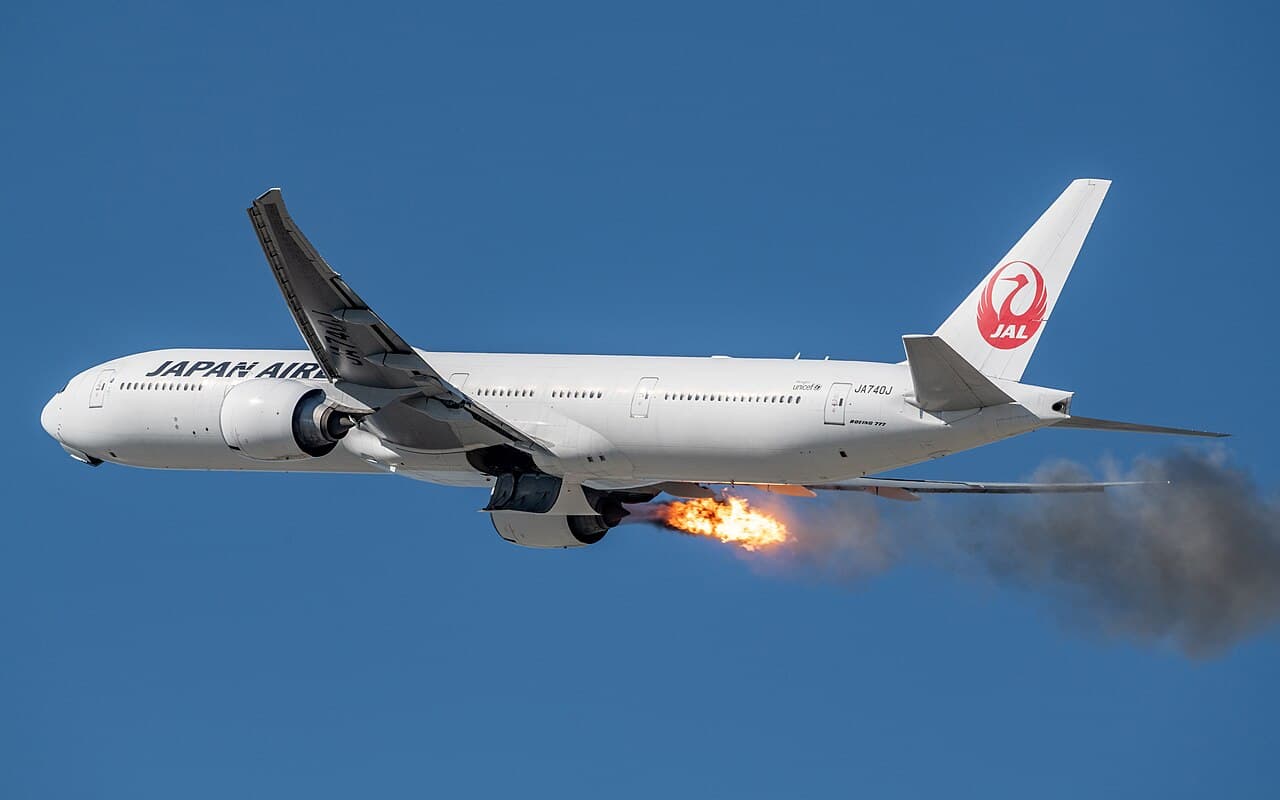
Ex-Flight Attendant Pleads Guilty to Using Fake Pilot ID to Fly Free on Three Major Airlines
The Lowdown Ex-flight attendant Dallas Pokornik has pleaded guilty to wire fraud after using a fake pilot ID badge to con three major U.S. airlines out of hundreds of free flights over nearly five years. In This Article How court filings point to which three airlines were defrauded, without prosecutors naming them directly. The 2024 encounter that finally exposed his fake pilot credentials to an airport employee. How he was tracked to Panama and extradited back to the U.S. to face charges. The prison sentence and fine he now faces, and when he’s due to be sentenced. Show 4 more points + .pyok-callout { display: flex; border-radius: 10px; background: #f7f9fc; border: 1px solid #e1e7ef; border-left: 4px solid #120E43; margin: 24px 0; font-family: -apple-system, BlinkMacSystemFont, "Helvetica Neue", Arial, sans-serif; } .pyok-callout-inner { padding: 20px 24px; width: 100%; } .pyok-callout-head { display: flex; align-items: center; gap: 8px; color: #120E43; margin-bottom: 12px; } .pyok-callout-tag { font-size: 12px; font-weight: 700; letter-spacing: 0.08em; text-transform: uppercase; } .pyok-callout-list { margin: 0; padding: 0; list-style: none; } .pyok-callout-list li { position: relative; padding-left: 18px; margin-bottom: 12px; font-size: 16px; line-height: 1.55; color: #1a1a1a; } .pyok-callout-list li::before { content: ""; position: absolute; left: 0; top: 9px; width: 6px; height: 6px; border-radius: 50%; background: #120E43; } .pyok-callout-list-more li:last-child { margin-bottom: 0; } .pyok-callout-subhead { text-align: center; font-size: 11px; font-weight: 700; letter-spacing: 0.1em; text-transform: uppercase; color: #8a93a3; margin: 4px 0 14px; padding-top: 14px; border-top: 1px solid #e1e7ef; } .pyok-callout-more { max-height: 0; overflow: hidden; transition: max-height 0.35s ease; } .pyok-callout-toggle { display: inline-flex; align-items: center; gap: 6px; margin-top: 10px; padding: 0; border: none; background: none; color: #120E43; font-size: 14px; font-weight: 700; cursor: pointer; } .pyok-callout-toggle:hover { text-decoration: underline; } .pyok-callout-toggle-icon { display: inline-flex; align-items: center; justify-content: center; width: 16px; height: 16px; border: 1.5px solid #120E43; border-radius: 50%; font-size: 12px; line-height: 1; } (function () { document.querySelectorAll('.pyok-callout-toggle').forEach(function (btn) { btn.addEventListener('click', function () { var card = btn.closest('.pyok-callout-inner'); var more = card.querySelector('[data-more]'); var isOpen = btn.getAttribute('aria-expanded') === 'true'; var textEl = btn.querySelector('.pyok-callout-toggle-text'); var iconEl = btn.querySelector('.pyok-callout-toggle-icon'); if (isOpen) { more.style.maxHeight = '0px'; btn.setAttribute('aria-expanded', 'false'); textEl.textContent = btn.dataset.moreText; iconEl.textContent = '+'; } else { more.style.maxHeight = more.scrollHeight + 'px'; btn.setAttribute('aria-expanded', 'true'); textEl.textContent = btn.dataset.lessText; iconEl.textContent = '\u2212'; } }); }); })(); An ex-flight attendant has pleaded guilty to defrauding three major U.S. airlines by using a fake pilot’s ID badge to obtain hundreds of free flights through so-called ‘non-rev’ privileges, in which airlines provide free or deeply discounted tickets to employees of other airlines as a reciprocal perk. Dallas Pokornik, 33, was indicted by a grand jury in Hawaii in January over allegations that he had been posing as a pilot in a ‘Catch Me If You Can’ ploy to travel the world for free. Dallas would request to sit in the cockpit when there weren’t any spare passenger seats available on the flights he wanted to catch. According to federal court filings, Dallas had worked for a Toronto-based airline as a flight attendant until 2019. During his time as a member of cabin crew, Dallas had legal access to free or discounted tickets, which are known within the industry as ‘non-rev’ perks, or non-revenue, as airlines aren’t making any money from these tickets. After he quit his job as a flight attendant, Dallas allegedly used his knowledge of how airline non-rev benefits worked to devise a scheme posing as a pilot to continue obtaining free flights from three major U.S. carriers. While prosecutors have deliberately withheld the names of the three airlines that Dallas defrauded, court filings do reveal where they are based. The first airline was based in Honolulu, the home base of Hawaiian Airlines. The second airline was based in Chicago, the headquarters of United Airlines. The third airline was based in Fort Worth, the headquarters of American Airlines. When obtaining free flights from these airlines, Dallas would allegedly also request a jumpseat in the cockpit, a special privilege that is only usually reserved for serving pilots. In 2024, however, Dallas presented the fake pilot’s ID badge to an airport employee of one of the airlines he defrauded, who was suspicious of its authenticity. The employee managed to take a photo of the ID badge and reported their suspicions. Once it was established that Dallas wasn’t, in fact, a pilot for the airline he claimed to work for, law enforcement was called in. Dallas was eventually tracked down to Panama, where an arrest warrant was issued, and he was extradited to the United States. Prosecutors allege that Dallas obtained “hundreds of free flights,” and while no one really knows how long the fraud was going on for, Dallas has admitted that it continued from January 2020 through October 2024. "Travel security protocols help keep our citizens and visitors safe, and anyone who breaches those protocols should expect to be brought to justice," commented U.S. Attorney Ken Sorenson after Dallas pleaded guilty to wire fraud. "We thank our law enforcement partners at Homeland Security Investigations and abroad for helping us hold this fraudster accountable,” Sorenson added. Dallas now faces a maximum sentence of up to 20 years imprisonment, plus a fine of up to $250,000. He is due to be sentenced on December 8, 2026. As part of his plea agreement , Dallas has agreed to pay restitution to the three airline victims. The amount of restitution that he will be required to pay will be determined at his sentencing hearing.
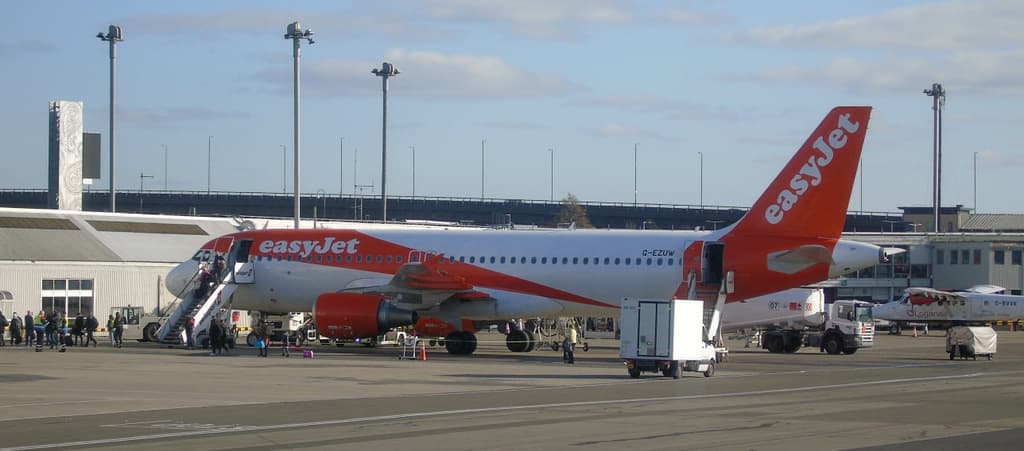
EasyJet Agrees to £5.7 Billion Takeover by Apollo Global Management
easyJet has agreed to a £5.7 billion takeover by US private equity firm Apollo Global Management. The deal came after rival bidder Castlelake withdrew from the race. Shareholders will receive £7.15 in cash for each share. ezstandalone.cmd.push(function () { ezstandalone.showAds(119); }); The agreement marks the end of a weeks-long bidding battle for the low-cost airline. Apollo stepped in with a higher offer after EasyJet had earlier reached a deal in principle with Castlelake. How the Bidding Unfolded Castlelake first approached easyJet in late May and early June 2026. The airline rejected several offers. EasyJet said those bids undervalued the company. In early July the two sides agreed terms at £6.90 per share. That valued EasyJet at about £5.5 billion. ezstandalone.cmd.push(function () { ezstandalone.showAds(127); }); Apollo then submitted a better proposal. easyJet’s board switched its support. Apollo’s offer valued the airline at £5.7 billion. Castlelake later confirmed it would not make a formal offer. This cleared the way for Apollo. What Apollo Plans for EasyJet Apollo said it is “highly supportive” of easyJet’s current strategy. The firm sees a clear chance to speed up the airline’s operational and commercial goals. Apollo has followed EasyJet for years. It views the carrier as one of the strongest businesses in global aviation. ezstandalone.cmd.push(function () { ezstandalone.showAds(128); }); The deal includes a cash option and a share alternative. Eligible shareholders can choose to roll some of their holding into the new private company. EasyJet founder Sir Stelios Haji-Ioannou and his family have given strong support. They will keep a significant stake and remain long-term shareholders.EU rules require majority European ownership and control of airlines. Apollo plans to meet this by giving the Haji-Ioannou family and other EU-based investors roughly half the business. ezstandalone.cmd.push(function () { ezstandalone.showAds(129); }); Matti Blume, CC BY-SA 4.0, via Wikimedia Commons Impact on Staff and Operations Apollo has pledged not to cut jobs for at least 12 months after the deal completes. Some roles linked to stock market listing requirements may go if easyJet becomes a private company. Flights and day-to-day operations will continue as normal. The EasyJet brand will stay in place. Apollo will keep the existing licensing deal with easyGroup, the company controlled by Sir Stelios. Board and Shareholder Views EasyJet chairman Sir Stephen Hester said the board carefully weighed the offer against the airline’s standalone prospects. He noted the proposal gives shareholders clear and attractive value. ezstandalone.cmd.push(function () { ezstandalone.showAds(130); }); Chief executive Kenton Jarvis welcomed Apollo’s aviation experience. He said it makes the firm a strong partner. The transaction still needs shareholder approval and regulatory clearances. Completion is expected in the first quarter of 2027. Once finished, EasyJet will leave the stock market and operate as a private company. Conclusion The takeover ends a period of uncertainty for easyJet. Shares had fallen sharply earlier in the year amid higher fuel costs and market pressures. The bidding process pushed the share price higher again. ezstandalone.cmd.push(function () { ezstandalone.showAds(131); }); Apollo brings access to capital and long-term flexibility. Private ownership should help easyJet focus on fleet upgrades, ancillary revenue and its holidays business. The airline will keep its low-cost model while gaining a supportive new owner. This agreement delivers certainty for shareholders and a clear path forward for one of Europe’s best-known budget carriers.
The Daily Touch & Go
The day's best aviation news in your inbox. Free, no spam.