

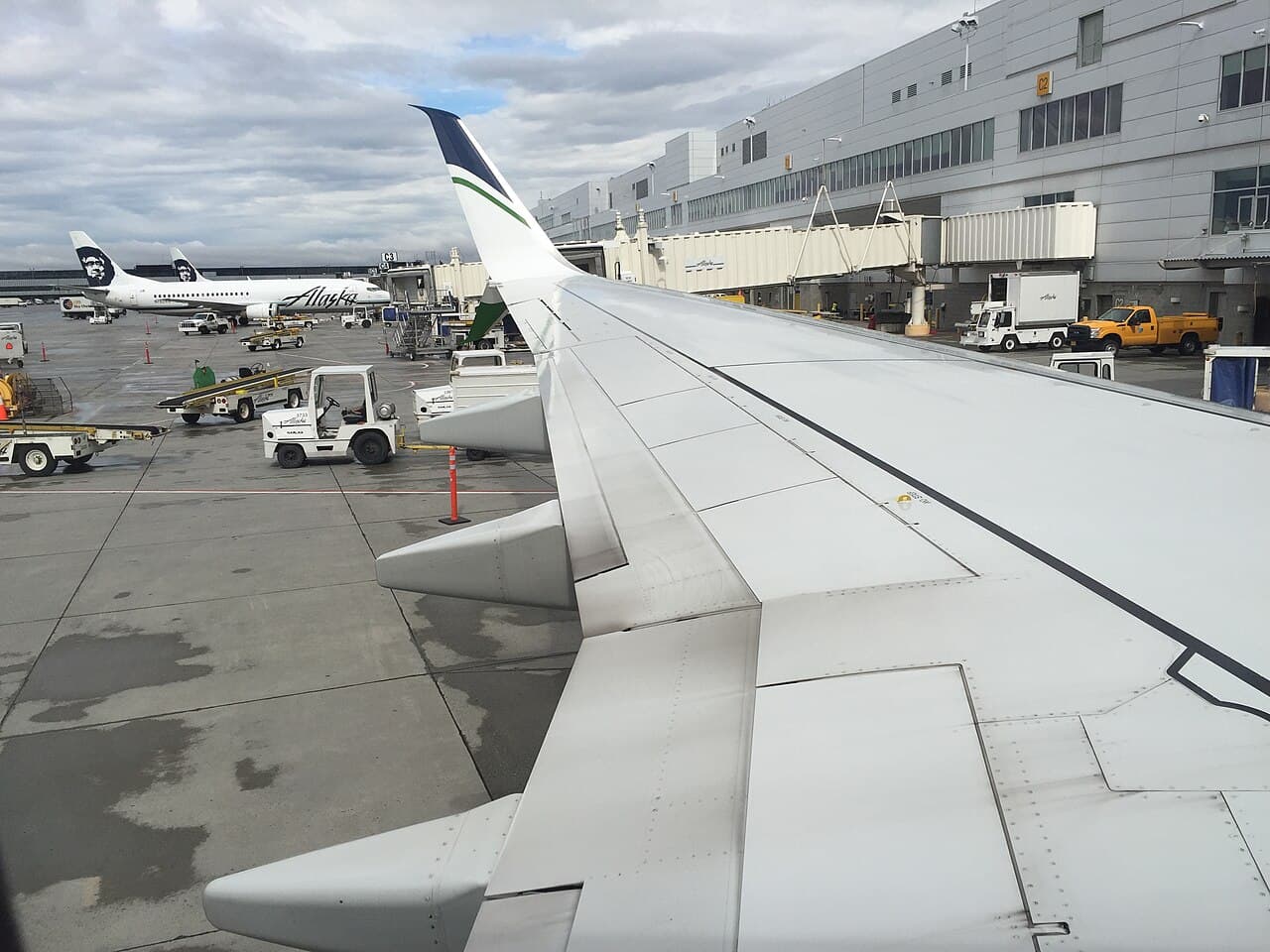
Image: Sunnya343 · CC BY-SA 4.0 · via Wikimedia Commons
Alaska Airlines invests $135M in Portland widebody hangar to boost maintenance and growth
Alaska Airlines is building a $135 million widebody-capable hangar at Portland International Airport, expanding its maintenance capacity and strengthening PDX as a critical West Coast hub.
The gist
Alaska Airlines breaks ground on a $135M widebody hangar at Portland, enhancing maintenance and regional hub capabilities.
Continuing coverage
All Fleet Expansion →- LATAM Airlines posts $227 million Q2 profit amid strong premium demand
- Cathay Pacific Group Posts 27% Operating Profit Rise and Stays on Track for 10% Capacity Growth
- US-Bangla Airlines to Double Fleet with $1.5B Boeing Order
- ANA expands Embraer E190-E2 order with eight additional jets for flexible domestic service
- flynas expands Airbus fleet with 25 new A330-900 and A321neo jets
Alaska Airlines has initiated construction of a significant new maintenance facility at Portland International Airport (PDX), marking a major investment in one of its key West Coast hubs. The $135 million project will deliver a hangar capable of servicing widebody aircraft, providing around 125,000 square feet of indoor maintenance space alongside 60,000 square feet of office and support areas. This widebody capability represents a crucial operational enhancement as Alaska integrates Hawaiian Airlines’ fleet and seeks to alleviate maintenance pressures currently concentrated at Seattle-Tacoma International Airport (SEA).
The new maintenance hangar is situated adjacent to the existing Horizon Air Operations Center and Maintenance Hangar at PDX, solidifying Alaska's long-standing presence at the airport. Since starting passenger service there in 1979, Alaska has steadily expanded its footprint at Portland. The hangar will be configured to handle up to three narrowbody aircraft or two widebodies simultaneously, enabling maintenance of larger Airbus A330 and Boeing 787-9 jets recently acquired through the Hawaiian Airlines merger. Alaska Airlines positions this expansion as both an investment in Portland and a strategic asset to enhance the operational flexibility of its broader network.
Benjamin Brookman, Alaska Airlines’ vice president of real estate and airport affairs, emphasized that the hangar will create over 100 new skilled jobs including maintenance technicians, engineers, and service professionals. He described the project as unlocking growth opportunities across Alaska's network by enabling maintenance activities to be performed more flexibly and efficiently beyond Seattle. This is a tangible commitment not only to Portland’s economy but also to operational resilience for the combined airline.
Portland International Airport is already a vital hub for Alaska Airlines. The carrier operates roughly a third of all flights at PDX, with over 130 daily departures scheduled for the current summer season. Over the past two years, the airline has also increased seat capacity from Portland by 50 percent. Recent route expansions include new year-round flights to Everett Paine Field and Pasco, plus seasonal services to destinations such as Baltimore, Philadelphia, St. Louis, and Jackson Hole. These moves underscore Portland's transition from a regional spoke to a significant West Coast hub facilitating both local and connecting traffic.
Passenger experience investments have accompanied Alaska’s expanded operational footprint. In June, the airline unveiled a newly redesigned Portland Lounge twice the size of its predecessor, featuring nearly 250 seats within 14,000 square feet of space. These upgrades complement the larger maintenance facility and indicate Alaska’s intent to build Portland into a more complete and competitive hub with superior service offerings across the network.
The addition of a widebody-capable hangar at Portland also prompts questions about the potential for future long-haul international routes from PDX. Alaska currently emphasizes Seattle as the primary base for long-haul international expansion. Nevertheless, PDX already hosts international long-haul flights operated by outside carriers such as British Airways to London Heathrow and KLM to Amsterdam Schiphol, suggesting infrastructure and market precedent for such services.
Alaska Airlines has noted it continuously evaluates route opportunities and market dynamics post-Hawaiian acquisition, leaving open the possibility of selectively introducing international flights from Portland over time. However, Seattle’s much larger corporate base and established long-haul premium service ecosystem make it the preferred hub for deploying Alaska’s limited widebody aircraft. For now, Portland’s role appears more focused on network relief and regional growth rather than a full pivot to international gateway status.
The hangar project thus reflects Alaska’s strategy to diversify maintenance capabilities and reduce operational bottlenecks at Seattle while expanding Portland as a second strategic hub. This investment builds infrastructure needed to support a larger, more geographically flexible airline, responding to traffic growth and operational complexities that arise from integrating new fleets and routes. It also strengthens Portland’s position in the Pacific Northwest aviation landscape, benefiting the local economy and travelers alike.
Overall, Alaska Airlines’ $135 million widebody hangar at PDX marks a significant operational and economic milestone for the carrier and the region. By broadening maintenance capacity for both narrowbody and widebody aircraft, creating over a hundred skilled jobs, and supporting ongoing network expansion in Portland, the investment signals a deepened commitment to growing the airport's hub status and operational resilience beyond its traditional Seattle focus.
Read more
All MRO/Maintenance →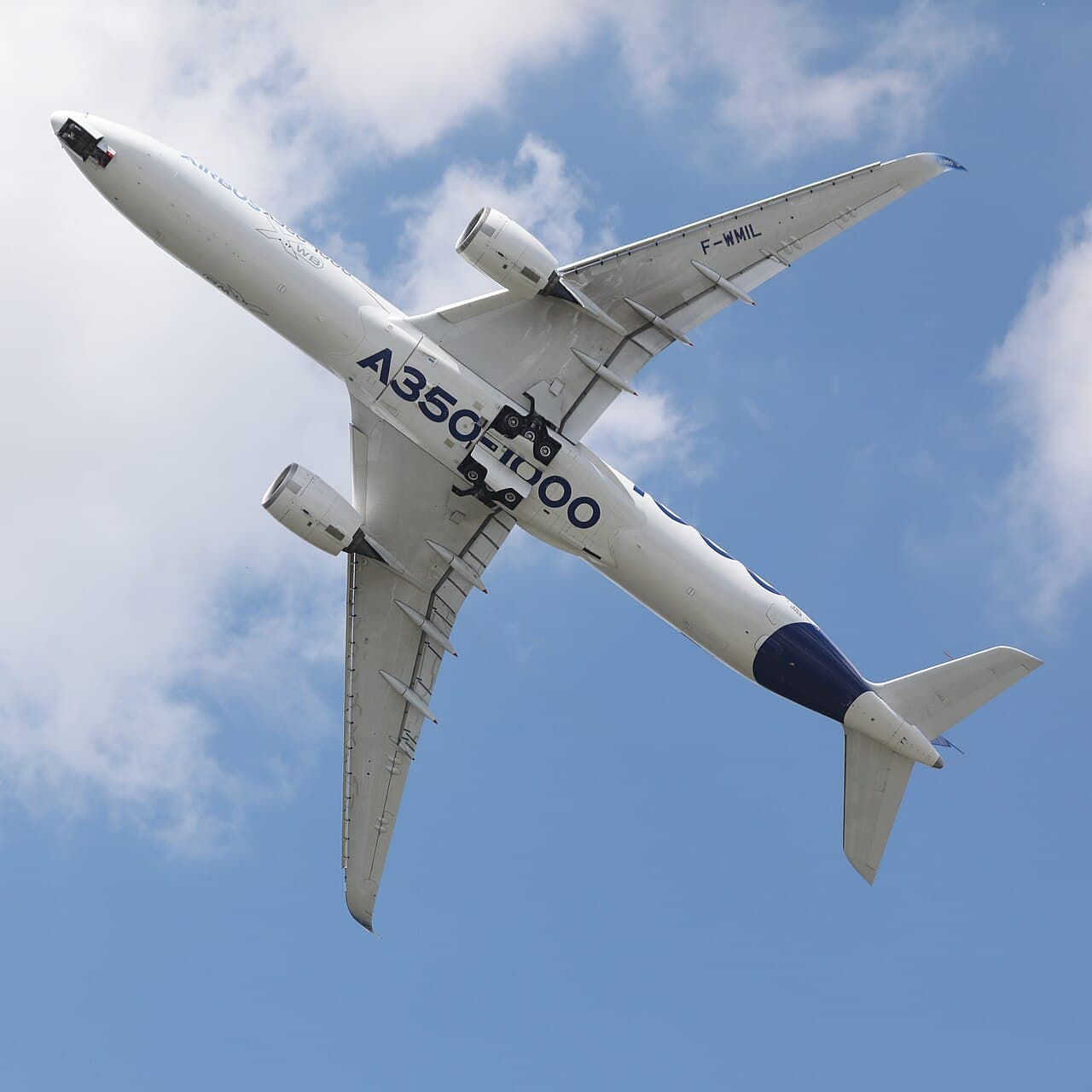
Lufthansa debuts its first Airbus A350-1000 adorned with centennial anniversary livery
Lufthansa is preparing to welcome its first Airbus A350-1000, an aircraft that carries added significance beyond its size. The aircraft, painted at Airbus's Toulouse facility in a blue design featuring a white crane graphic and the markings "1926 | 2026" and "100," is set to become the seventh addition to the airline's special fleet commemorating its 100th anniversary. According to the German flag carrier, painting the aircraft required roughly 432 liters of blue paint and 246 liters of white. From Toulouse to Munich The aircraft, which will carry the registration D-AIFA and the name "Deutschland," is scheduled to be transferred from Toulouse to Munich this fall 2026. Before the transport happens, it still needs to go through several test flights, additional interior work, and a final acceptance inspection. Lufthansa plans to hold an official naming ceremony at a later date. The delivery carries extra weight for the airline: this A350-1000 will be the 700th aircraft Airbus has delivered to the Lufthansa Group overall. A bigger sibling to the A350-900 At 73.8 meters long, the A350-1000 stretches about seven meters beyond the A350-900 already in Lufthansa's fleet. The larger aircraft is configured to carry up to 300 passengers across four cabin classes, including First Class, Business Class, Premium Economy, and Economy Class. Lufthansa has ordered 15 of the aircraft, with deliveries expected to continue through 2030. Part of an anniversary fleet This A350-1000 joins a growing group of Lufthansa aircraft featuring the special anniversary design. Other planes already flying with the livery include an A350-900, an A380, a Boeing 787-9, and a Boeing 747-8 on long-haul routes, along with two A320neo aircraft used on short- and medium-haul flights. According to Lufthansa, the distinctive paint scheme has drawn considerable attention from passengers and aviation enthusiasts alike since it began appearing on the airline's planes. RELATED Lufthansa Technik begins work on new 55,000m² MRO facility in Portugal
Air Europa to Receive First Airbus A350-900 in 2028 amid Strategic Overhaul
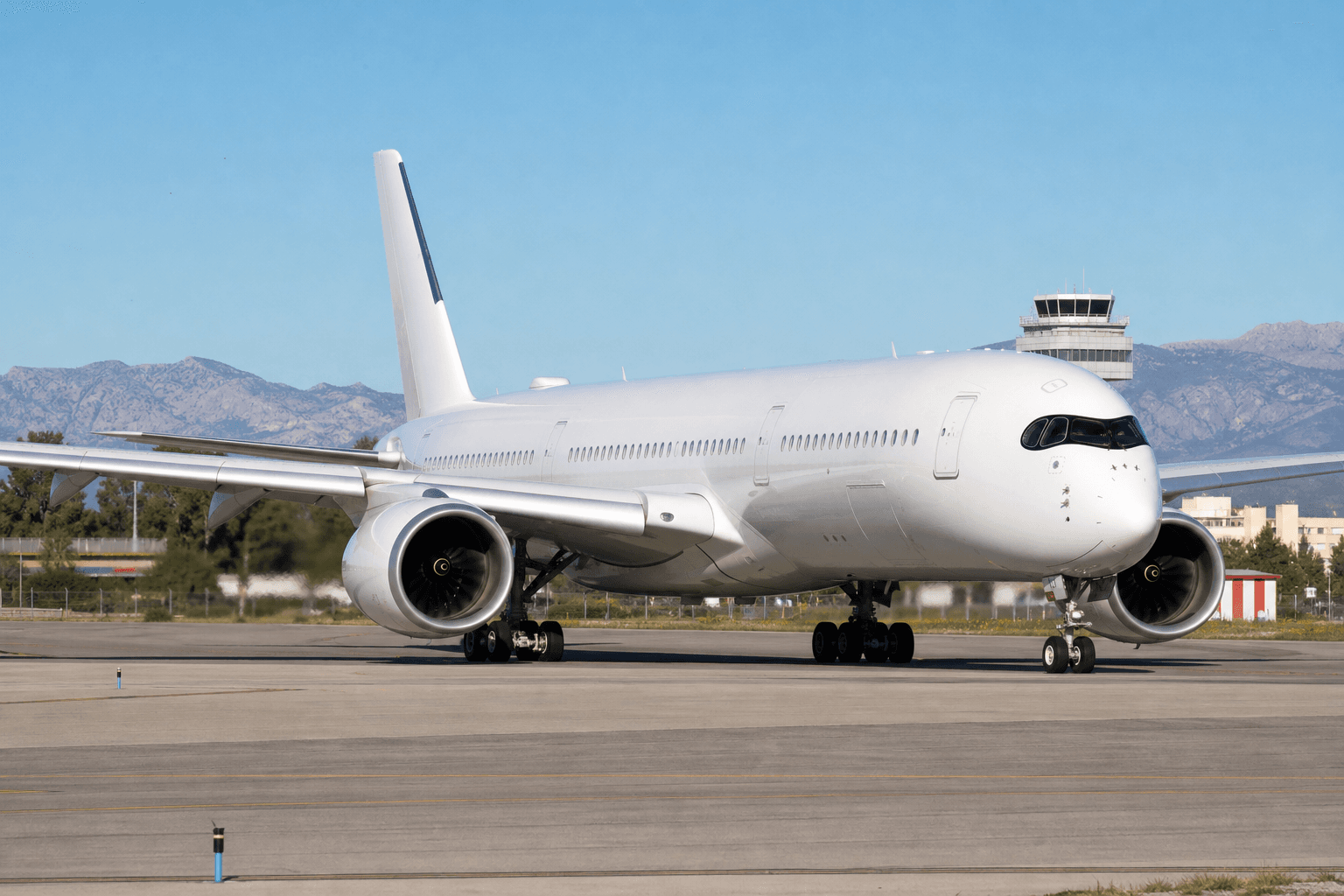
Spanish carrier is "optimistic" about this year after increasing 2025 profits by one-third. Air Europa expects to take delivery of its first Airbus A350-900 in 2028 and has embarked on a new strategic plan to achieve a "major structural and operational transformation" over the next two years. The Spanish carrier, which increased its full-year pre-tax profit by one-third to €155 million ($176 million) in 2025, says its new '+Air 28' plan will focus on operational efficiency, profitability and data-driven decision-making. As part of the plan, the carrier will launch a new maintenance division – Air Europa Technics – which will provide MRO services for its own aircraft and to third-party operators. Air Europa says it will adapt its maintenance capabilities to service the A350-900, ahead of incorporating the type into its currently all-Boeing fleet. It operates more than 60 aircraft, comprising 787-8s and -9s as well as 737s, and is in the process of adding 737 Max 8s as well . The carrier firmed an order with Airbus for up to 40 A350-900s at the beginning of this year. Air Europa confirms to FlightGlobal that the airline will take delivery of its first A350 at some point in 2028. Air Europa says it is "optimistic" about the remainder of 2026, despite "global instability surrounding the fuel market". Operating revenue in the first four months of the year was 9.2% higher than in the same period in 2025. The airline aims to increase its full-year pre-tax profit by 28% in 2026, it says. Full-year revenue in 2025 was 7.3% higher than the previous year, at €3.1 billion. Earnings before interest, taxes, depreciation and amortisation (EBITDA) increased by 14%, to €235 million. Passenger numbers were up 2.6% on a 1.5% increase in capacity, leading to a slight increase in load factor to 84.4%. "The continuous expansion and renewal of our fleet, together with structural improvements and operational efficiency, are the pillars on which we will continue to grow and demonstrate the strategic role we play, especially in Europe and Latin America," says Air Europa president Juan Jose Hidalgo. The airline’s chief executive, Richard Clark, adds: “The 2025 results are, once again, the outcome of the joint collaboration of all the professionals at this company. This effort does not stop, and it is the key to continuing our international expansion, as reflected in the opening of new routes, both domestic and international.” Air Europa’s recently-opened routes include Oviedo and Seville in Spain, Geneva in Switzerland and Johannesburg in South Africa. Star Alliance carrier Turkish Airlines is in the process of acquiring a 25-27% stake in Air Europa , which is a SkyTeam member. British Airways parent IAG is also a 20% shareholder in Air Europa, which is majority-owned by Globalia.
airBaltic Reports Record Passenger Numbers and Fleet Growth in First Half of 2026
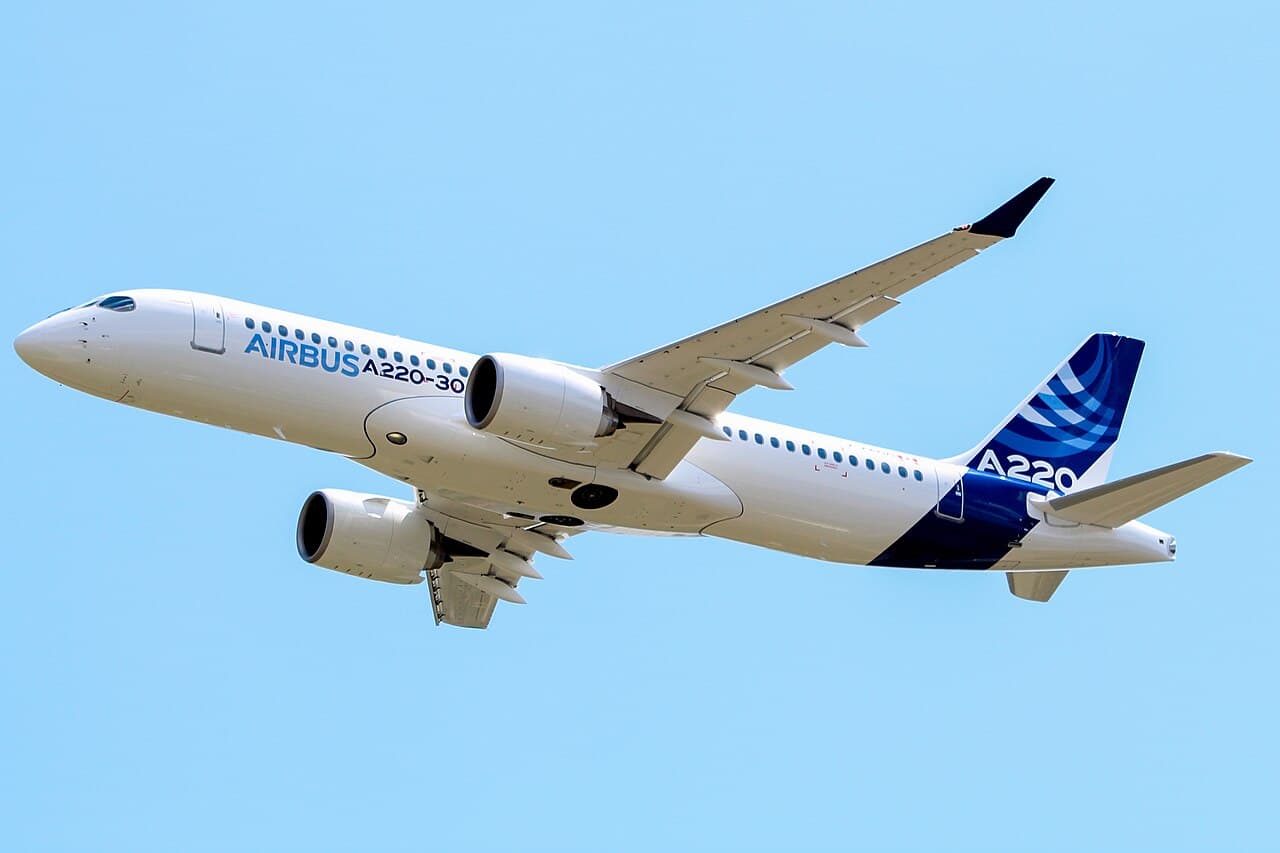
Latvian national carrier airBaltic continues to demonstrate solid operational momentum, carrying 509,700 passengers across its network in June 2026. This figure marks a 2% increase compared to the same month in 2025. ezstandalone.cmd.push(function () { ezstandalone.showAds(119); }); The airline also operated 4,535 flights during the period, reflecting a healthy 6.2% year-on-year rise. Despite the passenger growth, the load factor for June stood at 81.9%, a 2.2 percentage point decline from the previous year. ezstandalone.cmd.push(function () { ezstandalone.showAds(127); }); This dip primarily resulted from expanded capacity, as the airline deployed more flights and seats to meet anticipated demand and strengthen its network. Record First-Half Performance The positive trend extended across the first six months of 2026. airBaltic transported a total of 2,454,900 passengers, achieving a 3.9% increase over the same period in 2025. ezstandalone.cmd.push(function () { ezstandalone.showAds(128); }); This represents the highest passenger volume ever recorded for the January-to-June timeframe. In parallel, the airline conducted 23,634 flights, up 5% year-on-year. These results highlight airBaltic’s successful recovery and expansion efforts. The airline has benefited significantly from improved fleet availability. ezstandalone.cmd.push(function () { ezstandalone.showAds(129); }); After resolving previous Pratt & Whitney engine-related challenges that grounded aircraft in prior periods, airBaltic now operates its full fleet of Airbus A220-300 jets without major limitations. This has enabled greater operational stability, higher capacity (measured in available seat kilometres), and the ability to run more reliable schedules. By mid-2026, the fleet has grown to around 55 A220-300 aircraft, supporting both scheduled network operations and ACMI (Aircraft, Crew, Maintenance, and Insurance) activities. The modern, fuel-efficient A220 fleet contributes to better cost management and an enhanced passenger experience, known for its comfort, quiet cabin, and large windows. ezstandalone.cmd.push(function () { ezstandalone.showAds(130); }); Photo Credit: airBaltic Expanding Connectivity and Customer Focus airBaltic plays a vital role in connecting the Baltic States (Latvia, Estonia, and Lithuania) to more than 80 destinations across Europe, the Middle East, North Africa, and the Caucasus region. Its extensive network makes travel more accessible and convenient for leisure and business passengers alike. Recent initiatives underscore this commitment. The airline has extended several routes into the winter season, such as Tallinn–Vienna and Vilnius–Berlin, turning them into year-round connections. It is also adding new routes for the 2026/2027 winter period, including services from holiday destinations like Gran Canaria and Tenerife to various European cities. ezstandalone.cmd.push(function () { ezstandalone.showAds(131); }); Customer satisfaction remains high. In its latest survey, airBaltic achieved a 97% overall satisfaction rate and saw its Net Promoter Score rise to +36. Strong scores for crew professionalism, onboard comfort, and service quality reflect the airline’s focus on delivering a premium experience even in a competitive market. Supporting Regional Growth As a key economic driver, airBaltic facilitates tourism, business travel, and trade links that boost the broader Baltic economy. Its operations create jobs, stimulate inbound tourism, and provide essential connectivity for the region’s residents and visitors. ezstandalone.cmd.push(function () { ezstandalone.showAds(132); }); While the aviation industry faces challenges such as fluctuating fuel prices and economic pressures, airBaltic’s traffic figures for mid-2026 signal resilience. With full fleet utilization, network expansion, and a customer-centric approach, the airline is well-positioned to build on this momentum in the coming months.
Former Ethiopian Airlines CEO Tewolde Gebremariam appointed as Air India CEO
Former Ethiopian Airlines boss Tewolde Gebremariam has been named as the new CEO of Air India, following a comprehensive search to identify the next leader. On August 5, 2025, Air India announced that Gebremariam's "track record" leading Ethiopian Airlines made him "uniquely suited" to for the position. "Tewolde Gebremariam is widely recognized as one of the most successful aviation chief executives," Air India said. "During his decade-plus tenure as CEO of Ethiopian Airlines Group, he spearheaded a multi-billion-dollar expansion, transforming a regional carrier into Africa's largest, most profitable, and decorated airline group—growing revenue by more than fourfold and fleet size nearly threefold." Air India said its objective was to find a leader with a "proven record of managing mega-scale airline turnarounds". Fortune Global Forum 2019 / Flickr.com The airline praised Gebremariam's ability to manage "complex operational landscapes, driving cultural transformation, building competitive global hubs, and developing world-class MRO (Maintenance, Repair, and Overhaul) and aviation training infrastructure". Gebremariam served as the CEO of Ethiopian Airlines from January 2011 to March 2022 and was succeeded by Mesfin Tasew. "Having completed the initial phase of stabilization, integration, and fleet commitments under Campbell's guidance, Air India is now entering a critical execution and expansion era," N. Chandrasekaran, Chairman of Tata Sons and Air India, said. "Tewolde's track record in building one of the world's most efficient and profitable airline groups makes him uniquely suited to lead Air India." Campbell Wilson announced his resignation on April 7, 2026, ending a nearly four-year tenure leading the Tata Group-owned carrier through a sweeping post-privatization transformation. John Taggart / Creative Commons Gebremariam said it was a "profound honor to be entrusted with leading Air India at such a historic moment in its journey". "Air India carries an incredible legacy, and the opportunity to build a world-class global airline that reflects India's extraordinary economic potential is uniquely exciting," added Gebremariam RELATED Air India CEO Campbell Wilson resigns, will stay until successor named
The Daily Touch & Go
The day's best aviation news in your inbox. Free, no spam.