

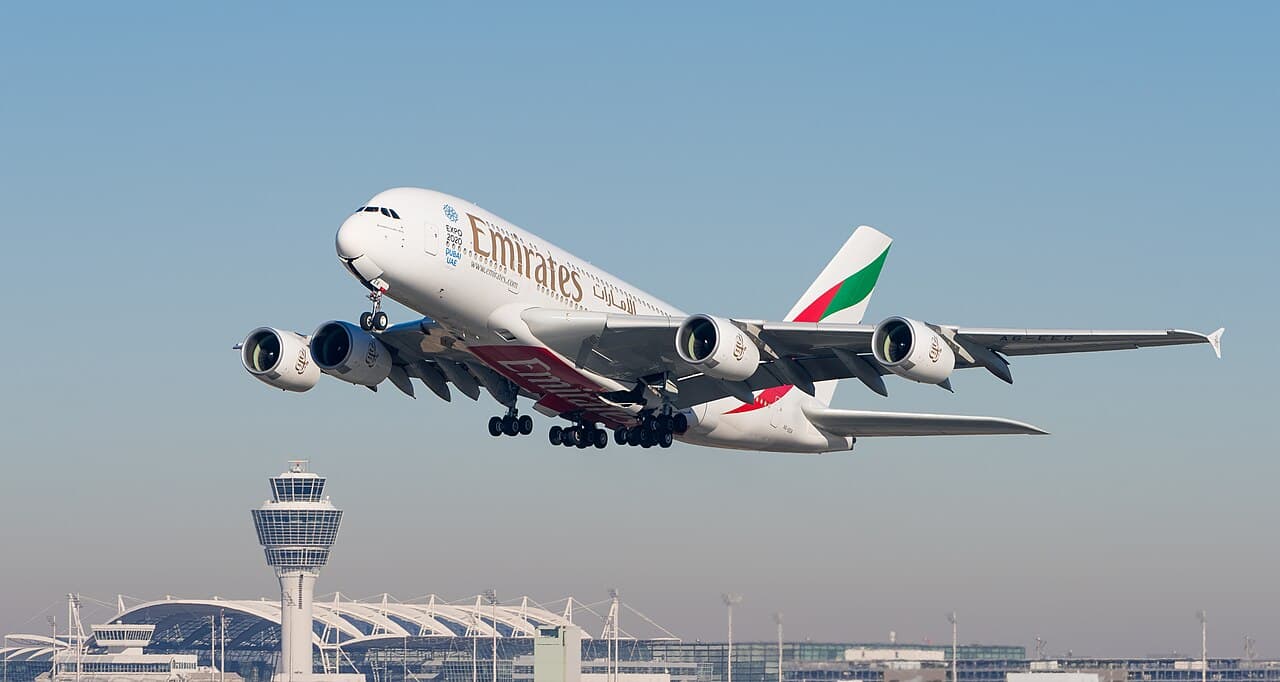
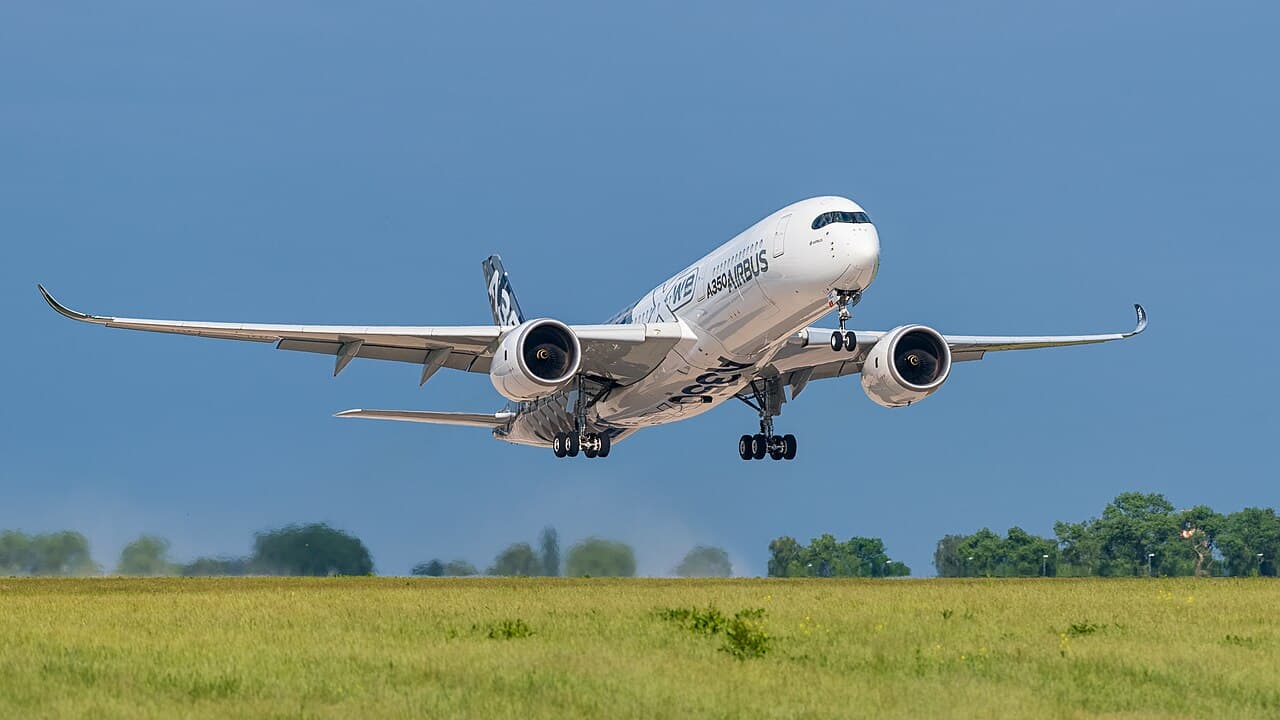
Image: Julian Herzog ( Website ) · CC BY 4.0 · via Wikimedia Commons
Emirates Faces Lawsuit Alleging Theft of Advance Meal Order Technology
Startup Nourish Aviation Holdings claims Emirates copied its proprietary system for passenger meal preordering and customization, leading to a lawsuit filed in Colorado federal court.
The gist
Emirates is sued for allegedly stealing Nourish Aviation's trade-secret technology enabling dynamic, customized advance meal orders.
The Emirates Group is confronting legal action after a U.S. district court filing accused the Dubai-based airline of misappropriating technology from a startup designed to streamline passenger meal preorders. Nourish Aviation Holdings LLC and Aviation Nutrition Network Investment Holdings Ltd. initiated the suit last week in the District of Colorado, alleging that Emirates unlawfully used their trade-secret platform after confidential discussions.
Nourish Aviation's platform distinguishes itself by integrating multiple data and operational points to allow passengers to order meals tailored to their flight and profile ahead of time. This includes linking reservation data, dynamically presenting menus appropriate to the traveler and flight segment, managing production and logistics across catering and airport services, and transmitting the order details to cabin crews for delivery. The technology also aims to utilize advance demand data to reduce waste and improve in-flight meal availability.
According to allegations, Nourish approached Emirates in 2020 with a joint venture proposal, highlighting how their system could mesh with Emirates-owned dnata catering services. They reportedly shared confidential implementation information during months of talks. The lawsuit contends that Emirates, which had attempted to develop similar meal preordering tech independently but struggled, eventually incorporated Nourish’s proprietary concepts without formal partnership, launching their own meal preordering feature in 2023.
The complaint must establish three key points: that a trade secret existed within Nourish’s system; Emirates acquired or utilized the secret breaching confidentiality; and that Nourish suffered damages from this misuse. Notably, the timing of the lawsuit coincides closely with the third anniversary of Emirates’s public introduction of their meal preorder program, likely linked to statute of limitations rules.
While Emirates’s prior unsuccessful attempts to implement meal preordering before collaborating with Nourish provide circumstantial support for the claim, meal preordering is not an innovative concept in commercial aviation. Singapore Airlines pioneered such offerings as early as 1998, and numerous carriers worldwide now provide fixed or customized meal ordering services.
Technically, Emirates's system appears more limited, offering business class passengers a selection of preorders rather than a more comprehensive marketplace or gate delivery system that Nourish seemed to envision. Some aviation experts note that integrating a meal ordering platform within the complex airline catering and service workflows is operationally challenging, but not beyond the capabilities of a major airline’s IT and catering divisions.
Unusually, the litigation was filed in Colorado despite Emirates being based in Dubai and no meetings taking place in the state. Emirates does not operate flights to Denver, though its airport has publicly signaled plans for such services. This venue choice may be related to Nourish's corporate registration rather than direct jurisdictional connections.
The case highlights tensions between innovative aviation technology startups and legacy carriers seeking to rapidly adopt digital improvements internally or through partnerships. The outcome will hinge on the ability to document whether Emirates crossed legal boundaries in utilizing proprietary systems or if their preordering capabilities were independently developed extensions of existing industry practices.
Frequently asked questions
- What technology is Nourish Aviation claiming Emirates stole?
- Nourish Aviation alleges that Emirates took their proprietary system that links passenger reservation data to dynamic meal ordering, manages workflow for production and service, and uses demand data to optimize meal availability.
- When did Emirates introduce its meal preordering service?
- Emirates launched its business class meal preordering feature in 2023, about three years after initial discussions with Nourish Aviation began in 2020.
- Why was the lawsuit filed in Colorado if Emirates is based in Dubai?
- The suit was filed in the U.S. District Court for the District of Colorado, possibly because Nourish Aviation has an LLC registered there, despite Emirates being based in Dubai with no direct operations in Colorado.
Read more
All Regulatory →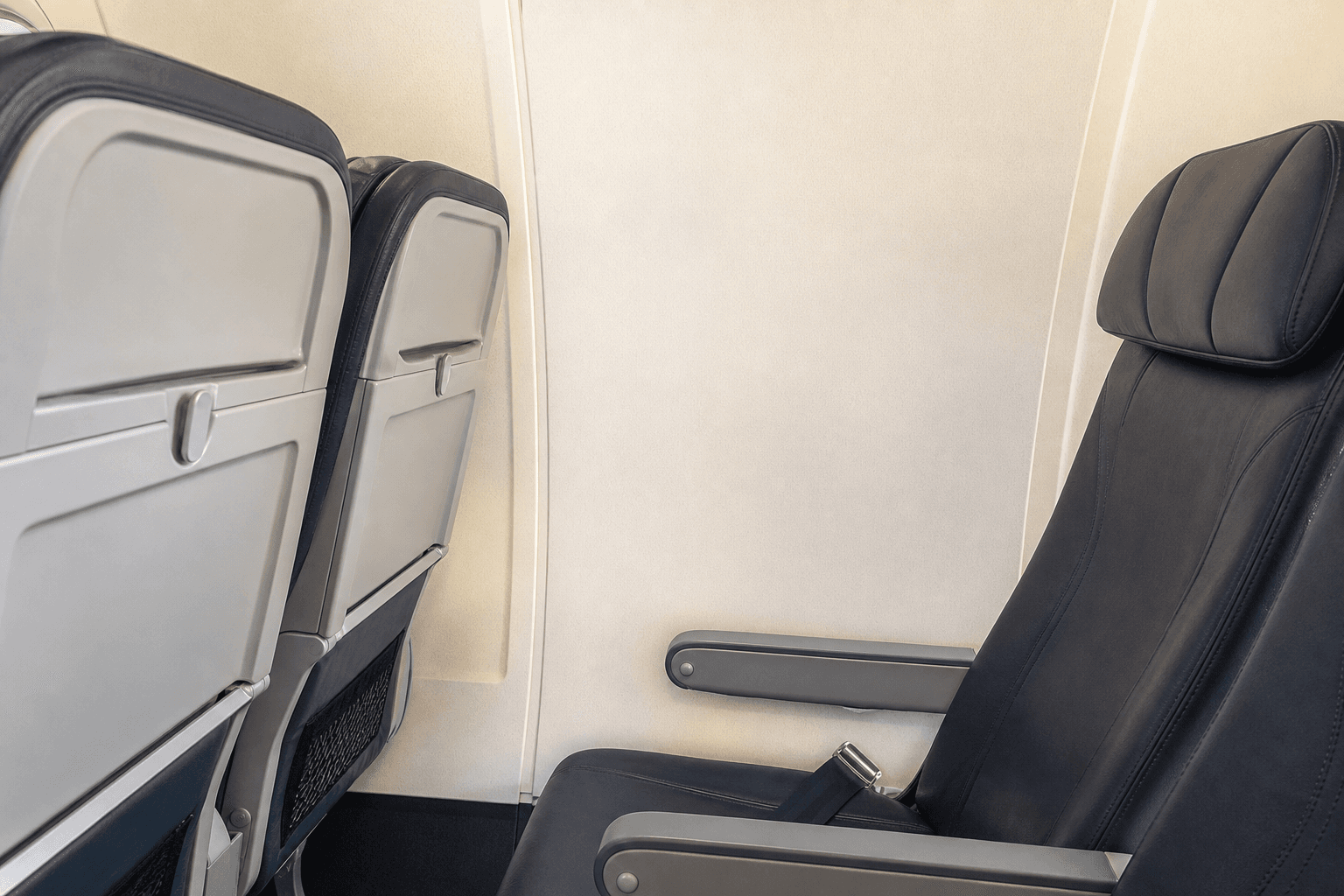
Judge Allows Lawsuit Over United's Windowless Window Seat Claims to Continue
The carrier argued that a "window seat" is defined by its position in the cabin, not its proximity to an actual window.
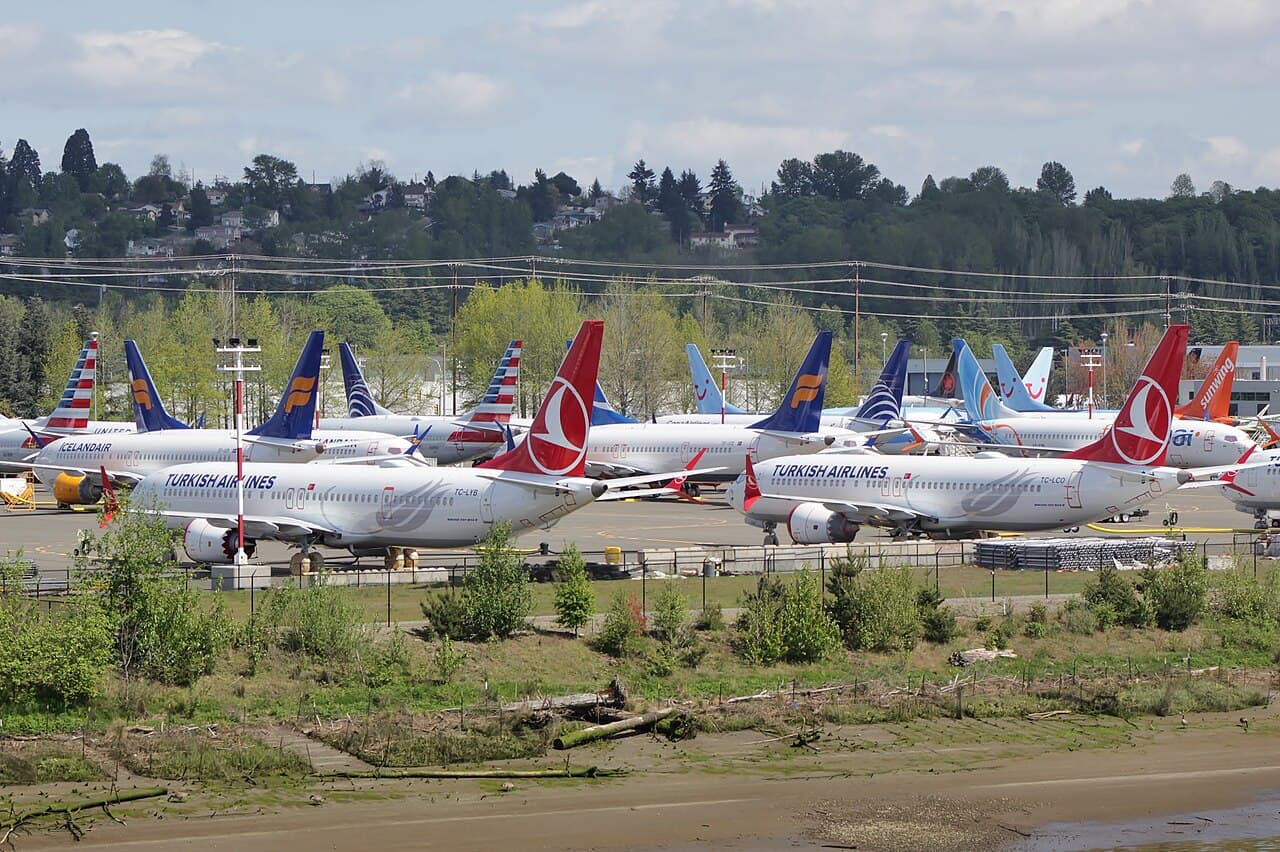
Aerolineas Argentinas to modernize fleet with new A330neos, updated business class, and Wi-Fi
SkyTeam member Aerolineas Argentinas has been a bit of a mess — the airline has been government owned since 2008, and lost money for 18 consecutive years. The company was given enough support to stay alive, but not enough of an investment to actually succeed. Amazingly enough, in the past couple of years, the airline has turned profits — we're talking about $56.6 million in 2024, and $112.7 million in 2025, so things are really looking up for the airline. 2025 was also the first year since being nationalized where the airline didn't receive any government support. In late 2025, we learned how Aerolineas Argentinas planned to make a major investment, including new planes, and an improvement to the passenger experience. We're now learning more about what this will look like, and the timeline with which it will happen. The airline will also finally offer a competitive business class product! Aerolineas Argentinas to acquire 20 Airbus & Boeing jets Aerolineas Argentinas' fleet currently consists of around 80 planes, including Airbus A330s, Boeing 737s, and Embraer E190s. The airline is now planning on adding 20 modern planes to its fleet, by way of lease agreements: Aerolineas Argentinas will acquire six Airbus A330-900s, which will complement the fleet of 10 A330-200s; these will start to be delivered as of the first half of 2028 Aerolineas Argentinas will acquire 14 additional Boeing 737 MAXs, including six 737 MAX 8s and eight 737 MAX 10s, which will complement the fleet of 15 737 MAX 8s (plus four 737-700s, and 28 737-800s); the additional 737 MAX 8s will arrive as of the first quarter of 2027, while the 737 MAX 10s will arrive as of 2028 (assuming the planes get certified soon, which they should… hopefully) It's exciting to see Aerolineas Argentinas finally modernizing its fleet in this way! The expectation is that all of these planes will be delivered by 2031. Aerolineas Argentinas is modernizing its fleet Aerolineas Argentinas investing in passenger experience Not only is Aerolineas Argentinas acquiring new planes, but the airline also finally plans to update the cabins of its existing aircraft, as part of a $65 million investment. For one, Aerolineas Argentinas plans to retrofit the cabins of its Airbus A330s, including introducing a new business class product. The idea is that the passenger experience will be harmonized between the A330-200s and the A330-900neos. For what it's worth, the carrier currently has angled seats in business class that are in a 2-2-2 configuration, so that's mighty uncompetitive nowadays. We now also know what we can expect onboard the new A330-900neos. The planes will have 291 seats, including 30 business class seats, 24 premium economy seats, and 237 economy seats. So expect an identical configuration to ITA Airways' Airbus A330-900neos , including the same staggered Vantage XL seats in business class. Aerolineas Argentinas' new A330-900neo cabins As of 2027, Aerolineas Argentinas also plans to introduce Wi-Fi throughout the fleet, starting with A330s, and followed by 737s and E190s. The airline has selected Intelsat to provide multi-orbit connectivity, using its new electronically steered array antenna. Aerolineas Argentinas planes are getting Wi-Fi Bottom line For the first time in a long time, Aerolineas Argentinas is making a big investment in its passenger experience. The airline is acquiring 20 new planes (Airbus A330neos and Boeing 737 MAXs), retrofitting its long haul aircraft (including with a new business class), and introducing Wi-Fi throughout the fleet. While we first learned about these general plans late last year, the details are finally all coming together, in terms of the timeline for the deliveries, what the new cabins will be like, etc. What do you make of these Aerolineas Argentinas developments?
United Airlines sues insurer Homesite over $5 million cyber claim refusal after CrowdStrike outage
United Airlines is suing one of its cyber insurers after it refused to pay out a claim the Chicago-based carrier made following the infamous July 19, 2024, CrowdStrike outage, which bricked millions of computers running Windows software worldwide. In the immediate aftermath of the outage, United was forced to cancel 1,600 flights, and thousands more were delayed. Around 200,000 passengers were left stranded as the airline raced to restore its IT systems, resulting in losses totalling nearly $114 million. Thankfully, United had taken out a comprehensive insurance policy for just this kind of “catastrophic cyber event.” Specifically, United had created a so-called ‘insurance tower’ with nine different insurance companies providing a combined $200 million in coverage above a $50 million self-insured retention. The way this tower works is that United is responsible for the first $50 million of losses before it can start making claims for its various insurers. The first layer in this insurance tower was covered by AIG who agreed to pay out the full $15 million its coverage offered. The second layer was shared by Starr and Evanstan to a limit of $10 million. Both insurers paid out $5 million to reach this limit. The third layer was covered by Scottsdale, which also had a limit of $10 million, and this was paid out in full. The fourth layer was shared by Starr and Liberty, also to a $10 million limit. Again, both insurers paid out $5 million each. The fifth and final layer was shared by Indian Harbor and Homesite to a limit of $10 million. Indian Harbor paid out its share of $5 million, while Homesite, the final insurer in the tower, refused. “This case is about an insurer that took United’s premium, watched every other insurer… pay a valid claim in full, and then—standing alone against the unanimous judgment of seven other insurers—refused to honor its own policy,” lawyers acting on behalf of United wrote in an unusually strongly worded complaint filed in an Illinois district court earlier this week. “Homesite’s refusal is not a good-faith coverage dispute. It is an outlier position.” United’s lawyers explain that around $20 million of the losses it incurred from the CrowdStrike outage was from paying out compensation to passengers – something that it claims was required under federal mandate. Meanwhile, Homesite has allegedly claimed that United should have sought written permission before it paid out this compensation. “No insurer acting in good faith would demand that its policyholder choose between federal regulatory compliance and insurance coverage,” United’s lawyers add in their complaint. “The diametrically opposed positions taken by two insurers in the same layer… confirm that Homesite’s coverage denials are not the product of a good-faith evaluation of coverage but are instead driven by a desire to avoid its contractual obligations.” United is demanding a jury trial in this case, and, along with the $5 million it says it is owed by Homesite, the airline is also seeking a judgment declaring that Homesite acted in bad faith, pre and post-judgment interest, and other monetary damages.
Airbus A350-1000ULR embarks on nonstop Toulouse to Melbourne test flight
Crew of Airbus twinjet designed for Qantas’s Project Sunrise to test systems including aft fuel tank. Airbus's first ultra-long range A350-1000ULR has taken off from Toulouse on a nonstop test flight to Melbourne. The twinjet – developed for Australian carrier Qantas's Project Sunrise initiative – lifted off from Toulouse Blagnac's runway 32L at about 07:34 local time on 23 July. While total flight time will not be formally confirmed until it arrives in Melbourne, the aircraft is intended to operate the Sydney-London route and fly for durations of 22h. This will be achieved with the specially-designed 20,000-litre aft centre fuel tank in the Rolls-Royce Trent XWB-powered jet. Airbus indicates that a crew of nine is on board the aircraft. The test flight is part of a 75-80h certification campaign for the -1000ULR ahead of Qantas's plans to launch the commercial Project Sunrise routes in October next year. Airbus carried out the maiden flight of the variant on 2 June. Qantas's first 238-seat A350-1000ULR will be a different airframe to the test flight aircraft MSN707 – the initial delivery will be MSN814. The airline has 12 of the type on order.
The Daily Touch & Go
The day's best aviation news in your inbox. Free, no spam.