

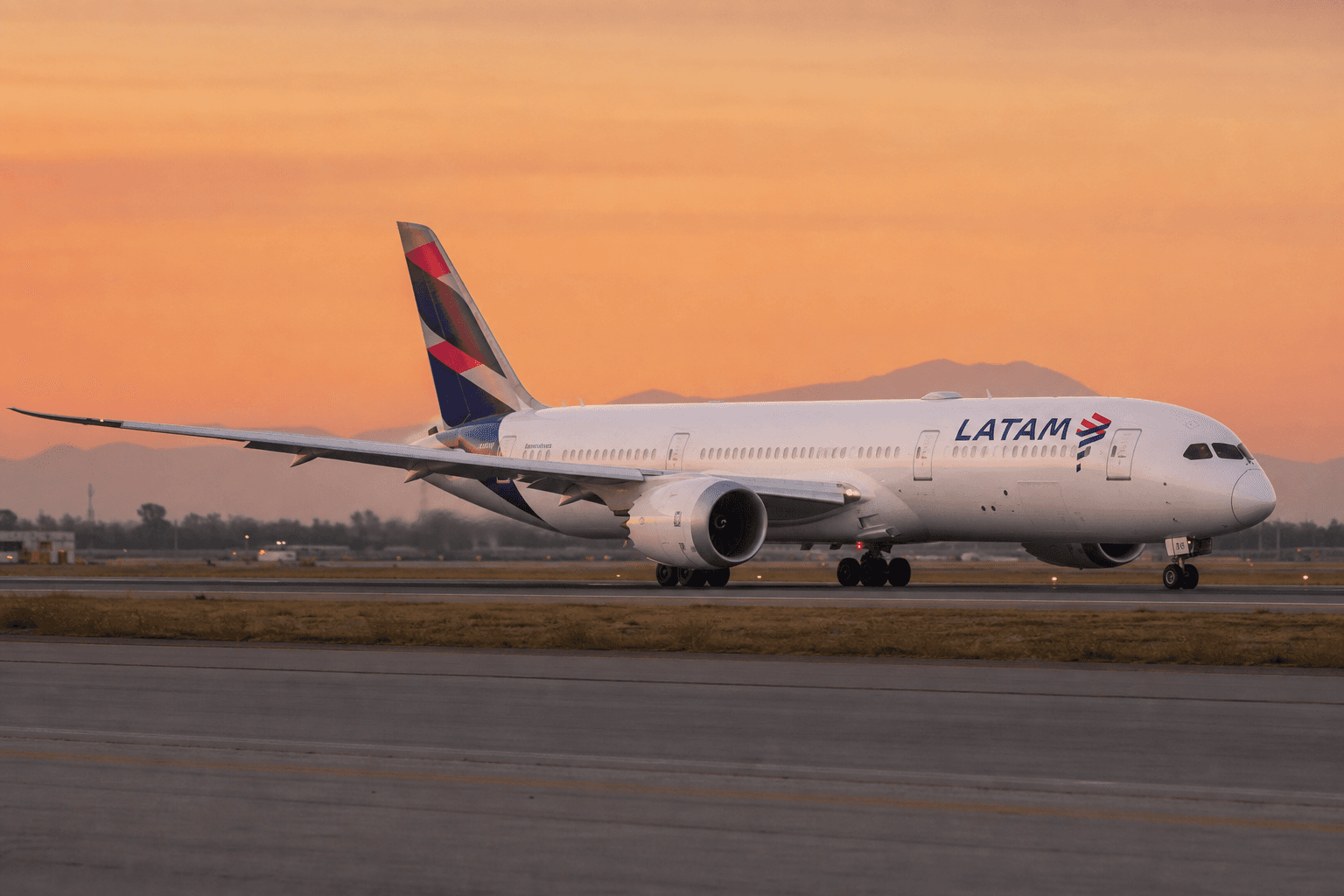
Illustration: The Touch & Go
LATAM Airlines Invests $100M to Introduce Premium Economy on 787 Fleet
LATAM Airlines is implementing a new Premium Comfort cabin on Boeing 787s with planned rollout in early 2027, part of a broader $360M retrofit focused on enhanced passenger experience.
The gist
LATAM is spending $100 million to add a premium economy class to its 787 fleet, marking a strategic upgrade from its previous two-class setup.
Continuing coverage
All Fleet Retrofit →LATAM Airlines is making a significant shift in its cabin offerings by introducing a Premium Comfort class on its Boeing 787 fleet, with an investment valued at approximately $100 million. This move marks LATAM’s departure from a longstanding two-class operation, closing the service gap between economy and business classes. The airline plans to debut the new premium economy cabins in the first half of 2027, aligning with its strategic focus on premiumization amid growth in transatlantic travel.
This initiative is part of LATAM’s wider ambition to upgrade passenger experience and capitalize on rising demand for premium seating options worldwide. The airline’s vice president of customers, Paulo Miranda, emphasized that Premium Comfort combines comfort, space, and high-level service to meet the evolving needs of travelers. LATAM’s strategy reflects global trends where premium economy cabins have steadily grown, particularly among carriers in North America and Europe, and now increasingly in South America as the market matures.
The Premium Comfort cabin will feature RECARO PL3530 seats offering a generous 40-inch pitch and an 8-inch recline, equipped with 16-inch 4K entertainment screens, Bluetooth connectivity, fast-charging USB-C ports, and individual power outlets. Enhancements also include a curated gastronomic offering and personalized service designed to elevate the onboard experience. London-based design consultancy PriestmanGoode collaborated closely with LATAM on the cabin, infusing South American cultural elements and mineral-inspired color palettes into the design while prioritizing environmentally responsible materials.
LATAM’s premiumization efforts extend beyond premium economy. The airline has invested $360 million in a comprehensive retrofit program for its 40 Boeing 787s, including installation of new business class seats featuring Recaro R7 mini-suites with sliding privacy doors, as well as upgrades to its economy cabins. Twenty-four 787s have already undergone retrofitting, with completion expected by the end of this year. These aircraft operate both international and domestic routes across Chile, Brazil, and Peru.
In addition to cabin upgrades, LATAM is boosting its in-flight offerings with improved connectivity through a partnership with Viasat, and a more integrated inflight entertainment system inspired by its strategic partner, Delta Air Lines. These digital enhancements aim to create a seamless customer journey and improve LATAM’s Net Promoter Score, reflecting stronger passenger satisfaction and engagement.
LATAM's investments in premium cabins and digital innovation coincide with impressive financial performance. The airline achieved a 16.2% operating margin in its last fiscal year, significantly outperforming the global IATA average of 7.2%. In the first quarter of 2026, LATAM reported a 62.1% profit increase year-over-year, totaling $576 million, along with a historic operating margin of 19.8%. Revenue growth and expanded long-haul services underpin this financial strength.
The expansion into premium economy comes as LATAM grows its international network, particularly transatlantic routes, reinforcing the economic viability of this cabin class. Premium economy attracts both leisure travelers seeking improved comfort and budget-conscious business travelers, filling the service and pricing gap between economy and business classes. This adaptation aligns LATAM with international carriers that have long benefited from diversified premium seating.
LATAM’s retrofit is also a clear indicator of South America’s evolving aviation market, where passenger preferences and expectations are shifting toward enhanced comfort and service options. The airline’s substantial loyalty program across the continent provides a strong foundation for capturing demand in the premium segment, enabling long-term sustainable growth in a highly competitive global environment.
Frequently asked questions
- What is the new premium economy product LATAM Airlines is introducing?
- LATAM Airlines is introducing a Premium Comfort cabin on its Boeing 787 fleet featuring larger seat pitch, enhanced entertainment, and personalized service, launching in early 2027.
- How much is LATAM investing in the premium economy retrofit?
- LATAM is investing around $100 million specifically for the premium economy cabin retrofit as part of a broader $360 million fleet upgrade program.
- Why is LATAM adding a premium economy cabin now?
- The addition responds to growing premium travel demand, helps fill the service gap between economy and business classes, and supports LATAM's expanded long-haul transatlantic network and premiumization strategy.
Read more
All Sustainability →
London Gatwick's Summer 2026 Sees Over 230 Destinations via Record 63 Airlines
London Gatwick Airport is fully prepared for the busy summer holiday season, offering passengers more choice than ever before. ezstandalone.cmd.push(function () { ezstandalone.showAds(119); }); This summer, the airport will connect travellers to more than 230 destinations through a record 63 airline partners, making it one of the best-connected hubs in Europe. With 11 new routes and eight new airline partners already launched this year, Gatwick continues to expand its network. ezstandalone.cmd.push(function () { ezstandalone.showAds(127); }); The momentum shows no signs of slowing, as the airport prepares to welcome Air Zimbabwe with a new direct service to Harare in the coming weeks. Popular Destinations for Summer Getaways Short-haul favourites remain strong, with Barcelona, Faro, and Dublin topping many wish lists. Long-haul travellers can jet off to exciting spots like Shanghai in China, Orlando in Florida, and Cancun in Mexico. These routes provide perfect opportunities for family holidays, romantic getaways, or visits to friends and relatives abroad. ezstandalone.cmd.push(function () { ezstandalone.showAds(128); }); The airport expects its busiest days on the first, second, and third Sundays of August, with around 900 flights scheduled on peak dates. Millions of passengers will pass through Gatwick’s terminals, but the airport has made significant preparations to ensure smooth journeys. Photo Credit: Gatwick Airport Nick Williams, Head of Passenger Operations & Service at London Gatwick Airport , gave comment. “We are looking forward to welcoming millions of passengers through London Gatwick this summer and everything is in place to help them enjoy a positive start to their holiday.” ezstandalone.cmd.push(function () { ezstandalone.showAds(129); }); “In partnership with a record 63 airlines, we’re excited to offer a fantastic range of more than 230 destinations, providing passengers with excellent choice when planning their well-earned summer holidays.” Enhanced Facilities and New Experiences Gatwick Airport has invested heavily in improving the passenger experience. Later this summer, travellers will be among the first in the UK to use innovative robot valets from Stanley Robotics. Drivers simply pull into a dedicated cabin, and autonomous robots take care of parking—delivering a faster, more convenient start to any trip. Both terminals now feature freshly refurbished departure areas with better seating, extra charging points, and improved accessibility. ezstandalone.cmd.push(function () { ezstandalone.showAds(130); }); Shoppers and foodies will enjoy an expanded range of options, including Discover London stores showcasing regional produce, GAIL’s first airport bakery, and Venchi’s first UK airport store offering Italian chocolate and gelato. Top Tips for a Stress-Free Summer Trip To make your journey even smoother, follow these practical tips: Families returning to the UK: Children aged eight and over who meet the 3ft 11in height requirement can now use eGates with an adult. Plan ahead: Check any road and rail updates before you travel. Stay hydrated: Bring a reusable bottle and use free water refill points. Driving? Book official Gatwick parking in advance. Security: Keep liquids (up to 2L) and devices in your cabin bag. Pack power banks and vapes in hand luggage only. Book special assistance at least 48 hours ahead if needed. Arrive on time: Two hours before short-haul and three hours before long-haul flights. Take advantage of 10% off at World Duty Free with Reserve & Collect (T&Cs apply). ezstandalone.cmd.push(function () { ezstandalone.showAds(131); }); Photo Credit: Gatwick Airport A Major UK Transport Hub As the UK’s second-largest airport, Gatwick serves around 43 million passengers annually. It supports over 76,000 jobs and generates £5.5 billion in GVA for the economy. Located just 28 miles south of London , it offers excellent road and rail links, with more than a quarter of England’s population within a one-hour journey. The airport is advancing a major £2 billion sustainable growth programme, aiming for net zero emissions by 2030 while increasing capacity through the routine use of its Northern Runway. With its extensive route network, modern facilities, and focus on passenger comfort, London Gatwick is ready to make this summer’s holidays memorable for all travellers. Book early, prepare well, and look forward to smooth departures and exciting destinations ahead. ezstandalone.cmd.push(function () { ezstandalone.showAds(132); });

Emerging Two-Hangar Trend Sees Pilots Balancing Business Jets with Personal Backcountry Aircraft
The longer I am in aviation, the more I find two-hangar pilots. These are the ones that have the business jet on limited charter with the management company , and a second hangar at the local airstrip. It is the second hangar that catches my attention, because it is the aircraft in that second hangar that sparks the eye twinkling smiles and the rascally grins. The second hangar is not always as brightly lit or even as big, but it is where you find the aircraft the owner actually loves to fly: a Carbon Cub FX-3 and an RV-14 he built during the pandemic. This is not an unusual story anymore. It is a generation. Aircraft You Show Off and the One You Actually Fly There is a class of pilot—successful, accomplished, the kind whose company uses the jet for legitimate business travel—who keeps a second aircraft that no flight department will touch, that no scheduler will log, that exists entirely outside the operational framework of the primary aviation asset. It is the aircraft they fly when the office is not calling. Sometimes it is a Carbon Cub fully optioned north of $400,000. Sometimes it is an SR22 left over from before the company grew to the point where a Pilatus , EPIC , or Citation made more sense. Sometimes it is a Van's RV-14 that lives in a T-hangar at a grass strip 40 minutes from home. Sometimes it is a restored Bonanza that belonged to a grandfather. What unifies them is not the aircraft type. It is what the aircraft represents. The jet is the tool. The other one is the reason they learned to fly in the first place. Welcome back to FLYING. Why This Generation Exists Now Three things converged to produce this profile. First, the premium certified piston and turboprop markets appreciated significantly from 2020 through 2023. Pilots who bought SR22Ts in 2015 saw their aircraft retain or appreciate in value, which made it financially easier to step into a Vision Jet without fully leaving the piston world behind. They kept the SR22 because selling it no longer made financial sense, and because it still served missions the jet was wrong for. You don't take a Vision Jet for $100 hamburgers. Second, the experimental market produced aircraft that only a few legacy certified backcountry manufacturers like Aviat ever could. A CubCrafters Carbon Cub FX-3 serves a backcountry mission the Cirrus cannot touch. A Van's RV-15, stalling below 45 knots and taking off in under 400 feet, a Bearhawk 5 , and a Rans S-21 Outbound take a pilot to places few certified production aircraft can reach. These aircraft are not consolation prizes for pilots who cannot afford a jet. They are deliberate acquisitions by pilots who can afford the jet and want something else entirely for a different kind of flying. Third, MOSAIC changed what is possible in a single category. It gave flying back to the pilot community, and introduced aircraft to make it more enjoyable than ever before. The provisions that took effect July 24, 2026—stall-speed framework replacing the weight limit, retractable gear permitted, night flight with an endorsement—opened the door to aircraft that serve missions the original LSA category was too constrained to accommodate. Profiles Are Real The pilots who have enough hours and enough experience to understand what each aircraft does well are the ones most likely to own more than one. Those are also more likely to be the ones that no longer clear the Class III medical, and rely on sport pilot designations to keep taking to the skies as often as the world below will allow. The two-hangar profile is not aspirational for this group. It is operational, alive and well, and growing. What is interesting from a financing perspective is how different these two transactions are. The jet transaction is institutional, with commercial underwriting, engine program enrollment, business use documentation, and a middle market aircraft lender that understands equipment finance. The Carbon Cub or RV-14 transaction is personal, with the build log as the title chain, EAB category, competitive mid 6 percent rates, and a lender pool that is thin compared to the certified aircraft market. The same pilot, the same net worth, the same financial profile—and two completely different underwriting conversations. Financing Gap Nobody Talks About The bank that financed your jet may also handle your treasury management needs and corporate loans, but almost certainly will not finance your Carbon Cub. Not because your credit changed. Because they do not hold the collateral type regularly and the transaction does not fit their underwriting policy. I know because I was that banker—a senior vice president and market executive at a super regional bank advising clients on corporate and private wealth matters. The $8 million jet to a family office or middle market enterprise was just another day at the bank. I can introduce you to that policy writer, now running the aviation lending division at one of the top five banks in the country. I can introduce you to the banker who taught Gulfstream synthetic leases in the 1990's in Savannah, Georgia. But the backcountry flyer with 300+ hp coming from a Lycoming engine like what Virgil's team puts in the Bearhawk 5? I could have overridden the policy, called it unsecured, taken a hit on the pricing, and maybe reached 5 years fully amortizing just to get it done. But that's not aircraft financing, and compared with real experimental terms, I would have lost that deal every day of the week. So your personal banker may try. They may even be a pilot themselves and try to create a personal loan, stretching policy and undercutting their risk pricing model to make it work. But that is not aircraft financing—that is forcing an asset-backed transaction into a consumer loan structure because the bank is not built around owner-flown aircraft financing. The credit team will likely be researching the difference between an Aviat Husky and a Beechcraft Bonanza and your loan will be the loan they did and hope they did not miss anything when the regulators pick it up for review. And yet, that is largely how the experimental aircraft market has limped along for years, with large cash inputs, if not wholly cash, and lenders stepping in and out of the market, leaving uncertainty about whether these aircraft can even be financed. FLYING Finance brings transparency to all of it, and handles both sides of the hangar. The turboprop or jet with the institutional documentation and the engine program enrollment, and the EAB with the build log and the experimental airworthiness certificate. We get to know our bankers as well as we get to know our customers, and we do not ask either one to compromise. One pre-approval. One conversation. One team that has closed both types and knows what each lender actually wants to see. Banks are excellent where they specialize. Knowing that is what we do, not yours to figure out. What This Looks Like Going Forward The two-hangar profile is not a niche. It is the direction the pilot population is moving. As certified aircraft become more expensive, as the EAB and MOSAIC categories become more capable, and as the pilots who grew up flying Cessnas and Pipers achieve the financial success to acquire whatever they actually want (maybe that 206 with floats ), the second hangar door is going to keep opening. The aircraft behind it might be a Bearhawk 5 with a 300-horsepower engine and a stall speed under 40 mph. It might be a CubCrafters XCub built for backcountry missions. It might be the RV-14 they built during the pandemic. It might be the Bonanza their grandfather owned. Whatever it is, it finances differently than the aircraft on the other side of the hangar. That conversation is worth having before you start the acquisition. Pre-approval at flyingfinance.com . EAB financing at flyingfinance.com/kitplane-financing/ . For the aircraft in the first hangar: flyingfinance.com/turboprop-jet-financing/ . FLYING Finance is the aircraft financing arm of the
Lufthansa's First Airbus A350-1000 Debuts in Special 100th Anniversary Livery
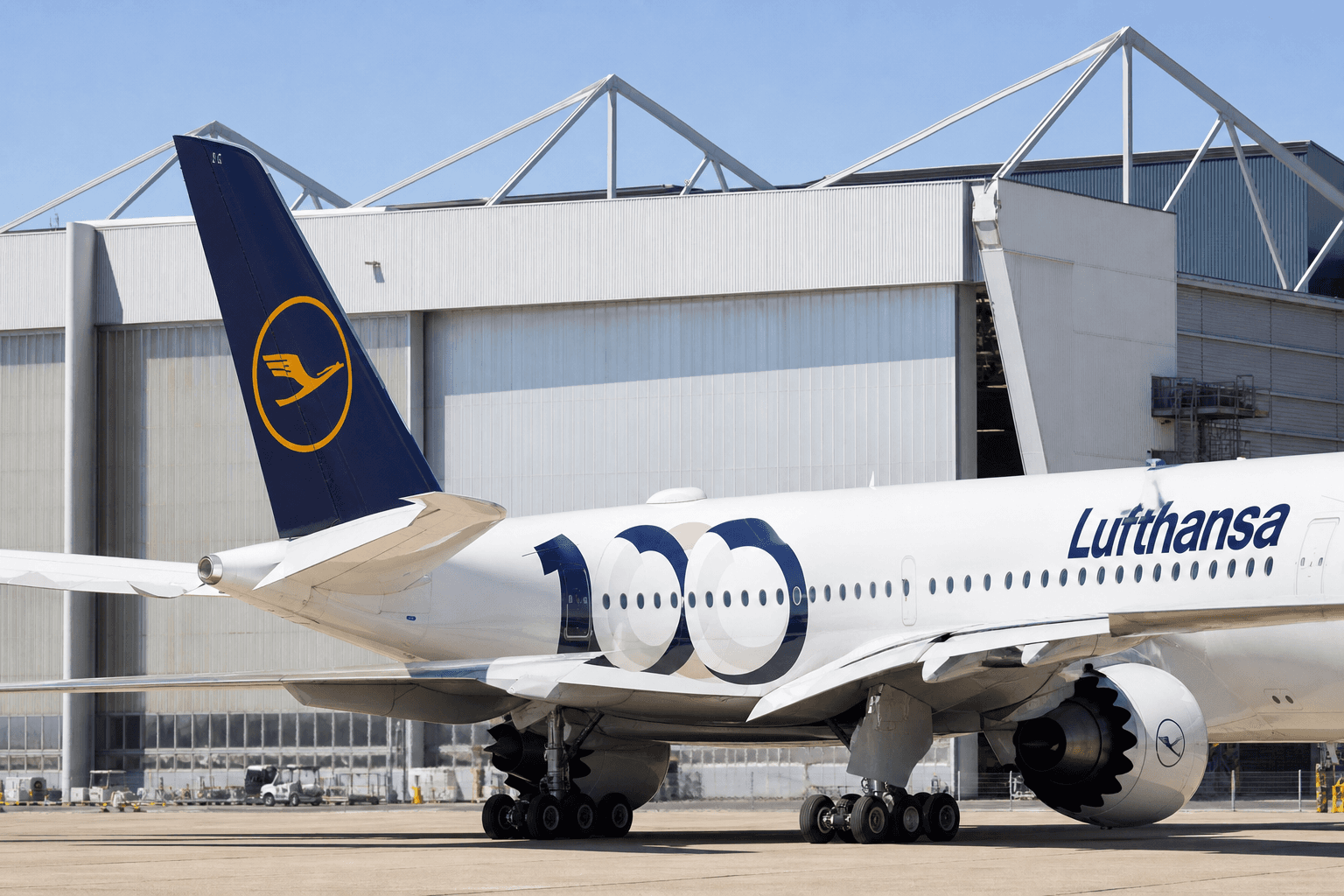
Lufthansa’s first Airbus A350-1000 has emerged from the paint shop in Toulouse wearing the airline’s striking special 100th anniversary livery, marking another milestone as it prepares to enter service later this year. The aircraft, registered D-AIFA , is the first of 15 Airbus A350-1000s on firm order for the German flag carrier and forms part of Lufthansa’s centenary celebrations, which are taking place throughout 2026. The eye-catching design features an oversized version of Lufthansa’s iconic crane logo sweeping across the rear fuselage, matching the commemorative scheme already carried by several aircraft in the airline’s anniversary fleet. These include a Boeing 787-9, Airbus A350-900, Airbus A380, Boeing 747-8 and selected narrowbody aircraft. New Flagship For Munich Following delivery from Airbus, D-AIFA will be based at Munich Airport , where it will operate alongside much of Lufthansa’s existing Airbus A350-900 fleet. Munich has become Lufthansa’s primary Airbus A350 hub in recent years, with the efficient twinjet operating many of the airline’s long-haul services from southern Germany. The arrival of the larger A350-1000 will further strengthen the airline’s premium long-haul operation from the airport. The Airbus A350-1000 is around seven metres longer than the A350-900 and offers greater passenger capacity while maintaining the type’s reputation for excellent fuel efficiency and reduced emissions. Lufthansa’s A350-1000 Fleet Lufthansa has ordered 15 Airbus A350-1000s , with options for a further 25 aircraft. The type will become the airline’s new flagship on many long-haul routes and is expected to feature Lufthansa’s latest Allegris premium cabin products throughout. The aircraft are intended to replace older four-engined Airbus A340-600s and provide increased capacity on high-demand intercontinental services while offering lower operating costs and improved environmental performance. With D-AIFA now painted in its commemorative colours, the aircraft is entering the final stages of preparation before delivery, ensuring Lufthansa’s newest flagship will also become one of its most distinctive as the airline celebrates 100 years since its founding.
Air Transat Starts First Non-Stop Service Between London Gatwick and Ottawa
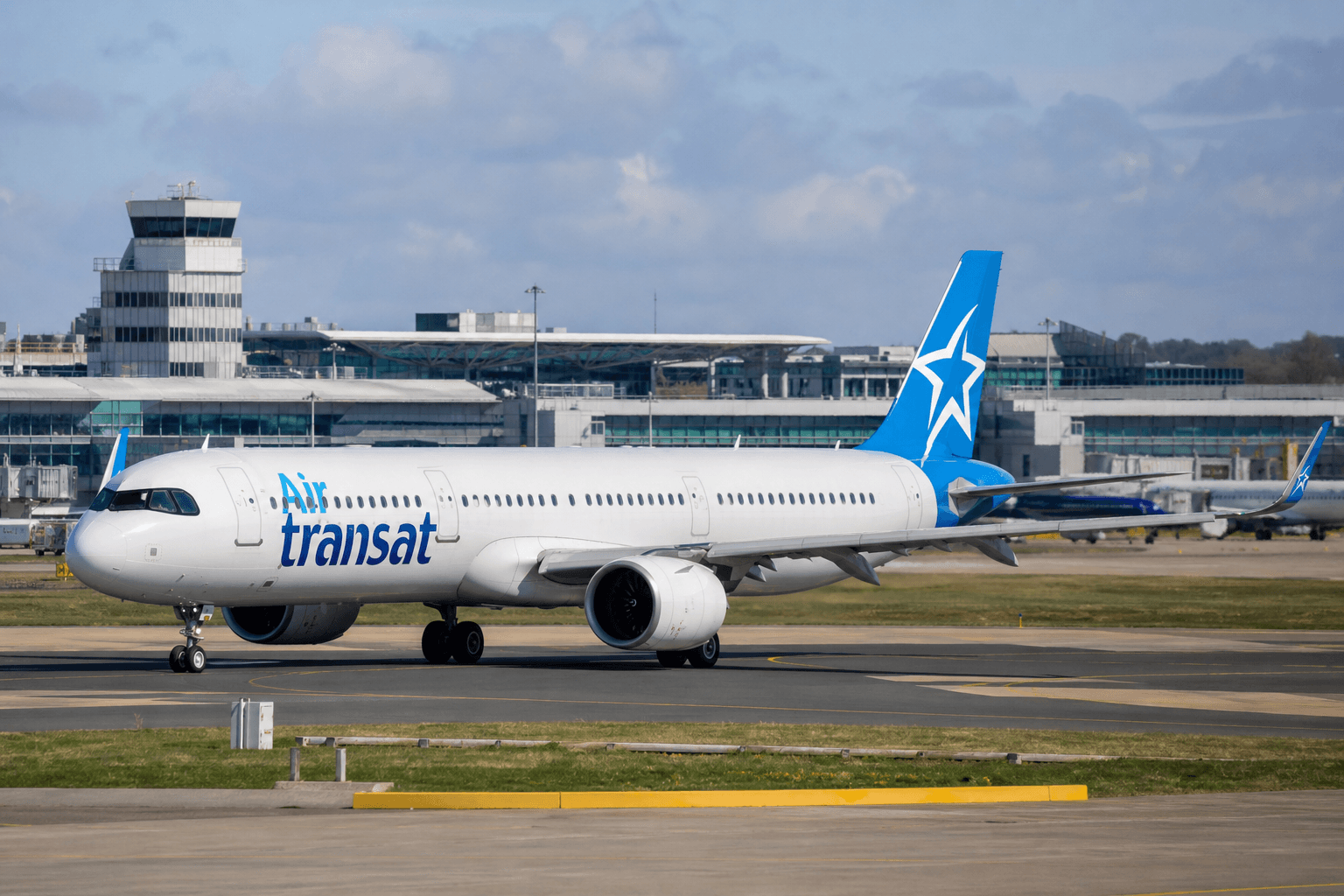
Air Transat has strengthened its transatlantic network with the launch of direct flights between London Gatwick and Ottawa, Canada’s capital. ezstandalone.cmd.push(function () { ezstandalone.showAds(119); }); The new seasonal service, operating up to three times weekly, marks the first non-stop connection from Gatwick to Ottawa International Airport and arrives at a symbolic time as the city celebrates its 200th anniversary. This latest addition expands Air Transat’s UK-to-Canada footprint significantly. In peak season, the airline now offers up to 34 weekly non-stop flights from the UK to Canadian destinations. ezstandalone.cmd.push(function () { ezstandalone.showAds(127); }); The Ottawa route complements existing year-round services to Toronto. These operate from London Gatwick, Manchester, and Glasgow, plus summer non-stops to Montréal from Gatwick. Strategic New Transatlantic Link Located at the confluence of Ontario and Québec, Ottawa provides a compelling destination for leisure and culture-focused travellers. ezstandalone.cmd.push(function () { ezstandalone.showAds(128); }); The new direct flight eliminates the need for connections in Toronto or Montréal. This reduces total travel time and improving the overall passenger experience. Flight schedules are designed to offer convenient departure and arrival times for UK travellers. The route is operated by Air Transat’s modern Airbus fleet, including the efficient A321LR. These aircraft deliver strong performance on medium-haul transatlantic sectors. The narrowbody aircraft maintains a lower fuel burn and reduced emissions compared to older generation types. ezstandalone.cmd.push(function () { ezstandalone.showAds(129); }); The A321LR, A330-200, and A330-300 aircraft form the backbone of the airline’s long-haul operations, enabling reliable year-round and seasonal services. Photo Credit: Quintin Soloviev, CC BY-SA 4.0, via Wikimedia Commons Passenger Experience and Cabin Options Air Transat continues to focus on comfort and value on its transatlantic flights. Economy Class passengers benefit from ergonomic seats, mood lighting, complimentary hot meals with wine or beer, and a generous carry-on baggage allowance. Personal touch-screen IFE systems provide extensive entertainment options to help passengers relax during the flight. ezstandalone.cmd.push(function () { ezstandalone.showAds(130); }); For those seeking a premium experience, Club Class offers significantly more space, enhanced recline, gourmet dining, complimentary premium beverages, and priority boarding and baggage handling. Both cabins reflect the airline’s consistent focus on leisure travellers who value comfort without ultra-long-haul flight times. Having been named World’s Best Leisure Airline 2025 by Skytrax for the seventh consecutive year, Air Transat brings nearly four decades of expertise in transatlantic operations. The airline has built a strong reputation for reliable service between Europe and Canada. Perfect Timing for Ottawa’s Bicentennial The new route supports travellers wanting to experience Ottawa’s year-long “Celebrate Together” bicentennial programme. Highlights include special events at Parliament Hill, activities along the UNESCO-listed Rideau Canal, and major festivals such as Ottawa Bluesfest and CityFolk. ezstandalone.cmd.push(function () { ezstandalone.showAds(131); }); The direct link makes it easier for UK visitors to access these celebrations and the city’s rich mix of history, culture, and outdoor attractions. With this launch, Air Transat continues to grow its presence in the UK-Canada market, offering more choice, greater convenience, and competitive connectivity for leisure travellers. The new Gatwick–Ottawa service is now available for booking on the airline’s website.
The Daily Touch & Go
The day's best aviation news in your inbox. Free, no spam.