

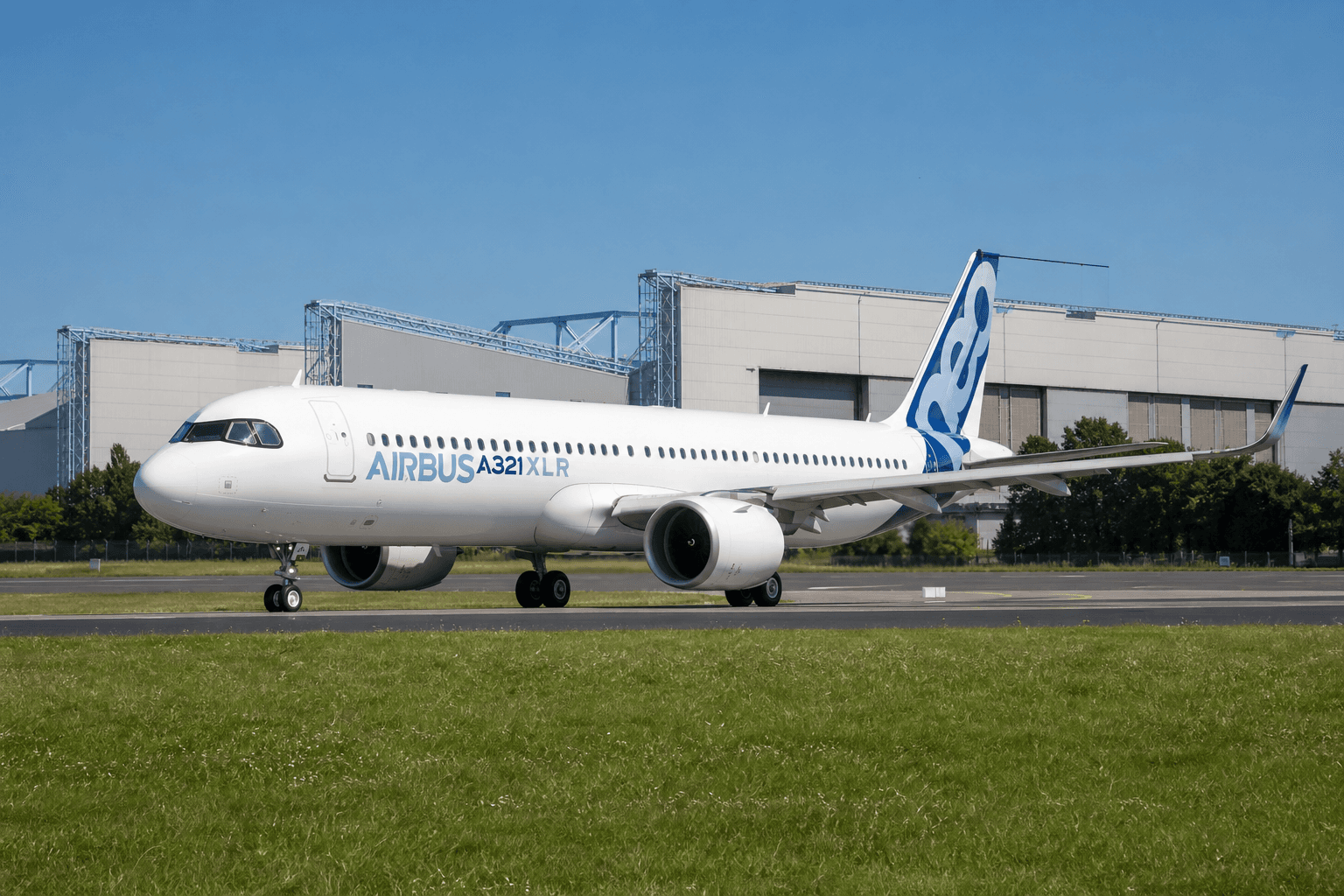
Illustration: The Touch & Go
Airbus Builds A321XLR Wings in UK and Final Assembly in Germany Across Four Nations
The Airbus A321XLR is produced with parts crafted in the UK, France, Germany, and Spain, reflecting long-standing consortium agreements dating to Airbus's founding.
The gist
The A321XLR is made across four European countries, with wings built in Wales and final assembly in Hamburg, Germany.
Continuing coverage
All Airbus →- Europe's FCAS fighter program collapses amid industrial disputes and divergent military goals
- Airbus Forecasts Doubling of Air Passengers by 2045 Led by Urban Growth and Aircraft Efficiency
- Syria Plans to Buy Eight Airbus Aircraft as Macron Visits to Support Reconstruction
- Airbus and MTU Aero Engines to launch joint venture for electric hydrogen fuel cell aviation engine
- Airbus and MTU to Launch Joint Venture for Hydrogen Fuel Cell Aviation Engines in 2027
The Airbus A321XLR, the most advanced member of the A320 family, is a culmination of a complex multinational manufacturing process spanning four countries before final assembly. Wings are manufactured in Broughton, North Wales; the forward fuselage comes from Saint-Nazaire, France; the rear fuselage and Rear Center Tank are produced in Hamburg, Germany; and the tail components originate from Getafe, Spain. Assemblies are transported via land routes, barges, and a specialized fleet of Airbus Beluga cargo aircraft to Hamburg for final assembly.
British involvement in Airbus wing production dates back over 50 years to the company's formation. When Airbus was created as a consortium in the late 1960s, wing design and manufacture were awarded to the UK due to the advanced aerodynamics developed by Hawker Siddeley for the De Havilland Trident airliner. The legacy of British engineering excellence in wing design has continued, with the Broughton factory producing wings for nearly every Airbus commercial aircraft except the A220.
Broughton remains a central hub for wing construction, employing about 6,000 people and operating production lines shared with the A320neo, A321neo, A330neo, and A350 programs. The site expanded in 2003 with the West Factory, originally built for the A380 wing assembly, and was retooled after A380 production ended to meet growing demand for the A321 wings, adding around 500 new jobs.
Final assembly is centered in Hamburg-Finkenwerder, where the A321XLR's unique Rear Center Tank is integrated into the rear fuselage's load-bearing structure. Unlike other A320 variants, the Rear Center Tank is structurally part of the aircraft, requiring specialized assembly processes handled only at the Hamburg facilities. Airbus has three dedicated hangars here, supporting all stages from structural assembly to equipment installation and final integration.
Supporting the multinational effort, Airbus sources components such as flaps from Bremen, Germany, and parts of the tail from both central Spain and northern Germany. Additional suppliers contribute key systems including landing gear from Safran, Collins, and Triumph, along with engines from Pratt & Whitney in Connecticut and the CFM International joint venture. Production spans continents, with suppliers from Malaysia and Austria contributing flap components to the supply chain.
Completed wings are transported from Broughton to Hamburg via the Airbus Beluga and BelugaXL, specialized outsize cargo aircraft designed exclusively for ferrying large aircraft parts. The original A300-600ST Beluga entered service in 1995, and its larger successor, the BelugaXL, began operating in 2020 with greater cargo volume. Airbus operates six BelugaXLs to shuttle components efficiently across manufacturing sites in Europe daily.
The production and logistics approach for the A321XLR reflect Airbus's historical work-share agreements established at its founding, ensuring each partner nation maintains a secured share of manufacturing capacity. This structure supports a robust supply chain while preserving Europe's broad aerospace industrial ecosystem. Airbus's model echoes Boeing's use of outsize cargo aircraft like the Dreamlifter, although Airbus supports a wider diverse aircraft portfolio across multiple countries.
Hamburg's role is pivotal, as it is the sole Airbus site where the A321XLR transitions from individual components into a complete aircraft. The Hangar 246 facility, opened in 2024, features advanced technologies including laser measurement systems and ergonomically designed assembly stations to optimize worker efficiency and aircraft quality. This consolidation of final assembly processes at Hamburg underscores Airbus's commitment to precision for its flagship narrowbody plane.
Airbus's multinational manufacturing highlights the intricate coordination and extensive planning essential to modern aircraft production. By leveraging decades-long partnerships and a distributed industrial footprint, the company sustains a supply chain that integrates thousands of workers and dozens of component suppliers into a unified aircraft manufacturing process, culminating in the A321XLR's advanced capabilities.
Frequently asked questions
- Why does Airbus manufacture A321XLR wings in the UK?
- Airbus builds wings in the UK at Broughton due to historical agreements dating to Airbus's founding, leveraging the UK's advanced wing design expertise from the Hawker Siddeley De Havilland Trident program.
- What makes the A321XLR's rear fuselage assembly unique at Hamburg?
- The A321XLR's Rear Center Tank is integrated structurally into the rear fuselage, making Hamburg the sole Airbus site equipped to assemble this load-bearing component within the fuselage.
- How are the large aircraft components transported between Airbus manufacturing sites?
- Airbus uses a specialized fleet of Beluga and BelugaXL cargo aircraft to transport large parts like wings from Broughton, Wales, to final assembly lines such as in Hamburg, as well as road and barge transport.
Read more
All Cargo →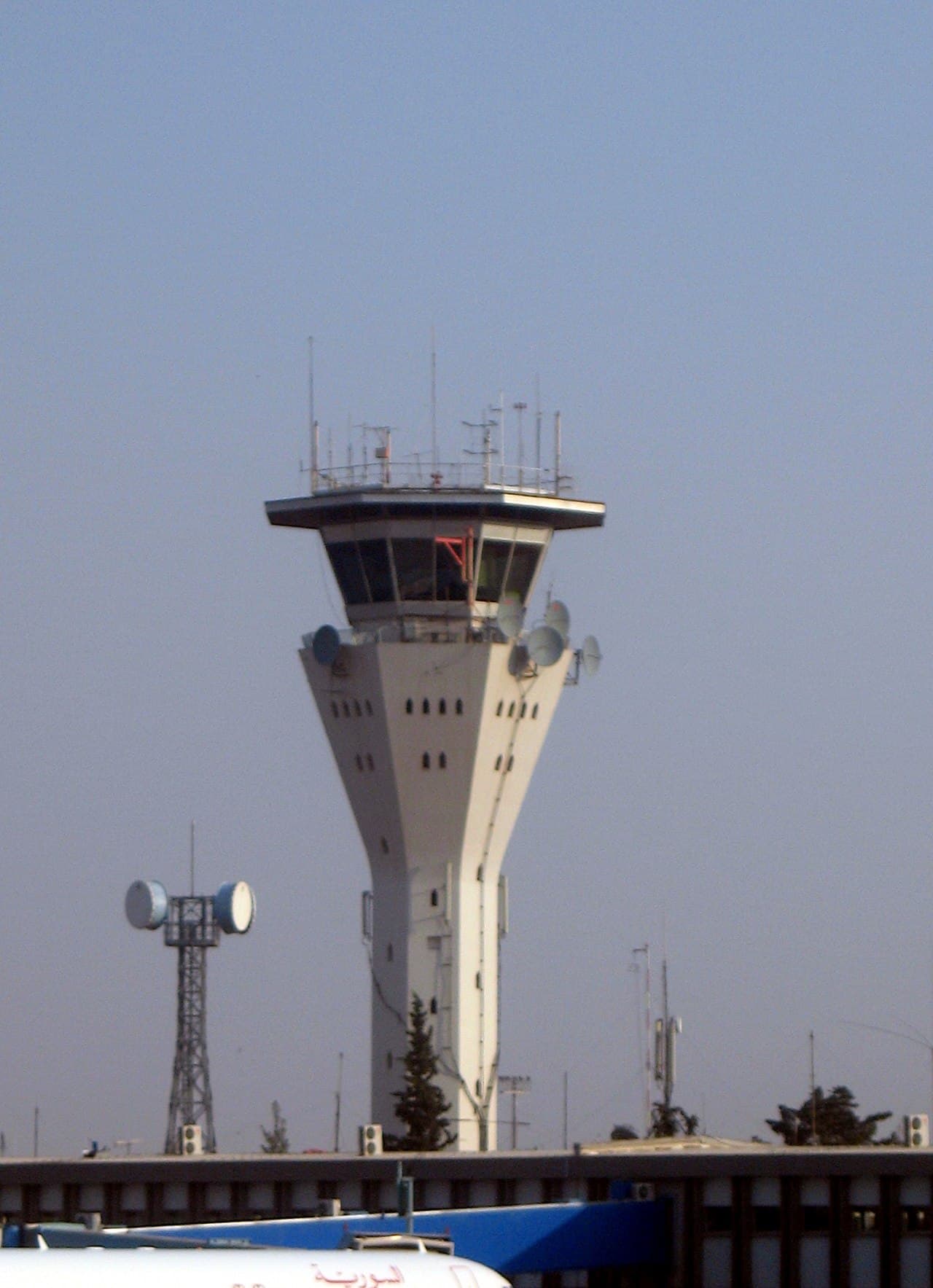
Syria Plans to Buy Eight Airbus Aircraft as Macron Visits to Support Reconstruction
During a visit by French President Emmanuel Macron, the Syrian President Ahmad al-Sharaa has said the country plans to order eight Airbus aircraft. On July 6, 2026, President al-Sharaa told French news station BFMTV about the potential order, indicating that the eight Airbus aircraft will be delivered quickly. There was no mention of the type of aircraft. President Macron is leading a delegation of investors and representatives of French companies to help rebuild Syria's infrastructure following the civil war. "We are building state institutions in Syria and establishing numerous partnerships, including in the aviation sector, as well as tourism, agriculture and industry," President al-Sharaa said. "France will contribute to infrastructure, industry, the financial sector and institutional restructuring, and there are many sectors in which it can play a role." Syrian Airlines, or SyriaAir, is owned by the Syrian government and is set to benefit from Qatari investment to expand operations. Syrian Government December 2024, saw the return of flight operations from Damascus International Airport (DAM) following the overthrowing of the country's former President Bashar al-Assad. Since then, airlines including Qatar Airways, Turkish Airlines, Emirates, Etihad and flynas have restarted operations to Syria. According to the Qatari Civil Aviation Authority, Damascus International Airport surpassed 148,000 passengers in May 2026 and 12 airlines are now operating to and from Syria. In February 2025, the European Union suspended several restrictive measures in view of the situation in Syria, allowing for Airbus contracts and flight operations to Europe. At the time the EU said it "aims to facilitate engagement with Syria, its people, and businesses, in key areas of energy and transport". RELATED Saudia orders more Boeing 777-200 freighters for its cargo division
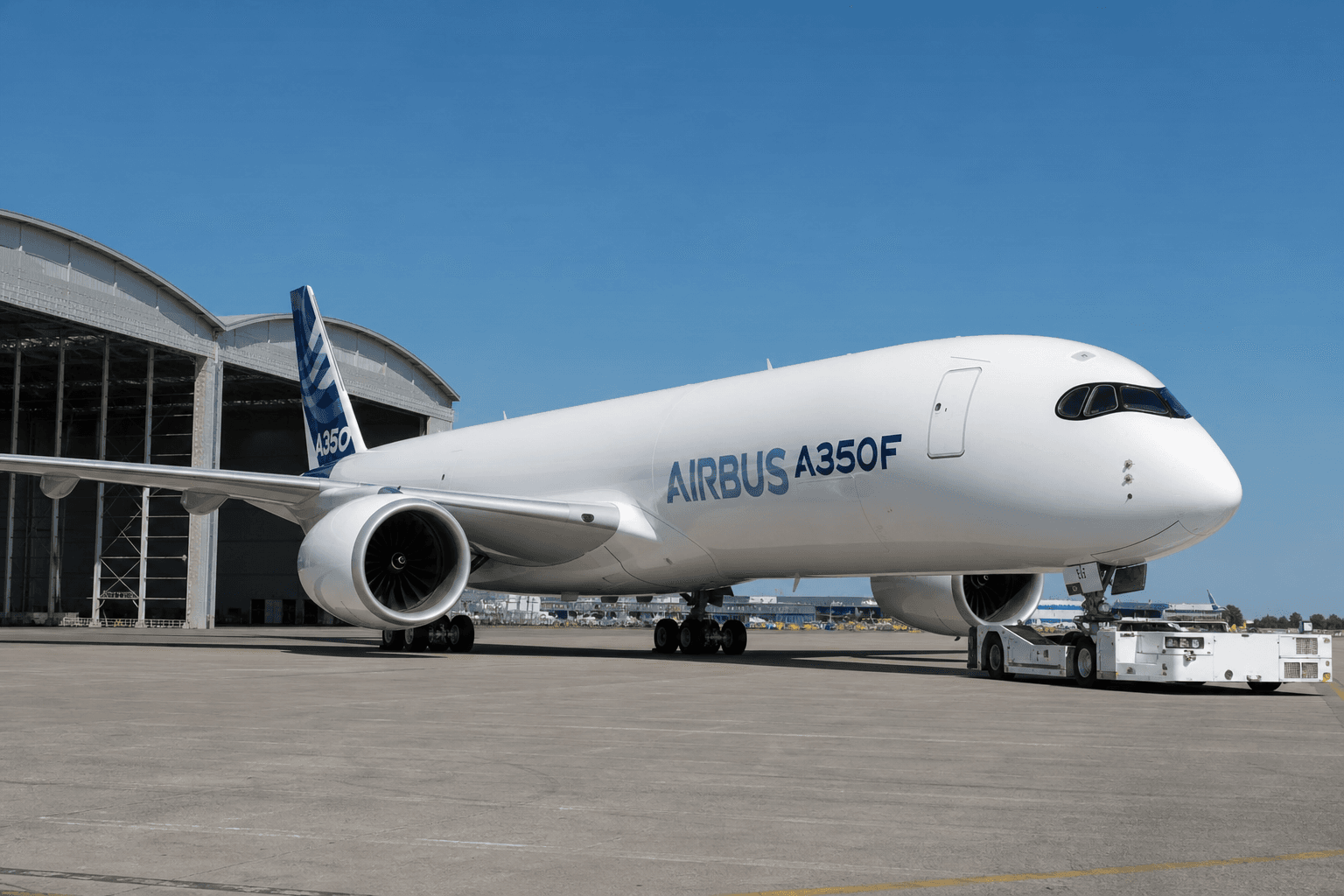
Airbus completes assembly of its first A350F freighter, begins test program
Airbus has just completed assembly of its very first A350F freighter, officially moving the program into its testing phase. The news came from the company's head of Freighter Marketing in late June.
Air Canada and IAMAW Reach Tentative Four-Year Deal Covering 11,000 Maintenance Workers
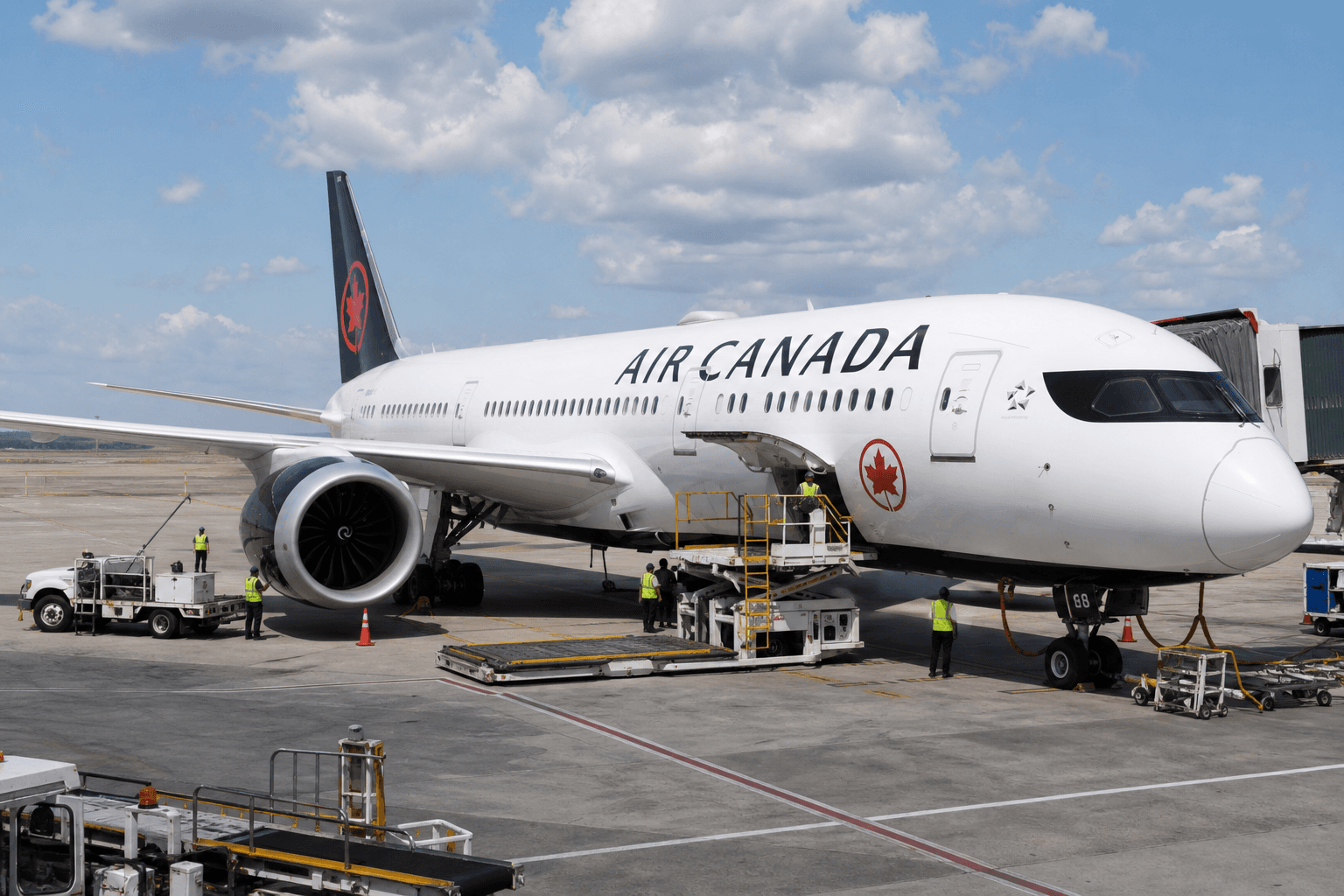
Air Canada has reached a new tentative collective agreement with the International Association of Machinists and Aerospace Workers (IAMAW), covering approximately 11,000 employees across the airline's technical and operational divisions. The agreement, announced on July 13, 2026, according to GlobeNewswire, covers the airline's Technical Operations, Maintenance and Operational Support group, which includes employees in Technical Operations, Airports, Cargo, Logistics, and Supply. What the agreement covers The four-year collective agreement would take effect retroactively from April 1, 2026, and remain in place until March 31, 2030. The tentative deal follows an earlier agreement reached in June between Air Canada and the IAMAW covering more than 11,000 employees in Maintenance, Cabin Services, Airport Airside Operations, Cargo, Finance, and Clerical roles. Terms of that agreement were kept confidential pending ratification by union membership and approval by the Air Canada Board of Directors. The latest agreement is subject to ratification by union members, which is expected to be completed in the coming days. If ratified, the agreement would mark the sixth collective agreement concluded at Air Canada this year, reflecting a period of active labor negotiations at the carrier. Air Canada said the agreement recognizes the contributions and skills of its employees. RELATED SAS CEO Anko van der Werff to leave airline for Air Canada in 2027
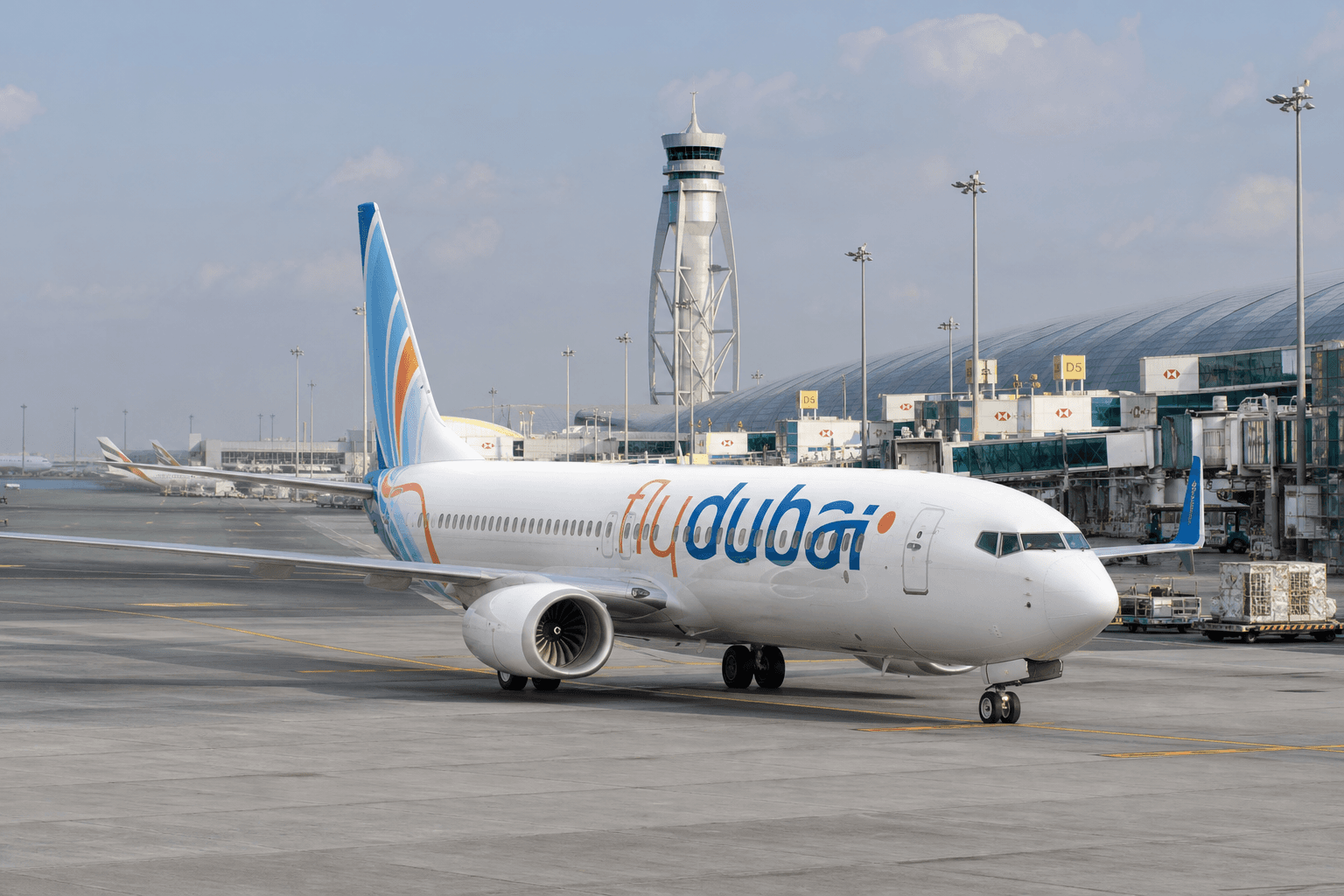
flydubai Resumes Daily Dubai-Aleppo Flights After 14-Year Pause
Dubai-based flydubai has announced the resumption of direct flights to Aleppo, marking a significant expansion of its operations in Syria. Starting 20 July 2026, the airline will operate daily non-stop services between Dubai International Airport (DXB) and Aleppo International Airport (ALP). ezstandalone.cmd.push(function () { ezstandalone.showAds(119); }); This development makes Aleppo flydubai’s second destination in Syria, following the successful launch of services to Damascus. The move comes nearly 14 years after operations to Aleppo were previously halted. It reflects flydubai’s ongoing commitment to connecting underserved markets and supporting Dubai’s role as a global aviation hub. ezstandalone.cmd.push(function () { ezstandalone.showAds(127); }); A Milestone for Connectivity Ghaith Al Ghaith, Chief Executive Officer at flydubai , expressed enthusiasm about the new route. “We are pleased to resume our operations to Aleppo after nearly 14 years of halted operations,” he said. “The introduction of our daily service to Aleppo marks an important milestone in our network expansion strategy.” Al Ghaith highlighted the airline’s core mission: creating direct air links to markets that previously lacked convenient connections. ezstandalone.cmd.push(function () { ezstandalone.showAds(128); }); The new service aims to meet strong existing demand while fostering closer economic, cultural, and familial ties between the UAE and Syria. Aleppo, one of the world’s oldest continuously inhabited cities, has long served as a vital commercial crossroads. ezstandalone.cmd.push(function () { ezstandalone.showAds(129); }); The resumption of direct flights is expected to benefit regional business travellers, the Syrian diaspora in the UAE and Gulf region, and visiting friends and relatives (VFR) traffic. Travellers will enjoy significantly shorter journey times compared to indirect routes. Photo Credit: flydubai Building on Damascus Success The Aleppo launch builds on positive momentum from flydubai’s Damascus operations. The airline became the first UAE carrier to offer daily services to the Syrian capital in June 2025. Due to robust demand, it has since increased frequency to three daily flights. Hamad Obaidalla, Chief Commercial Officer at flydubai , noted the encouraging response on the Damascus route. ezstandalone.cmd.push(function () { ezstandalone.showAds(130); }); “The resumption of our non-stop service to Aleppo builds on this momentum, providing our customers with greater choice and more convenient travel options between Dubai and Syria,” he said. The timing aligns well with peak summer travel demand. Flight Schedule Flights will depart from Terminal 3 at Dubai International Airport. The schedule includes: FZ 1191: DXB to ALP, departing 11:00, arriving 13:40 FZ 1192: ALP to DXB, departing 14:40, arriving 19:20 ezstandalone.cmd.push(function () { ezstandalone.showAds(131); }); (All times local) Photo Credit: flydubai Passengers can expect flydubai’s modern Boeing 737 fleet, featuring lie-flat seats in Business Class and comfortable Economy seating. Additional amenities include an immersive in-flight entertainment system and internationally inspired meals. The airline also offers optimised cargo capacity to support bilateral trade. Fares are competitively positioned. Return Business Class starts from AED 8,000 (DXB-ALP) and Economy Lite from AED 1,800. Return fares from Aleppo start from USD 2,000 in Business Class and USD 470 in Economy Lite. ezstandalone.cmd.push(function () { ezstandalone.showAds(132); }); The service operates as part of the flydubai-Emirates codeshare partnership, allowing seamless connections, single-ticket itineraries, and through baggage check-in across the combined network. Growing Network and Future Plans flydubai continues to expand its footprint. The airline now serves more than 140 destinations with a fleet of 97 Boeing 737 aircraft. Recent additions include Benghazi in Libya and Bangkok in Thailand, with Pokhara in Nepal scheduled for September 2026. Since starting operations in 2009, flydubai has carried over 137 million passengers and opened more than 100 new routes. The focus remains on removing barriers to travel and enhancing connectivity across diverse regions. ezstandalone.cmd.push(function () { ezstandalone.showAds(133); }); This resumption of services to Aleppo signals renewed opportunities for trade, tourism, and people-to-people connections between the UAE and Syria. As demand for travel in the region grows, flydubai’s daily service is well-positioned to play a key supporting role.
The Daily Touch & Go
The day's best aviation news in your inbox. Free, no spam.