

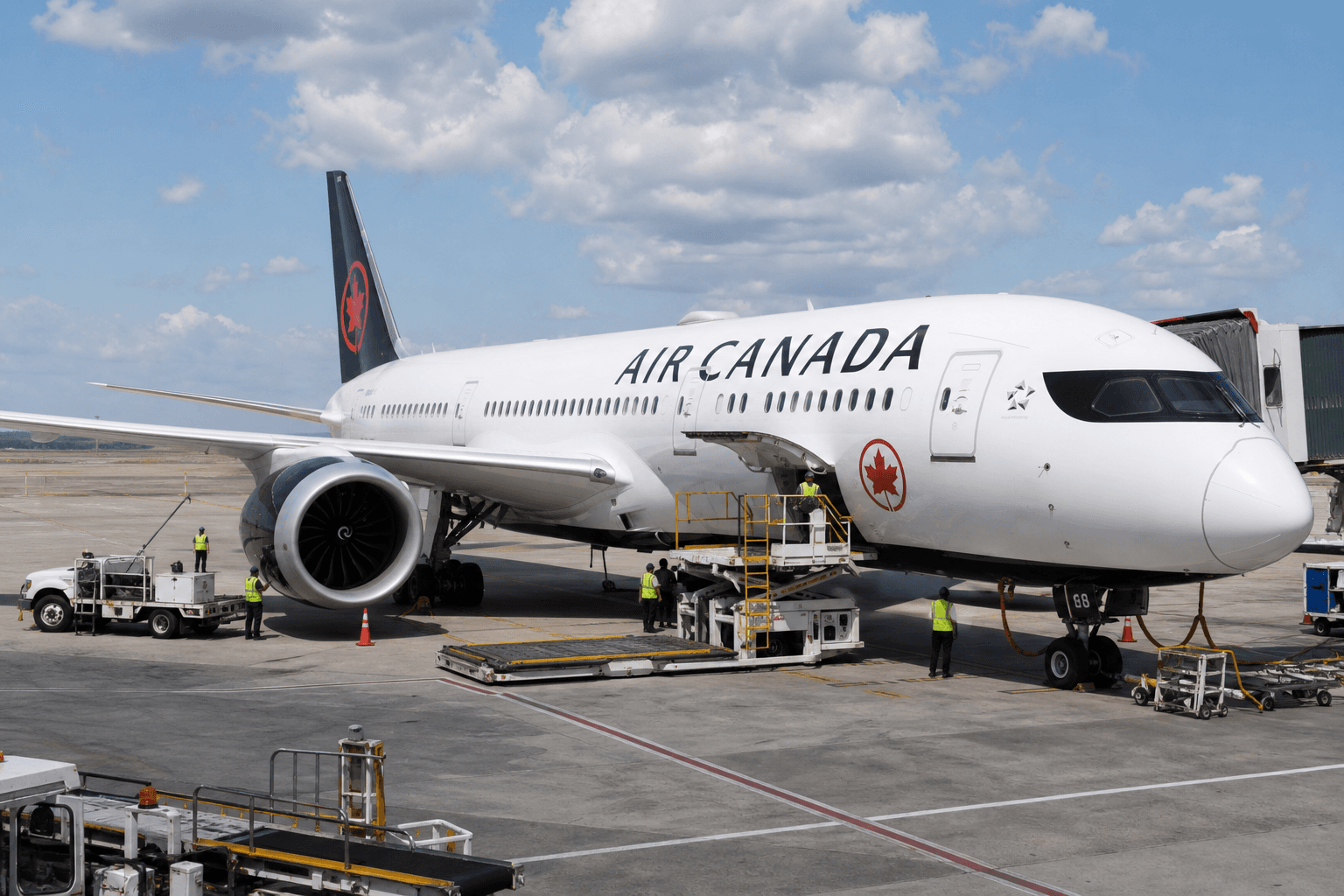
Illustration: The Touch & Go
Air Canada and IAMAW Reach Tentative Four-Year Deal Covering 11,000 Maintenance Workers
Air Canada and the International Association of Machinists and Aerospace Workers have agreed to a tentative four-year collective agreement for about 11,000 technical and operational employees, backdated to April 2026.
The gist
Air Canada and IAMAW have agreed on a tentative four-year contract covering 11,000 maintenance and operational workers starting April 2026.
Continuing coverage
All Air Canada →- Air Canada Debuts Speedy City Shuttle Linking Downtown Montréal with Montréal-Trudeau Airport
- Air Canada Deploys Airbus A220 on Multiple Nearly Seven-Hour Flights Across North America
- Air Canada Names Anko Van der Werff as New CEO Ending January 2027 Transition
- SAS CEO Anko van der Werff to lead Air Canada starting early 2027
- Air Canada Expands US Widebody Flights by 35% This Summer on Key Routes
Air Canada has secured a tentative collective agreement with the International Association of Machinists and Aerospace Workers (IAMAW) encompassing some 11,000 employees in its technical and operational sectors. This new deal, announced on July 13, 2026, applies to the airline's Technical Operations, Maintenance, and Operational Support staff, which includes workers in areas such as Airports, Cargo, Logistics, and Supply. The move follows ongoing labor discussions aimed at recognizing employee contributions and sustaining operational stability across the carrier's network.
The freshly negotiated agreement is structured as a four-year contract, effective retroactively from April 1, 2026, and will extend through March 31, 2030. This long-term arrangement seeks to provide a framework for labor relations covering the critical maintenance and technical workforce that ensures Air Canada's aircraft and airport operations run smoothly. By covering a broad spectrum of maintenance and support roles, the pact strengthens the relationship between the airline and its frontline technical personnel.
This tentative deal arrives shortly after Air Canada and IAMAW reached another agreement in June covering over 11,000 employees across diverse segments including Maintenance, Cabin Services, Airport Airside Operations, Cargo, Finance, and Clerical functions. Those agreements are pending ratification by union members and must be approved by Air Canada's Board of Directors before taking full effect. The sequence of agreements represents a coordinated labor negotiation phase at the airline.
With multiple collective agreements reached this year—this being the sixth such contract—Air Canada is undertaking a comprehensive approach to labor relations. The agreements are part of the airline's effort to stabilize employee relations across various divisions amid a period of significant operational demands and workforce challenges. The ratification process expected to conclude in the coming days will confirm union members’ approval for this latest contract.
The coalition with IAMAW reflects Air Canada's commitment to formally recognize the skills and dedication of its maintenance and operational workforce. Technical Operations staff are critical to the airline’s ability to maintain safety standards, efficient aircraft turnaround times, and the seamless functioning of airport support activities. This agreement ensures that these employees are represented and fairly treated in terms of wages, benefits, and working conditions.
Maintenance employees covered by this agreement are vital to the airline’s daily operations, executing preventive and reactive maintenance on Air Canada’s fleet to uphold airworthiness and regulatory compliance. The inclusion of logistics and supply personnel also highlights the integrated nature of the airline’s technical operations, ensuring the necessary parts and materials are available to support maintenance schedules across multiple hubs.
Air Canada’s series of agreements with IAMAW comes at a time when the airline industry continues to face labor shortages and heightened demand for air travel recovery post-pandemic. Solidifying labor agreements helps avert disruptions stemming from work stoppages or grievances, which can severely impact airline reliability and customer confidence. This labor harmony is crucial as Air Canada navigates a competitive market environment with fleet modernization and sustainability initiatives underway.
The technical and operational workforce agreement complements Air Canada's broader labor framework already in place, boosting morale among specialized employees who maintain the complex machinery of air transport. Maintaining these relationships is essential for operational excellence on the ground and in the air, directly influencing the airline’s reputation and financial performance.
As Air Canada anticipates the ratification of this tentative deal, the commitment to recognizing and valuing the technical employees' efforts speaks to broader trends in airline labor relations, where skilled maintenance personnel are increasingly vital. The finalized agreement will provide a structured, stable environment for these employees through 2030, supporting Air Canada’s long-term operational goals and workforce stability.
Frequently asked questions
- Which employees are covered under the new Air Canada-IAMAW tentative agreement?
- The agreement covers approximately 11,000 employees in Air Canada's Technical Operations, Maintenance, and Operational Support groups, including teams in Airports, Cargo, Logistics, and Supply.
- What is the duration and effective date of the new collective agreement?
- The tentative deal is a four-year contract retroactive to April 1, 2026, and effective until March 31, 2030, pending ratification by union members.
Read more
All Cargo →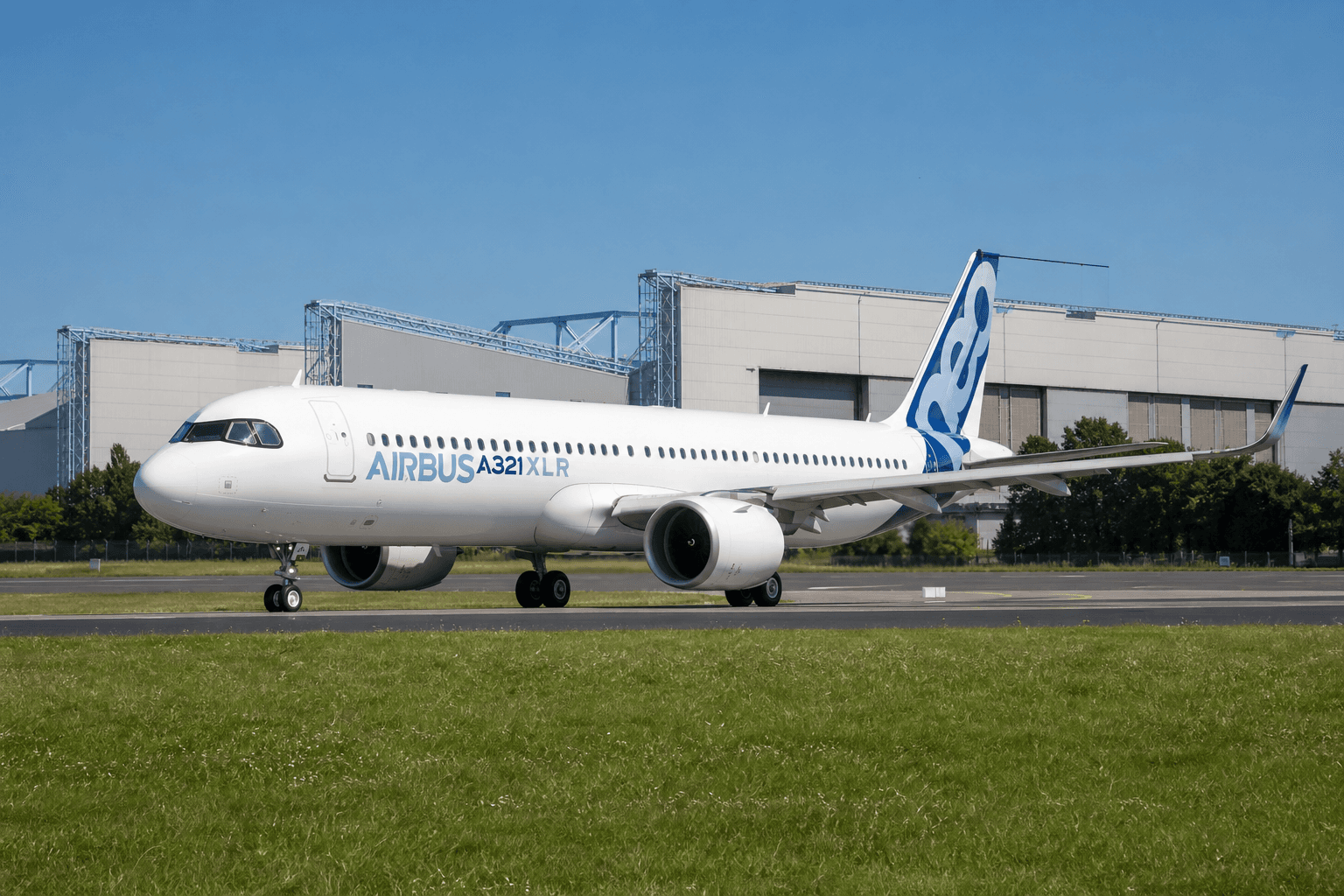
Airbus Builds A321XLR Wings in UK and Final Assembly in Germany Across Four Nations
The Airbus A321XLR is built across four countries before it flies. Its wings are manufactured in North Wales, its forward fuselage in western France, its rear fuselage and Rear Center Tank in northern Germany, and its tail in central Spain. The components travel between facilities by road, barge, and a fleet of purpose-built Beluga cargo aircraft before arriving in Hamburg for final assembly.
flydubai Resumes Daily Dubai-Aleppo Flights After 14-Year Pause
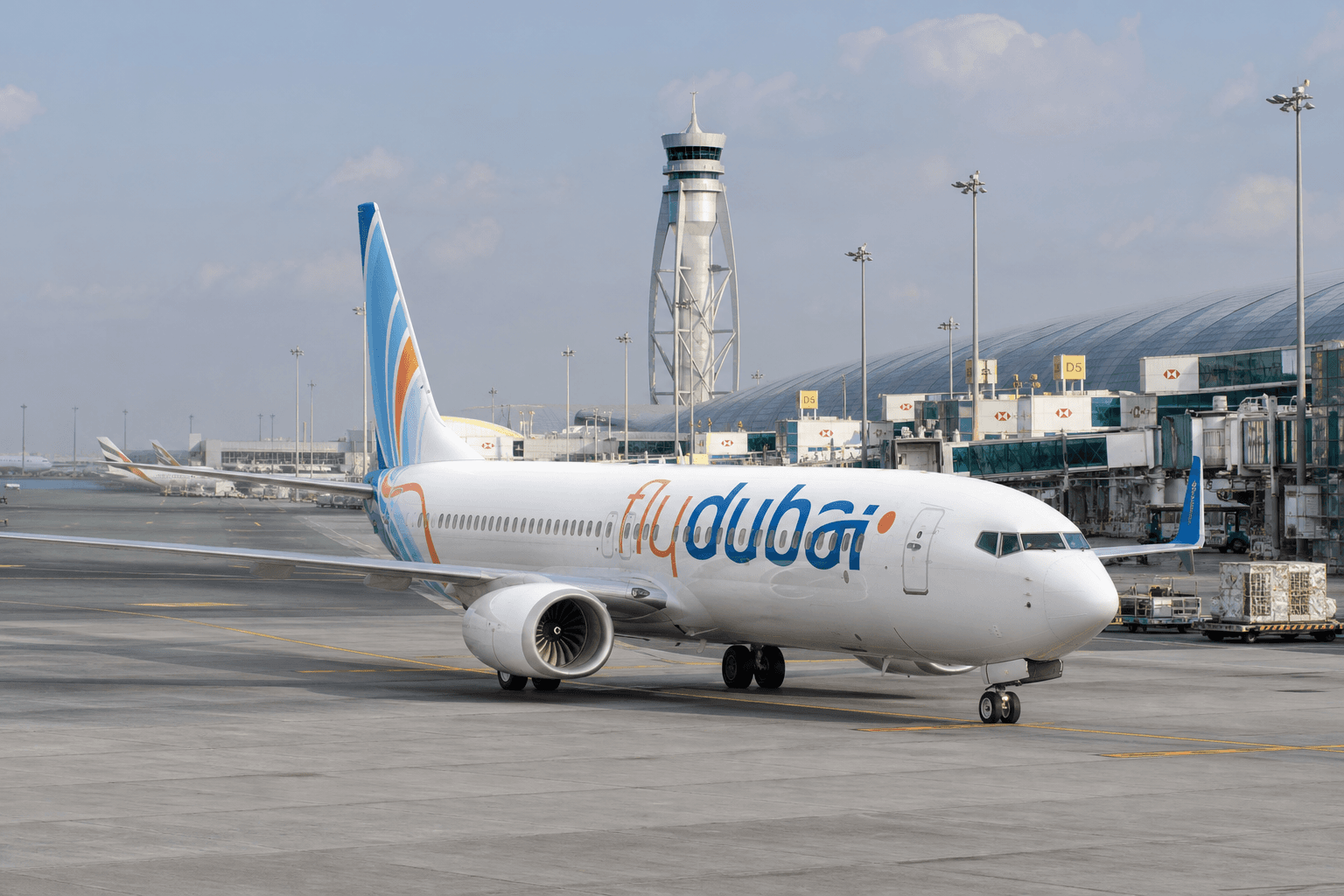
Dubai-based flydubai has announced the resumption of direct flights to Aleppo, marking a significant expansion of its operations in Syria. Starting 20 July 2026, the airline will operate daily non-stop services between Dubai International Airport (DXB) and Aleppo International Airport (ALP). ezstandalone.cmd.push(function () { ezstandalone.showAds(119); }); This development makes Aleppo flydubai’s second destination in Syria, following the successful launch of services to Damascus. The move comes nearly 14 years after operations to Aleppo were previously halted. It reflects flydubai’s ongoing commitment to connecting underserved markets and supporting Dubai’s role as a global aviation hub. ezstandalone.cmd.push(function () { ezstandalone.showAds(127); }); A Milestone for Connectivity Ghaith Al Ghaith, Chief Executive Officer at flydubai , expressed enthusiasm about the new route. “We are pleased to resume our operations to Aleppo after nearly 14 years of halted operations,” he said. “The introduction of our daily service to Aleppo marks an important milestone in our network expansion strategy.” Al Ghaith highlighted the airline’s core mission: creating direct air links to markets that previously lacked convenient connections. ezstandalone.cmd.push(function () { ezstandalone.showAds(128); }); The new service aims to meet strong existing demand while fostering closer economic, cultural, and familial ties between the UAE and Syria. Aleppo, one of the world’s oldest continuously inhabited cities, has long served as a vital commercial crossroads. ezstandalone.cmd.push(function () { ezstandalone.showAds(129); }); The resumption of direct flights is expected to benefit regional business travellers, the Syrian diaspora in the UAE and Gulf region, and visiting friends and relatives (VFR) traffic. Travellers will enjoy significantly shorter journey times compared to indirect routes. Photo Credit: flydubai Building on Damascus Success The Aleppo launch builds on positive momentum from flydubai’s Damascus operations. The airline became the first UAE carrier to offer daily services to the Syrian capital in June 2025. Due to robust demand, it has since increased frequency to three daily flights. Hamad Obaidalla, Chief Commercial Officer at flydubai , noted the encouraging response on the Damascus route. ezstandalone.cmd.push(function () { ezstandalone.showAds(130); }); “The resumption of our non-stop service to Aleppo builds on this momentum, providing our customers with greater choice and more convenient travel options between Dubai and Syria,” he said. The timing aligns well with peak summer travel demand. Flight Schedule Flights will depart from Terminal 3 at Dubai International Airport. The schedule includes: FZ 1191: DXB to ALP, departing 11:00, arriving 13:40 FZ 1192: ALP to DXB, departing 14:40, arriving 19:20 ezstandalone.cmd.push(function () { ezstandalone.showAds(131); }); (All times local) Photo Credit: flydubai Passengers can expect flydubai’s modern Boeing 737 fleet, featuring lie-flat seats in Business Class and comfortable Economy seating. Additional amenities include an immersive in-flight entertainment system and internationally inspired meals. The airline also offers optimised cargo capacity to support bilateral trade. Fares are competitively positioned. Return Business Class starts from AED 8,000 (DXB-ALP) and Economy Lite from AED 1,800. Return fares from Aleppo start from USD 2,000 in Business Class and USD 470 in Economy Lite. ezstandalone.cmd.push(function () { ezstandalone.showAds(132); }); The service operates as part of the flydubai-Emirates codeshare partnership, allowing seamless connections, single-ticket itineraries, and through baggage check-in across the combined network. Growing Network and Future Plans flydubai continues to expand its footprint. The airline now serves more than 140 destinations with a fleet of 97 Boeing 737 aircraft. Recent additions include Benghazi in Libya and Bangkok in Thailand, with Pokhara in Nepal scheduled for September 2026. Since starting operations in 2009, flydubai has carried over 137 million passengers and opened more than 100 new routes. The focus remains on removing barriers to travel and enhancing connectivity across diverse regions. ezstandalone.cmd.push(function () { ezstandalone.showAds(133); }); This resumption of services to Aleppo signals renewed opportunities for trade, tourism, and people-to-people connections between the UAE and Syria. As demand for travel in the region grows, flydubai’s daily service is well-positioned to play a key supporting role.
Airbus Forecasts Doubling of Air Passengers by 2045 Led by Urban Growth and Aircraft Efficiency
Urbanisation, rising GDP, and more efficient aircraft are set to drive robust long-term demand for air travel, according to Airbus’ latest Global Market Forecast (GMF) for 2026-2045. As populations shift and economies grow, air travel is evolving. ezstandalone.cmd.push(function () { ezstandalone.showAds(119); }); Urbanisation is no longer limited to megacities. Instead, smaller urban centres are expanding rapidly—nearly three times faster than larger ones. This shift, combined with a growing middle class and increasing diaspora communities, is creating new opportunities for direct flights between smaller city pairs. Efficient aircraft are making these routes economically viable. Modern planes can now connect cities that were previously too costly or distant to serve profitably. ezstandalone.cmd.push(function () { ezstandalone.showAds(127); }); Examples include routes like Riga to Tenerife or Melbourne to Alice Springs, which the A220 already handles effectively. Newer models with greater range are opening even more possibilities, such as Lisbon-Recife on the A321neo, Dublin-Nashville with the A321XLR, Algiers-Kuala Lumpur via the A330neo, and Taipei-Phoenix on the A350. ezstandalone.cmd.push(function () { ezstandalone.showAds(128); }); Photo Credit: Airbus Airbus Product Line Matches Market Needs Airbus’ strong order book of around 9,000 aircraft reflects this market demand. The company is ramping up production across its range, from the A220 to the A350, with the A320 Family reaching a rate of 75 aircraft per month. Notably, more than 70% of the A320 backlog consists of the larger A321neo and A321XLR variants—ideal for new, thinner routes. Wider-body aircraft like the A330neo serve high-capacity routes, while the A350 handles ultra-long-haul flights and is proving popular in the cargo segment with its freighter version. ezstandalone.cmd.push(function () { ezstandalone.showAds(129); }); Aviation plays a vital role beyond passengers. It transports high-value goods quickly to market and connects people for business, leisure, family visits, and more. For many communities, it serves as an essential economic lifeline. Resilient Passenger Growth Forecast Global air traffic continues to show strong resilience. The number of people in the middle class—the group most likely to fly—is expected to rise by 1.4 billion (+34%) by 2045. Airbus forecasts annual passenger traffic growth of 3.9% over the next 20 years, driven by global GDP growth of 2.6%, an additional 1.3 billion urban dwellers, and expanding middle classes. As a result, annual passenger numbers are projected to more than double, reaching around 10 billion by 2045. ezstandalone.cmd.push(function () { ezstandalone.showAds(130); }); Short-term challenges such as regional conflicts or high fuel prices have not weakened long-term demand, consistent with historical patterns. Growth is particularly strong in the Asia-Pacific region, with dynamic economies in India, Vietnam, Indonesia, and Malaysia leading the way. International migration and visiting friends and relatives (VFR) travel are also boosting international routes. Photo Credit: IATA Strong Demand for New, Efficient Aircraft To meet this growth and replace older planes, the world will need 42,060 new aircraft over the next 20 years. This includes 19,820 replacements and 22,240 for expansion. Single-aisle aircraft will account for 81% of deliveries, with widebodies making up the remaining 19%. These new-generation planes offer better cost efficiency and lower CO₂ emissions. ezstandalone.cmd.push(function () { ezstandalone.showAds(131); }); Fleet renewal is accelerating after COVID-19, as older aircraft are retired faster. By 2045, Airbus expects nearly 100% of the global fleet to consist of new-generation aircraft. This is up from about 39% in 2026. This transition supports profitable operations on both low-density routes and long-haul sectors while improving overall environmental performance. In summary, Airbus’ forecast highlights a decentralised, more connected future for aviation. Thanks to urbanisation trends, economic growth, and increasingly capable aircraft, air travel is poised to connect more people and places than ever before—driving economic benefits worldwide. ezstandalone.cmd.push(function () { ezstandalone.showAds(132); });
SpiceJet Struggles to Rebuild Amid Fleet Groundings and Financial Strains
Once India’s second-largest airline, SpiceJet was one of the country’s great low-cost success stories. At its peak, it operated more than 100 aircraft, carried millions of passengers each year and placed one of the world’s largest orders for the Boeing 737 MAX. Today, however, the airline is fighting to rebuild after years of financial challenges, grounded aircraft and shrinking market share. Although recent developments suggest signs of recovery, SpiceJet remains a long way from regaining its former position. So, what exactly has happened to one of India’s best-known airlines? A Rapid Rise Md Shaifuzzaman Ayon, CC BY-SA 4.0 <https://creativecommons.org/licenses/by-sa/4.0>, via Wikimedia Commons SpiceJet was launched in 2005 as a low-cost carrier focused on affordable domestic travel across India. Operating an all-Boeing 737 fleet, it quickly expanded into one of the country’s largest airlines, competing with carriers such as IndiGo, Air India and GoAir. Later, it diversified with the addition of De Havilland Canada Dash 8-400 turboprops, allowing it to serve smaller regional airports under India’s regional connectivity initiatives. By the late 2010s, the airline had become India’s second-largest carrier by market share and had ambitious expansion plans. It placed orders for more than 150 Boeing 737 MAX aircraft, expecting the new-generation jet to become the backbone of its future fleet. The Problems Begin Unfortunately for SpiceJet, several major crises arrived in quick succession. The worldwide grounding of the Boeing 737 MAX in 2019 removed an important part of its fleet and disrupted growth plans. Soon afterwards, the COVID-19 pandemic devastated air travel demand, placing enormous financial pressure on airlines around the world. While many carriers recovered relatively quickly, SpiceJet emerged with significant financial liabilities, disputes with lessors and suppliers, and increasing difficulty maintaining its fleet. As aircraft were repossessed or grounded awaiting maintenance and spare parts, the airline’s operational fleet steadily declined. At the same time, competitors—particularly IndiGo and the expanding Air India Group—continued investing heavily in new aircraft and network growth. A Shrinking Fleet SpiceXpress cargo 737. Photo: Kwok Ho Eddie Wong One of the clearest signs of SpiceJet’s difficulties has been its changing fleet. The airline still has substantial outstanding orders for the Boeing 737 MAX, but relatively few aircraft are currently flying compared with its ambitions. Its operational fleet today consists primarily of: Boeing 737-700 Boeing 737-800 Boeing 737-900ER Boeing 737 MAX 8 De Havilland Canada Dash 8-400 turboprops Alongside these, SpiceJet’s cargo division, SpiceXpress, continues to operate Boeing 737 freighters. However, dozens of aircraft have spent extended periods grounded while the airline worked through maintenance backlogs, engine availability and financial obligations. Why Are Airbus A320s Appearing? One of the more surprising recent developments has been the arrival of Airbus aircraft. Historically, SpiceJet has been an almost entirely Boeing operator, but in June 2026 the airline confirmed it would lease three Airbus A320s under damp-lease agreements to help restore capacity during the busy travel season. These aircraft supplement its Boeing fleet rather than signalling a long-term change in strategy. The move highlights how urgently the airline needs additional aircraft while more of its own Boeing fleet returns to service. Financial Challenges Continue Venkat Mangudi, CC0, via Wikimedia Commons SpiceJet’s biggest obstacle remains its finances. The airline has spent several years dealing with legal disputes, aircraft lessor claims and cash-flow pressures. More recently, reports emerged that some pilots had experienced delays in salary payments as the airline sought additional government-backed funding to stabilise operations. At the same time, external pressures have made recovery more difficult. Higher fuel prices, currency fluctuations and airspace restrictions affecting some international routes have all increased operating costs at a time when the airline has been attempting to rebuild capacity. Signs of Recovery Despite the challenges, there are reasons for cautious optimism. Over the past year, SpiceJet has gradually reactivated several grounded Boeing 737 MAX aircraft while also adding leased Boeing 737s to strengthen its schedule. The airline has completed financial restructuring measures, settled some outstanding liabilities and reported improving quarterly revenues as passenger demand has recovered. Management has repeatedly stated that restoring grounded aircraft remains its highest priority, with the aim of rebuilding frequencies and expanding both domestic and international services over time. Can SpiceJet Become a Major Player Again? The Indian aviation market is one of the fastest-growing in the world, but it is also among the most competitive. IndiGo now dominates domestic flying, while the Air India Group is investing heavily following its privatisation. Akasa Air continues to expand rapidly, creating further pressure on smaller rivals. For SpiceJet, survival may depend less on returning to its former size and more on establishing a sustainable business with a reliable fleet and stronger finances. The airline still has a recognised brand, loyal customer base and a substantial Boeing 737 MAX order book that could underpin future growth if deliveries resume and funding allows. Whether it can reclaim its place among India’s leading airlines remains uncertain. But after several difficult years, the first signs of recovery are beginning to emerge, suggesting that SpiceJet’s story may not yet be over.
The Daily Touch & Go
The day's best aviation news in your inbox. Free, no spam.