


Wake Island Recommissioned as Strategic US Navy Outpost Amid Indo-Pacific Tensions
Wake Island, last active during the 1941 Pearl Harbor attack, has been refurbished to support US distributed military operations amid growing regional missile threats.
The gist
Wake Island returns as a vital forward base boosting US Navy's operational resilience in the Indo-Pacific missile environment.
Continuing coverage
All Us Navy →Wake Island, a remote atoll situated roughly midway between Hawaii and Guam, has been reactivated as a strategic support hub for the United States Navy. This island, historically significant for transmitting its final messages during the Pearl Harbor attack in 1941, has now been repurposed to bolster US military posture against modern regional threats in the Indo-Pacific theater. The move reflects the evolving strategic necessity for distributed and resilient basing to counter growing missile capabilities of potential adversaries, particularly China.
The Indo-Pacific region has long been critical for US defense strategy, hosting a substantial military presence across Japan, South Korea, and Guam. Presently, about 80,000 US service members are active in this theater, centered mainly in Japan and Korea, with an extensive network exceeding 200 installations. This infrastructure has roots in Cold War deterrence policies but faces increasing risk due to advancements in Chinese missile technology targeting these fixed locations.
China's missile arsenal includes approximately 600 short-range ballistic missiles (SRBMs) like the DF-15 and DF-16, some 1,300 medium-range ballistic missiles (MRBMs) including DF-21 variants, and hundreds of intermediate-range ballistic missiles (IRBMs) such as the DF-26, capable of striking pivotal US bases like Guam. Beyond these, China fields over 300 ground-launched cruise missiles with ranges extending beyond 1,500 kilometers, and hypersonic glide vehicles integrated in their MRBM inventory add complexity to US defense calculations.
The vulnerability of large, static US bases in the region has prompted a shift toward distributed operations, a strategy involving dispersal of forces across smaller, more mobile installations that are harder to detect and target. Entities such as the Marine Corps' Expeditionary Advanced Base Operations (EABO) units and the Army’s Multi-Domain Task Forces (MDTFs) exemplify this approach, emphasizing mobility, flexibility, and redundancy in the face of missile assaults.
Wake Island fits directly into this distributed basing concept. It sits outside the effective range of the majority of China’s missile arsenal, making it an ideal staging area for logistics and refueling that support forward operations nearer contested areas like the South China Sea or Taiwan Strait. The island’s modest scale compared to main bases is compensated by its strategic geographic location, enabling it to serve as a resilient node in the US military's operational network.
The US Navy and other services have invested in upgrading Wake Island to meet the demands of modern brinkmanship and power projection. These enhancements include refurbishing airstrips, improving fuel storage, and establishing secure communication systems to support Agile Combat Employment (ACE) initiatives. ACE deployments plan to operate small detachments of around 50 to 100 personnel managing limited aircraft and support elements to maintain persistent and nimble airpower presence.
This strategy acknowledges that fixed, large bases are increasingly liabilities in potential high-intensity conflicts due to their visibility and vulnerability to conventional and asymmetric attacks, including drone swarms and hypersonic weaponry. Distributed basing, with Wake Island as a forward operating location, complicates enemy targeting and reinforces American deterrence by increasing operational unpredictability and survivability.
Such adaptations illustrate the US military’s recognition of changing threat dynamics in the Pacific, leveraging historical sites like Wake Island for contemporary strategic advantage. The island’s reactivation marks not merely a symbolic nod to its World War II past but a tangible step in reshaping force posture to meet modern challenges posed by regional missile arsenals and great power competition.
Ultimately, Wake Island’s renewed role underscores how logistical and operational flexibility is becoming pivotal to sustaining US military influence in the Indo-Pacific. Its presence enables a distributed web of support that enhances the US’s ability to project power, respond swiftly, and maintain credible deterrence against evolving threats in the heart of a contested strategic environment.
Read more
All Military/Defense →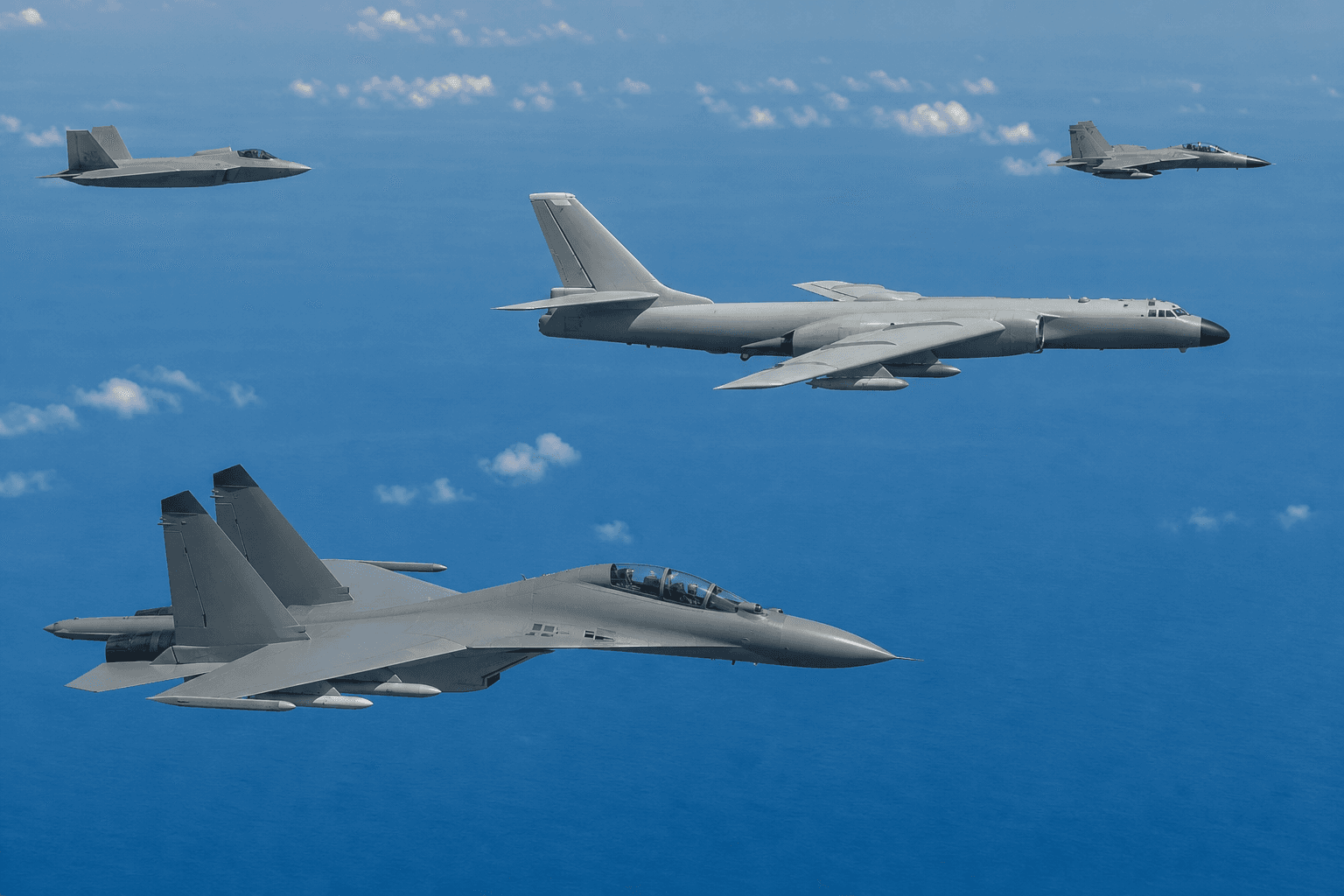
China and Russia Conduct Joint Bomber Patrol Over East China Sea Amid U.S. Exercises
The sortie included J-16 fighters escorting H-6K and Tu-95 strategic bombers. Russia and China have conducted a large joint air patrol over the East China Sea, including fighters, strategic bombers, aerial tankers and other support aircraft. The action on 27 June has been confirmed by both Beijing and Moscow, with China’s People’s Liberation Army (PLA)…
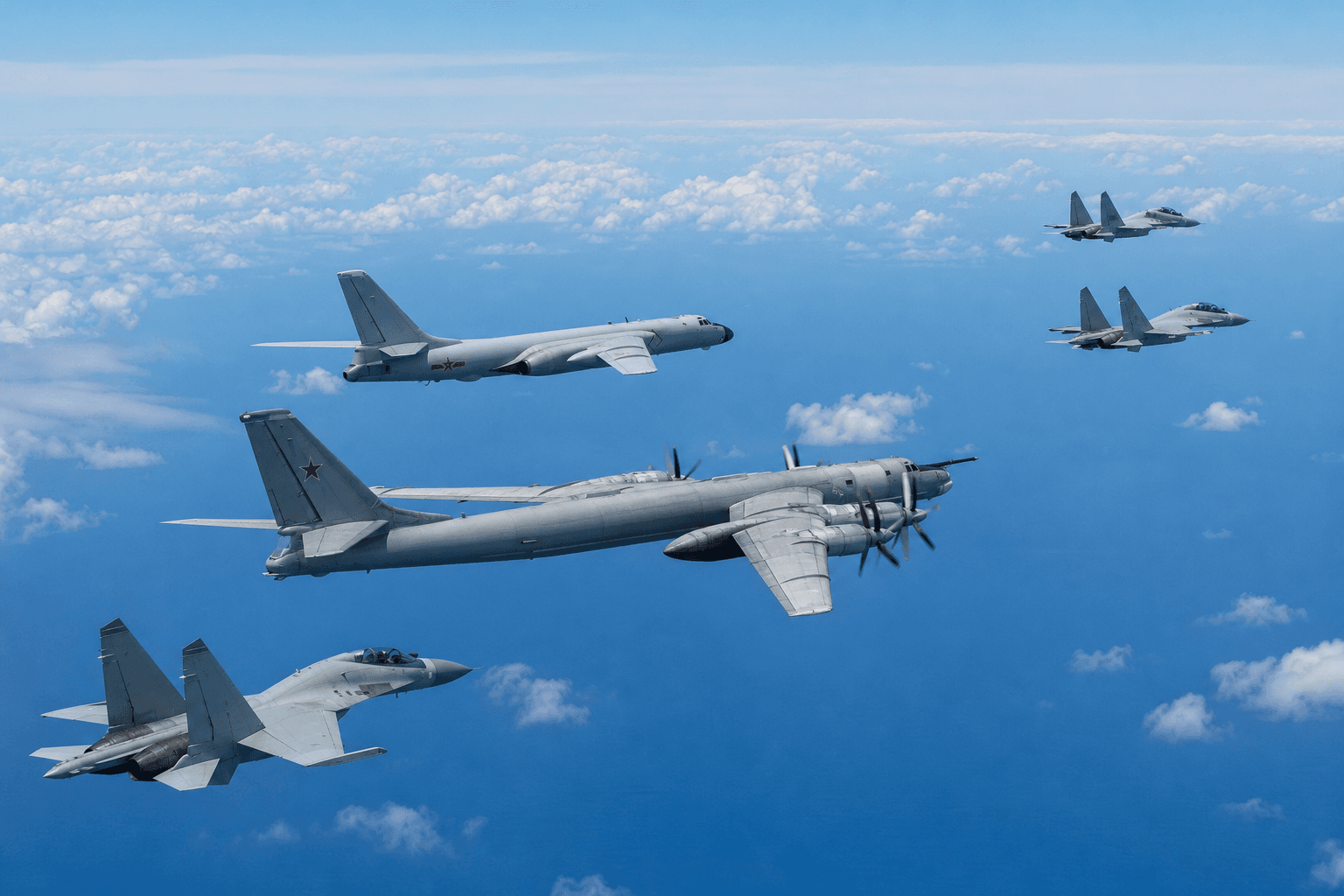
China and Russia conduct large joint bomber patrol provoking US, Japanese, and South Korean intercepts
China and Russia conducted their 11th joint strategic air patrol on June 27, 2026, sending a formation of…
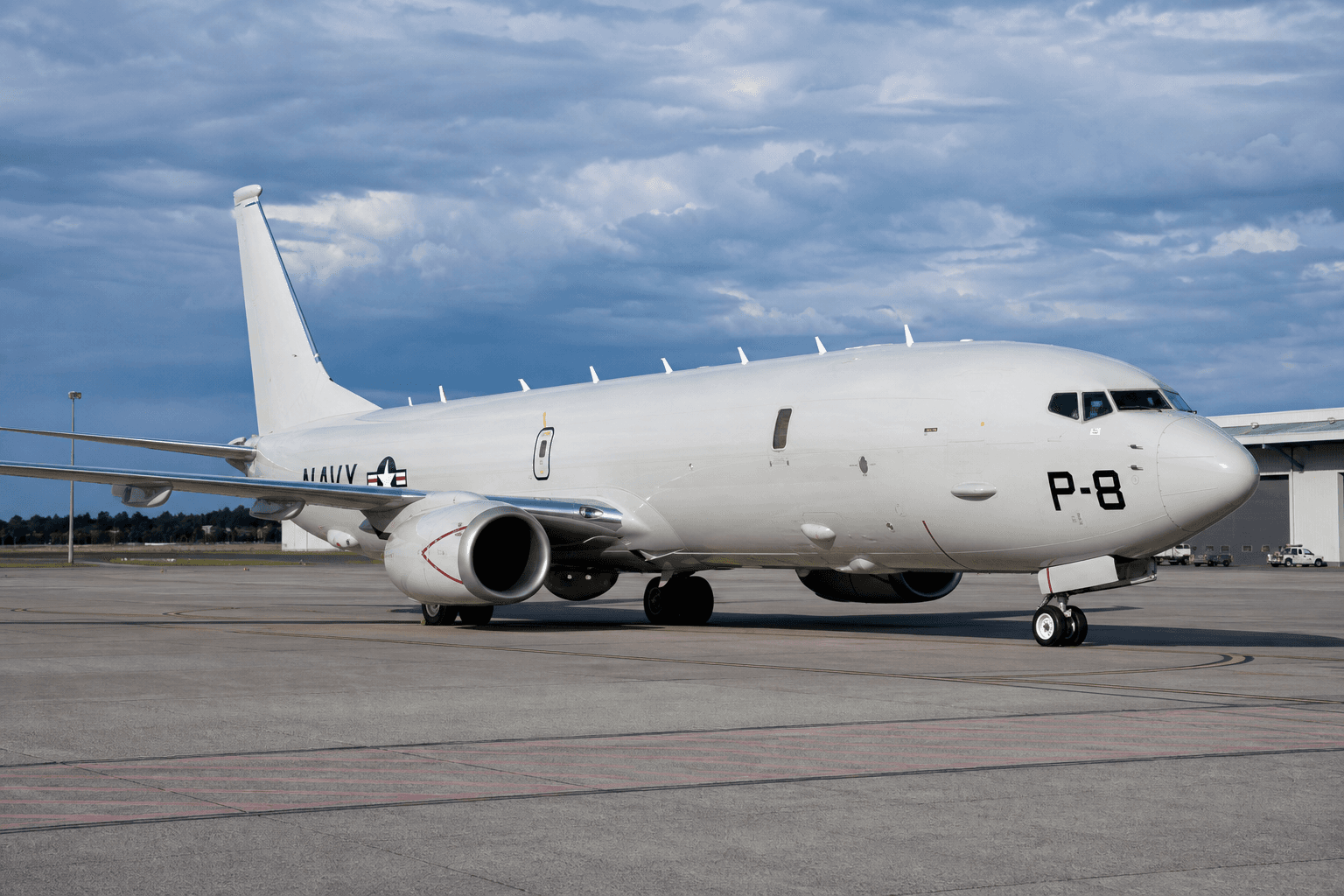
Denmark Orders Two Boeing P-8 Poseidon Aircraft Alongside NATO MQ-4C Triton Drones
Two major announcements from the North Atlantic Treaty Organization came on Tuesday, July 7. First, four member nations of NATO have decided to procure up to five Northrop Grumman MQ-4C Triton advanced surveillance drones. Second, Denmark will complement its new drone with the purchase of two Boeing P-8A Poseidon maritime patrol aircraft.
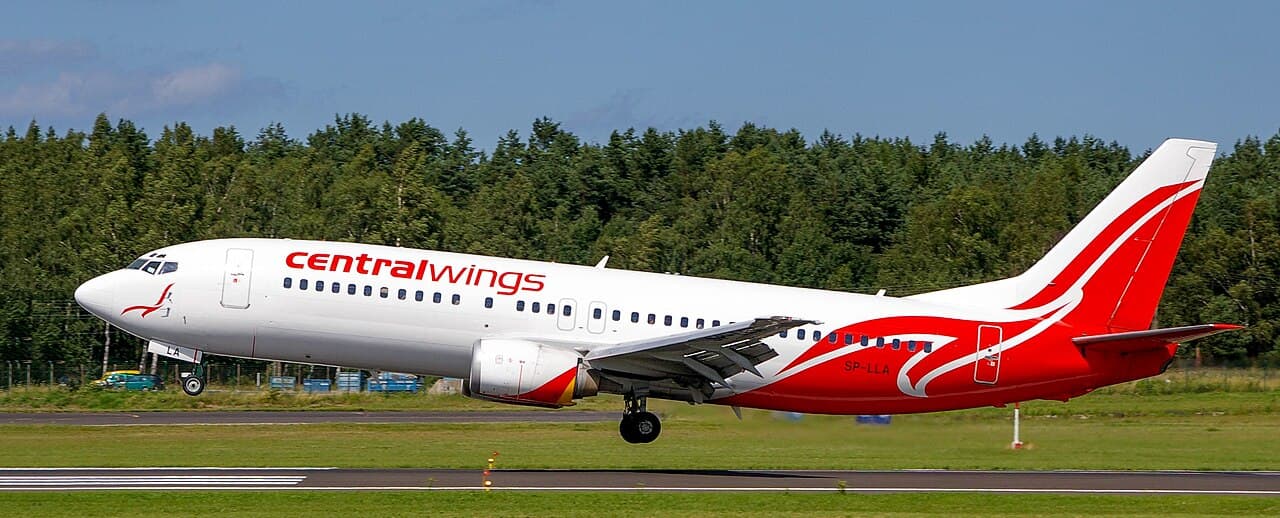
Wreckage of missing K2 Airways 737-400 freighter found off Pakistan coast
Aircraft lost contact over water while en route from United Arab Emirates to Pakistan. Pakistani search and rescue authorities have found wreckage from the K2 Airways Boeing 737-400 freighter which was declared missing during a flight between Sharjah and Karachi on 7 July. The Pakistani airports authority says the country's navy and the maritime security agency have "successfully located and identified" debris from the twinjet, adding that it was recovered about 53nm south of the coastal region of Ormara. Karachi-based K2 Airways states that the aircraft had five crew members on board when it disappeared over the Arabian Sea. Pakistan’s civil aviation authority says the crew “reported navigational system issue” at 21:18, and was in contact with Karachi area control centre. However, the aircraft was then seen on radar displays to be “rapidly descending” with a “rapid heading change” and contact was lost at 21:21, with the jet 155nm west of Karachi. K2 Airways says it was carrying two pilots, two engineers and a loadmaster. "Search and rescue operations are being conducted by the concerned organisations," it states. Public flight-tracking data, yet to be verified, suggests the aircraft was cruising at 35,000ft, some 1h 20min after departure, when it deviated from its heading and lost altitude over the Arabian Sea. The airline adds that it is "fully co-operating" with the Pakistan civil aviation authority and other agencies. It identifies the missing twinjet as AP-BOI, a 1999 airframe formerly in service with Aeroflot and Garuda Indonesia before being converted to a freighter. The company has not specified the nature of any cargo on board, and whether it included any hazardous goods. K2 Airways is a relatively young carrier, having been established in 2018. The company says its first aircraft arrived in Karachi two years ago, in July 2024.
The Daily Touch & Go
The day's best aviation news in your inbox. Free, no spam.