

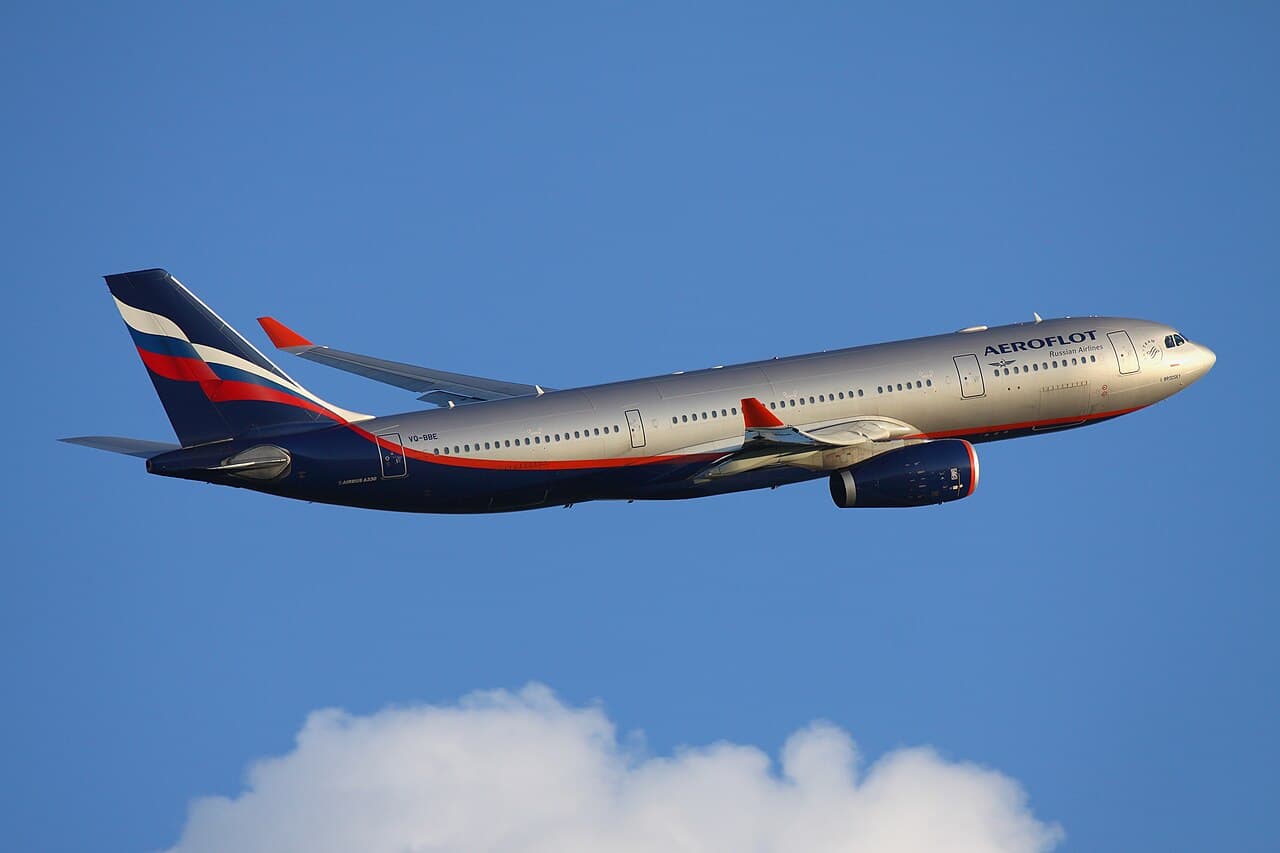
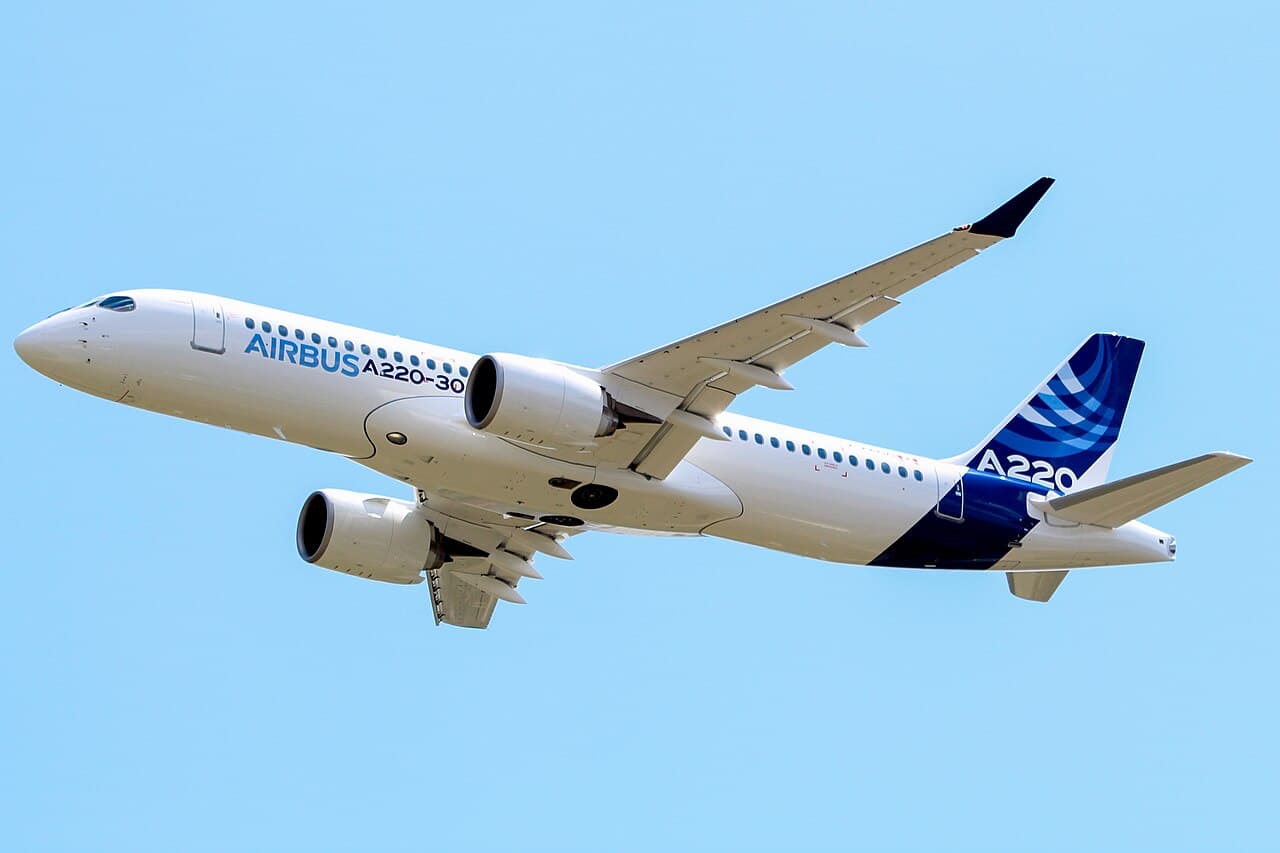
Image: Sergey Kustov · CC BY-SA 3.0 · via Wikimedia Commons
AirAsia suspends Sydney flights amid network realignment and fleet downsizing
AirAsia is halting its Kuala Lumpur-Sydney service as it cuts older widebody jets and boosts focus on more profitable Australian routes like Melbourne and Perth.
The gist
AirAsia drops Sydney route to tackle costs and optimize its network, shifting focus to stronger Australian markets and retiring fuel-inefficient widebodies.
Continuing coverage
All Fleet Management →- AirAsia Group Cuts Q3 Flight Capacity by 20-25% Amid Rising Fuel Costs
- American Airlines' Sun Belt Strategy Reflects Constraints More Than Choice, Experts Say
- AirAsia delays Bahrain hub and London flights amid fuel cost surge and capacity cuts
- Former Ethiopian Airlines CEO Tewolde Gebremariam appointed as Air India CEO
- Norse Atlantic Eyes Sale or Merger After IndiGo Leasing Deal Ends
AirAsia has announced the suspension of its Kuala Lumpur to Sydney service as part of a broader strategy to recalibrate its network and scale down its widebody fleet. The low-cost carrier attributed the move to mounting cost pressures, softer passenger demand on the Sydney route, and a strategic need to better align its operations with market realities. The Sydney service, operated by AirAsia X with Airbus A330-300 aircraft, currently runs four times weekly but will cease as the airline reinvests resources elsewhere in Australia.
Instead of Sydney, AirAsia plans to strengthen its presence on other Australian routes showing more robust demand and profitability. Kuala Lumpur to Melbourne and Perth are set to see increased frequencies starting in December. This shift reflects the carrier's aim to deploy its fleet and resources more efficiently, focusing on markets where it can operate sustainably and maintain a balanced network aligned with passenger demand.
AirAsia X began Kuala Lumpur to Sydney flights back in 2012, marking a significant extension of its medium-haul service network. With AirAsia’s withdrawal, the Sydney-Kuala Lumpur route will now only be served by Malaysian carriers Malaysia Airlines and Batik Air Malaysia, operating 20 and five flights weekly respectively. This consolidation signals a retreat by AirAsia from longer-haul operations in favor of optimized routing that supports financial sustainability.
The move follows a wider fleet restructuring announced in the airline group’s second-quarter earnings release, where AirAsia confirmed plans to remove 25 older aircraft this year, including 17 through early lease returns. This fleet downsizing is largely a response to soaring fuel costs and operational inefficiencies associated with older aircraft. The carrier also confirmed that the Airbus A330 widebodies will eventually be phased out as it transitions toward an all-narrowbody fleet.
Alongside fleet reductions, AirAsia is undertaking a network reset that includes permanent cancellations of 33 unprofitable routes operated by its Indonesia and Philippines units, plus temporary suspension of 17 others across the group. Capacity for the July to September period is expected to fall 20-25% year-on-year, highlighting the scale of operational trimming.
Benyamin Ismail, AirAsia X General Manager, emphasized the challenges faced by the airline in the current operating environment. He noted the necessity of difficult choices, such as accelerating retirements of older widebody jets that lack fuel efficiency and realigning the route network. These measures are designed to cultivate a more resilient business model and support long-term commercial sustainability amid volatile market conditions.
The strategic realignment shows AirAsia’s pivot away from less profitable long-haul intercontinental markets toward concentrated growth on routes with dependable demand and profitability. Melbourne and Perth, as key Australian hubs, are expected to benefit from this renewed focus. This shift also underscores the airline’s broader trend of simplifying its fleet to enhance efficiency and reduce operating costs.
AirAsia’s decision to suspend Sydney services and retreat from widebody operations marks a notable evolution in its strategy. It demonstrates how fuel cost pressures and market demand fluctuations continue to influence the airline industry’s route and fleet management choices. The adjustments by AirAsia reflect the intense competitive landscape in Southeast Asia-Australia air travel and the importance of nimble, cost-conscious operations.
Frequently asked questions
- Why is AirAsia suspending its Kuala Lumpur-Sydney service?
- AirAsia is suspending the Sydney route due to increasing cost pressures, softer demand on that route, and the need to align its network and fleet strategically for sustainability.
- What changes is AirAsia making to its fleet?
- AirAsia is removing 25 older aircraft this year, including 17 early lease returns, as part of a shift toward an all-narrowbody fleet and retiring less fuel-efficient widebody jets like the Airbus A330.
- Which Australian routes will AirAsia focus on after suspending Sydney flights?
- AirAsia plans to increase frequencies to Melbourne and Perth, routes where demand is stronger, starting from December as part of its network repositioning in Australia.
Read more
All Sustainability →
easyJet adopts digital fuel app with i6 Group to reduce emissions and costs
easyJet is rolling out a new digital tool that helps pilots order and confirm aircraft fuel more accurately. The move aims to cut unnecessary fuel burn, lower costs and reduce emissions. ezstandalone.cmd.push(function () { ezstandalone.showAds(119); }); The airline has partnered with aviation technology firm i6 Group. Together they will deploy the eHandshake digital refuelling platform across easyJet’s network. The system integrates directly into the airline’s existing ETechlog pilot platform. ezstandalone.cmd.push(function () { ezstandalone.showAds(127); }); How the New System Works Traditionally, fuel ordering relied on paperwork and manual data entry. Pilots will now submit fuel requests electronically. Refuelling providers receive accurate details before they arrive at the aircraft. This can help reduce delays. Once fuel is delivered, pilots confirm the amount digitally. The platform creates a full digital record of every stage. It tracks fuel planned, requested, delivered and accepted. ezstandalone.cmd.push(function () { ezstandalone.showAds(128); }); All data is stored centrally for transparency, analysis and invoice checks. This single digital workflow connects pilots, fuel suppliers and operational teams in real time. It improves communication and data accuracy. Greater visibility and control over fuel uplift help ensure aircraft carry only the fuel they need. ezstandalone.cmd.push(function () { ezstandalone.showAds(129); }); Environmental and Operational Benefits Carrying excess fuel adds weight. Extra weight increases fuel burn and emissions. By reducing unnecessary fuel uplift, the platform supports more efficient flights. easyJet estimates the technology could save around 10,000 tonnes of CO2 per year once fully deployed. It will also eliminate an estimated 600,000 sheets of paper annually by ending paper-based processes. The platform rolls out in phases. Initial deployment covers about half of the airline’s network. Expansion to around 90% of destinations is planned over the next three years. ezstandalone.cmd.push(function () { ezstandalone.showAds(130); }); Leadership Comments Adam Baker, Head of Fuel Performance at easyJet , gave comment. “At easyJet we are continually looking for opportunities to improve our operations through technology and innovation.” “Introducing eHandshake with i6 Group will provide a more connected and efficient fuel management process, improving data quality, giving us greater visibility across fuel operations and enabling reduced fuel consumption. “As we continue to modernise our operations, initiatives like this demonstrate how innovation and collaboration across the industry can incrementally help reduce aviation’s environmental impact both in the air and on the ground.” ezstandalone.cmd.push(function () { ezstandalone.showAds(131); }); Photo Credit: easyJet Alex Mattos, CEO and co-founder of i6 Group , added further comment. “We’re proud to partner with easyJet to enable a smoother, more connected refuelling process across its network.” “By integrating eHandshake into the technology pilots already use, fuel information can be shared and verified digitally between pilots, fuel providers and operational teams.” “This will improve communication and data accuracy, reduce unnecessary fuel uplift, and help easyJet deliver greater operational efficiency while lowering costs and emissions.” ezstandalone.cmd.push(function () { ezstandalone.showAds(132); }); Part of a Wider Sustainability Plan Digital fuelling forms a key part of easyJet’s net-zero roadmap. The airline aims for a 35% reduction in carbon emissions intensity by 2035. This target is validated by the Science Based Targets initiative. EasyJet remains committed to fleet renewal, operational efficiencies, airspace modernisation, sustainable aviation fuel and future zero-emission technologies. i6 Group, founded in 2015 and based in Farnborough, UK, specialises in cloud-based digital fuel management. Its solutions already serve airlines and suppliers at more than 300 airports worldwide. ezstandalone.cmd.push(function () { ezstandalone.showAds(133); }); By giving pilots better tools and more accurate data, easyJet is taking a practical step towards greener, more efficient flying. The digital shift removes paper, tightens control and supports measurable cuts in fuel use and emissions.
Loganair to Close Dundee Base and End All Flights by October 2026
Loganair will close its Dundee base later this year. The airline has confirmed it will stop all operations from Dundee Airport after 23 October 2026. This decision ends scheduled commercial flights from the airport. ezstandalone.cmd.push(function () { ezstandalone.showAds(119); }); The main service affected is the Dundee to London Heathrow route. Loganair will fly the final flights on Friday 23 October. The route has run under a Public Service Obligation, or PSO, since 2014. Local council and government funding has helped support it. Loganair says the contract is no longer financially viable. ezstandalone.cmd.push(function () { ezstandalone.showAds(127); }); Routes to the Islands Also End The base closure means more than just the London service will stop. Flights to Kirkwall in Orkney and Sumburgh in Shetland will also finish in October. These routes have linked Dundee with the northern isles. Once they end, Dundee Airport will have no regular commercial passenger flights. ezstandalone.cmd.push(function () { ezstandalone.showAds(128); }); Loganair explained the decision in a clear statement. “Following a review of the route’s long-term viability, Loganair can confirm that its Dundee–London Heathrow service will cease after Friday 23 October, and the operating base will close.” The company added that it had looked at other options but could not find a sustainable way forward. ezstandalone.cmd.push(function () { ezstandalone.showAds(129); }); Riik@mctr, CC BY-SA 2.0, via Wikimedia Commons Impact on Jobs and Staff Around 16 posts linked to Loganair’s Dundee operations now face risk. The airline says it will support affected workers. Staff will receive help to find alternative roles across the wider network where possible. Airport staff employed by Highlands and Islands Airports Limited may also see changes. The operator has started talks about shorter opening hours. The British Airline Pilots Association (BALPA) issued a short statement following the news of the closure. “Following Loganair’s announcement of the closure of its Dundee and Southampton bases, BALPA has moved quickly to formally engage with the company on behalf of affected members.” ezstandalone.cmd.push(function () { ezstandalone.showAds(130); }); They urged affected personnel to get in touch with their Company Council as early as possible. Earlier Plans Changed In May 2026, Loganair first announced it would end the Heathrow route. At that time the airline said it remained committed to the Dundee base. It planned to explore other London airports. By August those plans had changed. The full base closure followed after further review. ezstandalone.cmd.push(function () { ezstandalone.showAds(131); }); Photo Credit: Loganair Airport Future and Government Response Dundee Airport now faces an uncertain period. Without Loganair it will rely mainly on private and general aviation. First Minister John Swinney has spoken about the situation. He said the Scottish Government remains committed to keeping the airport open. Officials will look at ways to protect air links despite pressure on public finances. The airport has served the city for decades. Loganair’s presence dates back many years. Its departure marks a significant shift for local travel and business connections. ezstandalone.cmd.push(function () { ezstandalone.showAds(132); }); Looking Ahead Passengers with bookings after 23 October will hear from the airline directly. They can expect refunds or help with alternative travel options. Meanwhile, local leaders continue discussions with funding partners. The goal is to find new ways to maintain useful air services for Dundee and the wider region. Loganair’s move forms part of broader network changes. The airline is also closing its Southampton base around the same time. ezstandalone.cmd.push(function () { ezstandalone.showAds(133); }); These decisions reflect ongoing challenges facing regional carriers, including rising costs and the need for routes to remain viable. The final flights in late October will mark the end of an era for Dundee Airport. Residents, businesses and island communities will watch closely for any future developments that could restore regular commercial services.
TUI Group Posts Resilient Q3 Earnings Despite Iran Conflict Impact
TUI Group delivered a solid third-quarter performance in a challenging environment. The effects of the Iran war put downward pressure on both profit and revenue. Still, the company reported underlying EBIT of €234.6 million at constant currency. ezstandalone.cmd.push(function () { ezstandalone.showAds(119); }); This result came against a record prior-year quarter and included broader geopolitical uncertainty plus one-off costs. The tourism group reaffirmed its full-year guidance for underlying EBIT between €1.1 billion and €1.4 billion. Its integrated business model, which includes owned hotels and ships, continues to show strength. ezstandalone.cmd.push(function () { ezstandalone.showAds(127); }); Strong Underlying Results Despite Headwinds In the third quarter of financial year 2026, Group underlying EBIT reached €233.8 million, or €234.6 million at constant currency. This compared with €320.6 million in the same period last year. Results reflected higher geopolitical uncertainty that affected customer booking behaviour. A €20 million one-off impact linked to the Iran conflict also weighed on the numbers. ezstandalone.cmd.push(function () { ezstandalone.showAds(128); }); Group revenue stood at €5.8 billion, down from €6.2 billion a year earlier. Customer volumes totalled 9.9 million, a decline of 3 percent. Most of the pressure came from the Markets + Airline segment. For the first nine months, underlying EBIT came in at €118.3 million, or €123.2 million at constant currency. ezstandalone.cmd.push(function () { ezstandalone.showAds(129); }); Excluding €81 million of one-off costs from the Iran conflict and a Jamaica hurricane, the figure rose by €35 million, or €40 million at constant currency. This increase highlights the underlying strength of the business. Herbert394, CC BY-SA 4.0 , via Wikimedia Commons Segment Performance Shows Resilience Holiday Experiences remained the main driver of profits. Hotels & Resorts delivered underlying EBIT of €122.7 million. Demand stayed solid and average rates rose. Geopolitical issues affected some properties in the Eastern Mediterranean, Mexico and the Caribbean. Cruises generated underlying EBIT of €132.4 million. Strong demand for UK and German brands supported results, even after the €20 million Iran-related cost. TUI Musement improved to €22.7 million thanks to better B2B business and efficiency gains. ezstandalone.cmd.push(function () { ezstandalone.showAds(130); }); Markets + Airline recorded underlying EBIT of –€17.4 million. Softer demand and higher pricing pressure played a role. The team managed capacity and yields carefully to stay competitive amid higher fuel costs and extra market capacity. Net debt stood at €2.3 billion on 30 June 2026, up €0.4 billion year-on-year. The rise mainly reflected lower customer deposits as people booked closer to departure. Booking Momentum Improves Booked revenue for Summer 2026 in Markets + Airline improved by one percentage point to –6 percent since the May update. Momentum over the past four weeks has been encouraging. ezstandalone.cmd.push(function () { ezstandalone.showAds(131); }); Booked revenue ran 7 percent ahead of the prior year. This trend shows resilient demand for holidays and the appeal of TUI’s product range. Holiday Experiences trading for the fourth quarter points to solid underlying demand. The company continues to expand capacity in line with its growth strategy. Winter 2026/27 bookings remain at an early stage with limited visibility. Customers still focus on summer plans and book later than before. ezstandalone.cmd.push(function () { ezstandalone.showAds(132); }); Future Outlook TUI has suspended its revenue guidance. It continues to expect underlying EBIT in the range of €1.1 billion to €1.4 billion for the full year. The outlook assumes no major escalation in geopolitical tensions and stable fuel supplies. The company is also advancing its sustainability goals. It launched Mein Schiff Flow, which will operate on e-LNG together with Mein Schiff Relax. TUI Airline added 14 new Boeing 737 Max aircraft that use about 15 percent less fuel than the planes they replace. TUI’s integrated model of owned hotels, ships and distribution channels continues to prove its value. The business has navigated a volatile period while keeping its strategic transformation on track. ezstandalone.cmd.push(function () { ezstandalone.showAds(133); }); With a strong balance sheet and improving booking trends, the group remains well positioned for the rest of the year.
airBaltic plans major fleet cut to 36 aircraft by end of 2026 amid financial challenges
Latvian flag carrier airBaltic has been in a rough financial spot for some time, and in recent weeks there has been talk of the airline potentially needing to suspend operations due to running out of cash. The airline has now unveiled a new business plan, intended to strengthen its long term sustainability. This is actually a pretty radical transformation, so expect a lot of things at the airline to change… particularly, its network! First let's talk about what's changing, and then we'll talk about how airBaltic got into this situation in the first place. airBaltic unveils updated, long term business plan airBaltic's supervisory board has just approved the carrier's updated business plan, which is intended to strengthen the company's long term competitiveness, establish a sustainable capital structure, support future development, and maintain reliable connectivity for Latvia and the wider region. Here's what will be changing, summarized as succinctly as possible: airBaltic currently has a fleet of 54 Airbus A220-300s, and was planning on growing that fleet to 100 planes ; however, the airline now plans to shrink instead, decreasing its fleet to just 36 planes by the end of 2026, before eventually increasing the fleet to around 40 planes by 2031 The airline plans to largely maintain its scheduled capacity (since the airline does a lot of leasing out of aircraft — more on that below); available seat kilometers are expected to decline from 9.6 billion in 2026 to 8.7 billion in 2027, before gradually increasing to 10.5 billion by 2031 airBaltic will continue to have a network heavily focused on Latvia, but rather than pursuing broad expansion, the airline will focus on deepening its presence in existing markets by increasing frequencies where demand and profitability are strongest airBaltic largely leasing out its aircraft to other airlines under a wet lease model (particularly Lufthansa Group carriers), but the airline plans to increasingly focus on year-round deployment with this strategy, to mitigate the seasonal issue To fund these changes, airBaltic is seeking 225 million EUR in interim financing, intended to bridge the company to a permanent financing solution. The company is also seeking 100 million EUR of new capital. Here's how Erno Hildén, airBaltic's CEO, describes this updated strategy: "Every successful airline must continuously adapt to a changing market. Thus, this business plan is about making disciplined choices that strengthen airBaltic's long-term competitiveness while preserving what matters most – reliable connectivity and operations, together with financial sustainability. It provides a stronger foundation for the company's future and positions us to create long-term value for our customers, partners and Latvia." airBaltic's fleet will shrink to just 36 planes How airBaltic has found itself in such a tough spot airBaltic has historically been an incredibly well run airline. The CEO used to be Martin Gauss, but he was fired (which I found to be an odd decision) , and he's now CEO of Gulf Air . airBaltic operates an all-Airbus A220 fleet, and the airline had huge growth plans, and intended to acquire 100 of these aircraft. For a long time, the idea was as follows: Latvia has convenient geography for connections in Northern Europe, as well as to Russia, etc. Latvia is part of the European Union, but airBaltic has a major cost advantage, given that Latvia is a bit cheaper than some other countries in the EU, so there was merit to the airline wet leasing its aircraft to other airlines However, as you'd expect, the situation has evolved over time. With Russian airspace closed to airlines from the European Union, that has massively limited airBaltic's potential route network, and particularly has limited the number of connecting itineraries the airline can sell. If the current conflict with Russia didn't apply, it would be a totally different story at airBaltic. While airBaltic continues have a robust wet leasing business, the issue is that most airlines looking to lease planes only need them in summer, and not winter, given that it's when demand is highest. In early 2025, Lufthansa Group even bought a small stake in airBaltic , in part because of how much it values the wet lease agreements for subsidiaries like Lufthansa, SWISS, Brussels Airlines, etc. But the issue is that summer-only wet leases need to be able to cover costs not just for summer, but also winter, since it's not like airBaltic has anywhere to profitably fly those excess planes in winter. What has really caused issues for airBaltic in recent times is the increase in fuel costs. Not only have fuel costs increases been particularly bad in Northern Europe, but it's also tough to be a full service(ish) airline that exclusively has a regional network, given how robust ultra low cost carrier competition is in the region. Unfortunately for airBaltic, shrinking probably is the right choice here. That way the airline can focus its network on routes that are actually profitable, and on top of that, can be more selective about wet leasing, to airlines that actually value having planes on a year-round basis. airBaltic will shrink its wet lease operations Bottom line airBaltic has been on the brink of collapse in recent months, and the company's board has approved a new business plan, which will include some major changes. The most significant change is that the carrier's fleet will go from 54 planes to 36 planes by the end of the year. Then by 2031 the fleet will grow to 40 planes, compared to the planned 100 planes. With this downsizing, airBaltic also plans to increasingly focus on its most profitable routes, so expect some network cuts. We'll also see reductions to the carrier's wet leasing operations, as the airline tries to secure year-round deals, rather than just seasonal deals. What do you make of these airBaltic updates?
The Daily Touch & Go
The day's best aviation news in your inbox. Free, no spam.