

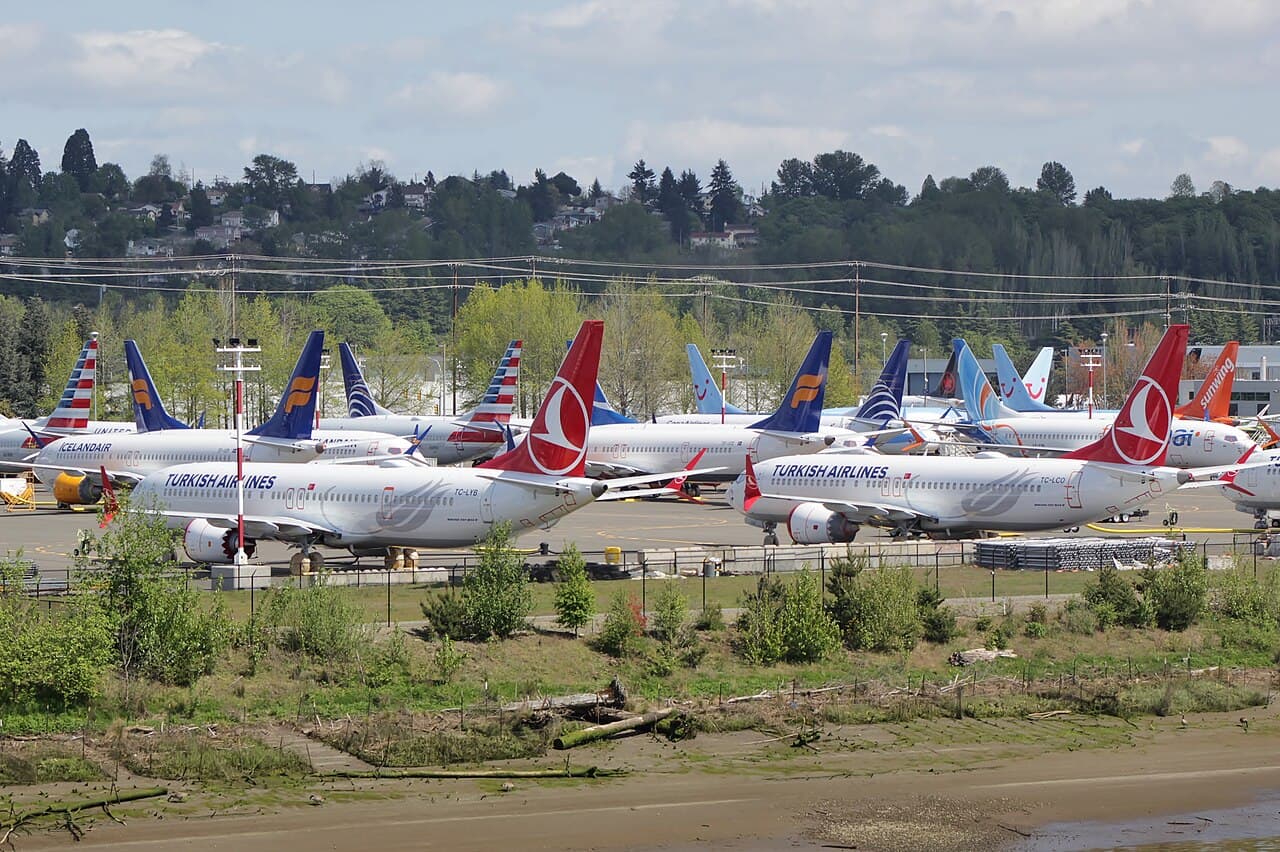
Image: SounderBruce · CC BY-SA 4.0 · via Wikimedia Commons
WestJet to lease first Boeing 737 Max 10, delivery expected by year-end
WestJet will take delivery of the first Boeing 737 Max 10 from Aviation Capital Group under a long-term lease, with introduction to service anticipated in 2027 following certification delays.
The gist
WestJet will lease the first Boeing 737 Max 10, aiming for delivery by year-end and service entry in 2027 after regulatory approvals.
Continuing coverage
All Fleet Expansion →- Lufthansa debuts its first Airbus A350-1000 adorned with centennial anniversary livery
- TAP Air Portugal to Expand Fleet by 24 Airbus Jets After Restructuring Completion
- Hainan Airlines Plans to Acquire 40 Airbus A320neos from 2028 to 2032
- Air China expands fleet with 15 A350-900s and 40 A320neos for Shenzhen Airlines
- Air China orders 15 Airbus A350-900s and 40 A320neos for Shenzhen Airlines
WestJet is set to become the launch operator of the Boeing 737 Max 10, securing the first aircraft to be delivered by the manufacturer. The Canadian airline will take delivery of this initial Max 10 by the end of the year through a lease agreement with Aviation Capital Group, which is supplying a total of 13 aircraft to WestJet under the same contract. This milestone places WestJet at the forefront of introducing Boeing's largest and latest 737 in their fleet.
The 737 Max 10 is the largest variant in Boeing's Max series, designed to offer enhanced capacity and efficiency. WestJet already has firm orders placed for 60 additional Max 10 aircraft, with options to acquire 25 more, signaling a major fleet renewal and expansion strategy involving this model. The lessor, Aviation Capital Group, had its own firm orders for 50 Max 10s as of March, indicating confidence in the type's market potential and delivery pipeline.
Despite the planned delivery by year-end, WestJet's chief executive Alexis von Hoensbroech has indicated that the aircraft might not enter commercial service immediately. A key reason is the expected delay between the Federal Aviation Administration (FAA) and Transport Canada certification processes. As a result, airline introduction is likely pushed to sometime in 2027, aligning with certification completion timelines.
On the certification front, Boeing's CEO Kelly Ortberg shared in May that the company was on track to complete the 737 Max 7 certification in the summer, followed closely by the Max 10 later in the year. This indicates that regulatory approvals needed for commercial operation are imminent but staggered between jurisdictions, creating a lag in the aircraft's operational rollout across different markets.
WestJet is among several major airline groups—such as Delta Air Lines, International Airlines Group, and United Airlines—that have placed sizeable orders for the Max 10. The program's launch has been notably delayed by about six years, owing to setbacks from the twin 737 Max crashes in 2018 and 2019 compounded by disruption caused by the Covid-19 pandemic, which affected production and certification schedules.
Following WestJet's initial delivery, other airlines are expected to take receipt of the Max 10 starting in 2027. Alaska Airlines, Delta, and United have announced plans to introduce the type into their fleets around the same timeframe. Delta’s CEO Ed Bastian confirmed in July that the airline anticipates up to 27 new 737 Max aircraft deliveries in 2027, with the Max 10 featuring prominently among them.
The Boeing 737 Max 10 represents a significant advance in narrowbody aircraft capability, particularly for airlines looking to maximize seat capacity and fuel efficiency on short- and medium-haul routes. WestJet's early acquisition under a lease model with Aviation Capital Group underscores a trend where carriers are balancing fleet expansion through a mix of owned and leased aircraft to optimize financial flexibility as air travel demand continues to recover.
This development highlights Boeing's efforts to recover trust and market share in the single-aisle segment after the Max family's prior challenges. The coming months will be critical, as the final certification approvals and actual aircraft deliveries become reality, marking a new chapter for operators like WestJet eager to modernize their fleets while meeting evolving regulatory standards globally.
Frequently asked questions
- When will WestJet take delivery of its first Boeing 737 Max 10?
- WestJet will take delivery of the first Boeing 737 Max 10 by the end of the year under a leasing arrangement with Aviation Capital Group.
- Why won't WestJet start flying the Max 10 immediately after delivery?
- The aircraft is unlikely to enter service before 2027 due to a certification lag between the FAA and Transport Canada.
- How many Boeing 737 Max 10 aircraft has WestJet ordered?
- WestJet has firm orders for 60 Boeing 737 Max 10s, plus options for another 25 aircraft.
Read more
All Airlines →
Spinner vs. Roller Luggage: Weighing the Pros and Cons for Travelers
People have strong opinions about just about everything in the travel space, and that includes luggage . In this post, I'd like to address one of the most controversial topics in the luggage world — should you get a spinner suitcase? I have strong opinions on this, but I know others vehemently disagree with me. What are spinner suitcases? For those not familiar with the terminology, a spinner suitcase is an upright bag with four wheels (as opposed to roller luggage, which has only two wheels). While it's absolutely not always the case, spinner suitcases are often hard-sided, while roller bags are more often soft-sided. It seems like in recent years, spinner suitcases have become all the rage, with many bag manufacturers largely switching from two wheels to four wheels for their bags. So, what are the pros and cons of spinner bags vs. roller bags? The pros of spinner suitcases There are several benefits to spinner suitcases compared to roller luggage: Spinner suitcases are much more flexible, in the sense that you can roll them next to or in front of you, which isn't so practical with roller luggage Spinner suitcases are more maneuverable, and can be rolled sideways into tighter spaces; this is great whether you're walking down an airplane aisle, or are rolling a bag through an automated immigration kiosk or through a train turnstile On flat and even surfaces, spinner suitcases are arguably easier to roll, as there's less friction, and less pressure on your arm and shoulder Spinner suitcases are often hard-sided, which some prefer, as it's potentially more durable, and protects the items in your bag Rimowa spinner carry-on The cons of spinner suitcases There are also several downsides to spinner suitcases compared to roller luggage: Spinner suitcases typically have external wheels, which doesn't help with maximizing space, as they stick out; when you put your carry-on bag in a sizer, the wheel space counts toward the limit Spinner suitcases are great on flat and even surfaces, but the second you deal with an incline, or you're inside something that's moving (a train, subway, etc.), or you have an uneven surface, they can become a burden Not all bags are equally durable, and sometimes wheels break; you're more likely to have issues if you have four wheels rather than two wheels, especially with spinner suitcases often having external wheels Spinner suitcases are more likely to be hard-sided, which doesn't maximize space, and doesn't allow you to expand your bag in the event that you're carrying more than usual Briggs & Riley two wheel carry-on I'm in the anti-spinner luggage camp Let me acknowledge that this is a topic that divides my household. Ford exclusively has spinner bags with four wheels, for both carry-ons and checked bags (he uses Rimowa bags). He says I'm too practical. I exclusively have roller bags with two wheels ( I use Briggs & Riley ), for both carry-ons and checked bags. I say Ford isn't practical enough. Does Ford's Rimowa look nicer than my Briggs & Riley bag? I'd say so (though I find Rimowa bags scratch up so easily… perhaps that's part of the charm?). Personally I don't think Briggs & Riley bags look particularly great, but they're incredibly durable ( I made the switch from Tumi several years back, and have been very happy about that). But style aside, I can't help but point out that when we travel together, I generally have fewer issues with my bag than Ford does. Basically any time we're not on a flat, smooth surface (which is quite a bit of the time), I find that my bag offers a more seamless experience. I know some people feel like it can be tougher on your wrists and heavier to have a two wheeled bag than a spinner bag. My solution is that I hang my backpack off the back of my carry-on with a clip. This acts as a balance to the bag's weight when I'm carrying it behind me, and makes it feel virtually weightless. There's also not nearly as practical of a way to hang a second bag off a spinner bag as with a roller bag. You can place something on top, but that can be limiting. My typical carry-on setup Anyway, I make absolutely no claim that my system is better than anyone else's. However, I've been using two wheeled roller bags for as long as I can remember, and I refuse to make the switch. I'm probably just stubborn, since the luggage industry is increasingly headed in the direction of spinner suitcases. I just can't get behind the concept. Bottom line People have strong opinions about the merits of four wheel spinner luggage vs. two wheel roller luggage. There are pros and cons to both types of bags. Call me traditional, but I'm stuck in my ways with roller luggage. I appreciate how these bags perform better with complicated surfaces, and I also like how I can clip something to the side of the bag, to maximize how much I can easily carry. For that matter, I also find they are more durable, so are less likely to have wheels break, etc. Where do you stand — do you prefer spinner luggage or roller luggage?

Airlines urged to charge for guaranteed overhead bin space to end gate-check hassles
Airlines make passengers fight for overhead bin space, then force gate-checking even when bins still look empty. They should sell guaranteed bin space instead—certainty passengers would actually value.
Choice Privileges Offers Record-Low 45% Discount on Purchased Points
Choice Privileges has launched its latest promotion on purchased points , offering up to a 45% discount. This is an opportunity to buy points for just 0.57 cents each, and to my knowledge, that's the lowest cost we've ever seen from the program for buying points. Let's take a look at everything you need to know about this deal, and talk about under what circumstances it makes sense to buy points. I generally recommend buying points only if you have a short term use in mind, and are sure the math checks out. Promotion on purchased Choice Privileges points Between July 14 and July 20, 2026, Choice Privileges is offering a sale on purchased points . The accounts I manage show a discount of up to 45%, which kicks in as long as you purchase at least 8,000 points in one transaction. Different accounts may very well show different offers, so you'll want to log into your Choice Privileges account to see what you're eligible for. Buy Choice Privileges points with up to a 45% discount How much does it cost to buy Choice Privileges points? Choice Privileges' pricing when buying points isn't linear, and you get a lower cost the more points you purchase, not even factoring in any promotional bonuses or discounts. Before factoring in any bonuses or discounts, the cost to purchase points ranges from 1.28 cents per point (if buying just 1,000 points) to 1.03 cents per point (if buying 180,000 points). If you maxed out this promotion, you could purchase a total of 180,000 points for $1,019.70, which is a rate of 0.57 cents per Choice Privileges point. Choice Privileges is selling points for 0.57 cents each When Choice offers a promotion on purchased points, it's typically either a 25-30% discount or a 30-50% bonus. So this 45% discount is excellent, and better than past offers we've seen from the program. Admittedly the value of Choice Privileges points has also gone down a bit over time, so it's not all good news. Redeem Choice points at Hotel Petaluma How many Choice Privileges points can you buy? Choice Privileges lets you purchase up to 180,000 points per account per calendar year, not factoring in any bonus points. Which credit card should you buy Choice Privileges points with? Choice Privileges points purchases are processed by points.com, meaning they don't generally count as a hotel purchase for the purposes of credit card spending. There is one exception — if you use a co-branded Choice Privileges credit card, then these purchases are rewarded in the same way as hotel spending. Otherwise, I'd recommend using a card with which you're trying to reach a minimum spending requirement , or a credit card that maximizes your return on everyday spending . When in doubt, review which credit cards are best for buying points and miles . Best cards for non-bonused spending: Is buying Choice Privileges points worth it? While it doesn't get much attention in the miles & points world, Choice is a huge hotel group, with over 7,000 properties in 40 countries, representing roughly 570,000 hotel rooms. Choice hotel brands include (among others) Ascend, Cambria, Comfort Inn, Sleep Inn, Quality Inn, Clarion, Rodeway Inn, and more. The catch is that Choice doesn't have that many aspirational properties. In general there's the most value outright purchasing points if you have a premium redemption in mind, given that this is the best way to get outsized value compared to the cost of a stay if paying cash. Choice Privileges doesn't have a formal award chart, but award pricing usually ranges from 6,000 to 45,000 points per night. In Asia-Pacific, some properties cost up to 75,000 points per night. There are definitely some properties where you'll get outsized value acquiring Choice Privileges points at a discount. For example, Choice has an impressive footprint in Northern Europe, where hotels can otherwise be expensive when paying cash, especially in summer. Redeem Choice points at La Posada Lodge & Casitas Tip: Redeem points at Preferred Hotels & Resorts Here's a fun redemption option with Choice Privileges points. While Choice doesn't manage these properties, Choice Privileges has a partnership with Preferred Hotels & Resorts, which is a group of over 500 luxury independent properties around the globe. You can redeem Choice Privileges points for stays here, and the hotels cost anywhere from 25,000 to 118,000 points per night. You can find participating hotels and award costs here , and nowadays you can even book these awards online. There are some participating hotels where you can get significant value redeeming this way, though the recent devaluation sure doesn't help. Does Choice Privileges have blackout dates? Choice Privileges doesn't have blackout dates, and points can be redeemed for stays up to 50 weeks in advance, as long as a standard room is available. Do Choice Privileges points expire? Choice Privileges points don't expire as long as you have at least some account activity once every 18 months. Virtually any activity that involves earning or redeeming points would be considered qualifying for these purposes. Redeem Choice points at Cambria Hotel LAX How much are Choice Privileges points worth? Everyone will value points differently, but personally I value Choice Privileges points at ~0.6 cents each. That's a conservative valuation, though if you're strategic you should be able to get lots more value out of your points than that. How else can you earn Choice Privileges points? Two transferable points currencies have Choice Privileges as a partner: Amex Membership Rewards points can be converted into Choice Privileges points at a 1:1 ratio Capital One miles can be converted into Choice Privileges points at a 1:1 ratio Citi ThankYou points can be converted into Choice Privileges points at a 1:1.5 ratio Wells Fargo points can be converted into Choice Privileges points at a 1:2 ratio Redeem Choice points at WoodSpring Suites properties Bottom line Choice Privileges is selling points with up to a 45% discount, which is an opportunity to buy points for as little as 0.57 cents each. While I wouldn't recommend speculatively picking up Choice Privileges points at that cost, with a specific and short term use in mind, there could be value with this offer. This is the best promo we've ever seen from the program on buying points. Does anyone plan on buying Choice Privileges points ?
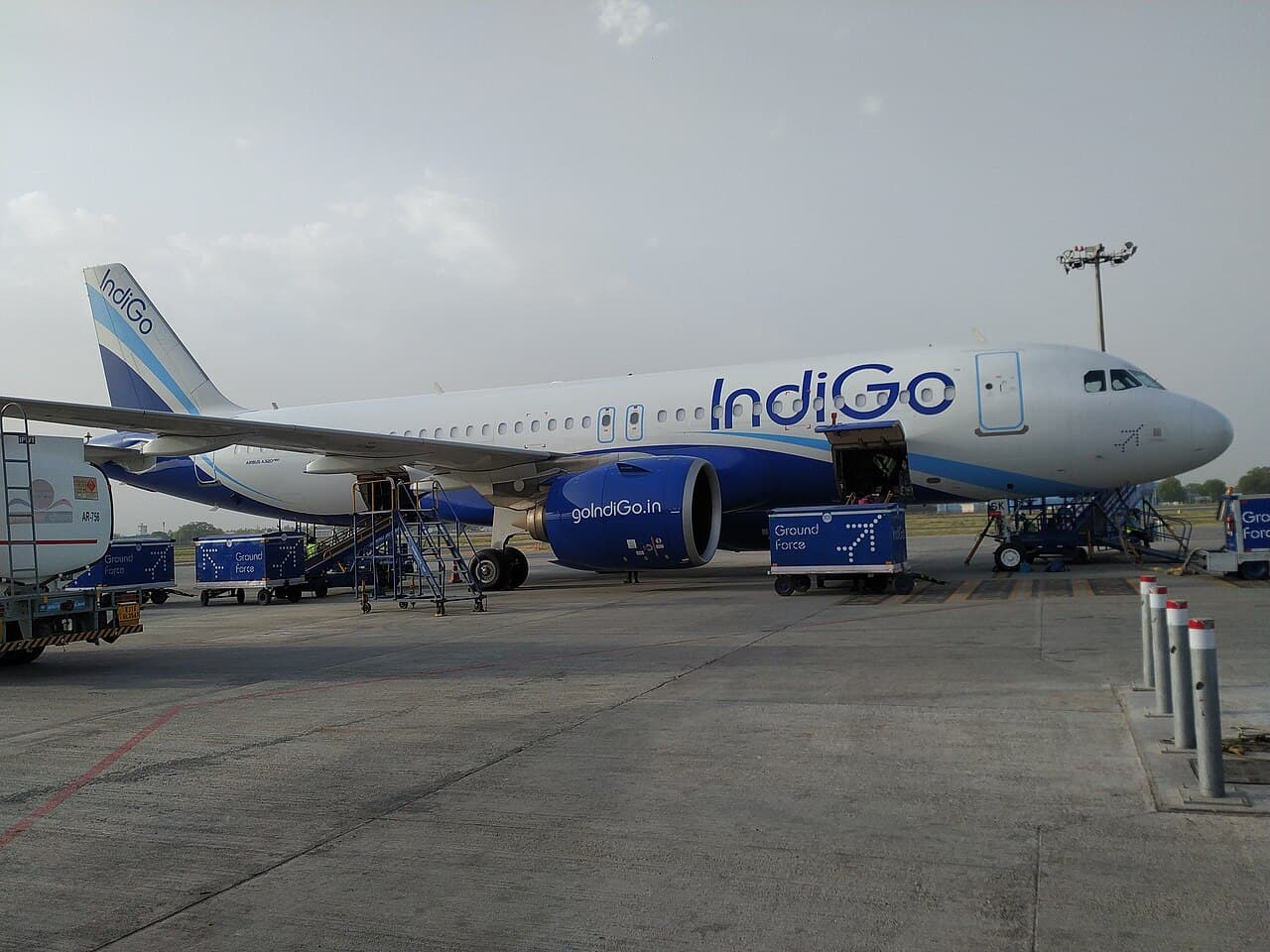
Frontier Airlines First US ULCC to Install Starlink WiFi Starting 2027
Frontier Airlines has announced that it will introduce SpaceX's Starlink satellite internet across its fleet, becoming the first ultra-low-cost carrier ( ULCC ) in the United States to commit to the high-speed connectivity platform. Installations are expected to begin in early 2027, marking a major shift for an airline that has never previously offered onboard WiFi. The move also aligns Frontier with a growing list of airlines embracing Starlink as the industry's preferred inflight connectivity solution.
The Daily Touch & Go
The day's best aviation news in your inbox. Free, no spam.