

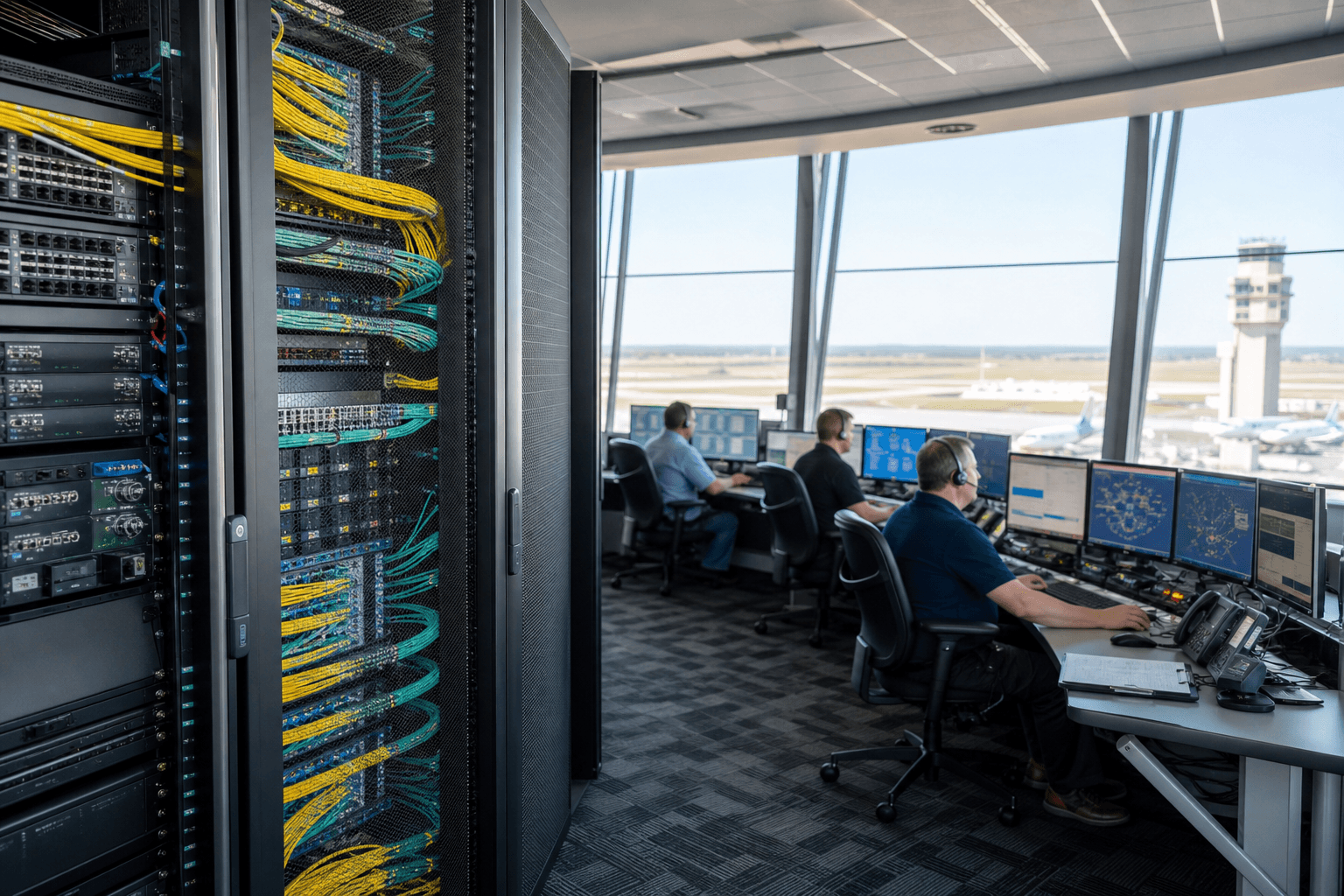
Illustration: The Touch & Go
FAA assigns AT&T central role in $2 billion air traffic network overhaul
FAA initiates $74.3 million contract with AT&T to advance Enterprise Network Services, part of a broader multibillion-dollar modernization of US air traffic control communications.
The gist
FAA accelerates air traffic control modernization by awarding AT&T a key $74.3M contract to upgrade its communications network.
Continuing coverage
All Faa →- FAA and Ohio Senators Firmly Oppose Closure of Burke Lakefront Airport
- FAA Seeks Billions More to Fund CAP Automation Amid Growing Industry Competition
- FAA Rules Texas Airport Violated Federal Rules by Selling Land for Nearby Housing Development
- FAA Unveils Advanced Surface Movement Radar at Newark to Boost Airport Safety
- FAA Orders $2.66M Seat Inspections on 453 Boeing 737 MAX Jets Amid Certification Oversight
The Federal Aviation Administration (FAA) has awarded AT&T an initial $74.3 million contract to take over a critical segment of its air traffic control communications network modernization. This contract marks the beginning of a larger, multibillion-dollar effort to overhaul the FAA's Enterprise Network Services (FENS) which forms the communications backbone for the National Airspace System. The move signifies a strategic shift in the FAA's modernization approach as it seeks to meet an ambitious deadline for deploying new systems by the end of 2028.
FENS is designed to replace the FAA Telecommunications Infrastructure (FTI) network, which has supported agency communications for more than two decades. This legacy system connects air traffic control facilities with other operations across the United States’ airspace, enabling essential data exchange for managing aircraft movement safely and efficiently. Transitioning to FENS aims to deliver a faster, more reliable communications platform critical to the safety and modernization of national air traffic.
Previously, Verizon held a 15-year FENS contract worth over $2 billion awarded in 2023, tasked with designing, building, operating, and maintaining the FAA’s next-generation communications platform. However, recent FAA restructuring has repositioned AT&T as the primary contractor to accelerate deployment timelines, while Verizon retains a supporting role. This change reflects the FAA's urgent push to meet the 2028 air traffic control modernization deadline amid growing concerns about aging equipment and infrastructure reliability.
The FAA’s Brand New Air Traffic Control System initiative encompasses a broad upgrade across radar, telecommunications, software, and hardware. Telecommunications form a key priority given their role in connecting the components of the National Airspace System. In recent years, the FAA has replaced over one-third of its outdated copper infrastructure with high-speed digital fiber, laying the groundwork for enhanced communications performance and resilience.
Beyond network upgrades, the FAA plans to deploy 5,170 new high-speed connections using a mix of fiber optic, satellite, and wireless technologies. The agency also intends to introduce 27,625 new radios, 462 digital voice switches, and 612 new radars as part of the holistic modernization effort. These upgrades collectively aim to improve communication reliability and air traffic management capability, directly addressing equipment-related delays and safety margins.
Equipment failures have contributed to a significant rise in flight-delay minutes, which in 2025 averaged nearly three times the level seen between 2010 and 2024. The FAA cites this surge as a critical driver for expediting its modernization projects to enhance system robustness, reduce operational disruptions, and maintain airspace safety standards. Investment into these technological upgrades is therefore seen as imperative for the efficiency of U.S. aviation operations.
Congress has allocated $12.5 billion in funding toward the FAA's air traffic control overhaul, but the agency estimates a total of about $20 billion will be required to complete all aspects of the program. Details about the eventual total value of the AT&T FENS contract remain undisclosed at this time. The initial $74.3 million contract represents the first publicly acknowledged funding under the newer AT&T-led arrangement and signals the start of expanded development and deployment activities.
The FAA’s decision to shift the lead FENS contract to AT&T suggests a strategic prioritization of speed and expertise in telecommunications infrastructure as pivotal to the overall air traffic control modernization timeline. The enhanced network is expected to underpin safer, more efficient national airspace operations for decades, connecting thousands of facilities with cutting-edge digital communication capabilities.
As the FAA pushes forward with these critical upgrades, the agency will likely continue focusing on integrating next-generation technologies that reduce delays and increase system reliability. The AT&T contract marks a significant step in this process, promising substantial improvements to the underlying communications framework that keeps U.S. airspace functioning smoothly.
Frequently asked questions
- Why has the FAA assigned AT&T a contract for air traffic control communications?
- The FAA awarded AT&T a $74.3 million contract to accelerate deployment of its Enterprise Network Services as part of a broader air traffic control modernization effort aiming for completion by 2028.
- What is the purpose of the FAA's Enterprise Network Services (FENS)?
- FENS is designed to replace the FAA's aging Telecommunications Infrastructure network, providing a modern communications backbone for air traffic control facilities and FAA operations nationwide.
- How does the FAA's modernization plan address equipment-related flight delays?
- The FAA is upgrading telecommunications, radios, voice switches, and radars to improve reliability and reduce delays, noting that 2025 flight delay minutes from equipment problems have sharply increased compared to previous years.
Read more
All MRO/Maintenance →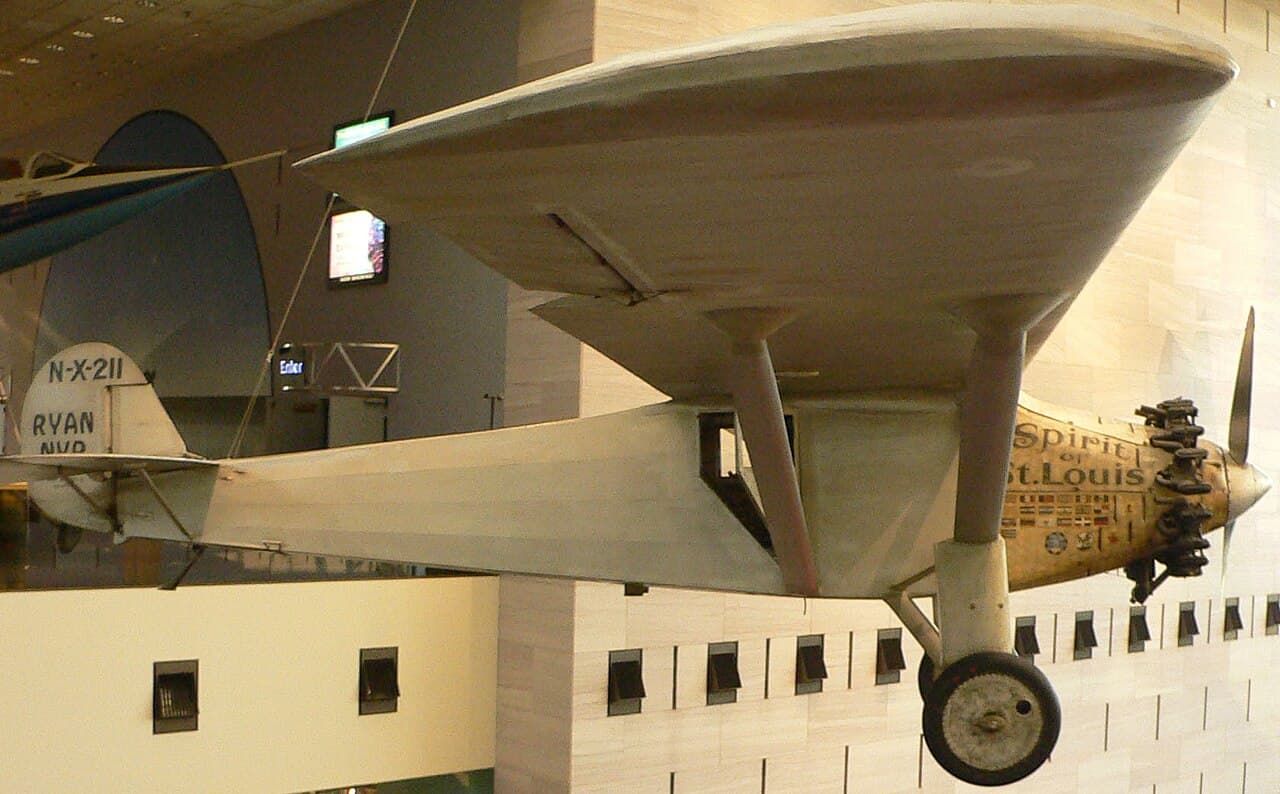
Google Acquires Spirit Airlines' Operational Data for $10M to Enhance AI Training
Google won a bankruptcy auction for Spirit Airlines' internal data, paying $10 million for emails, Teams messages, code repositories, operating records, pricing data, maintenance history, and disruption records that can help train AI systems on real business decisions and failures. The deal excludes Spirit's customer list and personal passenger data, which remains a separate asset for sale — because even in liquidation, Spirit still charges extra for the passenger.
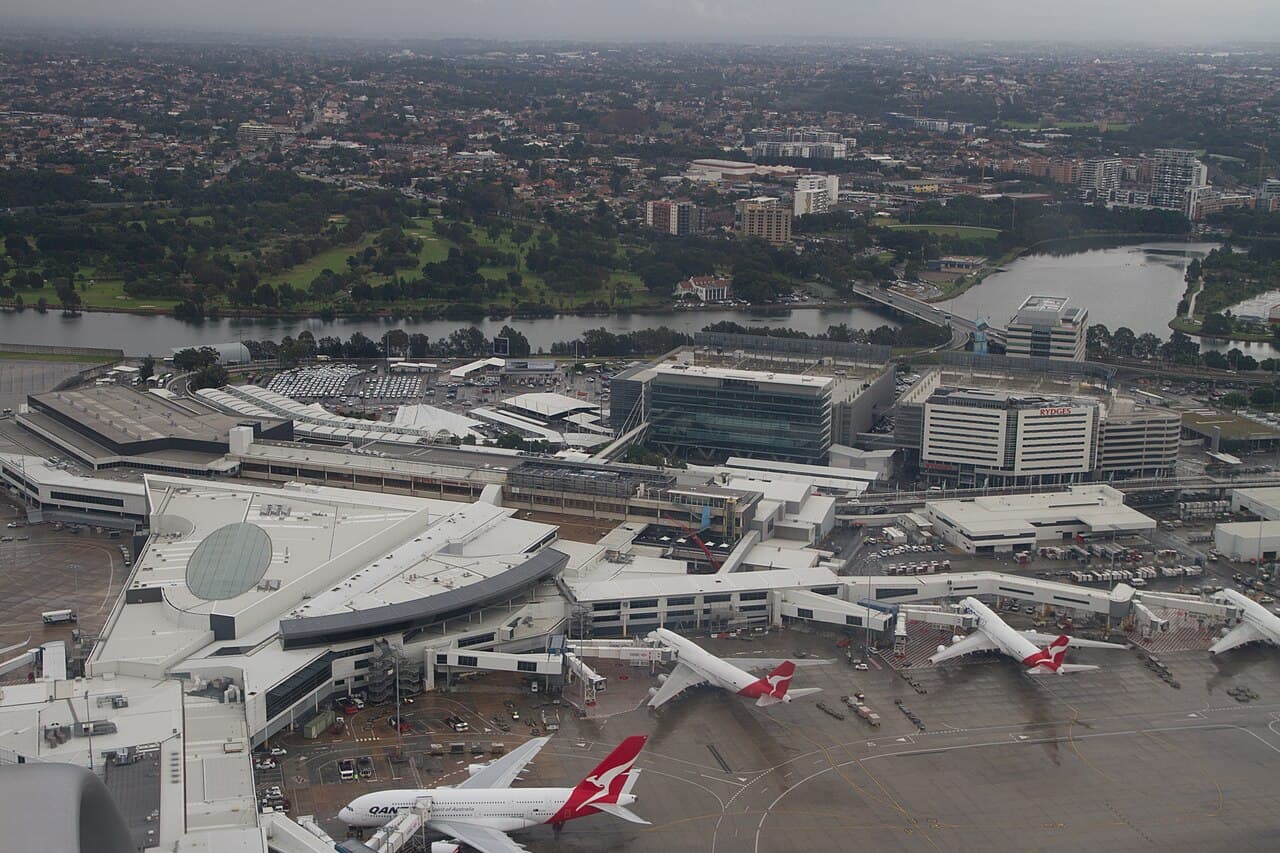
Sydney Airport's new Master Plan approved for integrated terminal by 2045
The Australian government has approved Sydney Airport's Master Plan 2045, clearing the way for a major redevelopment of the airport's domestic precinct that will merge domestic, regional, and international services into a single integrated terminal experience. Minister for Infrastructure, Transport, Regional Development and Local Government Catherine King approved the plan on Friday, August 14, 2026, giving Sydney Airport a framework to invest in the terminal capacity, transport connections, and passenger facilities needed to support the airport's growth over the next two decades. A single terminal experience takes shape The centerpiece of the plan is the proposed overhaul of Sydney Kingsford Smith Airport's (SYD) domestic precinct. #image_title Rather than keeping domestic, regional, and international operations separated as they currently are, the redevelopment would bring all three together under one integrated terminal, a shift designed to streamline the passenger experience as traffic grows. Sydney Airport CEO Scott Charlton said the approval gives the airport a clear pathway to plan for future demand and invest in the infrastructure the city will need in the coming decades. He said the plan is also built to support sustainable and responsible growth, with an emphasis on minimizing environmental impact and working closely with surrounding communities. Growth by the numbers #image_title The Master Plan forecasts that Sydney Airport will handle more than 72 million passengers annually by 2045, split between 36.4 million international travelers and 36.2 million domestic and regional passengers. Alongside that passenger growth, the airport's annual economic contribution is projected to rise to around $70 billion, while direct employment at the airport is expected to grow to more than 105,000 jobs. Environmental strategy built into the plan The Master Plan also folds in Sydney Airport's five-year Airport Environment Strategy, which lays out steps to reduce emissions, build climate resilience, and support more sustainable operations as the airport expands. Charlton thanked the Australian government and Minister King for endorsing the plan, and acknowledged the role of partners, government agencies, and the surrounding community throughout the planning process, adding that the airport looks forward to continued collaboration as the vision moves toward implementation. RELATED Australians support domestic SAF industry, Sydney Airport study shows
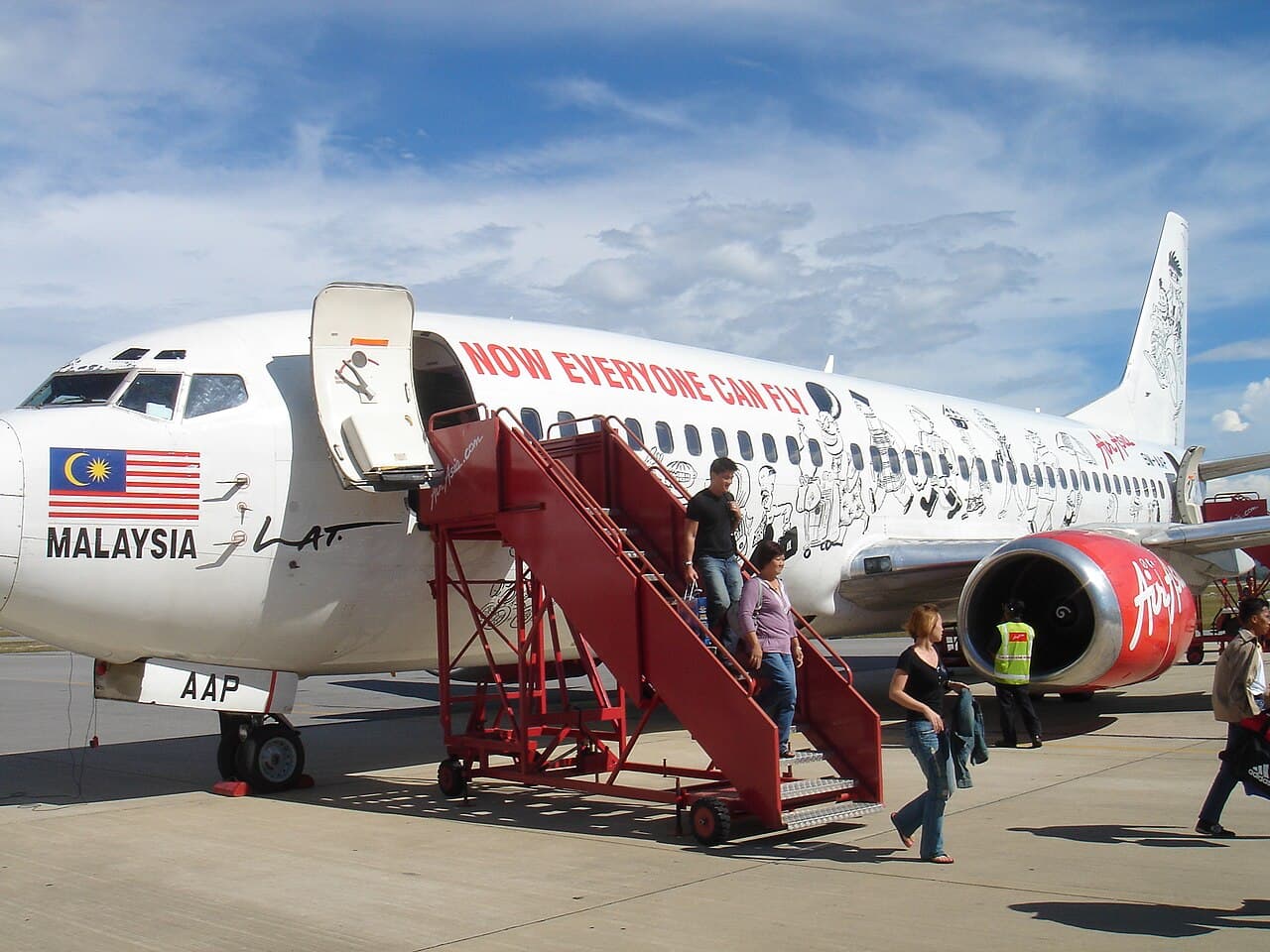
AirAsia delays Bahrain hub and London flights amid fuel cost surge and capacity cuts
Low-cost group plunges to quarterly loss on high fuel costs AirAsia Group has again delayed the launch of its Bahrain hub – as well as flights to London – in a bid to "preserve capital", and as part of a wider network "reset". The low-cost airline group says it will postpone the launch to 2027, but stops short of specifying a launch timeline. It would only say that it was doing so to "preserve capital, conserve liquidity, and prevent near-term long-haul margin dilution". Flights to Bahrain and London – AirAsia's return to Europe after 14 years – were to have started on 26 June, but the war in the Middle East, and the consequent spike in fuel prices, complicated its plans. By June, executives said the flights would be launched "some time" in August, citing a dip in jet fuel prices. The latest delay comes as the group, which has units in Malaysia, Thailand, Indonesia, the Philippines and Cambodia, restructures its operations to mitigate the spike in fuel prices. For the April-June quarter, group capacity was down 11% year on year "to protect unit margins against extreme spot fuel volatility". "Capacity shifted quickly to routes with stronger demand as conditions evolved, such as away from soft regional sectors toward high-yielding core domestic and high-density…trunk routes [in Southeast Asia]," notes AirAsia. AirAsia adds that its short-haul operations in Thailand, the Philippines, and Indonesia, and long-haul operations from Malaysia were loss-making during the quarter, while Malaysia and Cambodia short-haul operations were in the black. As part of its network restructuring, it permanently axed 33 "unviable" routes operated by its Indonesia and Philippines units, while further suspending 17 routes across the group. AirAsia will further cut capacity in the July-September quarter, with ASKs expected to decline 20-25% year on year. However, it expects to "fully" ramp up operations for the peak fourth-quarter. At the same time, AirAsia says it expects to remove 25 older aircraft – including 17 early returns – from its fleet this year, with no new deliveries expected until 2027. For the April-June quarter, AirAsia Group reported a loss after tax of MYR831 million ($203 million). In the same period last year, the group posted a pro-forma profit after tax of MYR919 million. The group's fuel expenses for the quarter was up 58%, outpacing reductions in maintenance and user charges. At the same time, AirAsia also took on foreign exchange losses during the period.
SWISS Begins Retrofit of A330-300s with New SWISS Senses Cabins Including First Class Redesign
In 2025, SWISS introduced new cabins for its long haul aircraft ( including an all-new first class and business class ), in a project that's known as SWISS Senses . SWISS is part of Lufthansa Group, so these cabins are essentially identical to the new Lufthansa Allegris concept , but with different branding. These new SWISS Senses cabins were first rolled out on newly delivered Airbus A350-900s , though we know that SWISS also plans to reconfigure its existing jets with these new seats. There's an exciting update, as the first Airbus A330-300 is currently being reconfigured with SWISS Senses cabins. SWISS Senses coming to Airbus A330-300 fleet SWISS has confirmed that it has started the project of reconfiguring Airbus A330-300s with new cabins. This work is taking place in Hong Kong (HKG) — the first plane with the registration code HB-JHC arrived in Asia on July 20, and is expected to be there for some time. So far, the existing cabins have reportedly been removed from the aircraft, and it's also undergoing heavy maintenance (a C-check), so there's a lot of work to be done. It always takes longer for the first aircraft to be reconfigured, given that new seats have to be certified on the aircraft . We know that Lufthansa Group has had quite some challenges with certification of new cabins, so we'll see how this all plays out, since the airline group doesn't have a great track record. However, assuming things go relatively smoothly, the plan is for the retrofit project to be put into full motion once the prototype is certified and back in service, so hopefully that's before the end of the year. At that point, the expectation is that one plane will be reconfigured every six weeks. SWISS' fleet consists of 14 A330s, so you'd expect the entire project to take right around 84 weeks, or a little over 19 months. Realistically, I expect it'll be around the spring of 2028 when the A330 project is complete, best case scenario. More realistically, I'd guess it'll wrap up in the summer or fall. The plan is then to reconfigure the fleet of 12 Boeing 777-300ERs. We'll see with exactly what timeline this starts. The project could start once the A330 retrofit is complete, or who knows, it could also start before then. SWISS is reconfiguring its Airbus A330s How the layout of SWISS Airbus A330-300s will change As SWISS reconfigures its Airbus A330-300s, what should we expect, exactly? Currently, SWISS' A330s have 236 seats, including eight first class seats, 45 business class seats, and 183 economy class seats. Old SWISS A330-300 seat map Once reconfigured, SWISS' A330s will have 225 seats, including three first class suites (one double suite), 43 business class seats, 28 premium economy seats, and 151 economy class seats. New SWISS A330-300 seat map So we're no doubt seeing a significantly better product across the board. However, with the introduction of SWISS Senses, we're seeing a five seat reduction in first class, a two seat reduction in business class, a new premium economy cabin with 28 seats, and a 32 seat reduction in economy class. One wild aspect of the SWISS Senses cabin on the A330 is that the first class is apparently too heavy for the plane, and could cause a weight and balance issue. As a result, the airline is installing a 1.5-ton weight in the back of the aircraft , to prevent that from being an issue. That's not exactly ideal, eh? Anyway, I'm going to be very curious to see how these A330s look once reconfigured. The cabins of these planes are tired, and in particular, SWISS' A330 business class leaves a lot to be desired. SWISS' A330 business class is outdated at this point It remains to be seen how tight the premium cabins on these planes feel, though. In economy, the A330 is a joy, given its 2-4-2 layout (meaning each row has two sets of seat pairs). The overall cabin is 17 inches narrower than on the A350 (where the SWISS Senses cabins debuted), so I'm sure this will be felt in business class, though the first class cabin feeling is what interests me most. The new SWISS Senses business class is great Keep in mind that there's a double suite in center of first class , and that feels tight on the A350, assuming you're two people ( it's the same as in Lufthansa Allegris ). I have to imagine it'll feel significantly more constrained on the A330. I imagine the double suite will be tight on the A330 Bottom line SWISS has started the project of retrofitting its Airbus A330 fleet with new cabins. The plane will be getting the new SWISS Senses concept with four classes of service. While SWISS Senses debuted on the A350, it's great to see the carrier's tired A330s get some love as well. The first plane is currently in the "shop," and it'll likely be a few months before it's ready to go, given that it's the prototype. Once this plane is back in service, expect planes to be reconfigured one after the other, with each taking around six weeks. Here's to hoping the certification process goes smoothly, given Lufthansa Group's track record. What do you make of SWISS' A330 retrofit plans?
The Daily Touch & Go
The day's best aviation news in your inbox. Free, no spam.