

Image: Wikimedia Commons · CC BY-SA 3.0 · via Wikimedia Commons
Google Acquires Spirit Airlines' Operational Data for $10M to Enhance AI Training
Google won Spirit Airlines' bankruptcy auction with a $10 million bid to purchase extensive internal emails, documents, and flight records, excluding passenger data, to train AI models.
The gist
Google buys Spirit Airlines’ comprehensive operational archive for $10M to advance AI understanding of complex business tasks, excluding customer data.
Continuing coverage
All Aviation Technology →- Ryanair Signs Five-Year AI and Cloud Partnership with Google to Boost Operations
- Simple Flying enhances Flight Tracker with cleaner interface and new features for easier live flight viewing
- New Radar at Newark Debuts as DOT Seeks $10B More for Air Traffic Control Upgrades
- Boeing 777-9 challenges Airbus A350-1000 dominance in long-haul widebody market
- Retired Delta pilot urges airline to replace Amazon Wi-Fi with Starlink for better service
Google has acquired Spirit Airlines’ expansive internal data archive in a bankruptcy auction, paying $10 million to gain access to millions of emails, files, and detailed operational records. The purchase, pending court approval scheduled for August 19, excludes customer personal data, reflecting the airline’s rigorous monetization of passenger information even amid liquidation.
The datasets cover decades of Spirit’s corporate communications and operational history, with some employee data dating back to 1986, and most business records beginning in 2008. The acquisition includes approximately 100 million emails, over 500 million Microsoft Teams messages, 17 million OneDrive and 20 million SharePoint files, alongside more than half a million IT support tickets. Additionally, Google obtains 516 source code repositories comprising around 30 million lines of code, including detailed commit logs, bug reports, reviews, and build tests.
Beyond communications and software, the archive contains extensive records for 763,391 individual flights, over 5 million crew pairings, aircraft maintenance logs, fuel data, and billions of entries related to irregular operations and passenger reaccommodations. Transactional data includes 190 million reservation records and 7.5 billion financial transactions such as refunds and vouchers, all stripped of personal identifiers to comply with privacy laws.
Google’s stated goal is to leverage this dataset to improve its AI models and products. The Spirit archive uniquely captures the nuanced interactions involved in airline operations — from pricing inventory and employee management to responding dynamically during disruptions involving maintenance, crew availability, weather, gate assignments, and passenger rerouting.
The company gains access to decision-making workflows interlinked with communication and software development processes, providing a rich training ground for AI agents that must execute multi-step business tasks. This includes reading emails, retrieving policies, adjusting forecasts, coding changes, routing approvals, and explaining outcomes—all backed by real-world enterprise data showing cause and effect.
Spirit’s history of operational challenges, brand perception issues, and multiple bankruptcies further enrich the dataset with examples of business failures, enabling AI to learn from complex problem scenarios and warning signs. The airline’s eventual loss of cost advantage and failed merger attempts provide context on commercial pressures impacting airline success.
Notably, Google does not obtain Spirit’s customer list, maintaining a clear separation of personal passenger information. The airline’s profiles, loyalty program data, call recordings, and customer service records remain outside this deal, subject to separate sale efforts targeting travel and hospitality industries. Google’s acquisition focuses solely on internal operational and corporate records.
To ensure compliance with stringent privacy regulations including the California Consumer Privacy Act and HIPAA, all identifiable personal data must be anonymized via a third-party deidentification process prior to transfer. Google is contractually bound to maintain deidentification standards and restrict data association with individuals or households, even when sharing with third parties.
This acquisition aligns with Google Cloud’s broader aviation industry push, exemplified by its recent five-year AI partnership with Ryanair to improve productivity, customer service, fleet operations, and maintenance scheduling. Although Spirit’s data will likely not be applied directly to Ryanair, the insight gleaned from complex airline operations complements Google’s expanding aviation AI expertise.
Frequently asked questions
- What types of data did Google acquire from Spirit Airlines?
- Google acquired Spirit Airlines’ internal emails, Microsoft Teams messages, files, IT tickets, source code repositories, flight records, crew schedules, maintenance logs, reservation and transaction records, all mostly de-identified.
- Does Google’s purchase include Spirit Airlines’ customer personal information?
- No, Google’s purchase excludes all personal customer data such as passenger profiles, loyalty program information, call recordings, and direct contact details, which are being sold separately.
- Why is Google interested in airline operational data for AI training?
- Google aims to use Spirit’s multi-faceted business and operational data to train AI models capable of handling complex, multi-step enterprise tasks like policy retrieval, coding, forecasting, and decision-making in dynamic scenarios.
Read more
All MRO/Maintenance →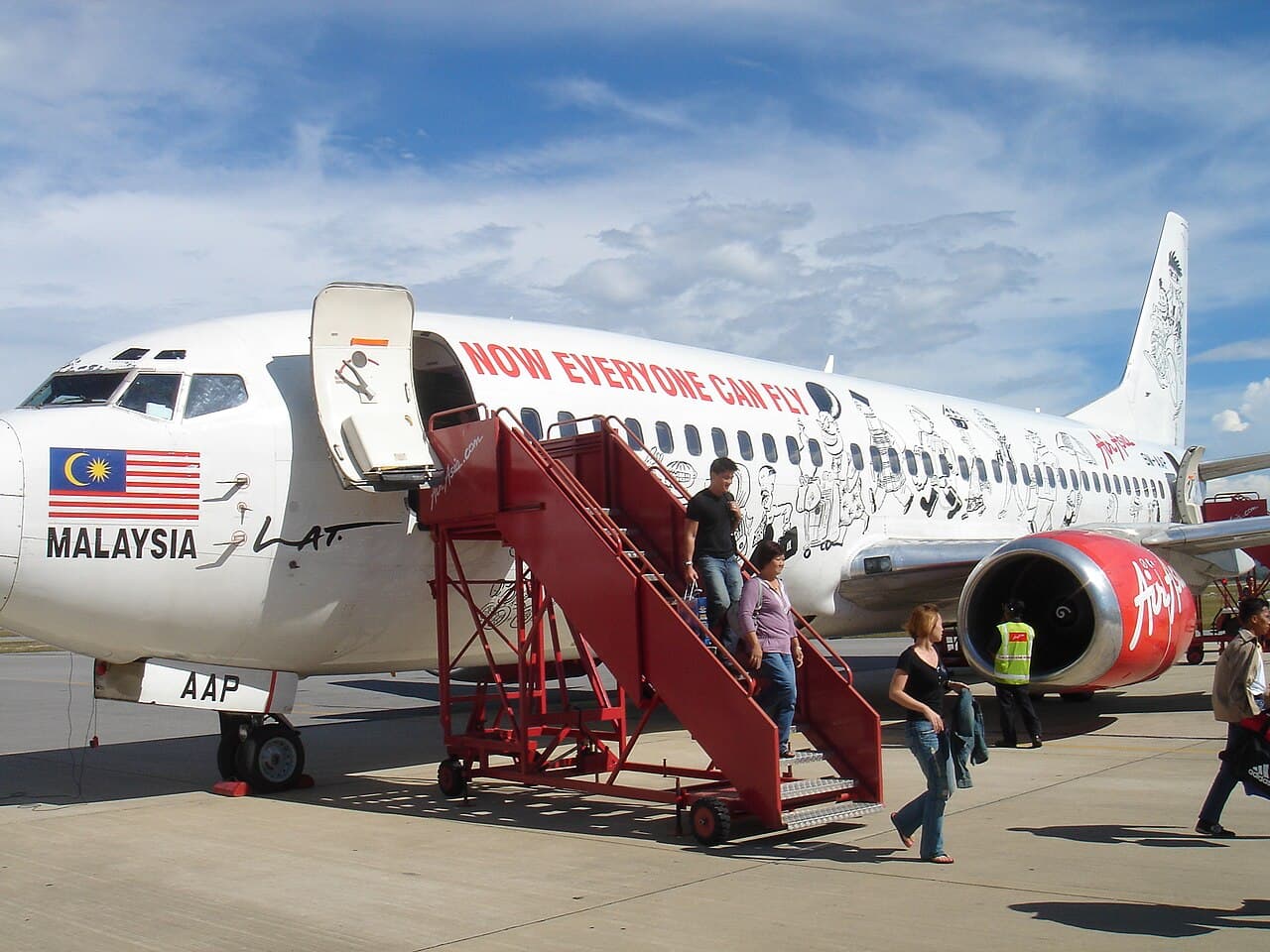
AirAsia delays Bahrain hub and London flights amid fuel cost surge and capacity cuts
Low-cost group plunges to quarterly loss on high fuel costs AirAsia Group has again delayed the launch of its Bahrain hub – as well as flights to London – in a bid to "preserve capital", and as part of a wider network "reset". The low-cost airline group says it will postpone the launch to 2027, but stops short of specifying a launch timeline. It would only say that it was doing so to "preserve capital, conserve liquidity, and prevent near-term long-haul margin dilution". Flights to Bahrain and London – AirAsia's return to Europe after 14 years – were to have started on 26 June, but the war in the Middle East, and the consequent spike in fuel prices, complicated its plans. By June, executives said the flights would be launched "some time" in August, citing a dip in jet fuel prices. The latest delay comes as the group, which has units in Malaysia, Thailand, Indonesia, the Philippines and Cambodia, restructures its operations to mitigate the spike in fuel prices. For the April-June quarter, group capacity was down 11% year on year "to protect unit margins against extreme spot fuel volatility". "Capacity shifted quickly to routes with stronger demand as conditions evolved, such as away from soft regional sectors toward high-yielding core domestic and high-density…trunk routes [in Southeast Asia]," notes AirAsia. AirAsia adds that its short-haul operations in Thailand, the Philippines, and Indonesia, and long-haul operations from Malaysia were loss-making during the quarter, while Malaysia and Cambodia short-haul operations were in the black. As part of its network restructuring, it permanently axed 33 "unviable" routes operated by its Indonesia and Philippines units, while further suspending 17 routes across the group. AirAsia will further cut capacity in the July-September quarter, with ASKs expected to decline 20-25% year on year. However, it expects to "fully" ramp up operations for the peak fourth-quarter. At the same time, AirAsia says it expects to remove 25 older aircraft – including 17 early returns – from its fleet this year, with no new deliveries expected until 2027. For the April-June quarter, AirAsia Group reported a loss after tax of MYR831 million ($203 million). In the same period last year, the group posted a pro-forma profit after tax of MYR919 million. The group's fuel expenses for the quarter was up 58%, outpacing reductions in maintenance and user charges. At the same time, AirAsia also took on foreign exchange losses during the period.
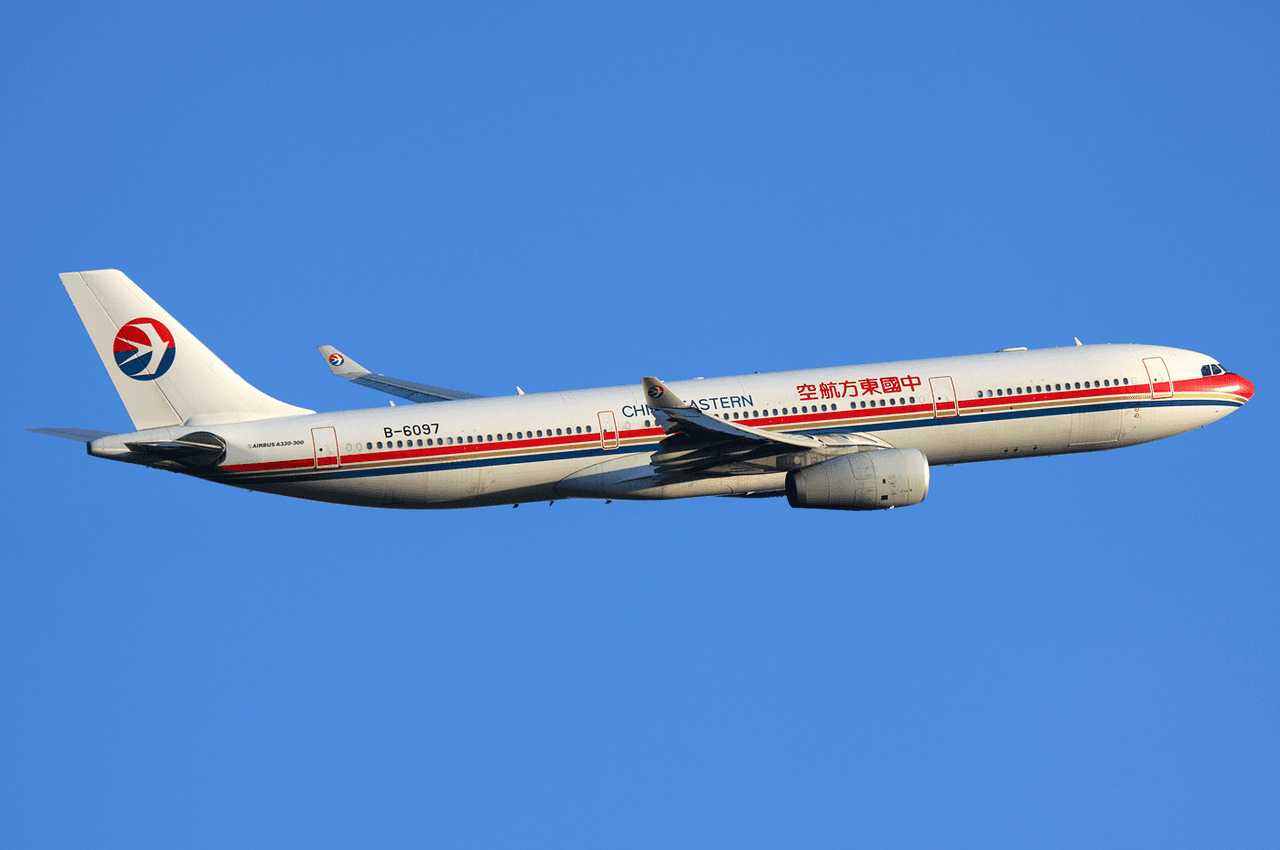
SWISS Begins Retrofit of A330-300s with New SWISS Senses Cabins Including First Class Redesign
In 2025, SWISS introduced new cabins for its long haul aircraft ( including an all-new first class and business class ), in a project that's known as SWISS Senses . SWISS is part of Lufthansa Group, so these cabins are essentially identical to the new Lufthansa Allegris concept , but with different branding. These new SWISS Senses cabins were first rolled out on newly delivered Airbus A350-900s , though we know that SWISS also plans to reconfigure its existing jets with these new seats. There's an exciting update, as the first Airbus A330-300 is currently being reconfigured with SWISS Senses cabins. SWISS Senses coming to Airbus A330-300 fleet SWISS has confirmed that it has started the project of reconfiguring Airbus A330-300s with new cabins. This work is taking place in Hong Kong (HKG) — the first plane with the registration code HB-JHC arrived in Asia on July 20, and is expected to be there for some time. So far, the existing cabins have reportedly been removed from the aircraft, and it's also undergoing heavy maintenance (a C-check), so there's a lot of work to be done. It always takes longer for the first aircraft to be reconfigured, given that new seats have to be certified on the aircraft . We know that Lufthansa Group has had quite some challenges with certification of new cabins, so we'll see how this all plays out, since the airline group doesn't have a great track record. However, assuming things go relatively smoothly, the plan is for the retrofit project to be put into full motion once the prototype is certified and back in service, so hopefully that's before the end of the year. At that point, the expectation is that one plane will be reconfigured every six weeks. SWISS' fleet consists of 14 A330s, so you'd expect the entire project to take right around 84 weeks, or a little over 19 months. Realistically, I expect it'll be around the spring of 2028 when the A330 project is complete, best case scenario. More realistically, I'd guess it'll wrap up in the summer or fall. The plan is then to reconfigure the fleet of 12 Boeing 777-300ERs. We'll see with exactly what timeline this starts. The project could start once the A330 retrofit is complete, or who knows, it could also start before then. SWISS is reconfiguring its Airbus A330s How the layout of SWISS Airbus A330-300s will change As SWISS reconfigures its Airbus A330-300s, what should we expect, exactly? Currently, SWISS' A330s have 236 seats, including eight first class seats, 45 business class seats, and 183 economy class seats. Old SWISS A330-300 seat map Once reconfigured, SWISS' A330s will have 225 seats, including three first class suites (one double suite), 43 business class seats, 28 premium economy seats, and 151 economy class seats. New SWISS A330-300 seat map So we're no doubt seeing a significantly better product across the board. However, with the introduction of SWISS Senses, we're seeing a five seat reduction in first class, a two seat reduction in business class, a new premium economy cabin with 28 seats, and a 32 seat reduction in economy class. One wild aspect of the SWISS Senses cabin on the A330 is that the first class is apparently too heavy for the plane, and could cause a weight and balance issue. As a result, the airline is installing a 1.5-ton weight in the back of the aircraft , to prevent that from being an issue. That's not exactly ideal, eh? Anyway, I'm going to be very curious to see how these A330s look once reconfigured. The cabins of these planes are tired, and in particular, SWISS' A330 business class leaves a lot to be desired. SWISS' A330 business class is outdated at this point It remains to be seen how tight the premium cabins on these planes feel, though. In economy, the A330 is a joy, given its 2-4-2 layout (meaning each row has two sets of seat pairs). The overall cabin is 17 inches narrower than on the A350 (where the SWISS Senses cabins debuted), so I'm sure this will be felt in business class, though the first class cabin feeling is what interests me most. The new SWISS Senses business class is great Keep in mind that there's a double suite in center of first class , and that feels tight on the A350, assuming you're two people ( it's the same as in Lufthansa Allegris ). I have to imagine it'll feel significantly more constrained on the A330. I imagine the double suite will be tight on the A330 Bottom line SWISS has started the project of retrofitting its Airbus A330 fleet with new cabins. The plane will be getting the new SWISS Senses concept with four classes of service. While SWISS Senses debuted on the A350, it's great to see the carrier's tired A330s get some love as well. The first plane is currently in the "shop," and it'll likely be a few months before it's ready to go, given that it's the prototype. Once this plane is back in service, expect planes to be reconfigured one after the other, with each taking around six weeks. Here's to hoping the certification process goes smoothly, given Lufthansa Group's track record. What do you make of SWISS' A330 retrofit plans?
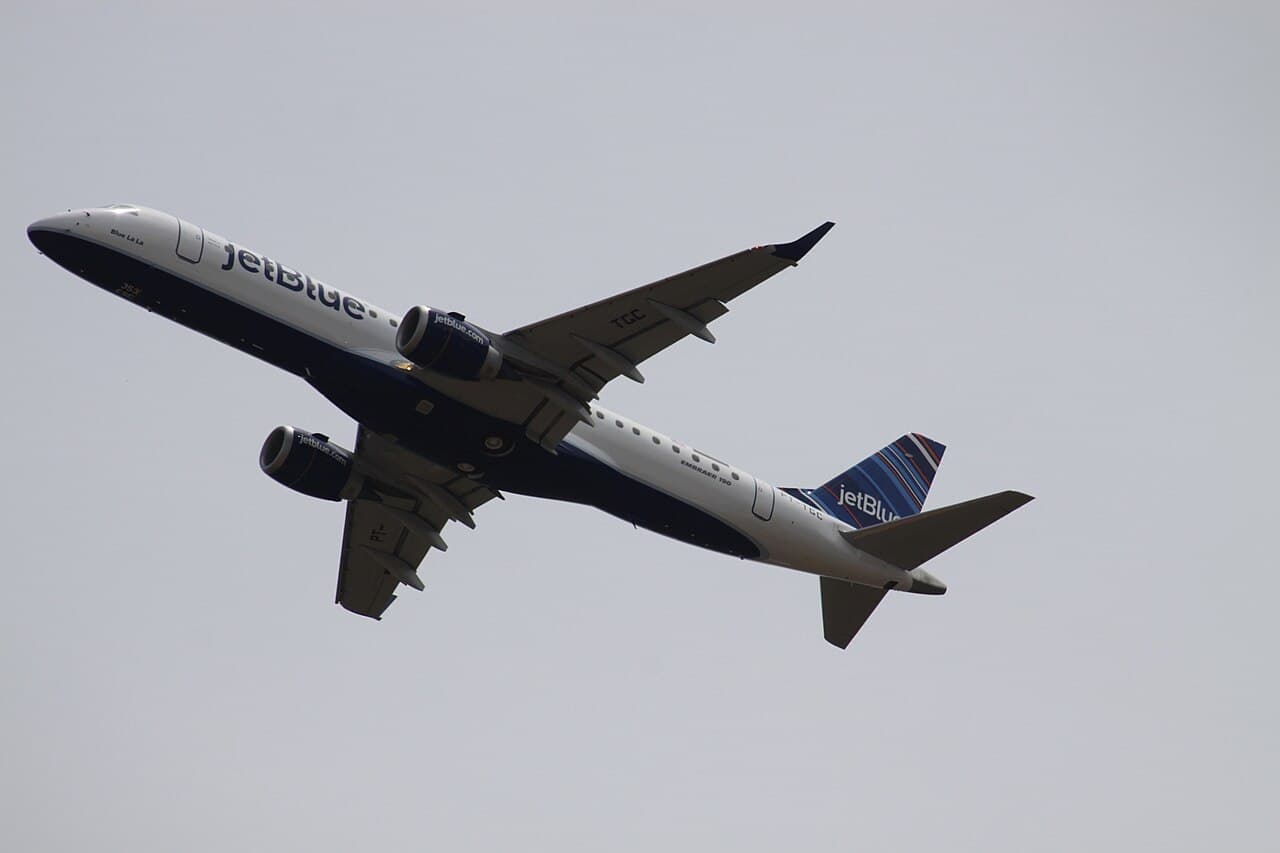
JetBlue Unveils Four-Cabin Fare Model Introducing BlueFirst Base Premium Option
New York-based JetBlue Airways is preparing to launch an all-new first class product for flights configured without its existing flagship "Mint" service. Dubbed "BlueFirst," this is the first conventional premium cabin to be offered on JetBlue flights without Mint seats configured.
FAA Orders $2.66M Seat Inspections on 453 Boeing 737 MAX Jets Amid Certification Oversight
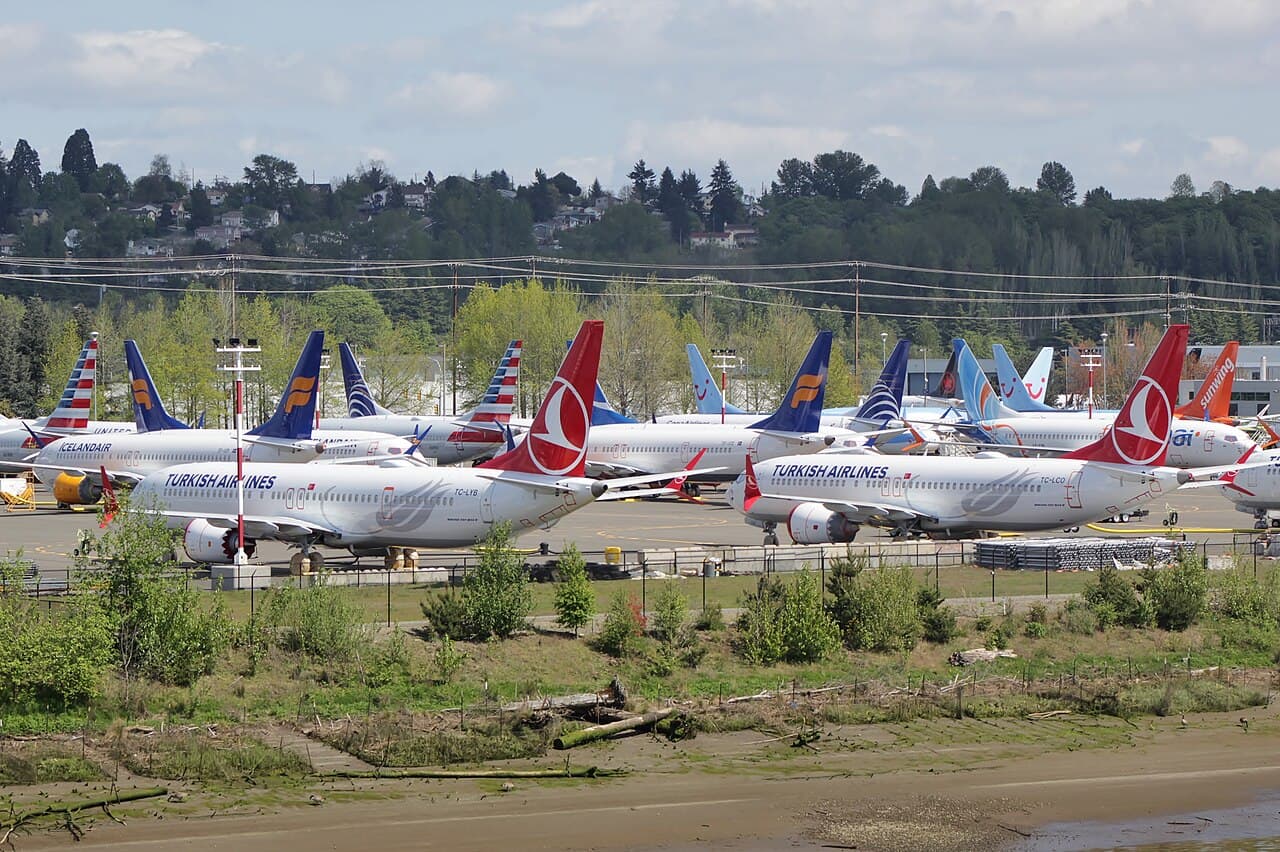
The FAA has recently permitted Boeing to independently issue airworthiness certificates for new examples of its 737 MAX and 787 models, but just a week after Boeing was granted this privilege (which it historically held for decades but was suspended in recent years), the FAA has proposed a new airworthiness directive (AD) regarding improperly installed seats on hundreds of 737 MAXs. It's not actually unusual for the FAA and other regulators to issue ADs, but it does signal that the FAA is only stepping up its oversight of Boeing.
The Daily Touch & Go
The day's best aviation news in your inbox. Free, no spam.